Daily Ten Minute Warmups

The Three T’s to Build Technique, Key Literacy, and Endurance

foxsfiresides

Just like an athlete’s regular workout to achieve specific goals for improvement in form, strength, and stamina, musicians need to adopt consistent practice habits, and apply a daily routine of the Three T’s:

  • Tuning and slow/long-tone warmup
  • Three Scales a Day
  • Technical Etude or Study

Even if time is very limited, the music directors of the South Hills Junior Orchestra recommend that, at a minimum, every musician spends at least ten minutes a day on a regime of playing scales and at least one technical exercise or etude (usually prescribed by a private teacher) to “maintain their chops,” increase flexibility and resilence, and further their technical proficiency.

The TECH TIP #1 outline below provides a suggested framework to follow (especially suitable for violin, viola, cello, and string players, but adaptable to any instrument).

This involves the following approach:

  • Consistent drill (ten minutes a day, seven days a week)
  • Focused drill (no distractions or interruptions, or it doesn’t count)
  • Repetitive drill (many revolutions and repeats)
  • Creative drill (innovative and inventive: new keys, articulations, rhythms, etc.)


How to Practice: “Variety is the Spice of Life!”

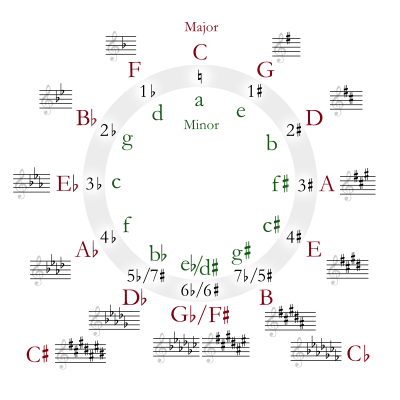
Key to this formula is venturing out of your “comfort zone” and exploring the entire “Circle of Fifths” – different key signatures (don’t just play in the same key every day), 400px-Circle_of_fifths_deluxe_4.svgMajor and minor scales, and numerous varied patterns:

  • Repeated notes
  • Unique rhythms
  • Slow to fast tempos
  • Slurs
  • Bowings (strings)
  • Intervals (e.g. scales in thirds, etc.)
  • Arpeggios
  • Dynamics and other expressive markings

Other practice strategies have been previously shared here (click on the “fireside” menu above or go to https://paulkfoxusc.wordpress.com/foxs-firesides/), and offer a host of problem solving techniques suitable for instrumentalists of any age and abilty level.

In addition, here are a few more tips for effective practice:

  1. Play your instrument every day, at least 5-7 times per week. Practicing in short amounts daily is more preferable than “cramming.” Developing technique is much like an exercise workout. Teach your muscles by doing a little bit daily.
  2. Set regular time(s) to practice. Consistency is the key to success.
  3. Find a comfortable, well-lit, quiet place to practice.  No television or telephone interruptions!
  4. Practice standing up, not sitting (except cello players). Remember to keep muscles relaxed and loose.  Relaxation and breathing exercises prior to the start of a practice session can be especially helpful.
  5. Use a mirror to visually check your form and technique. Use a recorder to aurally check your playing.
  6. When trying to improve intonation, play SLOWLY. Try to memorize your music or passage, close your eyes or play in the dark.  By restricting visual input, you may help enhance your aural ability, becoming more sensitive and “attuned” to tuning.
  7. Experts say “start slow and small.” After sight-reading (without stopping) your new selection, break it down into “practice goals” and “problem solve.” At each session, focus on a small section or difficult passage(s). Gradually increase your tempos or add more difficult fingerings/positions/bowings. As you learn each section, overlap your practice goals into repetitive longer “run-throughs” of the music.
  8. Test yourself performing “ten-times-in-a-row” with 100% accurate notes, rhythms and articulations.
  9. LISTEN!  If you are having trouble with an orchestra piece, or a new solo work, buy a recording, research it on YouTube, or try to get one from the library. Even better, get multiple recordings of it so you can hear different interpretations. Then, listen to it a lot.  Listen to it in the car, on your headphones while taking a walk, as background music while talking to a friend, during dinner, etc.
  10. seriestoshare-logo-01Don’t forget that the ultimate goal is not to produce the notes you see on the page as you would type in words on a keyboard—the goal is to produce beautiful music.  Listen to yourself and “make music” as you practice.

SHJO’s mission is all about supporting school music programs. (For more information, about the Southwestern PA community ensemble, please visit www.shjo.org.) Consult your band or orchestra teacher, as well as a private teacher (if you have one) for more detailed instruction on warmups, tuning, scale reading, and etude assignments.


Sample Scales

If you do not own a scale book, here are a few guides for string players:

Best wishes on setting up a daily ten minute PRACTICE PLAN!

PKF

Tech Tip #1

Three T’s to Build Technique, Key Literacy, and Endurance

  1. Tuning
  2. Three Scales a Day (two Major and one minor)
  3. Technical Etude or Study

What is needed?

  • SmartMusic, eTuner, or other standalone digital tuner
  • Lists of scales in different keys
  • Supplemental materials (such as Essentials for Strings or Essential Elements 2000 for Strings Book 2 p. 44-45)
  • Violin or Viola Etudes: VIOLIN/VIOLA: Wohlfahrt Foundation Studies Book 1 or Wohlfahrt Foundation Studies Book 2*
  • Cello Etudes: Sebastian Lee or Alwin Schroeder*
  • String Bass Etudes: Simandl*

Other instruments: any etude appropriate to your instrument *(ask your private teacher)

Recommendations

  1. Per daily warm-up, perform two Major scales and one minor scale.
  2. Play one scale slow with focus on natural tone production/vibrato and precise intonation.
  3. lay one scale fast with emphasis on articulation or bowing style.
  4. Play one scale using unique rhythmic, slurring, melodic patterns, shifting or in positions.
  5. Play at least one of the above scales in a flat key (Major or minor).
  6. epending on level of achievement, two octaves is the norm; one octave for novices or playing new keys starting on D (violin), G (viola/cello), A (bass) strings, C (all other instruments); three octaves for advanced string students.
  7. Check off the different keys you play on the Circle of Fifths. (The goal is that all string musicians should be able to play scales in keys of 1-5 sharps and 1 to 4 flats.)
  8. Vary your workout to include a range of expressive elements including articulations (staccato, marcato, legato, spiccato, hooked bows, pizzicato) and dynamics (forte to piano).

Definitions

  • Major Scale: Do-1 Re-2 Mi-3 Fa-4 Sol-5 La-6 Ti-7 Do-8 half steps between 3-4 and 7-8
  • Natural Minor: Do-1 Re-2 Me-3 Fa-4 Sol-5 Le-6 Te-7 Do-8 half steps 2-3 and 5-6
  • Harmonic Minor: Do-1 Re-2 Me-3 Fa-4 Sol-5 Le-6 Ti-7 Do-8 half steps 2-3, 5-6, and 7-8
  • Melodic Minor UP: Do-1 Re-2 Me-3 Fa-4 Sol-5 La-6 Ti-7 Do-8 half steps 2-3 and 7-8
  • Melodic Minor DOWN (same as Natural Minor)
  • Speedy Rhythm Drill (looks like an upside-down pyramid): four sixteenth notes per scale note (up and down), three sixteenths, two sixteenths, and one sixteenth
  • Speedy Slur Drill (looks like a normal pyramid): one quarter note (once up and down), two eighth notes slurred played twice, three notes (triplet) slurred played three times, and four sixteenth notes slurred played four times.
  • Slow-Fast drills: four eighth notes followed by four sixteenths (or vice versa)
  • The 2 + 1 Pattern (or 1 + 2): Triplets Do-Do-Re (or Do-Re-Re), Mi-Mi-Fa, Sol-Sol-La, etc. playing the entire scale using a steady beat in a moderate to fast tempo.
  • The 3 + 1 Pattern (or 1 + 3): Sixteenths Do-Do-Do-Re (or Do-Re-Re-Re), Mi-Mi-Mi-Fa, etc. playing the entire scale using a steady beat in a moderate to fast tempo.


For a printable copy of this TECH TIP #1, click below:

Music Tech Tips TEN MINUTES A DAY


© 2018 Paul K. Fox

Photo credit from Pixabay.com: “Fire” by Alexas_Fotos


Ethical Conundrums Revisited

More About Ethics in Education – Part I

“Food for Thought”

Facing Those Misconceptions, Dilemmas, and Problems in Daily Professional Decision-Making

business-1869266_1280

As I travel around Pennsylvania presenting sessions on “Ethics for Music Educators” at state conferences, regional professional development workshops, and collegiate music education seminars, as well as writing articles for PMEA News and hosting webinars, I seemed to have stirred up a lot of questions (which is GREAT!) and some confusion (not so good). This “hot topic” has become a lot like “peeling an onion.”

After discovering that few music or other subject area teachers have had formalized ethics training (pre-service or in-service), in fact most never even seeing their state’s “code of ethical conduct,” I feel like this is more complicated than it appears to be. Indeed, here and in other blog-posts, I am endeavoring to “peel the onion” – explore the problem one layer (step) at a time, to thoroughly understand what’s causing the conflict.

As a prerequisite, if you have not read my other articles on ethics from this website, please review the following:


A Closer Look at the Definitions

Ethics: moral principles that controls a person’s behavior.

Conundrum: a difficult problem or situation

ethics-2110621_1920_3dman_eu

An ethical conundrum is a problem that causes one to make a decision based on their personal values. It may question an individual’s beliefs of what is right and wrong. Ethical conundrums can range from simple everyday problems to serious illegal infractions.

What is the difference between an ethical conundrum and a dilemma? Thanks to https://www.quora.com/What-is-the-difference-between-conundrum-and-dilemma-Can-you-give-example-with-respect-to-a-context, we have a little more clarity (or barring that, at least a lot more detail to consider):

“Remember this phrase — on the horns of a dilemma.”

“A dilemma… [by definition] is a difficult choice between two (and only two) things or courses of action (as in two horns), both of which have some kind of undesirable consequences.”

“A choice of two things isn’t a dilemma — it may be a conundrum. A choice of one good thing and one bad isn’t a dilemma. A choice of two bad things is a dilemma.”

“A conundrum is about one thing — it’s just a difficult or confusing problem, and nearly always in the sense of having no possible solution or answer, or it’s an unbelievably hard challenge to produce the solution or answer. In short, a riddle.”

– Robert Charles Lee

These examples may be helpful, and were provided on the Quora website:

Dilemmas:

  • “We’re stuck in this dilemma of either jumping into shark-infested waters, or staying on board the burning ship and be burned alive.”
  • The proverb “Die if you do, die if you don’t.”

The classic conundrum facing thousands of students everywhere every year is which college to pick (the ‘one’ thing). College No. 1 has a better faculty but not fun. College No. 2 has a reputation of being more enjoyable and a more socially active student body. College No. 3 has average faculty but always get overseas placements. Which college is better for your future happiness?

A conundrum that resembles a dilemma: Should I work abroad alone for high pay? Or should I stay locally with my family for average pay?

A conundrum that feels like a dilemma: Do I save my mother or my children?

How about dealing with the sometimes controversial terms ethics vs. morality? This is from https://www.diffen.com/difference/Ethics_vs_Morals:

Ethics vs. Morals

“One professional example of ethics conflicting with morals is the work of a defense attorney. A lawyer’s morals may tell her that murder is reprehensible and that murderers should be punished, but her ethics as a professional lawyer require her to defend her client to the best of her abilities, even if she knows that the client is guilty.”

“Another example can be found in the medical field. In most parts of the world, a doctor may not euthanize a patient, even at the patient’s request, as per ethical standards for health professionals. However, the same doctor may personally believe in a patient’s right to die, as per the doctor’s own morality.”

– Diffen.com


Sample Situations in Daily Life

“A tree falls in the forest, is there sound?” Apply that “open-ended” philosophical approach to the ethics question, “If you find a $100 bill on the sidewalk and no one is around, what should you do?”

There are a myriad of real-life scenarios from numerous sources that may provide more insight in the adoption of ethical and moral “best practices.”

  • “Disabled placard abuse is a big problem in downtown San Diego. Handicap parking places are occasionally abused by people who do not possess a disability. These people typically use a family member’s handicap placards, for their own benefit. This leaves no accessible parking places for the people who truly need them. Would you?”
  • “Involving limited space and sold-out reservations, is it ethical for a hotel to charge someone for late cancellation (family emergency) in the case when no income would be lost because the room is easily sold to another hotel guest?”


ethics-2991600_1920_Tumisu

Jeffrey Selgin of RealSimple.com released a thought-provoking article, “10 Ethical Questions – Answered” on the CNN news feed website: http://www.cnn.com/2010/LIVING/wayoflife/03/10/rs.10.ethical.questions/index.html.

“Stealing is a no-no; cheating is bad. When it comes to moral quandaries, the thou shalt-nots are no-brainers.”

“The truly tough dilemmas are those small, more ambiguous ones that you may stumble upon anytime, anywhere.”

“The ethical decisions we confront daily are toughest when there’s a significant downside to making the ‘correct’ choice — or when it’s unclear what that choice is. Here’s how to identify the right thing to do; it’s up to you to do it.”

Selgin offers an interpretation of the morality of these sample questions for day-to-day reflection:

  1. If something at a yard sale is far more valuable than the posted price, do I have to let the seller know?
  2. Is it considered stealing to take pens from a bank? What about extra napkins from a fast-food restaurant?
  3. If a charity sends me free address labels and I don’t make a contribution, is it OK to use them?
  4. Is it unfair to move into better (open) seats at a sporting event or a concert?
  5. My boss gave me credit for a project on which a colleague did most of the work. Should I accept the praise?
  6. If someone tells an offensive joke, is it my responsibility to speak up about it?


Ethical Conundrums in the Professions

We will start start with a perspective from the science profession, also providing a good summary of the “fiduciary” and moral responsibilities of the medical and law professions:  (https://helix.northwestern.edu/blog/2014/07/ethical-conundrums).

“Medical students, before commencing their duties as compassionate caregivers, take the Hippocratic oath, promising to always treat the ill to the best of their ability and to make decisions that are in the best interest of their patients.”

“Law students, before beginning their duties as defenders of the world, take an oath of professionalism, promising to honor and advocate for the community with integrity and cooperation towards others.”

“Now, let’s talk about scientists, the lab-coat wearing, world-saving breed of professionals, most commonly seen in their natural habitat surrounding long-standing rows of benches usually filled with biological and chemical substances that they use to save lives. Where is their oath?”

– Khyati Meghani


scientist-2141259_1920_luvqs

Responsible for discovering drugs or other therapies that could stop us from aging,  finding the cure for cancer or the common cold, or for inventing miniaturized medical devices that could track the health of vital organs from within the blood stream, medical scientists are entrusted with our lives and must face “awesome” ethical obligations.

“Let’s take a time tour starting in the 1800’s. Meet, Alfred Nobel – a chemist and the inventor of dynamite, after whom the very famous Nobel Prize is named. Although his intention in developing dynamite was to create something more stable than nitroglycerine, and even though he is not responsible for killing millions around the world, he is still accountable for creating the invention that did. But, it is important to mention here that Nobel did establish the Nobel Foundation, which is funded by the wealth that he accumulated during his lifetime.”

“Next, meet Shiro Ishii, a microbiologist who had no ethical conscience while unleashing deadly pathogens on thousands of human research subjects under the delusional idea of creating a bacteriological weapons program.”

– Khyati Meghani

In his blog-post, “Ethical Conundrums,”  Khyati Meghani could give us countless other examples where scientists have conducted unethical research either for their love of science or under the delusion that they were helping mankind.

Why don’t we expect all professionals who deal closely with children (especially teachers) to take an oath to adhere to the highest standards of ethics and personal morality? It has always bothered me that educators are the only “fiduciary” whose charges are a “captive audience” and patently uninformed about the subject with little initial “ethics training” or “refresher” workshops. Even my investment counselor has to master (usually monthly) online course work on ethical practices.

poses-1367416_1920_NDE

In one published study of educator scenarios (Shapira-Lishchinsky, O., Teachers’ critical incidents: Ethical dilemmas in teaching practice, Teaching and Teacher Education 2010, doi:10.1016/j.tate.2010.11.003), the aim was to “explore ethical dilemmas in critical incidents and the emerged responses that these incidents elicit.”

“Teachers deal with many ethical problems in their practice. They encounter issues such as inappropriate allocation of resources, situations in which pupils are being discussed inappropriately, and irresponsible colleagues. When teachers’ sense of proper action is constrained by complex factors in educational practice and decisions are made and carried out contrary to the ‘right course,’ critical incidents which involve ethical conflict and moral distress result.”

– O. Shapira-Lishchinsky

Five main categories of 50 critical incidents were reviewed:

1. Caring climate versus formal climate.
2. Distributive justice versus school standards.
3. Confidentiality versus school rules.
4. Loyalty to colleagues versus school norms
5. Family agenda versus educational standards

For examples of these incidents, read the entire research study at https://pdfs.semanticscholar.org/8bbd/62c820d76cfaa35181319dcc3906790a4f00.pdf.

boys-286245_1920_White77


I was also happy to run across the excellent online article “Ethics in the Classroom” by Leah Shafer from the Usable Knowledge blog-site of the Harvard Graduate School of Education: https://www.gse.harvard.edu/news/uk/16/04/ethics-classroom.

“Ethical dilemmas abound in education. Should middle school teachers let a failing eighth-grade student graduate, knowing that if she’s held back, she’ll likely drop out? Should a private school principal condone inflated grades? Should an urban district pander to white, middle-class families — at the expense of poor, minority families — in order to boost the achievement of all schools?”

“Teachers, principals, superintendents, and education policymakers face questions such as these every day. And for many, amid the tangle of conflicting needs, disparate perspectives, and frustration over circumstances, lies the worry that discussing an ethical dilemma with colleagues will implicate you as not knowing how to make the right choice — or as already having made the wrong one.”

– Leah Shafer

Research compiled by educational philosopher Meira Levinson and doctoral student Jacob Fay take up these challenges in their new book Dilemmas of Educational Ethics: Cases and Commentaries (http://hepg.org/hep-home/books/dilemmas-of-educational-ethics). “In detailing the moral predicaments that arise in schools, the researchers also provide a framework for educators to discuss their own dilemmas with colleagues, opening the door to making these conversations more common.”

Their book offers “six detailed case studies of common educational dilemmas, each accompanied by commentaries of varying viewpoints.”

“Case studies offer a safe way for educators to begin recognizing and discussing ethical dilemmas they may face in their own work, since no real person is implicated. ‘We hope that by reading and talking about the cases and commentaries, professional communities can become more practiced and comfortable in having these sorts of discussions, so that when their own particular dilemmas arise, they have the cases and a language to be able to speak about what it is they’re struggling with in their own practice,’ says Fay.”

– Leah Shafer


yes-3100993_1920_geralt

Referencing the National Education Association’s Code of Ethics (http://www.nea.org/home/30442.htm), and the Council for Exceptional Children’s Ethical Principles and Professional Practice Standards for Special Educators (https://www.cec.sped.org/Standards/Ethical-Principles-and-Practice-Standards), RedOrbit posted an outstanding blog “Teachers’ Ethical Dilemmas – What Would You Do?” written by Jessica L Bucholz, Cassandra L Keller, and Michael P. Brady: https://www.redorbit.com/news/education/1141680/teachers_ethical_dilemmas_what_would_you_do/.

“What is considered ethical often comes down to determining what is in the best interest of the student. ‘Behaving ethically is more than a matter of following the rules or not breaking the law-it means acting in a way that promotes the learning and growth of students and helps them realize their potential’ (Parkay, 2004, p. 195). When professionals or students engage in unethical behavior, it can damage a good student-teacher relationship. Unethical behavior can ruin trust and respect between teachers and their colleagues. In extreme situations unethical behavior can result in a teacher losing his or her teaching position and/or certification. Resolving ethical dilemmas requires difficult educational decisions that do not always have a clear-cut ‘right’ answer.

Here we present several short vignettes of ethical dilemmas that both veteran and novice teachers have faced. We then ask you to consider the possible solutions for these examples and ask you what you would do if faced with a similar situation. Finally, we analyze each vignette using either the NEA’s or CEC’s code of ethics, identify ethical indicators that cover the situation, and propose a solution for each dilemma based on the code.”

– Jessica L Bucholz, Cassandra L Keller, and Michael P. Brady

Interesting classroom ethical scenarios are offered with recommended solutions. These six “mock dilemmas” are discussed in detail:

  • Possible learning disability
  • Assessment conflict
  • Medication
  • Standardized tests
  • Petty behavior
  • Religion


More to Come

From politicians to movie stars, CEOs to the companies they lead, and especially heinous – teachers, coaches, and other school personnel, ethical misconducts are being uncovered and aired daily in the news. This is too important not to sponsor a frank discussion on ethical standards applied to professional decision-making.

For Part II of this series “Ethical Conundrums Revisited,” we will rehash a few more modern-day scenarios in the school music education workplace, prod you to respond “what would you do?” (at least in your mind) to address these problems, and even explore a few areas you may not think are true “ethical issues.” What are your views on…

  • Privacy protection versus “open door” meetings with students?
  • Acceptance of congratulatory “musical hugs” versus the practice of avoiding all physical contact from students?
  • Refusal of gifts from music industry vendors versus acceptance of “free” offers or dinner meetings?
  • Use of social media networks to support student learning versus the risk of crossing the student/teacher boundary with inappropriate informal communications?
  • The sharing of anecdotes or details of an incident that occurred during a class or school activity with family members or colleagues?
  • The sharing of contact information with outside organizations or businesses?
  • Identification of individuals (especially the names of students), geographical locations, or specific information about your school district on social media?
  • Certification of inaccurate or exaggerated reports, such as “fudging” data on time-in and time-out attendance logins?
  • The exercise of a teacher’s “freedom of speech” rights versus the practice of maligning school administrators or their decisions in public?
  • The exercise of a teacher’s “freedom of expression” rights in having tattoos, body piercings, or wearing certain fad or provocative clothing versus compliance to school policies and norms?


PKF

© 2018 Paul K. Fox

Photo credits (in order) from Pixabay.com: “meadow” by geralt, “ethics” by 3dman_eu, “ethics” by Tumisu, “scientist” by luvqs, “poses” by NDE, “boys” by White77, and “yes” by geralt.


Business Ethics


The Myths of Retirement

Dispelling Five Common Misconceptions Involving One of Life’s Greatest Transitions – Perspectives from Gerontologists, Psychologists, Authors, and Other “Retiree Gurus”


Throughout my travels presenting at music educator conferences and local workshops, I discover soon-to-retire music teachers and other professionals have many preconceived notions about retirement. I hear the general acceptance of many “myths,” including these five Five Mythsthat seem to be the most prevalent:

  1. You retire FROM something.
  2. It’s an easy transition.
  3. It takes little time to prepare.
  4. It’s completely different from anything you’re doing now.
  5. Retirement is the time to downsize and move.

Let’s “troll the Internet” a little and check-in with a few leading authorities on retirement planning.

knit-869221_1920_Foundry


1

You should retire to, not from, something.

“Most people today view retirement as an opportunity to begin a new chapter in their lives, ‘not a time to wind down and move off the playing field,’ says gerontologist Ken Dychtwald, 64, the CEO of Age Wave, a research think-tank on aging issues.”

“They are trying to figure out new ways to be productive. ‘Many are wondering: What can I do with this stage of my life that is perhaps my highest purpose?’ says Dychtwald, who is also a psychologist. He has written 16 books on aging, health, and retirement issues.”

— “How to Reinvent Yourself in Retirement” by Nanci Hellmich, USA TODAY: https://www.usatoday.com/story/money/personalfinance/2014/10/12/five-stages-of-retirement/16975707/

grandma-736004_1920_fujidreams

quote

“You really should retire to something, not just retire from something… Having a notion of what you are retiring to is also a necessary early retirement planning activity. One that everyone should complete.”

“I would say that I just want the freedom to do whatever I want to do. To spend time in the garden, exercise, travel, pursue opportunities that interested me, learn new things, meet new people, etc. I had done the necessary steps of making sure that I had budgeted for my hobbies and our travel wishes. I thought that was enough. However that wasn’t going to occupy all of my retirement days.”

“Now I do want and enjoy free time where there are no obligations just as much as the next guy, but I needed to look at what I was really retiring to so I wouldn’t end up one of those unfortunate retirees who say they are bored and wished they had never retired. That is why you should plan to retire to something, not just retire from something.”

— “Retire To Something,” Leisure Freak Tommy: https://www.leisurefreak.com/non-financial-aspects-of-early-retirement/retire-to-something/

senior-2642013_1920_RitaE

quote

“Throughout your working years, you have probably viewed your retirement as a destination. It is a goal you are saving for and will hopefully reach one day. But once you reach this destination, then what? ”

“The perception of retirement as a destination may be why some people approach retirement with dread rather than anticipation. They view retirement as a finish line or as the end of the road.”

“But retirement is simply a milestone you pass on your journey. It’s like crossing the border from one state to the next. The road will continue to unfold before you.”

“Your life has changed in countless ways from the time you graduated from school and entered the full-time work force until the present. You have probably changed jobs and perhaps changed careers. You may have lived in numerous places, gotten married and raised a family. Friends have come and gone, your hobbies and interests have evolved and your body has changed.”

“Your retirement could easily last two or three decades. It won’t be a one-dimensional, stagnant state of being. Your life will continue to evolve in many ways after you retire. You may move, the people in your life will continue to shift and you will probably travel to new places and engage in new activities.”

— “Your Retirement is a Journey, Not a Destination” by Dave Hughes, RetireFabulously: http://retirefabulously.com/2017/05/15/your-retirement-is-a-journey-not-a-destination/


2

For many, retirement may not be an easy transition.

“50% of retirees will suffer some form of acute emotional distress. This is potentially a very large problem given the fact that 10,000 people are becoming eligible for Social Security every day for the next 20 years in the US alone.”

— Dr. Robert P. Delamontagne in Retiring Mind, Fairview Imprints, 2010: http://www.theretiringmind.com/

fisherman-1624704_1920_paulbr75

quote

“For some people, retirement planning conjures up images of languid days free from the demands of the daily grind, but for others the prospect of leaving the workforce may be a daunting or even frightening transition.”

“For most, this major milestone will elicit a mixture of emotions that fall somewhere between anticipation and apprehension. Retirement is, in fact, a complex experience for almost everyone, characterized by gains and losses and tremendous shifts in identity and routines.”

“Unless those challenges are addressed and dealt with, the so-called ‘golden years’ can be tarnished,” says Irene Deitch, PhD, psychologist and professor emeritus at the College of Staten Island, City University of New York. “Even those who may have thought they were prepared can find that the transition is tougher once they’re actually in the throes of it.”

—”Eight Ways to Ease into Retirement” by Katherine Lee, Everyday Health: https://www.everydayhealth.com/longevity/future-planning/happy-retirement.aspx

3

Preparation to retirement is essential for you and your family members.

“Most gerontologists agree that a period of adjustment will occur during the first years of “interning” as a retiree. Even more crucial is the “pre-retirement” or “imagination” stage of retirement, involving your preparation six to ten years prior to “taking the big leap” to FREEDOM!”

“Have you considered a few ‘terms of transformation’ below that are all-to-common to soon-to-be-retirees undergoing that life-changing transition to ‘living their dream?’ How should you unravel these “conundrums” or mysteries of transitioning to retirement?

  • Self-Identity and Change
  • Free Time
  • Energy and Fortitude
  • Losing Control and Perpetual Care”

“The only solution to ‘softening the blow’ of the possible turmoil and incongruity brought on at this time is to follow the Boy Scout rule… BE PREPARED.”

“According to TIPS Retirement for Music Educators by Verne A. Wilson (MENC 1989), at least three years before you leave your full-time employment:

  1. Sit down with your spouse if you are married (and other family members) and plan ahead carefully.
  2. Decide when you want to retire. Estimate as accurately as possible what your economic situation will be after you retire.
  3. Decide where you want to live after you retire. This means not just the neighborhood, city, or state, but also the kind and style of residence… retirement community, one-floor ranch, apartment, etc.
  4. Set some goals regarding how you want to spend your retirement time. Focus on your talents and abilities instead of looking at the handicaps that may come with the aging process.
  5. Be prepared for “change” and learn how to accept it, and be willing to embrace new opportunities for personal growth, flexibility, and adaptability.
  6. Be sure your intentions are clearly stated in writing (wills, power of attorneys, living wills, etc.)”

— “New Dreams and Horizons” by Paul K. Fox and other sources: https://paulkfoxusc.wordpress.com/2017/08/03/new-dreams-and-horizons/

old-couple-2435629_1920_MonicaVolpin

quote

“Prior to retiring, you should make a concerted effort to prepare for ‘life after work,’ including:

  • Cultivate interests outside work
  • Lead a healthier lifestyle
  • Revitalize family relationships
  • Spend more time with spouse
  • Embrace spirituality or meditation
  • Nurture friendships and make new friends”

— “Retire Happy: What You Can Do Now to Guarantee a Great Retirement” by Richard Stim and Ralph Warner, USA TODAY/Nolo Series: https://www.amazon.com/dp/141330835X/ref=rdr_ext_tmb


4

Retirement may or may not be completely different to what you are doing right now.

“Many people want to continue to work. In fact, 72% of pre-retirees, age 50 and older, say they want to keep working after they retire, according to a recent survey sponsored by Merrill Lynch in partnership with Age Wave. Almost half (47%) of current retirees either are working, have worked, or plan to work in retirement, the survey found.”

— “Work in Retirement: Myths and Motivations,” by Merrill Lynch in partnership with Agewave: https://agewave.com/wp-content/uploads/2016/07/2014-ML-AW-Work-in-Retirement_Myths-and-Motivations.pdf
trumpet-player-8455_1920_Hans

quote

“Planning for retirement may require a focus on self-management throughout a person’s career, according to a model of career development by psychologist Harvey Sterns, PhD, the director of the Institute for Life-Span Development and Gerontology at the University of Akron.

“No two retirees are the same and multiple pathways exist to get from work to retirement.”

“There is no right way to retire,” Sterns says. “Many people think retirement is wonderful, and for people who want to retire, that’s the right thing to do. If they don’t want to, that’s the right thing, too.”

“After 26 years as a counseling psychology professor at the University of Maryland, Nancy K. Schlossberg, EdD, was ready to retire. But she was hardly ready to slow down. She looked forward to having more flexibility and freedom in her schedule to explore other interests. Still, there was the question of what her new identity would be…”

“Retirement can take many forms, Schlossberg notes. In fact, she identified the following six based on her interviews with about 100 retirees:

  • Continuers stay connected with past skills and activities, but modify them to fit retirement, such as through volunteering or part-time work in their former field.
  • Adventurers start new activities or learn new skills not related to their past work, such as learning to play the piano or taking on an entirely new job.
  • Searchers learn by trial and error as they look for a niche; they have yet to find their identity in retirement.
  • Easy gliders enjoy unscheduled time and like their daily schedule “to go with the flow.”
  • Involved spectators maintain an interest in their previous field of work but assume different roles, such as a lobbyist who becomes a news junkie.
  • Retreaters become depressed, retreat from life and give up on finding a new path–the only negative path in Schlossberg’s classification.”

“The path retirees choose after retirement isn’t necessarily the path they stay on either, Schlossberg says.”

“It’s an evolving part of your career development,” Schlossberg explains. “And the longer you live, the more your path will shift and change.”

— “A New Face to Retirement” by Melissa Dittman, American Psychological Association: http://www.apa.org/monitor/nov04/retirement.aspx

fashion-985556_1920_skeeze

quote

“After the last school bell rings, retired teachers have a leg up. Opportunities cut a broad swath from tutoring to substitute teaching to jobs a little further afield, such as fitness training.”

“Teachers have a combination of tools in their kit that many retirees don’t — solid degree credentials, expertise in a specific field and a passion for helping people learn something new.”

— “Great Jobs for Retired Teachers” by Kerry Hannon, AARP: https://www.aarp.org/work/working-after-retirement/info-04-2011/jobs-for-retired-teachers.1.html

violin-374096_1920_niekverlaan

quote

“Most teachers spend their first year of “retirement” decompressing from the full-time teaching gig. It’s that special time you’ve looked forward to for years. You do some traveling, catch up on all those books you never had time to read, and just relax. Your days are free of ringing bells and reports. Plus, you get to spend a much larger part of your day in your pajamas. Yay! You earned it. You know you’ve arrived when Labor Day stops feeling like D-Day.”

“After a year or so, however, you may start to realize you actually miss working. Not that you miss the standardized tests, parent conferences and grade reports. But something in that work stimulated you in a way nothing else comes close to doing. Perhaps you miss the pleasure you felt creating learning units, or the joy of introducing students to a new author, or the collaborative bonds with fellow teachers. These were true enjoyments and now they are gone.”

“Once you’ve decompressed sufficiently, you might want to consider doing a career redesign. Unlike many other careerists, retired teachers have the freedom and the financial ability to put together a ‘second-act’ career, tailored to the life they want. Keep in mind, U.S. pension policies have restrictions on post-retirement income, so keep a close check on those caps.”

“If you’re feeling ready to begin again, here are ten opportunities you should definitely consider.

  1. Tutoring
  2. Specialized Test Prep
  3. College Application Support
  4. College Adjunct Teaching
  5. Career and Life Coach
  6. Tour Guide
  7. Writing and Editing
  8. Educational Consulting
  9. Translator
  10. International Schools”

— “Ten Great Encore Careers for Retired Teachers” by Peter Spellman, Nextcalling: https://nextcalling.org/wp-content/uploads/2018/01/10-Great-%E2%80%98Encore-Careers%E2%80%99-for-Retired-Teachers.pdf
artist-463959_1920_imaginart

quote

“We were fortunate to have Dr. John V. D’Ascenzo join the PMEA Retired Member Coordinator at the PMEA Summer Conference, assisting on the session “Retirement 101 – Retiree Stories and Strategies,” which was held on July 17-18, 2018 at the Red Lion Hotel in Harrisburg, PA.”

“John provided a lot of interesting perceptions and coping tips for the “soon-to-retire!” He shared new segments for consideration with references.”

“The evaluating of personal and professional paths prior to and at the time of retirement leads to behavioral changes that promote positive outcomes (Krawulski, de Oliviera Cruz, Medina, Boehs & de Toledo, 2017). Activities would include:

  • Giving and/or receiving education/training.
  • Volunteering roles: leadership, followership
  • Pursue different career paths for remuneration or gratis.”

Retired Member Network eNEWS, August 2, 2018: https://www.pmea.net/wp-content/uploads/2018/07/Retired-Member-Network-eNEWS-080218.pdf


5

Retirement may or may not be the time to pull-up stakes and move from your current residence.

“The US Census Bureau reports that 49 out of 50 people over the age of 65 stay right where they are when they retire.”

“If your current hometown is affordable, close to friends and family, and near activities and entertainment you most enjoy, why move for the sake of moving? Instead, consider whether the need for change can be satisfied through more frequent brief vacations, or by purchasing an inexpensive weekend getaway home.”

— “Fine Out Where You Should Retire” by Melissa Phipps, The Balance: https://www.thebalance.com/where-should-i-retire-2894254

guitarist-407212_1920__SplitShire

My next blog for this “Retirement Resources” forum will investigate this subject more closely and pose the questions, “Where Should I Retire?” and “What are the three most important factors to consider before choosing your retirement destination?”

Retirees: Do you have YOUR favorite “myth in retirement?” Please share. (Click on “comment” near the top of this article.) We would love to hear from you!

Otherwise, stay tuned for additional thoughts and tips on preparing a happy transition to retirement. You are also invited to revisit past blog-posts at this site: https://paulkfoxusc.wordpress.com/for-retirees/.

PKF

© 2018 Paul K. Fox

Photo credits (in order) from Pixabay.com: “emotional” by werner22brigitte, “knit” by foundry, “grandma” by fujidreams,”senior” by RitaE, “fisherman” by paulbr75, “old couple” by MonicaVolpin, “trumpet-player” by Hans, “fashion” by skeeze, “violin” by niekverlaan, “artist” by imaginart, “guitarist” by SplitShire, and “cottage” by MonikaDesigns.

 

cottage-1550083_1920_MonikaDesigns

Summertime Prep for Music Ed Majors

Collegiates: You snooze, you lose!

After a well-deserved break from your academics and other college or work deadlines, music-2674872_1920_kevinbismnow would be the perfect time to explore supplemental resources and get a “head-start” on additional pre-service training for next fall. These tips are especially valuable to anyone entering his/her senior or final year as a music education major, finely honing in and marketing your skills as a professional in order to be prepared for finding and succeeding at your first job.

Actually I hate to admit it, I enjoy assigning college students a little “homework!” But, most of this you can do from the comfort of your patio, beach blanket, swimming pool lounge chair, or couch in the game room. With the exception of “getting your feet wet” and diving into enriching music teaching field experiences and a summer workshop or two, all you need is a pencil to take notes and a device with access to the Internet.

There’s a lot to-do right now, and you only have the rest of July and August. Please try to “keep your eyes on the target” and squeeze in a few of these self-improvement plans around your vacation trips (seven lessons – see sections below) :

  1. Summer practicum
  2. Conferences
  3. Online research
  4. Skill gap-filling
  5. Ethics training
  6. Digital archiving
  7. Interview prep


orchestra-2496505_1920_HeungSoon


1. Are you really ever “on vacation” from music education?

Most veteran music educators would respond with “NEVER!” We maintain our professionalism by participating in workshops, reading teacher journals and online articles, perusing lesson materials and new music, practicing and advancing our personal musicianship, undergoing technology “tune-ups,” and focusing on other career development. This is a 12-month, even 7-day process, and academic breaks when they appear on our calendar allow us to “double-down” in areas we need the most help.

“Hands-on” training not only “fills-up your resume” with primary employment/volunteer sources, but more importantly, exposes you to realistic opportunities to expand your skills and knowledge of the “best practices” in music education and leadership training, while building techniques for handling student motivation and discipline best learned from “the school of hard knocks.”music-3090204_1920_brendageisse

These placements don’t always come “knocking at your door.” Go out and seek a little adventure! For leads, talk to your high school band, string, or choir director. Your purpose is to find something that allows you some contact with children… free (usually) or paid, in or outside the field of music and the arts. Here are a few ideas:

  • Coach summer band sectionals, field rehearsals, marching or dance practices, etc.
  • “Put up your shingle” and teach private or small class music lessons.
  • Offer to arrange music or or provide choreography for local school drum-lines, marching bands and/or auxiliary units, or theater groups.
  • Sing in a community or church choir, and offer to help accompany, vocal coach, or conduct.
  • Sign-up to assist in local youth ballet, modern dance, or drama programs.
  • Sing, play, or teach solo or chamber music for summer religion or music camps, childcare facilities, hospitals, or senior citizen centers.
  • Volunteer (in almost any capacity) at a preschool or daycare center.


kids-1093758_1920_klimkin


2. The tools of the trade – CONFERENCES!

Summer is a GREAT time to grow your network of valuable opportunities for future collaboration, do a little goal setting, and “push the envelope” with professional development of the “latest and greatest” and “state of the art” music and methods.  The primary source for professional development is the education conference. There still may be time for you to find one close to you, perhaps in conjunction with a little sightseeing or visits with friends and relatives in the same city, like the following:

Thanks to www.takeflyte.com/reasons-to-attend-conferences, we know that attending workshop sessions are “good for you!” Participating in a conference helps you to…

  • Sharpen the saw (sharpen your skills – Stephen Covey’s seventh habit of highly effective people)
  • Meet experts and influencers face-to-face
  • pmeaMix and mingle to improve your networking opportunities
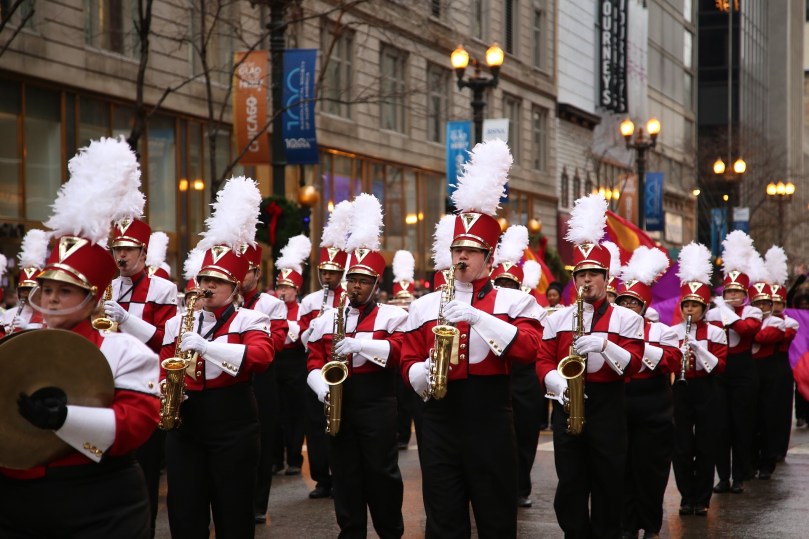

  • Find new tools and innovations
  • Learn in a New Space
  • Break out of your comfort zone
  • Be exposed to new tips and tactics
  • Relearn classic techniques with greater focus
  • Share experiences with like-minded individuals
  • Discover the value of the serendipity in a random workshop
  • Invest in yourself
  • Have fun!

If you really need any additional rationale for spending the money, click on the blog-post “Getting the Most Out of Music Conferences” at https://majoringinmusic.com/music-conferences/.

Finally, believe-it-or-not, you can bring the conferences to YOU! For the annual $20 subscription fee, you can view NAfME Academy professional development videos on almost any topic you can imagine. Check out the NAfME library of webinars: https://nafme.org/community/elearning/.


marching-band-1404489_1920_sam99929


3a. A winning website

The aforementioned Majoring in Music website is an excellent place to visit. It is amazingly extensive. You should read these articles for your “final year of prep.”


3b. These “awesome” resources are brought to you by NAfME

Besides the broad-based music subject matter and specific teaching skills, here’s some valuable advice, including how to “run a music program” (first link). I hope I am not stating the obvious: You should become a member of this national association for the advancement of music education.


Amplify

I also want to point you to the community discussion social media platform called Amplify, a benefit of NAfME membership. We are stockpiling a lot articles for college music education students, as well as sharing dialogue on everything from pedagogical issues to music equipment purchasing recommendations in both the collegiate member group and “music education central.” Go to https://nafme.org/introducing-amplify-largest-community-music-educators-country/.


guitar-2922536_1920_sunawang


4. “Filling in the gaps”

Your music education methods courses and other college classes were never expected to provide 100% of the necessary tools to become a competent teacher in every setting. This spotlights the need for professionalism. Once you land a job, you will have to “catch-up” and seek additional training to improve those areas in which you feel inadequate or unfamiliar. You can begin NOW to explore a few of these areas while enjoying your less stressful off-campus schedule:

  • child-621915_1920_skeezeUnderstanding specific educational jargon and the latest approaches, applications, and technologies in the profession (e.g. Backwards Design, The Common Core, Whole Child Initiatives, Multiple Intelligences, Depth of Knowledge and Higher Order of Thinking Skills, Formative, Summative, Diagnostic, and Authentic Assessment, etc. – Do you know the meaning of these terms?)
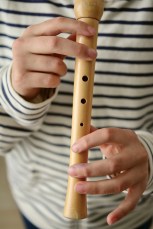
  • Teaching outside your “major” area or specialty (e.g. instrumental music for voice students, etc.)
  • Comprehending behavior management techniques and suggestive preventive disciplinary procedures
  • Mastering the use of valid assessments (e.g. can you give specific examples of diagnostic, authentic, formative, and summative assessments?) as well as a variety of music rubrics and evaluative criteria
  • Knowing the provisions of the Family Educational Rights and Privacy Act and other confidentiality statutes, Individual Education Plans and service agreements, and accommodating students with disabilities

flute-2245032_1920_congerdesignYou need to ask yourself the question, “What are my greatest weaknesses in music education?” Or, to put it another way, “What school assignments would I feel the least confident to teach? After earning your state’s all-essential credential, your certificate will likely be general and only say “music Pre-K to Grade 12.” Administrators will expect you can “do it all” – introducing jazz improvisation at the middle school, accompany on the piano or guitar all of the songs in the grades 1-6 music textbook series, directing the marching band at the high school or the musical at the middle school, starting an elementary string program, etc.

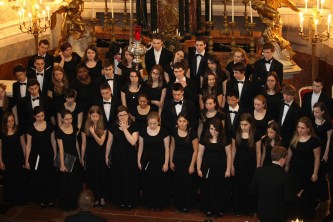
Figure out and face your greatest fears or worse skill areas. Work on them now! Take a few lessons, join a new ensemble of the “uncomfortable specialty,” ask help from your peers, etc.

More about this was printed in a previous post: https://paulkfoxusc.wordpress.com/2018/03/11/transitioning-from-collegiate-to-professional-part-ii/.


microphone-1804148_1920_klimkin2


5. The ABC’s of professional ethics

So far, have you been given any ethics training in college? Most pre-service educators only receive a cursory introduction to such things as codes of conduct, moral professionalism, guidelines to avoid conflicts in relationships with students, use of social media, confidentiality regulations, copyright infringement, pedagogical and economic decision-making, etc.

Now in my 46th year working in the field of music education (although retired from the public schools in 2013), I unblushingly admit I never had a full-blown course in ethics. Music colleagues have confirmed to me that it was barely (or not at all) touched-on in music methods classes, introduction to student teaching, school district orientation or induction sessions, or back-to-school in-service programs. choir-458173_1920-intmurrSince music teachers are all “fiduciaries” (do you know the meaning of the word?) and legally responsible for our “charges,” wouldn’t it be a good idea to review our state’s regulations and code of conduct, and hear about the challenges and pitfalls of ethical decision-making before we jump in and get “over our heads,” so-to-speak?


I can offer you two ways to immerse yourself into music education ethics. If you are a PCMEA or PMEA member and an “auditory learner,” you might prefer the FREE PMEA online webinar video (two-part) plus handouts at https://www.pmea.net/webinars/. Otherwise, visual learners and others may like this five-part blog series:


band-1850616_1920_Pexels


6. “A picture says a thousand words” in marketing yourself

Have you been archiving your last several year’s of field assignments? Have you recorded numerous moments of teaching, music directing, performing, and working with students? Are you prepared for the coming year’s student teaching, getting ready to take still photos, audio samples, and video excerpts?

“We cannot emphasize the power of pictures enough when it comes to portfolios. During interviews, committee members are trying to get to know you and trying to envision you teaching. Don’t trust their imaginations to do so, give them pictures… photos or newspaper articles of you teaching students in the classroom, with students on field trips, learning excursions or outside class activities, with children while you are serving in adviser roles, with your students at musical or athletic events, coaching or working with children in a coaching capacity, as a leader and role model.” – http://www.theeduedge.com/top-five-must-haves-top-five-could-haves-your-teacher-interview-portfolio/

As I mentioned in a previous blog, be careful to obtain permission in advance to video record students for your e-portfolio. During your field experiences or student teaching, little-girl-3043324_1920_Atlantiosask your cooperating teacher (or his/her supervisor’s) permission. Some school districts have “do not photo” rosters. (However, in my district, only a few elementary students were “on the list” and most defaulted to a “permissible” status unless the parent opted out. The principal’s secretary had a record of all exceptions.) It is also suggested that you focus your camera mostly on YOU and not the students, from the back of the classroom or rehearsal facility (possibly from afar), so that the student faces are not clearly discernible. To respect their privacy, in the recorded excerpts, do not use any segment announcing the names of your students.
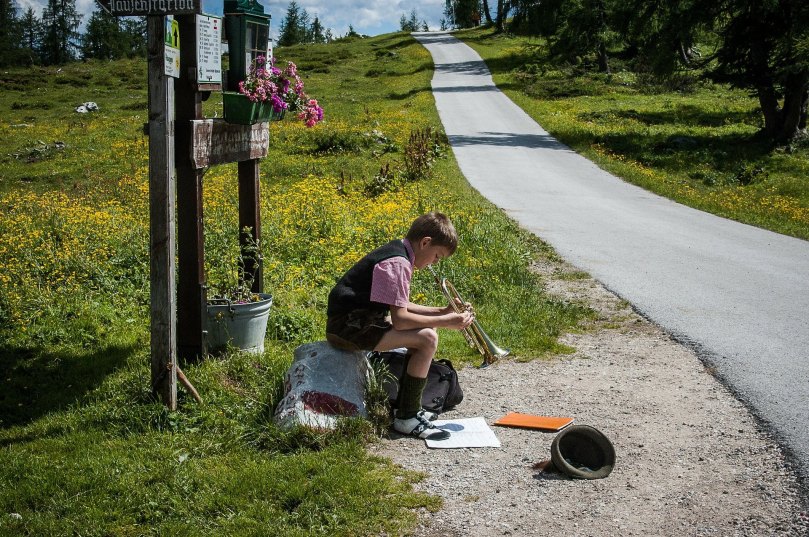
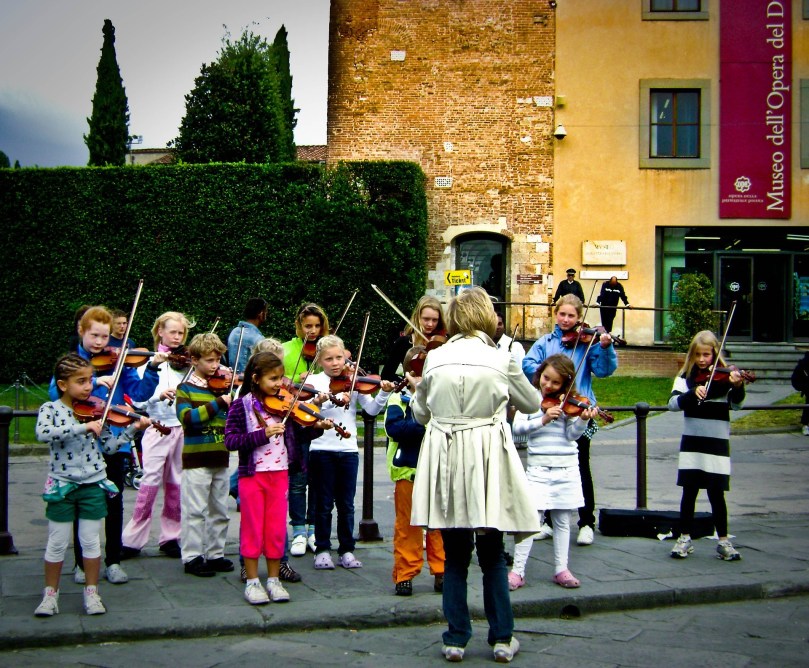
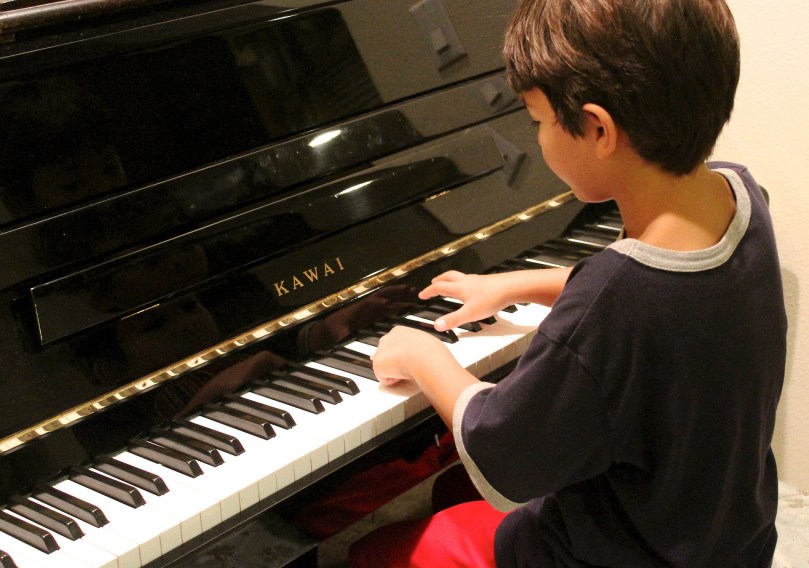
What would be ideal to place on/in your website/e-portfolio? Show a wide spectrum of experience and training: elementary and/or middle school general music, band, choral and string ensembles (all grades), marching band, musicals, dance, music technology, piano and guitar accompanying, Dalcroze eurhythmics, Orff instruments, etc. Competency, versatility, and being well-rounded are the keys here.


boy-273279_1920_Silberfuchs


7. Teacher interviews – “practice makes perfect”

I have written a lot on the subjects of assembling a collection of your teaching anecdotes and stories, marketing your “personal brand,” and preparing for the employment screening process. (Have you wandered through the comprehensive listing at https://paulkfoxusc.wordpress.com/becoming-a-music-educator/?)

However, I recently came upon several new-to-me online articles that summarize the basics. Please take a look at these:

After reading all of these (and compile your own list of interview questions), you should get together informally with your fellow juniors and seniors and hold mock interviews, record them, and jointly assess the “try out” of your interviewing skills to land a job.

Finally, have you recently updated your resume, and created (or revised) your professional business card, website, and e-portfolio?

children-2685070_1920_mochilazocultural


Okay, I admit it. I got a little carried away. You would need TEN SUMMERS to cover everything above. What’s that saying? “There’s never enough hours in a day…”

Hopefully these resources  and recommendations are helpful “food for thought!” You cannot accomplish anything by procrastination… or just “sleeping in!”


Many have said that aspiring to be a music educator is a lot like a “calling.” Using your summer “free time” is all about “professional engagement.” One of my superintendents said he expected prospective new music teacher recruits to show high energy, enthusiasm, sense of purpose, and dedication during the interview… even a supposed willingness to “lay down in front of a school bus” or “do whatever it takes” to make the students (and the educational program) successful. Regardless of the hyperbole, that’s engagement!

So, what are you waiting for? Pass the sunscreen and the ice tea. Then, after a quick swim, jog, round of golf, or game of tennis, get started on your summer assignments!

PKF


piano-78492_1920_nightowl


© 2018 Paul K. Fox


Photo credits (in order) from Pixabay.com: “music” by ArtsyBee, “music” by KevinBism, “orchestra” by HeungSoon, “music” by brendageisse, “kids” by klimkin, “marching band” by sam99929, “guitar” by sunawang, “child” by skeeze, “flute” by congerdesign, “microphone” by klimkin, “choir” by intmurr, “band” by Pexels, “little girl” by Atlantios, “boy” by Silberfuchs, “children” by mochilazocultural, and “piano” by nightowl.

Summer or Anytime Music Enrichment

Focus on YOUR MUSIC during summer vacations, holidays, or academic breaks

foxsfiresides

The following idea-bank is a checklist offered to Band and Orchestra instrumentalists, their music teachers, and family members as “food for thought!”

Here are a few suggestions to consider as a TO-DO LIST after all the standardized tests, final concerts, and end-of-the-semester projects in all academic areas. Summertime is a wonderful way to “get to know” your instrument and build on your knowledge-base, technique, musicianship, and repertoire.

  1. Help organize your time by setting up a regular daily practice schedule. Practice a little every day. Consistency creates confidence!
  2. Create a “scale journal.” Write down on manuscript paper all your major and minor scales and the I, IV and V7 arpeggio series. Practice scales in all keys.
  3. Shriya NarasimhanCreate four new scale variations every day and add them to your “journal.” Creative new variations should make playing scales more enjoyable. Some examples are unusual rhythms (pizza toppings, desserts, interesting proper names), more difficult slurs, scales in thirds, etc.
  4. Explore the performance of one, two or three octaves of major, minor, chromatic, pentatonic and whole tone scales.
  5. To improve reading skills, play new music “at sight,” even music written for other instruments. Don’t be afraid to play a challenging piece above your ability level or even read a song from a piano score.
  6. Play through some of your “oldies” and favorites from past lessons or Band/Orchestra classes.
  7. shjo_Jonathan Pickell and Wendy HartVisit the local music store and browse. Explore new publications of Classical, pop, folk, fiddle/jazz, show tunes or other styles.
  8. Sign-up for a music camp or college classes of music appreciation, theory, eurhythmics, etc.
  9. Take a few private lessons. For enrichment, take piano, voice and/or learn a new instrument.
  10. Spend an entire day in the sheet music, recordings, and music book section at the local library.
  11. Purchase and learn the music audition requirements for your MEA band/orchestra ensemble or solo adjudication festivals.
  12. Form a chamber group with other players in your neighborhood and rehearse at least once a week.
  13. _shjo_violinistsPurchase a duet book for mix or matched instruments (such as Beautiful Music for 2 Stringed Instruments by Applebaum—Book I (easy), Book II (medium), Book III advanced). Team up with another musician (band or string) and share non-transposing parts (flute or oboe with violin, trombone with cello, etc.).
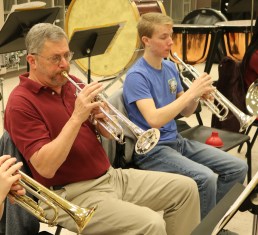
  14. Encourage yourself to “pick out a song by ear” and try to write it down on music paper.
  15. Sit in or join a local community or youth ensemble like the South Hills Junior Orchestra which rehearses on Saturdays in the Upper St. Clair High School (Western PA) Band Room. Rehearsals resume on September 8, 2018.
  16. shjo_David Levin_and_Devon AllenPlan a vacation or academic break around an out-of-state music workshop or concert series.
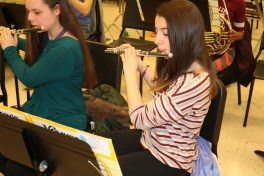
  17. Update your iTunes, Google Music, Amazon Music or other online music streaming services by purchasing and listening new solo or chamber works by artists who perform on the same instrument as you.
  18. Subscribe to SmartMusic, install/learn new music software, or peruse free online programs. Samples: Have you tried https://www.musictheory.net/ or https://www.good-ear.com/?
  19. Tune in to WQED FM, WDUQ or PBS and share a few minutes of classical music at least once a week. Attend concerts by professional musicians (like the Pittsburgh Symphony Orchestra, Civic Light Opera, or River City Brass).
  20. Prepare and perform a fifteen-minute recital for the residents of a local nursing home, hospital or Senior Citizen center.
  21. _shjo_in_rehearsal_031018 - 00Read books or magazine articles about famous musicians, performers, conductors or composers.


  22. Take a “field trip” to a luthier (person who makes or repairs string instruments) or the instrument dealer. Have your instrument examined, cleaned, adjusted and appraised. Purchase accessories and do any necessary repairs. If necessary, update your insurance!

How many of these can you accomplish over the months of June, July and August… or throughout the year? “Practice makes self-confidence,” and the more time you put into it, the more you take away from the experience. Please enjoy your summer or winter breaks, but learn to have fun with your instrument and EXPLORE MORE MUSIC!

Click here for a digital “take-away” of this list. Also, please feel free to share the other SHJO enrichment resources and “Fox Firesides” at http://www.shjo.org/foxs-fireside/ or https://paulkfoxusc.wordpress.com/foxs-firesides/.

seriestoshare-logo-01

Paul K. Fox, Director, South Hills Junior Orchestra        www.shjo.org

PKF

© 2018 Paul K. Fox

Photo credit from Pixabay.com: “fire” by skeeze.


“Creativity Thinking” in Music Education

A Brief Taste of the Research of Peter R. Webster

Peter Webster

Portions reprinted from the chapter “Creative Thinking in Music: Advancing a Model” by Peter R. Webster at www.peterwebster.com/pubs/WillinghamBook.pdf and other sources. For more current research and resources, it is recommended you visit the homepage of Peter Webster, and especially peruse his slides at http://www.peterrwebster.com/Present/keynoteDesertSkies2017.pdf.


“When the history of music education is written many years from now, there will be mention made of the time period represented by the end of the 20th century and the beginning of the new millennium as a critical point in the profession’s history. It will be noted that practical, theoretical, and research-based writings focused attention on both product and process in the teaching and learning of music. Rather than just product (largely music performance), the processes involved in the creation of music are becoming import as well. In addition to the nurturing of fine solo and ensemble performances, a more comprehensive approach to music education is emerging which embraces the study of composition, improvisation, music listening, cultural context, and relationships to other arts. In the United States, this trend began in the sixties with the Comprehensive Musicianship Project and the Manhattanville curriculum project and continued by the Yale, Tanglewood, and Ann Arbor symposia in following years. In more recent times, the National Voluntary Standards in the Arts have come to mark a more comprehensive approach. In other countries such as the United Kingdom and Australia, attention to music composition as a curricula focus has been long established. It is clearly the case that no longer can a music teacher expect to be successful by only teaching children how to perform the music of others in a dictatorial fashion, paying little attention to the development of aesthetic decision-making and musical independence of students.”

“Creativity Thinking and Music Education: Encouraging Students to Make Aesthetic Decisions” by Peter R. Webster

sculpture-3365574_1920_CouleurAccording to the above study by Peter Webster, Scholar-in-Residence at the Thornton School of Music, University of Southern California in Los Angeles, “good music teaching” involves the practice and observation of three types of musical behaviors:

  • Listening (most common)
  • Composition (perhaps the least common)
  • Performance: reproduction of music written by others (common) and the creation of music “in the moment” (improvisation)

Several basic tenants are proposed and reviewed in his work:

  • “Music teachers design environments that help learners construct their personal understanding of music.”
  • “Teachers must teach for independent thought” and “…our students can make aesthetic decisions about music… and to develop a sense of musical independence.”
  • “Student decision-making is predicted on the ability to hear musical possibilities without the presence of the sound… think in sound.”

brain-20424_640_PublicDomainPicturesPeter Webster’s definition of “creativity in music” is succinct: “the engagement of the mind in the active, structured process of thinking in sound for the purpose of producing some product that is new for the creator.” Furthermore, this is a thought process and “we are challenged, as educators, to better understand how the mind works in such matters — hence the term creative thinking.” (Webster, 1987)
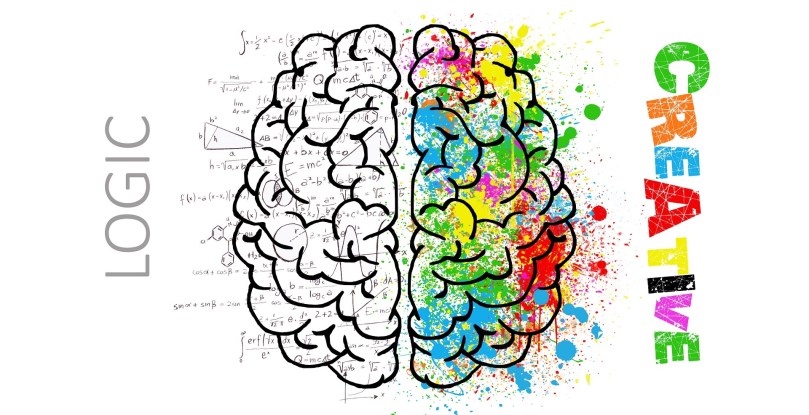

Creative thinking in literature reveals five common elements:

  1. A problem solving context
  2. Convergent and divergent thinking skills
  3. Stages in the thinking process
  4. Some aspect of novelty
  5. Usefulness of the resulting product

Webster states, “Studies in many disciplines have revealed that creative thinking generally progresses through stages: preparation, incubation, illumination and verification.”

brain-2062055_1920_ElisaRiva

In 1992, Webster reviewed literature on creative thinking in music education and cited nearly 200 writings. He organized the studies into three major categories:

  1. Theoretical (works based on philosophical or psychological arguments)
  2. Practical (writings designed to inform praxis but not based on empirical evidence)
  3. Empirical (studies of product and process across composition, performance/improvisation and listening, and studies that examined cause and effect and relationship

More recently, he has augmented his research with a bibliography of more than twice that size, including the following references with new trends:

  • violin-3182455_1920_DekoArt-GalleryA heighten interest in the young child and invented music notation and their discussion of it as a window to understanding the child’s knowledge (Barrett, Gromko, MacGregor)

  • New approaches to assessment, including 1. consensual techniques (Hickey), 2. peer assessment (Freed-Garrod), and 3. novice evaluation (Mellor)
  • Attention to the role of collaboration (Kashub, Wiggins, MacDonald/Miell
  • New speculation and experimentation on the role of music technology (Hickey, Stauffer, Ellis)
  • Emergent thinking on the pedagogy of composition teaching (Odam)
  • New work on cause/effect and relationship (Auh, Hagen, Fung)
  • Compositional strategies (Auh, Folkestad)
  • Thought processes while composing (Younker/Smith, Kennedy)
  • New studies on how various musical behaviors (composition/improvisation/listening) relate to one another (Swanwick/Franca, Savage/Challis, Burnard)
  • Developmental patterns of creative thinking (Marsh, Barrett, Younker, Swanwick)
  • Creative performance (Dalgarno)
  • New work on improvisation: 1. empirical (McMillan) and 2. conceptual (Elliott, Kratus, Booth)

banner-1005546_1920_geralt

A few of Webster’s thoughts for future considerations

  • We need more work on social context, particularly the role of popular music to frame compositional and improvisational work. Clearly certain popular idioms that are easy to grasp play a dominant role as entry points for compositional and improvisational thinking, but what is less clear is the path toward more sophisticated skills.
  • We need to study the revision process and how it functions in the teaching context. We need to earn how to go beyond the primitive gesturals to encourage kids to think in sound at a more sophisticated level.
  • treble-clef-1132378_1920_deidiRelated to this are the issues of teacher control: when do we step in to change something or suggest a new path.


  • Experimentation with open-ended vs. more closed-ended tasks for creative teaching and research deserves more study.
  • Experimental validity is an issue. How can we make the actual collection of data more realistic and deal more directly with the time constraints and contexts of “school” vs. out of school.
  • When do children start composing music with “meaning.” After age 9, or long before? What does it mean to compose with “meaning?”
  • When we ask children to compose or improvise or listen or perform “in school,” is the result different than if these behaviors were done out of school?
  • When children compose, are they working from a holistic perspective or are then working locally without a plan?
  • Is it fair or correct to evaluate the quality of children’s creative work with the eyes of adults?
  • Are there stages of creative development in children?
  • Is it really possible to study and define creative listening?


cranium-3244110_1280_GDJ.png

References

Csikszentmihalyi, M. (1997). Creativity: Flow and the psychology of discovery and invention . New York: Harper Collins.

Finke, R., Ward, T., & Smith, S. (1996). Creative cognition: Theory, research, and applications.

Cambridge, MA: MIT Press.

Gardner, H. (1991). The unschooled mind: How children think and how schools should teach. New York: Basic Books.

Gardner, H. (1997). Extraordinary minds: Portraits of exceptional individuals and an examination of our extraordinariness. New York: Basic Books.

Gardner, H. (1999). The disciplined mind : What all students should understand. New York: Simon & Schuster.

Guilford, J. (1950). Creativity. American Psychologist. 5, 444-454.

Guilford, J. (1967). The nature of human intelligence. New York: McGraw-Hill.

Kafai, Y., & Resnick, M. (Eds.). (1996). Constructionism in pracice: Designing, thinking, and learning in a digital world. Mahwah, NJ: Lawrence Erlbaum.

music-1924589_1920_ahkeemhopkins

Mark, M. (1996). Contemporary music education, (3rd ed.) New York: Schirmer Books.

Mayer, R. (1999). Fifty years of creativity research. In: Sternberg, R. (ed.). Handbook of creativity. New York: Cambridge University Press., 449-460.

National Standards for Arts Education. (1994) Reston, VA: Music Educators National Conference.

Sternberg, R. (1999). Handbook of creativity. New York: Cambridge University Press.

Sternberg, R. & Lubart, T. (1999) The concept of creativity: Prospects and paradigms. In: Sternberg, R. (ed.). Handbook of creativity. New York: Cambridge University Press., 3-15.

Wallas, G. (1926). The art of thought. New York: Harcourt, Brace.

Webster, P. (1990). Creativity as creative thinking. Music Educators Journal, 76 (9), 22-28.

Webster, P. (1987). Conceptual bases for creative thinking in music. In Peery, J., Peery, I. & Draper, T. (Eds). Music and child development, (pp. 158-174). New York: Springer-Verlag.

Webster, P. (1992). Research on creative thinking in music: The assessment literature. in R. Colwell (ed.), Handbook of research on music teaching and learning, 266-279. New York, Schirmer Books.

Williams, D., & Webster, P. (1999). Experiencing music technology. (2nd ed.). New York: Schirmer Books.

piano-1496056_1920_allyartist

PKF

© 2018 Paul K. Fox

Photo credits (in order) from Pixabay.com: “CD cover” by kellepics, (picture of Peter Webster from his website), “sculpture” by Couleur, “brain” by PublicDomainPictures, “brain” by ElisaRiva, “violin” by DekoArt-Gallery, “banner” by geralt,  “treble-clef” by deidi, “cranium” by GDJ, “music” by ahkeemhopkins, and “piano” by allyartist.

Unique Retiree Resources

It is always a privilege to receive email or comments from many of you regarding my past blog-posts at this site. I truly appreciate hearing from you – agree or disagree – and, whenever possible, I will “pass along” your recommendations and perspectives.

hospice-1793998_1920_unclelktThe “mission” is to help you with the transition to retirement and, when they are relevant, to communicate links to helpful sources of information. Many of these are not applicable to every retiring music teacher. However, if not issues for a family member, you might know of a friend, neighbor, colleague, or someone else who could use some direction in these eclectic topics:


  • Housing purchases/rentals, maintenance, and improvements
  • Personal security
  • Downsizing
  • Health care, eldercare, and physical fitness
  • Disabilities
  • Advance care planning
  • Medical Alert systems
  • Mattress purchase recommendations
  • Sleep guides and disorders
  • Grieving and coping with loss

We started this exposé with a previous blog, “Seniors Helping Seniors” at https://paulkfoxusc.wordpress.com/2017/05/28/seniors-helping-seniors/.

grandparents-1969824_1920_sylviebliss


Elmer George invited all of us to peruse his new website: elderville.org. It is called Resources for All Elders, and it shares lists of websites, blogs, and fact sheets on numerous senior-related themes – everything from “daily safety tips” to “volunteering.”

elderville.comSeveral great examples, his set of February 2018 articles (https://elderville.org/blog/) discuss “Five Ways Seniors Can Avoid Stress and Hassle During This Tax Season” and “Three Ways Seniors Can Get Healthy at Church.”

Specific to housing concerns, Elmer emailed me these additional avenues of help:


granny-1280445_1920_brenkee


Elizabeth Reynolds reached out to me with research on criteria for choosing the best medical alert system: https://www.reviews.com/medical-alert-systems/.  She said, “After hearing that there are 800,000 fall-related hospitalizations each year, our team created this resource in an effort to change that number.” Elizabeth added, “Our hope is that our guide may assist readers navigating their options to minimize this risk in the event of a fall.” At first, I thought her posting was a well-concealed advertisement for a particular company, until I explored her entire www.reviews.com website. Knowledge is power. Elizabeth has assembled a wide variety of resources in these areas worth further reading:

  • Reviews.comHome Services
  • Insurance
  • Financial Services
  • Home Products
  • Health and Fitness
  • Beauty
  • Pets


bed-1846251_1920_pexels


Speaking of reviews, something on which you would not probably seek advice is what mattress to purchase or finding other aids for improving your sleep. Well, if you know anyone who has had trouble getting to sleep or is seeking methods of being well-rested, let me be the first to recommend https://www.bestmattressreviews.com/, shared by Jenny Thompson. She claims her “team” has been researching the science behind sleep and reviewing sleep products to see if they really have the effects that the companies claim to have. I admit, her extensive online resource first sounded a lot like a very large commercial, but I have never known such detail and vast criteria could be involved in assessing the merits of different mattresses and sleep accessories:

  • Types: foam, innerspring, latex, and hybrid
  • Sleep position: side sleepers, back sleepers, stomach sleepers, couples
  • Other benchmarks: firm, soft, cooling, crib, organic, pain management, and user type (mattresses for pet owners, runners, people with disabilities, etc.)

It is definitely worth your time to examine the article section on specific sleeping guides:

  • bestmattressreviewsSleep disorders
  • New and expecting mothers
  • Advice for children, teenagers, and college students
  • Mental health and sleep
  • Sleep and anxiety
  • P.T.S.D. and other problems

We may all know someone who has suffered the effects of Alzheimer’s. This one recently hit home to me as I just discovered one of my long-time music teacher friends was enrolled in a memory unit.

dementia-3051832_1920_geralt

According to this website, “Alzheimer’s disease affects as many as 5 million Americans. Scientists still don’t know how to prevent, slow, or cure the disease. Meanwhile, the death rate has increased 55% over the past decade and a half, and with the silver tsunami on the horizon, the number of patients is expected to explode. Sleep problems and Alzheimer’s are interconnected. People living with Alzheimer’s experience difficulty sleeping, while people who have sleep issues earlier in life are at greater risk for developing the disease.” We should all be aware of this link for more information: https://www.bestmattressreviews.com/alzheimers-and-sleep/.


spiritfinderFinally, out of the blue, Jennifer Scott contacted me with “healthy ways to cope with a loss” with these resources to help grieving families:



Reaching out to those who may be suffering with anxiety and depression, her helpful hints will go far to alleviate stress. I found parts of her website, http://spiritfinder.org/, are also very illuminating. Thank you, Jennifer!

beach-2090091_1920_qimono


Bookmark the URL of this blog-post for future use. You never know when you might need some guidance on these miscellaneous subjects. Revisit past writings at https://paulkfoxusc.wordpress.com/for-retirees/.  Also, please stay “connected,” communicate your “views and news” in blog comments (click at the top of the page), submit your responses to the NAfME discussion platform Amplify (we have a special “retired member” community forum, or just send an email to paulkfox.usc@gmail.com.  As Tom Bodett said in commercials for a well-known motel chain: “We’ll leave the light on for you.”  

PKF

© 2018 Paul K. Fox

Photo credits (in order) from Pixabay.com: “countryside” by sasint, “hospice” by unclelkt, “grandparents” by sylviebliss, “granny” by brenkee, “bed” by pexels, “dementia” by geralt, and “beach” by qimono.


Social Media – Boon or Nemesis?

This is an expanded version of an excerpt from my August 30, 2017 blog-post multi-part series entitled “Ethics for Music Educators II,” crossing over to multiple categories and perspectives for veteran music teachers, new or pre-service educators, and retirees, and touching on the timely issues of ethics, student/teacher safety, professional development, and personal branding.


social-media-3352921_1920_mohamed_hassan

The Paradox: Online Technology Pitfalls vs. Innovations in Education

This may be hard to believe, but when I started teaching in 1978, “social media” did not exist. If you can imagine this, there was no Internet yet, and most of us did not have computers. Flip or smart phones and tablets were only the subject of science fiction or Star Trek episodes. Guidelines for use or to avoid abuse of social media were not even a “seed” in our imaginations.

notes-3236566_1920_Alehandra13When MySpace and Facebook came upon the scene in 2003 and 2004, most school administrators recommended “stay away from these.” The online sharing and archiving of photos initiated the adoption of many other social media apps (Flickr and later Instagram, Tumblr, Snapchat, etc), which provoked new challenges in maintaining privacy, appropriateness, and professionalism. Danger, danger, danger!

However, very soon after, school leaders starting rolling out revolutionary “technology” such as “teacher pages” and school webpages, online bulletin board services, interactive forums, virtual learning environments like Blackboard and Blended Schools, and other educational tools which encouraged two-way communications among students in the class and the teacher. All of this is here to stay… so how should we use technology safely?

Cons – Negatives – Warnings

Paraphrasing current and past postings from the Pennsylvania Department of Education Professional Standards and Practices Commission Educator Ethics and Conduct Toolkit, social media and other digital communications may perpetuate the following problems:

  1. network-3354116_1920_geraltCommunicating digitally or electronically with students may lead to the blurring of appropriate teacher-student boundaries and create additional challenges to maintaining and protecting confidentiality.


  2. Texts, emails, and social media postings are not private, and may be seen by others, forwarded, and/or copied or printed.
  3. Out of context, they may be misinterpreted, appear to be inappropriate, and/or lead to a violation of “The Code.”
  4. It is the responsibility of the teacher to control his or her “public brand,” how he or she wants to be perceived by students, parents, colleagues, and the public. One’s public brand can and does impact perceptions, which in turn can impinge upon effectiveness.

“Let’s debunk the free speech myth: Many teachers believe they have the absolute First Amendment right to post anything they want on social networking sites, including party pix and diatribes about the boss. After all, they’re on their own time and using their own resources. Sadly, the courts say otherwise.”

– National Education Association

There are a lot of pretty scary scenarios out there modeling “real” ethical dilemmas for teachers in the use of emerging technology and social media. If you can, take the time to preview a few of these case studies and videos:

facebook-76536_1920_Simon

Many have said that Facebook and educators, in particular, should never mix. Although not entirely accurate or perhaps fair to the social media “giant” (you can carefully set-up private, content-specific Facebook groups with restricted access and limited privileges), this seems to be supported  by one news story about a Math teacher who loss her job because she failed to notice changes in her Facebook privacy settings, and the other, a clever Facebook vs. teacher presentation by R. Osterman. In my opinion, both of these should be “required viewing” by all college music education majors and current educators in all subject areas.


Pros – Positives – Recommendations

By no means are we implying that all forms of technology are “bad” or “dangerous” for music teachers. For example, some of us have explored the valuable web-based music education platforms of SmartMusic (MakeMusic, Inc.) and MusicFirst, and I can give you a handful of fantastic (free) links to online resources for the teaching of music theory, ear-training, and even sight-singing:

One of my favorite music educator blog-sites is Mrs. Miracle’s Music Room. Her March 2017 post, “Social Media for Music Teachers,” provides excellent insights into the safe and philosophically-sound use of Pinterest, Facebook, Twitter, Instagram, and YouTube. I cannot recall how many times I visited YouTube’s exhaustive library of recordings, sharing with my students both good and bad examples of the orchestral literature we were studying.

Another impressive article, “How Music Teachers Can Use the Power of Social Media” by Amanda Green, focuses on using the Internet to send out practice reminders, encourage practice uploads, share amazing performances, and communicate tips and reminders.

“Some people mistakenly assume that social media doesn’t apply to them. Take music teachers. Their work is done in person, one student at a time, right? Not at all. If you’re a music teacher and you don’t already have a Twitter account, a Facebook page, and a Tumblr blog set up for your music studio, you’re not taking advantage of all of the ways that social media can help your students. As the TakeLessons team notes: the Internet has enabled students to learn music from anywhere, often from teachers who are Skyping halfway across the country.” – Amanda Green

Here are several supplemental resources provided in NAfME Music in a Minuet:

woman-3190829_1920_shy_kurji

Finally, I urge you to review Chad Criswell’s submission, “Social Media and Communication in the Music Classroom,” which was published in the February 2012 NAfME Teaching Music.


Exercising Good Judgment and Professionalism Using Technology

Ethics are all about making good choices. Returning to “my state’s” excellent ethics tool kit, the following links were suggested for additional study:

Guiding questions about the above links from the PA Professional Standards and Practices Commission:

  • “After examining these resource guides for emerging technology, did any of the guidelines surprise you?”
  • “Do you envision any problem for you personally in adhering to these guidelines?”

During my sessions on ethics in music education, I quote these ten rules from the American Board for the Certification of Teacher Excellence:

  1. Know your school district or state’s policies on social media.
  2. Never “friend” or “follow” students on your personal accounts.
  3. Keep your profile photos clean
  4. Do not affiliate yourself with your school on a personal profile.
  5. Do not geo-tag your connection-3330561_1920_TheDigitalArtistposts with your school’s location.
  6. “Snaps” are forever! Anyone can take a screen shot of your posts.
  7. Never mention your school or the names of staff or students in any post.
  8. Set your Instagram account to private.
  9. Never complain about your job online.
  10. Never post photos of your students on social media

The final word, the most eloquent and comprehensive guide for all of us to use in our daily decision-making in the profession is the Model Code of Ethics for Educators, created by the National Association of State Directors of Teacher Education and Certification (NASDTEC).

“The Model Code of Ethics for Educators (MCEE) serves as a guide for future and current educators faced with the complexities of P-12 education. The code establishes principles for ethical best practice, mindfulness, self-reflection, and decision-making, setting the groundwork for self-regulation and self-accountability. The establishment of this professional code of ethics by educators for educators honors the public trust and upholds the dignity of the profession.” – NASDTEC

Here is the specific section applicable to social media and other technology. I cannot imagine that, after all of this, there is anything else left to say!

PKF

MCEE Responsible Use of Technology


Photo credits (in order) from Pixabay.com: “Internet” by TheDigitalArtist, “notes” by Alehandra, “social-media” by mohamed_hassan, “network” by geralt, “Facebook” by Simon, “Internet” (2) by TheDigitalArtist, “portrait” by Karla_Campos, “woman” by shy_kurji, “smartphone” by TeroVesalainen, and “connection” by TheDigitalArtist.


© 2018 Paul K. Fox

Transitioning from Collegiate to Professional – Part III

The Final Leap from Pre-Service to In-Service:

The Metamorphosis and Integration of Philosophy, Maturity, and Teacher Preparation

trumpet-1495108_1920_congerdesignTo “wrap-up” our final segment, we will review the development of a professional “marketing plan.” This is blog #3 out of 3. (Be sure to also check out #1 and #2, too.)

These are three critical skills you need to foster in the search for a school music position, marketing yourself, interviewing, and landing a “good” job:

  • Personal branding (who are you, what makes you unique, and what do you have to offer?)
  • Story telling (anecdotes) of your positive attributes and personal brand, including a record of your habits of “engagement” in music education, and
  • Networking (associating with other professionals and getting your positive stories “out there”).


skills-3262172_1920_diwou

branding

Personal Branding

“Personal branding is the practice of people marketing themselves and their careers as brands. While previous self-help management techniques were about self-improvement, the personal-branding concept suggests instead that success comes from self-packaging… Personal branding is essentially the ongoing process of establishing a prescribed image or impression in the mind of others about an individual, group, or organization.”

– Wikipedia: https://en.wikipedia.org/wiki/Personal_branding

What is the difference between marketing and branding? According to some, “marketing is what you do, branding is what you are.” (www.tronviggroup.com/the-difference-between-marketing-and-branding/)

phone-2840244_1920_RobinWiggins13Shama Hyder posted “7 Things You Can Do to Build an Awesome Personal Brand” at http://www.forbes.com/sites/shamahyder/2014/08/18/7-things-you-can-do-to-build-an-awesome-personal-brand/, including the following outlined summary:
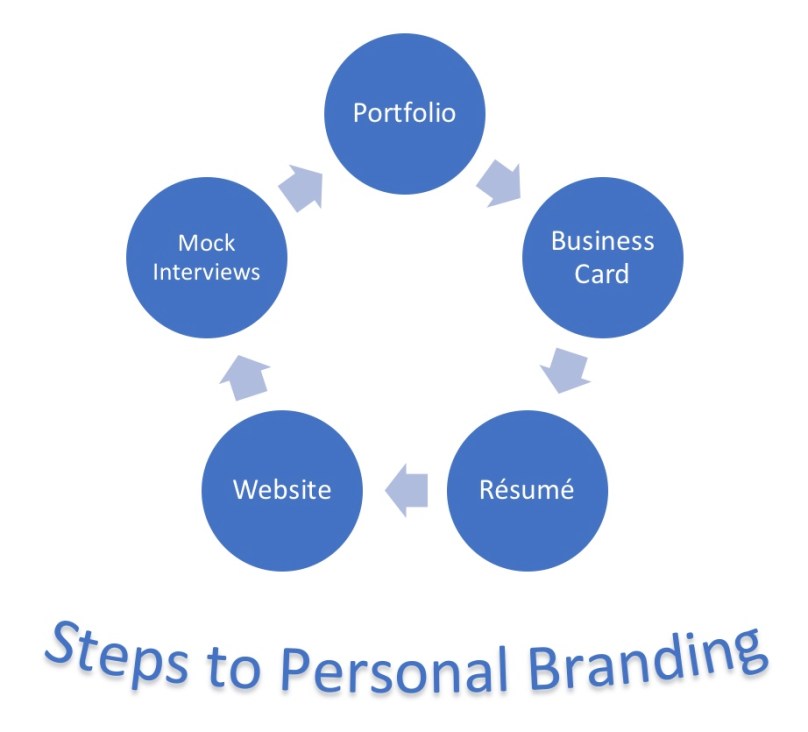
  1. Start thinking of yourself as a brand
  2. Audit your online presence
  3. Secure a personal website
  4. Find ways to produce value
  5. Be purposeful in what you share
  6. Associate with other strong brands
  7. Reinvent

During these waning months for college music education seniors, now is the time to finalize the preparations for personal branding and beginning the employment search! Personal branding is critical to help you “stand above the rest,” showing that you have what it takes and would be a major asset to a prospective employer, and defining and marketing your own unique qualities that would make you “a good fit” for the specific job openings.

Steps to Personal BrandingThe branding process involves first developing your philosophy of music education, archiving your awards and accomplishments, documenting your grades and ok-3061659_1920_RobinHiggins12experiences, and collecting stories/personal anecdotes of your strengths. The next steps include the creation of a written and electronic portfolio, business card, resume, and website. Finally, you must compile/assemble everything together and practice (and self-assess) your “story-telling skills” to answer those important questions at well-rehearsed “mock interviews.”



You will likely not have enough time to complete all of these tasks during methods classes or student teaching seminars. That’s okay. If you are serious about prepping yourself to find a great music teaching job, the valuable links (see below) and articles are out there… just manage your time and start reading.

feedback-2990424_1920_geralt

networking

Networking

According to the article “Network Your Way to Secure a Teaching Job” at https://resumes-for-teachers.com/job-search-help/teacher-network/, many people are unaware of the basics of networking and how to use them it to their advantage in securing a job:

“Networking simply refers to finding job-related contacts. Most teachers who are just beginning their careers may feel that they have few, if any, networking contacts in the teaching field. It is important to consider the many different areas of networking as you create your own group of networking contacts to help you secure a teaching job. It is interesting to note that many of the teaching positions that are filled each year are filled by those who came to the attention of personnel managers by recommendation.”

“Always think about adding to your teaching network. When meeting new people, be certain to add them to your network. Talk to them about your skills, education, experience, and learn about their jobs. Make sure that you always ask for a business card.”

Do you have a business card? Is your résumé updated and available online on your professional website?

young-3061653_1920As I laid out in a previous blog “Networking Niceties: The ‘How-To Schmooze’ Guide for Prospective Music Teachers” at https://paulkfoxusc.wordpress.com/2016/04/04/networking-niceties/, the concept of networking is two-way communications. Just like collective sets of nerve synapses, two-way connections are expected to fire repeatedly in all directions. That’s actually the science behind memory. For professional networking, it is your “charge” to create multiple pathways to/from school HR managers and secretaries, administrators, music supervisors and department heads, and music teachers… and YOU – your skills, accomplishments, unique qualities, experience, education, and personality traits.
pcmeaThe above blog-post also explores setting up a good organizational system to manage your professional contacts.
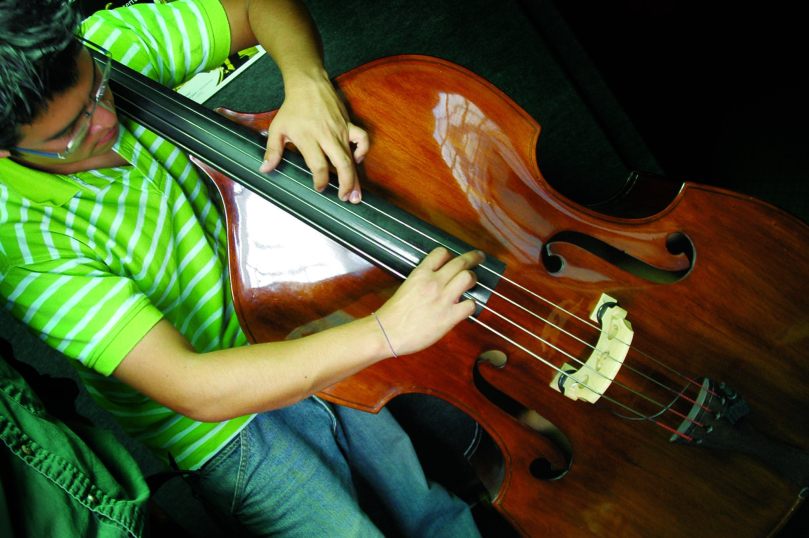

If you are a Pennsylvania collegiate member (PCMEA), I heartily recommend the article “Networking 101” by Dr. Kathleen Melago, PCMEA State Advisor and Associate Professor of Music Education at Slippery Rock University, published in the Summer 2017 issue of the state journal PMEA News (pages 40-42). Here are several quotes from her work:

“One of the most common ways music educators can plan to network is at conventions. First, try to avoid interacting only with people from your school or people you already know from other schools. Go to sessions that interest you and look for opportunities to meet people there. Before the session starts, introduce yourself to people sitting around you. Use your social skills to assess whether they seem like they want to engage in a conversation or not. After the session, go up and meet the presenter.”

“Of course, social media is another great way to build your network. Networking with professionals already in the field can help you see what they are doing and help you build ideas of what you would like to do in your program someday.”

“Sometimes, you might find yourself networking unexpectedly. For example, you might go into school to work with their clarinet section during band camp and just happened to meet the choir teacher. That is networking!”

“To help your networking be most effective you need to have good communication skills. When interacting with others in a networking situation, be sure to focus on the person with whom you are speaking. Avoid looking off into the distance as if you were to anticipating someone else more important coming by. But your cell phone away and be present to the conversation.”

“Be yourself in your networking interactions. If you pretend that you are someone you are not, you will either end up unhappy or you’ll be discovered is someone who is not genuine.”

Dr. Melago goes on to provide a myriad of excellent examples of networking skills and opportunities.

Another resource specifically for networking at music teachers conferences is posted at https://nafme.org/getting-music-conferences/.


music-1237358-2 ricardo vasquez


engagement

Engagement

Here is an excellent definition of “professional engagement” from “Domains of Teaching” of the Australian Institute for Teaching and School Leadership at https://www.aitsl.edu.au/teach/understand-the-teacher-standards/domains-of-teaching.

Teachers model effective learning. They identify their own learning needs and analyze, evaluate and expand their professional learning, both collegially and individually.

Teachers demonstrate respect and professionalism in all their interactions with students, colleagues, parents/carers and the community. They are sensitive to the needs of parents/carers and can communicate effectively with them about their children’s learning.

Teachers value opportunities to engage with their school communities within and beyond the classroom to enrich the educational context for students. They understand the links between school, home and community in the social and intellectual development of their students.

Engagement for prospective music teacher may include synonyms like “participate,” “enroll,” “join,” “be active,” “volunteer,” “seek experience,” and “make a difference!”

Are you a member of your professional music education associations?

  • NAfME National Association for Music Education
  • PCMEA Pennsylvania Collegiate Music Educators Association, or another state’s local NAfME collegiate chapter
  • pmeaPMEA Pennsylvania Music Educators Association, or another state’s NAfME-affiliated MEA
  • ACDA American Choral Directors Association
  • ASTA American String Teachers Association
  • NBA National Band Association

Did (or will) you attend your state music teachers’ conference and local workshops on music education and professional development?

To prove you are “professionally engaged,” I would expect to see a consistent record of modeling in the following areas:

  1. excited-3126449_1920_RobinHiggins9Self-reflection of the professional’s teaching practices and modification of these as needed to match changes in the environment and circumstances


  2. Self-assessment of the professional’s methods and approaches, as well as the progress of the students’ learning, using both formative and summative methods for constant and ongoing improvement
  3. Identification and planning of professional learning needs.
  4. Unsupervised (or unplanned by school administration) goal-setting and self-guided implementation of opportunities for professional development
  5. Association with professional learning communities, school and community meetings, and other collaborative projects
  6. Volunteer service in music and music education
  7. Membership and subscription to music education journals and participation in online professional community discussion groups

Many have said that aspiring to be a music educator is a lot like a calling. One school superintendent I know said he expected prospective new recruits to show high energy, enthusiasm, sense of purpose, and dedication during the interview… even a supposed willingness to “lay down in front of a school bus” or “do what ever it takes” to make the students (and the educational program) successful. That’s engagement!

classical-music-1838390_1920_Pexels

In summary, becoming a music educator is about finding your inner confidence, a mindset that you know what you’re doing, and that you’re ready for that real world experience. You’ve learned those essential skills in conducting, piano accompaniment, arranging, student behavior modification and discipline, music diagnosis and remediation, and even how to market your professionalism. Now… drum roll, please! Here’s… a master music teacher!

target-3306771_1920_geralt

In closing, here are supplementary materials to help you to “get your feet wet,” all free and available online. The following lists, although not comprehensive, are a good place to start (courtesy of https://www.pmea.net/wp-content/uploads/2012/10/Collegiate-Communique-No11-022218-2.pdf):

Good luck!


Personal Branding, Marketing, and Networking

Business Cards

Résumés

Portfolios and Websites

Interview Questions, Techniques, and Skills of “Story-Telling”


PKF

© 2018 Paul K. Fox


Photo credits (in order) from Pixabay.com: “tutor” by nrjfalcon1, “trumpet” by congerdesign, “skills” by diwou, “phone” by Robin-Higgins, “OK” by Robin-Higgins, “feedback” by geralt, “young” by Robin-Higgins, “music” by ricardo-vasquez, “excited” by Robin-Higgins, and “classical-music” by pexels.

On the Road Again…

PA_Turnpike_Commission_logo.svgI hate the Pennsylvania Turnpike… but I’ll get over it!
Over the 43+ years that I’ve been involved in music education conferences starting in college and attending our annual events in Lancaster, Hershey, Valley Forge, and everywhere else, I have used this “blessed” road.

Oh, it’s much better now. There are more stretches of 70 mph speed limits, and even the rest stops and restaurants are improved than they were 10 and 20 years ago. However, the twisting-twining roads, usual “bad weather” (why does it always rain or snow during the state conference?), need to jockey for position with all those large tractor-trailer trucks, etc. always challenge my nerves and patience.

Hey, it’s what we do. And I’ll never give it up.

The annual trek for acquisition of professional development remain such a critical element for self-improvement, program assessment, and personal enrichment. The annual spring and summer conferences of the Pennsylvania Music Educators Association offer an incredible depth of new materials, methods, and perspective, not to mention the all-so-essential networking, “catch-up with colleagues,” and collaboration of ideas.

As they say in the movie Shawshank Redemption (1994), “get busy living or get busy dying.” In this business, we have to look forward, seek innovation and reinvention, “build a better mouse trap,“ and absorb advice from “the latest and greatest” clinicians and “people on the move.” That’s how you GROW!

For more than four decades, I have never attended a day of professional development or a conference that I didn’t learn a myriad of new things, feel refreshed and recharged, and return to “make a difference” in my classroom, my school, and my program.

pmeaSoon I will be attending my 51st PMEA conference (counting springs and summers). I always feel a little nostalgic this time a year when I recollect all of those PMEA District, Region State, and All-State festivals, the latter held in conjunction with the music educators conference. I’m also remembering all the times I took my students to these events, capturing memories of specific individuals, singing in their choral parts in the car, swapping old stories about previous orchestras, choirs, and conductors, and providing a few last-minute tips on how to take auditions.
Now that I’m retired, my time is more devoted in making presentations and sharing a portion of what is now a vast vault of hard-won knowledge, skills, and experiences in order to help my colleagues with their unique situations and problems. They say that “work” provides us with the three essential elements of purpose, structure, and community. Even in retirement, participating in PMEA provides me all these things and the chance to continue to interact with like-minded and committed music educators, literally for the good of the profession.

In my capacity as PMEA state retired member coordinator, I sponsor a breakfast meeting prior to the Friday morning sessions at the annual spring conference, and I have the pmea conferenceprivilege of keeping “in tune” with fellow retirees, active practitioners, and even members of our PCMEA pre-service music teachers. This has stimulated my mind, kept me current, made me a better listener, and fostered a lot of moments of satisfaction knowing that I can still help dedicated professionals in the career that I devoted most of my life.


For those of you who have never attended a PMEA spring conference, shame on you. The annual state-of-the-art music teacher clinics, music industry exhibits, keynote presenters, and “best in the state” performances are provided to inspire you and “recharge your batteries.” Take a few personal days and see what’s up. For Pennsylvania music educators during April 19-21, 2018, we are at Lancaster, Pennsylvania. (For a schedule of sessions, concerts, and meetings, go to https://www.pmea.net/wp-content/uploads/2014/12/2018-Conf-Schedule-from-Spring-News-edit-3.26.pdf.) Next year, we will convene in my hometown, Pittsburgh, a combined in-service conference with the biennial NAfME Eastern Division.

Lancaster-City-Marriott

Finally, for those of you who have retired from day-to -day teaching of music classes, going to PMEA spring and summer conferences also offers you the opportunity to explore our fine state, visit historical sites, taste the cuisine, soak up the landscapes, and see the unique attractions in each city. Lancaster is a great place to take excursions. Did anyone suggest “road trip” for the grandchildren? Here are a few of the local (family-friendly) attractions you could “squeeze around” the official PMEA-scheduled events:

Pittsburgh_skyline_panorama_at_night

When you plan to come to Pittsburgh during the first week of April 2019, I want you to take an extra day if you can and enjoy our cultural attractions, sports events in one of the three stadiums, landmarks like the Blockhouse, Fort Duquesne, Point State Park, and the three rivers themselves, and go to places like the Carnegie Science Center, Andy Warhol Museum, Phipps Conservatory and Botanical Gardens, Pittsburgh Zoo and PPG Aquarium, etc.

So much to do and so little time…

PKF


You are cordially invited to…

MM1

…a PMEA session for soon-to-retire and retired music teachers

MM2


© 2018 Paul K. Fox