A Family-Friendly Checklist to Plan Your Final Affairs
Four years ago, I wrote the blog Estate Planning: Final Instructions, and as I said at the time, “The Elephant in the Room” (rarely or awkwardly talked about) was “How to Prepare Your Family for the End” – sharing your final wishes and necessary financial, legal, and estate information.
Our guest author for this month, Charlie Baker from the law office of Travis R. Walker, recaps a more detailed listing of the needs to make your end-of-life transition as smooth and stress-free as possible for your heirs. Although you won’t be around to hear them thank you for this advance planning, no matter how busy you are right now (or how uncomfortable thinking about this eventual “final passage”), don’t put it off! PKF
Here is the summary the essential categories of TO-DOs:
Estate planning doesn’t have to be a grim affair. This 25-step checklist will make it easier for your family to settle your affairs after your passing. Even if you already have a will or trust in place, there may be additional steps you can take to give your family the peace of mind they need in the days after your death.
Assemble Necessary Information
[ ] 1. Itemize Inventory
Before you write out your will, take note of the material things you own. These may include:
Property
Physical investments
Precious belongings like jewelry or art
Expensive at-home equipment
It’s in your best interest to create an inventory of your belongings in an electronic spreadsheet, but you can also work with your family members to create a physical copy.
Make sure you share the finished copy of your inventory with your executor.
[ ] 2. Itemize Non-Physical Assets
You can also create a separate inventory detailing your intangible investments, including your:
Once again, share this document with your executor. You can also keep an additional physical copy with your tax returns and any documents regarding your insurance policies.
[ ] 3. Assemble Insurance Policies
Regarding your insurance policies, print out all information relevant to your life insurance, home/renters insurance, car insurance, and related coverage. It’s in your best interest to keep this information in a fire-safe or at a bank.
Your executor can receive instructions on accessing these documents if they don’t already have copies on hand.
[ ] 4. Note List of Debts
There’s a chance you’ll leave behind debts upon your passing. These can range from credit card debts to essential mortgage debts to unanticipated medical expenses.
You can work with trusted family members to take account of these debts. Your family can then address those expenses as painlessly and simply as possible.
[ ] 5. Make a Membership List
If you’re a member of an organization that offers life insurance benefits at no additional cost to you or your loved ones, note those institutions among your documents. Your loved ones may have the right to collect additional benefits after passing.
[ ] 6. Gather Titles and Deeds of Properties
While creating an inventory of your belongings, ensure that you produce any related proprietorial documents and include them in your estate planning kit. These documents can include vehicle titles and deeds of property.
You may want to retitle any relevant properties if you have a trust in place, so that said property falls under the trust’s protection at the time of your death.
[ ] 7. Gather Proof of Identity Documents
You can also find the original copies of your social security card, birth certificate, marriage certificate, divorce certificate, and any discharge papers. Consider making copies of relevant documents and storing them in a fire-safe or bank box.
Again, make sure your executor knows how to access these documents or comes into possession of relevant copies.
[ ] 8. List Digital Logins and Passwords
In this increasingly digital age, your death may see you leave behind a litany of online accounts. With this in mind, list your social media accounts, financial accounts, email addresses, and passwords. You could also invest in terabyte storage blocks so you can make copies of any pictures or relevant documents you may have stored on your computer(s).
Manage and Review Finances
[ ] 9. Consolidate Your Finances
If possible, ensure you can transfer your finances to a single bank or create a paper trail that your loved ones can later follow to consolidate your finances. You want to make it easy for your executor to distribute your applicable finances upon your passing.
[ ] 10. Review Retirement Account Beneficiaries
The beneficiaries you name in your retirement account will receive the benefits before anyone noted in your will. Make sure you’ve named the appropriate beneficiaries and add those parties you want to be protected. You can also remove certain parties from your retirement account after you first establish that account.
[ ] 11. Review Insurance Beneficiaries
Similarly, double-check your insurance beneficiaries and take the time to add any parties you want to benefit from your chosen protections.
[ ] 12. Prepare for Estate Tax Obligations
While you may not have the opportunity to get ahead of your loved ones’ tax obligations, you can work with a personal executor to prepare your loved ones for your state’s specific estate and inheritance taxes. You can also note any federal laws that might impact your loved ones’ inheritances.
[ ] 13. Take Advantage of College Funding Accounts
If you want to create a college fund for any children or grandchildren, you can establish a 529 account during estate planning. Establishing a 529 account comes with tax advantages you can discuss with an accountant or an estate planning attorney, depending on your circumstances.
Decide on Your Plan
[ ] 14. Talk with an Estate Attorney
Between the emotional stress and the sheer number of documents you need to establish a postmortem action plan, you may find you need a hand planning your estate. You can work with an estate attorney to gather the necessary documents and establish the appropriate support nets for your family.
[ ] 15. Choose an Executor or Administrator of Your Estate
Most estate planning attorneys prompt you to elect a personal estate executor when you first draft your will. If you have not elected this individual at this point, you must do so.
Your executor should be someone you trust to be responsible with your loved one’s feelings and your estate. Choosing an executor who is financially stable and mentally fit is also advisable.
[ ] 16. Assign Transfer on Death Designation
When you take the time to assign a transfer of your accounts upon the designation of your death — provided you can do so — you can prevent your loved ones from waiting through a lengthy probate process to take control of your assets.
You can work with an aide to connect with the relevant institutions and ensure your accounts are handled correctly. You have the right to ease the transference of your IRAs, retirement funds, 401ks, and insurance policies in addition to your bank accounts.
[ ] 17. Select Guardians for Children and Pets
Most people don’t forget to declare a guardian for their children in the event of their death. If there’s a specific party you want to watch over your loved ones — including your pets — you need to declare as such in your will.
You can connect with an estate planning attorney if you need to modify an existing will to account for a new family member or pet under your guardianship.
Complete Important Documents
[ ] 18. Last Will and Testament
Your last will and testament identifies your executor, giving them your instructions regarding how you want your property to be distributed. This document must be witnessed and notarized, ensuring you were of sound mind when you distributed control over your estate.
[ ] 19. Living Trust
You can use a living trust to distribute a portion of your estate to a specific designee. Living trusts come with explicit instructions about how portions of your estate should be distributed upon your passing.
You can choose to create either a revocable or irrevocable trust.
You retain control over a revocable trust until your death.
An irrevocable trust technically owns itself and thus places less of a taxable burden upon its recipient.
[ ] 20. Living Will
A living will specifies your desired actions in the event that you can no longer make medical decisions for yourself. You can also use a living will to issue “do not resuscitate” orders.
[ ] 21. Power of Attorney
The power of attorney title determines who wields control over your estate and affairs if you can no longer do so due to your death or a severe injury.
[ ] 22. Statement of Wishes
You can include a statement of wishes along with your will, but it’s not an essential document. Instead, it’s a statement of wishes outlining what you would like your loved ones to do upon your passing regarding your funeral arrangements and additional postmortem care. You can also use a statement of wishes to elaborate on decisions made in your will.
Updating and Managing Your Estate
[ ] 23. Store Documents in a Safe and Accessible Place
You must store your postmortem documents in a location safe from environmental harm and foul play. It’s best to store multiple copies of essential documents in a fire-safe or bank box.
[ ] 24. Make Copies of Your Documents
Having multiple copies of your postmortem documents is always a good idea. You can create physical copies of your estate plans to divide among the relevant parties. You can also make digital copies of these documents to store in the Cloud or on a personal storage drive.
If necessary, you can request that your executor distribute access to these documents to the relevant parties upon your death.
[ ] 25. Reassess Your Plan
There is always a chance your plans for the future may change after you’ve assembled your estate planning documents. With that in mind, make sure you revisit your documents after significant life changes, such as marriage, divorce, and the birth of a child.
You can also revisit your plan if the person you named as your executor or a beneficiary passes away. An estate planning attorney can help you rework your plan upon your request.
Visit this website for the Law Offices of Travis R. Walker based in Florida.
Teacher Retirees: Not to be morose, but have you undergone a little soul-searching and introspection into how you want to leave your mark on this world? Since you’ve departed from your full-time career, do you feel your past/current goals and pursuits will make a difference?
How will you be remembered once you’re gone?
If someone else was to “put me on the spot” and ask me this, my quick rejoinder would be, “Music and education are my life!”
How about you?
Let’s start with a review of the broad definition from Merriam-Webster:
noun: 1. a gift by will especially of money or other personal property, 2. something transmitted by or received from an ancestor or predecessor or from the past
adjective: of, relating to, associated with, or carried over from an earlier time, technology, business, etc.
Legacy is [how] most people… want to be remembered, loved, and revered.
A legacy is not something that we have complete control over. After all, we cannot control how other people perceive us, we can only control our own actions.
So how can we leave the world with a legacy of our choosing?
What we must do is inspire through our own actions. If you go back through time and analyze the most influential legacies, you’ll see that they all inspired action through their own action. They didn’t just think about doing things, or tell others to do them; they went out and got things done on their own!
These legacies began while they were still alive, except I’m sure they weren’t thinking about them in those terms. Their ACCOMPLISHED GOALS became their legacy, which lives on today.
It may boil down to two thought-provoking inquiries posed in “What Will Be Your Legacy?”What do you want to leave for the world that will affect it when you are gone? AND How do you want to change the future?
Thanks to blogger Marelisa Fabrega, here’s more food for thought and self-examination:
What do you want your life to stand for?
How do you want to be remembered by your family and friends?
What will those beyond your circle of family friends remember you for?
What kind of impact do you want to have on your community?
How will the world be a better place because you were in it?
What contributions do you want to make to your field?
Whose lives will you have touched?
What lessons would you like to pass on to future generations?
What do you want to leave behind?
How can you serve?
In her article “How to Leave a Lasting Legacy,” Fabrega also shares several activities for the creation of a personal legacy, everything from the Stephen Covey exercise on writing your own obituary or designing the words you want etched on your tombstone to adding your own “meaning of life” verse to the Walt Whitman poem Oh Me Oh Life as English teacher John Keating (played by Robin Williams) taught in the film Dead Poets Society.
Your legacy is putting your stamp on the future. It’s a way to make some meaning of your existence: “Yes, world of the future, I was here. Here’s my contribution, here’s why I hope my life mattered.”
A legacy is more than a large donation to your favorite church, foundation, or charity. Of course, this process should begin with self-reflection, advance planning, hiring an attorney, and making your financial intentions and final instructions clear in writing.
Do you have a legal will, ethical will, living trust, Power of Attorney, and advance directive? Have you updated your important documents to take care of the needs of your family? Have you notified your spouse, adult children, and other relatives where they can find these legal papers, passwords, and other digital files? If not, please review my blog “Estate Planning.”
But, legacy is so much more, including strategies for passing on your values and goals after you are no longer here!
13 years ago, I first learned about an ancient tradition for passing on personal values, beliefs, blessings, and advice to future generations called an “ethical will.” At a subconscious level, I must remember the custom, because when my father was diagnosed with lung cancer in 1990, I asked him to write a letter about the things that he valued. About a month before he died, my dad gave me two hand-written pages in which he spoke about the importance of being honest, getting a good education, helping people in need, and always remaining loyal to family. That letter – his ethical will – meant more to me than any material possession he could have bequeathed.
— Barry K. Baines in Ethical Wills
As we have also noted in a previous blog-post, you should reflect on what you would say to those nearest and dearest to you if you couldn’t (or didn’t) tell them in person. Consider writing individual letters to your partner, children, or other family members “as a way of leaving a few last words.” Check out Frish Brandt’s “Last[ing] Letters.”
Your Contributions “In Memoriam”
The idea of leaving a legacy is the need or the desire to be remembered for what you have contributed to the world. In some cases, that contribution can be so special that the universe is unalterably changed. However, for most of us mere mortals walking this earth, we will leave a more modest legacy that doesn’t necessarily change the world but does leave a lasting footprint that will be remembered by those whose lives you touched.
You hope your life matters in some way. I know I do. I’ve been teaching since the age of 22 and teaching is my legacy, my contribution that hopefully enlightened the lives of my students whether they became actors, scientists, doctors, mothers or yogis. My teaching is a gift that keeps on giving because it leads me to other learning and knowing experiences that I share with others.
(I bolded “teaching is my legacy” in the above quote because I hope that will be considered as my own preeminent legacy.)
To borrow from the inspiration and expertise of others, I found this insightful and stimulating self-help article offering “Five Ways to Leave a Great Legacy” by Joan Moran.
Moran describes in detail these tips:
Support the people and causes that are important to you.
Reflect and decide what is most important to you in your life.
Share your blessings with others.
Be a mentor to others.
Pursue your passions because they are infectious.
She sums it up succinctly: “Leaving a legacy is an important part of your life’s work. A legacy develops from a life dedicated to self-reflection and purpose. What will be revealed and what will endure is a truthful and value driven body of living.”
The straightforward way to live a life of significance is simply to share your three t’s: time, talent, and treasure. Our lives are meant to give away – to significant causes, to loving families, to friends in need, to lasting relationships. Find a way that your gifts can serve others. Your time, energy, and money are precious resources – they are limited, and you are the sole owner. If you spend them in one area you can’t spend them in another. When we say “yes” to one thing, by default we saying “no” to something else. The key to winning is to say “yes” to the significant things in your life.
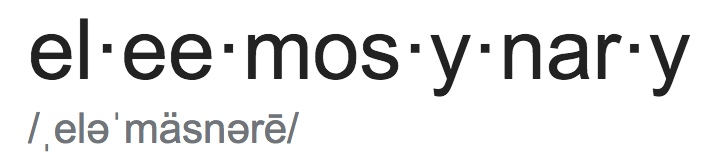
Fancy SAT vocabulary term! No, we do not need a visit from Charles Dickens’ three ghosts to learn altruism! Everyone should want to be remembered as eleemosynary or generous souls! Especially during my retirement years (2013 to the present), I want to model volunteerism:
Directing the South Hills Junior Orchestra (non-salaried sharing of my teaching)
Serving as a volunteer escort for the St. Clair Memorial Hospital (three days/week)
Promoting communications and marketing strategies of the Community Foundation of Upper St. Clair
Supporting the Pennsylvania Music Educators Association in various projects including teacher training, recruitment, retention, and retirement prep.
Writing articles and presenting workshops/webinars that help other teachers
These wishes will need to be updated from time to time, just like revising mission/vision statements, goals and objectives.
In addition, future monetary bequeaths from “what’s left” of our remaining assets will serve as “random acts of kindness from the grave” in support our current values, funding hereafter projects and pursuits (subscribing Moran’s tips #1-3 above) that matter to us.
How to Make an Educator Smile
My wife and I never had kids, so admittedly we live vicariously when we “bump into” our former students and revel in their major life-passages and accomplishments. It warms a retired music teacher’s heart to “catch-up” with a combined 53+-year history of past pupils from our music classes, choirs, bands, orchestras, and musical/play productions, and learn that they are happy, healthy, prosperous, and thriving. It gives us a special thrill to hear they are still “making music” and/or passing on their love of the arts to their own kids. That is indeed part of every teacher’s wish for a lasting legacy.
During our retirement, we continue to attend many concerts, recitals, weddings, receptions, Eagle Scout ceremonies, etc. of our former “charges.” We feel blessed to be invited to participate in these special occasions to share in their joy, love, and success.
In some small way, we fervently hope our efforts to bring creative self-expression and the appreciation of the arts have made a difference to our students’ lives and their development into caring, responsible, and “artistic” adults.
In Conclusion: The Fox Vision and Values — “These Things I Believe”
Equal-access to high quality and meaningful music education programs is an essential part to the intellectual, emotional, and artistic development of all children.
The primary goal of an education in the arts is to nurture creative self-expression.
Regardless of talent or privilege, every individual on earth can find inspiration and success in some form of music or the arts.
Our life purpose involves relationships. It is more about people than about things.
We were put on this planet to understand and help others, to foster more than a mere tolerance for diverse individuals and perspectives, rather to emphasize the values and practices of acceptance, respect, empathy, and collaboration.
Our primary goal is to empower volunteerism, to make a difference in the lives of others less fortunate or experienced, and to give freely of our time, talents, passions, and resources.
The Elephant in the Room: How to Prepare Your Family for “The End”
Expanded from the October 3, 2019 article in PMEA Retired Member Network eNEWS.
Few people want to talk about it… what co-authors Shoshana Berger and BJ Miller discuss in their book, A Beginner’s Guide to the End: Practical Advice for Living Life and Facing Death:
Passwords for phone, computer, email, and social media accounts
Instructions for your funeral and final disposition
An ethical will*
Letters to loved ones
* Where a legal will transfers assets, an ethical will transfers immaterial things: your life lessons and values. For a discussion on the latter, seek out the book Ethical Wills: Putting Your Values on Paper by Dr. Barry Baines.
Berger and Miller also recommended to purchase and set-up an online password manager to safeguard your data and share the master password with someone you trust. (For more info on password management software, read my “tech rant” blog here.)
With greater detail, we also learn from https://www.wealthmanagement.com/news/final-letter-instructions-family-important the importance of leaving a “final letter of instructions” to your loved ones. The website reports what Neuberger Berman Trust Company advises should be archived in a document to be read after your death.
The location of all estate planning documents, such as wills and trust agreements
A list of relevant advisors with contact information
List of other people to contact on your death
Location of any safe deposit boxes, inventory list, location of keys, who is authorized to open
List of life insurance policies, location and beneficiaries
List of bank accounts and how they are titled
Investment and trust account information
A description of other assets
Any debts or other liabilities
Listing of all credit card accounts
Inventory of other important documents like deeds and titles, and where they are held
Location of keys to all residences
Description of any pension benefits and who to contact
Instructions concerning funeral or memorial services
They add that this document should be held by your attorney, spouse, and adult children.
What would you say to those nearest and dearest to you if you couldn’t (or didn’t) tell them in person? Consider writing individual letters to your partner, children, or other family members “as a way of leaving a few last words.” Check out Frish Brandt’s inspiring website, “Last[ing] Letters.”
A Lasting Letter is a letter written to someone you care about, someone who you wish to hear your voice and read your words long into the future. Sometimes referred to as a ‘legacy letter,’ this letter holds the words that carry one’s voice forward in time.
The letter can take many forms: long or short, a memento of a moment or a history of a lifetime, a connection made or missed, an instruction or a confession, a love letter, and everything in between.
Each letter is unique: each voice, each intention is individual.














 13 years ago, I first learned about an ancient tradition for passing on personal values, beliefs, blessings, and advice to future generations called an “ethical will.” At a subconscious level, I must remember the custom, because when my father was diagnosed with lung cancer in 1990, I asked him to write a letter about the things that he valued. About a month before he died, my dad gave me two hand-written pages in which he spoke about the importance of being honest, getting a good education, helping people in need, and always remaining loyal to family. That letter – his ethical will – meant more to me than any material possession he could have bequeathed.
 Support the people and causes that are important to you.
 Directing the South Hills Junior Orchestra (non-salaried sharing of my teaching)





 paulfox.blog