Time, Task, & Media Management for Pre-Service/New Music Educators
This article is in memory of the late Thomas Labanc (October 1946 – November 2017), my friend, colleague, Upper St. Clair School District social studies teacher, curriculum leader, and assistant to the superintendent, school historian, brilliant visionary and fellow risk-taker, who taught me the basics of Priority Management and collaborated on many of our school district’s communications and public relations projects, including the establishment of the highly successful community publication UPPER ST. CLAIR TODAY magazine. PKF

Imagine there is a bank that credits your account each morning with $86,400.
It carries over no balance from day to day. Every evening the bank deletes whatever part of the balance you failed to use during the day.
What would you do? Draw out every cent, of course!!!
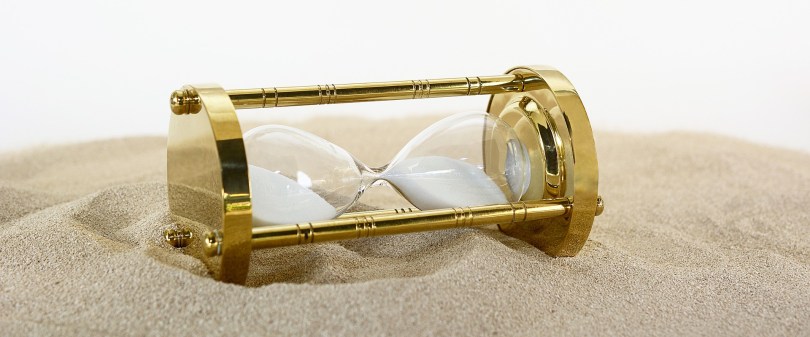
Each of us has such a bank. Its name is TIME.
Every morning, it credits you with 86,400 seconds.
Every night it writes off, as lost, whatever of this you have failed to invest to good purpose.
It carries over no balance. It allows no overdraft.
Each day it opens a new account for you.
Each night it burns the remains of the day.
If you fail to use the day’s deposits, the loss is yours.
There is no going back. There is no drawing against the “tomorrow.”
You must live in the present on today’s deposits.
Invest it so as to get from it the utmost in health, happiness, and success!
The clock is running. Make the most of today.
To realize the value of ONE YEAR, ask a student who failed a grade.
To realize the value of ONE MONTH, ask a mother who gave birth to a premature baby.
To realize the value of ONE WEEK, ask the editor of a weekly newspaper.
To realize the value of ONE HOUR, ask the lovers who are waiting to meet.
To realize the value of ONE MINUTE, ask a person who missed the train.
To realize the value of ONE SECOND, ask a person who just avoided an accident.
Treasure every moment that you have! And reassure it more because you shared it with someone special, special enough to spend your time.
Remember that time waits for no one.
Yesterday is history. Tomorrow is mystery. Today is a gift.
That’s why it’s called the present! – Pratheek Naidu
Philosophies of Time Management
Even though it is from a book on post-employment transitioning (
Purposeful Retirement: How to Bring Happiness and Meaning to Your Retirement), the author Hyrum W. Smith suggests several thought-provoking questions on prioritizing time:
- Does your management of time reflect your governing values?
- Are you giving the most time to that which matters most?
- What can you do tomorrow to ensure your time aligns with your priorities?
A similar perspective but providing much more detail, I recommend consuming from cover-to-cover First Things First by Stephen R. Covey, who succinctly defines this conundrum about using time wisely.
“For many of us, there’s a gap between the compass and the clock – between what’s deeply important to us and the way we spend our time. And this gap is not closed by the traditional “time management” approach of doing things faster. In fact, many of us find that increasing our speed only makes things worse.” – Stephen Covey
The four sections of Covey’s book dive into these concepts:
- The Clock and the Compass
- The Main Thing is to Keep the Main Thing the Main Thing
- The Synergy of Interdependence
- The Power of and Peace of Principle-Centered Living
In addition, I found additional insight and inspiration in the philosophy of managing time from these links:
For those of you who have already begun your career in music education or even working as a day-to-day music sub, try these classroom and time management tips (thanks to NAfME):

The 4 D’s
Have you ever heard of a system called Priority Management (PM)? PM proposes methodology and business tools to immediately route every piece of paper and your daily “to-do tasks” that come into your life to one of the four D’s:
- Do it! (now)
- Date it! (assign it to the future)
- Delegate it! (give it to someone else to do) or
- Dump it! (into the trash)
PM’s “WorkingSm@rt method” promises to help you “gain control over your day, find balance, prioritize your work, and reach your goals,” giving you time to focus on the tasks that are important to you. The bottom line – every digital or printed post-it-note, piece of mail, receipt, publication, email or other communication – must be “put in its place” on the spot – either completed instantly, deferred to another time, given to someone else to do, or THROWN OUT!
Yours truly, a “late baby boomer,” never enjoyed that prophesied and romanticized revolution of a “paperless society.” Did you? PM recommends the creation of a “future reading” file, a subcategory of “date it.” Experts on Google Mail will extol the merits of creating a folder and categorizing/storing messages such as emailed issues of
MEJ, Kappan, SB&O, and other digital editions of professional newsletters. I have found that this doesn’t work very well, even in retirement. The file folder just fills up, and I never seem to get around to reviewing the things I thought were so important to save. Nor did the practice of our grandmothers’ generation clipping articles (and coupons) out of newspapers. You would think you could solve this media overload by just printing a small excerpt of what you want to peruse later and putting it in a letter tray near your desk? Nope. It just piles up! However, probably the ideal solution would be to designate a specific 15 minutes or more every day for something they used to give to the middle school students I taught: “silent and sustained reading.”
“Pros” Wrestle Control of Their “Free Time!” You Can Do That, Too!
“When you get right down to it, intentional living is about living your best story.”
 How many times have you heard it? Make your plans and goals “intentional!” Besides all of the upcoming deadlines and appointments to which you are committed, include in your daily and weekly schedule opportunities for individual reflection and growth.
Plan 30-60 minutes of professional enrichment every day, throughout the year. The list below is based on an hour, but when time is really at a premium, just divide everything in half.
- Read an article in a professional journal or digital newsletter (15 minutes)
- “Keep up your chops” in ear training, sight-reading, and score reading. Have you ever used something like Elementary Training for Musicians by Hindenmith and practiced exercises that make you sing in syllables, tap a different rhythm independently with your left hand, conduct the beat pattern with your right hand, and beat your foot to the pulse? Revisit your college solfeggio assignments, and of course, sight-singing anything is also most beneficial. (10 minutes)
- Perform on the piano, rotating weekly to different styles and forms of music. If you’re not a piano major or an accomplished choral accompanist, include playing at sight several different voice parts simultaneously from choral octavos. (10 minutes)
- Research and add professionals to update your contact file. Did you run into any new music teachers or school administrators this week? Search school district websites for the names of music department chairs and supervisors. (5 minutes)
- Practice your story-telling skills (organized and “polished” telling of anecdotes about your achievements, teaching experience, “personality pluses,” and problem solving. Role play answering job-screening questions in video-recorded mock interviews, and allow time to assess your “performance.” (10 minutes)
- Work on personal branding and marketing projects: making, refining, and customizing your e-portfolio, business card, professional website, and resume. (10 minutes)
The last three bullets above are covered extensively within this blog. Try these links:
If you “think” you are ready for the job search process, complete the self-assessment at https://paulkfoxusc.wordpress.com/2017/04/24/intereviewing-the-situation-and-jobs/.

What about vacations or academic breaks when it seems there’s more time to spare? With some repetition to the above, in the December 2017 issue of Collegiate Communique, a digital publication of the PMEA Council for Teacher Training, Recruitment, and Retention (in support of the Pennsylvania Collegiate Music Educators Association and Society for Music Teacher Education), these recommendations were offered for college music majors who are leaving school for their winter or summer recesses.
“After you finish your semester finals, juries, concerts, writing assignments, and other projects, you may have several weeks before you have to return to full-time classes at the university. Besides catching up on your sleep and visiting your family and friends, how many of these enrichment activities can you accomplish?”
- Share your musical gifts.
- Sit in with a church or community choir, orchestra, or band.
- Learn something new about music… even outside your specialty.
- Spend a lot of time sight-reading.
- Improve your score reading and analysis.
- Volunteer to coach/conduct music rehearsals at the local public school.
- Attend as many concerts as you can.
- Compose a short seasonal, folk, jazz, or classical piece.
- Record video/audio excerpts of your major instrument/voice in preparation for placement in your e-portfolio.
- For upcoming employment prep and practice of mock interviews, review the marketing professionalism articles at https://paulkfoxusc.wordpress.com/becoming-a-music-educator/.
– Collegiate Communique #8
Of course, from a 35-year veteran teacher now retired, a snide remark in response to feeling a little “stressed over the schedule” could be to “get used to the 24/7 nature of the job.” A music teacher works from sun-up (and before) to sun-down (and after), and constantly has to juggle multi-tasking on a wide variety of to-do’s, all landing at the same time: writing lesson plans, arranging music or drills, preparing scores or accompaniments, planning and rehearsing ensembles, managing the grade book and attendance records, attending faculty meetings and parent conferences, writing curriculum, student assessments, and lesson targets, preparing for extra-curricular activities like marching band, chorus, or the musical, finishing your own homework for graduate courses, district inductions, or professional development assignments, ETC.
But, if you “get organized,” you will love it! There is nothing better (albeit hectic) than the “calling” of serving your students and the profession as a music educator, inspiring creative self-expression, artistry, music appreciation, and life-long learning.
PKF
© 2017 Paul K. Fox
Photo credits from Pixabay.com: “hourglass” by annca, “children” by mochilazocultural, “stopwatch” by geralt, “parade” by Marmiche, “time management” by mohamed1982eg, “choir” by intmurr, “time” by geralt, “box” by rawpixel, and “businessman” by Fotomek.








 paulfox.blog