The “New” Model for Modern Music Education

by Katherine Langford

We welcome this month’s guest blogger, Katherine Langford, who describes herself as “a digital marketing consultant, writer, freelancer, WordPress enthusiast, and coffee lover.” Thank you, Katherine! PKF

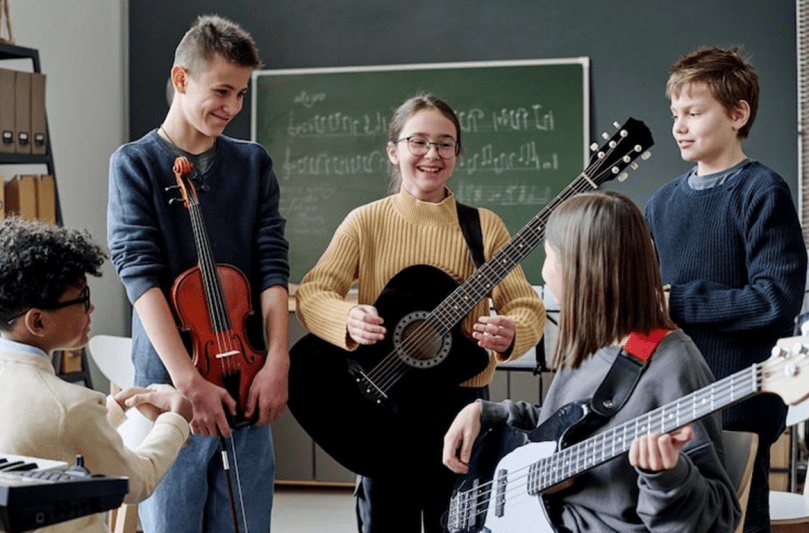
Music education has transformed dramatically in recent years. Traditional classrooms and rigid lessons are giving way to creative, flexible learning models that blend technology, collaboration, and real-world experience. The new model for modern music education isn’t just about mastering an instrument anymore—it’s about nurturing creativity, adaptability, and digital fluency.

Whether you’re a teacher, a student, or a parent trying to understand this shift, this guide will walk you through everything you need to know about the new model for modern music education and how it’s reshaping the way we learn, teach, and perform music.

What Defines the “New” Model for Modern Music Education?

The new model for modern music education is built on accessibility, inclusivity, and innovation. In the past, learning music often required private lessons, expensive instruments, and long practice hours under strict instruction. Now, technology has made learning more interactive, affordable, and engaging.

This model integrates online platforms, digital tools, and peer learning to create a dynamic environment. Students can watch video tutorials, join virtual ensembles, or even receive online class help from experienced musicians. It allows learners to progress at their own pace while receiving instant feedback and guidance.

Another major shift is the focus on creativity over perfection. Instead of emphasizing technical mastery alone, educators now encourage improvisation, digital composition, and personal expression. This approach builds confidence and helps students connect emotionally with their craft.

The Rise of Online Learning in Music Education

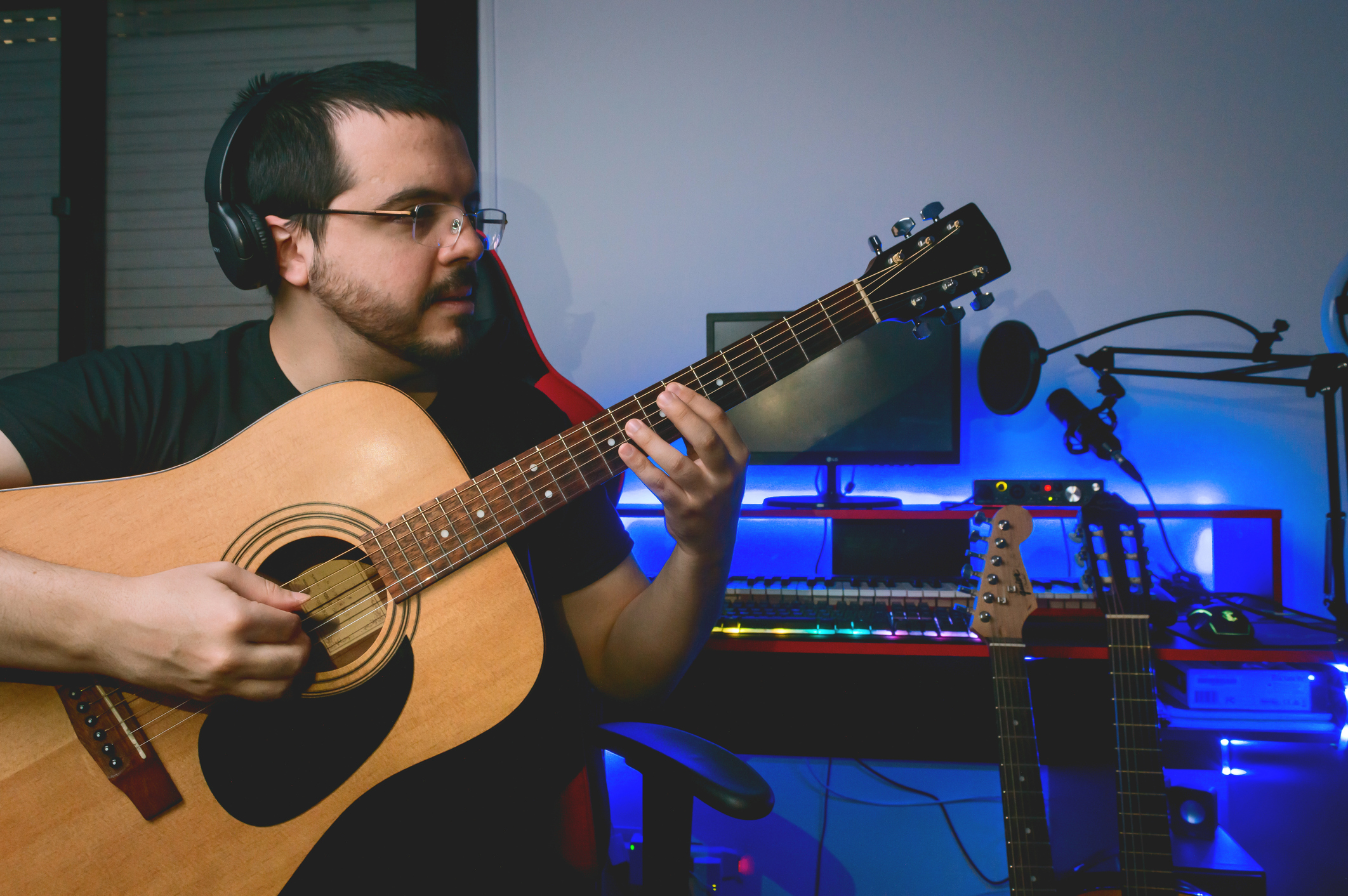
Online learning has become a cornerstone of modern music education. With platforms like YouTube, MasterClass, and specialized e-learning sites, anyone can access lessons from world-class musicians. Students can now learn piano, guitar, singing, or music production without leaving home.

These online classes are highly interactive, offering personalized feedback and practice tools. Some programs include live sessions, enabling real-time interaction with instructors and classmates. The flexibility to study from anywhere attracts learners of all ages and skill levels.

Online music education also supports busy professionals and students balancing multiple commitments. Many ask, Can I take my online class for music while working full-time? The answer is yes. With self-paced modules, recorded lessons, and flexible scheduling, anyone can continue learning without disrupting daily life.

Key Features of Modern Music Education

The new model for music learning focuses on a few core features that make it different from traditional instruction.

1. Technology Integration
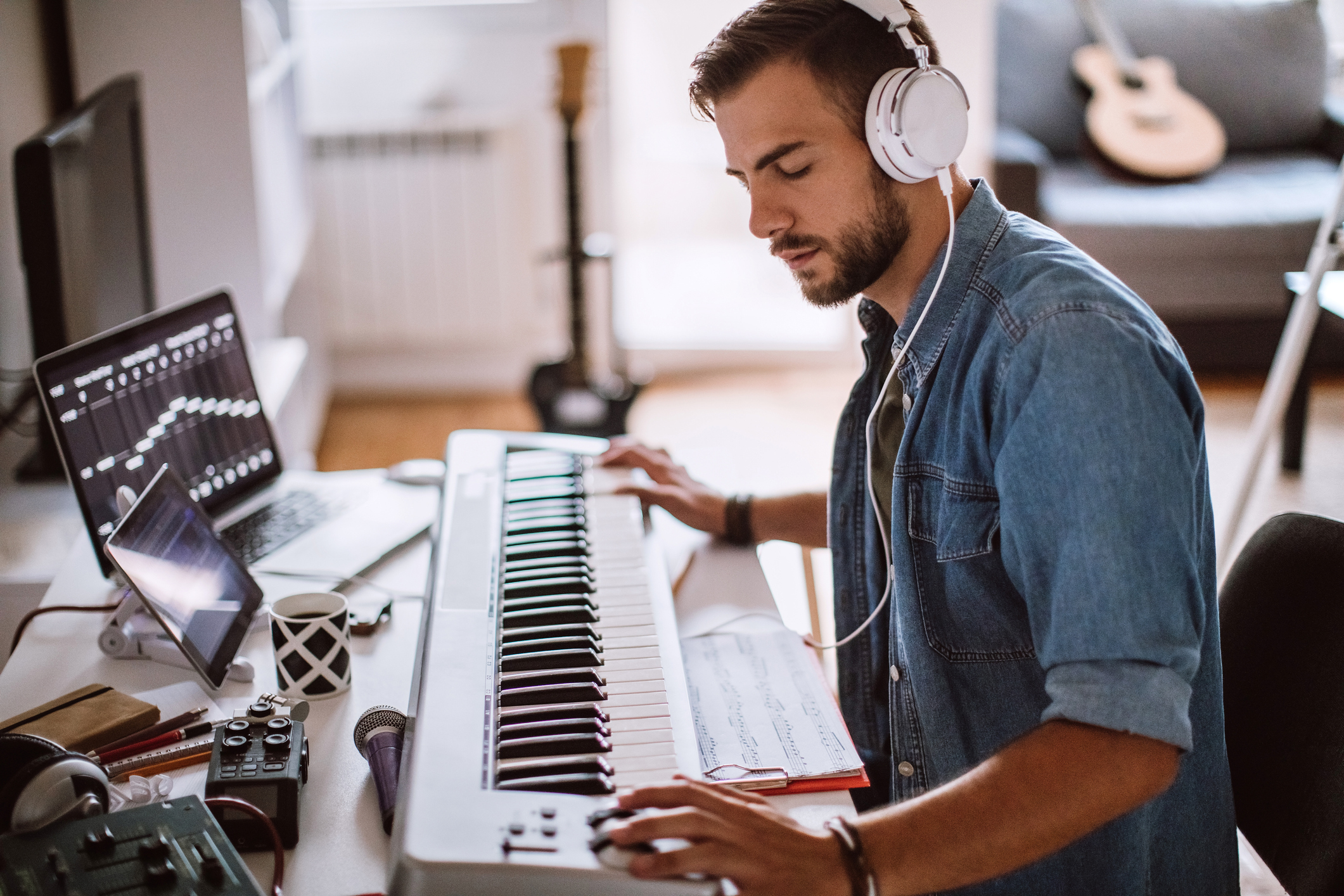
Modern classrooms use music software, apps, and digital instruments. Tools like GarageBand, Ableton Live, and Sibelius help students compose, record, and edit their music. This hands-on digital experience prepares them for real-world music careers.

2. Collaboration and Global Access
Students can collaborate with others worldwide through online jam sessions or group projects. This exposure broadens cultural understanding and inspires new creative styles.

3. Personalized Learning Paths
AI-driven platforms now assess student progress and customize lesson plans. Learners receive targeted exercises that focus on areas needing improvement. This keeps motivation high and ensures steady progress.

4. Performance and Portfolio Building
Instead of graded recitals, students can build online portfolios, showcasing their songs or performances. This practical experience helps them prepare for music schools or careers in the industry.

Why Modern Music Education Matters Today

Music education today goes beyond traditional training. It prepares students for an evolving creative economy where adaptability and digital literacy matter.

The new model equips students with real-world skills such as sound design, audio editing, and digital marketing for music. These are essential for anyone pursuing a career in the modern music industry.

Additionally, it nurtures emotional intelligence. Creating and performing music helps students manage stress, improve focus, and build resilience. These soft skills translate into better academic and personal outcomes.

Another reason this new approach matters is its inclusivity. Learners who once couldn’t access quality lessons due to location or cost can now participate through online classes. Music education is no longer limited to elite institutions—it’s open to everyone.

The Role of Teachers in Modern Music Education

Teachers remain at the heart of music education, but their role has evolved. Instead of being strict evaluators, they now act as mentors, facilitators, and collaborators.

Educators guide students through self-directed learning, helping them explore interests while mastering key concepts. They encourage experimentation and critical thinking rather than rote memorization.

Teachers also integrate multimedia tools into lessons, using interactive notation software, metronome apps, and virtual instruments. This keeps learning engaging and relevant.

Modern instructors understand that today’s learners consume music differently. They balance traditional techniques with contemporary styles, helping students connect classical foundations to genres like pop, jazz, or digital soundscapes.
The Impact of Technology on Music Learning

Technology has completely reshaped how music is created and taught. From recording studios to smartphone apps, innovation drives engagement and creativity.

Students can record, mix, and share their music instantly. They can join online communities, collaborate virtually, or receive detailed feedback through smart analysis tools.

Some schools use virtual reality to simulate live performance environments. This helps students overcome stage anxiety and refine their skills before performing in real-life situations.

Moreover, digital sheet music platforms make learning more interactive. Instead of flipping pages, learners can annotate, loop sections, and practice efficiently.

Technology also enables inclusive learning. Students with disabilities can use adaptive devices or apps that make instruments more accessible. This reinforces the principle that music truly belongs to everyone.

How Online Class Help Supports Music Learners

Many students struggle with consistency or technical challenges while learning online. That’s where online class help becomes valuable. Expert tutors assist learners in managing lessons, assignments, and projects.

They provide feedback, correct mistakes, and ensure students stay on track. This type of support bridges the gap between traditional mentoring and independent study.

For example, if a student is learning music theory but struggles with notation, they can seek online class help for one-on-one guidance. This approach ensures understanding without the stress of falling behind.

It’s especially useful for those pursuing formal music degrees remotely. Expert assistance ensures academic integrity while keeping the learning experience enriching.
Common Question: Is Online Music Education as Effective as In-Person Lessons?

Many learners wonder if virtual learning can match the impact of face-to-face instruction. The short answer is yes, it can be just as effective—sometimes even more.

Online music education offers flexibility and access to diverse expertise that local lessons may lack. You can study jazz composition with a teacher from New York or classical violin from a maestro in Vienna.

Additionally, digital lessons allow unlimited practice and playback. Students can review recorded sessions anytime, reinforcing understanding and mastery.

However, success depends on commitment and quality instruction. Active participation, consistent practice, and seeking feedback are key to thriving in online music education.

Challenges Facing the New Model for Modern Music Education

While modern approaches have many benefits, challenges still exist. Internet connectivity, lack of physical interaction, and screen fatigue can affect engagement.

Students may also struggle with motivation when learning alone. This is where teacher support and community involvement become crucial. Encouraging virtual collaborations and online performances helps maintain enthusiasm.

Another concern is access to instruments. Not every learner can afford quality equipment or digital tools. Schools and institutions need to bridge this gap by providing resources or scholarships for talented students.

Despite these obstacles, the benefits of digital and hybrid learning far outweigh the drawbacks. With ongoing innovation, these challenges are gradually being addressed.

The Future of Modern Music Education

The future of music education looks bright and interconnected. We’ll see more hybrid classrooms combining online and offline experiences. Students might attend physical rehearsals while collaborating digitally with international peers.

Artificial intelligence will continue shaping learning paths, analyzing performances, and suggesting improvements. Virtual and augmented reality will simulate live concerts and recording studios for immersive training.

Most importantly, inclusivity and creativity will remain the foundation of this evolving system. Every learner, regardless of background, will have the opportunity to express themselves musically.

The new model is creating musicians who not only play instruments but also understand technology, production, and storytelling. They’ll be ready to thrive in an industry that values both art and innovation.
How Students Can Get the Most Out of Modern Music Education

If you’re a student exploring the new world of music learning, here are some helpful tips:

  1. Set clear goals. Decide what you want to achieve before starting lessons.
  2. Stay consistent. Practice regularly, even if only for short sessions.
  3. Use technology wisely. Try apps, online lessons, and recording tools to track progress.
  4. Engage with others. Join online groups, perform live sessions, and exchange feedback.
  5. Seek guidance. Don’t hesitate to reach out for online class help when needed.

These small steps ensure that your learning remains enjoyable and productive.

The Cultural Shift in How We Value Music Education

In the past, music education was often viewed as a luxury. Today, it’s recognized as a vital part of cognitive and emotional development. Studies show that learning music improves memory, discipline, and communication skills.

The modern model has made music more inclusive, integrating it into mainstream education and digital life. Whether through school programs, online platforms, or personal study, students now see music as both an art and a skill for life.

Cultural acceptance has grown too. Parents now appreciate the value of creative subjects, realizing they develop critical thinking and empathy. This shift has expanded the reach of music education across age groups and professions.

Conclusion: Embracing the New Model for Modern Music Education

The new model for modern music education is more than just a trend, it’s a necessary evolution. It reflects how we live, learn, and connect in the digital age.

By combining technology, collaboration, and creativity, this approach empowers learners to explore their potential fully. Whether you’re learning to produce music, master an instrument, or compose original songs, the tools and opportunities are at your fingertips.

PKF

© 2025 Katherine Langford and Paul K. Fox

Social Media – Revisited

Before you begin reading this article, please take a moment and peruse these past blog posts:

Although several of the cited research links may have expired (for example, PA Department of Education modified most of their website’s URLs), these provided the foundations of background information and references for the presentation I prepared for the DCMEA Virtual Conference in 2020 (during COVID) and serve as the starting point for the workshop I will share in-person at the DCMEA Winter Conference in January 2026. This blog provides updates and additional perspectives. Taken in combination with the above sources, you will be able to identify the benefits, positive models, precautions, and dangers of social media, social networks, professional learning networks, and sample emerging technologies as they apply to teachers’ professional development and education of students.


“THE WHY”

Before every clinic or publication I develop, I always try to spotlight the theme of “THE WHY” as preached by one of my favorite authors and motivational speakers – Simon Sinek! According to him, for organizations and individuals alike, “THE WHY” (rationale and priority) is more important than “THE WHAT” and “THE HOW.” (See this video.)

WHY is a collaborative discussion on social media essential? Why now?

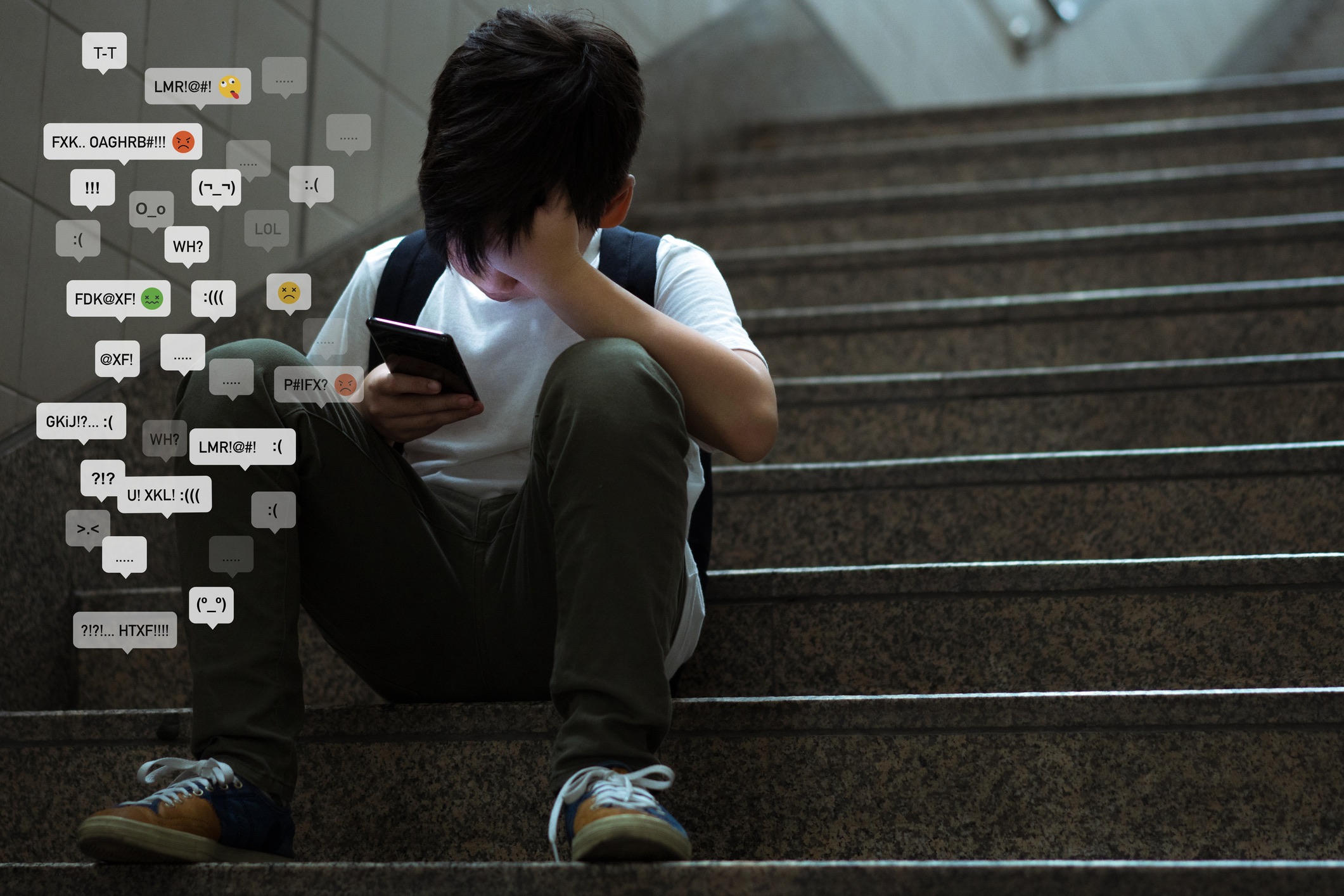
 ”There’s a growing body of evidence suggesting that educators are facing increasing scrutiny regarding their social media use. Concerns include unprofessional conduct, inappropriate interactions with students, and the potential for cyberbullying and other negative impacts on student well-being.”

“Educators are increasingly concerned about how social media influences students’ social-emotional development and their interactions with others.” 
NEA Member Polling on Social Media…
NEA Impact on Social Media and Personal Devices on Mental Health
HHS Youth Mental Health and Social Media

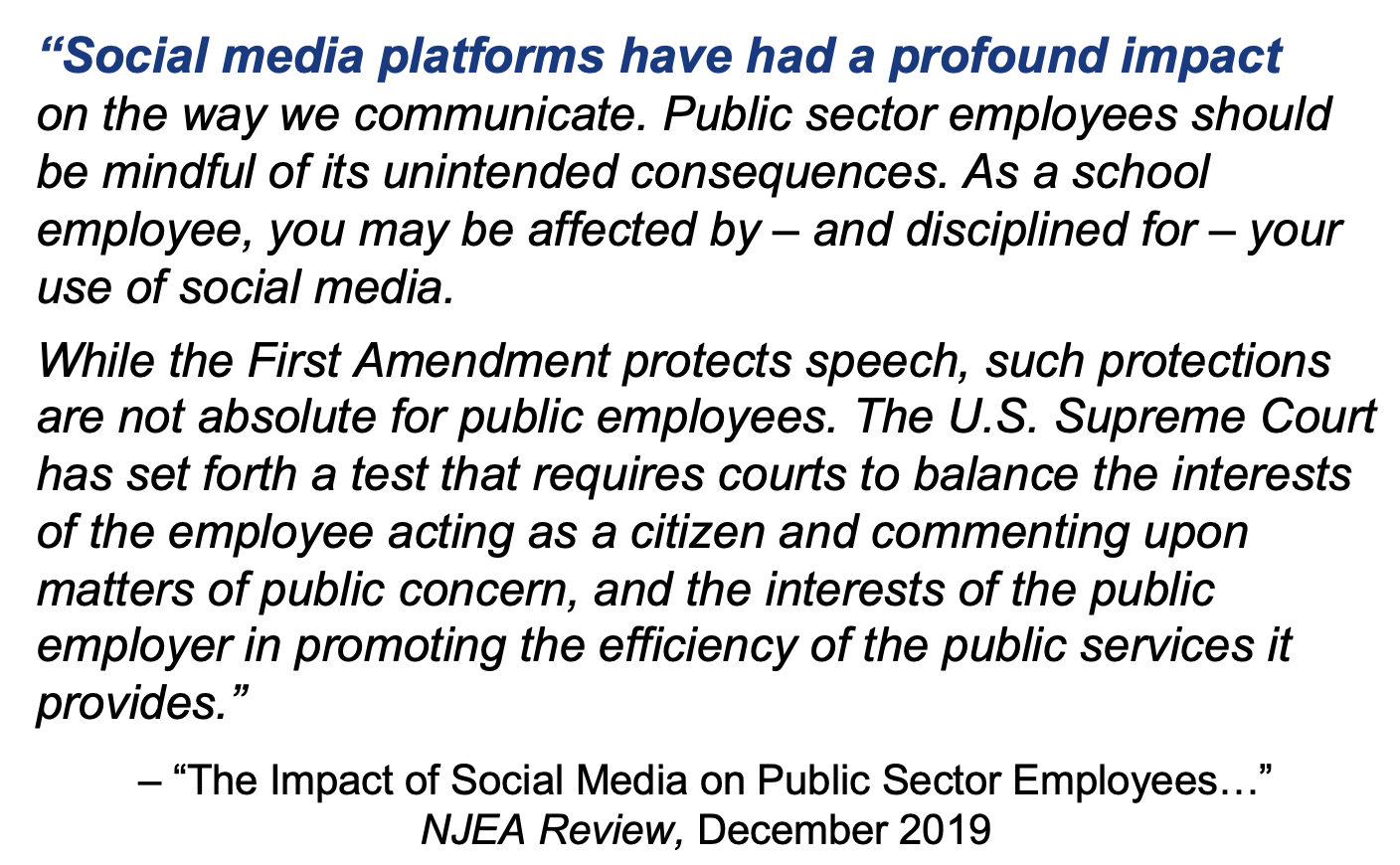
Frankly, there is still a lot of confusion about the dangers of social media, social networking, and other technology integrations into education. In Social Media – Boon or Nemesis, we mentioned that teachers should “debunk the free speech myth.” We demonstrated how the improper application of social media could get educators in trouble. Check out these sites for more info and corroborative stats:
Teacher Student Misconduct and the Critical Role of Social Media Screening
NCBA Social Media for School Employees
Social Media Hazards and Tips for Teachers

As always, our goal is to promote ethical practices in maintaining professionalism in the digital world.


“THE WHAT” Review of Definitions

“Social Media”

Social media are “websites and applications that enable users to create and share content or to participate in social networking.”
— Oxford Lexico.com online dictionary

“Social Network”

A social network is, 1. a network of social interactions and personal relationships.; 2. a dedicated website or other application which enables users to communicate with each other by posting information, comments, messages, images, etc.
— Oxford Lexico.com online dictionary

Professional Learning Community” (PLC)

A PLC is “a group of educators who meet regularly…” (usually in-person) “…to strategically enhance their teaching skills and improve student outcomes.”

versus “Professional Learning Network” (PLN)

A PLN is “a group of educators who gather more informally…” (usually in online communications) “…to problem-solve and generate ideas to enhance classroom practices. A PLN… often takes the form of an open forum, where participants can ask and answer questions based on their experiences.”
https://edtechmagazine.com/k12/article/2024/08/pln-vs-plc-perfcon


“THE HOW” Ethos of Care

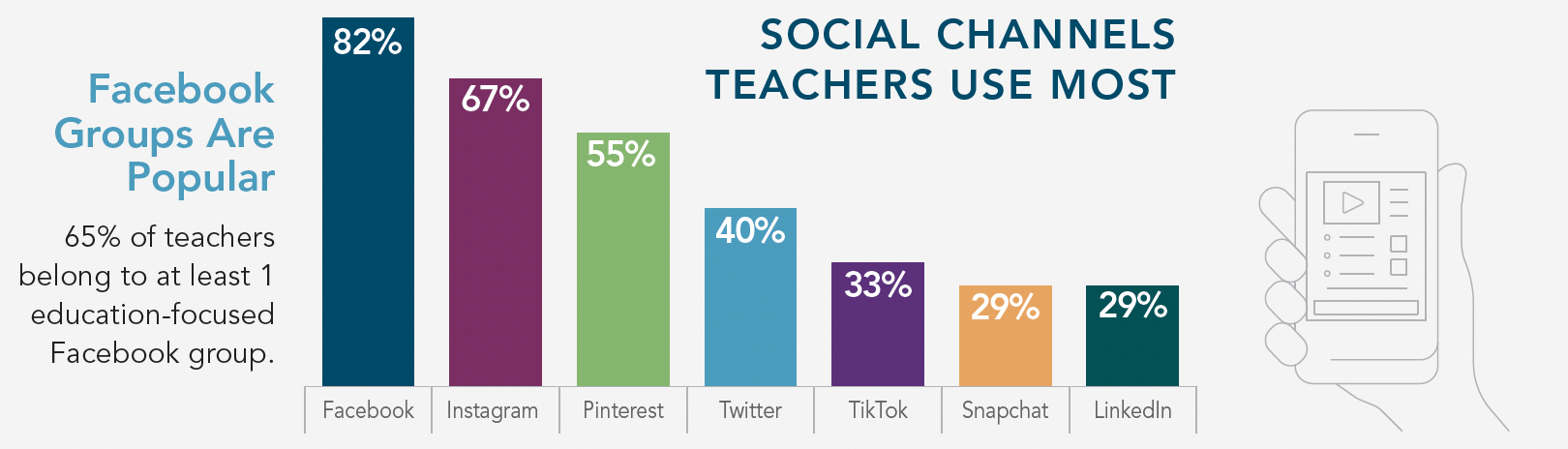
Teachers use social media to…

  • Get inspired with new teaching ideas
  • Find resources for the classroom
  • Connect with other educators
  • Stay on top of trends and news
  • participate in an online community
  • Find teacher discounts and deals
  • Follow education companies and organizations

How Teachers Use Social Media
Teachers Social Media Use

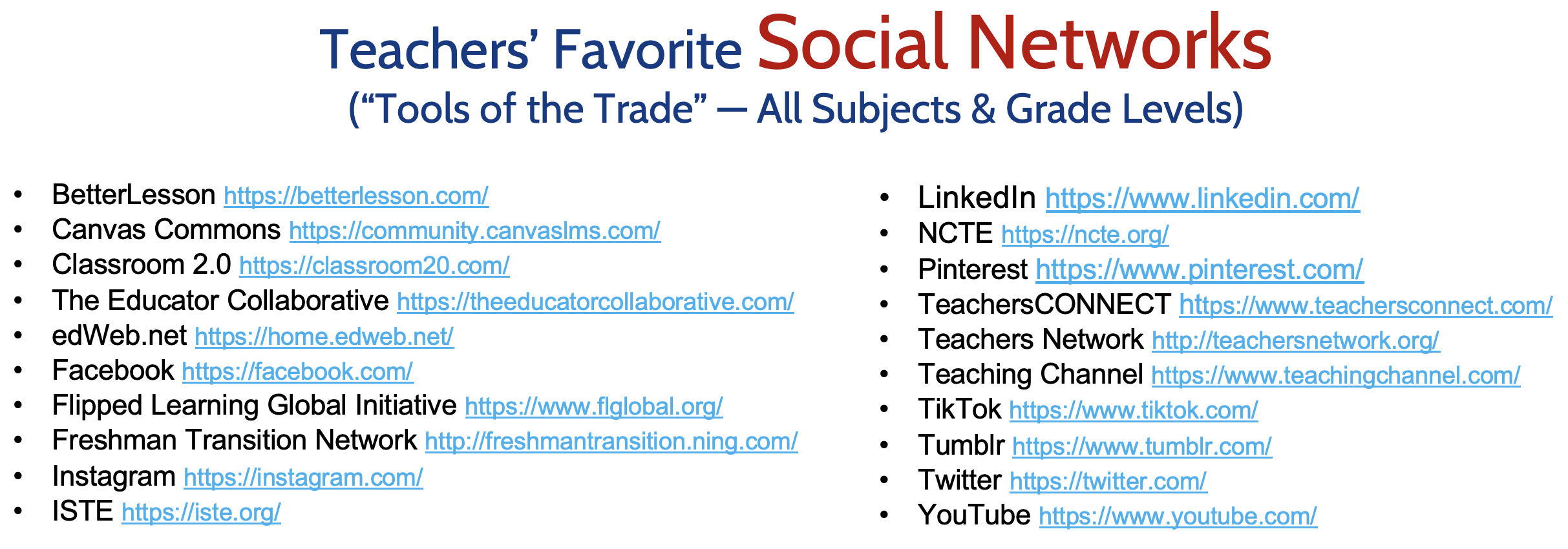
Social Networks for Teachers

We acknowledge that the benefits of social networking for educators are numerous by promoting professional collaboration and connections, including:

  1. Acquiring information to enhance understanding
  2. Keeping informed about latest developments in education
  3. Enhancing communications with students, parents, and the school community
  4. Fostering connections with colleagues in the field to expand an educator’s professional network.

Benefits of Social Media as an Educator

However, educators must exercise “sound judgment” and proper professional boundaries when using social media/networks with students. While the introduction of new technology provides many opportunities for teaching and learning, it is important to establish clear rules for appropriate student-teacher communication. In order to promote safety and appropriate boundaries while transitioning to a virtual teaching and learning environment, the Pennsylvania Professional Standards and Practices Commission offers suggestions to help educators protect themselves and their students.

  1. All technological resources and applications should be school entity-approved and only used in the manner prescribed. Ensure that you are familiar with the tools you are using in order to use them properly. 
  2. Communication with students should occur at designated times, consistent with traditional school day hours. Maintain transparency and protect yourself by keeping a record of all communications with students. 
  3. Clearly communicate when and how students should contact you and provide a timeframe for when students should expect responses to questions. 
  4. Avoid one-to-one interactions with students in chatrooms, FaceTime, Skype, or any other online space. School psychologists, school counselors and others providing one-to-one services to students should consult with school administration about the best mode of communication. 
  5. Use approved forms of communication by your school entity to connect with students and parents (i.e. Remind), use only your school email to communicate, and copy administration when communicating with parents or students. 
  6. When creating content or interacting in an online space with students, conduct yourself as you would if you were in school. If appearing on camera, dress professionally and be mindful of your surroundings and the camera’s view. 
  7. Do not “friend” or follow students on social media and do not allow students to “friend” or follow you on your personal social media. Remember, you do not have a “social” relationship with your students. 
  8. Keep your personal and professional lives separate. Do not share overly personal information about yourself with students.

PSPC Digital Tips for Educators

While exercising responsibility to maintain a respectful, safe, online environment, there are many benefits for the application of social media for students in the classroom:

  • Real-time communications can increase student engagement, collaboration, communication and overall participation
  • Many students may find it easier to participate in online discussions that in the classroom
  • Students can easily ask each other or their teacher questions about assignments outside of class
  • Students & teachers can quickly share resources at any time.
  • Teachers can easily share class announcements.
  • Social media can provide a contingency plan for last minute remote learning scenarios.
  • Students can organize school events with each other or with the help of a teacher.
  • Teachers can augment an online-only class by establishing a social media page or account simply for building community.
  • Students can practice using social platforms responsibly, including maintaining a respectful online discourse.
  • Teachers can communicate directly with parents as needed, and parents can stay informed of school news via a convenient, easily accessible platform.

However, please watch out for these potential drawbacks:

  • Social media can be a major distraction, especially if students are accessing their personal accounts independently.
  • If students primarily use social platforms to participate in class discussions, they can miss out on practicing face-to-face conversations and respectful in-person discourse.
  • Some students may see social media assignments as an opportunity to cyberbully their classmates, and there is always a risk of someone posting inappropriate content or language.

Social Media in Education


“THE WHAT” Several Success Stories

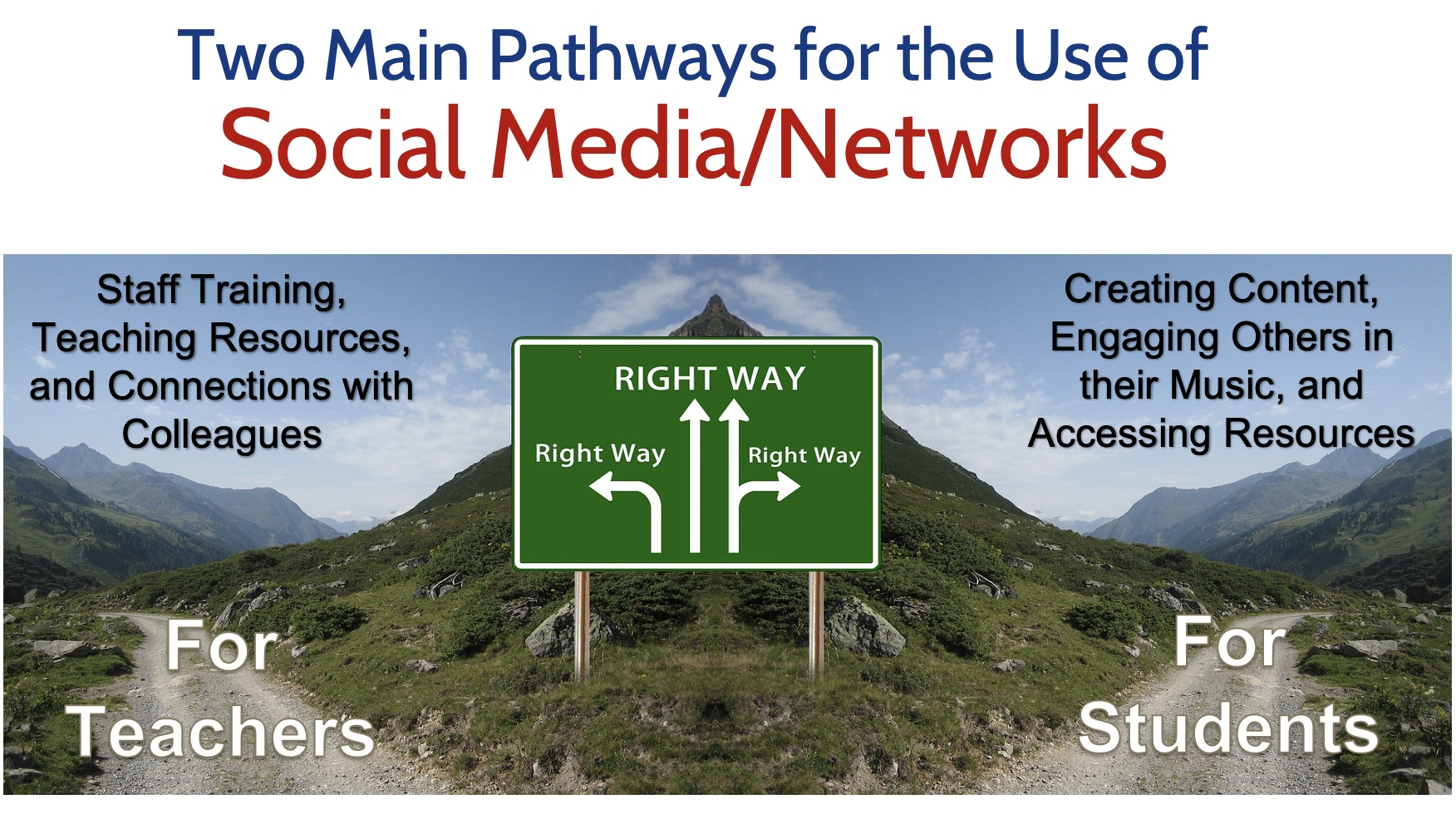
Balancing the positives and negatives and taking into account all of these precautions in order to maintaining professional boundaries, the integration of new technology into the classroom may offer excellent enrichment and increase student motivation for advanced learning. This may take many forms. Here are a few interesting models.

Prior to preparing for the DCMEA online session in 2020, I stumbled upon a truly inspiring post from Derek Muller, a gifted teacher, physicist, filmmaker, and founder of the YouTube channel Vertiasium which has captured millions of subscribers. He offers one of the BEST models of using social media to enrich the understanding of learning math and science (applicable to all fields of study), while at the same time, provides warnings against unbridled use of so-called “innovation for innovation’s sake.”

“I feel like people over the years are invariably drawn to use these words:  revolutionize and education. And there’s this sort of amnesia that we’ve had a hundred years’ worth of these predictions, worth of really groundbreaking technologies that have transformed other areas in our lives but have failed to fundamentally change the way we do education. So, I stand here today as a voice of caution, to think that the future of education is not one of revolutions…”

You need to watch this: How is Social Media Transforming the Future of Education? (2016)
Derek Muller

Say what you want about how COVID significantly disrupted our educational programs, evidence of learning loss, problems in socio-emotional development, decline of student engagement and self-motivation, rise in mental health struggles, decreased instructional time, and the effects of a new digital divide of under-served students (Annie E. Casey Foundation), happily there were surprisingly a few positive advancements the results of exploring new tools and methodologies we had to employ to tread water and cope with the catastrophe. (“When life hands you lemons, make lemonade!”)

As one example, in the middle of preparing music for my community orchestra, we were shut down in 2020. No in-person rehearsals at the school. I then pivoted to creating my own online platform called SHJOOLA (South Hills Junior Orchestra Online Academy) in 2021 using MusicFirst. For a nominal yearly subscription fee, I was able to continue my Saturday morning classes (synchronous) as well as asynchronous (on-their-own time) learning using excellent applications in a virtual environment: MusicFirst Classroom, Focus on Sound, PracticeFirst, Sight-Reading Factory, Musition, Auralia, a web-based music notation program, and a huge library of method books and ensemble music. Several past blogs showed how we rolled out SHJOOLA:

The latter link above also provided a comprehensive list of supplementary resources (at the time) for online music education. Please peruse these even though some of them may have now gone inactive. We will provide supplemental links at the bottom of this article.

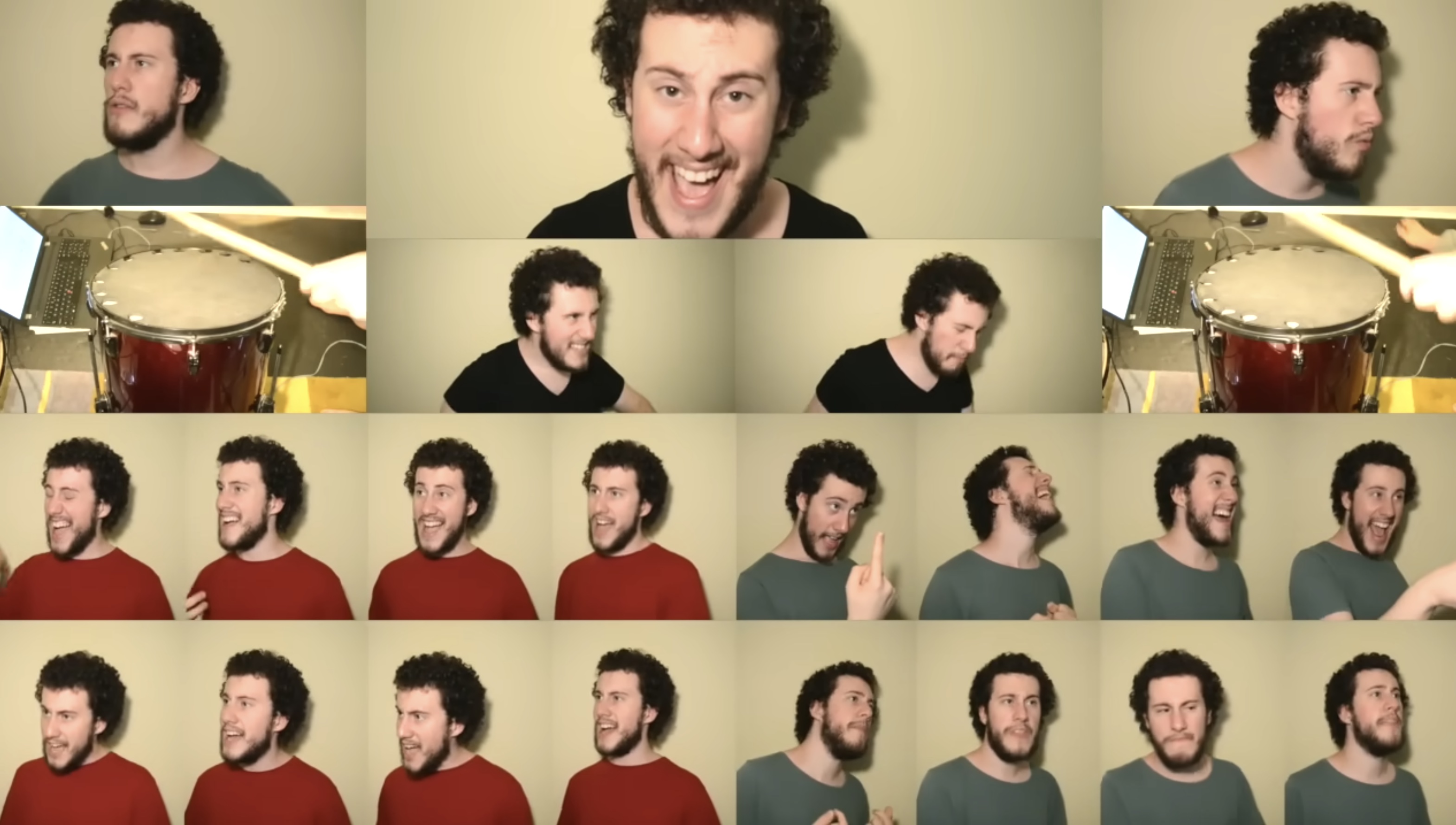
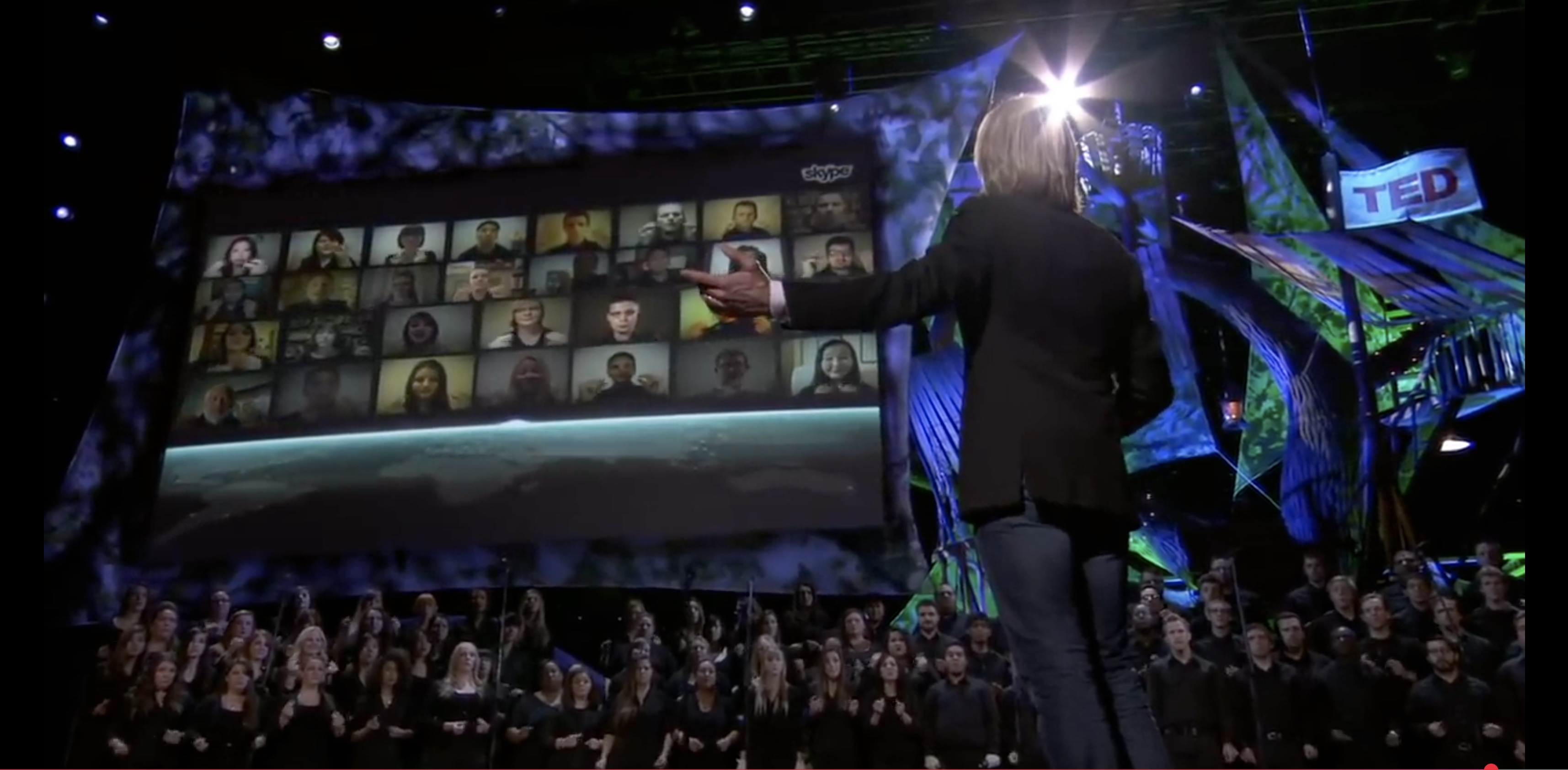
Another direction accented by the onslaught of the pandemic was digital streaming performances, incorporating technology in both the solo and ensemble settings. The following are two of my favorite examples of these to be viewed on YouTube:

Circle of Life from Disney’s Lion King (2015-18) by Sam Robson, arranger, innovator and performer using multitrack recording of a single performer mixing as many as 50 voices at one time.

Cloudburst, a Virtual & Live Choir and TEDTALK (2013) by Eric Whitacre

Well… sorry this blog has grown to be so large! If you admit to understanding the potential hazards of and precautions for integrating social media, social networks and other technologies into education, we’ll close with the following bibliography of additional resources for further study. If that is not enough to whet your curiosity, stop back in several months to download a copy of my slide summary for the session I will present at the DCMEA Winter Conference on January 30, 2026.

Be careful stay safe and professionalbut ENJOY!

Sample Blogs

Several Major Platforms

Examples of Music Applications/Websites

PKF

© 2025 Paul K. Fox
Hacks for Music Teachers – Part 2

More Tips, Tricks, & Techniques to Help You Organize

As you can see, it has been awhile since I shared a blog-post. It looks like I went on vacation and skipped the entire month of July!

Well, truth be told, familiar to many of my band director friends, we are hitting the streets with a plethora of summer clinics, rehearsals, and camps to prepare for and usher in the season of parades, halftime shows, pre-games, festivals, competitions, etc., and although I am officially “retired,” I chose to re-up as “admin” to the “Pride of Upper St. Clair” – the marching band of the school from which I left in 2013. Serving as announcer for now more than 37 years, I decided to “put the pedal to the metal” and join the “band leadership team” to discover the joy of watching our ensemble “hatch” their new shows from scratch, re-awaken and build on their technique, inspire and grow their membership, and focus on “practice-practice-practice” and “making music!” I just finished a grueling week of those 12-14 hour band camp days spent in close partnership with 100+ of my favorite high school musicians.

Fantastic? Yes. Exhausting? Absolutely! It reminds me of 30-years-worth of nonstop days and nights of leading the annual spring musical as director/producer, including missing meals, dragging myself home to re-acquaint myself with my wife (who went through this, too), and dropping into bed. I have always said, quoting Ernie Zeliniski in his book How to Retire Happy, Wild and Free, it is important to find PURPOSE, structure, and community in retirement… but this hectic pace of frenzied activity at times tests my endurance. And, it feels a little like I never left teaching….

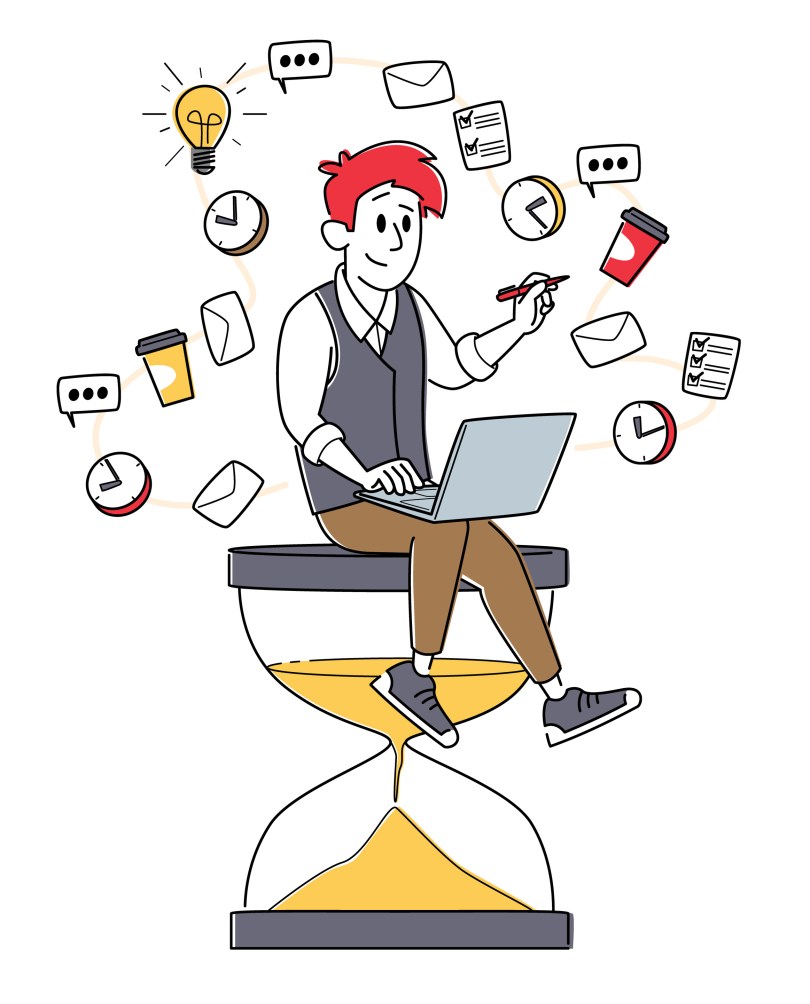
Therefore, I thought it would be appropriate to share some “advice from the experts” in terms of organizational tools and quick fixes or “hacks.” (See Part 1 on this topic.) This is only a gourmet “taste” of their ideas to simplify your life, work, and teaching. You should do yourself a favor and take more time to research the websites below for a complete explanation of their recommendations. We appreciate their generosity and willingness to be “free and open” to permit us to repeat their ideas in this forum.

Easy Time Savers for Instrumental Teachers

Photo and article excerpt by Wendy Higdon

To get started with a “bang,” let’s visit Wendy Higdon’s “On and Off the Podium” website here, or the NAfME “Music in a Minuet” blog site which reprinted her Clever Music Teacher Hacks That Will Make Your Year Amazing – Getting Ahead of the Time Crunch.

  • “Use rubber pencil grips as inexpensive thumb rest cushions on clarinets by cutting them in thirds. (see photo)
  • Pink erasers work well as emergency rock stops for your cello and bass players
  • Purchase golf pencils on the cheap to keep in the classroom so that forgetting a pencil never becomes an excuse. Kids won’t love using these short, little pencils, so they are less likely to walk away at the end of class.
  • Three ring binders with sheet protectors help students keep organized and also cut down on lost music. If you want to be super-organized, add a pencil pouch and tab dividers in the binder.
  • Strips of velcro on the carpeting work well as guides to where chairs should go and allow your students to quickly and easily straighten up the rows. (see photo)
  • Print a sign with important information that your students frequently need (music store phone number, website addresses, etc.) and have them take a picture with their phone so they won’t have to ask you in the future. Do the same for important dates, locker combinations or anything else that is easily forgotten.
  • Locker mirrors can be purchased cheaply during school supply sales. Buy a class set and use them to check embouchure and more!
  • Did a clarinet or sax player forget their ligature? Or worse. . . it got stepped on and now it is as flat as a pancake! Use a rubber band to hold the reed on the mouthpiece until the student can get a new one.
  • Does your baton get buried under all your conductor scores? Use a binder clip on the side of your music stand, and it will always be handy! (see photo)
  • Do your beginning flute players have trouble remembering which keys the fingers of their left hand go on? Use “Avery Dot” stickers to mark the keys. You can do the same with clarinet pinky keys. Color code the keys on the right and left hand to assist students in learning their alternate fingerings. (see photo)”

There are a lot more “why didn’t I think of that” time management hints throughout the article. Also, be sure to check out her interesting Microsoft Word and Excel templates to use for your seating and locker assignments.

Band Directors Collaborate!

Photo and article excerpt by Mike Doll

The middle school band directors in South Carolina got together and created a brainstorming session to share teaching tips and strategies with each other in order to improve their music programs. According to Mike Doll, editor of one of the blog posts Band Directors Talk Shop, “After the success of the first meeting, we decided to continue this on a regular basis, and we now do this 2-3 times a year for the past 10 years. These ‘best practices’ gatherings have been very informative, and we always walk away with several new ideas to try in our classrooms.”

Here are several ingenious ideas from their “toolkit” of Tricks of the Trade – Five Organizational Tips.

1. Music sorter stick
“One of our directors shared a neat way to sort music back into score order without multiple piles of different parts scattered around them on the floor. If you go online and search for Plastic Sort All, you will find the tool they use for this trick.”

“The director then used a label maker and created labels for each instrument in score order and attached them to the sorter in place of the letters and numbers on the end. “

2. Lines/tape on the floor for easy chair placement
“One director, with a tile floor, mentioned they would check with their maintenance folks and find out when the wax would be stripped from the floor. At that point, they would tie a string to their director stand and measure the distance to the first row. They would then attach a sharpie to the other end of the string and use it like a compass to draw arcs on the floor. Once the floor was waxed, the lines never came up. Gaffers tape also works on carpeted floors. At the end of each class, the director would have everyone look down to make sure the front chair legs were on the arc. Clean neat rows in seconds at the end of each period.”

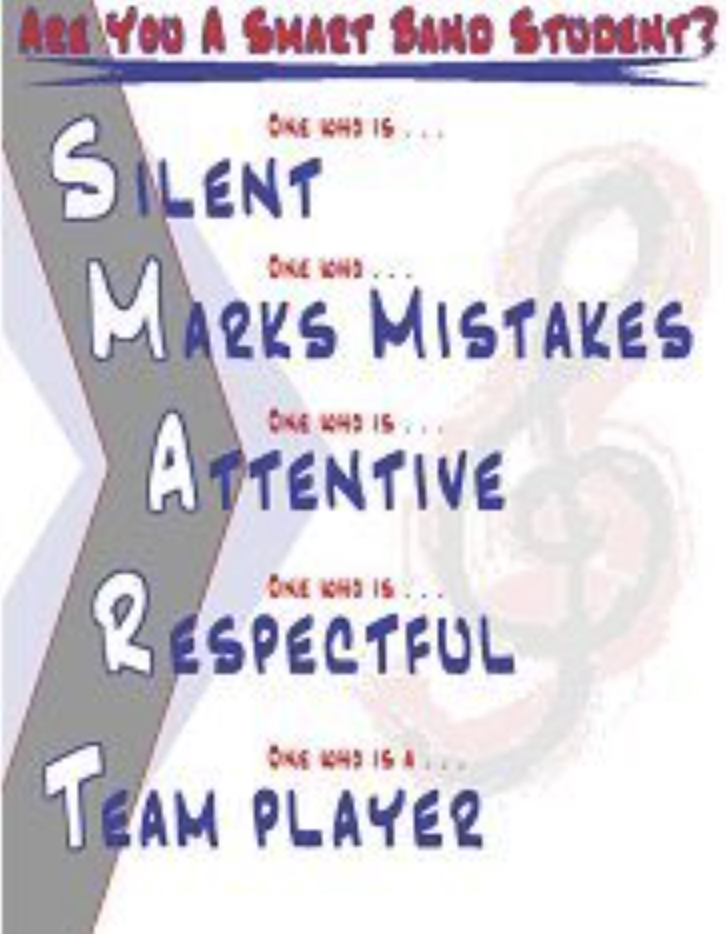
5. SMART Band Student.

“Quick and clean set of expectations for your band students. A SMART band student is one who is:

  • Silent
  • Marks Mistakes
  • Attentive
  • Respectful
  • Team Player”

The article’s “Tip #4” on Band Binders is reminiscent of what I had applied to my grades 5-8 string program. My wife utilizes something similar for her online music lessons. Rookie or new teachers, especially, check it out!

In addition, you should peruse their website for an inspiring collection of articles on a host of other topics:

Band Room Hacks

Photo from Google’s Search of “Band Room Hacks on Pinterest” by Julia Arenas

How timely and appropriate! I stumbled on this Pinterest site, Band Room Hacks, a collection by Julia Arenas, and since I did not get advance permission to reprint her library of images, I will invite you to go explore them for yourself. At a quick glance, I see she has assembled from music colleagues a lot of excellent storage solutions as well as music teaching tools that may inspire you to modify/add your own new time-saving shortcuts.

Time and Task Management on Steroids

We round off our organizational hacks for music teachers with the brilliance of Ashley Danyew, and excerpts from her blog post 9 Time-Saving Tools and Tactics for Busy Music Teachers and Directors.

Although productivity experts like Stephen Covey in Seven Habits of Highly Effective People and the originators of the aforementioned (in Part 1) Priority Management System (a favorite of mine) may be most helpful, we can all learn from Ashley as she sums things up with these tips on supercharging ourselves in planning for a good start to the school year. (You’ll have to visit her post to get the full gist of what to do!)

  1. Put all your to-do’s in one place.
  2. Track your time.
  3. Batch related tasks.
  4. Limit social media.
  5. Divide your work-day into time blocks.
  6. Set aside time to send and respond to emails.
  7. Close documents and browser tabs you are not currently using.
  8. Go into meetings with an agenda or outline.
  9. Make templates.

I particularly love this introduction to her article:

“One thing I hear over and over from church musicians and music educators (well, everyone, really) is that there never seems to be enough time to get it all done.”

Time to teach
Time to rehearse
Time to write
Time to practice
Time to be with family
Time to be a good friend
Time to read
Time to exercise
Time to learn

“We’re always looking for new ways to be more productive, get more done in the little time we seem to have, and save time in places where, like money, we might be overspending. Am I right?”

“That’s one of my favorite ways to think about time – as money. It’s a commodity. We all have the same number of hours in the day – it’s how we spend them that makes the difference.”

Where (and how) do you want to spend your time? What’s important to you?

“Once you can answer this question, you’ll be motivated to make it happen – to take control of how you’re spending your time and look for ways to save it, where you can.”

9 Time-Saving Tools & Tactics for Busy Music Teachers and Directors
by Ashley Danyew

Couldn’t have said it better myself!

Have a great school year!

PKF

Teacher Self-Care During the Pandemic

We thought our next article in this series on music teacher health and wellness was going to center around burn-out. But then… COVID-19 struck (was this really only 3-4 months ago?), we were forced into self-isolation, and all “brick and mortar” schools closed. In the ensuing panic, we all scurried about seeking solutions to reconnect and engage our students from afar in compliance with strict shelter-in-place restrictions.

“Seemingly overnight, the world changed. Teachers and school leaders have had to revamp their entire instructional systems with, in many instances, only a day’s notice. To say many of us are experiencing whiplash, disorientation, and anxiety is an understatement.”

virus-4928021_1920_HoagyPeterma“Our students are feeling it too. Typically, nationwide, one in three teenagers has experienced clinically significant anxiety in their lifetime (Merikangas et al., 2010). It’s probable that during a pandemic that heavily impacts everyday life, levels of anxiety in children and teens are even higher, and the possibility of subsequent trauma greater.”

“In these unprecedented times, teachers are rising to the occasion creatively and quickly to shift to remote learning amidst school closures. Even in a traditional classroom, it can be a challenge to support students with anxiety and trauma histories to stay calm and learn. With distance learning, this difficulty is magnified. However, there is much teachers can do to reduce anxiety in students even while teaching remotely. During this crisis, we need to prioritize students’ mental health over academics. The impact of trauma can be lifelong, so what students learn during this time ultimately won’t be as important as whether they feel safe.”

“Maintaining Connections, Reducing Anxiety While School Is Closed” by Jessica Minahan in ASCD Educational Leadership, Summer 2020

My opinion? The Internet and other forms of media can be a godsend or a contributing factor to our feelings of malaise. The 24/7 nature and immediacy of news programs and web posts updating the statistics of new coronavirus cases, hospital admissions, deaths, shortages of personal protection equipment and respirators, unemployment numbers, and the stock market’s roller-coaster ride, have added fear, stress, and “noise” to the real problem… our ability to cope with the ramifications of this pandemic!

Well, at least a lot of dialogue has been generated “out there” about recommended remediation and “success stories.” The purpose of this blog-post is to share some of this “advice from the experts.” Many of you (I hope) may say, “This is just common sense.” True, but however “common” it is, more people than you think are not applying these principles to their own personal lives. And like the one online post that caught my eye the other day, “Teachers Are Breaking” by Jessica Lifshitz, all of us should share our anecdotes… the trials, internal struggles, and tribulations… to make it through this emergency.

Together, we are stronger!

books-4843726_1920_Myriams-Fotos

I have been accused of being a little too emotional and I should not “feed into the negativity,” as one reader complained in reaction to one of my blogs. However, according to this article by Christina Cipriano and Marc Brackett, “emotions drive effective teaching and learning, the decisions educators make, classroom and school climate, and educator well-being.”

“At the end of March, our team at the Yale Center for Emotional Intelligence, along with our colleagues at the Collaborative for Social Emotional and Academic Learning, known as CASEL, launched a survey to unpack the emotional lives of teachers during the COVID-19 crisis.”

“In the span of just three days, over 5,000 U.S. teachers responded to the survey. We asked them to describe, in their own words, the three most frequent emotions they felt each day.”

“The five most-mentioned feelings among all teachers were: anxious, fearful, worried, overwhelmed and sad. Anxiety, by far, was the most frequently mentioned emotion.”

Navigating Uncertain Times: How Schools Can Cope With Coronavirus

Almost in unison, the strategies that seem to be echoed most often by medical and mental health professionals, educators on the front line, and even technology specialists, are outlined by this “wellness map of to-do’s!”

  1. Don’t obsess. Calm yourself. Set priorities.
  2. Connect and communicate often with your family members and your students.
  3. Set and maintain boundaries.
  4. Practice mindfulness.
  5. Take the necessary steps to maintain your own physical and mental health!

burnout-4778253_1920_Tumisu

Avoiding Becoming Overwhelmed

As a retiree, I “only” lost the spring season of my community youth orchestra to this crisis. In my position as state chair of the PMEA Council Teacher Training, Recruitment, and Retention (PMEA Council TTRR), I tried to soothe the “hysteria” of many of my still-working friends and colleagues who were grappling with the instantaneous roll-out of distance learning. After researching online music education resources, we were able to place countless links on the PMEA Council TTRR website (here). After 7+ weeks, one of our “omnibus Google Docs” has grown to 15+ pages and more than 225 separate sources of virtual, remote, and alternative music learning media and methods.

computer-768608_1920_free-photosFor some, this has made matters worse… an “overload of abundance!” The multitude of venues and opportunities (too many unexplored “new technologies” for many of us baby-boomers!) included information about virtual ensembles, YouTube libraries, music games, lessons plans and platforms for synchronous and asynchronous e-learning, video-conferencing techniques, hardware and software reviews, etc.

Take a deep breath! Focus! Prioritize your goals. What are you trying to accomplish? Don’t try to consume all of the available resources “out there,” nor use every application or online lesson that you find on Facebook groups like https://www.facebook.com/groups/mecol/. What was it my mother used to say at the dinner table? “Sip and chew slowly… don’t gulp!” Take away what might help your situation, but approach anything brand new in moderation!

online-5059831_1920_TumisuGo ahead and sign-up for a webinar or planned learning community meeting or two. Many professional development workshops are provided with “no extra fees” right now, like the NAfME library here, the aforementioned Facebook group and others, and if you already have a membership in PMEA, this website.

BUT… plan to take away ONLY one or two new “teaching tools” from each session… maybe consider trying-out one new app or lesson idea every other week?

As if to anticipate our needs, more than a year ago, Elena Aguilar published the in-depth piece “How to Coach the Overwhelmed Teacher” in Education Week blog, summarizing excellent stress-reduction treatments. (Share these if you think they will help you or some else! Read the entire article for more detail!)

desperate-5011953_1920_Peggy_MarcoFive tips for coaching overwhelm:

  1. Describe it.
  2. Recall previous experiences.
  3. Identify one tiny next step.
  4. Listen.
  5. Plan for action.

“When coaching someone experiencing strong emotions, it’s important to know the signs and indicators of depression and anxiety disorders. Emotions can turn into moods, and if moods hang around long enough, they may become depression or an anxiety disorder. People who feel overwhelmed a great deal may be experiencing depression, whereas those who are ‘stressed’ a lot may be experiencing anxiety. This resource, AppD Depression_Anxiety.pdf, can be offered to your coachees or used to consider whether someone may need professional help.”

“When coaching any strong emotion, it’s useful to remember that emotions can be guides to self-understanding. They are a normal part of being a human being, and strong emotions show up to get us to pay attention to what’s going on. We can welcome strong emotions—in ourselves and in our coachees—and explore them to gain insight into ourselves and humans and educators.” — Elena Aguilar

coronavirus-4991979_1920_enriquelopezgarre

Making Connections

Your loved-ones and friends probably need you now more than ever!

And, a myriad of research supports the assertion that social connections significantly improve our own physical and mental health and emotional well-being, such as published by the “Center of Compassion & Altruism Research & Education” of the Stanford Medical School:

“Strong social connection leads to a 50% increased chance of longevity, strengthens your immune system (research by Steve Cole shows that genes impacted by loneliness also code for immune function and inflammation), helps you recover from disease faster, [and] may even lengthen your life!”

“People who feel more connected to others have lower levels of anxiety and depression. Moreover, studies show they also have higher self-esteem, greater empathy for others, are more trusting and cooperative and, as a consequence, others are more open to trusting and cooperating with them. In other words, social connectedness generates a positive feedback loop of social, emotional and physical well-being.” — Dr. Emma Seppala

There’s even evidence that “human touch” and close connections with other people increase our body’s levels of the beneficial hormones serotonin and cortisol.

Just more common sense? Right? Probably!

human-2944064_1920_geralt

The first thing I did during that initial announcement of school/activity closures was to reach-out to my “musical kids.” Many music directors told me they quickly sponsored a Zoom/Google Hangout meeting of their ensemble members, mostly just to check-in with their players or singers and get everyone “on board” for future online interactions.

Perhaps COVID-19 has made me a better “citizen,” too. Much more frequently, I now call or text a friend, colleague, volunteer co-worker, or neighbor to see how they are doing. It’s terrible to admit that it took a world disaster to improve my interpersonal communications skills!

Finally, here’s a good “recap.” In spite of the need for social distancing, these examples of “safe connections” are suggested by Jennifer Wickham from The Mayo Clinic:

  • Use electronics to stay in contact with friends, neighbors and loved ones. This could include using video-conference programs, making voice calls instead of sending texts, or talking with a neighbor through windows while maintaining a safe distance.
  • Spend quality time with the people you live with, such as playing board games or completing an indoor project.
  • Make a family meal or dessert recipe that reminds you of friends or family you are unable to visit, and then call them to tell them about it. This way, you get an experience of internal and external connection.
  • Write in a journal about your experiences during this time of social distancing. Not only will this help you sort out what you are thinking and feeling, but also it can be shared going forward as a way for future generations to connect with the past.

timetable-2467247_1920_Comfreak

Setting Boundaries

Something else I admit to NOT doing!

“Going Google,” “exploring e-learning,” or “doing digital” –  it is easy to get carried away and not notice you just spent 12 hours in-a-row of “screen time” participating in online meetings or creating new remote learning opportunities for your music students. Exactly when are your classroom and office hours? You are likely pushing yourself too hard, even in your pajamas! This insane pace will only promote other health concerns!

The foresight of Elisa Janson Jones was evident for writing this in her blog “7 Self-Care Strategies to Prevent Burnout” back in September 2018 before the pandemic:

bulletin-board-3233653_1920_geralt“It’s hard to create a work-life balance when life is filled with work. Teachers are known for working long hours off-the-clock for no additional compensation. This is even more prevalent in music education. We add performances, competitions, musicals, individual lessons, fundraising, data entry, and even music composition and arranging to our task list.”

“We may find pride in saying we worked 60 hours this week, flaunting to our friends that we got to school in the dark and left in the dark. Perhaps we find self-importance in their pity and admiration.”

“However, to thrive in our profession, we must remember that teaching music is our career, not our entire life. Hobbies, families, volunteering, and other ways we contribute to our communities and our homes are also aspects of who we are.”

“Setting clear boundaries between when we are working for our paycheck and when we are working for ourselves helps us carve out space where we offer ourselves time to be free of obligations and burdens of our career. Whether it’s a few hours per day, a full day per week, or both, setting strict boundaries for when you’re on-the-clock and when you’re off is essential.” — Elisa Janson Jones

yoga-4595164_1920_laurajuarez

Mindfulness and “Living” in the Present

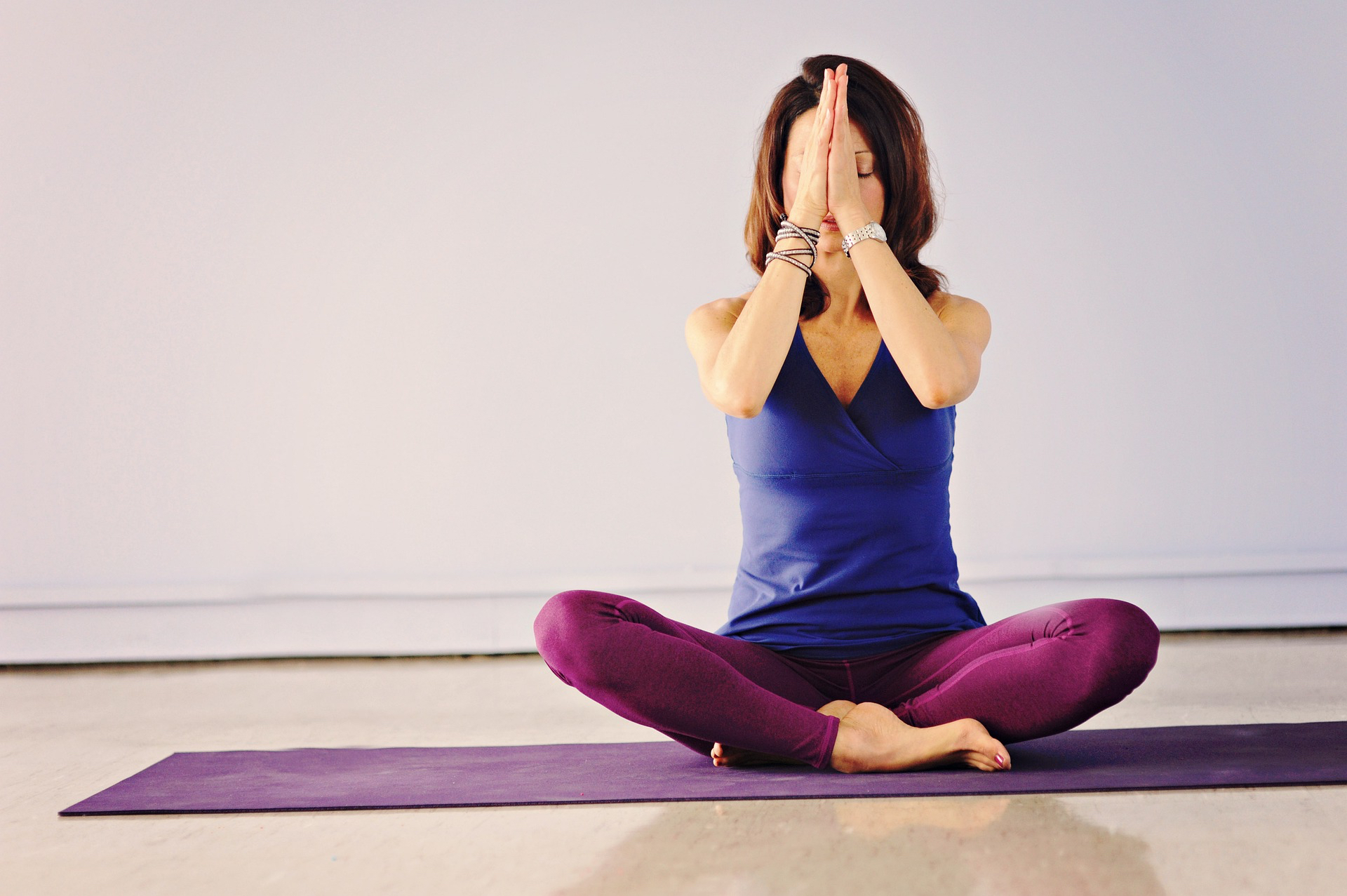
Another concept that Elisa Janson Jones covered in her Smartmusic blog: mindfulness.

Now is the time for a little nonjudgmental “free reflection,” or what the psychologists call the best practice of “mindfulness” – a focus with full attention on your thoughts, feelings, and sensations “in the moment.” I think the “Teaching with Orff” website really nailed it in the article “7 Self Care Tips for Quarantined Music Teachers.”  Read co-author Zoe Kumagai’s examples of affirmations: “How do I want to feel today?”

  • I allow myself time and space to reflect.
  • My mind is aware of the present.
  • My heart feels compassionate and is full of love.
  • My mind is stimulated by books, stories, art, scholarly articles, music that inspire me to be my best self.
  • I maintain boundaries with technology and intake of the news.
  • My body is free to dance.
  • My voice is clear to sing, laugh and converse authentically.

According to this Harvard Medical HelpGuide, the habits and techniques of mindfulness can improve well-being, physical health, and mental health:

“There is more than one way to practice mindfulness, but the goal of any mindfulness technique is to achieve a state of alert, focused relaxation by deliberately paying attention to thoughts and sensations without judgment… Allow thoughts to come and go without judgment and return to your focus on breath or mantra.” — HelpGuide

Band director, best-selling author, and acclaimed clinician Lesley Moffat devoted an entire chapter to mindfulness in her book I Love My Job But It’s Killing Me. You know what they say, “What’s good for the goose is good for the gander.” After learning the techniques for herself, she adopted mindfulness practice at the beginning of each band rehearsal for her students, a 4-5 minute routine of guided breathing and relaxation exercises leading up to the daily warmup chorale.


snowglobes-437383_1920_jojokejohn

I love the symbolism in her “snow globe” analogy:

“Just like a snow globe that’s been shaken up, it takes time for your mind and body to settle down. If you try to get the snow globe to settle down while you’re still holding it and carrying on with your regular activities, the snow may fall slower, but it won’t completely stop and allow you to see the objects in the snow globe. You must allow it to be completely still long enough for the water to stop swirling and the glitter to follow the pull of gravity and settle on the bottom. It only takes a matter of minutes until it settles, revealing the magical scene inside, and the very glitter that was covering up the view when it was moving around has become a lovely blanket of snow that grounds the scene in the snow globe. But without a few minutes of stillness, it is impossible for it to become completely settled. So it goes with a mindfulness practice. Your mind and body needs time to go from hyper-speed to a pace that serves you well, a place where you have space to think – and space to not think. That begins by bringing stillness to your body and to your mind. Easy to say – hard to do… until you practice it every day and it becomes habit.” Lesley Moffat

Love the Job, Loss the StressHer book should be required reading for all music teachers, even retirees who want to remain active in the profession. (Read my previous review here.) It serves as a true treasure-house of practical applications for de-stressing and re-centering your life. Her “mPower Method of Meals, Movement, Music, and Mindfulness” may be the solution to improving your situation.

FYI, her next book, Love the Job, Lose the Stress, is on the way. You can request an advance e-copy here.


“Do as I Say… Don’t Do as I Do!”

The worst part of this? We seldom take our own advice. Hey teacher, “heal thyself,” and “practice what you preach.” Taking care of our children or elderly relatives, we are probably the last to comply with the tenets of our own sermons on health and wellness.

Lesley Moffat also devoted a chapter in her book to the airline safety bulletin “Put On Your Own Oxygen Mask First.” You cannot take care of someone else (your family members or your music students) unless you first take care of yourself!

salad-374173_1920_stevepbMake self-care PRIORITY ONE for YOU! I know, you have heard all of these before:
  • Eat a balanced diet.
  • Hydrate.
  • Get enough sleep.
  • Exercise daily.
  • “Flex your brain.”

The latter “exercising your mind” is referenced in the Teaching with Orff website, and is a frequent emphasis on my blog-site (with examples here, here, and here). Pursue your own avenues of creative self-expression, and grow and learn something new every day!

According to charitable organization Waterford.org, the definition of “self-care” is “any action that you use to improve your health and well-being.” They cite extensive research from the National Institute of Mental Illness (NAMI), corroborating the statement that there are six elements to self-care:

  • Physical
  • Psychological
  • Emotional
  • Spiritual
  • Social
  • Professional

self-care-4899284_1920_Wokandapix

And, as explained in the article “Why Teacher Self-Care Matters, and How to Practice Self-Care in Your School,” self-care is not about selfishness.

“Self-care is an important component of a teacher’s mental health, but there are misconceptions about what it is. It’s common for educators to dismiss the self-care movement as ‘selfish’ or ‘superficial.’ But for teachers, self-care is so much more than breakfast in bed or treating yourself to a spa day. It’s about taking care of your health so that you’re prepared to be the best teacher you can be for yourself and your students.”

Waterford.org

These endorsements probably represent just “the tip of the iceberg!” Peruse all of the resources listed below. In addition, perhaps we should take a close look at Alex Wiggin’s ASCD article,  “A Brave New World: A Teacher’s Take on Surviving Distance Learning” (Educational Leadership, Summer 2020), considering the adoption of these four lessons learned from the past four months:

  1. Relying on a team reduces work and stress.
  2. Connecting with students boosts morale.
  3. Learning new technology isn’t so bad.
  4. Model being a life-long learner

I predict that the hardest part, coming to the end of May and the completion of our first-ever “virtual spring semester,” is coming to grips with our “fear of the unknown!” At the date of this writing, no one really knows when “we” are going back to “in person” schools, how we will resume large group music instruction like band, choir, or orchestra rehearsals, and what will the “new normal” look like to successfully “move on!”

Summer break is just around the corner… a good time to stop and reflect! And yes, we will make it through this.

Please stay safe! PKF

park-5040260_1920_Queven


References


© 2020 Paul K. Fox


Photo credits (in order)

From Pixabay.com


Summertime Prep for Music Ed Majors

Collegiates: You snooze, you lose!

After a well-deserved break from your academics and other college or work deadlines, music-2674872_1920_kevinbismnow would be the perfect time to explore supplemental resources and get a “head-start” on additional pre-service training for next fall. These tips are especially valuable to anyone entering his/her senior or final year as a music education major, finely honing in and marketing your skills as a professional in order to be prepared for finding and succeeding at your first job.
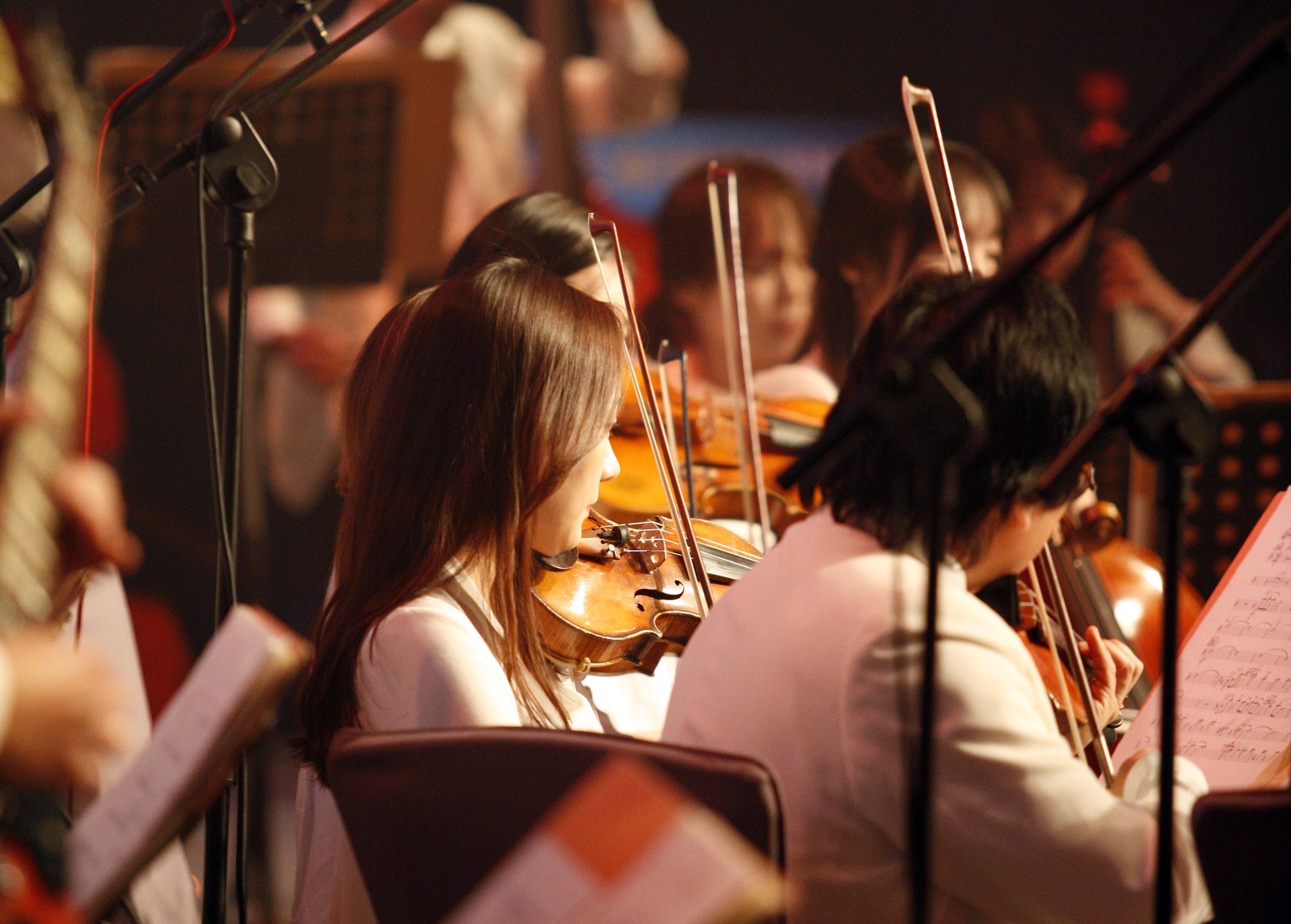
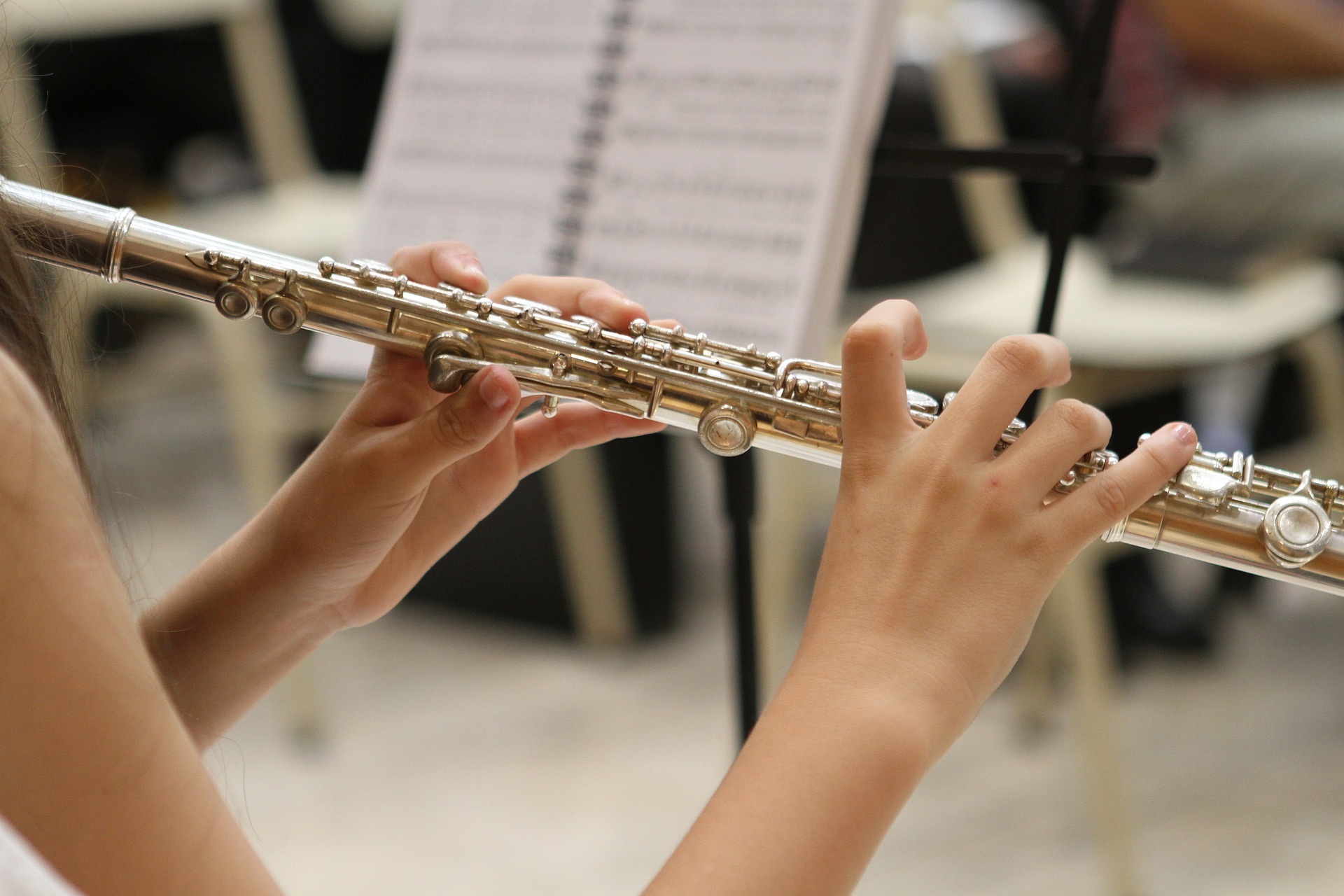
Actually I hate to admit it, I enjoy assigning college students a little “homework!” But, most of this you can do from the comfort of your patio, beach blanket, swimming pool lounge chair, or couch in the game room. With the exception of “getting your feet wet” and diving into enriching music teaching field experiences and a summer workshop or two, all you need is a pencil to take notes and a device with access to the Internet.

There’s a lot to-do right now, and you only have the rest of July and August. Please try to “keep your eyes on the target” and squeeze in a few of these self-improvement plans around your vacation trips (seven lessons – see sections below) :

  1. Summer practicum
  2. Conferences
  3. Online research
  4. Skill gap-filling
  5. Ethics training
  6. Digital archiving
  7. Interview prep


orchestra-2496505_1920_HeungSoon


1. Are you really ever “on vacation” from music education?

Most veteran music educators would respond with “NEVER!” We maintain our professionalism by participating in workshops, reading teacher journals and online articles, perusing lesson materials and new music, practicing and advancing our personal musicianship, undergoing technology “tune-ups,” and focusing on other career development. This is a 12-month, even 7-day process, and academic breaks when they appear on our calendar allow us to “double-down” in areas we need the most help.

“Hands-on” training not only “fills-up your resume” with primary employment/volunteer sources, but more importantly, exposes you to realistic opportunities to expand your skills and knowledge of the “best practices” in music education and leadership training, while building techniques for handling student motivation and discipline best learned from “the school of hard knocks.”music-3090204_1920_brendageisse

These placements don’t always come “knocking at your door.” Go out and seek a little adventure! For leads, talk to your high school band, string, or choir director. Your purpose is to find something that allows you some contact with children… free (usually) or paid, in or outside the field of music and the arts. Here are a few ideas:

  • Coach summer band sectionals, field rehearsals, marching or dance practices, etc.
  • “Put up your shingle” and teach private or small class music lessons.
  • Offer to arrange music or or provide choreography for local school drum-lines, marching bands and/or auxiliary units, or theater groups.
  • Sing in a community or church choir, and offer to help accompany, vocal coach, or conduct.
  • Sign-up to assist in local youth ballet, modern dance, or drama programs.
  • Sing, play, or teach solo or chamber music for summer religion or music camps, childcare facilities, hospitals, or senior citizen centers.
  • Volunteer (in almost any capacity) at a preschool or daycare center.


kids-1093758_1920_klimkin


2. The tools of the trade – CONFERENCES!

Summer is a GREAT time to grow your network of valuable opportunities for future collaboration, do a little goal setting, and “push the envelope” with professional development of the “latest and greatest” and “state of the art” music and methods.  The primary source for professional development is the education conference. There still may be time for you to find one close to you, perhaps in conjunction with a little sightseeing or visits with friends and relatives in the same city, like the following:

Thanks to www.takeflyte.com/reasons-to-attend-conferences, we know that attending workshop sessions are “good for you!” Participating in a conference helps you to…

  • Sharpen the saw (sharpen your skills – Stephen Covey’s seventh habit of highly effective people)
  • Meet experts and influencers face-to-face
  • pmeaMix and mingle to improve your networking opportunities
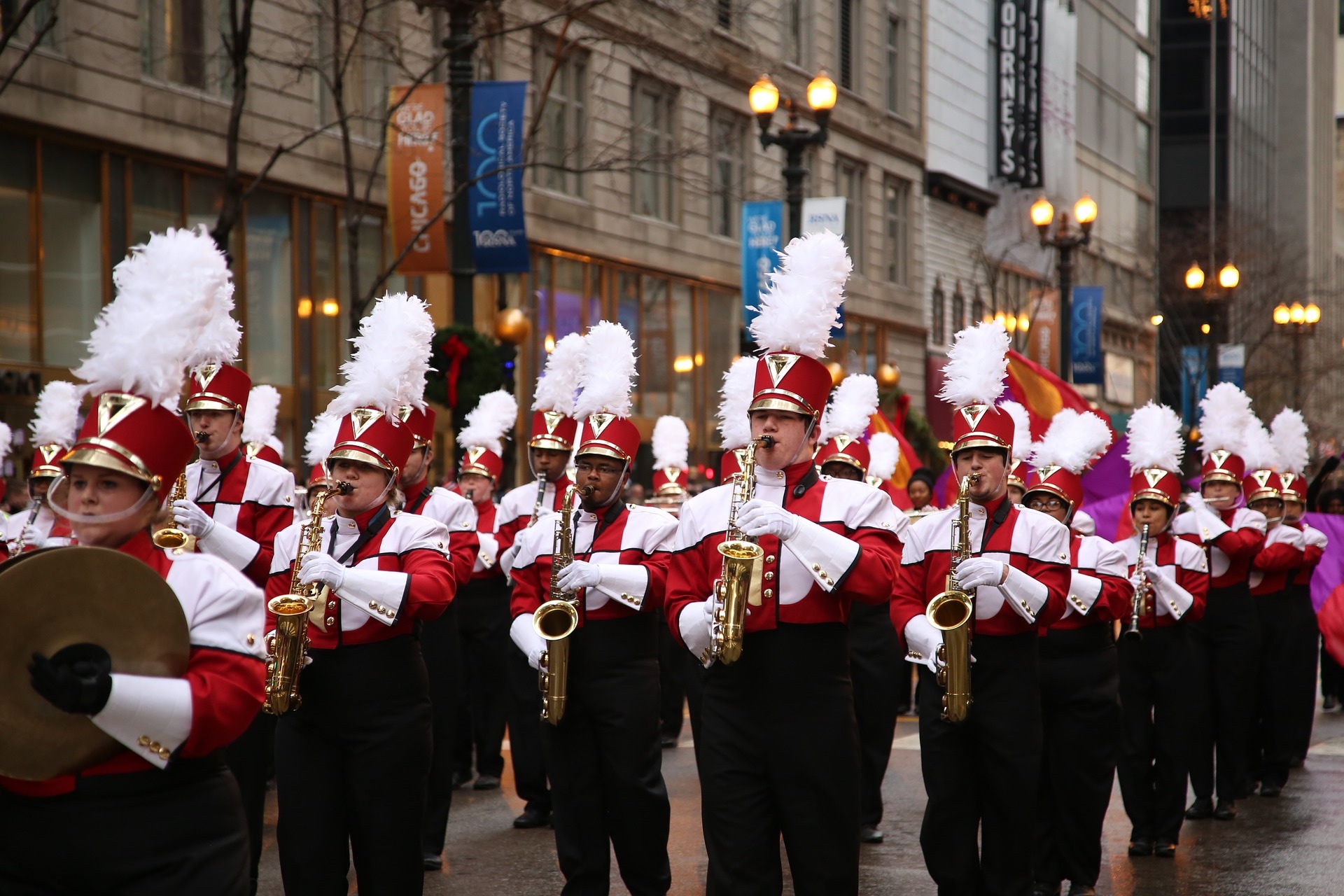

  • Find new tools and innovations
  • Learn in a New Space
  • Break out of your comfort zone
  • Be exposed to new tips and tactics
  • Relearn classic techniques with greater focus
  • Share experiences with like-minded individuals
  • Discover the value of the serendipity in a random workshop
  • Invest in yourself
  • Have fun!

If you really need any additional rationale for spending the money, click on the blog-post “Getting the Most Out of Music Conferences” at https://majoringinmusic.com/music-conferences/.

Finally, believe-it-or-not, you can bring the conferences to YOU! For the annual $20 subscription fee, you can view NAfME Academy professional development videos on almost any topic you can imagine. Check out the NAfME library of webinars: https://nafme.org/community/elearning/.


marching-band-1404489_1920_sam99929


3a. A winning website

The aforementioned Majoring in Music website is an excellent place to visit. It is amazingly extensive. You should read these articles for your “final year of prep.”


3b. These “awesome” resources are brought to you by NAfME

Besides the broad-based music subject matter and specific teaching skills, here’s some valuable advice, including how to “run a music program” (first link). I hope I am not stating the obvious: You should become a member of this national association for the advancement of music education.


Amplify

I also want to point you to the community discussion social media platform called Amplify, a benefit of NAfME membership. We are stockpiling a lot articles for college music education students, as well as sharing dialogue on everything from pedagogical issues to music equipment purchasing recommendations in both the collegiate member group and “music education central.” Go to https://nafme.org/introducing-amplify-largest-community-music-educators-country/.


guitar-2922536_1920_sunawang


4. “Filling in the gaps”

Your music education methods courses and other college classes were never expected to provide 100% of the necessary tools to become a competent teacher in every setting. This spotlights the need for professionalism. Once you land a job, you will have to “catch-up” and seek additional training to improve those areas in which you feel inadequate or unfamiliar. You can begin NOW to explore a few of these areas while enjoying your less stressful off-campus schedule:

  • child-621915_1920_skeezeUnderstanding specific educational jargon and the latest approaches, applications, and technologies in the profession (e.g. Backwards Design, The Common Core, Whole Child Initiatives, Multiple Intelligences, Depth of Knowledge and Higher Order of Thinking Skills, Formative, Summative, Diagnostic, and Authentic Assessment, etc. – Do you know the meaning of these terms?)
  • Teaching outside your “major” area or specialty (e.g. instrumental music for voice students, etc.)
  • Comprehending behavior management techniques and suggestive preventive disciplinary procedures
  • Mastering the use of valid assessments (e.g. can you give specific examples of diagnostic, authentic, formative, and summative assessments?) as well as a variety of music rubrics and evaluative criteria
  • Knowing the provisions of the Family Educational Rights and Privacy Act and other confidentiality statutes, Individual Education Plans and service agreements, and accommodating students with disabilities

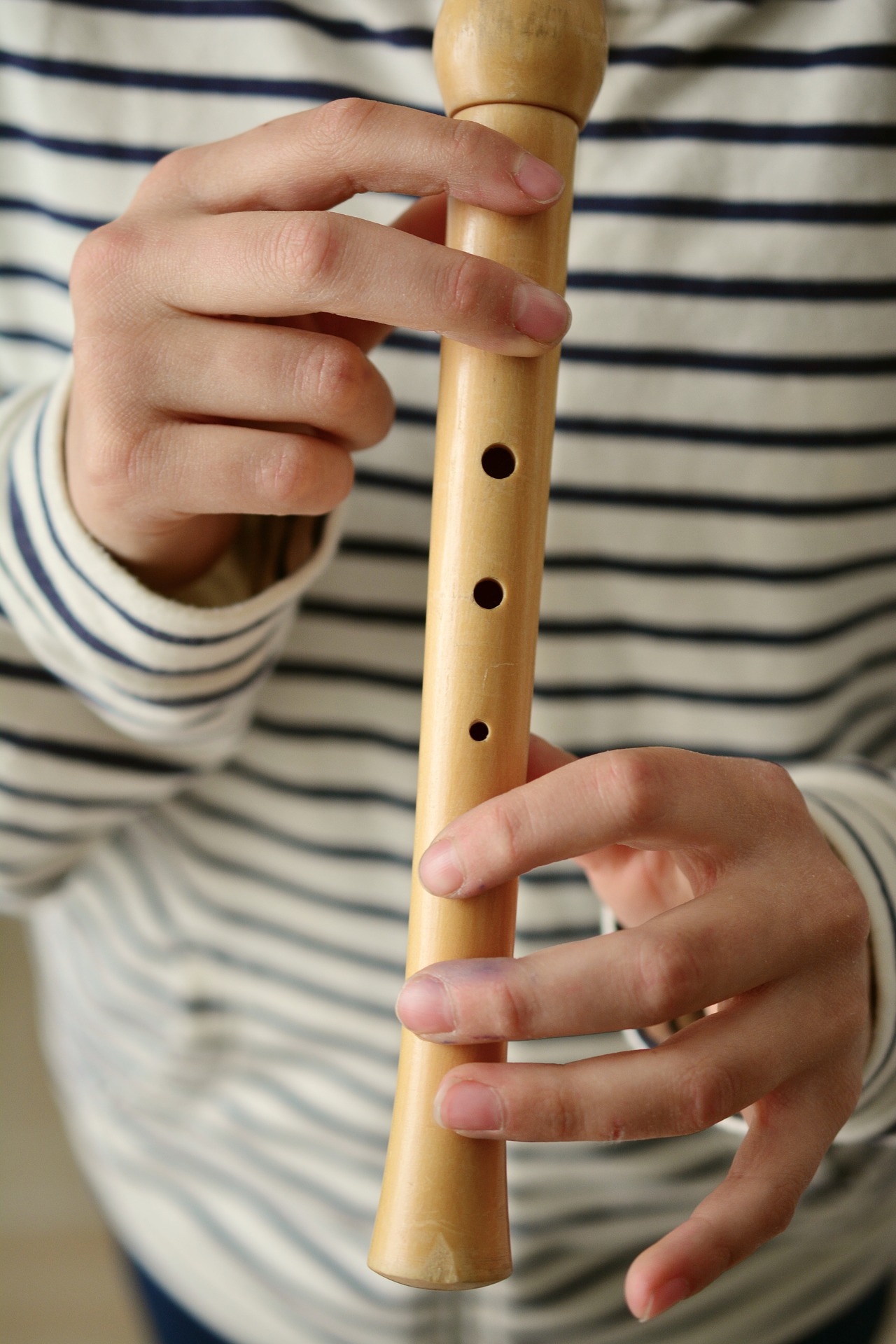
flute-2245032_1920_congerdesignYou need to ask yourself the question, “What are my greatest weaknesses in music education?” Or, to put it another way, “What school assignments would I feel the least confident to teach? After earning your state’s all-essential credential, your certificate will likely be general and only say “music Pre-K to Grade 12.” Administrators will expect you can “do it all” – introducing jazz improvisation at the middle school, accompany on the piano or guitar all of the songs in the grades 1-6 music textbook series, directing the marching band at the high school or the musical at the middle school, starting an elementary string program, etc.
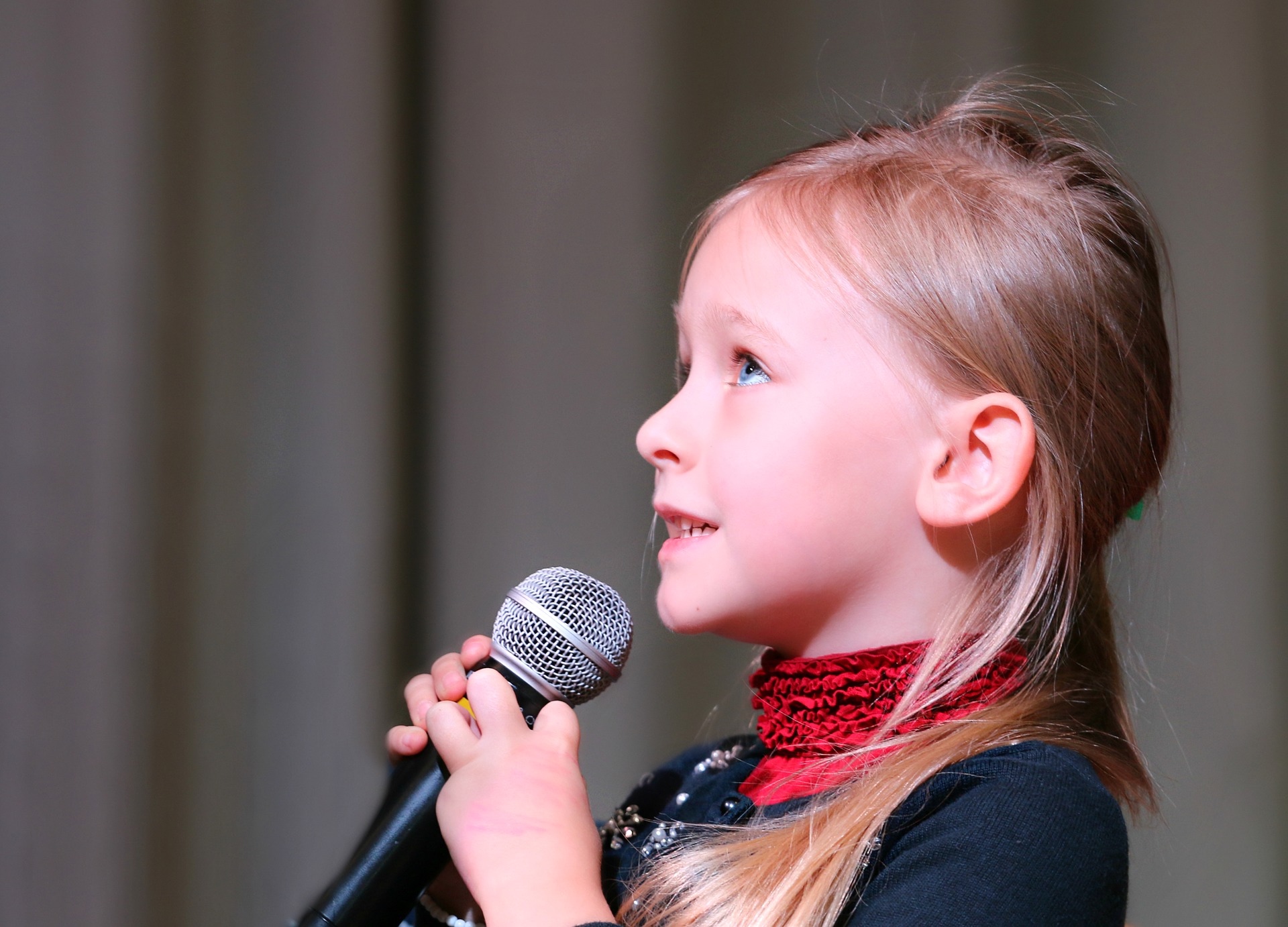
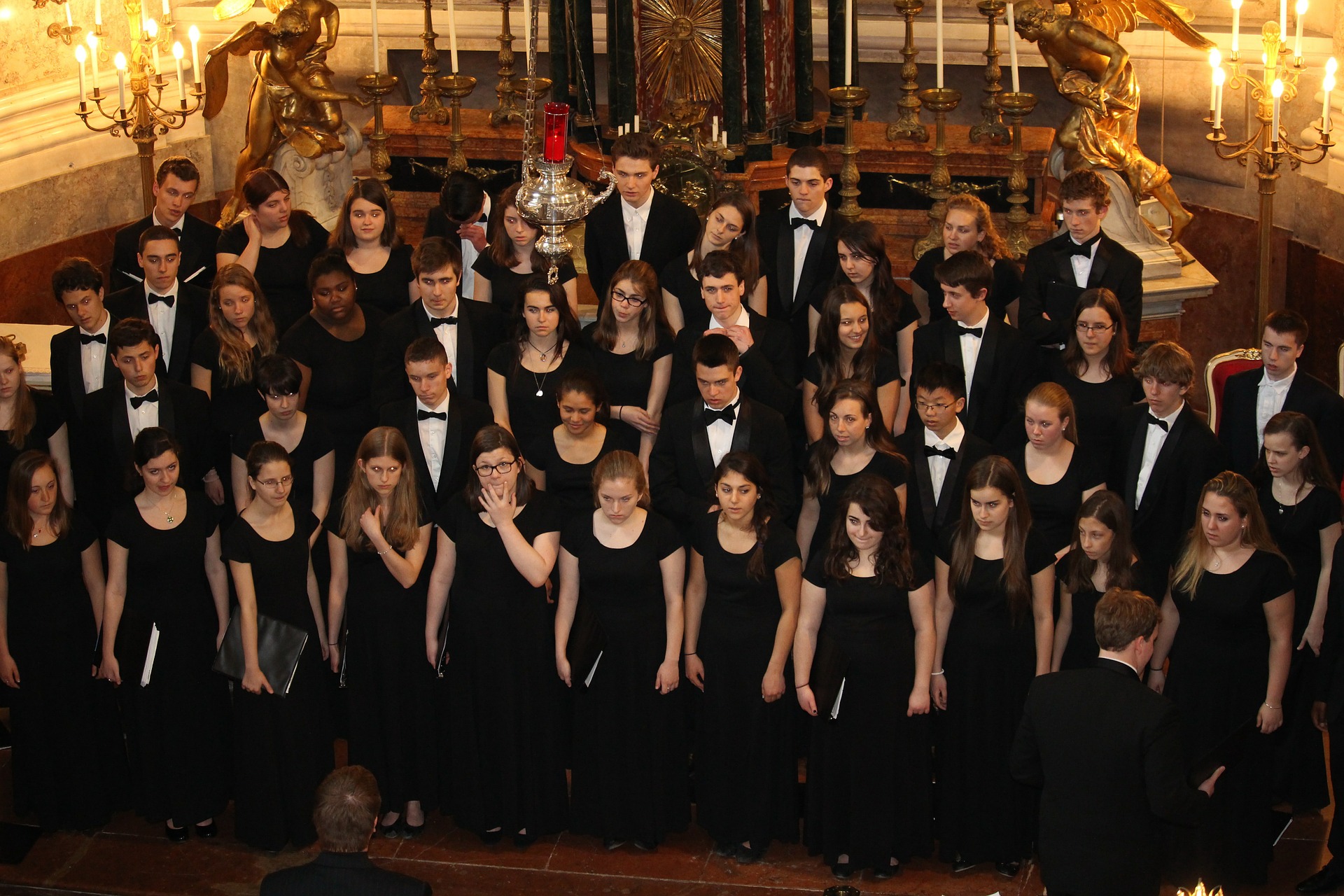
Figure out and face your greatest fears or worse skill areas. Work on them now! Take a few lessons, join a new ensemble of the “uncomfortable specialty,” ask help from your peers, etc.

More about this was printed in a previous post: https://paulkfoxusc.wordpress.com/2018/03/11/transitioning-from-collegiate-to-professional-part-ii/.


microphone-1804148_1920_klimkin2


5. The ABC’s of professional ethics

So far, have you been given any ethics training in college? Most pre-service educators only receive a cursory introduction to such things as codes of conduct, moral professionalism, guidelines to avoid conflicts in relationships with students, use of social media, confidentiality regulations, copyright infringement, pedagogical and economic decision-making, etc.

Now in my 46th year working in the field of music education (although retired from the public schools in 2013), I unblushingly admit I never had a full-blown course in ethics. Music colleagues have confirmed to me that it was barely (or not at all) touched-on in music methods classes, introduction to student teaching, school district orientation or induction sessions, or back-to-school in-service programs. choir-458173_1920-intmurrSince music teachers are all “fiduciaries” (do you know the meaning of the word?) and legally responsible for our “charges,” wouldn’t it be a good idea to review our state’s regulations and code of conduct, and hear about the challenges and pitfalls of ethical decision-making before we jump in and get “over our heads,” so-to-speak?
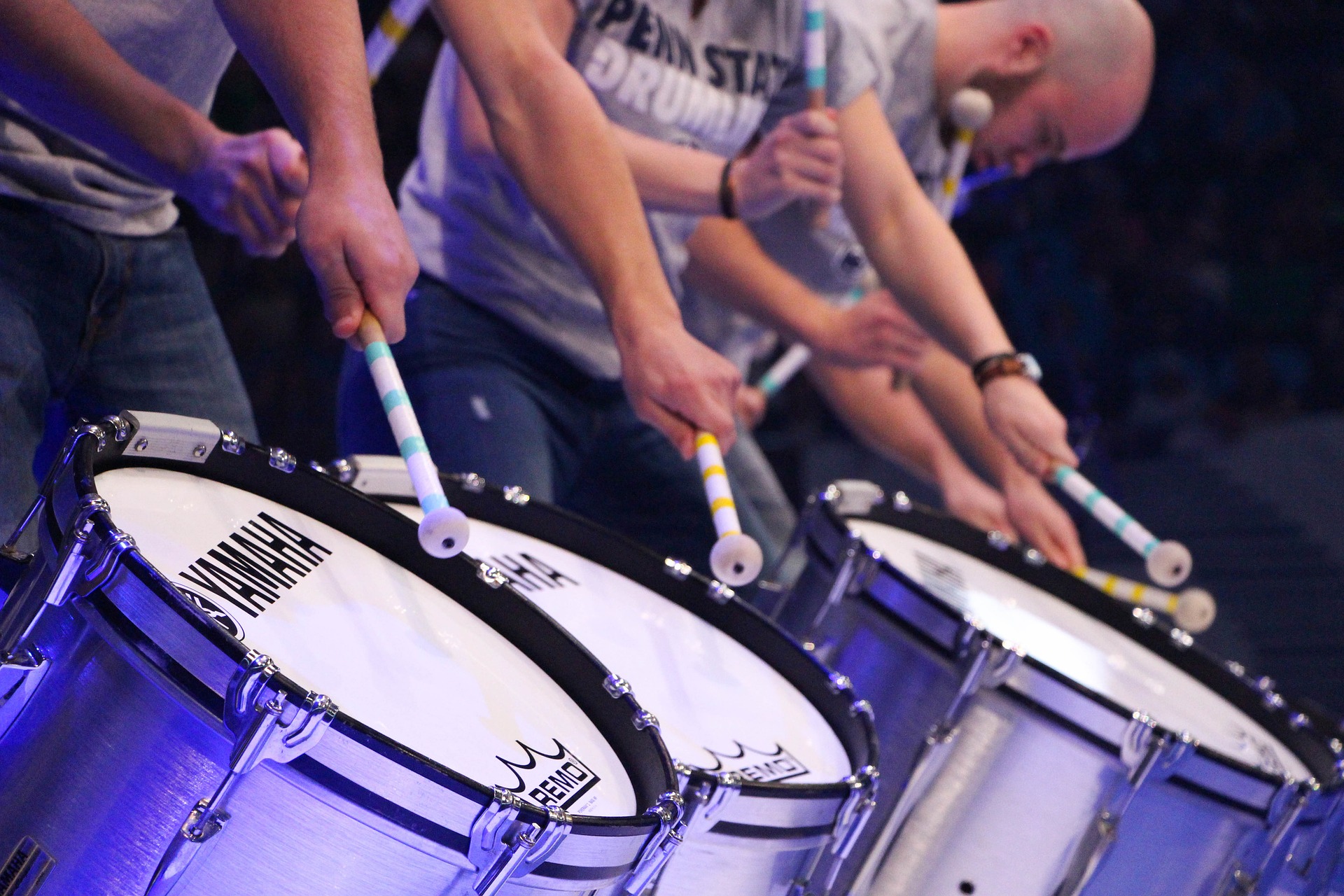
I can offer you two ways to immerse yourself into music education ethics. If you are a PCMEA or PMEA member and an “auditory learner,” you might prefer the FREE PMEA online webinar video (two-part) plus handouts at https://www.pmea.net/webinars/. Otherwise, visual learners and others may like this five-part blog series:


band-1850616_1920_Pexels


6. “A picture says a thousand words” in marketing yourself

Have you been archiving your last several year’s of field assignments? Have you recorded numerous moments of teaching, music directing, performing, and working with students? Are you prepared for the coming year’s student teaching, getting ready to take still photos, audio samples, and video excerpts?

“We cannot emphasize the power of pictures enough when it comes to portfolios. During interviews, committee members are trying to get to know you and trying to envision you teaching. Don’t trust their imaginations to do so, give them pictures… photos or newspaper articles of you teaching students in the classroom, with students on field trips, learning excursions or outside class activities, with children while you are serving in adviser roles, with your students at musical or athletic events, coaching or working with children in a coaching capacity, as a leader and role model.” – http://www.theeduedge.com/top-five-must-haves-top-five-could-haves-your-teacher-interview-portfolio/

As I mentioned in a previous blog, be careful to obtain permission in advance to video record students for your e-portfolio. During your field experiences or student teaching, little-girl-3043324_1920_Atlantiosask your cooperating teacher (or his/her supervisor’s) permission. Some school districts have “do not photo” rosters. (However, in my district, only a few elementary students were “on the list” and most defaulted to a “permissible” status unless the parent opted out. The principal’s secretary had a record of all exceptions.) It is also suggested that you focus your camera mostly on YOU and not the students, from the back of the classroom or rehearsal facility (possibly from afar), so that the student faces are not clearly discernible. To respect their privacy, in the recorded excerpts, do not use any segment announcing the names of your students.
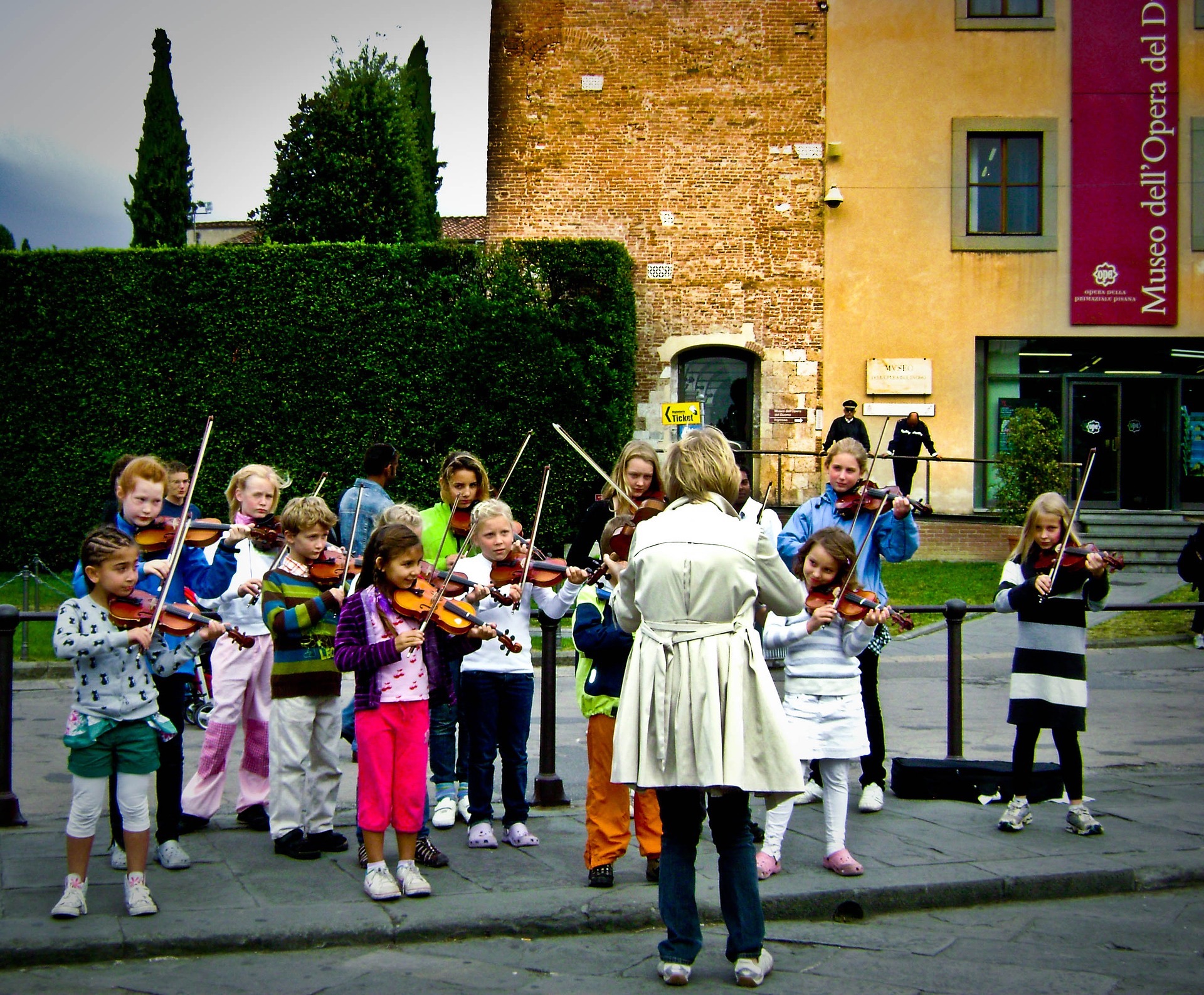
What would be ideal to place on/in your website/e-portfolio? Show a wide spectrum of experience and training: elementary and/or middle school general music, band, choral and string ensembles (all grades), marching band, musicals, dance, music technology, piano and guitar accompanying, Dalcroze eurhythmics, Orff instruments, etc. Competency, versatility, and being well-rounded are the keys here.


boy-273279_1920_Silberfuchs


7. Teacher interviews – “practice makes perfect”

I have written a lot on the subjects of assembling a collection of your teaching anecdotes and stories, marketing your “personal brand,” and preparing for the employment screening process. (Have you wandered through the comprehensive listing at https://paulkfoxusc.wordpress.com/becoming-a-music-educator/?)

However, I recently came upon several new-to-me online articles that summarize the basics. Please take a look at these:

After reading all of these (and compile your own list of interview questions), you should get together informally with your fellow juniors and seniors and hold mock interviews, record them, and jointly assess the “try out” of your interviewing skills to land a job.

Finally, have you recently updated your resume, and created (or revised) your professional business card, website, and e-portfolio?

children-2685070_1920_mochilazocultural


Okay, I admit it. I got a little carried away. You would need TEN SUMMERS to cover everything above. What’s that saying? “There’s never enough hours in a day…”

Hopefully these resources  and recommendations are helpful “food for thought!” You cannot accomplish anything by procrastination… or just “sleeping in!”


Many have said that aspiring to be a music educator is a lot like a “calling.” Using your summer “free time” is all about “professional engagement.” One of my superintendents said he expected prospective new music teacher recruits to show high energy, enthusiasm, sense of purpose, and dedication during the interview… even a supposed willingness to “lay down in front of a school bus” or “do whatever it takes” to make the students (and the educational program) successful. Regardless of the hyperbole, that’s engagement!

So, what are you waiting for? Pass the sunscreen and the ice tea. Then, after a quick swim, jog, round of golf, or game of tennis, get started on your summer assignments!

PKF


piano-78492_1920_nightowl


© 2018 Paul K. Fox


Photo credits (in order) from Pixabay.com: “music” by ArtsyBee, “music” by KevinBism, “orchestra” by HeungSoon, “music” by brendageisse, “kids” by klimkin, “marching band” by sam99929, “guitar” by sunawang, “child” by skeeze, “flute” by congerdesign, “microphone” by klimkin, “choir” by intmurr, “band” by Pexels, “little girl” by Atlantios, “boy” by Silberfuchs, “children” by mochilazocultural, and “piano” by nightowl.