Did You Take the Summer Off?

Rebuilding instrumental technique after a long break
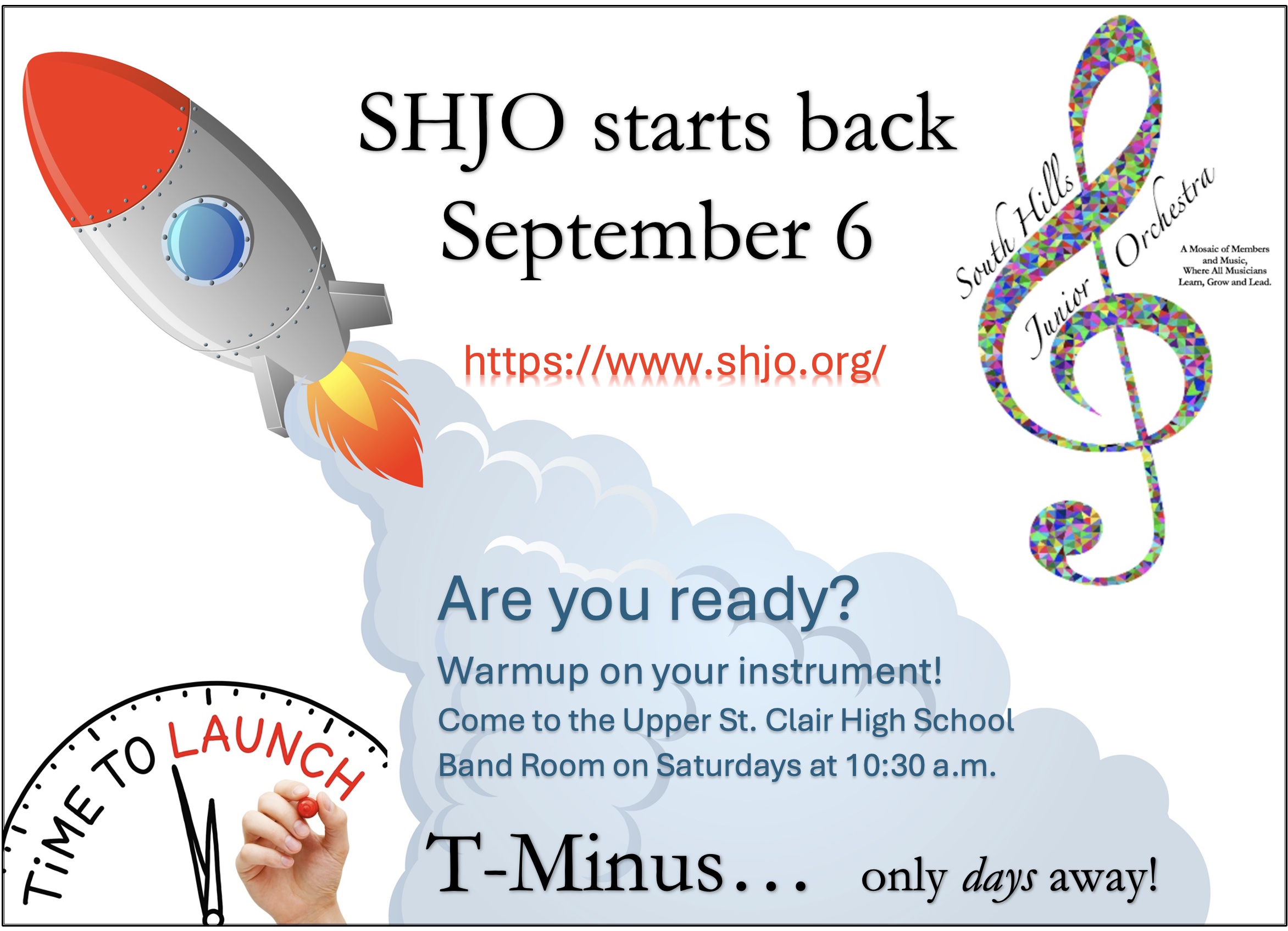
Director’s Note: This is the week to get ready for the return of the South Hills Junior Orchestra after all our vacations! If you live in the Southwestern PA area, we hope you will consider this a personal invitation to “TRY SHJO” and participate in several free and open rehearsals of our community orchestra – a totally “judgment-free” place for creative self-expression of all ages and ability levels. Practices are held in the Upper St. Clair High School Band (1825 McLaughlin Run Road, Pittsburgh, PA 15241) on Saturdays from 10:30 a.m. to 12:30 p.m.

A Google search on my computer fetched the following “AI Overview,” a nearly perfect summary for wind players to recover their “chops” and bring back good tone, intonation, breath support, flexibility of the embouchure, key literacy, and practice habits. For players of all orchestral instrumental sections, I recommend revisiting other articles in the Fox’s Fireside Library to develop a “practice plan” and adopt new musical goals. PKF

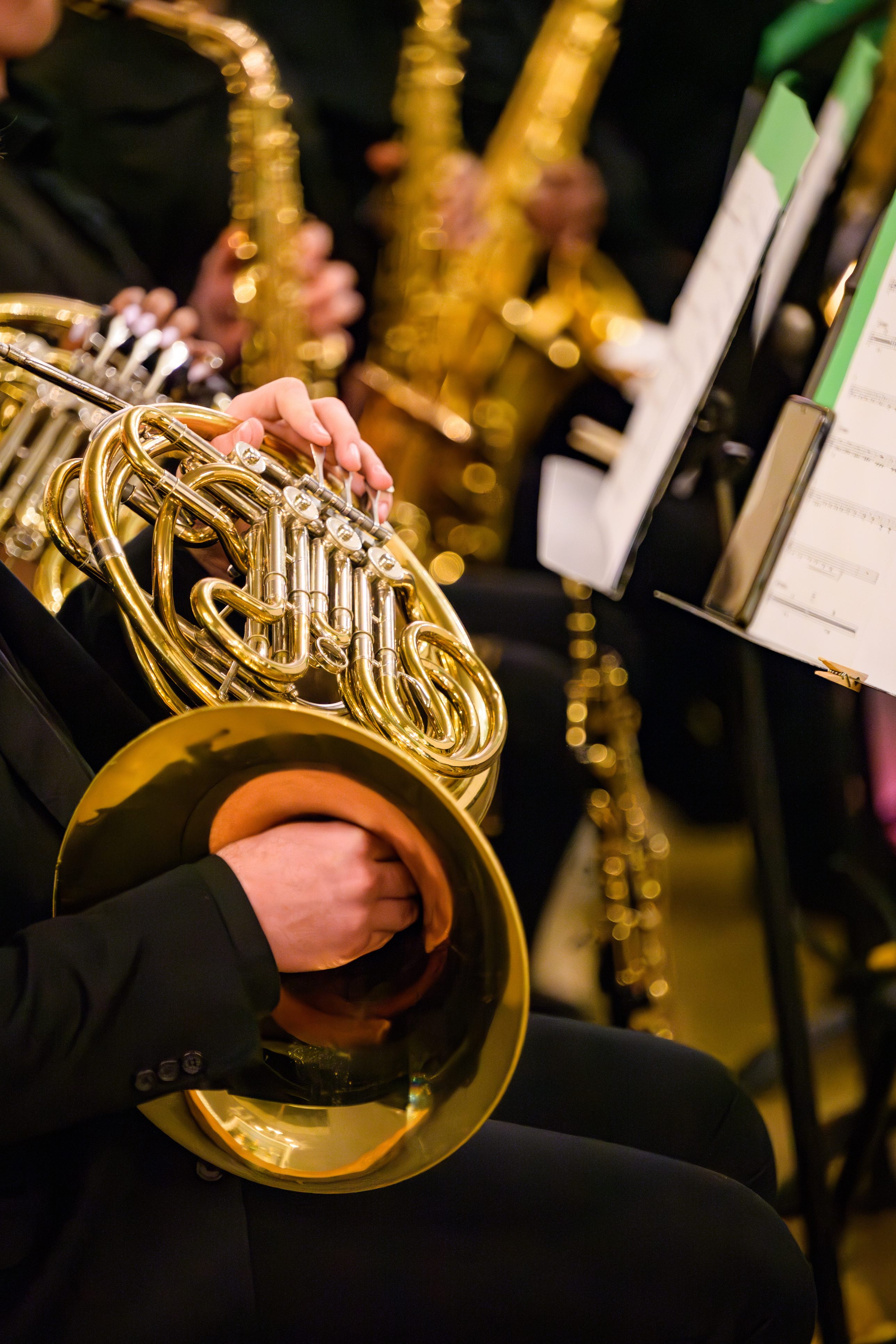
To rebuild your brass and woodwind instrumental technique after a long break, focus on the following gradual, three-stage process: first, restore your tone and response, then regain flexibility and dexterity, and finally, rebuild range and endurance. Prioritize short, consistent practice sessions, and avoid pushing too hard too early to prevent injury and bad habits.
Stage 1: Restore tone and response

Your primary goal is to reacquaint your body with the fundamentals of playing by focusing on soft dynamics and your lowest register.

  • Breathing exercises: Start without your instrument. Practice deep, diaphragmatic breathing to re-engage your respiratory system and expand your lung capacity. You can use simple routines like inhaling for four counts and exhaling for eight, or try the “pinwheel” exercise to visualize steady airflow.
  • Buzzing: Brass players should spend time buzzing with just their mouthpiece to get their lips vibrating efficiently again.
  • Long tones: On your instrument, play sustained, steady notes at a soft volume in your lower-to-middle range. Focus on producing a clear, characteristic tone. Use a tuner to monitor your pitch stability.
  • Short practice sessions: Limit your initial sessions to 5–20 minutes, with plenty of rest in between. This prevents over-straining your facial muscles and embouchure.
Stage 2: Regain flexibility and dexterity

Once your tone and response feel stable, you can begin to expand your comfortable playing range and improve finger speed.

  • Scales and arpeggios: Practice basic scales and arpeggios at a slow, controlled tempo. This helps rebuild muscle memory for your fingers while keeping the focus on even, beautiful tone.
  • Slurred partials (brass) and lip slurs (woodwind): Practice smoothly transitioning between notes without using your tongue. This strengthens your embouchure and improves air control.
  • Simple music: Play easy, melodic pieces you know well. This helps you focus on phrasing and musicality without the pressure of a difficult score.
  • Increase session length gradually: Slowly add time to your practice sessions, perhaps moving to 15–30 minutes at a time. Continue to take frequent breaks.
Stage 3: Rebuild range and endurance

After re-establishing your fundamentals, you can begin to increase the intensity and duration of your playing to return to your previous level.

  • Expand your range: Gently start working your way into your upper and lower registers, but maintain a soft dynamic level. Only increase volume once you can play a note softly with a good tone.
  • Louder dynamics: Once your full range is accessible, begin practicing with louder dynamics. This is physically demanding, so continue to take frequent rests.
  • Articulation: Incorporate tonguing exercises. Start with basic single tonguing before adding more complex techniques like double and triple tonguing.
  • Listen to your body: Your body will be the ultimate guide. If you feel any pain or unusual fatigue, ease up and incorporate more rest into your routine.
  • Mental preparation and practical tips
  • Listen to music: Remind yourself of what inspires you and listen to your favorite players to reconnect with the joy of playing.
  • Record yourself: Objectively evaluate your progress by listening back to recordings. This helps you identify areas that need work and celebrate your improvements.
  • Revisit old notebooks: Look back at any old lesson journals for useful reminders and insight into your past tendencies.
  • Service your instrument: A leaky pad or sticky valve can make returning to your instrument unnecessarily difficult. Have a technician give your instrument a “clean, oil, and adjust” to ensure it’s in prime playing condition.
  • Be patient: You are not expected to be at your former playing level immediately. Trust that your muscle memory will return with consistent, smart practice.

Click here to download a printer-friendly copy of this article.

 Here are additional resources shared in the SHJO eUPDATE newsletter (August 30, 2025):

PKF

© 2025 Paul K. Fox

SMART Practice

Fox’s Fireside – Summer Camp Edition

foxsfiresides


My wife is a genius!

Well, I knew this before I married her in 1978, but every day I work “side by side” with her on music education projects like the South Hills Junior Orchestra Online Academy (SHJOOLA – pronounced shah-ZOH-lah), I discover even more of her amazing “hidden” talents and insights!

Donna Stark Fox is the author of 99% of this Fox’s Fireside.

We launched SHJOOLA and other digital/virtual/alternative programs (like SHJO.clips) to keep our community orchestra instrumentalists practicing inspite of the school closure and restrictions caused by the pandemic. We want to foster our players’ self-confidence and motivate even greater focus on new growth and achievement in instrumental technique, key literacy, ear-training, musicianship, personal goal-setting, and artistic enrichment. As the character Jean-Luc Picard from the Star Trek Next Generation series says, ENGAGE… in the pursuit of their own inspired initiatives in music learning!

ONLINE ACADEMY LOGO 1.2

During the first week of SHJOOLA, we introduced this SMART Practice Primer (download and adapt to your own practice regime). The philosophy comes from my wife’s (ahem) 55+ years in the field of music performance as a violinist and pianist and a versatile career of 38+ years in the public schools teaching strings, band, general music, elementary chorus, musicals, etc.

What are the secrets of practice success? Past Fox’s Firesides address many issues of time, goals, focus, mentors, problem solving, and various playing techniques. (You may also peruse this catalog of past articles and our SHJO.clip library here.)

This article hopes to bring out a new approaches to “practice builds self-confidence…”

Are you ready for SMART Practice?

  • Schedule time for practice by using a calendar.
  • Find a quiet place to practice and gather everything you need.
  • Set goals. Write them down, make them measurable, and be specific and realistic. Check them off and “raise” your goals frequently.
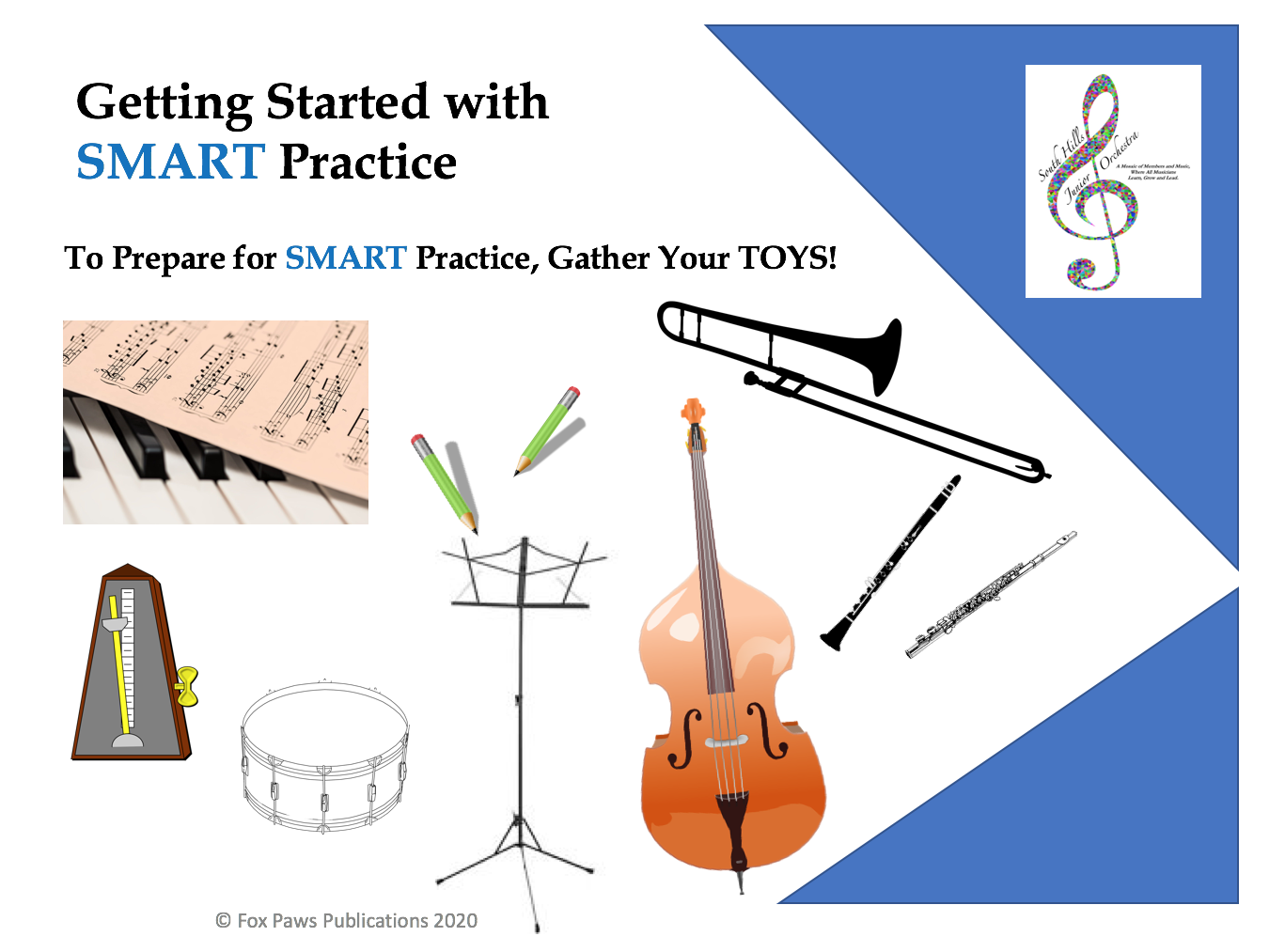
  • Gather your equipment, including your instrument, music stand, chair, pencils, music folder, metronome, and tuner.
  • Chart your practice with a list of what to practice, because writing it down is a promise to do it!
  • Keep a reflective journal to organize your thoughts, to analyze and to set new goals.
  • Regularly make audio or video recordings of yourself and keep them in a file in a folder on your electronic device.

Smart Practice 1

Success starts with a plan!

Begin with a long-range goal/dream.

  • I will perform a solo with a symphony orchestra.
  • I will become a professional musician.
  • I will play in a college orchestra or band.
  • I will enjoy music throughout my adult life.

Set medium-range goals.

  • I will play a Mozart Concerto before I am 16.
  • I want to upgrade to a better-quality instrument when I am 14.

Set and rest short-term goals on a weekly and even daily basis.

  • This week, I will play the Bach Fugue with accurate fingerings and pitch.
  • This week, I will play the Bach Fugue at performance tempo.

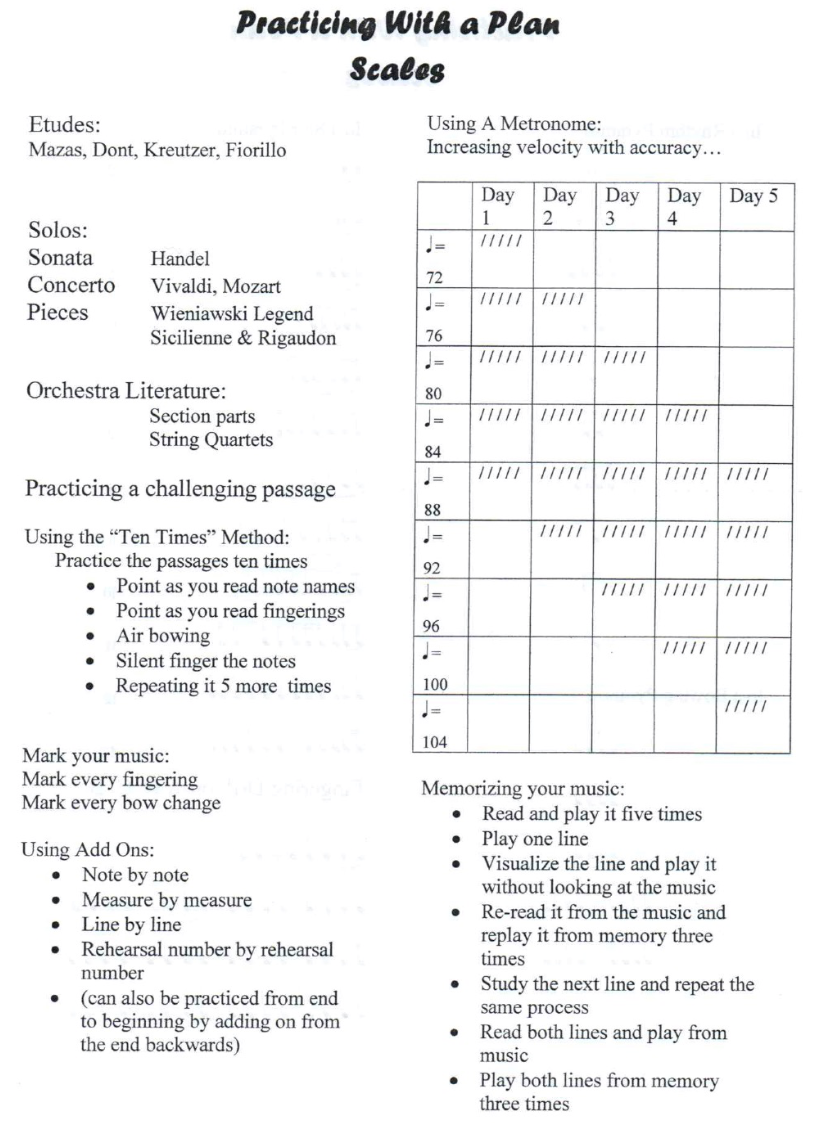
Here is an example of one violinist’s SMART Practice plan:


Practicing with a plan

Tips on SMART Practice

  1. Warm-up with drills and exercises.
  2. Identify the key of each selection you are practicing.
  3. Play the scale for the key you have identified, using a rhythm or articulation pyramid.
  4. Select a passage to improve and mark the fingerings in pencil.
  5. Say the note names in half notes. (“If you can say it, you can play it!”)
  6. Be sure you practice every note as a half note using the fingerings provided by the conductor.
  7. Use a metronome to “keep it honest.”
  8. Practice VERY SLOWLY using the original rhythm and bowings/articulations.
  9. Gradually increase the tempo by “inching up” on the metronome.
  10. How many times have you played the passage correctly?
  11. Ten consecutive times right today, and ten more tomorrow, will already make the passage 20 times better than it was before!
  12. Schedule your next practice session.
  13. Reflect in your journal and set new short-term goals for tomorrow!


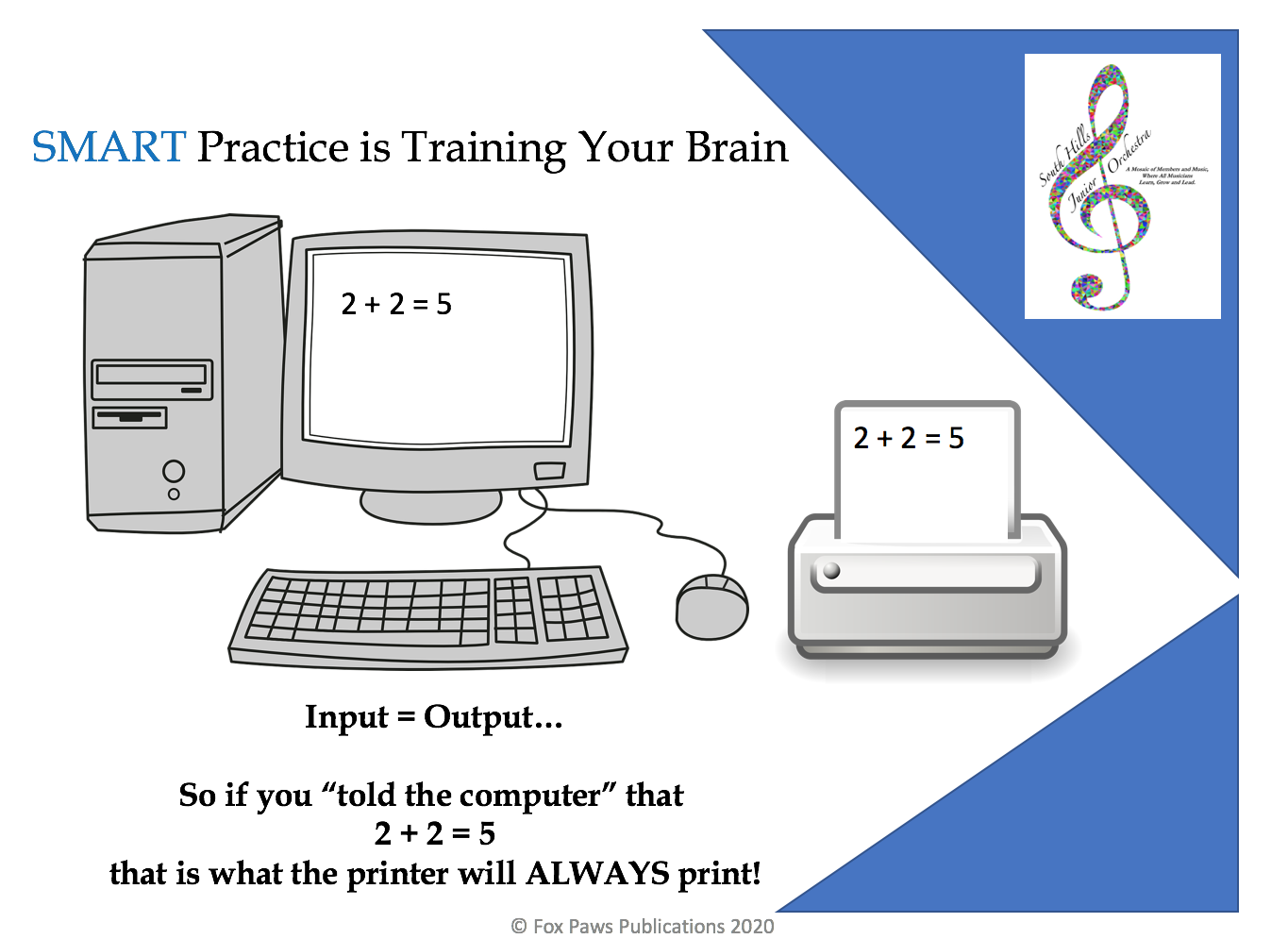
smart practice is training your brain

Training your brain is SMART Practice

  • Practice is a process.
  • Practice is all about habit development.
  • Practice leads to self-confidence.
  • Practice is an opportunity for self discovery.
  • Practice is cumulative.
  • Practice is where you can make mistakes privately.
  • Amateurs practice to get it right.
  • Professionals practice so that they never play it wrong.

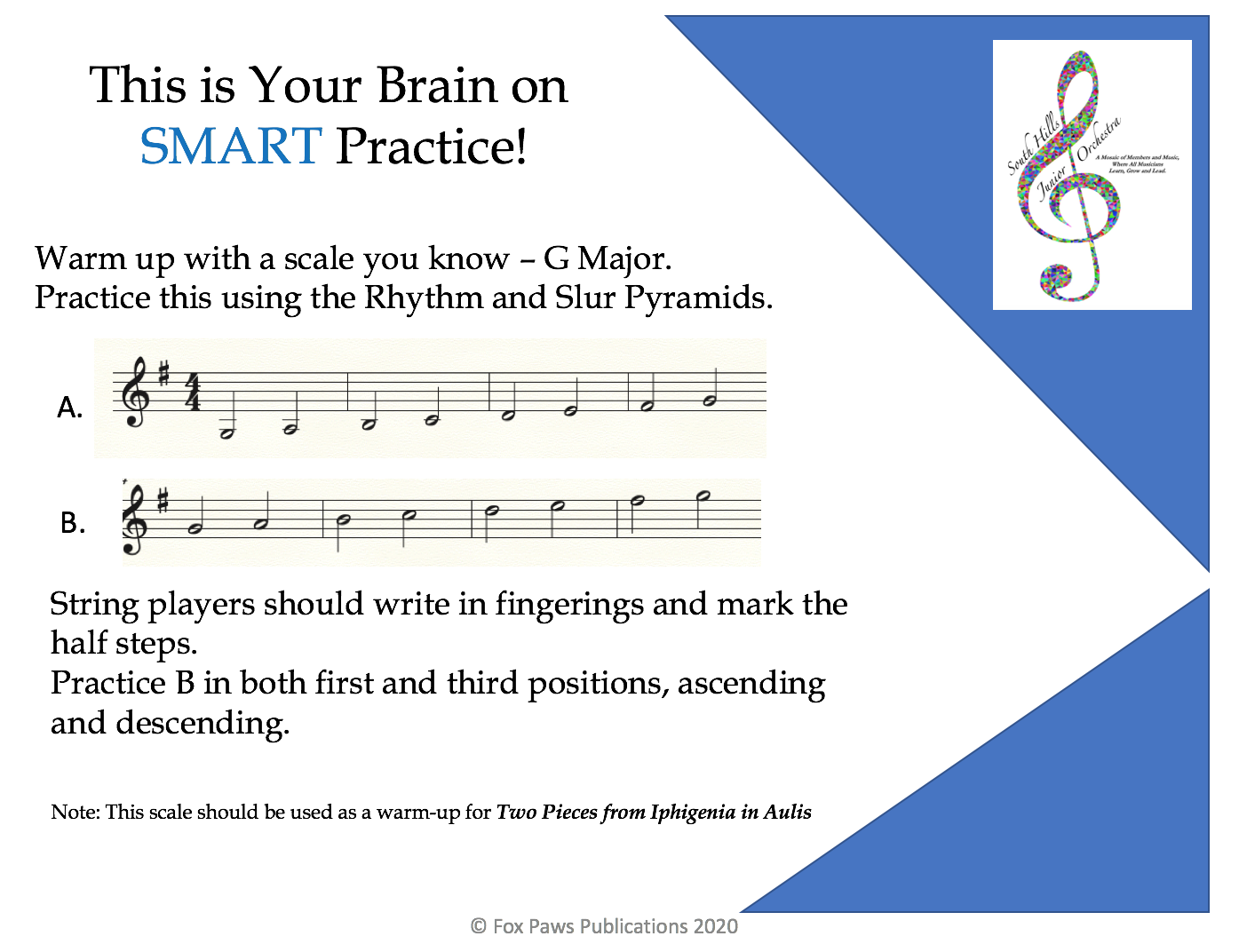
This is your brain on SMART Practice

Variety is the spice of life and music variations challenge the mind!

You may have heard these strategies before:

  • First make it easier, then progressively harder.
  • First subtract (e.g. remove slurred notes) and then progressively add more challenging elements to the music (dynamics, longer phrases, articulations, fingerings, positions, memorization, etc.)
  • First play it slower, then progressively faster.
  • First take smaller sections (measure by measure, phrase by phrase), then progressively expand to larger sections, eventually being able to play the entire piece.

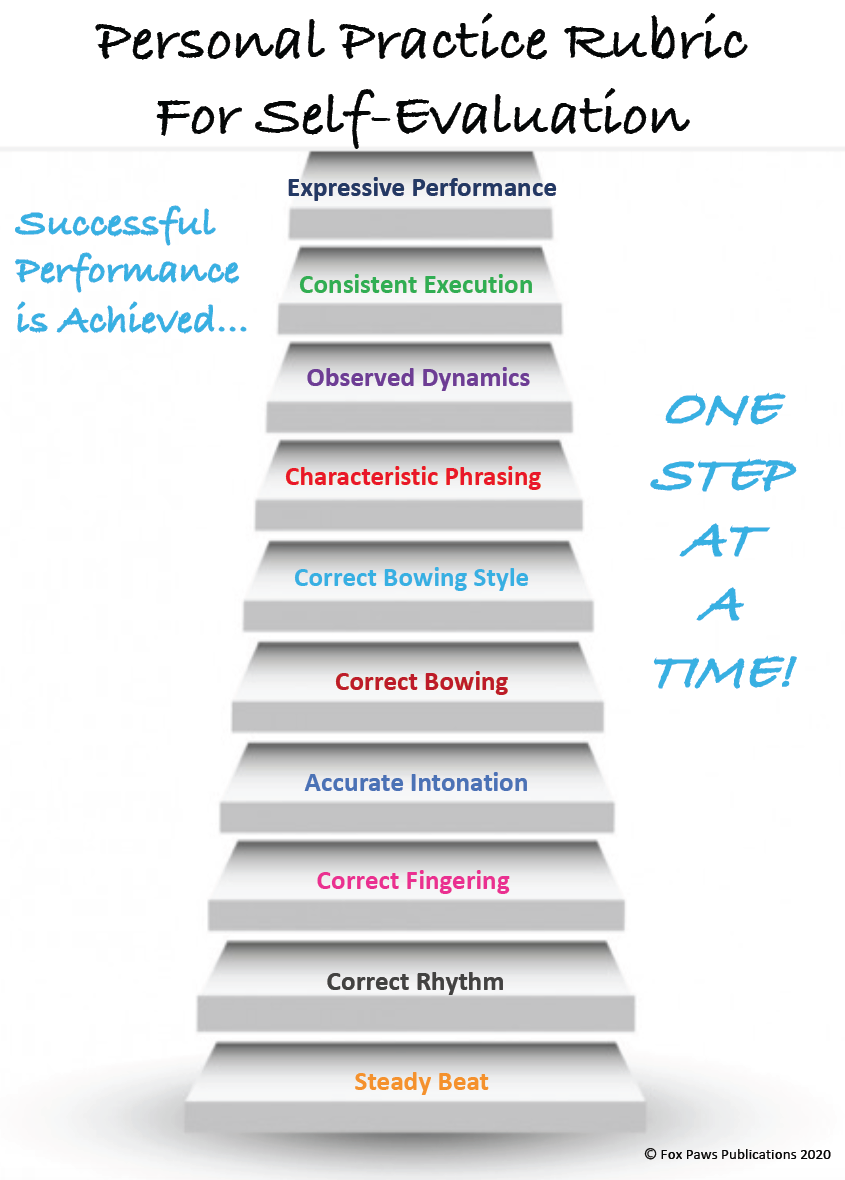
practice rubric

Try these rhythm and articulation pyramids on your scales, warmups, etudes, and any difficult passage in the music. Taking “baby steps,” create a new way to learn the part…

More to come… Part II will dive into additional recommendations for personal music problem solving with numerous examples.

Keep at it! You’ll make us all proud. Most importantly, especially yourself!

PKF

seriestoshare-logo-01

The mission of the nonprofit South Hills Junior Orchestra is to support and nurture local school band and orchestra programs, to develop knowledge, understanding, performance skills, and an appreciation of music, to increase an individual member’s self-esteem and self-motivation, and to continue to advance a life-long study of music. Members of the Orchestra learn, grow, and achieve positions of leadership to serve their fellow players.

The second half of our 37th season (Spring 2020) was postponed due to school closures and the pandemic. We are now offering SHJOOLA – the South Hills Junior Orchestra Online Academy. The program includes virtual sectional rehearsals, special workshop seminars via Zoom, and remote music learning activities, both synchronous and asynchronous instruction, and provides a one-year subscription to MusicFirst Classroom, PracticeFirst, Sight Reading Factory, Musition (music theory), Noteflight (score notation) and other apps. Western PA instrumentalists are welcome to apply for membership in one of the 25 remaining “seats” in SHJOOLA by contacting Managing Director Janet Vukotich.

(For more information about SHJO, please visit www.shjo.org.)

This and all Fox’s Fireside blog-posts are free and available to share with other music students, parents, directors, and supporters of the arts. For a printable, hard copy of this article, click here.


© 2020 by Paul K. Fox and Fox Paws Publications


Photo credit from Pixabay.com:

“Camp Fire” by Chris Aram