Hacks for Music Teachers – Part 2

More Tips, Tricks, & Techniques to Help You Organize

As you can see, it has been awhile since I shared a blog-post. It looks like I went on vacation and skipped the entire month of July!

Well, truth be told, familiar to many of my band director friends, we are hitting the streets with a plethora of summer clinics, rehearsals, and camps to prepare for and usher in the season of parades, halftime shows, pre-games, festivals, competitions, etc., and although I am officially “retired,” I chose to re-up as “admin” to the “Pride of Upper St. Clair” – the marching band of the school from which I left in 2013. Serving as announcer for now more than 37 years, I decided to “put the pedal to the metal” and join the “band leadership team” to discover the joy of watching our ensemble “hatch” their new shows from scratch, re-awaken and build on their technique, inspire and grow their membership, and focus on “practice-practice-practice” and “making music!” I just finished a grueling week of those 12-14 hour band camp days spent in close partnership with 100+ of my favorite high school musicians.

Fantastic? Yes. Exhausting? Absolutely! It reminds me of 30-years-worth of nonstop days and nights of leading the annual spring musical as director/producer, including missing meals, dragging myself home to re-acquaint myself with my wife (who went through this, too), and dropping into bed. I have always said, quoting Ernie Zeliniski in his book How to Retire Happy, Wild and Free, it is important to find PURPOSE, structure, and community in retirement… but this hectic pace of frenzied activity at times tests my endurance. And, it feels a little like I never left teaching….

Therefore, I thought it would be appropriate to share some “advice from the experts” in terms of organizational tools and quick fixes or “hacks.” (See Part 1 on this topic.) This is only a gourmet “taste” of their ideas to simplify your life, work, and teaching. You should do yourself a favor and take more time to research the websites below for a complete explanation of their recommendations. We appreciate their generosity and willingness to be “free and open” to permit us to repeat their ideas in this forum.

Easy Time Savers for Instrumental Teachers

Photo and article excerpt by Wendy Higdon

To get started with a “bang,” let’s visit Wendy Higdon’s “On and Off the Podium” website here, or the NAfME “Music in a Minuet” blog site which reprinted her Clever Music Teacher Hacks That Will Make Your Year Amazing – Getting Ahead of the Time Crunch.

  • “Use rubber pencil grips as inexpensive thumb rest cushions on clarinets by cutting them in thirds. (see photo)
  • Pink erasers work well as emergency rock stops for your cello and bass players
  • Purchase golf pencils on the cheap to keep in the classroom so that forgetting a pencil never becomes an excuse. Kids won’t love using these short, little pencils, so they are less likely to walk away at the end of class.
  • Three ring binders with sheet protectors help students keep organized and also cut down on lost music. If you want to be super-organized, add a pencil pouch and tab dividers in the binder.
  • Strips of velcro on the carpeting work well as guides to where chairs should go and allow your students to quickly and easily straighten up the rows. (see photo)
  • Print a sign with important information that your students frequently need (music store phone number, website addresses, etc.) and have them take a picture with their phone so they won’t have to ask you in the future. Do the same for important dates, locker combinations or anything else that is easily forgotten.
  • Locker mirrors can be purchased cheaply during school supply sales. Buy a class set and use them to check embouchure and more!
  • Did a clarinet or sax player forget their ligature? Or worse. . . it got stepped on and now it is as flat as a pancake! Use a rubber band to hold the reed on the mouthpiece until the student can get a new one.
  • Does your baton get buried under all your conductor scores? Use a binder clip on the side of your music stand, and it will always be handy! (see photo)
  • Do your beginning flute players have trouble remembering which keys the fingers of their left hand go on? Use “Avery Dot” stickers to mark the keys. You can do the same with clarinet pinky keys. Color code the keys on the right and left hand to assist students in learning their alternate fingerings. (see photo)”

There are a lot more “why didn’t I think of that” time management hints throughout the article. Also, be sure to check out her interesting Microsoft Word and Excel templates to use for your seating and locker assignments.

Band Directors Collaborate!

Photo and article excerpt by Mike Doll

The middle school band directors in South Carolina got together and created a brainstorming session to share teaching tips and strategies with each other in order to improve their music programs. According to Mike Doll, editor of one of the blog posts Band Directors Talk Shop, “After the success of the first meeting, we decided to continue this on a regular basis, and we now do this 2-3 times a year for the past 10 years. These ‘best practices’ gatherings have been very informative, and we always walk away with several new ideas to try in our classrooms.”

Here are several ingenious ideas from their “toolkit” of Tricks of the Trade – Five Organizational Tips.

1. Music sorter stick
“One of our directors shared a neat way to sort music back into score order without multiple piles of different parts scattered around them on the floor. If you go online and search for Plastic Sort All, you will find the tool they use for this trick.”

“The director then used a label maker and created labels for each instrument in score order and attached them to the sorter in place of the letters and numbers on the end. “

2. Lines/tape on the floor for easy chair placement
“One director, with a tile floor, mentioned they would check with their maintenance folks and find out when the wax would be stripped from the floor. At that point, they would tie a string to their director stand and measure the distance to the first row. They would then attach a sharpie to the other end of the string and use it like a compass to draw arcs on the floor. Once the floor was waxed, the lines never came up. Gaffers tape also works on carpeted floors. At the end of each class, the director would have everyone look down to make sure the front chair legs were on the arc. Clean neat rows in seconds at the end of each period.”

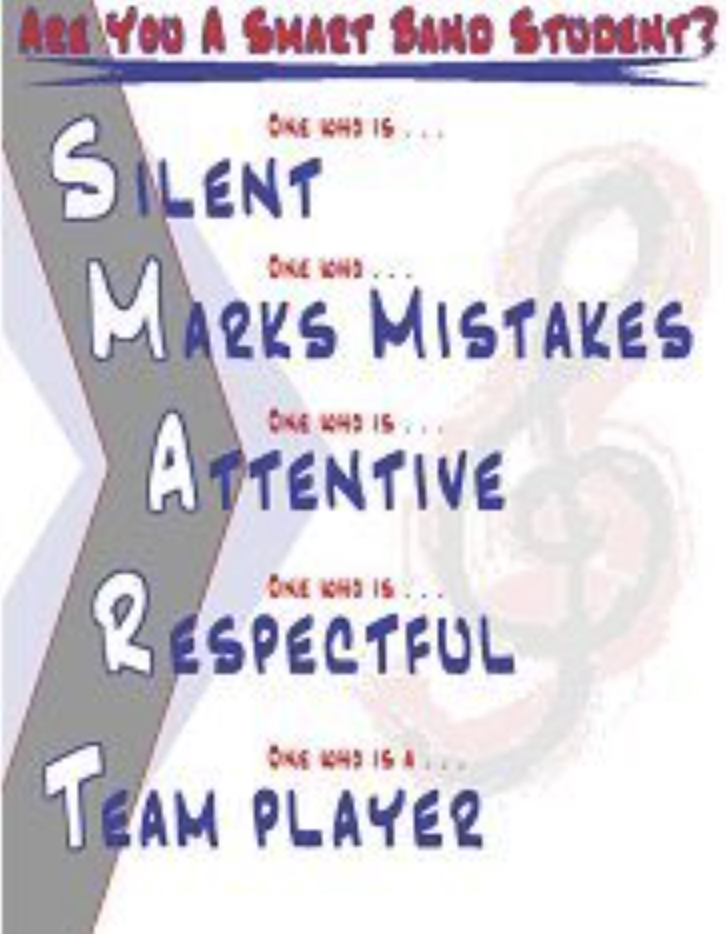
5. SMART Band Student.

“Quick and clean set of expectations for your band students. A SMART band student is one who is:

  • Silent
  • Marks Mistakes
  • Attentive
  • Respectful
  • Team Player”

The article’s “Tip #4” on Band Binders is reminiscent of what I had applied to my grades 5-8 string program. My wife utilizes something similar for her online music lessons. Rookie or new teachers, especially, check it out!

In addition, you should peruse their website for an inspiring collection of articles on a host of other topics:

Band Room Hacks

Photo from Google’s Search of “Band Room Hacks on Pinterest” by Julia Arenas

How timely and appropriate! I stumbled on this Pinterest site, Band Room Hacks, a collection by Julia Arenas, and since I did not get advance permission to reprint her library of images, I will invite you to go explore them for yourself. At a quick glance, I see she has assembled from music colleagues a lot of excellent storage solutions as well as music teaching tools that may inspire you to modify/add your own new time-saving shortcuts.

Time and Task Management on Steroids

We round off our organizational hacks for music teachers with the brilliance of Ashley Danyew, and excerpts from her blog post 9 Time-Saving Tools and Tactics for Busy Music Teachers and Directors.

Although productivity experts like Stephen Covey in Seven Habits of Highly Effective People and the originators of the aforementioned (in Part 1) Priority Management System (a favorite of mine) may be most helpful, we can all learn from Ashley as she sums things up with these tips on supercharging ourselves in planning for a good start to the school year. (You’ll have to visit her post to get the full gist of what to do!)

  1. Put all your to-do’s in one place.
  2. Track your time.
  3. Batch related tasks.
  4. Limit social media.
  5. Divide your work-day into time blocks.
  6. Set aside time to send and respond to emails.
  7. Close documents and browser tabs you are not currently using.
  8. Go into meetings with an agenda or outline.
  9. Make templates.

I particularly love this introduction to her article:

“One thing I hear over and over from church musicians and music educators (well, everyone, really) is that there never seems to be enough time to get it all done.”

Time to teach
Time to rehearse
Time to write
Time to practice
Time to be with family
Time to be a good friend
Time to read
Time to exercise
Time to learn

“We’re always looking for new ways to be more productive, get more done in the little time we seem to have, and save time in places where, like money, we might be overspending. Am I right?”

“That’s one of my favorite ways to think about time – as money. It’s a commodity. We all have the same number of hours in the day – it’s how we spend them that makes the difference.”

Where (and how) do you want to spend your time? What’s important to you?

“Once you can answer this question, you’ll be motivated to make it happen – to take control of how you’re spending your time and look for ways to save it, where you can.”

9 Time-Saving Tools & Tactics for Busy Music Teachers and Directors
by Ashley Danyew

Couldn’t have said it better myself!

Have a great school year!

PKF

Giving Back to the Association

A Pep Talk for Teachers to Become “Team Members!”

I found myself this past Monday morning with a few extra minutes checking my almost empty “to-do” list and, with the exception of planning to watch the Pittsburgh Steelers football game and the endless chore of raking leaves in my yard (I immediately rejected the latter), I discovered I had very few professional or personal priorities to focus on this week! Wow! Some additional “free time!” Shh… don’t tell anyone!

Down time? As I mentioned in a previous blog-post, since the summer, things had been a little hectic for “this retiree.” When I accepted the position of “admin” to the marching band of the school from where I retired, I discovered how fast we can fill up our schedules with meetings, rehearsals, and performances… to the point that it is hard to imagine how I could possibly have done all of this unless I retired from the regular job! My wife jokingly said, “Those were the days!” (perhaps a little unsympathetically?) as she watched me takeoff for band camp, parent salute nights, late night away football games, etc., while she remained cozy at home. “Been there. Done that! Not anymore!”

Only one professional association got me through more than five decades in music education and 35+ years of full-time directing, equipping me to handle the twists and turns of an ever-changing career (e.g., becoming a choral director even though I had never sang in a high school or college choir), and even attending music festivals as a viola and tuba student for four years in the Penn Hills school district. Who do I credit for giving me this “life force,” “teacher chops,” and music mastery? PMEA. We are so fortunate to have this priceless “collaboration of our colleagues,” numerous resources for the benefit of our own professional development, and services we provide to our music students. Cut me and I bleed PMEA blue!

How Are YOU Feeling?

This blog’s “call to action” is necessary because of the turmoil the pandemic has left the arts education community, new school health and safety mandates, re-prioritization of district resources (in some places away from the arts in spite of the need for more not less social emotional learning), reports of the drop in music participant enrollments, decrease in membership renewals, and teacher shortages.

The crush of COVID-19 and all of the program delays, suspensions, (and hopefully not) permanent losses have made this one of the most challenging times I can ever recall. The only way we can get through this is “together…” and frankly, “if you’re not part of the solution, you’re part of the problem!” This is NO TIME to let your membership and involvement lapse! PMEA and other professional music education organizations (like NAfME, ACDA, ASTA) need your “dedication to the cause,” willingness to help “the team” and one other,  and active participation.

Collegiate members, full active members, and retired members – all of us joining forces – can truly “make a difference!” No matter how busy or stressed you are and how much you feel you are “slugging it out in the trenches” alone, we all need to become partners and devote time for and dedication to the associations we are blessed to have right now that support music educators in the Commonwealth, the nation, and the profession.

The Essential Role of Associations

It does not matter which profession you have chosen! You NEED an ASSOCIATION!

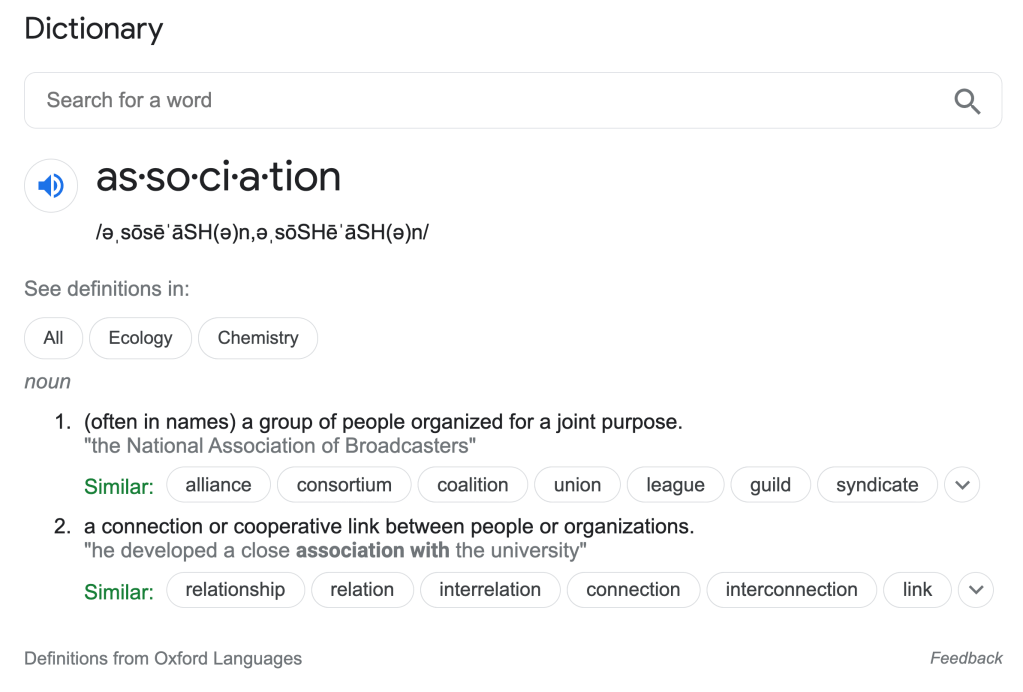
Google English Dictionary provided by Oxford Languages

The architects may have defined “this essential bond” best:

Membership in the relevant professional organization is one of the things that separates a profession from a conventional job. It is a key element that defines a professional. Membership in one’s professional organization is expected of all professionals. It is important to support the advancement of one’s profession, and becoming a member of the professional organization is a part of that advancement.

Involvement with a professional society will afford the participant an opportunity to network with other colleagues in industry and practice. Making connections with others who have similar interests reinforces why one has chosen this career. It enables new professionals to associate with senior members of the profession and learn from them. Joining a professional organization is critical in keeping abreast of the latest knowledge and practices locally, regionally, and globally. It helps the professional to stay abreast of current issues and opportunities and will also assist in personal advancement for the member who becomes involved.

Many professional organizations offer continuing education, seminars, and lectures along with other opportunities for learning. An active participant will have the opportunity to serve in professional development. Working with people outside of one’s own firm and volunteering will build leadership skills. Opportunities for working with the community for the betterment of society and the local economy will be available. There will be possibilities for making real contributions to the human condition through projects the professional organization may take on as a part of giving back to the community. There are events that will call for public speaking skills and professional visibility which will assist in moving one’s career to another level by connecting with other professions and local leaders in the area. The profession will benefit from members’ service and the members will be rewarded in return by such things as personal fulfillment, professional enrichment, and building a stronger resume as a result.

Further definition of the professional responsibilities and ethical practices will come in part from the professional organization. It is a central core for regulation, education, revitalization, networking and service. Joining a professional organization provides occasions and experiences to renew one’s enthusiasm for the practice of interior design. The interaction can be both inspirational and enlightening. Being a member of a professional organization is a symbiotic relationship between the organization and the member that will benefit them both.

Alabama Board for Registered Interior Designers

My “top-ten” benefits for membership in a professional association like PMEA are:

  1. Development and sharing of the standards and best practices of the profession
  2. Student festivals and music performance assessments
  3. Professional development and career advancement opportunities: workshops, conferences, and publications
  4. Leadership training
  5. Collaborative projects such as health and wellness seminars, ethics training, library of online resources, etc.
  6. Networking opportunities
  7. Models and resources for curriculum writing
  8. Coaching and mentoring resources
  9. Resources in job hunting and interviewing techniques
  10. Advocacy of music education and “a voice” (more political “clout”) in defining future government public policy

So, What’s in it for Me?

Review a few of the synonyms of “association” mentioned above: “alliance,” “consortium,” “coalition,” “connection,” etc. I am sure you’ve heard the saying: “TEAM stands for Together Everyone Achieves More.” Or, to quote the philosopher Aristotle: “the whole is greater than the sum of its parts.”

The easiest way for me to show the value of joining PMEA and becoming more active, engaged, and successful in your teaching assignment (no matter what the primary specialty – general music, vocal, band, strings, jazz, music theory, technology, etc) is to take a snapshot of the benefits displayed on the www.pmea.net website. Why try to reinvent the wheel? You might be surprised the extent of the HELP that is available just around the corner! Go ahead… click away! Take a peek at what you may be missing!

On a personal note, PMEA has provided me the insight, inspiration, and opportunities for substantial career growth, “places to go and people to meet” to fill-in-the-gaps of the skill training I may have felt were missing, for example methods and media for teaching a high school choral program for more than 16 years and directing/producing 37+ musicals. In addition, PMEA and NAfME have been the sole institutions that I have turned to for more than 50 years for their sponsorship of choral and orchestral music festivals and other enrichment that have provided my students new and highly motivating musical challenges and countless state-of-the-art once-in-a-lifetime experiences.

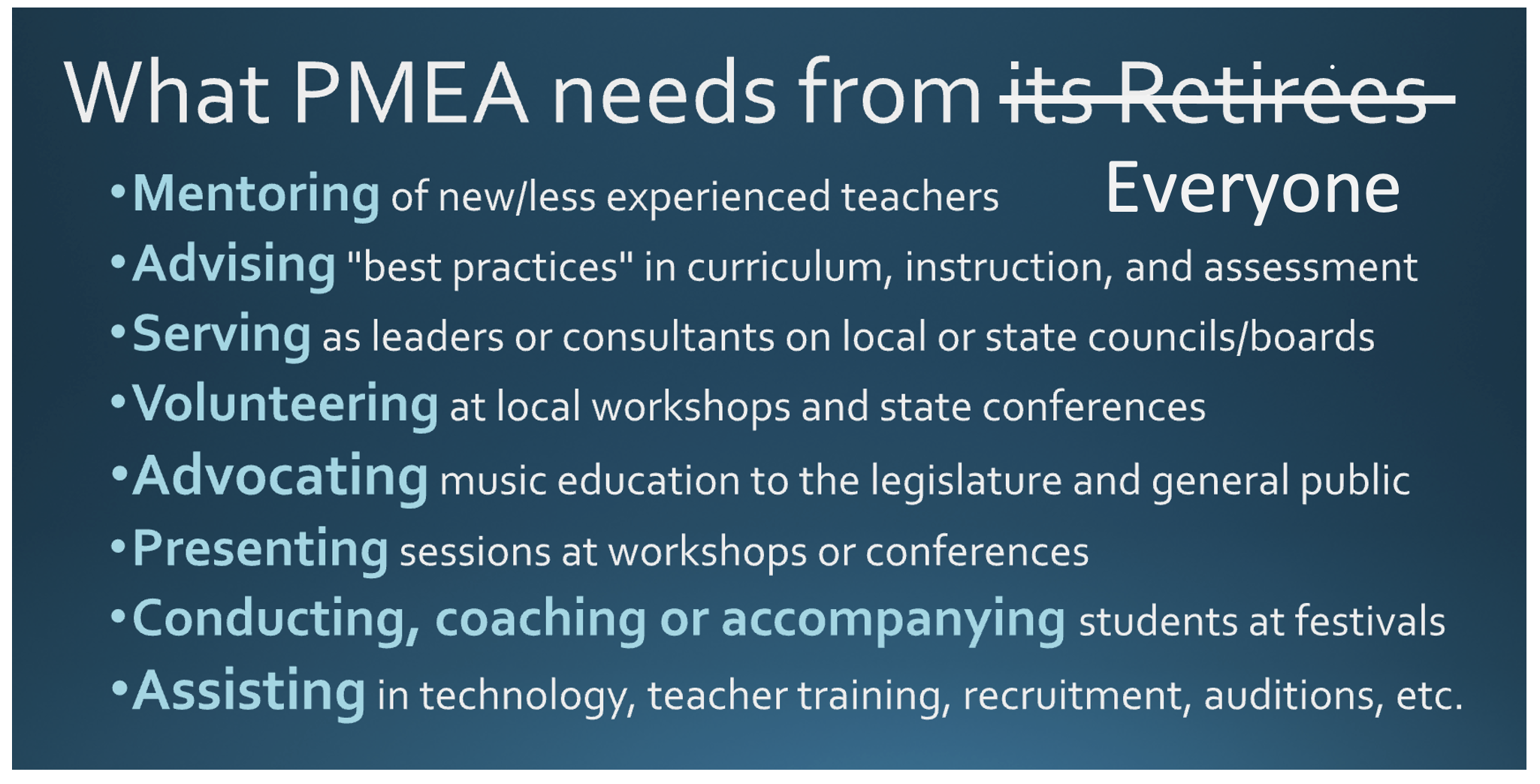
So now, reflect on the title of this blog! It is essential to give back to our association – to help it achieve its mission: “to advance comprehensive and innovative music education for all students through quality teaching, rigorous learning, and meaningful music engagement.” We’re all in this together, and together we can make it better! Slide #6 at the bottom of the retired members’ webpage proposes what PMEA needs from all members (not just retirees):

The number one thing you can do for ANY association is to pay your annual dues, attend its meetings, be active and HELP OUT! In return, PMEA can assist you in finding and sustaining your passions! What are you waiting for? If you have not renewed for the 2021-2022 year, please visit this PMEA membership webpage.

PKF

© 2021 Paul K. Fox

Pictures from Pixabay.com by artist Augusto Ordóñez

Stressed Out?

More Remedies for Reducing Teacher Stress & Burnout

stress-1837384_1920_johnhainWelcome back to our series on music teacher (and other professionals) self-care.

First, as presented in this insightful article by Chris Mumford, we confirm the notion that “stress is inevitable,” but “how you respond to it can spell the difference between a long, rewarding career or one cut short by burn-out.” Based on new research, he offers some surprising (and even counter-intuitive) techniques to better deal with it, including these “9 Stress Management Strategies Every Teacher Needs to Know.”

  1. Breathe (properly)… When you’re experiencing intense levels of stress, breathe in deeply (put your hands on your stomach and feel it expand out), for four seconds, then exhale evenly for four seconds. Keep this up for two-three minutes for maximum effect. 
  2. Embrace the stress… Viewing your stress in constructive ways [reframing] will actually cause your body to respond to it differently and prevent long-lasting physical damage.
  3. Be imperfect… Teachers are often prone to perfectionism and its ill effects: they often feel that they aren’t doing enough, or that their mistakes are magnified because of the importance of their job. If you find yourself feeling this way, fight back.
  4. stress-2379631_1920_DavidqrPractice emotional first aid… Do you beat yourself up when you experience failure or make a mistake? [Find] ways to break the negative patterns of thought.
  5. Be grateful… We have to stop, quiet our minds, and create “stop signs”—little reminders of things that we should be grateful for every day.
  6. Limit “grass is greener” thinking… You will have challenges anywhere you go.
  7. Work smarter, not harder… Find ways to delegate some of your work, or invest in tools or technologies that will make your life easier. 
  8. Ask for help… doesn’t make you weaker, it makes you better at your job.
  9. Make a connection… When you connect with another person, your body produces oxytocin, which is a chemical that helps repair the heart. If you help your neighbors, family, etc., you’re much less likely to experience the negative effects of stress. 


boat-647049_1920_skeeze

Just Breathe… According to the Navy SEALS!

The calming, deep-breathing practice (#1 above) can be learned by reviewing a host of resources, including the book Maximizing Your Human Potential and Develop the Spirit by former Navy SEAL Mark Divine, as well as these websites:

Examples of two different NAVY SEALS breathing exercises advise us on how to reach a more relaxed state:

TACTICAL BREATHING (to alleviate “fight or flight” tension)

Place your right hand on your belly, pushing out with a big exhale. Then breathe in through your nostrils, slowly drawing the breath upward from your belly to your upper chest.

Pause and exhale, starting from your chest and moving downward to the air in your belly. Imagine your belly button touching your spine.

Once you’re comfortable with a full, deep breath, repeat it, this time making the exhale navy SEALStwice as long as the length of the inhale. For example, inhale to the count of four, pause briefly, and exhale to the count of eight. Repeat three times.

Stephanie Vozza

BOXED BREATHING (to help ground you, sharpen concentration, and become more alert and calm)

Expel all of the air from your lungs
Keep them empty for four seconds
Inhale through your nose for four seconds
Hold for a four count (don’t clamp down or create pressure; be easy)
Exhale for a four count
Repeat for 10-20 minutes

Reuben Brody


mental-health-2019924_1920_Wokandapix

Mind Over Matter

Our own minds may be our own worst enemies. Have you read the insightful article “Sustaining the Flame – Re-Igniting the Joy in Teaching Music” by Karen Salvador in the December 2019 issue of Music Educators Journal? She offers research-supported strategies for nurturing courage, peace, and resilience as well as suggested habits of thinking and action. Samples of “cognitive distortions,” a term of which I had never heard previously defining “irrational beliefs,” is addressed by “reframing” our inner voice during specific incidents of emotional distress.

MEJ December 2019Her common examples of cognitive distortions include the following. Do any of these sound familiar?

  • Disqualifying (discounting) the positive events
  • Jumping to conclusions
  • Filtering (focusing entirely on the negative elements of a situation)
  • Double standard (placing unreasonable/unattainable expectations for ourselves)
  • Personalizing (or “taking something personally”)
  • Polarized (placing people or situations in unrealistic “either or” categories)

Additional recommendations by Nicole Stachelski for combating stress and burnout are listed in the article:

  1. Laugh with your students
  2. Eat your lunch (take a break or enjoy social time)
  3. Schedule regular physical activity
  4. Drink more water (and visit the bathroom as needed!)
  5. Prioritize your work and set boundaries
  6. Keep a consistent bedtime
  7. Delegate – don’t be afraid to ask for help
  8. Focus on what’s really important

stress-1277561_1920_TheDigitalArtist

More Ideas — Just Pick One!

Take a gander at this excellent Scholastic.com teacher blog-post by Nancy Jang summarizing “15 Ways to Reduce Teacher Stress.” Can you try at least one new strategy this week that resonates with you and your life?

  1. Close the door during prep time.
  2. Make a SHORT and DOABLE “Must Do” and “May Do” lists.
  3. Delegate items to parent volunteers.
  4. Lay out your outfit and prepare your healthy lunch the night before.
  5. Get a full eight hours of sleep.
  6. Don’t correct every piece of paper.
  7. Work out!
  8. Get up early!
  9. Stay away from negativity.
  10. Don’t take things home.
  11. Plan time every week/day to enjoy something that is not remotely related to teaching.*
  12. meditate-1851165_1920_PexelsLearn something new.
  13. Plan a trip.
  14. Don’t over-commit.
  15. Take ten minutes a day and mediate.

*Probably one of my own worst habits was not modeling number 11 above. No matter how busy you are with your daily in-school teaching and extra-curricular music/coaching activities, the full recommendations are important to consider:

Spend time with your family and friends, travel, work on your garden, read for pleasure, take a hike. Learn how to turn off being a teacher. Balancing your time to just be YOU (not the teacher you) allows you to be renewed and have more mental energy for your students.

Nancy Jang

A few more ideas are offered by Jennifer Gunn in her blog-post from Concordia University “How Educators Can (Really, Honestly) Unplug – And How Stress Affects Us.” As always, it is suggested that you read the entire article at the link provided.

  • Practice mindfulness
  • Get a change in scenery
  • Focus on some serious self-care
  • Make plans with friends
  • LOL
  • Unplug, literally
  • Schedule your work time and your fun time


handstand-2224104_1920_MatanVizel

Balance

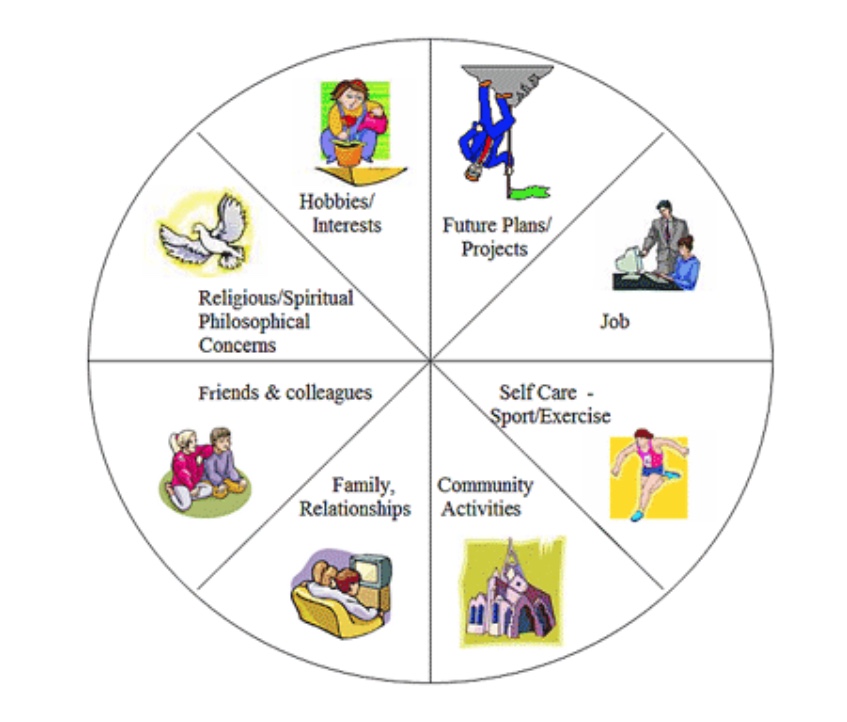
Work Life Balance ZelinskiIn almost every health and wellness article, we hear the emphasis of prioritizing and seeking a more equitable use of personal time, achieving what Ernie Zelinski, author of the best-selling book How to Retire Happy, Wild, and Free, refers to as “work/life balance.” Future blogs on samples of “super stress reducers” in “setting boundaries,” time management, and innovative organizational tools will be forthcoming.

Several books are also recommended readings for addressing the issues of teacher health and wellness. We have already reviewed several of these. More to come.


Our next journey to an in-depth look at music educator self-care will explore more fully TEACHER BURNOUT. To stay up-to-date on past and future articles, publications, and workshop presentations on this topic, be sure to revisit the “Care” section of this blog-site.


Resources


PKF


Photo credits (in order) from Pixabay.com

  • “laptop-woman-education-study-young” by Jan Vašek
  • “stress” by johnhain
  • “stress-despair-burden” by Davidqr
  • “boat-teamwork-training-exercise” by skeeze
  • “mental-health-wellness-psychology” by Wokandapix
  • “stress-relief-help-sign-relax” by Pete Linforth
  • “meditate-meditation-peaceful” by Pexels
  • “handstand-beach-sea-ocean-sand” by MatanVizel
  • “wooden-train-toys-train-first-class” by Couleur

wooden-train-2066492_1920_


© 2020 Paul K. Fox