70 and Out?

Editor’s Note: Sorry! I don’t usually use this forum to rant or rave and complain… but, since I am almost flat on my back right now, I need to vent. Hopefully, other “seniors” who read this blog will find some benefits to this article and the research links below.

Keep up the “good fight” to maintain your own health and wellness! PKF

Mobility!

It’s the single most important thing in retirement! “If you ain’t got it, you’ve got nothing.”

There’s nothing worse than losing one’s ability to get around.

When I retired, I couldn’t imagine any limitation to my physical activities (with the exception of doing those ambitious squat thrusts of my youth or running a full gallop with my Yorkiepoo). Sure, as we age, many of us may experience more minor aches and pains caused by the effects slowly progressing arthritis, a touch of foot neuropathy or plantar fasciitis, overuse of our muscles in strenuous activity, lifting, or carrying heavy objects, or other issues, but these “challenges” don’t usually slow us down too much. And yes, I explored a few of those media-hyped over-the-counter topical remedies “everyone” claims will alleviate foot and muscular pain. How many of these do you recognize? Alphabetically I dabbled in Advil Targeted Relief, Aspercreme with Lidocaine, Blue Emu, IcyHot, Nervive, Penetrex, Salonpas, and Voltaren. I even bought several pairs of expensive shoes with custom insoles and orthotics. The foot pain has since mysteriously “gone away” (probably due to some excellent PT and regular bouts of stretching/flexing), which has led me to focus more on a new, annoying development – slight knee pain – for which the docs say may be early onset “bone-on-bone” (Knee Osteoarthritis).
Be proactive, Mr. Fox, I said!

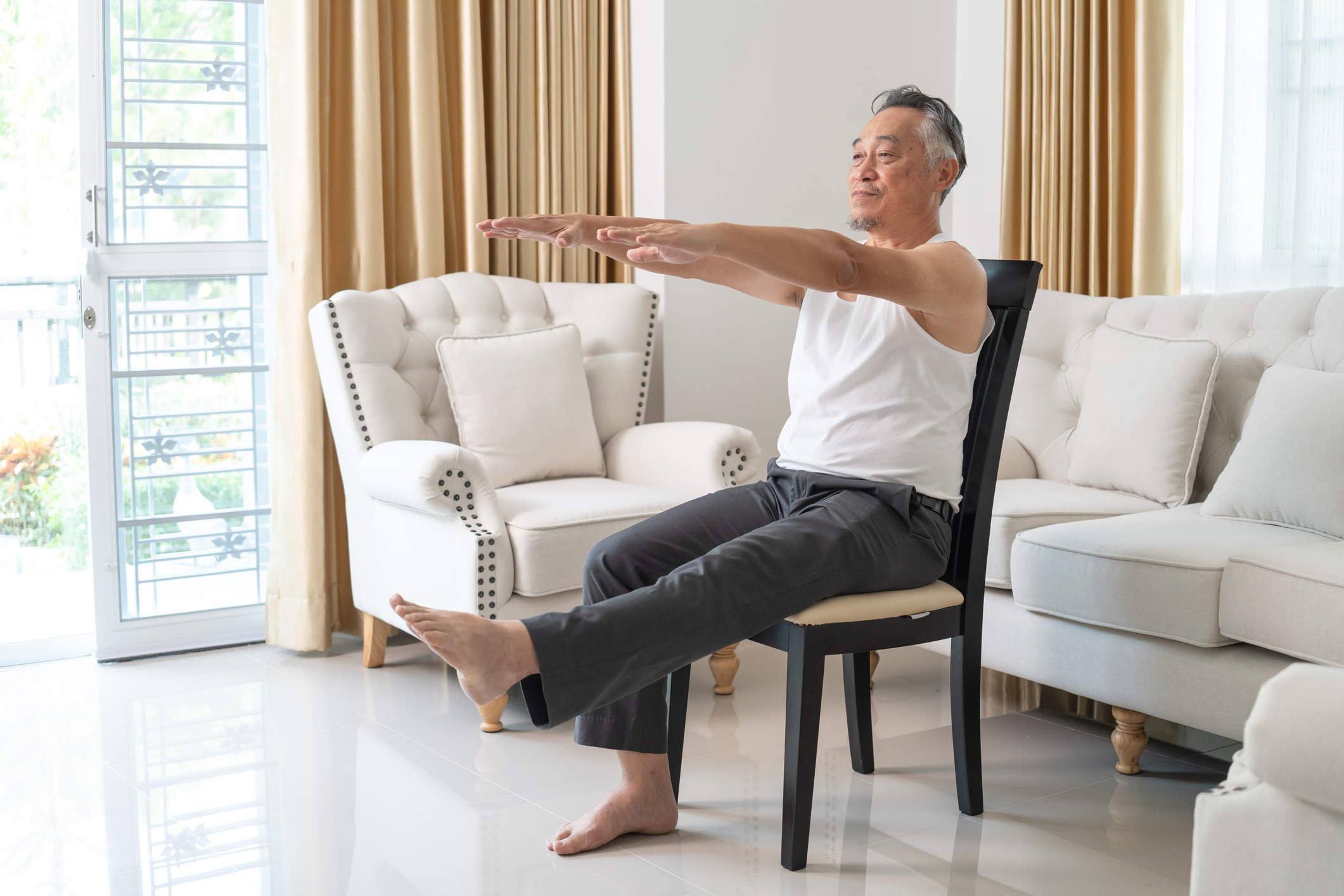
Get off your duff, stretch, and move around more. (At regular intervals, my loving wife and the Apple Watch on my arm continually nag me to stand, move, and exercise!) So I can brag I made a concerted effort to lose weight (down 30 pounds and no longer need blood pressure medicine) and even put myself on a regime of online “old man yoga/chair” exercises (an app costing $38/month – but, after some progress in “core tightening” over several months, I abandoned them!). I’ve sought the services of a good physical therapist to help me through what will eventually be knee replacement surgery (but, if I do their daily prescriptions to build my leg muscles, perhaps the cutting won’t be needed for another decade or two! By the way, musicians/music teachers make good patients of PT because we know the importance of practicing regularly – even on the day of the lesson!) I have a good orthopedic surgeon in my back pocket, and during my last visit with him, I was able to say “no” to cortisone injections. Things seemed to be getting better!
But, all of this came to a crashing halt.

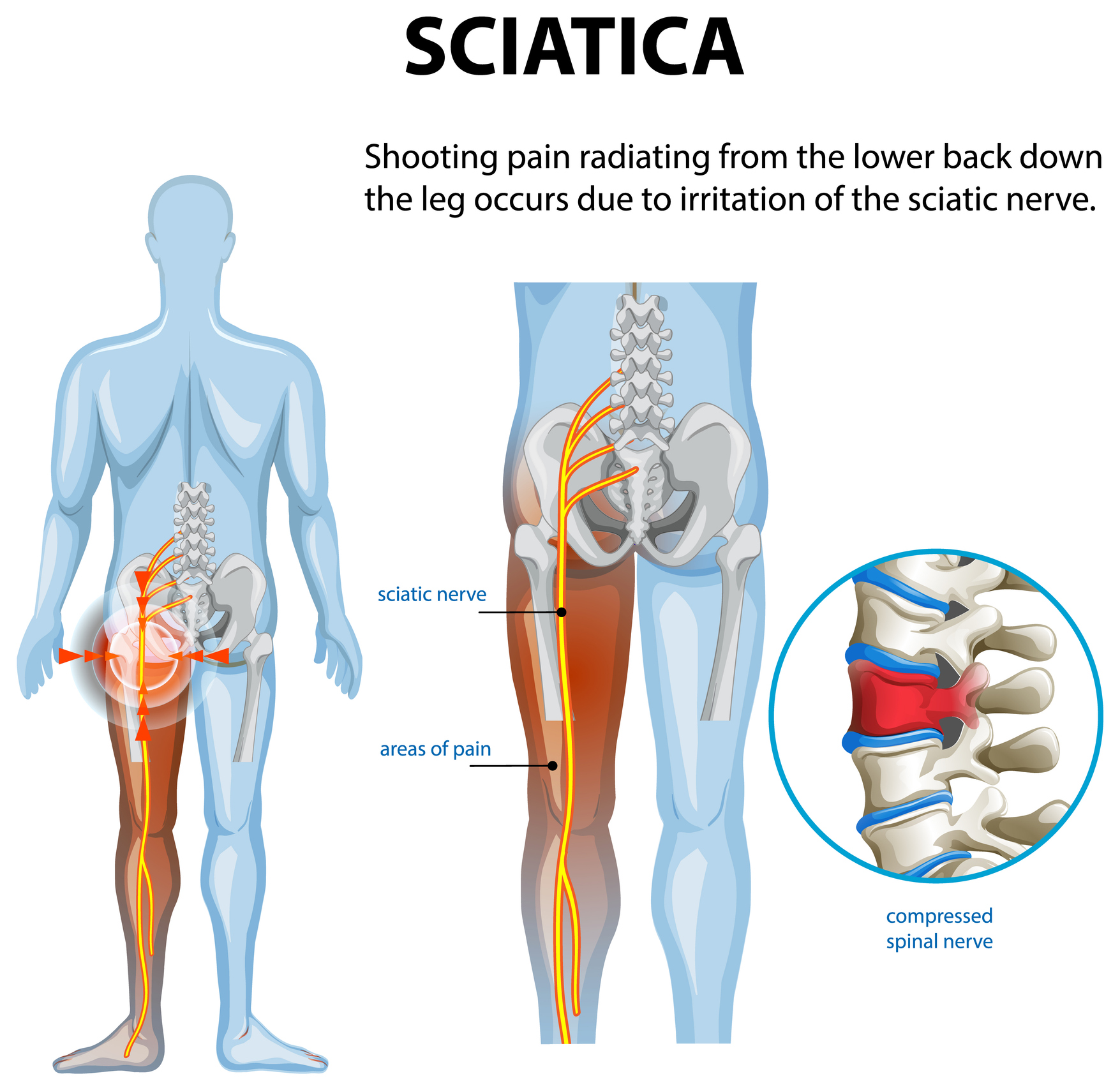
Several weeks ago, I struggled to raise a very heavy conductor’s stand (to which I will eventually chew-out the manufacturer of a poorly designed/awkward-positioned height adjustment screw). After my first dose of extra-strength Advil wore off, I felt like I had pulled a muscle in my back. It went away in a day or two, so I didn’t think much of it. But, five days later, when I woke up and climbed out of bed, suddenly any pressure I placed on my right leg gave me excruciating pain. I have been told this is probably sciatica or a “pinched nerve.” The pain is so bad that when I first get up or stand for even a few minutes on my right foot, I double-over and cannot move. I use any object around me to support myself such as countertops, tables, desks, shelving, etc., and feeling helpless literally “hobble around” trying to get from place to place. Even rolling over in bed the wrong way can cause an extreme surge of this pain which radiates down the entire leg. It has slowed down my activity to a crawl.
The timing could not have been more perfect!

Last week, I attended our state music teachers’ conference. After the five-and-a-half hour trip to the other end of the state (which everyone says with sciatica, you are never supposed to sit that long!), I planted myself in an electric wheelchair to get from place to place, fulfilling my normal PMEA duties such as taking candid photographs of the events and running a session or two. The (level 9) intense pain seems to come and go and I have gone to a doctor to receive a new script for physical therapy including an analysis to pinpoint the exact location of this unhappy nerve and what exercises may help. X-rays so far have shown only a little arthritis of the spine; apparently no herniated disks. (Is this what we all have to look forward to – “a little arthritis” – as we mature?) If it does not get better soon, I may consider going to a chiropractor. Have you had your first introduction to a cane? At the conference, I went to the local Rite Aid and bought one (along with a “TENS-machine,” although I have not unwrapped it yet and will need help setting up the “Transcutaneous Electrical Nerve Stimulation” device). Thank God for the Internet, because I even needed to search for instructions on which hand to use the cane and how to adjust its length (my physical therapist checked it). It does provide some stability so that I can walk around without knocking books off shelves or outside, but it’s not a long-term solution.

I wish I could tell you I have some good news to report, but… as of today, we have not figured out the cause or location of the problem. I am on prednisone and it is only slightly alleviating the pain. Sitting in my office chair (right now) gives me a dull pain (number 2-3). Weight bearing can raise that number up to 8-9. My wife (who is a saint) has been waiting on me hand-and-foot (and she has a few of her own aches and pains!). My doggies are unhappy because they are receiving fewer long walks and they were kicked out of the bed so I can stretch (and so my restlessness would not keep them up all night). I have had to postpone my hospital volunteer work (I can’t push wheelchairs) and curtail a lot of other scheduled activities. With several concerts coming up for our local community orchestra, I am considering conducting in a chair from the podium… and I may have to miss marching in the annual Community Day Parade on May 17 when I usually serve as the “duck maestro” for the Community Foundation of Upper St. Clair’s GREAT DUCK RACE fundraiser.

I’m turning 70 next week!

Several weeks ago, I would have told you I am CELEBRATING the big 7-0! I revel in the freedom of retirement, the joy of “refiring” or “rewiring” myself to explore new projects, refocusing energy on favorite past hobbies and “mindful” pursuits, catching up with former students and colleagues, helping others as a music educator mentor, presenting workshops on teacher self-care, ethics training, interviewing, and retirement transitioning (take a look at my latest professional brochure here), subscribing to the retiree doctrine “it’s not my sandbox anymore” avoiding the jobs/tasks I no longer want to do, and literally… “living the dream.”

Now, I must face these new challenges head-on, and I will! I will not allow myself to “retire” (that old definition to “withdraw” or “resign”). I will fight any acquiescent acceptance of increasing disability, disengagement, depression, unnecessary significant medical intervention, or long-term advanced pain management! Yes, this is a SELF TALK: They say most recovery from sciatica is very slow! If you share this condition, don’t get discouraged!

Mobility.

I want it back! I want to return to modeling what author Ernie Zelinski says in his book How to Retire Happy, Wild and Free are the essential ingredients for a meaningful and satisfying retirement and life passage to self-reinvention, renewing the quest of finding “purpose, structure, and community” throughout our golden years.

Sample Additional Research on Sciatica

https://pmc.ncbi.nlm.nih.gov/articles/PMC1895638/

https://my.clevelandclinic.org/health/diseases/12792-sciatica

https://www.health.harvard.edu/blog/taming-pain-sciatica-people-time-heals-less-2017071212048

PKF

© 2025 Paul K. Fox
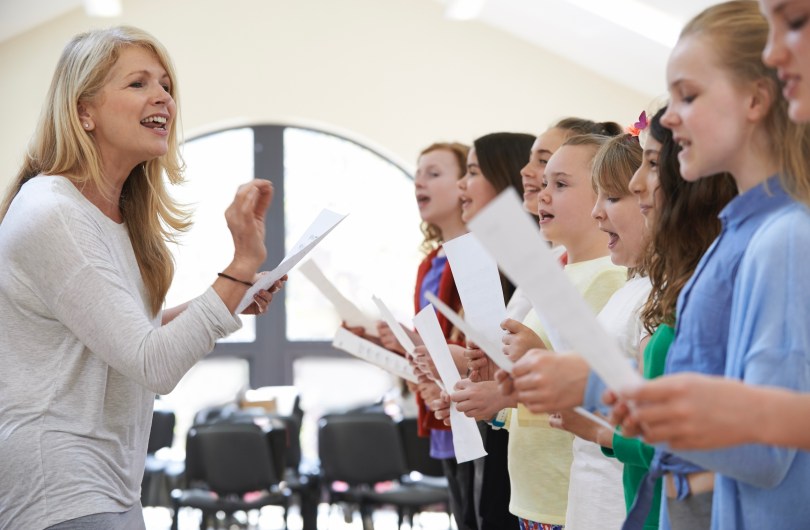
Those Were the Good Ol’ Days

The “E” in RETIREMENT is for Energy, Engagement, Excitement, and Endurance

This blog is all about how to stay young and vibrant – BECOMING A VOLUNTEER! Geared to those of us who have retired, this is very personal and unique to every individual, no matter what the age!

Do you remember the song, “Those Were the Days” performed by Mary Hopkins (1968), the Fifth Dimension (1969), and even Dolly Parton (2000)?

Those were the days my friend
We thought they’d never end
We’d sing and dance forever and a day
We’d live the life we choose
We’d fight and never lose
For we were young and sure to have our way.
La la la la
Those were the days, oh yes those were the days

In June 2021, I went back to work. Well, not exactly full-time… but it felt that way!

Remember the times as music educators we spent 15-18 hours a day or more thinking, planning, creating, teaching, problem-solving, schlepping stuff, sweating, and working out beyond the regular school day and during summer months with major music projects like the marching band, spring musical, music adjudication trip, etc.?

Asked by my friend and current Upper St. Clair School District performing arts curriculum leader/HS band director Dr. John Seybert, I signed on to the newly-expanded extracurricular activity (ECA) position as administrative assistant and announcer of the marching band for the school from which I had retired. Filling in the gaps, taking attendance, handling mounds of paperwork, interacting with a whole new generation of music students, and learning a few new software applications along the way like FamilyID, Canvas, Remind, and the district’s Blackboard website, I threw my hat in the ring, not just to continue to serve as the voice of the “Pride of Upper St. Clair” at football games halftime shows (now in my 36th year), but to manage the full schedule of rehearsals, meetings, performances, and blessedly (?) exhausting 24/7 week-long band camp. I forgot how it felt to get up at 6 a.m. and return home around 9:30 p.m.

It has been exhilarating. It has been exhausting!

On another stage, when the local COVID stats fell two months ago, I was invited back to our local community hospital to serve as a volunteer – discharging patients from their rooms or escorting them from the outpatient surgery or endoscopy units. Yes, I was called upon to somehow restore the physical demands I (used-to) place on my personal stamina. Fully fatigued and expended after a shift of 4-7 hours of driving my wheelchair taxis (sometimes carrying over-sized people even though we’re only supposed to move those weighing 250 pounds or less), I find myself yearning for a retiree “power-nap,” only to regroup for the next day’s challenging schedule and another early-morning wake-up.

The best part of these 8-15 hours per week? Choosing one of the finest medical facilities in our metropolitan area – St. Clair Hospital (now “Health”) – I have the chance to meet former music students (grown up), their kids, parents and grandparents, friends, and other acquaintances at their greatest need. And, there’s almost no finer escort “call” than going to the family birth center and bringing to the car a new mommy and two-day-old baby… sharing that special moment with an alum or school staff member!

It has been exhilarating. It has been exhausting!

WHAT

In past articles on a satisfying retirement, I often quote the book How to Retire Happy, Wild, and Free, the search for self-reinvention and new avenues for fulfilling those essential needs of “purpose, structure, and community” that employment had previously provided us. Author Ernie Zelinski’s definition of “purpose” are these goals:

  • To make a difference in people’s lives
  • To make a contribution
  • To find creative expression
  • To take part in discovery
  • To help preserve the environment
  • To accomplish or achieve a challenging task
  • To improve health and well-being

We learn from Revitalizing Retirement: Reshaping Your Identity, Relationships, and Purpose by Nancy Schlossberg that for retirees it is important to feel “needed” and that pursuits that foster “mattering” are crucial to a positive self-esteem, good mental health, and stable life balance.

It has been suggested that one problem of retirement is that one no longer matters; others no longer depend on us…

The reward of retirement, involving a surcease from labor, can be the punishment of not mattering. Existence loses its point and savor when one no longer makes a difference.”   

– Rosenberg and McCullough

The opposite of “mattering” is feeling “marginalized.” I would rather feel worn-out than useless/ignored/discarded!

In his book Design Your Dream Retirement, Dave Hughes recaps with his four essential ingredients of life balance:

  1. Physical activity
  2. Mental stimulation
  3. Social interaction
  4. Personal fulfillment

If you read my bio in the “about” tab above, I think all would agree: mission accomplished! I’ve made myself extremely busy. (Perhaps I “matter” a little too much?) “It’s a good thing I am retired… I would not have enough time to do all of these things if I still had a job!”

Yes, it FEELS good!

WHY

Now some rationale from the online pundits. First, review the article “Why Elderly People Should Volunteer.” According to the “experts,” volunteering is:

  • Socially beneficial
  • Good for mental cognition
  • Giving back to the community
  • Physically engaging
  • An opportunity to learn something new
  • Flexible
  • A strategy to fill up your day
  • The reason you get out of bed in the morning

Of course, one has to be careful and follow your doctor’s advice on what tasks will not overwhelm you! The CDC and other medical professionals urge adopting a “safe” routine of regular physical activity as a part of an older adult’s life. Check out websites like https://www.cdc.gov/physicalactivity/basics/activities-olderadults.htm and https://www.cdc.gov/mmwr/preview/mmwrhtml/00001482.htm. Besides keeping your mind active, increasing your physical activity as a volunteer while “living the dream” in retirement will:

  • Reduce the risk of serious illnesses (heart disease, type II diabetes, and depression
  • Help you manage a “healthy weight”
  • Improve your balance and coordination
  • Decrease the risk of falls or other injuries

Talk with your doctor to find out if your health condition limits, in any way, your ability to be active. Then, work with your doctor to come up with a physical activity plan that matches your abilities. If your condition stops you from meeting the minimum recommended activity levels, try to do as much as you can. What’s important is that you avoid being inactive.

Centers for Disease Control and Prevention

Volunteering is all about being more eleemosynary (adjective defined as “generous, charitable, gratuitous, or philanthropic”). In my workshops on retirement transitioning, I frequently quote two gurus on the benefits of “giving back.”

With a frequently untapped wealth of competencies and experiences, older people have much to give. This fact, coupled with fewer requirements for their time, gives them unique opportunity to assume special kinds of helping roles.

– Mary Baird Carlsen – Meaning-Making: Therapeutic Processes in Adult Development

Our increased longevity and generally better health has opened our eyes to new and increased opportunities to contribute to the betterment of society through civic, social, and economic engagement in activities we believe in.

– Jo Ann Jenkins, CEO of AARP – Disrupt Aging

HOW

But you already knew all of this, right? There are so many ways to “bring it on” and “make a difference” in your “golden years.” (Wow – three cliches in a row!)

There are so many directions you can go to offer your free time to volunteer:

  • Escort at local hospital or nursing home
  • Walk dogs at animal shelter
  • Serve in charitable fund-raising projects
  • Assist food banks and meals-on-wheels agencies
  • Enlist as special advocate for abused or neglected children
  • Work as hospice volunteer
  • Maintain parks, trails, nature habitats, or recreation centers
  • Host an international student
  • Become a youth director, mentor, or scout leader
  • Teach summer school, night classes or Performing Arts workshops
  • Give guided tours or lectures as a docent at a local museum
  • Apply office management and clerical skills to benefit libraries and other nonprofit associations
  • Run a school club (share your hobby)

As trained music educators, we can share our precious skills in creative self-expression :

  • Accompany, coach, or guest conduct school/community groups, college ensembles, or music festivals.
  • Run for office or chair a committee or council of your state or local MEA association
  • Serve as presiding chair or member of the your state’s MEA planning committee or listening committees for the music in-service conferences
  • Participate as guest lecturer or panel discussion member at a conference, workshop, or college methods program
  • Judge adjudication festivals
  • Help plan or manage a local festival or workshop
  • Assist the local music teacher in private teaching, piano playing, marching band charting, sectional coaching, set-up of music technology, instrument repair, etc.
  • Write for your professional organizations’ publications (like PMEA or NAfME)

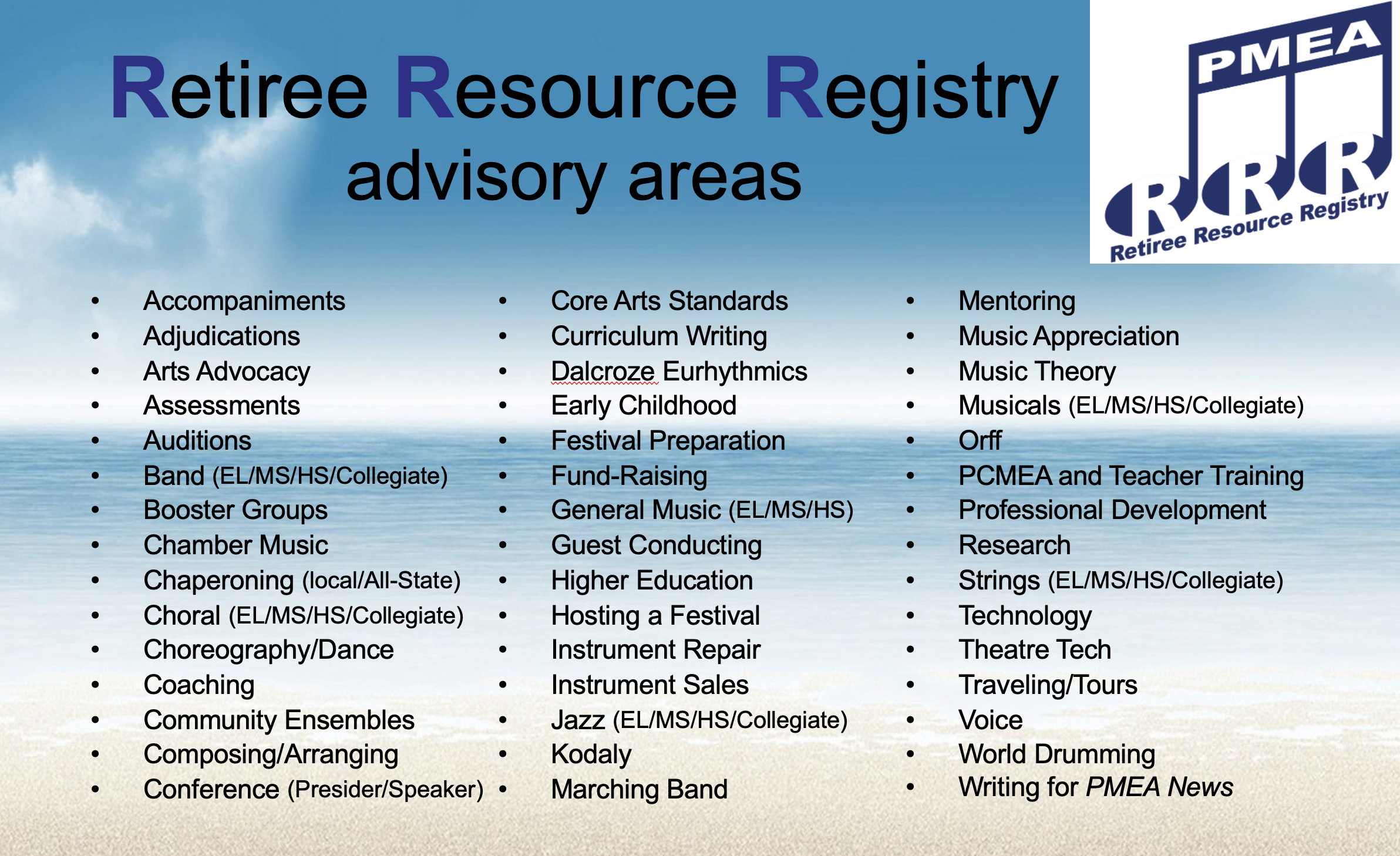
If you are a retired music teacher and member of PMEA, you could sign-up for the Retiree Resource Registry and serve as an informal consultant to others still “slugging it out” in the trenches. Go to the PMEA retired member focus area for more information.

More sources to peruse on this subject:

Anyway, back to a little “bragging!” At least “yours truly” is holding his own and hopefully contributing what he can to the success and welfare of others! Are you? In my retirement pastime, I refuse to sit idle, binge-watch movies on Netflix, or view hours of boring TV. To quote another song’s lyrics, this “senior citizen” will never lament…

Life is so unnerving
For a servant who’s not serving
He’s not whole without a soul to wait upon
Ah, those good old days when we were useful
Suddenly those good old days are gone
Ten days we’ve been rusting
Needing so much more than dusting
Needing exercise, a chance to use our skills
Most days we just lay around the castle
Flabby, fat, and lazy
You walked in and oops-a-daisy!

“Be Our Guest” from Beauty and the Beast

So, what’s your story?

PKF

iStock by Getty images:

Images from Pixabay:

© 2021 Paul K. Fox

WHEN Should You Retire?

The Skills and Models of a Happy Retirement

[Portions reprinted from the state journal of the Pennsylvania Music Educators Association, PMEA News, Spring 2019 issue – All rights reserved.]


man-2546107_1920_geralt

Is It TIME to Retire?

This is a personal question that no one but YOU can answer… not even your PMEA Retired Member Coordinator! By the time you read this article in the Spring edition of PMEA News, this choice may be uppermost in your mind, especially if you are within a couple years of that so-called “retirement age.” Most school districts require advance notification of an employee’s plan to retire in order to retain full benefits and exit bonuses, and to allow planning for the job replacement search and screening process. (Check your teacher’s contract!)

In music educator conference sessions, director meetings at festivals, and printed in PMEA News and the online e-publication Retired Member Network eNEWS, much has pmeabeen discussed about the “what,” “how,” and most recently, “where” of retirement, even issues of “privacy” regarding your decision. For a review of these areas and a bibliography of resources, please visit:


The “why” of retirement is also relevant. There may be a lot of influences for someone to consider leaving their full-time career:

  1. Boredom or lack of stimulation in the current job
  2. Changing employment status or responsibilities
  3. Health problems (yours or other members of your family)
  4. Spouse retiring
  5. Your or family member’s desire to relocate
  6. Needs for caregiving (grandchildren, parents, or elderly family members)
  7. Travel opportunities
  8. Acceptance of a new position or the start or expansion of an “encore career” (higher education, music industry, travel/tour planning, or another field)

Other involuntary or more negative motivations may “encourage” you to resign your position:

  • Music and/or staff are eliminated from the curriculum or building in which you teach.
  • You are experiencing a decline in music program enrollment or participation.
  • You feel unappreciated, unsupported, devalued, or ignored as a professional.
  • You conclude you must retire early to avoid losing existing contractual benefits.

elderly-lady-4025995_1920_MabelAmber

However, the most important reflection on WHEN to retire should begin with the question, “Are you ready for retirement?” and…

Do You Have What It Takes for a Happy Retirement?

A successful retirement is not “all about the money.” Certainly, you are well-advised to make an appointment with an estate planner, elder attorney, and/or financial advisor (probably all three). Bring a copy of your bank and investment statements, annual reports on your pension, social security, annuities, and insurance documents. Make sure you have the “big picture” of your net worth and accomplish the following (https://www.fisherinvestments.com/en-us):

  • Determine your goals, objectives and time horizon;
  • Make key distinctions between income and cash flow;
  • Develop a basic plan to help achieve your retirement goals.

However, probably even more important, experts say there are many other requirements that foster preparedness to enjoying your post-full-time employment years. For example, proposed by the editorial team of the NewRetirement website, there are eight essential keys to a potential retiree’s “happy transition.” (Read the entire article for a greater perspective at https://www.newretirement.com/retirement/8-skills-you-need-for-best-retirement/.)

  1. A Knack for Dealing with Uncertainty
  2. Resilience: Can You Overcome Adversity?
  3. Capability to Maintain a Set of Friends
  4. Cash Flow Mastery
  5. Ability to Set Your Own Schedule and Stay Motivated
  6. Can You Relax?
  7. Capacity to Have a Purpose and Follow Passions
  8. Do You Know How to Manage an Overall Retirement Plan?

senior-2642041_1920_RitaE2

These concepts are supported by the book Happy Retirement: The Psychology of Reinvention by Kenneth S. Shultz (DK Publishing, 2015) which focuses on the question, “Are you psychologically prepared to retire?”

  1. How important is your job when it comes to getting a sense of life satisfaction?
  2. How many non-work activities do you have that  give you a sense of purpose?
  3. How do you imagine your life to be once you stop working?
  4. How do you think retirement will affect your relationship with family and friends?
  5. How much energy for work do you have these days?

Being “psyched” for the “big day” also involves learning personal coping skills, modeling these characteristics of good mental health (from the book The Psychology of Retirement: Coping with the Transition from Work by Derek Milne, 2013):

  • Being able to use your talents and energy productively
  • Enjoying challenges and gaining pleasure from accomplishing tasks
  • Being capable of sustaining a meaningful love relationship
  • Finding meaning in belonging and contributing to your community
  • Being responsive, sensitive, and empathic to other people’s needs and feelings
  • Appreciating and responding to humor
  • Coming to terms with painful experiences from the past
  • Being comfortable and at ease in social situations;
  • Being energetic and outgoing
  • Being conscientious and responsible.


woman-3186741_1920_silviarita

Should I or Shouldn’t I Go Now?

No, this won’t be an easy decision… but, you knew that, right? There seems to be a plethora of free advice “out there” to help (?) you deliberate. (Well, you get what you pay for!) A few samples from the Internet:

7 Signs It Is Time (http://www.plannersearch.org/financial-planning/7-signs-its-time-to-retire)

  1. Your bank accounts
  2. Your bucket lists
  3. Your health
  4. The markets
  5. Health care benefits
  6. Social Security benefits
  7. Your spouse

10 Signs It Is Not Time (https://www.investopedia.com/articles/personal-finance/021716/10-signs-you-are-not-ok-retire.asp)

  1. Struggling to pay bills
  2. You have lots of debt
  3. Have major expenses
  4. Don’t know your SS benefits?
  5. Need monthly financial plan
  6. Need long term financial plan
  7. What about the effects of inflation?
  8. Need to re-balance portfolio
  9. Retirement worries you
  10. You love your job

old-couple-2435629_1920_MonicaVolpin_

Happy retirement = busy retirement. We keep going back to what PMEA MIOSM Chair Chuck Neidhardt said about venturing into retirement – also the perfect bumper-sticker: “Have a plan!” In almost every case study, retiring music teachers must “move on” to an equally engaging and active life style, finding new purpose and meaning in their “senior years!” Considering that many professionals are “addicted to achievement” and the sudden cessation from work may cause some emotional turmoil (Sydney Lagier in US News and World Report, July 20, 2010), we should study examples of those who have happily “Crossed the Rubicon” ahead of us into “retirement bliss.”

Leaving your school employment does not mean you won’t continue doing what you have always enjoyed… personal music (or dance or drama) making, performing in or conducting an ensemble, composing, accompanying, etc. The PMEA Retiree Resource Registry – the proverbial “directory of past leaders in PA music programs” – lists many retired members who continue to offer their talents and experience to help others in the profession. This is a good place to start for asking “advice from the experts” on just about any topic… perhaps even tips on deciding WHEN to retire: https://www.pmea.net/retired-members/.

How about a couple more “models and mentors” who made this “change of life” adjustment and explored new directions towards self-reinvention in retirement?

ben-franklin-3589235_1920_ericdunham

Ben Franklin, Founding Father
“Having worked as a successful shopkeeper with a keen eye for investments, Franklin had earned his leisure, but rather than cultivate the fine art of indolence, ‘retirement,’ he said, was ‘time for doing something useful.’ Hence, the many activities of Franklin’s retirement were: scientist, statesman, and sage, as well as one-man civic society for the city of Philadelphia. His post-employment accomplishments earned him the sobriquet of ‘The First American’ in his own lifetime, and yet, for succeeding generations, the endeavor that was considered his most ‘useful’ was the working life he left behind when he embarked on a life of leisure….”

https://www.theatlantic.com/business/archive/2015/09/how-america-lost-track-of-benjamin-franklins-definition-of-success/400808/

2000 – “The Year of Retirement?” for two musical superstars
Barbra Streisand, singer, songwriter, actress, and filmmaker
Garth Brooks, country-music singer and songwriter
“In 2000, Barbra Streisand performed four farewell concerts to mark her retirement from performing live. At the time, she was 58 years old and wanted to focus more on acting, directing and recording albums, reported ABC News.”

“Her retirement ended in 2016 when she returned to the stage for her The Music… The Mem’ries… The Magic! tour, which grossed $53 million over 16 performances, according to Billboard.”

“Garth Brooks shocked fans in October 2000 when he announced his plan to retire to Oklahoma until the youngest of his three daughters graduated from high school, reported Billboard. The country music superstar was 42 years old when he began his early retirement.”

“During his semi-retirement, he did a few sold-out stints at arenas and a 186-show Las Vegas residency with wife Trisha Yearwood, according to Billboard, but he largely stayed out of the spotlight. Brooks returned to touring in September 2014 and continued until December 2017, performing a total of 390 shows, reported Billboard. Forbes cited his 2017 earnings as $60 million. Together, Brooks and Yearwood are one of the richest celebrity couples.”

https://www.gobankingrates.com/net-worth/celebrities/celebrities-who-came-out-of-retirement/

grandma-736004_1920_fujidreams_

“If money can buy you happiness,” supposedly these ten athletes were financially more successful after retirement, as opposed to the total earnings they generated during their original sports careers:

  • Muhammad Ali
  • Jim Brown
  • Oscar De La Hoya
  • Lenny Dykstra
  • George Foreman
  • Dwayne Johnson (“The Rock”)
  • Magic Johnson
  • Michael Jordan
  • Nolan Ryan
  • Dave Whelan

https://www.complex.com/sports/2012/01/10-athletes-who-made-more-money-after-retiring/


Agatha Christie, British writer
Finally, to answer the question, “What would Agatha Christie do in retirement?” best-selling author Ernie Zelinski quoted in his The Retirement Cafe website the following list of activities proposed to be “her favorite things” from the publication Agatha Christie: An Autobiography (Dodd, Mead & Co., 1977).

  • Sunshine
  • Apples
  • Almost any kind of music
  • Railway trains
  • Numerical puzzles and anything to do with numbers
  • Going to the sea
  • Bathing and swimming
  • Silence
  • Sleeping
  • Dreaming
  • Eating
  • The smell of coffee
  • Lilies of the valley
  • Most dogs
  • Going to the theatre

Ernie concluded, “This list of activities and things that Christie loved may trigger some of the stuff that turns you on and which you can use for an active retirement. This will go a long way towards conquering retirement boredom.”

http://www.retirement-cafe.com/Fun-Things-to-Do-When-You-Retire.html

fisherman-1624704_1920_paulbr75_

Is the time ripe for you to retire? Again, only YOU can answer that!

When it becomes the right moment for you to make that “big plunge” to “living your dreams…” KUDOS and BEST WISHES on your rebirth as you explore your own pursuit of retirement self-reinvention and post-employment “freedom!”

PKF

© 2019 Paul K. Fox


Photo credits in order from Pixabay.com: “old” by dietcheese, “man” by geralt, “elderly lady” by mabelamber, “senior” by ritae, “woman” by silviarita, “old couple” by monicavolpin, “ben-franklin” by ericdunham, “Fisherman” by paulbr75, “grandma” by fujidreams, and “wooden-train-toys-train-first-class” by Couleur.

wooden-train-2066492_1920_Couleur