

Reconciliation: Somber Ruminations of a Retiree
And I hope when I get old I don’t sit around thinking about it
but I probably will
Yeah, just sitting back trying to recapture
a little of the glory of, well time slips away
and leaves you with nothing mister but
boring stories of glory days…
Glory days, well they’ll pass you by —Bruce Springsteen
Okay, admittedly, this blog may be a little on the “dark side” – so before and after you read this, be sure to go out and take a long walk, hug your spouse or your grandchild or a dog, find something fun to do, indulge in some ice cream – anything to recharge, bolster your mood, and “come back to life!”
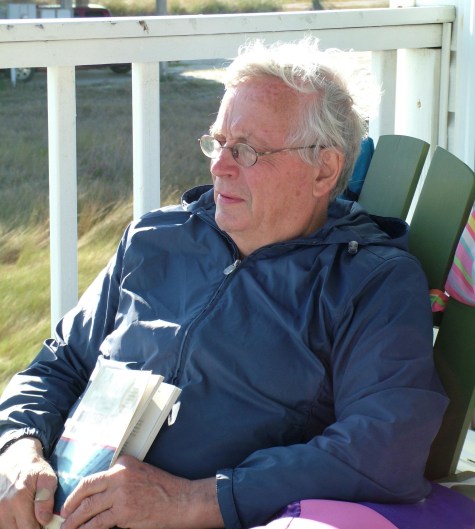
Reconciling with and Redefining Retirement
According to Merriam Webster, the full definition of “reconcile” is the following:
“…to restore to friendship or harmony, settle, resolve, make consistent or congruous, cause to submit to or accept something unpleasant…”
Also referring to online dictionaries like Webster, the terms retiring and retirement mean “seclusion from the world, privacy, withdrawal, the act of going away, retreating, or disappearing.”
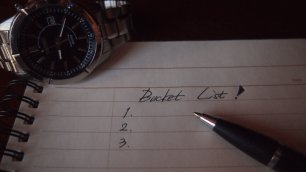 Nope. I cannot accept these archaic definitions! My translation for what it means to face this life-style shift of changing perspectives and expectations, “Crossing the Rubicon” into retirement, is finding alternative but purposeful pursuits, fulfilling “bucket lists,” and reshaping fresh new goals leading to creative ways to self-reinvent and thrive.
The Stages and Emotions of Retirement
In the July 25, 2016 PMEA Retired Member Network eNEWS, I reflected on a few of the ups-and-downs of post-employment transitioning and the emotional journey of re-adjustment, “reinventing” yourself, or as Ken Blanchard and Morton Shaevitz advise in their book (by the same name), “Refire! Don’t Retire!”
In which “stage of retirement” do you find yourself? Are you resting and taking an extended vacation, or currently mapping out your post-employment “plans,” or already diving into your “golden years” with a full schedule of activities, or seeking new goals and your “life’s purpose,” or retreating from everything just to “get your head together?” —Paul Fox
In a USA TODAY article (2014), Ken Dychtwald (gerontologist, psychologist, educator and CEO of Age Wave, a research think-tank on aging issues) labels the logical progression of  five stages of retirement that he predicts most people go through after leaving their full-time job. (See http://www.usatoday.com/story/money/personalfinance/2014/10/12/five-stages-of-retirement/16975707/).
- Imagination
- Anticipation
- Liberation
- Re-engagement
- Reconciliation
I think every retired person should read these, figure out on which step they are, diagnose their feelings, and “move on” toward the final stage of reconciliation.
“Thanks to the ever-increasing longevity, many of us will have decades to learn, teach, play, work and re-invent ourselves again and again after our core career has ended. Perhaps it’s time to retire retirement.” —Ken Dychtwald
However, I hear from many retirees that, at some point, they experience a period of depression or sadness after they retire, even a profound sense of loss or grief. There are hosts of articles about this phenomenon:
- “The Five Things About Retirement That You Aren’t Expecting” by Kathryn Tuggle (2015) at Main St https://www.mainstreet.com/article/5-hardest-things-about-retirement-that-you-arent-expecting
 “The Five Top Stressors in Retirement and How to Cope” by Nanci Hellmich (2014) at USA TODAY http://www.usatoday.com/story/money/personalfinance/2014/05/27/retirement-five-stressors/9329991/
- “Retiring Without Stress” by Deborah Rozman (2013) at Huffington Post http://www.huffingtonpost.com/heartmath-llc/retirement-stress_b_3583559.html
- “Job Loss and Unemployment Stress” by Melinda Smith, Jeanne Segal, Lawrence Robinson, and Robert Segal (2016) at HelpGuide.org http://www.helpguide.org/articles/stress/job-loss-and-unemployment-stress.htm
It boils down to coping with a few of these emotional “bumps” along the way:
- Loss of professional identity
- Loss of goals, daily routine, and purposeful activity
- Loss of social network and interaction with co-workers
In my article, “Surviving Retirement: Avoiding Turmoil, Traumas, Tantrums, and Other Transitional Problems” in the Winter 2015 issue of PMEA News, I mentioned how quickly we retired teachers seemingly become forgotten and obscure.
Someone wise once told me not to be alarmed when even your own music students forget you after two or three years. Not having you in class, nor hearing your name on the public address, nor seeing you in the halls, nor watching you direct an assembly, ensemble or musical, it is perfectly natural that your identity will likely fade away as the “graduates” leave and the new enrollees enter the building.
However, since I was still working with the marching band (and had been involved in so many other extra-curricular activities), I figured I might have a year or two before disappearing into obscurity. Surprise! One month from stepping down, I was walking my dogs at the high school and came upon a junior girl and her mother in a “driving training session.” I shouted out “hello” (my Yorkie-poo didn’t even bark), and the girl immediately rolled up her windows and moved away… “Stranger danger?” A few minutes later, when the opportunity presented itself (mom and driver switched seats), I introduced myself and received a blank look when I reassured them, “I just retired from this school. Surely you remember Mr. Fox?” Nope. Don’t expect it. Anyway, there are advantages to losing the spotlight and becoming totally anonymous. —Paul Fox
This is normal. “Type-A” personalities and “peak performers” must make a concerted effort to limit linking the majority of their self-worth and identity to their employment! Echoed by author Sydney Lagier in “Seven Secrets to a Happy Retirement” at US News and World Report (http://money.usnews.com/money/blogs/on-retirement/2010/07/20/7-secrets-to-a-happy-retirement), we should not be addicted to achievement. “The more you are defined by your job, the harder it will be to adjust to life without.”
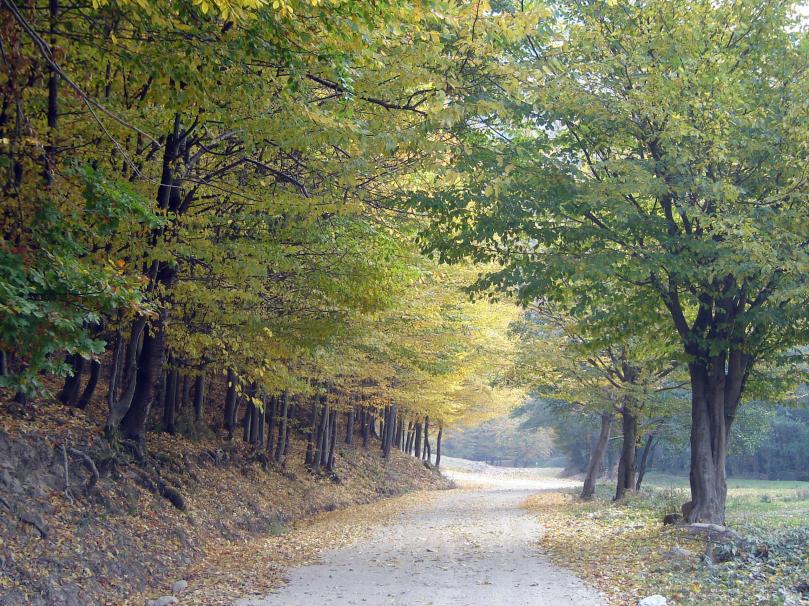
This is my favorite reflection implying our failure to let go of “our glory days,” used with permission from the very gifted poet Nancy Ellen Crossland (see her other writings at http://www.voicesnet.com/allpoemsoneauthor.aspx?memberid=1022350010):
Reflections on an Autumn Day
Where once they hung in glorious array
Golden tinged, copper swirled
Russet swatches
Now trodden and dampened;
What a sad display!Where once waving and twirling
In crisp autumn days
Clinging to the ground
Plastered on soles of shoes
Forever appear to be bound,Ah, but a few stalwart leaves hang
Grasping on for life
Another gust, a downpour or two
They also shall join those
trampled leaves askew,So bid farewell, oh hearty ones
Another season shall again pass
You shall have your days in the sun,Your brilliance shall never slip away
For always shall be remembered
Your autumn glory days.—Nancy Ellen Crossland 11/04/2010
In addition, I noticed feeling these “retirement blues” when I attended the viewing of the late PA music educator Andrew Ruzzini. To be honest, at every funeral, the concept of facing our own mortality becomes more and more difficult. But, even worse, very few people attended Andy’s service, most of his students were unaware of his passing, and my heart ached witnessing the dismal response to the death of one of the most influential band directors in the early years of my former school district! We will all be forgotten?
The Legacy of Heroes and Mentors
The movie Mr. Holland’s Opus lays out a beautiful theme for music teacher retirees: that last scene and the speech of his former student, a clarinet player who struggled to get a good sound, now the governor of the state, was so moving.
Mr. Holland had a profound influence on my life and on a lot of lives I know. But I have a feeling that he considers a great part of his own life misspent. Rumor had it he was always working on this symphony of his. And this was going to make him famous, rich, probably both. But Mr. Holland isn’t rich and he isn’t famous, at least not outside of our little town. So it might be easy for him to think himself a failure. But he would be wrong, because I think that he’s achieved a success far beyond riches and fame. Look around you. There is not a life in this room that you have not touched, and each of us is a better person because of you. We are your symphony, Mr. Holland. We are the melodies and the notes of your opus. We are the music of your life. —Adult Gertrude Lang, character in the movie Mr. Holland’s Opus
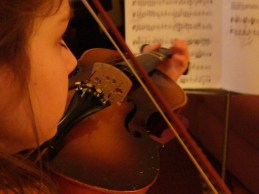 y engaged man. One example, he transformed his backyard by moving a truckload of large rocks around his garden when he was 80 years old. I attended his 100th birthday party where he played an hour-plus recital with three generations of the Reichenfelds. He always told prospective teachers, “Surround yourself with young people and you’ll never grow old.” The comment I wrote in memory of Eugene Reichenfeld in the online guest book (legacy.com) came from the heart: “With our mentor’s passing, orchestra music and education in our area will never be the same. However, thankfully, Maestro Reichenfeld’s legacy is that he ‘passed on the baton’ and inspired so many future teachers to follow in his footsteps… sharing his love of and skill in strings for eternity! The music lives on!”
Three More Reflections for the Road…
I am grateful for finding the final column of Maryellen Weimer, Penn State Professor and Editor of the The Teaching Professor, sharing her thoughts on the things she will and won’t miss after 33 years of teaching: http://www.facultyfocus.com/articles/teaching-careers/retirement-reflections-things-i-will-and-wont-miss/.
If you have the time (and the intellect – he is very deep), you should also read the “retirement notes” of Gary T. Marx: Hither and Thither No More: Reflections on a Retired, But Not Shy, Professor at http://web.mit.edu/gtmarx/www/hitherthither.html#note2.

And, thank you, Corita Kent, for summing up the prescription to a happy, healthy, rewarding, and meaningful life… before, during, and after employment!
If you look too far ahead, living only for dreams, or too far back, living only to repeat the past, you will miss the fullness of the present. This is a lesson for both your professional life and your personal life. It is important to have balance in one’s life, so find the time to do the things that you enjoy — athletic or physical activities, the beautiful outdoors, visiting with friends, reading books, volunteering in your community. May you find the satisfaction of living a well-balanced and healthy life. —Corita Kent
More on Retirement…
- Tips on a smooth and well-prepared transition to retirement
- Maintaining a balance of good health, exercise, and happiness in retirement
- Advice from music teacher retirees to soon-to-be retirees
- Happy trails, retirees! PMEA retired members rock-on
- Retirement = reflection + renewal + altruism
- What I Learned from My Dogs… in Retirement
- It’s time to “dust off your chops” (join a community band/orchestra)
- Tips for retirees on managing stress during the coming winter celebrations
- Random acts and other resolutions
- Retirement = deferred gratification
- An engaged mind makes for a happy retiree
- Downsized and out… coping with unexpected loss of a music teaching job
- Sing your heart out, now and in retirement
- Retired from what
- Three exit lanes to self-help retirement guides
- Post-employment prep – new places to go


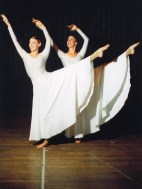 Take up a new hobby. Now that you have the time, go exploring… and the skies the limit! But don’t forget, anything worth doing “engages the mind!”
 If you have not read a previous blog of mine, “Advice from Music Teacher Retirees to Soon-To-Be Retirees,” check out the reprinted version on the Edutopia website:
  Just like a rehearsal – start off with a mind warm-up! Go to the website
  Leo the Tech Guy program and site at
  Finally, hobbyist websites are a wonderful resource. Examples: photography
 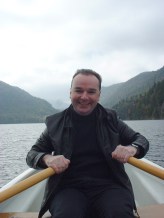 health is all about nurturing our skills/talents, exploring new pathways, facing new challenges, engaging our minds, and enjoying the “good life” after full-time employment. Nothing is stopping you from starting a new career, learning a new language, writing a book (or reading everything you always wanted to at the library), learning (better) how to act/dance/sing/play a new instrument, taking a trip to a new country (or city in the US) or journey to your backyard with a camera, and modeling the essence of the Robert Frost message, “I took the road less traveled by…. and, that has made all the difference.”
 It used to be that the coming winter recess of seven or more days off from full-time public school music teaching mostly meant catching up on much-needed sleep, tackling a few of those deferred household chores, performing or conducting a couple holiday concerts, visiting family and friends, and “pigging out” at a few gigantic holiday feasts.
 family gatherings during the holidays are rarely stress-free… Sometimes these situations are small, unpleasant blips in otherwise enjoyable celebrations. But for some, the feelings go deeper—many people dread the holidays, becoming stressed or anxious in the weeks leading up to a family get-together.”
 So, here is some timely advice to bring down your anxiety levels and cope with the changing season.
 Know your spending limit (set a budget and stick to it).
 Tell jokes, like “Why do reindeer stop for coffee on their Christmas run? Because they’re Santa’s star bucks.” A whole collection of quick one-liners are available at her website, which she says are guaranteed to add humor to your holiday and de-stress awkward episodes.
 If your stress is made worse mostly due to the transition of a recent retirement, there are numerous resources to help you through this “significant life passage.” First of all, you should know it is not unusual to feel this way. In his book, The Retiring Mind, Dr. Robert P. Delamontagne estimates that “50% of retirees will suffer some form of acute emotional distress.” Now all we have to do is learn how to deal with this change… sounds easy?
 stress-reduction strategies: “Realize that your brain’s reward center likes variety, so give yourself a variety of experiences.”
 paulfox.blog