We welcome back guest blogger Ed Carter and his article on a subject I know next-to-nothing about… except that I, too, am a consumer of online media. We thank him for his research and insight! (Featured image by Freepik). PKF
TL;DR
Musicians today are diversifying income streams far beyond traditional gigs and streaming royalties. From sync licensing and sample packs to branded teaching content and micro- niche merch, the modern artist’s toolkit is packed with opportunity. Below, we explore 10 ways to earn more — creatively, sustainably, and independently.
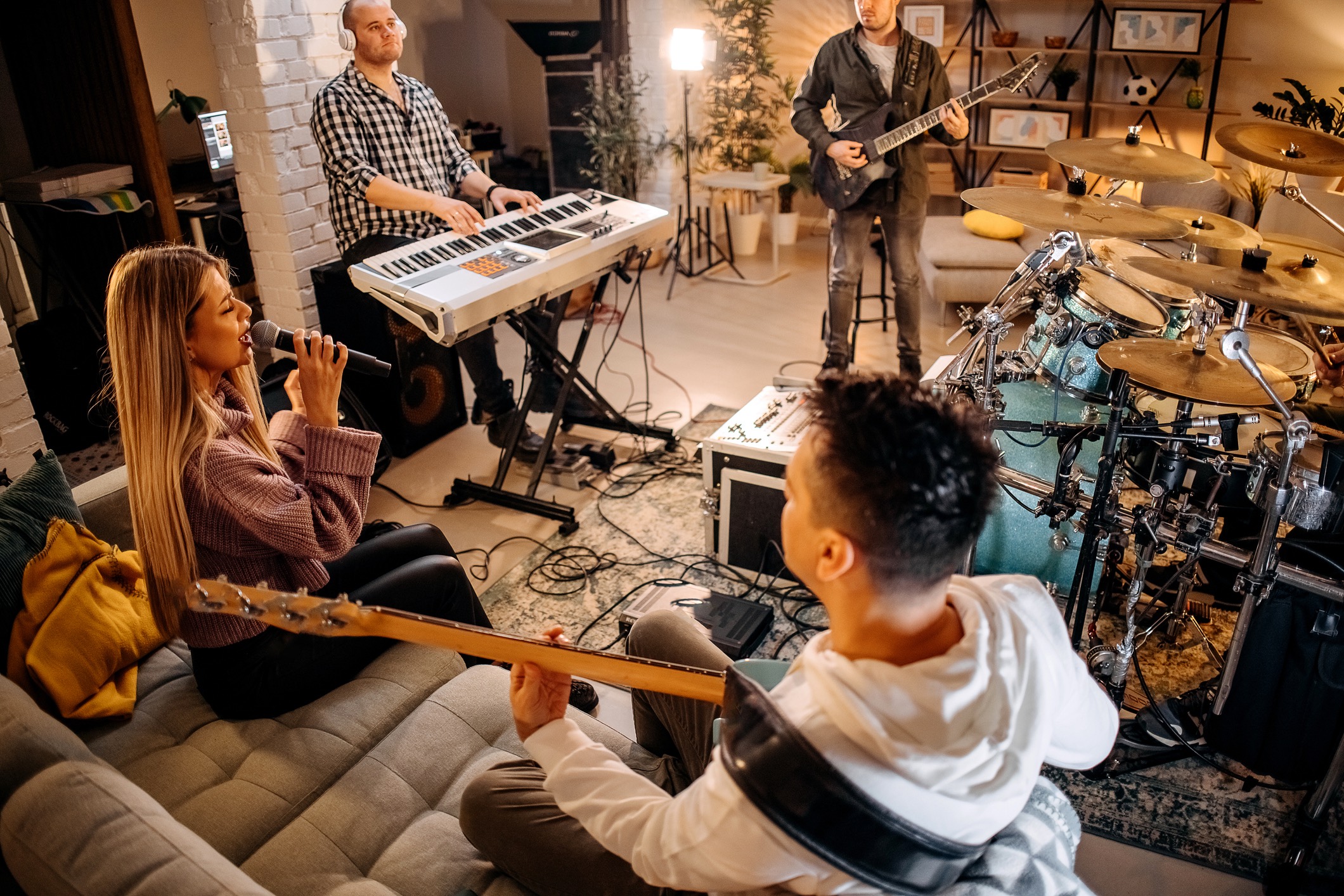
Host Micro-Events and “Living Room” Concerts
Forget stadium tours. Many fans crave intimacy. Many online platforms let artists perform in unconventional venues — apartments, cafes, or backyards. You can set your own prices, meet new fans directly, and keep the lion’s share of the door revenue.
Checklist for a Successful Small Show:
Pick a host with good acoustics and space for 20–40 people
If you’re ready to formalize your music venture — whether selling courses, beats, or branded merch — start it as a small business entity.
Launching a business might sound intimidating, but it doesn’t have to be. With an all-in-one platform like ZenBusiness, you can form an LLC, manage compliance, create your website, and even track finances in one place. A structured setup means tax deductions, legal protection, and scalable growth.
License Your Music for Sync (Film, TV & Games)
Sync licensing has exploded. Sites like Epidemic Sound connect independent artists with producers, ad agencies, and filmmakers. A single placement can earn $500–$5,000. Pro Tip: Tag your tracks with clear mood and genre descriptors (e.g., uplifting cinematic pop) so curators find you faster.
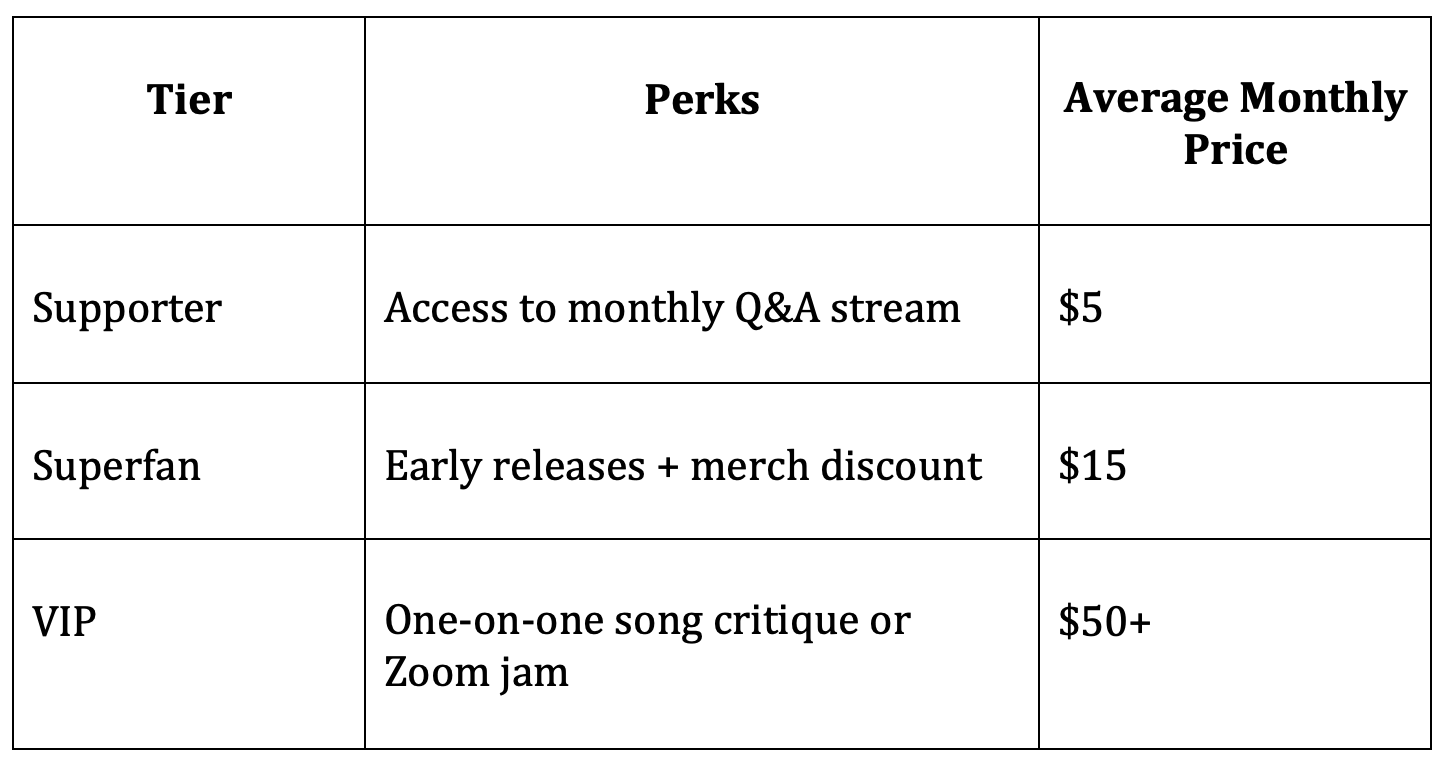
Offer Fan Subscriptions
Platforms like Bandzoogle let musicians monetize loyalty, not just streams. Offer behind- the-scenes videos, early demos, or private songwriting sessions.
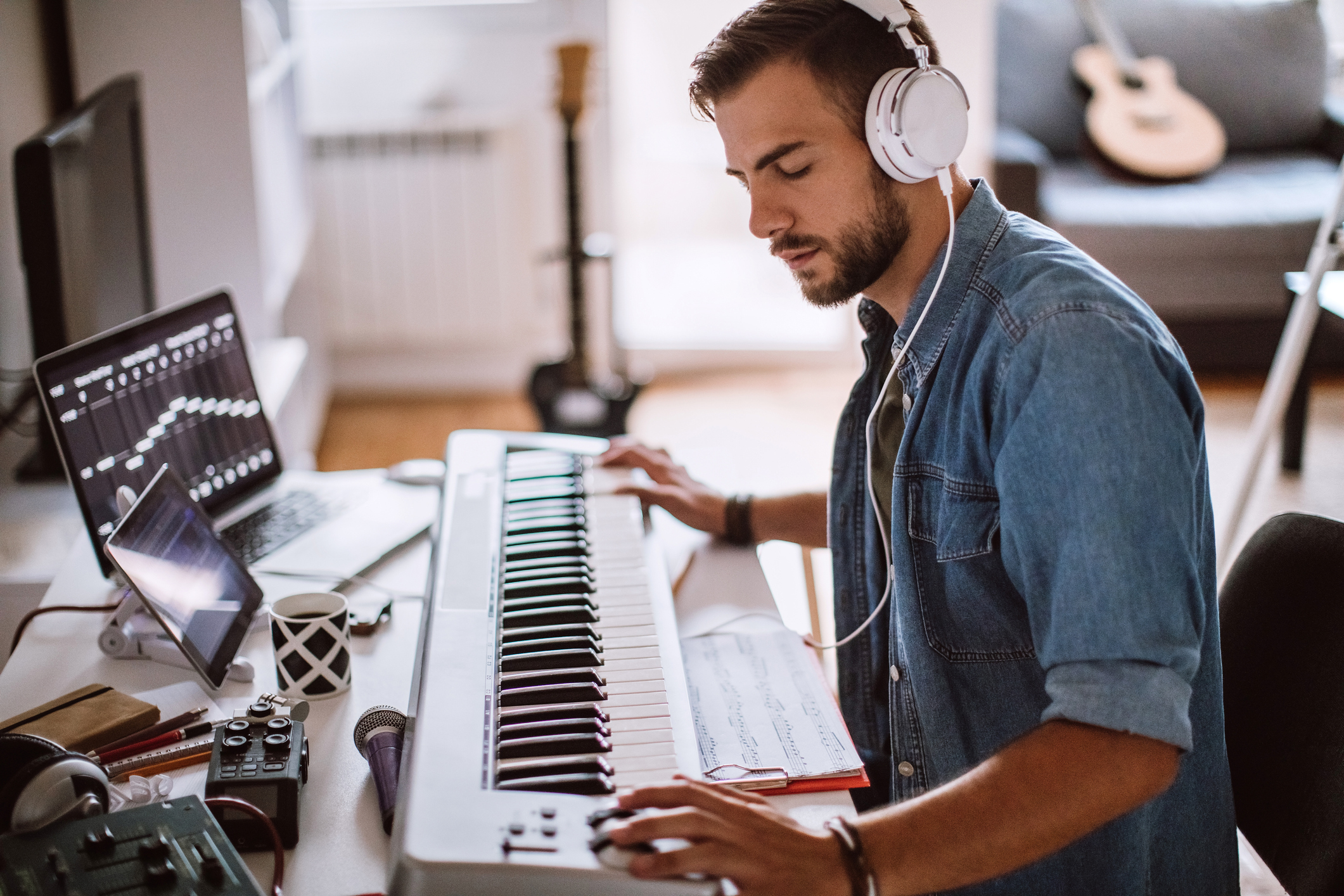
Create & Sell Sample Packs
If you produce, you can sell your drum kits, synth presets, and loops. Marketplaces like Noiiz let you upload your sounds and get royalties whenever producers use them.
How-To (Mini Guide):
Curate your 50–100 best loops or hits.
Label by BPM, key, and genre.
Include a “demo track” showing them in action.
Submit to platforms or sell directly on your site.
Teach (Without Leaving Your Studio)
Music education is booming online. Start by offering short video lessons on YouTube. Build a following, then convert viewers into paying students.
Bullet List: Why Teaching Works
Generates recurring income
Builds your authority as a musician
Introduces new fans to your music
License Your Merch to Other Creators
Many artists overlook merch licensing. Your designs, logos, or slogans can appear on third- party apparel via dropship sites like Redbubble.
YouTube creators and podcasters constantly need affordable background music. Sites like AudioJungle pay per download or license. Even better: some offer recurring revenue if your track gets consistent usage.
Sell Exclusive Content NFTs or Digital Collectibles
Though the NFT buzz has cooled, niche fan communities still buy one-of-a-kind assets — unreleased demos, lyric art, or collectible stems. Marketplaces like Zora make it musician- friendly again.
Offer Mixing, Mastering, or Session Work
You don’t have to be touring to make great money. Offer your technical expertise on SoundBetter. Even basic editing jobs can supplement your main income stream — and help you network globally.
FAQ: Quick Answers for Indie Artists
Do I need a large following to make real money? No. Many creators with <1,000 dedicated fans make sustainable income by diversifying — think 10 income streams, not 10,000 followers. What’s the best income path for producers? Sync licensing and sample packs. They scale globally without physical touring. Should I register my brand name as a business? Yes, especially if you sell products or hire collaborators. Forming an LLC can protect your personal finances and simplify taxes.
Glossary
Fan Subscriptions: Ongoing payments from fans for exclusive content.
LLC: A “Limited Liability Company” — a legal structure separating your business and personal assets.
Micro-Sync: Low-cost music licensing for YouTubers, podcasts, and small ads.
NFT (Non-Fungible Token): A unique digital identifier recorded on a blockchain that serves as a public certificate of ownership and authenticity for a specific digital or physical asset. Artists and creators can use NFTs to distribute their work, engage with fans, and potentially earn royalties from secondary sales, providing a new revenue stream.
Sample Pack: A bundle of sounds and loops producers can buy and reuse.
Sync Licensing: Letting TV, film, or brands use your music for a fee.
Conclusion
The modern musician’s mantra? Don’t wait for discovery — build income like an entrepreneur. With smart licensing, direct-to-fan models, and structured business tools, you can turn your creativity into stability — one micro stream at a time.
Check out other articles by Guest Author Ed Carter at this blog site:
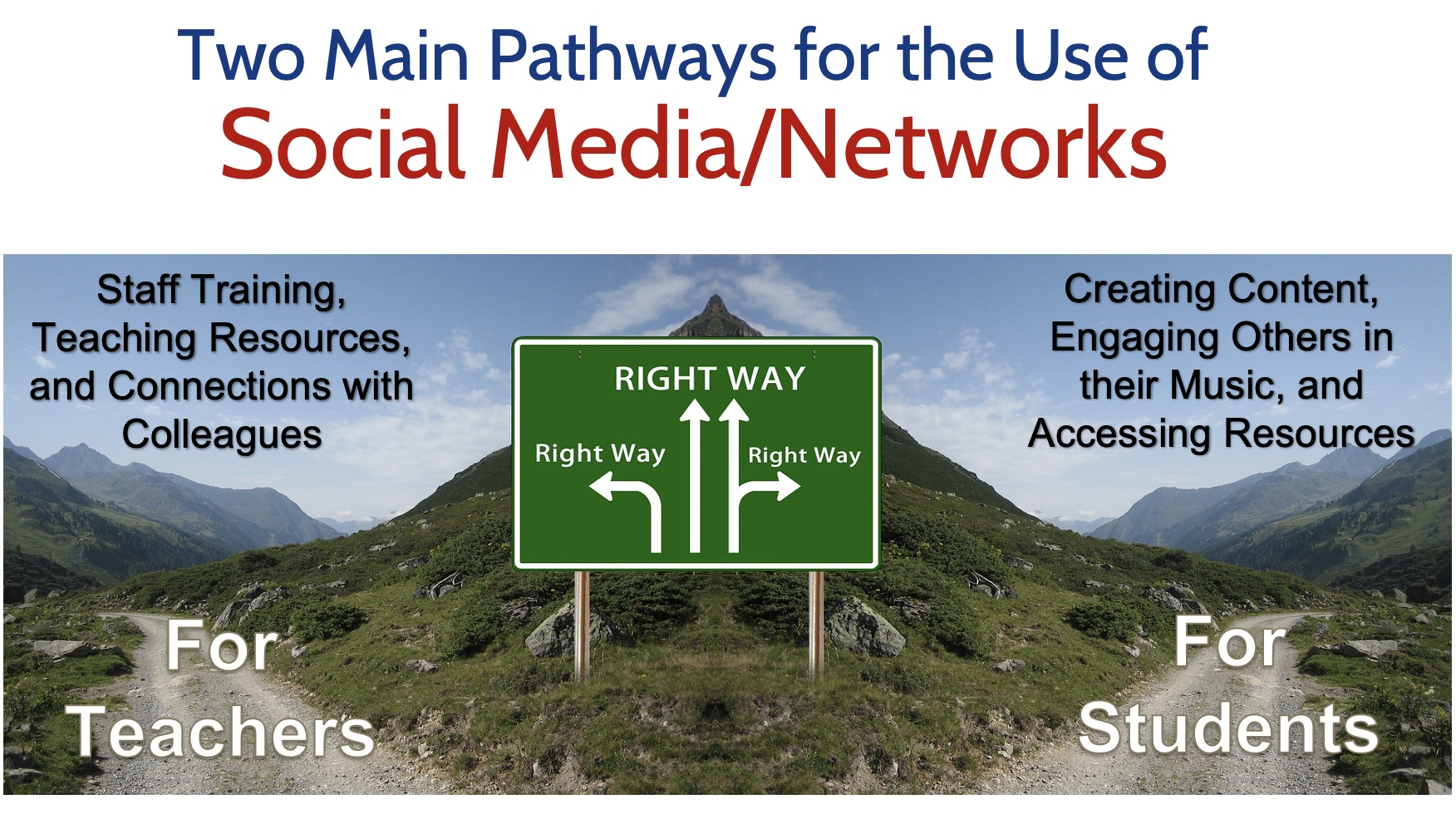
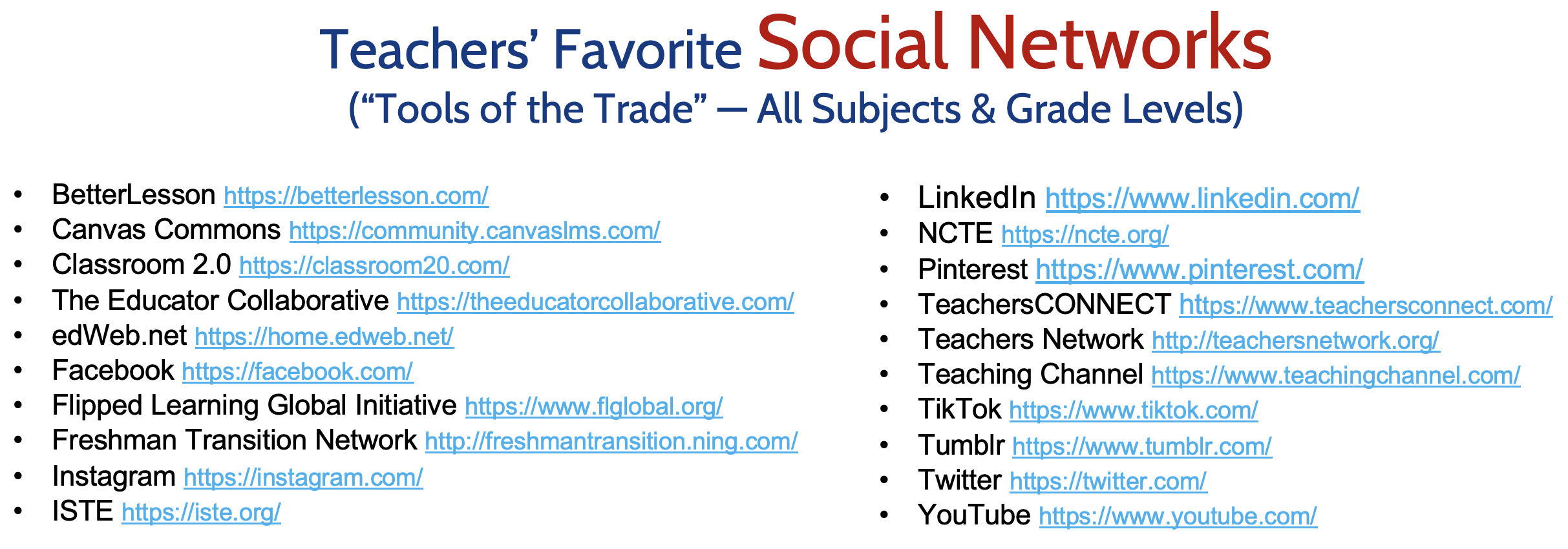
Although several of the cited research links may have expired (for example, PA Department of Education modified most of their website’s URLs), these provided the foundations of background information and references for the presentation I prepared for the DCMEA Virtual Conference in 2020 (during COVID) and serve as the starting point for the workshop I will share in-person at the DCMEA Winter Conference in January 2026. This blog provides updates and additional perspectives. Taken in combination with the above sources, you will be able to identify the benefits, positive models, precautions, and dangers of social media, social networks, professional learning networks, and sample emerging technologies as they apply to teachers’ professional development and education of students.
“THE WHY”
Before every clinic or publication I develop, I always try to spotlight the theme of “THE WHY” as preached by one of my favorite authors and motivational speakers – Simon Sinek! According to him, for organizations and individuals alike, “THE WHY” (rationale and priority) is more important than “THE WHAT” and “THE HOW.” (See this video.)
WHY is a collaborative discussion on social media essential? Why now?
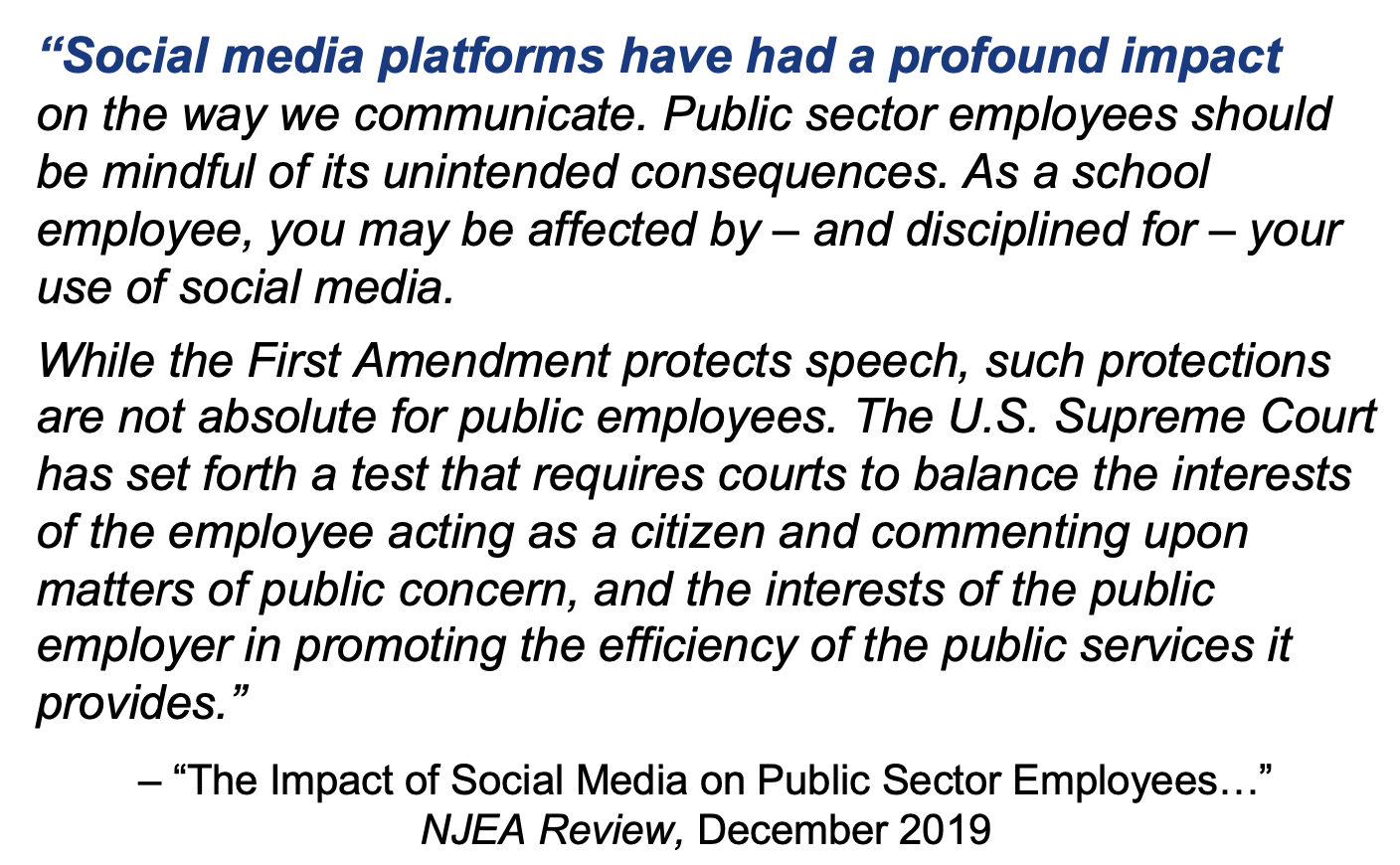
”There’s a growing body of evidence suggesting that educators are facing increasing scrutiny regarding their social media use. Concerns include unprofessional conduct, inappropriate interactions with students, and the potential for cyberbullying and other negative impacts on student well-being.”
As always, our goal is to promote ethical practices in maintaining professionalism in the digital world.
“THE WHAT” — Review of Definitions
“Social Media”
Social media are “websites and applications that enable users to create and share content or to participate in social networking.” — Oxford Lexico.com online dictionary
“Social Network”
A social network is, 1. a network of social interactions and personal relationships.; 2. a dedicated website or other application which enables users to communicatewith each other by posting information, comments, messages, images, etc. — Oxford Lexico.com online dictionary
“Professional Learning Community” (PLC)
A PLC is “a group of educators who meet regularly…” (usually in-person) “…to strategically enhance their teaching skills and improve student outcomes.”
versus “Professional Learning Network” (PLN)
A PLN is “a group of educators who gather more informally…” (usually in online communications) “…to problem-solve and generate ideas to enhance classroom practices. A PLN… often takes the form of an open forum, where participants can ask and answer questions based on their experiences.” —https://edtechmagazine.com/k12/article/2024/08/pln-vs-plc-perfcon
However, educators must exercise “sound judgment” and proper professional boundaries when using social media/networks with students. While the introduction of new technology provides many opportunities for teaching and learning, it is important to establish clear rules for appropriate student-teacher communication. In order to promote safety and appropriate boundaries while transitioning to a virtual teaching and learning environment, the Pennsylvania Professional Standards and Practices Commission offers suggestions to help educators protect themselves and their students.
All technological resources and applications should be school entity-approved and only used in the manner prescribed. Ensure that you are familiar with the tools you are using in order to use them properly.
Communication with students should occur at designated times, consistent with traditional school day hours. Maintain transparency and protect yourself by keeping a record of all communications with students.
Clearly communicate when and how students should contact you and provide a timeframe for when students should expect responses to questions.
Avoid one-to-one interactions with students in chatrooms, FaceTime, Skype, or any other online space. School psychologists, school counselors and others providing one-to-one services to students should consult with school administration about the best mode of communication.
Use approved forms of communication by your school entity to connect with students and parents (i.e. Remind), use only your school email to communicate, and copy administration when communicating with parents or students.
When creating content or interacting in an online space with students, conduct yourself as you would if you were in school. If appearing on camera, dress professionally and be mindful of your surroundings and the camera’s view.
Do not “friend” or follow students on social media and do not allow students to “friend” or follow you on your personal social media. Remember, you do not have a “social” relationship with your students.
Keep your personal and professional lives separate. Do not share overly personal information about yourself with students.
While exercising responsibility to maintain a respectful, safe, online environment, there are many benefits for the application of social media for students in the classroom:
Real-time communications can increase student engagement, collaboration, communication and overall participation
Many students may find it easier to participate in online discussions that in the classroom
Students can easily ask each other or their teacher questions about assignments outside of class
Students & teachers can quickly share resources at any time.
Teachers can easily share class announcements.
Social media can provide a contingency plan for last minute remote learning scenarios.
Students can organize school events with each other or with the help of a teacher.
Teachers can augment an online-only class by establishing a social media page or account simply for building community.
Students can practice using social platforms responsibly, including maintaining a respectful online discourse.
Teachers can communicate directly with parents as needed, and parents can stay informed of school news via a convenient, easily accessible platform.
However, please watch out for these potential drawbacks:
Social media can be a major distraction, especially if students are accessing their personal accounts independently.
If students primarily use social platforms to participate in class discussions, they can miss out on practicing face-to-face conversations and respectful in-person discourse.
Some students may see social media assignments as an opportunity to cyberbully their classmates, and there is always a risk of someone posting inappropriate content or language.
Balancing the positives and negatives and taking into account all of these precautions in order to maintaining professional boundaries, the integration of new technology into the classroom may offer excellent enrichment and increase student motivation for advanced learning. This may take many forms. Here are a few interesting models.
Prior to preparing for the DCMEA online session in 2020, I stumbled upon a truly inspiring post from Derek Muller, a gifted teacher, physicist, filmmaker, and founder of the YouTube channel Vertiasium which has captured millions of subscribers. He offers one of the BEST models of using social media to enrich the understanding of learning math and science (applicable to all fields of study), while at the same time, provides warnings against unbridled use of so-called “innovation for innovation’s sake.”
“I feel like people over the years are invariably drawn to use these words: revolutionizeand education. And there’s this sort of amnesia that we’ve had a hundred years’ worth of these predictions, worth of really groundbreaking technologies that have transformed other areas in our lives but have failed to fundamentally change the way we do education. So, I stand here today as a voice of caution, to think that the future of education is not one of revolutions…”
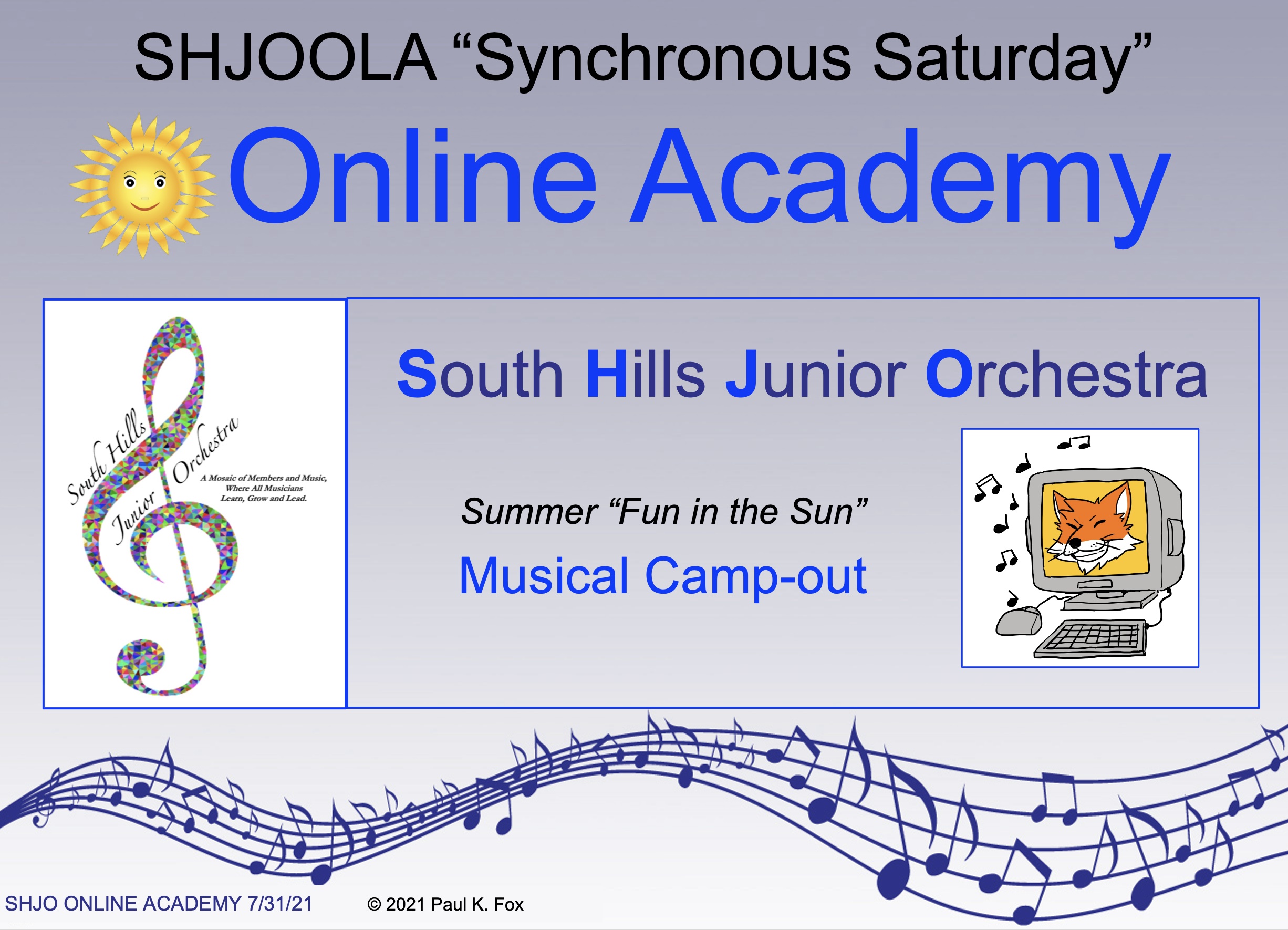
As one example, in the middle of preparing music for my community orchestra, we were shut down in 2020. No in-person rehearsals at the school. I then pivoted to creating my own online platform called SHJOOLA (South Hills Junior Orchestra Online Academy) in 2021 using MusicFirst. For a nominal yearly subscription fee, I was able to continue my Saturday morning classes (synchronous) as well as asynchronous (on-their-own time) learning using excellent applications in a virtual environment: MusicFirst Classroom, Focus on Sound, PracticeFirst, Sight-Reading Factory, Musition, Auralia, a web-based music notation program, and a huge library of method books and ensemble music. Several past blogs showed how we rolled out SHJOOLA:
The latter link above also provided a comprehensive list of supplementary resources (at the time) for online music education. Please peruse these even though some of them may have now gone inactive. We will provide supplemental links at the bottom of this article.
Another direction accented by the onslaught of the pandemic was digital streaming performances, incorporating technology in both the solo and ensemble settings. The following are two of my favorite examples of these to be viewed on YouTube:
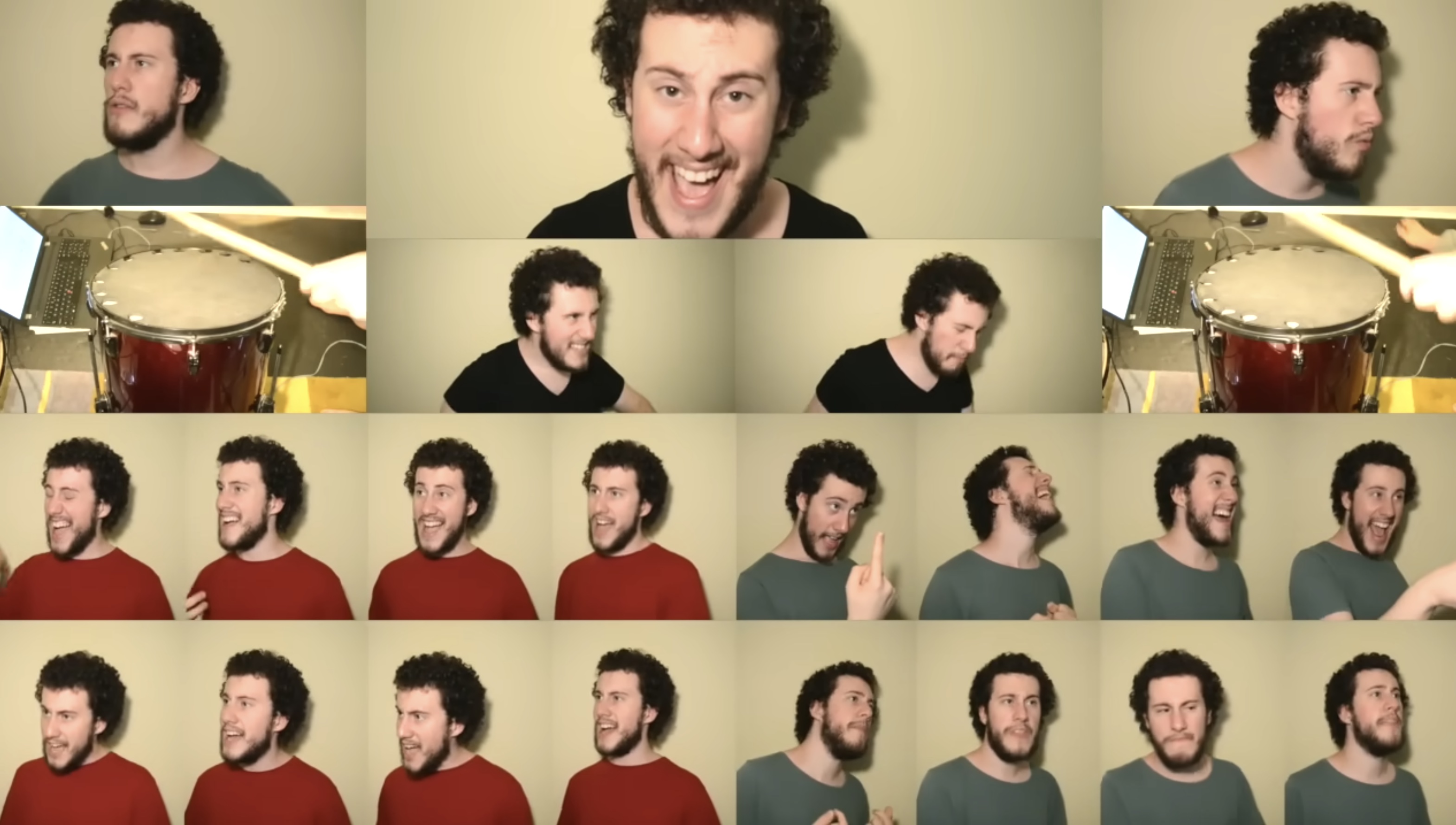
Circle of Life from Disney’s Lion King (2015-18) by Sam Robson, arranger, innovator and performer using multitrack recording of a single performer mixing as many as 50 voices at one time.
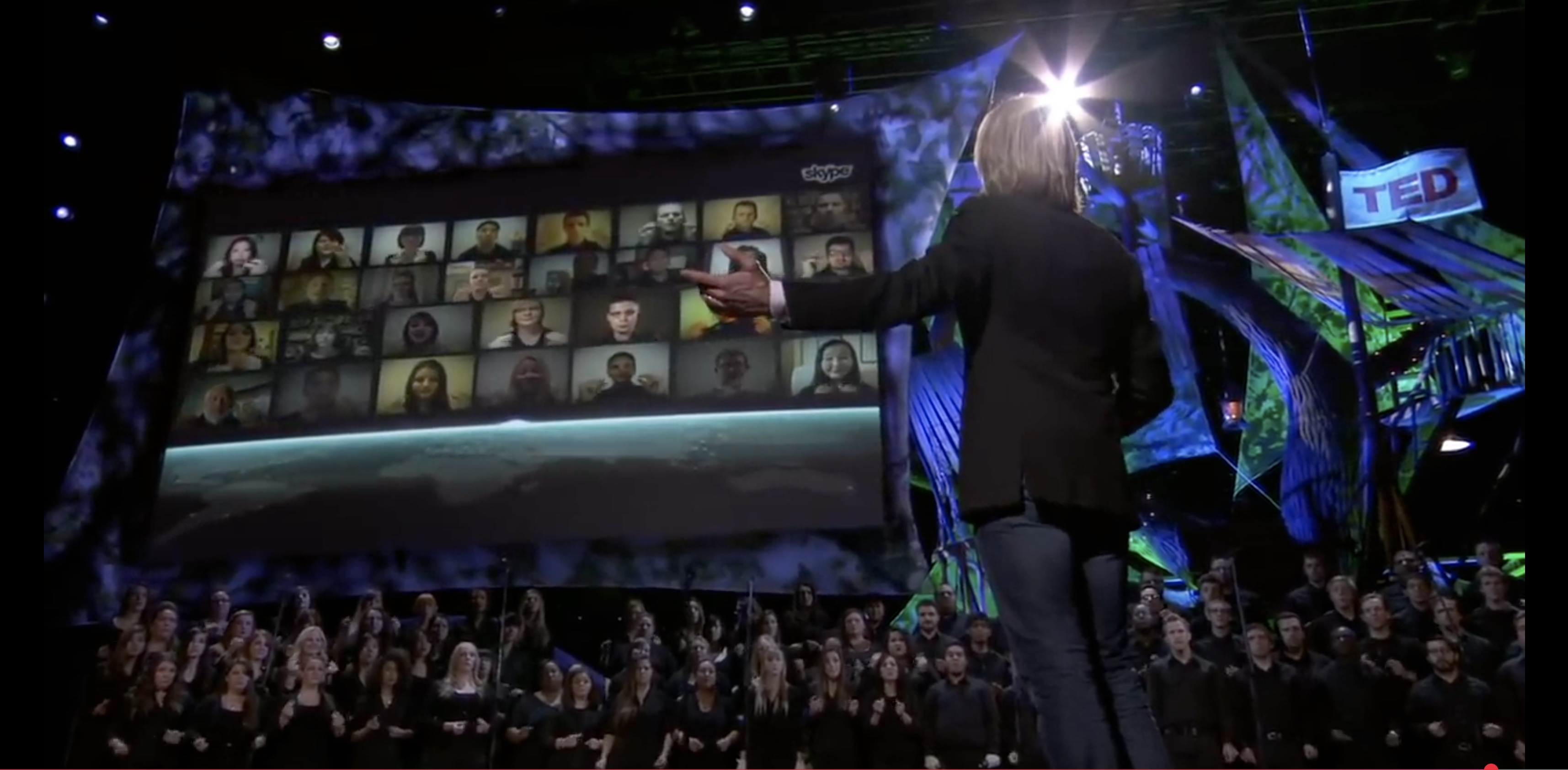
Cloudburst, a Virtual & Live Choir and TEDTALK (2013) by Eric Whitacre
Well… sorry this blog has grown to be so large! If you admit to understanding the potential hazards of and precautions for integrating social media, social networks and other technologies into education, we’ll close with the following bibliography of additional resources for further study. If that is not enough to whet your curiosity, stop back in several months to download a copy of my slide summary for the session I will present at the DCMEA Winter Conference on January 30, 2026.
Be careful — stay safe and professional — but ENJOY!
Creative Ways for Musicians to Make Money Beyond Gigs
Most of us who chose becoming music educators were motivated by our own experiences in creative self-expression and playing or singing in ensembles, and inspired by our incredibly dedicated school and private music teachers and ensemble directors. The “calling” of entering this profession was due to wanting to share this joy of making music! The best part of all of these musical experiences and training? Most of us retain these skills throughout our careers and even in retirement — many participating in community bands, orchestras, choirs, or jazz combos — some for hire!
Guest blogger Ed Carter reminds us that there are many ways to literally “cash in” our musicianship and supplement our income.
Article by Ed Carter
As a musician, making money can be challenging, especially when starting out. However, there are unique and unconventional ways through which musicians can earn extra money. Here are some ideas worth considering.
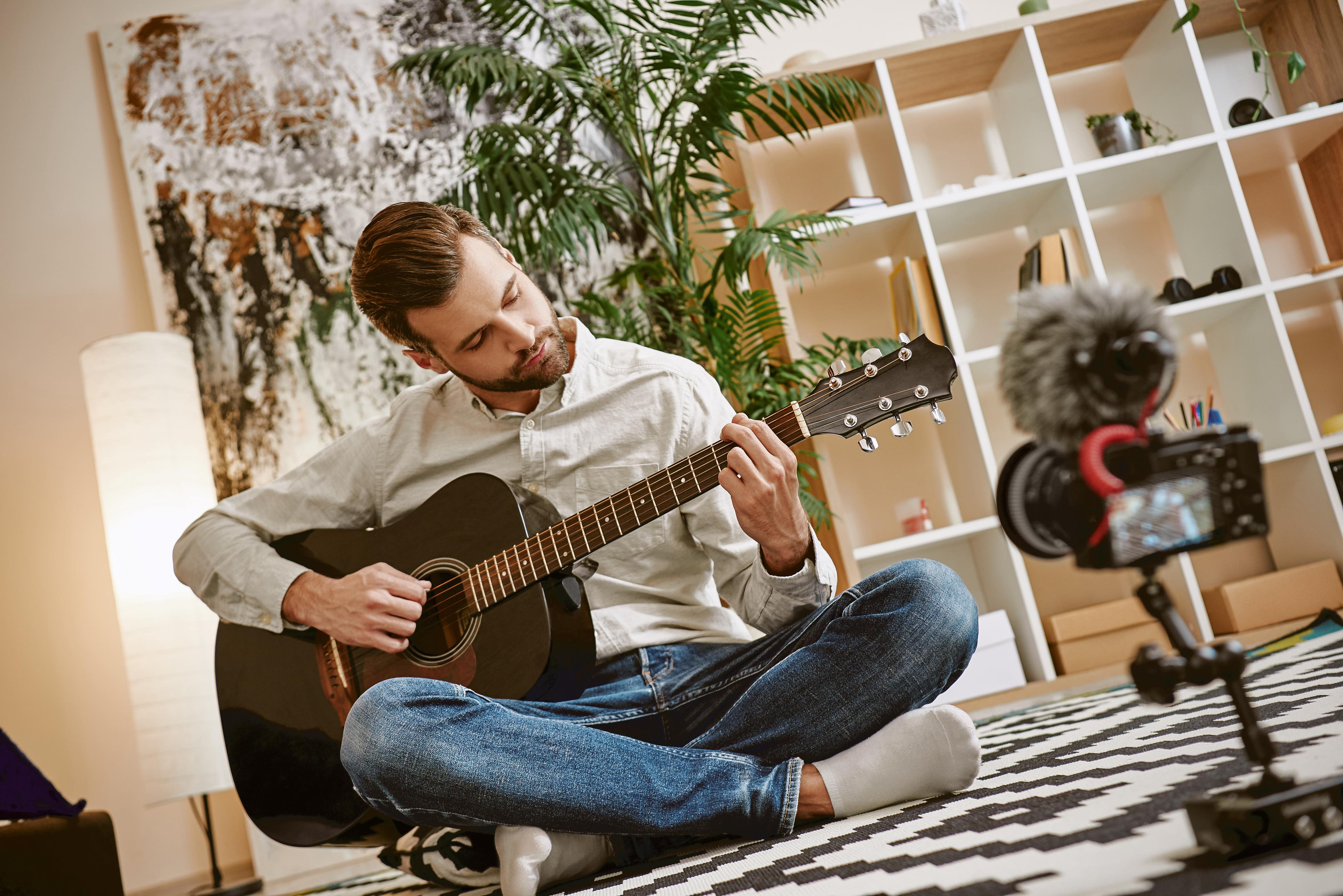
Live Streaming
Live streaming has become a popular way to reach audiences, especially because of its convenience and cost-effectiveness. As a musician, you can leverage this platform by hosting online concerts, meet-and-greet sessions, and private performances. To earn money from these events, consider using these platforms.
Selling Merchandise
Merchandise sales are a great way to promote yourself while creating extra income. Consider offering merch such as hats, stickers, or even signed t-shirts. The key is to make your offerings unique and appealing to your fans. To ensure maximum exposure and sales, consider selling your merchandise at live events and through your website or social media channels.
Starting a YouTube Channel
YouTube has proven to be a powerful platform for musicians to gain exposure, build their fan base, and earn money. You can create a channel hosting content such as behind-the-scenes clips, tutorials, or even live performances. To earn money through YouTube, consider joining the YouTube Partner Program or utilizing sponsored content. Additionally, use other forms of social media platforms to promote your channel and gain more subscribers.
Tutoring
By sharing skills and experience, musicians can earn money through teaching. Consider offering lessons to beginners or those looking to advance their skills. To ensure consistent income, you can offer both in-person and online lessons. Creating a lesson plan, setting a reasonable rate, and marketing your services online will help you attract students.
Networking
Getting involved in your local music scene is essential to connecting with other musicians and growing your fan base. Consider attending open mics, local concerts or festivals, joining a band or musical group, or even volunteering. By building relationships with other musicians, you can collaborate on projects, gain valuable experience, and increase your exposure.
Playing Gigs
Playing for events is a great way to not only earn extra money but also gain exposure to potential fans. Consider contacting event planners, wedding coordinators, and event organizers to offer your services. To succeed in this avenue, be reliable, punctual, and consistently produce quality music. By offering a unique musical experience, you will earn more referrals and increase your client base.
Composing
If you have experience in musical arrangement and composition, there is a high demand for those skills. Consider working with bands, orchestras, and other musical groups to create unique arrangements. To get started, create a portfolio of past arrangements, market your services online, and network with other musicians in your community.
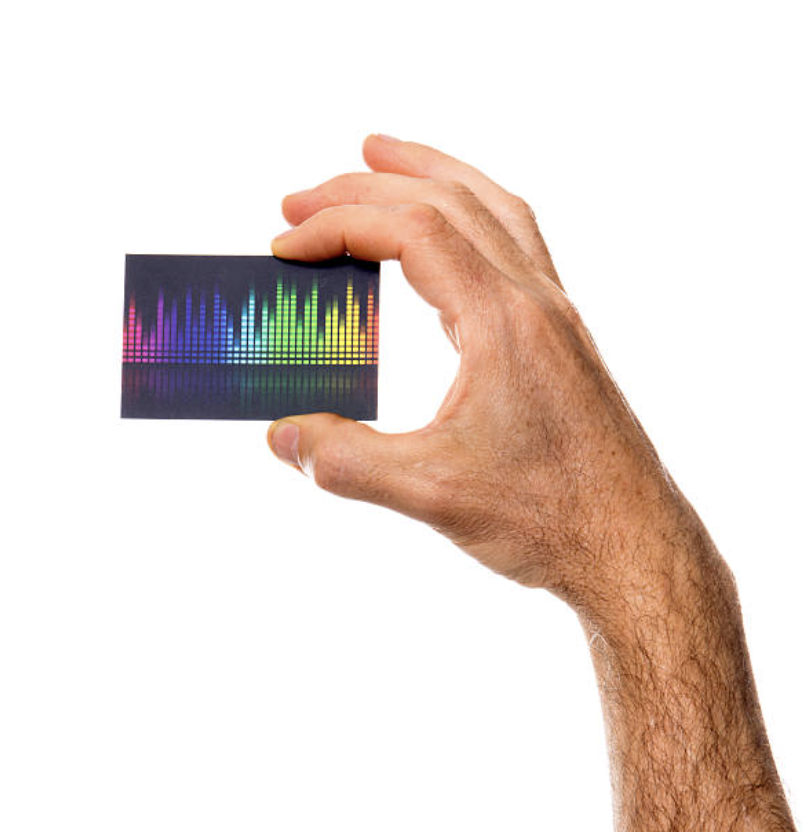
Striking a First Impression
If you are a musician, having an engaging and memorable business card can help you stand out from the crowd and promote yourself. One solution to create professional and visually appealing cards is to use online tools. You can include your contact information, social media handles, and music style description on your card and distribute them at events, live performances, and networking opportunities. This may be a solution to help you make a lasting impression and expand your fanbase.
As a musician, there are various ways to earn extra money while building your career. By leveraging different platforms and services, such as live streaming, YouTube, and merchandise sales, you can increase your revenue and grow your brand. Remember, consistent quality and hard work are key to achieving success in the music industry.
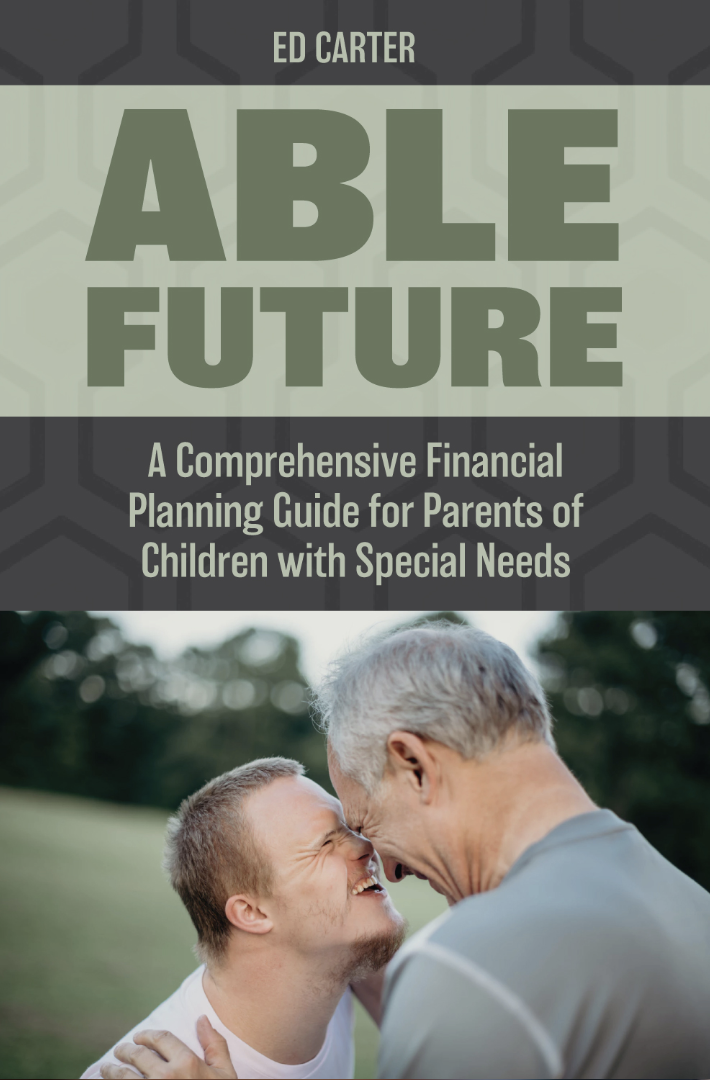
I’m Ed Carter, and I am a retired financial planner. Over the years, I’ve worked with clients of all ages, backgrounds and incomes. About 10 years into my career, I saw a need for financial planners who specialize in helping individuals and families living with disabilities. Regardless of their nature or how long they’ve affected someone, physical and mental limitations often cause stress and confusion when it comes to financial planning. Many people are unaware of just how many options they have when it comes to financial assistance and planning, so it’s an honor to offer my experience and change people’s lives for the better.
Now that I’m retired, I’m committed to continuing my services, even though I work on a broader scale than when I was working 9 to 5. I now spend my free time writing financial literacy articles for people to share on their blogs, collecting resource links for people to share on their websites, and collaborating with like-minded folks who want to make a difference.












 paulfox.blog