
The Final Leap from Pre-Service to In-Service:
The Metamorphosis and Integration of Philosophy, Maturity, and Teacher Preparation
 To “wrap-up” our final segment, we will review the development of a professional “marketing plan.” This is blog #3 out of 3. (Be sure to also check out #1 and #2, too.)
These are three critical skills you need to foster in the search for a school music position, marketing yourself, interviewing, and landing a “good” job:
- Personal branding (who are you, what makes you unique, and what do you have to offer?)
- Story telling (anecdotes) of your positive attributes and personal brand, including a record of your habits of “engagement” in music education, and
- Networking (associating with other professionals and getting your positive stories “out there”).

Personal Branding
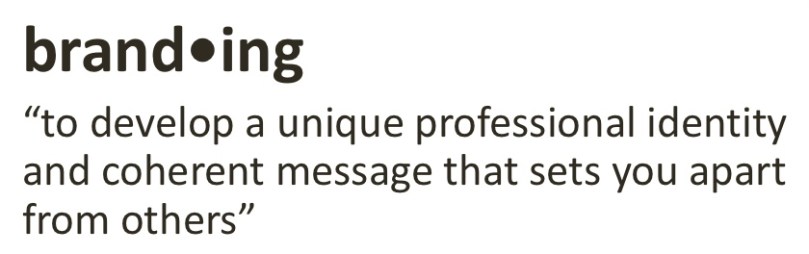
“Personal branding is the practice of people marketing themselves and their careers as brands. While previous self-help management techniques were about self-improvement, the personal-branding concept suggests instead that success comes from self-packaging… Personal branding is essentially the ongoing process of establishing a prescribed image or impression in the mind of others about an individual, group, or organization.”
– Wikipedia: https://en.wikipedia.org/wiki/Personal_branding
What is the difference between marketing and branding? According to some, “marketing is what you do, branding is what you are.” (www.tronviggroup.com/the-difference-between-marketing-and-branding/)
 Shama Hyder posted “7 Things You Can Do to Build an Awesome Personal Brand” at http://www.forbes.com/sites/shamahyder/2014/08/18/7-things-you-can-do-to-build-an-awesome-personal-brand/, including the following outlined summary:
- Start thinking of yourself as a brand
- Audit your online presence
- Secure a personal website
- Find ways to produce value
- Be purposeful in what you share
- Associate with other strong brands
- Reinvent
During these waning months for college music education seniors, now is the time to finalize the preparations for personal branding and beginning the employment search! Personal branding is critical to help you “stand above the rest,” showing that you have what it takes and would be a major asset to a prospective employer, and defining and marketing your own unique qualities that would make you “a good fit” for the specific job openings.
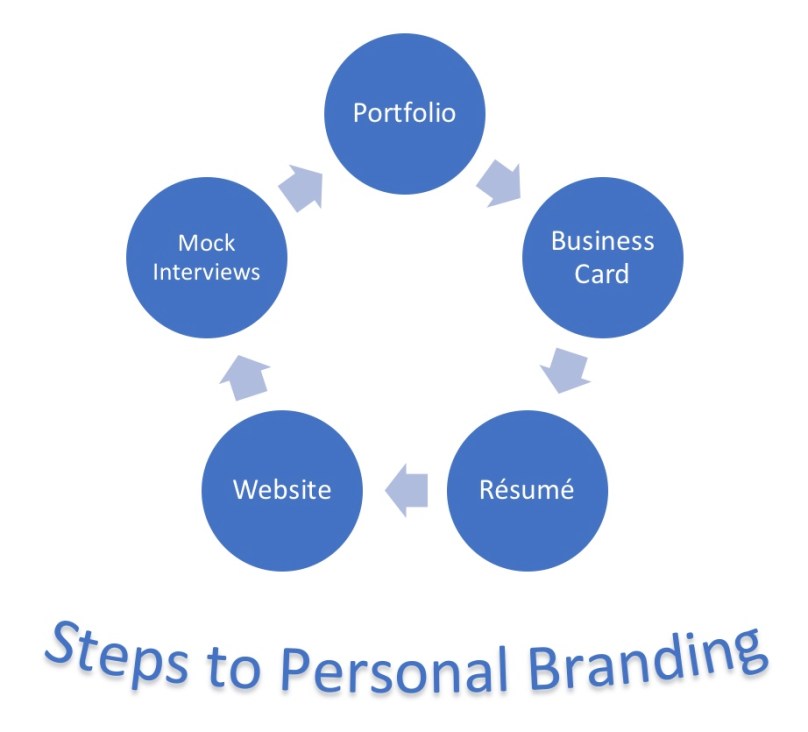 The branding process involves first developing your philosophy of music education, archiving your awards and accomplishments, documenting your grades and
  experiences, and collecting stories/personal anecdotes of your strengths. The next steps include the creation of a written and electronic portfolio, business card, resume, and website. Finally, you must compile/assemble everything together and practice (and self-assess) your “story-telling skills” to answer those important questions at well-rehearsed “mock interviews.”
You will likely not have enough time to complete all of these tasks during methods classes or student teaching seminars. That’s okay. If you are serious about prepping yourself to find a great music teaching job, the valuable links (see below) and articles are out there… just manage your time and start reading.

Networking
According to the article “Network Your Way to Secure a Teaching Job” at https://resumes-for-teachers.com/job-search-help/teacher-network/, many people are unaware of the basics of networking and how to use them it to their advantage in securing a job:
“Networking simply refers to finding job-related contacts. Most teachers who are just beginning their careers may feel that they have few, if any, networking contacts in the teaching field. It is important to consider the many different areas of networking as you create your own group of networking contacts to help you secure a teaching job. It is interesting to note that many of the teaching positions that are filled each year are filled by those who came to the attention of personnel managers by recommendation.”
“Always think about adding to your teaching network. When meeting new people, be certain to add them to your network. Talk to them about your skills, education, experience, and learn about their jobs. Make sure that you always ask for a business card.”
Do you have a business card? Is your résumé updated and available online on your professional website?
 As I laid out in a previous blog “Networking Niceties: The ‘How-To Schmooze’ Guide for Prospective Music Teachers” at https://paulkfoxusc.wordpress.com/2016/04/04/networking-niceties/, the concept of networking is two-way communications. Just like collective sets of nerve synapses, two-way connections are expected to fire repeatedly in all directions. That’s actually the science behind memory. For professional networking, it is your “charge” to create multiple pathways to/from school HR managers and secretaries, administrators, music supervisors and department heads, and music teachers… and YOU – your skills, accomplishments, unique qualities, experience, education, and personality traits.
 The above blog-post also explores setting up a good organizational system to manage your professional contacts.
If you are a Pennsylvania collegiate member (PCMEA), I heartily recommend the article “Networking 101” by Dr. Kathleen Melago, PCMEA State Advisor and Associate Professor of Music Education at Slippery Rock University, published in the Summer 2017 issue of the state journal PMEA News (pages 40-42). Here are several quotes from her work:
“One of the most common ways music educators can plan to network is at conventions. First, try to avoid interacting only with people from your school or people you already know from other schools. Go to sessions that interest you and look for opportunities to meet people there. Before the session starts, introduce yourself to people sitting around you. Use your social skills to assess whether they seem like they want to engage in a conversation or not. After the session, go up and meet the presenter.”
“Of course, social media is another great way to build your network. Networking with professionals already in the field can help you see what they are doing and help you build ideas of what you would like to do in your program someday.”
“Sometimes, you might find yourself networking unexpectedly. For example, you might go into school to work with their clarinet section during band camp and just happened to meet the choir teacher. That is networking!”
“To help your networking be most effective you need to have good communication skills. When interacting with others in a networking situation, be sure to focus on the person with whom you are speaking. Avoid looking off into the distance as if you were to anticipating someone else more important coming by. But your cell phone away and be present to the conversation.”
“Be yourself in your networking interactions. If you pretend that you are someone you are not, you will either end up unhappy or you’ll be discovered is someone who is not genuine.”
Dr. Melago goes on to provide a myriad of excellent examples of networking skills and opportunities.
Another resource specifically for networking at music teachers conferences is posted at https://nafme.org/getting-music-conferences/.
Engagement
Here is an excellent definition of “professional engagement” from “Domains of Teaching” of the Australian Institute for Teaching and School Leadership at https://www.aitsl.edu.au/teach/understand-the-teacher-standards/domains-of-teaching.
Teachers model effective learning. They identify their own learning needs and analyze, evaluate and expand their professional learning, both collegially and individually.
Teachers demonstrate respect and professionalism in all their interactions with students, colleagues, parents/carers and the community. They are sensitive to the needs of parents/carers and can communicate effectively with them about their children’s learning.
Teachers value opportunities to engage with their school communities within and beyond the classroom to enrich the educational context for students. They understand the links between school, home and community in the social and intellectual development of their students.
Engagement for prospective music teacher may include synonyms like “participate,” “enroll,” “join,” “be active,” “volunteer,” “seek experience,” and “make a difference!”
Are you a member of your professional music education associations?
- NAfME National Association for Music Education
- PCMEA Pennsylvania Collegiate Music Educators Association, or another state’s local NAfME collegiate chapter
 PMEA Pennsylvania Music Educators Association, or another state’s NAfME-affiliated MEA
- ACDA American Choral Directors Association
- ASTA American String Teachers Association
- NBA National Band Association
Did (or will) you attend your state music teachers’ conference and local workshops on music education and professional development?
To prove you are “professionally engaged,” I would expect to see a consistent record of modeling in the following areas:
 Self-reflection of the professional’s teaching practices and modification of these as needed to match changes in the environment and circumstances
- Self-assessment of the professional’s methods and approaches, as well as the progress of the students’ learning, using both formative and summative methods for constant and ongoing improvement
- Identification and planning of professional learning needs.
- Unsupervised (or unplanned by school administration) goal-setting and self-guided implementation of opportunities for professional development
- Association with professional learning communities, school and community meetings, and other collaborative projects
- Volunteer service in music and music education
- Membership and subscription to music education journals and participation in online professional community discussion groups
Many have said that aspiring to be a music educator is a lot like a calling. One school superintendent I know said he expected prospective new recruits to show high energy, enthusiasm, sense of purpose, and dedication during the interview… even a supposed willingness to “lay down in front of a school bus” or “do what ever it takes” to make the students (and the educational program) successful. That’s engagement!

In summary, becoming a music educator is about finding your inner confidence, a mindset that you know what you’re doing, and that you’re ready for that real world experience. You’ve learned those essential skills in conducting, piano accompaniment, arranging, student behavior modification and discipline, music diagnosis and remediation, and even how to market your professionalism. Now… drum roll, please! Here’s… a master music teacher!

In closing, here are supplementary materials to help you to “get your feet wet,” all free and available online. The following lists, although not comprehensive, are a good place to start (courtesy of https://www.pmea.net/wp-content/uploads/2012/10/Collegiate-Communique-No11-022218-2.pdf):
Good luck!
Personal Branding, Marketing, and Networking
- https://paulkfoxusc.wordpress.com/2015/12/16/tips-on-personal-branding/
- https://www.aicpa.org/interestareas/youngcpanetwork/resources/career/fivetipstobrandingyourself.html
- https://paulkfoxusc.wordpress.com/2015/07/04/marketing-yourself-and-your-k-12-music-certification/
- https://www.quicksprout.com/the-complete-guide-to-building-your-personal-brand/
- https://paulkfoxusc.wordpress.com/2016/04/04/networking-niceties/
- https://www.workitdaily.com/hate-networking-tips/
Business Cards
- https://paulkfoxusc.wordpress.com/2016/04/04/networking-niceties/
- https://www.huffingtonpost.com/2011/11/12/designing-a-business-card_n_997449.html
- https://www.entrepreneur.com/article/159492
- https://www.webdesignerdepot.com/2010/06/how-to-design-your-business-card/
Résumés
- https://paulkfoxusc.wordpress.com/2016/01/12/music-teacher-resumes-revisited/
- https://www.wikihow.com/Make-a-Resume
- https://www.thebalance.com/guidelines-for-what-to-include-in-a-resume-2061035
- https://www.resume.com/blog/5-simple-tips-when-building-a-resume/
- http://www.powerful-sample-resume-formats.com/index.html
- https://iml.esm.rochester.edu/careers/resume/
- https://www.cmu.edu/career/students_and_alumni/write_a_resume_or_cover_letter/index.html
Portfolios and Websites
- https://paulkfoxusc.wordpress.com/2018/01/14/the-professional-website/
- https://nafme.org/do-i-need-a-digital-teaching-portfolio/
- https://paulkfoxusc.wordpress.com/2015/11/15/planning-the-perfect-professional-portfolio/
- http://www.theeduedge.com/top-five-must-haves-top-five-could-haves-your-teacher-interview-portfolio/
- http://langwitches.org/blog/2009/07/17/digital-teaching-portfolios/
- http://www.learnnc.org/lp/pages/6437?style=print
Interview Questions, Techniques, and Skills of “Story-Telling”
- https://paulkfoxusc.wordpress.com/2015/08/02/when-it-comes-to-getting-a-job-s-is-for-successful-storytelling/
- https://paulkfoxusc.wordpress.com/2015/10/11/the-dos-and-donts-of-interviewing/
- https://paulkfoxusc.wordpress.com/2016/02/27/interview-questions-revisited/
- https://paulkfoxusc.wordpress.com/2015/09/01/a-blueprint-for-success-preparing-for-the-job-interview/
- https://www.theguardian.com/teacher-network/teacher-blog/2014/jan/29/teacher-job-interview-questions-top-ten
- https://www.thebalance.com/teacher-interview-questions-and-best-answers-2061223
- https://theinterviewguys.com/teacher-interview-questions-and-answers/
PKF
© 2018 Paul K. Fox

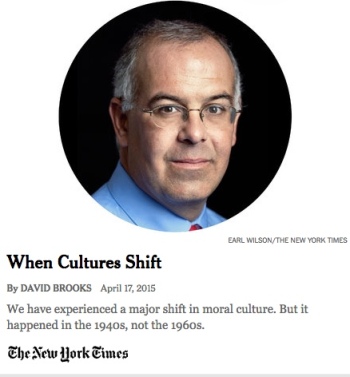 Many have suggested that there has been a decline in moral standards that have contributed to ethical disputes in modern society (and in the public schools). Some say that this is attributed to a breakdown or lessening of the influence of organized religion and family values. “When Cultures Shift,” an excellent article in the New York Times (April 17, 2015), David Brooks explores some of causes and effects of this “slip” to our value systems, ethics, and renewed focus on self:
 Do schools, not necessarily families, serve as the “safety net” for socializing its citizens, and teaching morality, manners, and the values of human relationships? Are teachers held to a higher standard of behavior in order to model these principles and charged with the responsibility of indoctrinating the meaning of “right and wrong” and how to get along with each other? Many would seem to agree, including sample codes of ethics for teachers and this from Robert Fulghum
  In Essays on Moral Development: The Philosophy of Moral Development (New York: Harper Collins 1981), Lawrence Kohlberg illustrates his “Six Stages of Moral Development” from ethical decisions based on adherence to rules/regulations and avoidance of punishment to acceptance of universal principles of justice and respect for human life.
 As I said in Part I of this blog series, one of the first acts of a new or transferred teacher upon being hired to a specific school district is to visit the website of his/her state’s education department, and make a thorough search on the topic of “code of ethics” or “code of conduct.” There is no defense for ignorance of the codes and statutes relevant to the state you are/will be employed.

 In addition, in almost every state education system, there are “mandatory reporting” regulations. Teachers are held responsible to ensure that their colleagues conform to the appropriate standards of ethical practice as well. In other words, if you know something is wrong and you do not report it to an administrator, you could also be liable and subject to hearings, discipline, and even prosecutions for negligence of your duty to protect the best interests, health, and safety of the student(s) involved.
 A sense of invulnerability
 It is the responsibility of the teacher to control his or her “public brand” – how he or she wants to be perceived by students, parents, colleagues, and the public. One’s public brand can and does impact perceptions, which in turn can impinge upon effectiveness.




 Start thinking of yourself as a brand


 If you have time, design a personal logo, a symbol of you wherever you go on websites, e-mail footer, digital and printed portfolios, business cards, etc. Although I retired in 2013, I created the illustration at the above right. It implies that I am “a happy fox” (my last name), involved in music, and especially love a certain Beethoven symphony, reinforcing that I am an orchestral musician.
 paulfox.blog