

This message goes out to all of my Pennsylvania music education colleagues and especially any currently enrolled Freshman through Graduate college students in the Commonwealth.
My wife and I are proud to announce the launch of two new scholarships for the 2023-24 school year, financed by the Stark-Fox Family Fund, and managed by the Pennsylvania Music Educators Association (PMEA). Official applications will be available soon (spring semester 2023) on the PMEA website here. All materials are due on or before June 1, 2023.
Do you know someone who is currently attending a PA university, college, or conservatory? Is he or she majoring in music education AND is a member of Pennsylvania Collegiate Music Educators Association (PCMEA) OR majoring in a science-technology-engineering-mathematics (or related) field of study AND participating in their collegiate music ensemble for credit?
Then… SPREAD THE WORD!

Here is a general summary of the eligibility requirements and expectations for application approval, subject to change by the PMEA EXCOM and staff. A performance video (or submission of an original composition) is required for either scholarship, and interested candidates could begin now (during the semester break) to prepare their piece(s), update their resume, assemble a digital portfolio, and write the essay.
PMEA Council TTRR Continuing Music Education Award
- Amount and number of scholarships may vary from year-to-year
- Full-time enrollment of at least one year (two complete semesters) as an undergraduate or graduate music education major in an accredited PA institution
- Nonrenewable (selection of a different candidate each year)
- Paid directly to candidate as reimbursement for college tuition, dorm/apartment rent, meals on campus, textbook purchases, and/or the purchase of a new instrument (must provide receipts)
- Blind judging by PMEA members with at least one member from the PMEA Council of Teacher Training, Recruitment, and Retention, PMEA EXCOM, and/or PMEA staff
- Criteria for selection
- A minimum of at least one year as PCMEA member in good standing with letter of affirmation from the PCMEA sponsor
- Submission of college transcript reflecting 3.5 GPA or higher
- Demonstration of solo performance skills (recorded video) or submission of composition(s)
- Presentation of a music education portfolio with sample lesson plans, philosophy, and development of creative instructional activities with a focus on the arts at the center of STEAM
- Participation in at least one PMEA-sponsored professional development program e.g., the Annual Conference, Summer Conference, Webinar, or Regional Workshop
- Completion of essay in response to the question “Why have you chosen a career in music education?” and portrayal of leadership and well-defined goals and aspirations towards a career in music education.
- Letter of recommendation from at least one music education professor

PMEA Music-for-Lifelong-Learning Award
- Amount of scholarship may vary from year-to-year
- Full-time enrollment of at least one year (two complete semesters) as an undergraduate or graduate science-technology-engineering-mathematics major in an accredited PA institution
- Enrollment for at least one semester in a music performance course e.g., band, chamber music, chorus, jazz, or orchestra earning the letter grade of an “A” or equivalent with submission of letter of recommendation (and transcript) from ensemble director
- Nonrenewable (selection of a different candidate each year)
- Paid directly to candidate as reimbursement for college tuition, dorm/apartment rent, meals on campus, textbook purchases, and/or the purchase of a new instrument (must provide receipts)
- Blind judging by PMEA members with at least one member from the PMEA Council of Teacher Training, Recruitment, and Retention, PMEA EXCOM, and/or PMEA staff
- Criteria for selection
- 3.5 GPA or higher on college transcripts
- Demonstration of solo performance skills (recorded video)
- Presentation of a music portfolio with high school and college history of participation in music ensembles and pursuits in creative self-expression, concert programs, and/or evidence of the development of creative activities or projects with a focus on the arts at the center of STEAM
- Completion of essay that reflects musical leadership, community service, and/or the ccandidate’s rationale and aspirations for the continuation of “music study as a life-skill”
- Response to the question, “How does the study of music enhance your knowledge, skills, and depth of understanding for a career in science-technology-engineering-mathematics?”
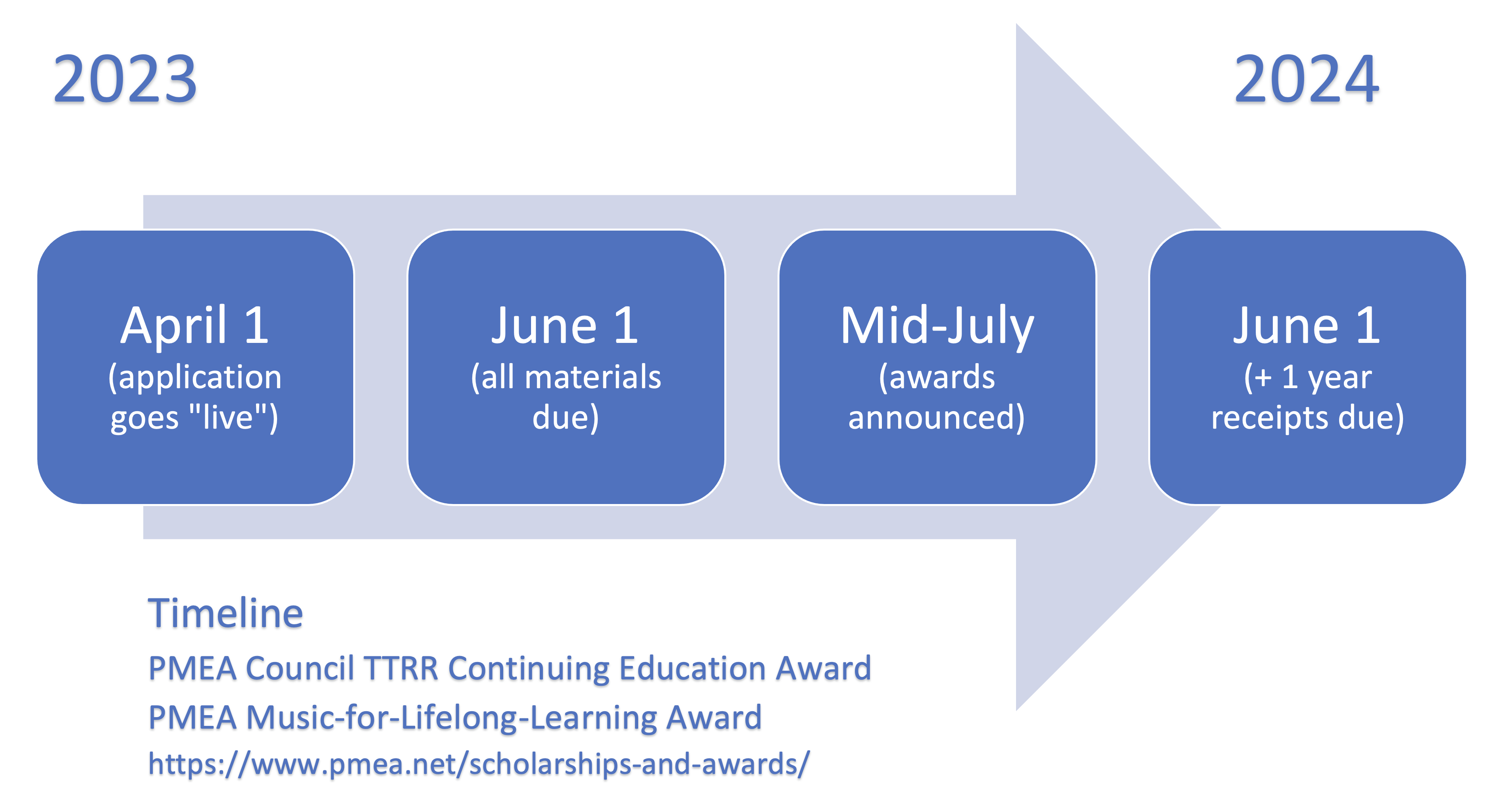
We are hopeful that these will become annual awards of substantial amounts (with a goal of at least $5K to $15K per person based on market conditions), provided as reimbursement of the scholarship recipient’s higher education expenses. If you are a potentially eligible candidate, get to work on the selection process and documentation NOW and… good luck!
PKF
The Stark-Fox Family Fund supports PMEA and PCMEA.
© 2022 Paul K. Fox

 As a courtesy to the writer (and modeling good preparation on your part), give at least two to three weeks’ notice (more is better). Remember: “Lack of planning on your part does not constitute an emergency on the teacher’s part.” It would also be polite to “gently remind” the staff member about the final deadline of the recommendation (at least one weekend’s notice). For SHJO, one Saturday ahead of the final deadline would be ideal.
 paulfox.blog