
PART I: Financial Fraud
 Every day in the news, we hear of another sad story of someone being tricked into giving up some of his/her hard-earned green-stuff… numerous successful fraudulent schemes to get you to part with your $$$ willingly or simply steal it right out from under you without you even knowing it! Even the FBI has devoted a webpage on elder-fraud which we should all review: https://www.fbi.gov/scams-and-safety/common-scams-and-crimes/elder-fraud. With losses as high as $3 billion annually, this is a problem we all must become better informed.
My blog-posts are provided to educate and inform retired music teachers and other professionals… and there’s never a reason to “reinvent the wheel” if I can share something “as is” that is totally “on the mark!” Before you do anything else, for you and your family’s personal financial security, education, and peace-of-mind, take a 15-minute break and read the entire Birch Gold Group Scam Protection Resource Guide on this website here: https://www.birchgold.com/scam-protection-resource-guide/.
 Below is an outline of their recommendations with the hopes to better illuminate the problem, define types of fraud and methods to avoid them, and warn you about the “booby-traps” that are out there ready to pounce on the unwary. More resources are also offered for “homework.”
The Birch Gold Group guide is designed to “provide investors with the info necessary to identify fraudulent activity and common-sense solutions to avoid being scammed.”
Six warning signs of a scam:
- Sounds too goods to be true
- High-pressured sales tactics
- Complex investment strategies
- Limited account control
- Insider info, faked credibility
- Overseas opportunities
 Six tips to avoid fraud:
- Ask the salesperson tough questions
- Do your own research
- Beware of unsolicited offers
- Protect yourself online and on social media
- End the conversation
- Know what to look for
Nine prominent types of scams:
- Pyramid schemes
- Ponzi schemes
- Pump-and-dump schemes
- Advance fee scam
- Foreign currency trading (Forex)
- Affinity fraud
- Offshore scams
 Binary options
- High-yield investment programs (HYIPs)

Also from Birch Gold are these additional investment “scams” for which you should be on the lookout:
- Coronavirus Scams: Look Out for Fake COVID-19 Cures, Stimulus Payments and More
- Spoofing Technology Targets Social Security Recipients
- Former Vanguard Supervisor Guilty of $2 Million Scam
- “Virtual Kidnapping” Shows How Scammers Are Evolving with Technology
- Beware of These IRS Scams This Tax Filing Season
- Lawsuit Against Facebook Sheds Light On This Troubling Social Media Scam
- Woodbridge Group Ponzi Scheme Comes to a $1 Billion End
(Permission was granted for reprinting portions from the Birch Gold website.)
More Advice on Blocking Financial Scams
“Year after year, a destructive flood of fraud sweeps the nation, leaving countless victims in its wake. Unfortunately, new and improved technology only gives fraudsters an edge, making it easier than ever for scam artists to nab financial data from unsuspecting consumers. In fact, swindlers and hackers pinched $16 billion from 15.4 million U.S. consumers in 2016, according to Javelin Strategy & Research’s 2017 Identity Fraud Study. To make matters worse, the Identity Theft Resource Center reports there were 1,473 recorded data breaches in 2019.2 But even in these uncertain times, there are things consumers can do to protect themselves from greedy, increasingly crafty fraudsters.” — Investopedia
Amy Bell contributed a helpful article to the Investopedia blog “on topic” with the following title: “Ten Tips to Avoid Common Financial Scams,” This is another excellent resource you should peruse detailing her “top ten list.”
 Never Wire Money to a Stranger
- Don’t Give Out Financial Information
- Never Click on Hyperlinks in Emails
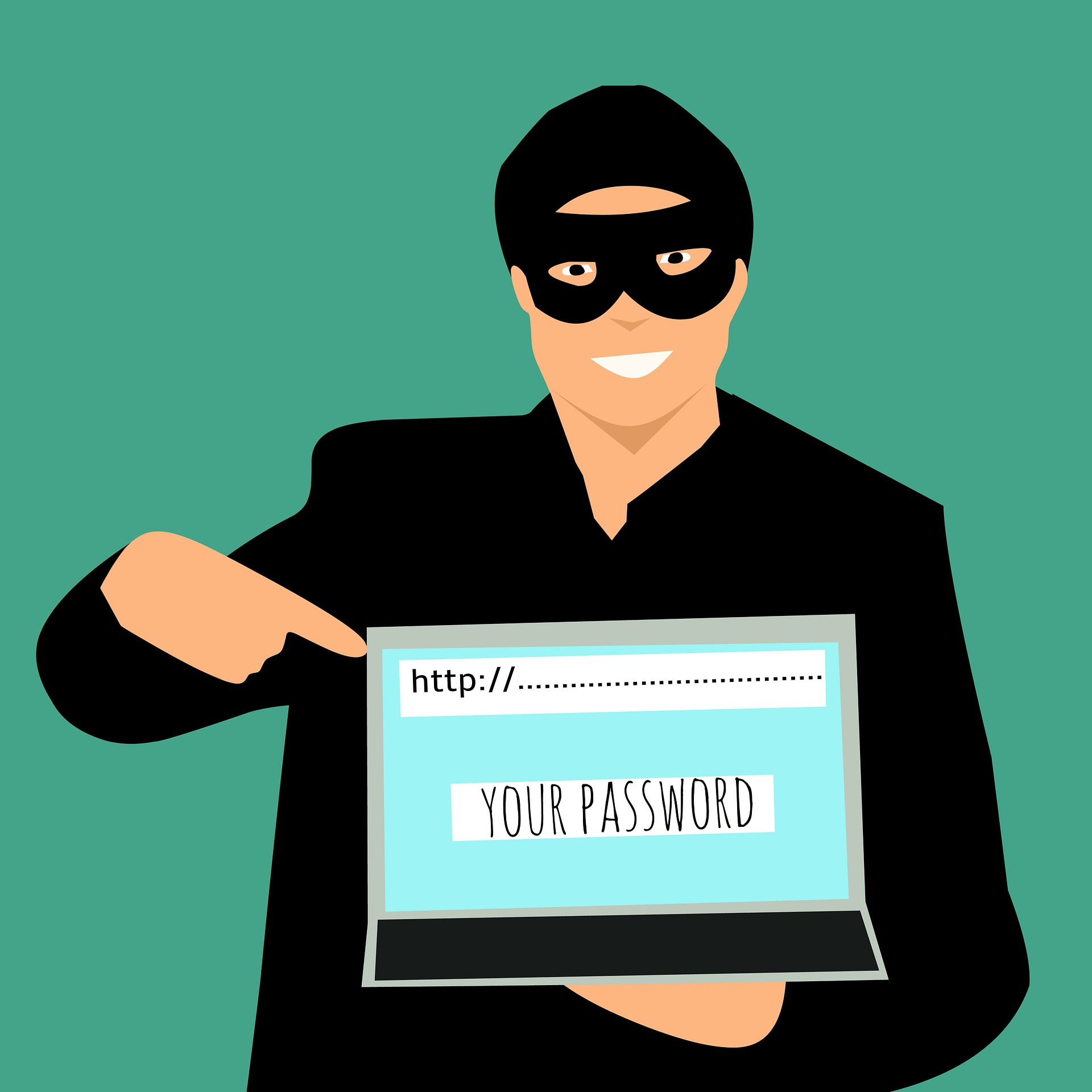
- Use Tough-to-Crack Passwords
- Never Give Out Your Social Security Number
- Install Antivirus and Spyware Protection
- Don’t Shop with Unfamiliar Online Retailers
- Don’t Download Software from Pop-Up Windows
- Make Sure the Websites You Visit Are Safe
- Only Donate to Known Charities
Additional Websites for Your Review:
- https://www.usa.gov/common-scams-frauds
 https://www.cftc.gov/ConsumerProtection/FraudAwarenessPrevention/CFTCFraudAdvisories/index.htm
- https://www.consumer.ftc.gov/features/scam-alerts
- https://www.investor.gov/protect-your-investments/fraud/types-fraud
- https://www.irs.gov/newsroom/tax-scams-consumer-alerts
- https://www.bbb.org/article/news-releases/16758-bbb-tip-phishing-scams
Coming soon…
Part II: Other Types of Fraud and Remedies
PKF
Pixabay.com graphics by Mohamed Hassan:
- Scam Alert (iStock-1175261373)
- Scam Phishing
- Fraud Hacker
- Fraud Prevention
- Trap Money Bait
- Laptop Error
- Hacker Scam
© 2021 Paul K. Fox







 paulfox.blog