Editor’s Note: I am taking several weeks off (a retiree’s summer vacation?) from writing articles and creating new material or proposals for workshop presentations on “the life cycle of a music educator – from preservice training to retirement.” Frequent guest contributor Ed Carter (see his past blogs here, here,and here) has graciously offered the piece below on advice for musicians to promote/market their music. Thanks for your insight, Ed!
In today’s digital age, getting your music discovered isn’t just about creating great art; it’s about strategic visibility and connection. For musicians, the realm of possibilities is expansive, yet selecting the right path can significantly influence your success. This article shared courtesy of Paul K. Fox delves into practical strategies to amplify your presence, engage with your audience, and carve a distinctive niche in the bustling world of music.
Dive into the Heart of Your Community
Embracing local music festivals and events can be a game-changer for your music career. These gatherings are not just events but a vibrant ecosystem of music lovers eager to explore new sounds. By participating, you’re not merely performing; you’re immersing yourself in a community that thrives on discovery. The connections made here, both with fans and other artists, can lead to collaborations and opportunities that extend far beyond the festival grounds.
Creating a Website
In the era of streaming, the significance of owning your distribution channel cannot be overstated. Setting up your own website brings your music directly to fans without intermediaries. This approach not only boosts your earnings but also strengthens your relationship with your audience. Offering exclusive content or merchandise can further personalize the experience, making your listeners feel like part of a special circle.
Crafting the Perfect Pitch
Waiting for discovery is a path of uncertainty. Seize the initiative by reaching out to publishing and media outlets with your music. Crafting a compelling pitch requires understanding what makes your music unique and conveying it in a way that resonates with journalists and bloggers. This proactive approach can lead to coverage that boosts your visibility exponentially, attracting new listeners and opening doors to new opportunities.
Mastering the Business of Music
Consider bridging the gap between music and marketing by going back to school for a business degree to sharpen your business acumen, essential for marketing and selling your art. A business degree equips you with vital skills in marketing strategies and financial management, crucial for a sustainable career in the arts. The convenience of online degree programs allows you to pursue education while continuing to create. Indeed, this could be the ticket to not just creating art but making a living from it.
Develop a Press Kit
A well-crafted press kit can be your passport to gaining attention in the music industry. This toolkit should encapsulate your music, personality, and achievements, providing a comprehensive snapshot to journalists and industry insiders. High-quality photos, a compelling bio, and standout music samples can make your press kit an irresistible introduction to your sounds.
Hosting Your Own Event
Why wait for an invitation when you can create your own event? Hosting your own event or showcase puts you in the driver’s seat, allowing you to present your music exactly as you envision it. This initiative not only demonstrates your entrepreneurial spirit but also creates a buzz around your work, attracting both fans and industry professionals to see what you’re all about.
Harmony and Philanthropy
Aligning your music with charitable causes is a powerful way to expand your reach while contributing to the greater good. Offering your talents for charity events or auctions showcases your commitment to social causes and can endear you to a broader audience. This approach not only elevates your profile but also enriches your musical journey with meaningful connections and experiences.
The journey to getting your music discovered is multifaceted, requiring creativity not just in your art but in your approach to marketing and community engagement. By exploring local music festivals, leveraging your online presence, and engaging directly with the media, you’re building a foundation for success. Supplementing your artistic talents with business skills and giving back to the community add depth to your career, making your music resonate on a deeper level. With dedication and strategic effort, your sound can rise above the noise, connecting with fans and opening doors to new opportunities.
Creative Ways for Musicians to Make Money Beyond Gigs
Most of us who chose becoming music educators were motivated by our own experiences in creative self-expression and playing or singing in ensembles, and inspired by our incredibly dedicated school and private music teachers and ensemble directors. The “calling” of entering this profession was due to wanting to share this joy of making music! The best part of all of these musical experiences and training? Most of us retain these skills throughout our careers and even in retirement — many participating in community bands, orchestras, choirs, or jazz combos — some for hire!
Guest blogger Ed Carter reminds us that there are many ways to literally “cash in” our musicianship and supplement our income.
Article by Ed Carter
As a musician, making money can be challenging, especially when starting out. However, there are unique and unconventional ways through which musicians can earn extra money. Here are some ideas worth considering.
Live Streaming
Live streaming has become a popular way to reach audiences, especially because of its convenience and cost-effectiveness. As a musician, you can leverage this platform by hosting online concerts, meet-and-greet sessions, and private performances. To earn money from these events, consider using these platforms.
Selling Merchandise
Merchandise sales are a great way to promote yourself while creating extra income. Consider offering merch such as hats, stickers, or even signed t-shirts. The key is to make your offerings unique and appealing to your fans. To ensure maximum exposure and sales, consider selling your merchandise at live events and through your website or social media channels.
Starting a YouTube Channel
YouTube has proven to be a powerful platform for musicians to gain exposure, build their fan base, and earn money. You can create a channel hosting content such as behind-the-scenes clips, tutorials, or even live performances. To earn money through YouTube, consider joining the YouTube Partner Program or utilizing sponsored content. Additionally, use other forms of social media platforms to promote your channel and gain more subscribers.
Tutoring
By sharing skills and experience, musicians can earn money through teaching. Consider offering lessons to beginners or those looking to advance their skills. To ensure consistent income, you can offer both in-person and online lessons. Creating a lesson plan, setting a reasonable rate, and marketing your services online will help you attract students.
Networking
Getting involved in your local music scene is essential to connecting with other musicians and growing your fan base. Consider attending open mics, local concerts or festivals, joining a band or musical group, or even volunteering. By building relationships with other musicians, you can collaborate on projects, gain valuable experience, and increase your exposure.
Playing Gigs
Playing for events is a great way to not only earn extra money but also gain exposure to potential fans. Consider contacting event planners, wedding coordinators, and event organizers to offer your services. To succeed in this avenue, be reliable, punctual, and consistently produce quality music. By offering a unique musical experience, you will earn more referrals and increase your client base.
Composing
If you have experience in musical arrangement and composition, there is a high demand for those skills. Consider working with bands, orchestras, and other musical groups to create unique arrangements. To get started, create a portfolio of past arrangements, market your services online, and network with other musicians in your community.
Striking a First Impression
If you are a musician, having an engaging and memorable business card can help you stand out from the crowd and promote yourself. One solution to create professional and visually appealing cards is to use online tools. You can include your contact information, social media handles, and music style description on your card and distribute them at events, live performances, and networking opportunities. This may be a solution to help you make a lasting impression and expand your fanbase.
As a musician, there are various ways to earn extra money while building your career. By leveraging different platforms and services, such as live streaming, YouTube, and merchandise sales, you can increase your revenue and grow your brand. Remember, consistent quality and hard work are key to achieving success in the music industry.
I’m Ed Carter, and I am a retired financial planner. Over the years, I’ve worked with clients of all ages, backgrounds and incomes. About 10 years into my career, I saw a need for financial planners who specialize in helping individuals and families living with disabilities. Regardless of their nature or how long they’ve affected someone, physical and mental limitations often cause stress and confusion when it comes to financial planning. Many people are unaware of just how many options they have when it comes to financial assistance and planning, so it’s an honor to offer my experience and change people’s lives for the better.
Now that I’m retired, I’m committed to continuing my services, even though I work on a broader scale than when I was working 9 to 5. I now spend my free time writing financial literacy articles for people to share on their blogs, collecting resource links for people to share on their websites, and collaborating with like-minded folks who want to make a difference.
Author Trishna Patnaik with a view of the mountains of Darjeeling, India
This special feature reviews something all music teachers, performers, and consumers already know that’s in our DNA… the need for music to sustain our lives! Guest authored by Trishna Patnaik, this poignant message is essential during these challenging times of COVID-19 and in support of many school music/art programs currently under siege.
PKF
Can you envision a life without music?
A world where your favorite musician is a doctor or lawyer, or construction worker because music doesn’t exist?
A life where you can’t turn on your favorite workout playlist while going for a run? Or the pump-up song to boost your confidence right before your big presentation cannot happen?
If you can’t, you are definitely not alone.
Music tends to hit on us a deep level. Whether it is sad music that helps us feel relatable when we are going through hard times or joyful music that adds an extra bounce to your step, music is incredibly powerful!
But, then why is this case? Why does music impact your brain and mood so deeply?
Music is a Universal Language…
…but we don’t always pay enough attention to what it’s saying and how it’s being understood. We wanted to take an important first step toward solving the mystery of how music can evoke so many nuanced emotions. Music has a special ability to pump us up or calm us down.
Listening to music can be entertaining, and it might even make you healthier. Music can be a source of pleasure and contentment, but there are many other psychological benefits as well. Music can relax the mind, energize the body, and even help people better manage pain.
Brain regions involved in movement, attention, planning, and memory consistently showed activation when participants listened to music—these are structures that don’t have to do with auditory processing itself. This means that when we experience music, a lot of other things are going on beyond merely processing sound.
Knowing better how the brain is organized, how it functions, what chemical messengers are working, and how they’re working—that will allow us to formulate treatments for people with brain injury, or to combat diseases or disorders or even psychiatric problems.
The notion that music can influence your thoughts, feelings, and behaviors probably does not come as much of a surprise. If you’ve ever felt pumped up while listening to your favorite fast-paced rock anthem or been moved to tears by a tender live performance, then you easily understand the power of music to impact moods and even inspire action!
The psychological effects of music can be very powerful and wide-ranging. Music therapy is an intervention sometimes used to promote emotional health, help patients cope with stress, and boost psychological well-being. Your taste in music can provide insight into different aspects of your personality.
Why Do People Listen to Music?
Over the past several decades, showcase numerous functions that listening to music might fulfill. Different theoretical approaches, different methods, and different samples have left a heterogeneous picture regarding the number and nature of musical functions.
Principal component analysis suggested three distinct underlying dimensions. People listen to music to regulate arousal and mood, to achieve self-awareness, and as an expression of social relatedness. The first and second dimensions were judged to be much more important than the third—a result that contrasts with the idea that music has evolved primarily as a means for social cohesion and communication. The implications of these results are discussed in light of theories on the origin and the functionality of music listening and also for the application of musical stimuli in all areas of psychology and for research in music cognition.
The psychology of music seeks to interpret musical phenomena in terms of mental function; that is, it seeks to characterize the ways in which people perceive, remember, perform, create, and respond to music. While centred on the empirical findings and theoretical approaches of psychology, the field is highly interdisciplinary, with input from neuroscientists, linguists, geneticists, computational modellers, physicists, anthropologists, music theorists, music performers, and composers.
While the study of music has a long history, dating from the ancient Greeks, the psychology of music as an empirical science did not emerge as a full-fledged discipline until the second part of the 20th century. During the last few decades the field has advanced rapidly, and it interfaces strongly with other branches of psychology, such as the studies of perception, cognition, performance, human development, personality psychology, psycholinguistics, clinical neuropsychology, evolutionary psychology, ability testing, and artificial intelligence.
Musical activity combines perceptual, cognitive, and motor skills in real time and it can offer social and health benefits for diverse populations. While psychologists and neuroscientists probe musical activity for insights about the human mind and brain, music scholars examine its cultural, pedagogical, and theoretical aspects. Though these approaches can complement each other, scientific and humanistic studies of music are often disconnected.
This can result in experiments with flawed musical stimuli and musicological writings with problematic assumptions about human cognitive processes. The human brain contains neural mechanisms specific to music perception. It has identified a neural population in the human auditory cortex that responds selectively to sounds that people typically categorize as music, but not to speech or other environmental sounds. It has been the subject of widespread speculation.
The Benefits of Listening to Music
Brain Focus is Enhanced
Any music listener will agree that music can evoke emotions such as pride, elation, or relaxation. That music does more than that for humans: it stimulates various parts of the brain and bodily responses. How do different kinds of music affect the human body physiologically and psychologically? Is the unconscious experience elicited by the autonomic nervous system analogous to what is experienced consciously through emotions?
Background music, or music that is played while the listener is primarily focused on another activity, can improve performance on cognitive tasks in older adults. One study found that playing more upbeat music led to improvements in processing speed, while both upbeat and downbeat music led to benefits in memory.
So the next time you are working on a task, consider turning on a little music in the background if you are looking for a boost in your mental performance. Do consider choosing instrumental tracks rather than those with complex lyrics, which might end up being more distracting!
Music Can Reduce Stress
It has long been suggested that music can help reduce or even manage stress. Consider the trend centred on meditative music created to soothe the mind and inducing relaxation. Fortunately, this is one trend supported by research. Listening to music can be an effective way to cope with stress.
Listening to music had an impact on the human stress response, particularly the autonomic nervous system. Those who had listened to music tended to recover more quickly following a stressor.
Music Can Help You Eat Less
One of the most surprising psychological benefits of music is that it might be a helpful weight-loss tool. If you are trying to lose weight, listening to mellow music and dimming the lights might help you achieve your goals.
Music and lighting help create a more relaxed setting. Since you are more relaxed and comfortable, then you may consume food more slowly and be more aware of when you began to feel full.
You might try putting this into practice by playing soft music at home while you eat dinner. By creating a relaxing setting, you may be more likely to eat slowly and, therefore, feel fuller sooner!
Music Can Improve Your Memory
Some feel like listening to their favourite music improves memory, while others contend that it simply serves as a pleasant distraction.
It depends upon a variety of factors, including the type of music, the listener’s enjoyment of that music, and even how musically well-trained the listener may be. Musically naive students learned better when listening to positive music, possibly because these songs elicited more positive emotions without interfering with memory formation.
However, musically trained students tended to perform better on learning tests when they listened to neutral music, possibly because this type of music was less distracting and easier to ignore. If you tend to find yourself distracted by music, you may be better off learning in silence or with neutral tracks playing in the background.
Music Can Help Manage Pain
Music can be very helpful in the management of pain. The effects of music on pain management found that patients who listened to music before, during, or even after surgery experienced less pain and anxiety than those who did not listen to music.
While listening to music at any point in time was effective, noted that listening to music pre-surgery resulted in better outcomes. Music listeners require less medication to manage their pain. There was also a slightly greater, though not statistically significant, improvement in pain management results when patients were allowed to select their own music.
Music May Help You Sleep Better
Insomnia is a serious problem that affects people of all age groups. While there are many approaches to treating this problem, it has been demonstrated that listening to relaxing classical music can be a safe, effective, and an affordable remedy. Sleep quality is enhanced for those who listened to soothing music before going to sleep over a period of time without any intervention or breakages.
Music Can Improve Motivation
There is a good reason why you find it easier to exercise while you listen to music. Listening to fast-paced music motivates people to work out harder.
Speeding up the tracks resulted in increased performance in terms of distance covered, the speed of pedalling, and power exerted. Conversely, slowing down the music’s tempo led to decreases in all of these variables.
So if you are trying to stick to a workout routine, consider loading up a playlist filled with fast-paced tunes that will help boost your motivation and enjoyment of your exercise regimen!
Music Can Improve Mood
Another of the science-backed benefits of music is that it just might make you happier! People who listen to music knew an important role in relating arousal and mood. Participants rated music’s ability to help them achieve a better mood and become more self-aware as two of the most important functions of music.
Listening to music is not directed to become happier intentionally! However, if you do so by working to determine your own levels of happiness, you will show improvement in the moods and feeling happier.
Music May Reduce Symptoms of Depression
Music therapy can be a safe and effective treatment for a variety of disorders, including depression. Music therapy was a safe, low-risk way to reduce depression and anxiety in patients suffering from neurological conditions such as dementia, stroke, and Parkinson’s disease.
While music can certainly have an impact on mood, the type of music is also important. Classical and meditation music offer the greatest mood-boosting benefits, while heavy metal and techno music are ineffective and even detrimental.
Music Can Improve Endurance and Performance
Another important psychological benefit of music lies in its ability to boost performance. While people have a preferred step frequency when walking and running, scientists have discovered that the addition of a strong, rhythmic beat, such as fast-paced musical track, could inspire people to pick up the pace.
Runners are not only able to run faster while listening to music; they also feel more motivated to stick with it and display greater endurance. While research has found that synchronizing body movements to music can lead to better performance and increased stamina, the effect tends to be the most pronounced in cases of low to moderate intensity exercise. In other words, the average person is more likely to reap the rewards of listening to music more than a professional athlete might.
So why does music boost workout performance?
Listening to music while working out lowers a person’s perception of exertion. You’re working harder, but it doesn’t seem like you’re putting forth more effort. Because your attention is diverted by the music, you are less likely to notice the obvious signs of exertion such as increased respiration, sweating, and muscle soreness.
Music engages people with learning disabilities
There is evidence that music interventions can offer opportunities for creative, psychological, and social developments for individuals with mild to profound learning disabilities, addressing the disadvantages they face in respect of social outcomes.
Music can change the world
Do you ever listen to a song and find yourself moved so deeply you are almost in tears? Have you ever been to a live performance that turned your worst day into your best? Have you ever heard a song that inspired you? Music has the power to move us and to change us. Yet today’s music mostly does not seem to have the same earth-moving, society-shaping effects as that of the past.
With today’s technology, music has become even more of a part of our life experiences: we listen to it on our drive to work, when we go to parties, while we study, when we exercise, and in so many other settings. There are, however, still musicians who hope that their words will inspire change.
Music with a message
The combination of the right lyrics, rhythm and instruments can build a group identity, stir strong emotions, engage audiences and amass people to take action. This makes music the perfect partner for social change.
The effect of music on emotions
It is undeniable that music can stimulate our emotions, evoking different feelings like sadness, happiness, calmness, relaxing and nostalgic feelings. This emotional stimulation from music is because it activates areas in our brain that process sound features. It also activates the limbic brain areas associated with emotions and the prefrontal areas, which is connected to decision making!
One of the reasons music has a huge impact on our emotions is that our mirror neuron system is activated when music is being played. It may be due to the song’s pitch, volume, and timbre. Indeed, music plays a big part on our emotions. If we are broken hearted, we react accordingly when we hear music or songs that were connected to our failed relationships. We sometimes find ourselves in tears hearing a song that reminds us of these relational memories.
There are also points in our lives when we are feeling so low that listening to something inspirational can often alter our negative mood into a positive one.
The Effect of Music on Intellectual Capacity
Can music make people smarter?
Those who undergo musical training are said to be more cooperative and coordinated than their non-musically trained counterparts. This is probably because people who play an instrument or sing usually work with other people; hence, they learn how to interact and communicate with others, making them more open to social interaction.
People who are into music or those who have undergone musical training show an increase in brain plasticity. Brain plasticity is the innate ability of the brain to change shape and get bigger in response to learning or training.
There is a significant difference in terms of structures of auditory and motor cortices in the brain and other brain areas between musicians and non-musicians. They found out that musicians tend to have a bigger and structured brain areas compared to non-musicians. Musical training affects other domains such as verbal intelligence and executive functions, which often lead to better academic performance.
The Effect of Music on Attainment and Creativity
Music is said to enhance one’s creativity and attainment. There is a strong association between music and attainment of tasks! Music could also make us enter into a “wandering mode.” This wandering mode enables us to daydream or imagine things, which sometimes stimulate our creative side.
Music as a Therapy
Music can improve your mood, quality of life, and self-esteem, but it is also:
Extremely safe
Non-invasive
Easily accessible
Non-expensive
Music Boosts Our Moods
Can your favorite songs be a form of therapy?
It was discovered that music can release dopamine in two main places in the brain, the dorsal and ventral striatum. When you are having a pleasurable experience, such as listening to your favourite song, these areas of the brain light up.
These things happen because musical patterns affect our auditory cortex, which is a part of the neural reward system and other areas involved in memory and emotion.
Music has accompanied major social events throughout the history of mankind. Major gatherings such as weddings, graduations, or birthdays are usually recognized by a familiar tune! There is evidence that music plays a large role in emotional processes within the brain. An individual’s emotional state of mind can directly impact daily cognition and behaviour.
Studies have shown that music has the ability to regulate a wide range of both positive and negative emotions. Determining the degree of music’s influence on aggression using two extremes of genre such as: relaxing yoga music versus aggressive rap music! It is seen that those who listened to yoga music show lower aggression, while those who listened to rap music have higher aggression. Aggressive music can make listeners more aggressive emotionally compared to other types of music!
How Many Emotions Can Music Make You Feel?
The subjective experience of music across cultures can be mapped within at least 13 overarching feelings: amusement, joy, eroticism, beauty, relaxation, sadness, dreaminess, triumph, anxiety, scariness, annoyance, defiance, and feeling pumped up.
So much is the power of music, the vibe of music is so propelling that you must enamour enormous benefits and experiential experiences of music time and again. So that you become as timeless as music itself! This is the very derivative of the psychology of music as poignant, proper and poised as music itself!
Trishna Patnaik is a self-taught visual artist, art therapist, workshop presenter, and full-time professional painter from Mumbai, India. She holds the degrees of BSc (Life Sciences) and MBA (Marketing). Trishna has been practicing art for over 14 years. After a professional stint in various reputed corporates, she realized that she wanted to do something more meaningful. She found her true calling was painting. She says, “It’s a road less travelled but a journey that I look forward to everyday.” Trishna offers this inspiration for the advocacy of music and art at a time we all need to support continuation of school programs in the Fine and Performing Arts, so essential to the social and emotional learning of all students during the pandemic.
This is probably the most important message we can share with you during this period of coronavirus self-isolation.
No matter what this pandemic throws at us, or how long we remain away from close human interaction and participation in our ensembles or classes at the now closed “brick and mortar” schools, let’s keep a focus on maintaining our “chops,” building on our “musical momentum,” and practicing every day.
From an eco-friendly (“save our natural resources”) slant as well as an economist’s perspective, you have invested too much time and money on playing an instrument to give up now! So, nature and the COVID-19 have thrown you a few curve-balls these past seven weeks?
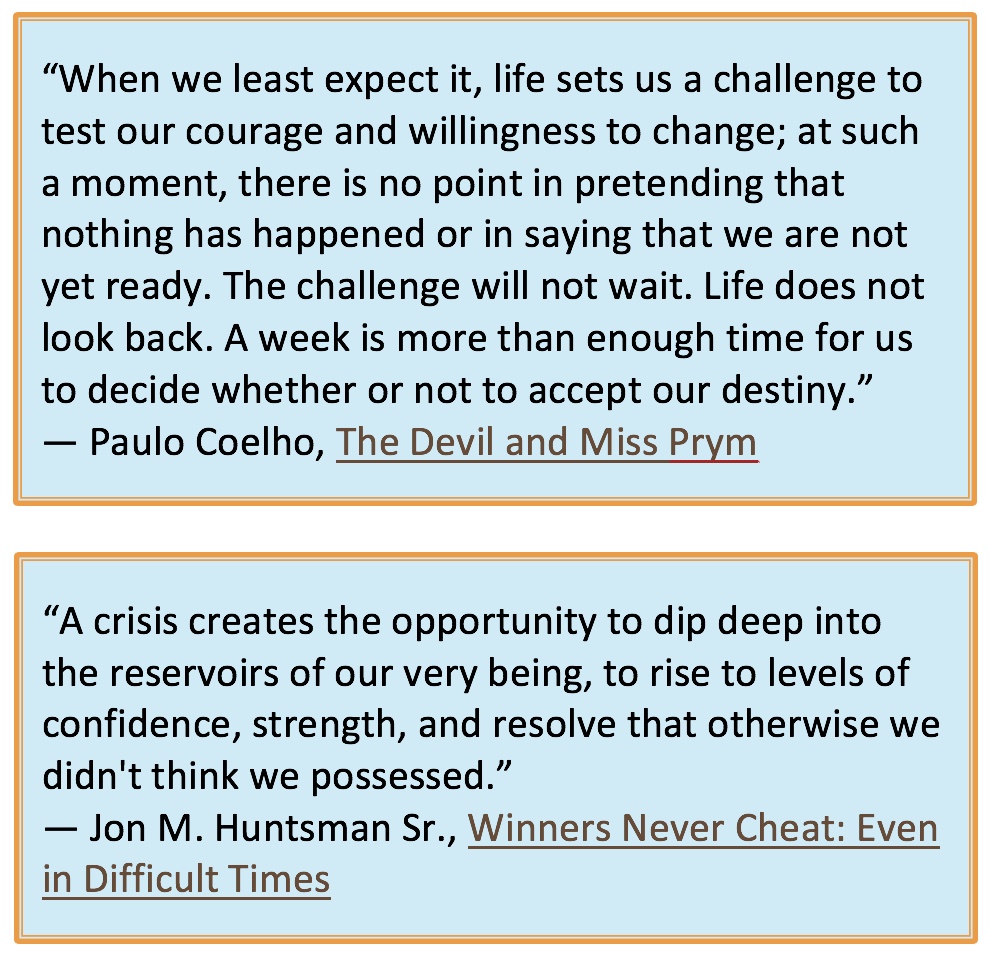
The only way we should respond to the challenge is to meet it head-on!
Take advantage of all of this available “free” stay-at-home time to further your artistic enrichment and make “new and improved” musical goals!
No teacher will have any patience listening to your whining or remarks of “could have,” “would have,” or “should have been” excuses. What have we always wished for? “If only I had enough time to learn that new scale, étude, or song!” “With all of my other academic assignments, sports events, and extracurricular activities, how can I fit in moments for listening to bands, orchestras, or classical virtuoso artists performing on the web?” “When am I ever going to have the chance to compose…” (or “arrange” or “record” or “memorize” or “conduct” or “choreograph”) “…that piece?” “When will I get around to learn this new technique, practice sight-reading, or dive into those drills designed to improve my key literacy, rhythmic precision, tone, intonation, range, form, coordination, embouchure, stick rudiments, or bow control?
The answer is… now only one word: NOW!
What are you waiting for? You have too much at stake here, and soon, this crisis will pass, and we will all come back together – only much stronger and wiser for making good choices in the use of our time!
We divided up the SHJO.clips into categories to develop your “well rounded” musicianship:
How many of these have you accomplished? In your clip journal, do you show progress in all focus areas? Can you advise SHJO family members and directors on your recommendations on future projects to further our “collective” knowledge, skills, and appreciations in music? (We would LOVE to hear from you!)
Now get out there and learn, create, and share meaningful moments in music!
PKF
The mission of South Hills Junior Orchestra, which rehearses and performs at the Upper St. Clair High School in Pittsburgh, PA, is to support and nurture local school band and orchestra programs, to develop knowledge, understanding, performance skills, and an appreciation of music, to increase an individual member’s self-esteem and self-motivation, and to continue to advance a life-long study of music. Members of the Orchestra learn, grow, and achieve positions of leadership to serve their fellow players.
Support and Participate in Your School Productions!
And now… a non-paid advertisement in support of MS/HS music drama programs… also perfect for celebrating “Music in Our Schools’ Month!” Please pass this on!
The coming springtime brings birds, flowers, bees, and… the magic of live theater! Lasting from early March to late May, the season of school musicals is now upon us! Here’s a friendly reminder from a retired public-school musical director/producer to attend one or more of your local shows! I guarantee it: You won’t be sorry! (For singers and instrumentalists already in a youth, church, or community ensemble, this is message is probably “singing to the choir!”)
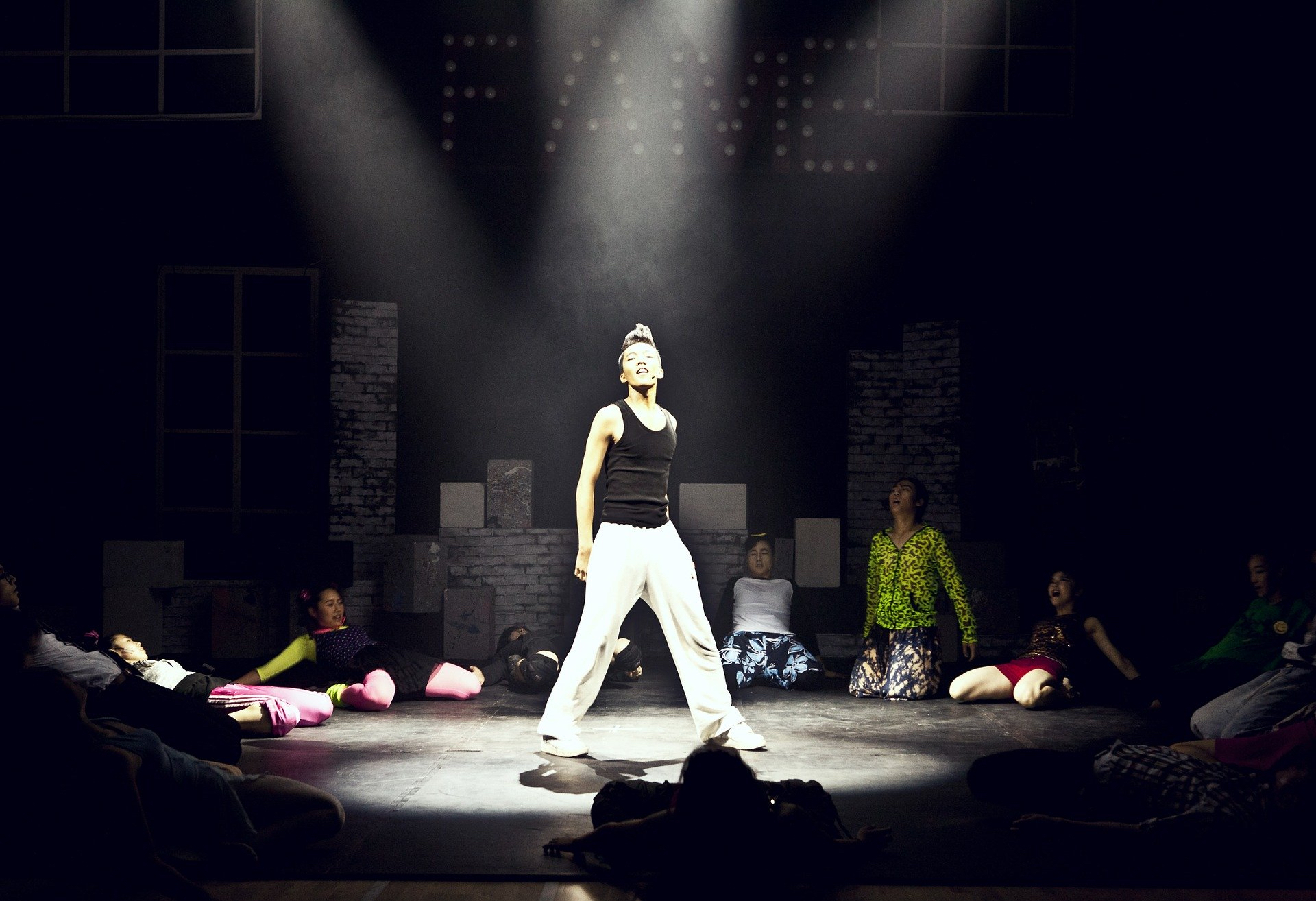
The school musical allows all of the Fine and Performing Arts the chance to collaborate, create, communicate, and “come together” in the presentation of a new transformed art form… everything from acting, dancing, choral, chamber, and solo singing, and instrumental accompaniment… to costumes, make-up, sets, props, lighting, sound, and special-effects. The music and stage crafts “make the magic” to stir your imagination for an evening or matinee of wonderful entertainment and enlightenment!
Many of our local high school musicals secure the rights for the same licensed productions that you see in downtown professional productions (like Pittsburgh Civic Light Opera and PNC Broadway series in my area) – one might say “professional grade” intended to be performed by seasoned professionals and not “watered down.” But, regardless of the incredibly challenging vocal ranges, dance steps and athleticism, virtuoso musical passages, and instant scene changes, the students always “rise to the occasion,” and perform amazingly artistic, realistic, funny, serious, romantic, thought-provoking, and inspiring numbers, providing a once-in-a-lifetime opportunity to share with your entire family!
The scripts and scores for each show provide only the barest information on how to put everything together. The directors, choreographers, and set designers have to determine the selection and placement of the cast on the stage (defining their blocking and all entrances/exits) as well as the kind of backdrops, props, and platforms to build, position, and move (in and out) from scene to scene. Because of this, I can offer you the assurance that no two presentations of a single production will ever be the same. In addition, no two shows performed at different sites will even be remotely similar. The variety and unique talents of the leads, chorus, dancers, pit orchestra, and production crews, as well as the vision and leadership of the artistic staff, will assure that the audience will experience many surprises and excitement every time they come to the theater!
Support your talented musicians, singers, dancers, and production-crew members. Buy a ticket. Invite other members of your extended family, coworkers, and neighbors to escape their wintry doldrums and enjoy an outing. Do you love theater? Consider volunteering to help the musical, assisting in the peripheral such as sewing costumes, distributing posters, selling tickets, building sets, painting the scenery, buying a program advertisement or well-wisher announcement, or chaperoning the parties. Contact the school’s musical director or Performing Arts chairperson to find out additional ways to help “make a difference” in your school’s Performing Arts.
The school district at which I am proud to have served for 33 years as music teacher, 30 years as HS producer, and 7 years as Performing Arts Curriculum Leader is putting on SHREK – The Musical. Their “grand opening” for two weeks of shows is March 6, 2020 at 7:30 p.m. in the Upper St. Clair HS Theater, 1825 McLaughlin Run Rd., Pittsburgh, PA 15241.
What else is happening in our southwestern PA area? At the time of this blog-post, we learned of a few of these upcoming HS musicals. (Be sure to check in with your local district to find out what is playing, dates, and times, and how to reserve show tickets. If all else fails and you cannot find the announcement on their school website, call the building principal’s secretary who usually knows “what’s going on!”)
Sampling of High School Spring Musicals
(Southwestern Pennsylvania from March 5 to May 9, 2020)
Ringgold HS: Thoroughly Modern Millie on March 5-7, 2020
Upper St. Clair HS: Shrek – The Musical! on March 6-8, 12-14
Thomas Jefferson HS Disney’s Newsies! on March 12-15
Bethel Park HS: Guys and Dolls on March 18-21
Bentworth HS: Shrek – The Musical on March 19-21
Peters Township HS: Big Fish on March 19-22
Chartiers Houston HS: Beauty and the Beast on March 20-22
West Allegheny HS: 9 to 5: The Musical on March 20-22, 27-28
West Mifflin HS: The Addams Family on March 26-29
South Park HS: Chicago: High School Edition on March 26-29
Baldwin HS: The Addams Family on April 1-4
Burgettstown MSHS: The Music Man, Jr. on April 2-4
Brentwood HS: Annie on April 2-4
Elizabeth Forward HS: Drowsy Chaperone on April 2-5
Mt. Lebanon HS: Once Upon a Mattress on May 7-9
PKF
The mission of South Hills Junior Orchestra, which rehearses and performs at the Upper St. Clair HS in Pittsburgh, PA, is to support and nurture local school band and orchestra programs, to develop knowledge, understanding, performance skills, and an appreciation of music, to increase an individual member’s self-esteem and self-motivation, and to continue to advance a life-long study of music. Members of the Orchestra learn, grow, and achieve positions of leadership to serve their fellow players.
The Laws of Practicing & More Tips on Preparing Music
Many of the early South Hills Junior Orchestra “Fox’s Firesides” are about developing new techniques to solve musical problems, dispelling the myth that all you need to do is put in the time. Is there any truth in “practice makes perfect?” Not really. It is more critical that all instrumentalists set-up a regular schedule for focused practice, limiting all distractions, defining and working on goals, and then the truer adage can be modeled: “perfect practice develops perfect playing.”
Perhaps since January is the first month of The New Year, this would be a good time to review the different practice techniques we have already published at https://paulkfoxusc.wordpress.com/foxs-firesides/, especially #1, #4, and #8.
Here are a few more ideas, “borrowed” from my former place of employment – the Upper St. Clair School District Performing Arts Department.
THE LAWS OF PRACTICING
The 24-Hour Law – It takes 24 hours for yesterday’s lesson to be learned.
The Perfect Attendance Law – Practicing a little every day always beats cramming.
The Three Musketeers Law – Never practice without a metronome, tuner, or recording device to hear how you sound.
The “Elephant in the Room” Law – One must “face the music,” specifically, the musical passage with which they are struggling the most.
The Sloth Law – When in doubt, play it slower.
LIFE HACKS (Practice Edition)
Sloth Hack – Playing slower, to the point that it is impossible to mess up.
Jaws Hack – Slur a passage with which you are struggling.
Karaoke Hack – Play the passage in conjunction with your favorite recording of the piece.
Time Trial Hack – Put a timer on for a few minutes and see how much you can accomplish in a short amount of time.
Drop the Bass Hack – If a passage is too high, play it down an octave.
Cheat Code Hack – Simplify a rhythm if you are struggling to learn it.
Here are several additional websites with excellent “hack” recommendations for developing better practice skills, but don’t forget to ask your school music director and private teacher for more advice!
Keep up your commitment to and PRACTICE towards real self-improvement, creative self-expression, making beautiful music, and participating in your school and community bands and orchestras!
PKF
The mission of South Hills Junior Orchestra, which rehearses and performs at the Upper St. Clair High School in Pittsburgh, PA, is to support and nurture local school band and orchestra programs, to develop knowledge, understanding, performance skills, and an appreciation of music, to increase an individual member’s self-esteem and self-motivation, and to continue to advance a life-long study of music. Members of the Orchestra learn, grow, and achieve positions of leadership to serve their fellow members.

























 No teacher will have any patience listening to your whining or remarks of “could have,” “would have,” or “should have been” excuses. What have we always wished for? “If only I had enough time to learn that new scale, étude, or song!” “With all of my other academic assignments, sports events, and extracurricular activities, how can I fit in moments for listening to bands, orchestras, or classical virtuoso artists performing on the web?” “When am I ever going to have the chance to compose…” (or “arrange” or “record” or “memorize” or “conduct” or “choreograph”) “…that piece?” “When will I get around to learn this new technique, practice sight-reading, or dive into those drills designed to improve my key literacy, rhythmic precision, tone, intonation, range, form, coordination, embouchure, stick rudiments, or bow control?
 The mission of South Hills Junior Orchestra, which rehearses and performs at the Upper St. Clair High School in Pittsburgh, PA, is to support and nurture local school band and orchestra programs, to develop knowledge, understanding, performance skills, and an appreciation of music, to increase an individual member’s self-esteem and self-motivation, and to continue to advance a life-long study of music. Members of the Orchestra learn, grow, and achieve positions of leadership to serve their fellow players.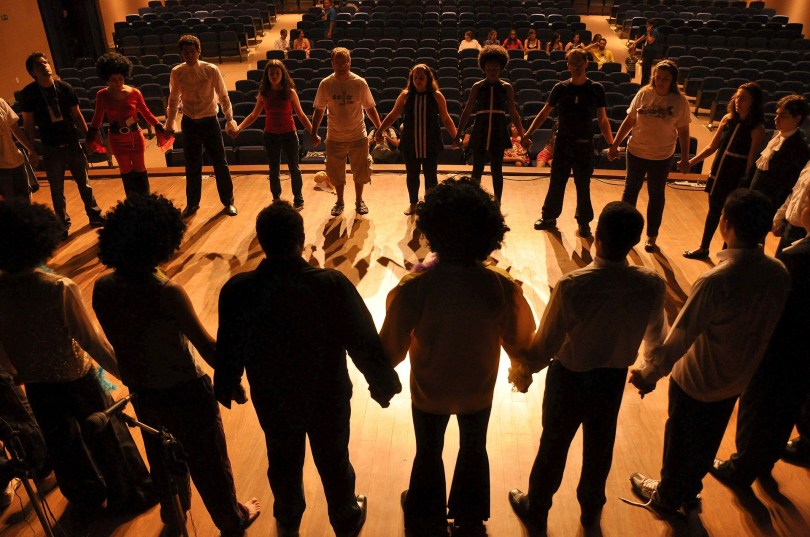


 The school musical allows all of the Fine and Performing Arts the chance to collaborate, create, communicate, and “come together” in the presentation of a new transformed art form… everything from acting, dancing, choral, chamber, and solo singing, and instrumental accompaniment… to costumes, make-up, sets, props, lighting, sound, and special-effects. The music and stage crafts “make the magic” to stir your imagination for an evening or matinee of wonderful entertainment and enlightenment!
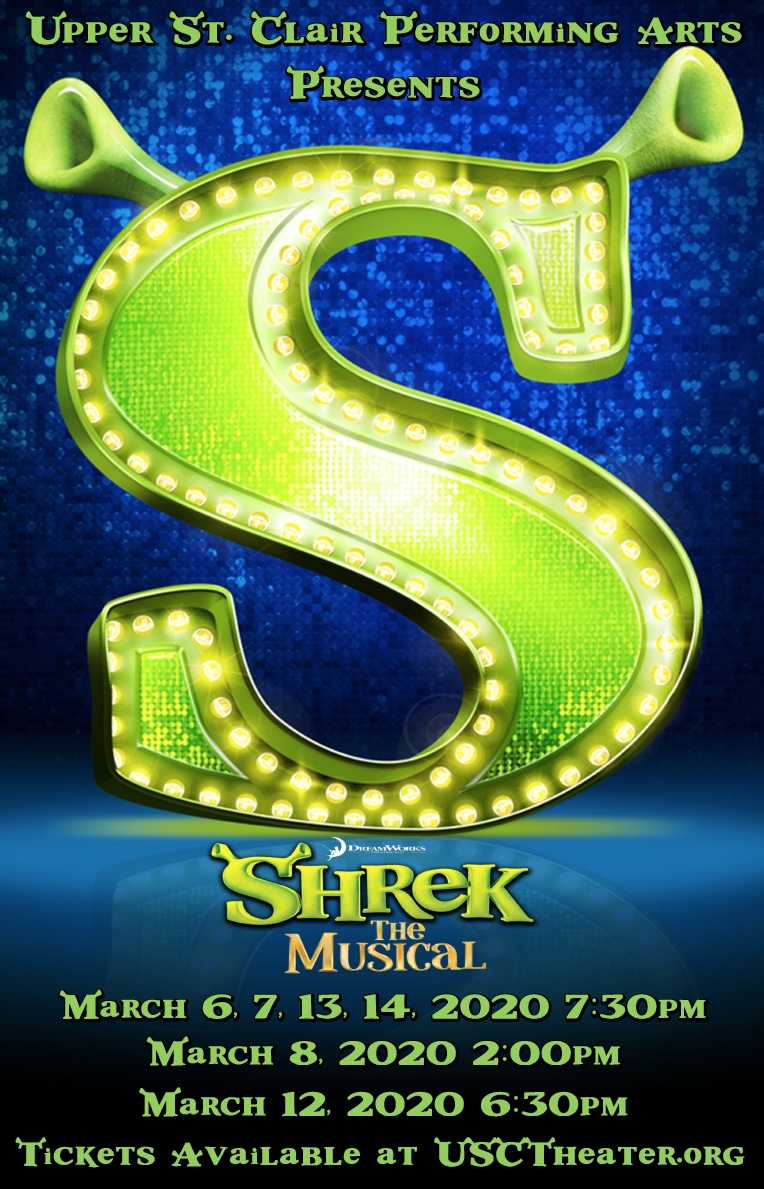 The school district at which I am proud to have served for 33 years as music teacher, 30 years as HS producer, and 7 years as Performing Arts Curriculum Leader is putting on SHREK – The Musical. Their “grand opening” for two weeks of shows is March 6, 2020 at 7:30 p.m. in the Upper St. Clair HS Theater, 1825 McLaughlin Run Rd., Pittsburgh, PA 15241.

 Karaoke Hack – Play the passage in conjunction with your favorite recording of the piece.
 paulfox.blog