

Countdown to a Smooth and Satisfying Retirement

Are you retired, retiring this year or next, or thinking about “Crossing the Rubicon” to post-employment bliss over the next three or more years?
According to Ken Dychtwald, psychologist, gerontologist, and CEO of Age Wave, research on aging, health, and work issues defines five stages of retirement:
- Stage 1: Imagination (5 to 15 years before retirement)
- Stage 2: Anticipation (1 to 5 years before retirement)
- Stage 3: Liberation (first year of retirement)

- Stage 4: Re-engagement (1 to 15 years after retirement)
- Stage 5: Reconciliation (ages late 70s and early 80s)
As reported by USA TODAY at https://www.usatoday.com/story/money/personalfinance/2014/10/12/five-stages-of-retirement/16975707/, these first three stages provide opportunities to rethink, recharge, reinvent, and even retool new ways to redefine one’s life-purpose and meaning, become productive, and begin that new chapter in their lives. The studies emphasize the need for the famous Boy Scouts’ motto – “be prepared” – and you should start reflecting on “what you are going to be when you grow up” at least three years prior to “the big day!”
Many people want to continue to work. In fact, 72% of pre-retirees, age 50 and older, say they want to keep working after they retire, according to a recent survey sponsored by Merrill Lynch in partnership with Age Wave. Almost half (47%) of current retirees either are working, have worked, or plan to work in retirement, the survey found.
Many people also want to devote more time to their family and friends. Some want to continue to learn, and others want to enjoy their favorite hobbies and develop new ones…
— Ken Dychtwald
The bottom line is, as suggested in “Retire Happy – What You Can Do Now to Guarantee a Great Retirement” in the USA TODAY/Nolo Series by Ralph Warner and Richard Stim, prior to leaving the work force, you should make a concerted effort to anticipate “life after work,” including:
- Cultivate interests outside work
- Lead a healthier lifestyle
- Revitalize family relationships
- Spend more time with spouse
- Embrace spirituality or meditation
- Nurture friendships and make new friends.

FIRST THINGS FIRST
So, are YOU ready to retire from full-time music teaching? Are you sure?
For me, I cry out HURRAY for the FREEDOM, and enthusiastically take on exploring raising puppies, home improvements, more personal music making, conducting, writing, photography, community service, and volunteer work. And, as you can imagine, my calendar is as full as it has ever been!
However, not all of our newly retired colleagues feel the same way… at least, not at first. It should be said that not everyone may be ready to retire. Often heard employment complaints aside, “be careful for what you wish!” In general, few are ambivalent about this transition… leaving the day-to-day highly pressured, detailed, “rat-race” most music teachers embrace to jumping into the wide-open horizons of new vision, focus, and directions. Recent retirees either love or hate this “passage.”
— Paul K. Fox
If you are not sure of your current mental and financial preparation for retirement, checkout “7 Signs It’s Time to Retire” at http://www.plannersearch.org/financial-planning/7-signs-its-time-to-retire, and equally as important, “Ten Signs It’s Not Okay to Retire” at http://www.investopedia.com/articles/personal-finance/021716/10-signs-you-are-not-ok-retire.asp.
Have you seen this quote by Dr. Robert P. Delamontagne from his book Retiring Mind (Fairview Imprints, 2010), which provides statistics that are actually a little alarming?
50% of retirees will suffer some form of acute emotional distress. This is potentially a very large problem given the fact that 10,000 people are becoming eligible for Social Security every day for the next 20 years in the US alone.
— Dr. Robert P. Delamontagne
I also recommend taking the quiz, “Are You Psychologically Ready for Retirement?” at http://www.nextavenue.org/quiz-are-you-psychologically-ready-for-retirement/ from the book, Happy Retirement: The Psychology of Reinvention by Kenneth S. Shultz (DK Publishing, 2015), asking these five essential questions:
- How important is your job when it comes to getting a sense of life satisfaction?
- How many non-work activities do you have that give you a sense of purpose?
- How do you imagine your life to be once you stop working?
- How do you think retirement will affect your relationship with family and friends?
- How much energy for work do you have these days?

HAVE A PLAN
In the article “Are You Emotionally Ready to Retire?” published by the Wisconsin Medical Journal, Maureen E. Hansen illustrates the need for an “emotional retirement plan.” (Please visit https://www.wisconsinmedicalsociety.org/_WMS/publications/wmj/pdf/103/4/53.pdf).
The transition from a structured to an unstructured lifestyle can be unnerving if you are not prepared. When our clients retire, they often feel as if they are on vacation for the first month or so. After that, the realization that they are not returning to work starts to sink in. This is when anxiety can creep in. However, the process of adjusting can be far less stressful if you establish a plan well in advance.
— Maureen E. Hansen
She emphasizes that both financial and non-financial aspects of retirement need to be addressed. “Long before your going-away party at the office, you need to decide what you want for your retirement—leisure time, volunteer work, establishing a legacy?” Here are her several key issues to consider:
- Set lifestyle goals.
- Build a network.
- Consider your spouse’s feelings.
- Live your dream.
From Bankrate (http://www.bankrate.com/retirement/10-things-to-do-before-you-retire/), here is a checklist of considerations you should revisit as often as necessary before taking the retirement plunge:
- Prepare a balance sheet
- Get rid of debt
- Conduct a house check
- Assess life insurance needs
- Think about long-term care insurance
- Consider variable annuities
- Oversee estate planning
- Ditch college expenses
- Look at the big picture with a planner
- Prepare a budget
The Internet is deluged with a multitude of recommendations on retirement prep. Here are couple more to peruse at your leisure:
- https://www.forbes.com/pictures/eedg45fdhg/five-things-to-pay-for-before-you-retire/#3f00679847e8
- http://www.huffingtonpost.com/2014/10/20/planning-for-retirement_n_5955562.html
- http://www.kiplinger.com/slideshow/retirement/T047-S002-steps-to-take-in-the-year-before-you-retire/index.html

DOWN TO MORE SPECIFICS
In the August 26, 2017 PMEA Retired Member Network eNEWS, I shared the link to the AARP blog-post “10 Steps to Get You Ready for Retirement” at http://www.aarp.org/work/social-security/info-05-2011/10-steps-to-retire-every-day.html, with the following “executive summary” (but be sure to read the entire article for the detail):
- Step 1: Define Your Retirement
- Step 2: Take Stock of Your “Assets”
- Step 3: Evaluate Your Health – Now
- Step 4: Determine When to Collect Social Security
- Step 5: Network Through Social Media & Other Methods
- Step 6: Decide How Much You Want (or Need) to Work
- Step 7: Create a Retirement Budget
- Step 8: Find New Ways to Cut Your Expenses (Start Saving More)
- Step 9: Prepare for the Unexpected
- Step 10: Stick to Your Plan
I also offered my (now) “top-seven tips” for getting ready to “living the dream” for future PA music educator retirees:
- Download the Ultimate Retiree Resource Guide and peruse the myriad of contributions by “true experts in the field of retirement” posted on the PMEA retired member website: https://www.pmea.net/wp-content/uploads/2014/10/ultimate-retiree-resource-guide-111717.pdf.
- Scan through the plethora of other blog-posts at https://paulkfoxusc.wordpress.com/for-retirees/ and the official PMEA Retired Members’ website: https://www.pmea.net/retired-members/.
- Purchase a book or two by the “masters” of retirement transitioning (check out these authors and others from the sources above: David Borchard, Julie Cameron, Robert Delmontagne, Dave Hughes, Steven Price, Kenneth Shultz, Hyrum Smith, Verne Wilson, and Ernie Zelinski).
- Family Meeting: If you are married, sit down with your spouse (with no distractions) and map out the essential “who, what, when, where, and how” of retirement. Are you both ready to venture into your “golden years?” Are you and your wife/husband on the same page?
 PSERS (PA pension fund) Planning: 12 months or more away from your projected retirement date, attend a “Foundations for Your Future” program (even attend it more than once), and request a retirement estimate (form PSRS-151), after which you will need to schedule the all-important “Exit Counseling Session.”
- Make an appointment with an estate planner, elder attorney, and/or financial advisor (probably all three). Bring a copy of your bank and investment statements, PSERS reports, social security, annuities, and insurance documents. You may need help in determining which PSERS “plan” to adopt. While you’re at it, update your will and other legal documents.
- To stay “connected” with your professional associations (e.g. Pennsylvania Music Educators Association and National Association for Music Education), be sure to update your personal profile at “headquarters” with your personal (not school) email address. Continue to participate in music and education, and reap the benefits of significantly discounted retired membership dues and conference registration fees. See the blog-post “PMEA in Retirement – What’s in it for Me?” at https://paulkfoxusc.wordpress.com/2016/12/15/pmea-in-retirement-whats-in-it-for-me/.
Finally, if you have not done so, I encourage you to revisit my last retirement blog-post (https://paulkfoxusc.wordpress.com/2017/08/03/new-dreams-and-horizons/). Review those six essential things to do when you are a couple years “out” from making that “great leap to freedom,” solid advice from TIPS – Retirement for Music Educators book by Verne A. Wilson (MENC 1989), and to learn more about “nipping in the bud” those pesky retirement conundrums:
- Self-Identity and Change
- Free Time?
- Energy and Fortitude
- Losing Control and Perpetual Care
Yes, planning ahead makes all the difference. On this topic, our last inspiration also comes from TIPS – Retirement for Music Educators.
If you were planning to spend the rest of your life in another country, you would want to learn as much about it as possible. You would read books about the climate, people, history, and architecture. You would talk to people who had lived there. You might even learn a bit of its language. Old age is like another country. You’ll enjoy it more if you have prepared yourself before you go.
— B. F. Skinner and Margaret Vaughn
Best wishes for a happy retirement!

PKF
© 2017 Paul K. Fox

 I write these blogs to “get things off my chest.” Fair warning! Unlike other articles on this site, I may project a little negative attitude in this piece, griping in response to what I consider is unfair public opinion.
 While on this rant, I would also like to complain that I am tired of hearing how teachers only work nine months a year. Someone’s math is really bad when you look at the calendar. Most schools in Pennsylvania start by the fourth week in August for teacher in-service days (definitely before Labor Day) and end by the second week in June, depending on how many snow days or vacation breaks are scheduled in the school year. Closer to ten months?
 There will always be criticism and negative comments about the value of our teachers. Part of this is due to the fact we have all been there. Everyone knows a “bad teacher” who modeled laziness, incompetency, or neglect of duty. You may have had one of these “rotten apples,” or perhaps were forced to endure an educator or coach who demonstrated “abuse of power.”
 “practice” our job, applying different techniques to each unique situation, focusing on the needs of our “charges,” constantly re-assessing ourselves, retraining and updating our skills, and solving problems.
 No one goes into education to make a lot of money. With the same level of post-graduate work, nearly every other entry-level job or even being self-employed will fetch much more compensation.This is why it has been hard finding math and science teachers in some localities. They would have to accept major pay-cuts declining jobs in engineering, chemistry, computer science, and the technology industry as opposed to becoming a first-year teacher.
 At least, we are doing something we love, and we can take “the joy of making music” to the grave!
 great potential and one for whom you have spent much time and effort helping. It was always a crushing blow to hear “Johnny wants to give up playing,” “he is bored,” or “now we will try something new like (ahem) intramural tiddly-winks.” Parents/guardians conceded that it was hard to “make him practice.” My initial response (if I have the guts to say it, but by then, it was usually too late): “Who is in charge here? Do you make your kids brush their teeth or do their math homework?”
 I was relieved that, during a time of state and local budget crunches (when many school districts were not filling retired staff positions), my administration and school directors were true to their mission statement: “Developing lifelong learners and responsible citizens for a global society is the mission of the Upper St. Clair School District, served by a responsive and innovative staff who in partnership with the community provides learning experiences that nurture the uniqueness of each child and promote happiness and success.” When I retired, they hired excellent replacements for all of my former positions: Secondary Orchestra/String Teacher, Grades 1-12 Performing Arts Curriculum Leader, and Spring Musical/Fall Play Director/Producer.
 Now we can “catch-up” on travel, pets, hobbies, volunteer work, gardening, home improvements, and revisiting our “creativity roots” which got us started in the first place towards a career in music and education.
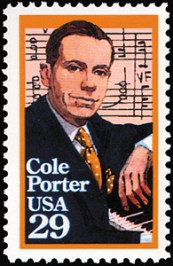 There is nothing worse than feeling that your father does not approve of who you are or what you want to do with the rest of your life. Of course, I am not alone in having this kind of parental disapproval. American composer and songwriter Cole Porter (who wrote Anything Goes) experienced a similar problem. At the insistence of his rich maternal grandfather for whom he was named after, he entered Yale University and then the Harvard Law School to become a lawyer. However, his true love was music. While at Yale (and secretively from his family), he wrote 300 songs and the words and music to six full-length student shows. Eventually he switched to studying harmony and counterpoint with the Harvard music faculty… the rest is history!
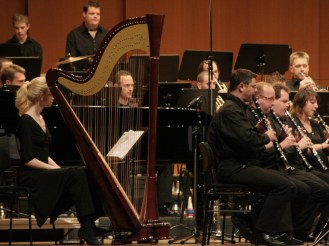 Why choose education? Well, the status of a teacher in some cultures is at the pinnacle of the society’s most cherished and respected. In fact, in some Asian countries, tradition dictates that the eldest rules the entire family, and is often considered a master teacher. The career of a teacher is on the top of the spectrum. The merchant is at the bottom. This is exactly the opposite for today’s Western countries… a worship of wealth, stockbrokers, millionaires, “things,” etc. (Of course, it should be mentioned that, using this analogy, Asian musicians are also at the bottom… considered to be nearly useless in lower socioeconomic agrarian societies.)
 paulfox.blog