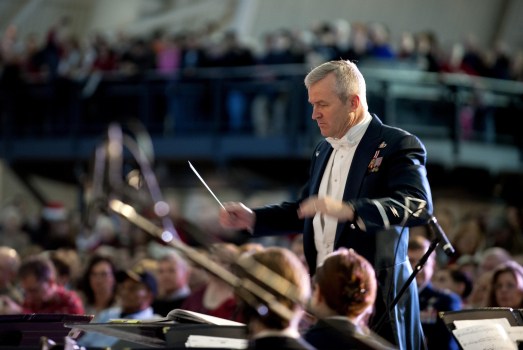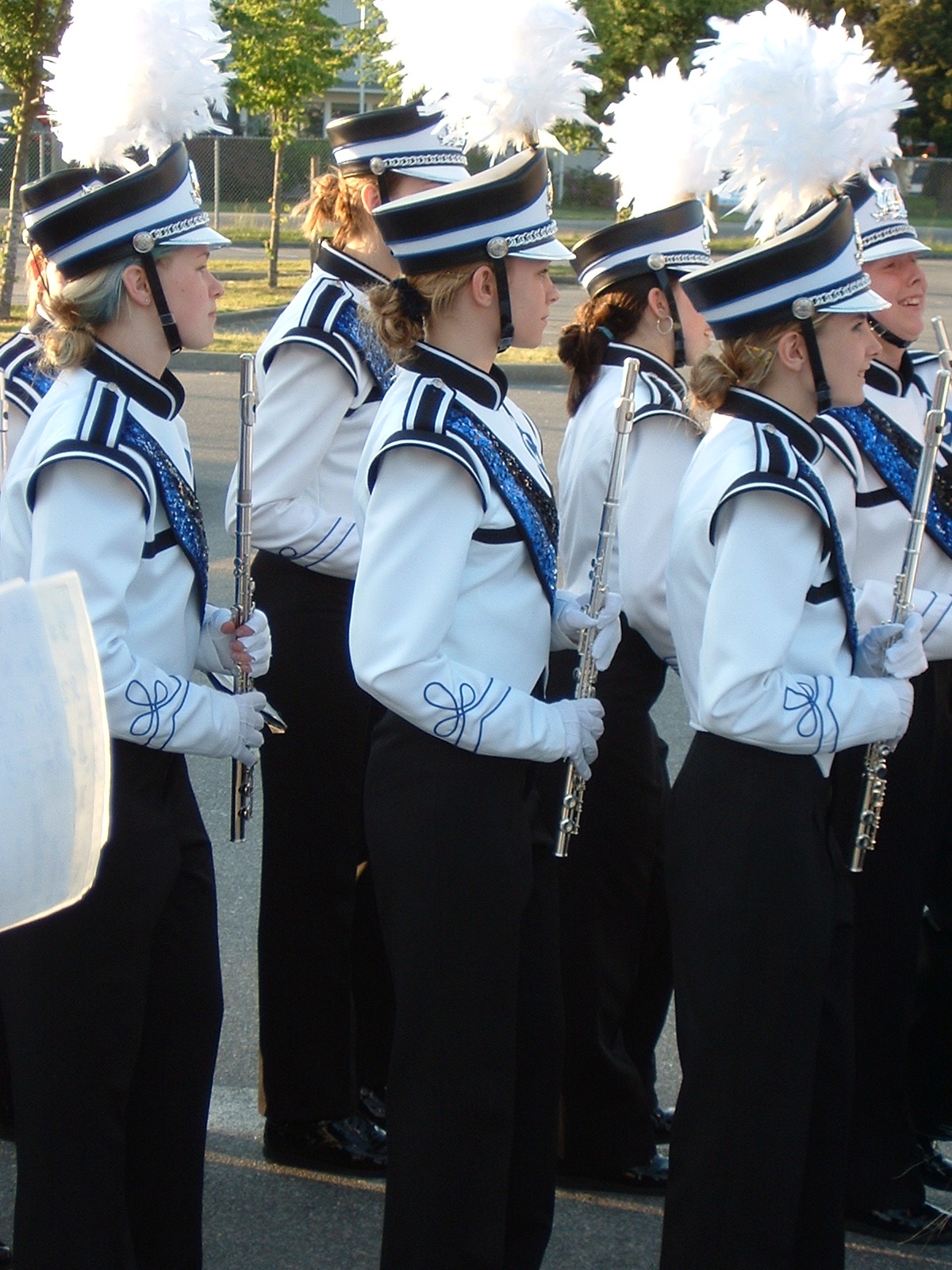
Happy Thanksgiving, Newbies!

“I would teach children music, physics, and philosophy; but most importantly music, for the patterns in music and all the arts are the keys to learning.” — Plato

digital-spray-paint-1160577

Things for Which Prospective Music Teachers and Students Majoring in Music Education Should Be Thankful… and on Which to Reflect Over This Holiday Season!

Music educators and those training for this honorable career have many reasons to feel blessed. This Thanksgiving 2016 blog is another one of my “pep talks” and an ongoing goal to share resources for pre-service professional development. Lets begin with a classic “top-ten” list — the fruits and cornerstones of our profession:

  1. prospective-music-student-1440071-1Music is one of life’s greatest treasures!
  2. You will always have your music. Your future employment is also your hobby, and even after 35 or more years, you will inclined to continue your music throughout the “golden years” of retirement.
  3. There are so many ways you can make a difference in the lives of children with music. Whether it is singing, playing an instrument, composing, listening, feeling, or moving in response to music, music fills a basic need!
  4. Although music is an excellent vehicle for developing 21st Century learning skills (the four C’s of creativity, critical thinking, collaboration, and communication), participating in music for music’s sake is paramount. To find true meaning and personal artistry, you cannot review the arts without “doing” (or creating) the arts.

  5. parade-band-1421028Your joy of creative self-expression and “making music” will sustain you through almost anything… and will transfer to your students’ success in life.
  6. In many settings of school music courses and extra-curricular activities, your students make a conscious effort to choose you and the study of music in order to spend as much time together. “They may have to take math and English, but they also want their daily dose of music!”
  7. Newcomers to this field, you do not have to be right or perfect all the time in class. During your student teaching and early years on the job, if you are enthusiastic, dedicated, and respectful of the feelings of your students, youkids-singing-christmas-songs-1438089r mistakes (and there will be many) will be forgiven. Besides, there are usually no “single right answers” in music and art – only opportunities for divergent and flexible thinking, adaptability, and personal expression.
  8. You’ll never forget your students… and when you bump into them after graduation, they will remind you all about “those good times!” Don’t be surprised when they tell you were the best part of their education.
  9. Your band, orchestra, and/or choral director back home (school district and university) are rooting for you… and want you to succeed. If you have questions, go see them. They would appreciate you asking for their advice.unwritten-solo-2-1314639
  10. Good news! Help is on the way! On this blog-site, there is a single link to all of the articles, handouts, PowerPoint slides, etc., everything from branding yourself to a review of the interview questions you will need to answer at job screenings. To help you market your professionalism, develop a philosophy of music education, learn the basics of networking, dive into making a business card, professional website or e-portfolio, or practice taking interviews, go to the link above or https://paulkfoxusc.wordpress.com/becoming-a-music-educator/.

Why Music? Why Do You Want to Become  a Music Educator?

It never hurts to embrace and share the excellent voices of our music education advocates. Check out these interesting online sources:

Ten Goals for the Holiday Break

After you finish your fall semester finals, juries, concerts, writing assignments, and other projects, you may have several weeks before you have to return to full-time classes at the university. Besides catching up on your sleep and visiting your family and friends, how many of these enrichment activities can you accomplish?

  1. Share your gifts. Play your instrument, accompany concert-1435286someone else, or sing solos at a local nursing home or senior center.
  2. Sit in with a church or community choir, band, or orchestra. Just ask the conductor if you could participate in a few rehearsals over your break.
  3. Learn something new about music… a different instrument, recent releases in sheet music or recordings, unique composer/arranger in your major area, music education article from a professional journal, innovative music software or interactive online programs (often free trials are available to future teachers), etc. For example, have you perused SmartMusic and MusicFirst?

  4. OLYMPUS DIGITAL CAMERASpend a lot of time sight-reading… especially on the piano. To take your ear-training training a step further, pull out your old folk-song sight-reading series  or Hindemith’s Elementary Training for Musicians and practice musicianship exercises.
  5. To improve your score reading, take a choral arrangement and play the individual vocal parts at sight (soprano + bass, alto + tenor, soprano + tenor + bass, etc.). Or, perform on the piano 2-4 parts of a string quartet score.
  6. Volunteer to assist coaching a sectional or large ensemble at your local public school.
  7. Attend as many local concerts as you can: school, amateur adult, and professional.
  8. Compose or arrange a short holiday, folk, or classical song for unusual instrumentation (e.g. flute, viola, baritone sax, and tuba). Who knows? Someday you may have to conduct an ensemble with such unique membership.flute-player-1567317
  9. Record video/audio excerpts of your major instrument/voice for placement on your professional website. Begin preparations on or update your e-portfolio.
  10. Read all of the “marketing professionalism” articles on this blog-site. Take notes or print the things to which you want to refer back. Make a list of the possible interview questions, and put yourself through several “mock job screenings” (alone or with one or more college buddies) with you answering these randomized questions in front of a camera. Assess your performance. During your”free time” over the holiday break, assemble your “personal stories” – anecdotes revealing your skills, personality traits, teaching experiences, and accomplishments that could be shared at future employment interviews. Most important article on this subject? Look at thanksgiving-turkey-1521430https://paulkfoxusc.wordpress.com/2016/02/27/interview-questions-revisited/.

Best wishes for a healthy, peaceful and fulfilling holiday. Please enjoy lots of turkey with your loved ones, but if you can, “catch up” on your long term preparation for becoming a music educator. Make every day count over the recess. Reflect on why you are becoming a music educator, and be grateful for the multitude of benefits! Finally, never forget your own creative roots… make time for music every day!

PKF

© 2016 Paul K. Fox

Photos are licensed by FreeImages.com (all rights reserved)

21st Century Job Search Techniques

“New Age” Employment Tools for Music Teachers

Portions of this blog-post reprinted from “Job Searching in the 21st Century – The 5 W’s of the Application” in the Summer 2016 issue of PMEA News, the state journal of the Pennsylvania Music Educator Association. Special thanks goes to contributor Joshua Gibson, PMEA State Director of Member Engagement. PMEA members should go directly to the website, download and read the entire insightful article: http://www.pmea.net/resources/pmea-news/.

Hello and welcome to all collegiate music education majors and prospective job seekers! Here are a few more suggestions to help you go out and find the perfect public school music position, especially in Pennsylvania. But first, if you have not read my past blogs on this subject, please click on the above link “Becoming a Music Educator.”

Are you a PCMEA or PMEA member?

pmeaThe number one “tool” for finding a job is not a tool at all – it is all about modeling professionalism, networking with other college students and music teachers, and becoming actively engaged in your state/national music education associations (click on the acronyms to go to their websites) – National Association for Music Education (NAfME), Pennsylvania Music Educators Association (PMEA) and Pennsylvania Collegiate Music Education Association (PCMEA). Interaction with others in your field is essential to build and maintain connections to what is “state-of-the-art” in curriculum/instruction, innovations in teaching and technology, news, trends, and other information related to the field of music education, and even “leads” to possible openings in PA school districts via job banks and conversations with other colleagues at state conferences and meetings. If you are not already a member of NAfME and PCMEA, you are walking away from numerous opportunities and benefits that could help you land a job!
The Mobile Resume

Much has been written about the curriculum vitae (CV) or employment resume. One recommendation is for it to be constantly updating, adaptable, flexible, and “very digital.” dockan1Your “travel document” (paper copy you bring to the interview or “one-of-kind” attachment in response to email application) should be easy-to-modify based on the specific job posting to which you are applying. Your philosophy, goals, education, and teaching experience should focus on and reflect your competencies in alignment with the requirements for the music position. Your professional website and online resume should be more “general” and not rule out being considered for employment assignments outside your major. The PA teaching certificate states you are licensed to teach music in grades pre-K to 12… which means you should be qualified for any opening in elementary, middle, and high school general music, band, choir, jazz, keyboard lab, and strings, right?

If your professional “contacts” (or the school district’s website) help you discover more specifics about the type of music position to which you are applying, you can include on your resume past performances and interactions with students even remotely related to this subject area, as well as become better prepared for the questions and a demonstration lesson at the interview. For example, the school district from which I retired recently began looking for a middle and elementary school band director and high school assistant marching band director. Even if you majored or emphasized in voice, piano, or strings in college, “if you really want the job,” you should be able to revise your resume to include such experiences like playing the flute in your HS marchingdockan2 band for a year, conducting a small instrumental ensemble to accompany your youth church choir, giving a few summer lessons to the bell players in the local drum line where you live, etc. In addition, prior to the first employment screening and mock lesson at the interviews, you could “bone up” on your instrumental methods, suitable middle and elementary band warmups/literature, the meaning/concept of “middle school education,” and perhaps even pull out and brush up playing a few scales on that flute (or whatever) in your closet.

Electronic Business Card

Past blogs (see https://paulkfoxusc.wordpress.com/category/marketing-professionalism/) discuss personal branding, the set-up of a professional website, business cards, and networking. Have you thought about placing a Q code on your business card that scanning would go directly to your e-portfolio and sample recordings, perhaps displaying an excerpt from your senior recital and several videos of your teaching or conducting?

Check out these online resources that are “pro” using a Q code:

To be fair, these sites recommend against placing a Q code on your card:

At the every least, you need to print on your business card the URL listing to your website or LinkedIn pages… access to find “everything you always wanted to know about” you as a candidate.

dockan3

Where Are the Jobs? Websites and Online Hiring Agencies

PMEA State Director of Member Engagement Joshua Gibson shared his research on using the Internet to search for music teacher openings posted in Pennsylvania. (PCMEA and PMEA members should read the entire article, “Job Searching in the 21st Century – The 5 W’s of the Application Process” on pages 62-63 in the Summer 2016 issue of PMEA News.)

With descriptions printed in the journal, you should become familiar with these sites:

PMEA Educational Entities Map

pcmeaAnother great reason you should be a member of your professional association (PMEA or PCMEA) if you are looking for a job in PA is… the PMEA Job Board. Many PMEA members have relied on the Job Board for the most recent information when it comes to available PA music teacher positions.
Adapted from Google Maps, Gibson recently created/unveiled the latest interactive tool to facilitate a hunt for PA musical jobs: PMEA Educational Entities Map. His explanation:

The PMEA Educational Entities Map will “allow anyone to be able to search jobs in any geographical area in the Commonwealth of Pennsylvania. You can sort by Public School Districts (red), Charter Schools (blue), Career and Technology Centers (green), High Education (yellow), and Intermediate Units (orange).”

The job seeker can also use a specific PA county overlay to outline a specific area, as well as correlate with the PMEA District and PMEA Region maps.

In summary, “Once you click on the specific entry, you will be given the name, address, phone number, website, the employment website, and county of residence.”

For more information about the PMEA Job Board, go to http://www/pmea.net/job-board/. Gibson invites comments or questions for using the PMEA Interactive Map at jgibson@pmea.net.

dockan4

Break-a-leg! Hopefully these 21st Century marketing hints will do the trick! Best wishes on starting (or restarting) your music teaching career!

Photo credits: David Dockan, my former student and graduate of West Virginia University. Check out his professional website: http://www.daviddockan.com/.

Additional Blogs of “Tips and Techniques” for Getting Hired


PKF

© 2016 Paul K. Fox

Retired from What?

concert-662851_1920Do music teachers ever retire? Not really!
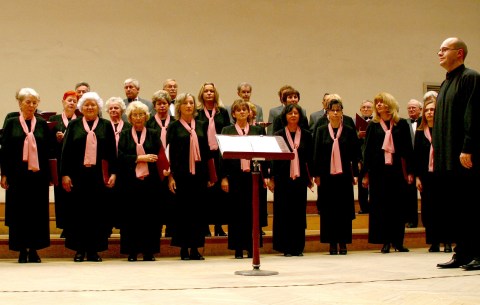

The other night, I was attending a community foundation meeting for which I serve as trustee. One of the other members came up to me and made a little fun of the fact that he noticed I list my previous employment on the footer of my email.

I have to admit I was taken aback and a little embarrassed. I recalled that several months after I retired from public school teaching, I prepared some business cards to distribute at music education conferences and collegiate seminars which included the job titles I assumed when I was working full-time at Upper St. Clair. You have to admit it may be a little ironic. Why would a retiree use a business card to help broadcast his skills and experience for possible future employment opportunities… something no longer needed?

choir-1438273

Then it hit me. Most people retire and want nothing to do with the daily grind to which they were assigned during their career. Many want to forget everything and wash their hands of all memories of their former position(s) in sales, management, law, medicine, trades, manufacturing, service industry, etc. – perhaps, even non-arts related education!

Musicians and music teachers are definitely unique. Our job is really more of a “calling,” never just a place to go to work and earn a paycheck. We were inspired to make music and then share this fantastic process with our students and audiences. Our employment was never 9-to-5. And, all of the Performing Arts have no notion of a 9-to-5 goal…  “Hurry up, let’s finish learning this piece, play it, and then go to the bar and have a few drinks.”

serenata-1191504

The mission of music education is to facilitate creative self-expression, to nurture understanding of ourselves, our culture, and our artistic heritage, and to seek out as many opportunities to “make music” in collaboration with other instrumentalists and vocalists. You have heard it before: “Music is lifelong learning!” That means there are no limits to lifelong participation in the arts based on race, color, religion, gender, sex, national origin (ancestry), disability, marital status, military status, and most importantly, age!

I know very few music education professionals who do not “bring home their music…” looking for more ways to experience it in their free time:

  1. Play, sing, act, or dance in a community ensemble
  2. Direct or accompany a church or community group
  3. street-musicians-1436714Practice and go out on a few gigs with your own jazz, rock, Barbershop, or chamber music group

  4. Teach private lessons
  5. Coach or compose for local marching bands, etc.

All of these activities become magnified when you retire. Once we are “set free” from the day-to-day academic schedule, lesson planning, faculty meetings, etc., we can focus our attention on what we really love to do. We are probably the luckiest professionals alive… we want to revisit our creative roots, not run away from them.

My previous experience (on my business card or e-mail footer) is relevant and I will no longer apologize for sharing it. I am not “stuck in the past,” but focused on the future! It means I am still active in the profession, available to mentor or help others in the field, always learning and growing, and exploring new directions and avenues to inspire my own artistry.

How many of you retirees agree that you are really just moving on to different pursuits in performance and/or music singer-1535103education? Of course, the best part of retirement is that you get to pick what you want to do every day for the rest of your life. So go ahead and say yes to those extra conducting gigs, writing/publishing your own “Mr. Holland’s Opus,” working with the church or community choir, accompanying a handful recitals, volunteering to help your favorite local marching band or civic theater, serving as an adjudicator for a music festival, supervising student teachers or teaching college music education methods classes, etc.
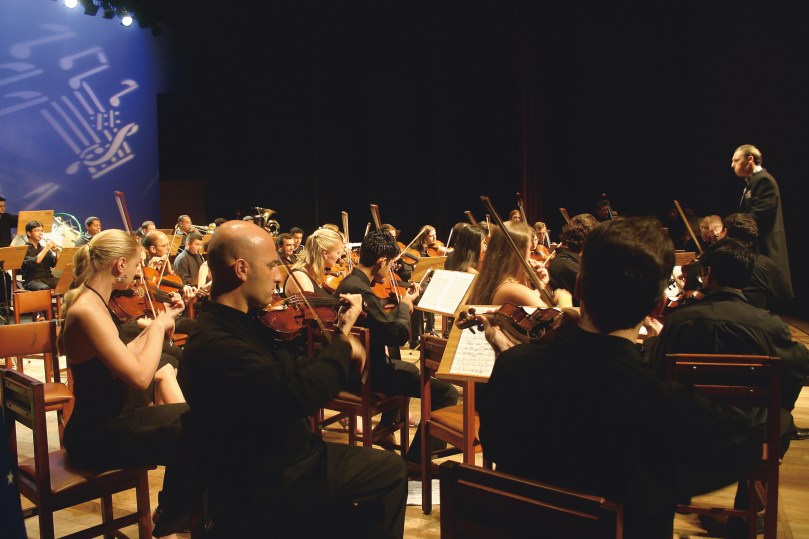
If you rearrange the letters, “retired” becomes “retried,” not “retread.” Yes, I embrace many of those other “re- words” meaning “growth,” such as redefining, retraining, re-targeting, re-tailoring, remaking, retooling, re-energizing, reflecting, and revitalizing, but not those negative or low-energy terms such as reverting, returning, regretting, retreating, recycling, refusing, regrouping, regressing, or retreading.

concert-1-1438833As long as I am alive, I will continue to inspire in others that music makes a difference!


Downsized… and Out!

Coping with the Unexpected Loss of a Music Teaching Job

Quotes from the movie “Mr. Holland’s Opus” directed by Stephen Herek

Vice Principal Wolters (William H. Macy): I care about these kids just as much as you do. And if I’m forced to choose between Mozart and reading and writing and long division, I choose long division.

Glenn Holland (Richard Dreyfuss): Well, I guess you can cut the arts as much as you want, Gene. Sooner or later, these kids aren’t going to have anything to read or write about.

Glenn Holland: I’m 60 years old, Gene. What are you going to do: write me a recommendation for the morgue?

* * *

Glenn Holland: It’s almost funny. I got dragged into this gig kicking and screaming, and now it’s the only thing I want to do.

Glenn Holland: You work for 30 years because you think that what you do makes a difference, you think it matters to people, but then you wake up one morning and find out, well no, you’ve made a little error there, you’re expendable.

worried-man-against-white-free-photos-1430353On the subject of music teachers exiting the job market, one area we have not ventured into with these blogs on “retirement resources” is the most difficult to handle – having to face a forced resignation or involuntary leave.

Being laid off, especially from what was a long-term position, is very much like losing a close friend or relative. The loss is palpable.

No matter the reason… budget cuts, downsizing the program, position re-assignments, new administrative directives, or health problems, the feeling is inexplicable. Helplessness. Frustration. Resentment. Resignation.

According to Easter Becker-Smith, Leadership Development and Life Coaching at http://www.slideshare.net/coacheaster/the-emotions-of-losing-your-job-5597103, it is normal to go through four stages of grieving after losing your job:

  1. Denial
  2. despair-work-falure-computer-1494555Depression
  3. Anger
  4. Acceptance

Your past experiences in professional development, employment transfers, moving, coping with change, or understanding management or hiring practices, do not help a bit…  you are “kicked to the curb” and left speechless.

For the music educator and school employee, the scenarios of “getting the ax” are many:
  • Music is eliminated from the curriculum or the building in which you teach.
  • You feel you must retire (earlier than you want) to avoid losing existing medical benefits due to problems with ongoing negotiations of the new teachers’ contract.
  • You were last hired and several arts teachers are furloughed due to a budget crisis.
  • You voluntarily retire from the full-time job, but hope to continue as assistant marching band director (to complete your 30th year). Due to “politics” unrelated to you, a board member withdraws your name from the agenda and you never receive approval.
  • The new head coach of the sport in which you have assisted for ten years fires you to bring in his “cronies.”
  • With no warning, the school secretary (not the administrator himself) informs you that “your services are no longer required” in an extra-curricular assignment you have served for 25+ years.

OLYMPUS DIGITAL CAMERA

Just like any regular retirement, you instantly become an outsider and unknown, and lose your former “member of the team” standing (e.g. the ID badge no longer works to unlock doors or operate the photocopier, and you are asked to return your keys). It even seems you and your history have already been forgotten. Of course this hurts – we are all human. Even if we do not care to admit it, we seek approval and validation from our supervisors and peers alike, as well as appreciation from our “clients” (the parents and students we are charged to serve). We want to know that what we did made a difference, were appreciated, and would somehow serve as a model for future employees. And, most of the time, regardless of the length of time and the meritorious contributions you gave to the school district, you will not hear words of gratitude or thanks from your former boss!

KONICA MINOLTA DIGITAL CAMERA

I hate the terms “twilight” or “golden” years (a possible subject of a future blog), but during this “life passage,” things are definitely “going away.” Against our will, we say goodbye to our day-to-day “life’s mission” – a career in school music education – as well as many of our associations with coworkers, that hectic 24/7 schedule and the constant busyness it generated (thank god), and a lot of those social engagements that were a part of our career development and staff camaraderie.

We need to refocus on the future and forget the past. Change happens. Do you recall that famous John Lennon line? “Life is what happens while you are busy making other plans!” Or an appropriate saying for musicians: “Life itself is not a dress rehearsal.”

Suggestive readings on how to cope? First, I would peruse NOLO’s “Losing a Job: Ten Things You  Can Do to Make It Less Painful” http://www.nolo.com/legal-encyclopedia/losing-job-ten-things-that-help-29761.html.

Check out Lifehacker’s “Nine Things You Should and Shouldn’t Do if You Lose Your Job” by Shannon Smith: http://lifehacker.com/nine-things-you-should-and-shouldnt-do-if-you-lose-you-509536697.

Keep an eye on the health effects that your sudden job loss may have on you: http://www.helpguide.org/articles/stress/job-loss-and-unemployment-stress.htm.

me-and-my-worried-thoughts-1475594Evaluate your response to stress since you were summarily eliminated from your district. It is worth reviewing the definition of PTSD and see if it should be applied to your behavior and the emotional upheaval you are feeling (from the online blog of the Dr. Oz Show at http://www.doctoroz.com/article/how-recognize-post-traumatic-stress-disorder):

“Post-traumatic stress disorder (PTSD) is often associated with people who deal with high-stress situations, such as emergency medical technicians, firefighters, police officers or soldiers. But every person has the potential to be struck by this debilitating anxiety disorder. The loss of a family member, severe injury, losing your job or your home – these are just some circumstances that put you at greater risk for PTSD.”

Another good website on the subject of PTSD is http://www.nimh.nih.gov/health/topics/post-traumatic-stress-disorder-ptsd/index.shtml. However, PTSD is next to impossible to self-diagnose, so see your primary care physician or a therapist.

Finally, for music educators, I have written numerous articles (more to come) about the things you might consider to do with your newfound freedom… satisfying goals to fill and fulfill exciting new bucket lists:

To quote from the above Easter Becker-Smith resource:

“The Bureau of Labor Statistics has never estimated the number of times people change careers in a lifetime, but they did examine the number of jobs the younger baby boomers held between the ages of 18 and 36. It was found to be an average of 9.6 jobs. Other reports show that the average person would have 5-7 career changes…

Remember that losing a job always brings emotions and you will need time to work through those feelings. Lastly, remember that your goal is to always move forward.”

Exactly! Move forward! There’s a great future just awaiting your embrace!

PKF

© 2016 Paul K. Fox

retirement-1350003

Interview Questions Revisited

New Getting a Job Tips for Prospective Music Teachers

The Interview Playbook: Directing a Showstopping Performance in Interpreting and Reciting Your Lines!

All the world’s a stage,
And all the men and women merely players;
They have their exits and their entrances,
And one man in his time plays many parts… – William Shakespeare


concert-662851_1920

How do you get to Carnegie Hall? Practice, practice, practice! How do you market yourself, take interviews, and succeed in landing a job? Practice, practice, practice!

This article reviews rationale and methods to intentionally prepare, rehearse, “stage,” and “act out” your answers to interview questions.

tie-690084_1280Depending on the structure of the interview, the hiring procedures of the institution, and the type of session (whether it is a general screening prior to any job opening, or the first round, second round, demonstration lesson, final round with the superintendent, etc. in order to fill a specific position), you will be exposed to many different kinds of questions.

Listed below are 71 samples of what might be asked at interviews for a school music posting. As they say, it is time to “woodshed” your upcoming performances!

The first step is to think up as many examples as possible of past incidents that exhibit your mastery of core standards in teaching, critical thinking and problem solving, professionalism, music and academic accomplishments, and all positive interactions with children, in both musical and non-musical settings. Assemble and catalog these successful “scenes” (even write them down) to prep your responses for the interview.

business-819287_1920As I go out to help at job fairs and mock interviews for music education majors, I advise the soon-to-be candidates to practice their storytelling skills and recall relevant personal anecdotes in order to satisfy the interviewers’ questioning, promote an image of competency and self-confidence, “show that you have what it takes” and would be a “good fit” for their school district, and ultimately “ace” the examination.

One example I give the “recruits” is probably more suitable to a sales position. If an interviewer asks something like, “What was your first job?” – your response should not be a quick rejoinder of several words like “a paper route.”  To enhance your “personal brand” and illustrate your character, proficiency, and work history, you should take the opportunity to tell a story about that first “gig.” Describe what you did as the neighborhood paperboy, perhaps revealing a little insight into the kind of entrepreneur interview-1018332_1920you are, adoption of “customer-first” philosophy and habits, a savvy business sense, focused motivation, and a strong work ethic. Narrate an anecdote rather than list facts. Plan (and dress rehearse) something like this script: “My route was small, so I surveyed my existing customers, asked about their needs, desires, and their definition of a ‘perfect paper delivery,’ and how I could help them. I tagged and followed-up on their unique requests, like ‘hiding the pile of papers that end up accumulating during vacation periods’ (advertising to the world that homeowner is out-of-town), and ‘when NOT to place the paper in the screen door early in the morning so as to avoid waking up the dogs and the whole household.’ I also solicited business from non-subscribers, asking them how I could be of assistance. Pretty soon, word got around, and my enhanced customer-care translated into almost doubling the number of the people on my route.”

Next, with or without help from your peers (your future competitors in the job market), set-up one or more video recording sessions of “mock interviews.” Put yourself in the shoes of the both the interviewer and the interviewee… randomize and select questions from the lists below (take representative samples from all three categories for multiple interview-717291_1920settings) and form your responses. View and assess your performances. What are your strengths and weaknesses, and what improvements could be recommended? Besides the content and clarity of your answers, monitor and evaluate your body language, eye contact, and posture, vocal tone and projection, and those intangibles like “charm,” “attitude,” and “first impressions.” If you do this in a group (roommates, collegiate music education chapter, methods class, etc.), request feedback from your “critics.”

Finally, here are five more considerations for successful interviews:

  1. Answer the questions as truthfully as possible. Be true to yourself. Never try to predict or recite what you think the interview panel wants to hear. Also, keep in mind, “anything you say may be held against you…” such as declaring a willingness to participate in a host of extracurricular activities, sports, student council, and other clubs. If you claim you want to become the marching band director, musical choreographer, swim coach, Sadie Hawkins dance organizer, and yearbook sponsor, the administrators (who are always seeking to fill these positions) will expect you to sign up for all of these extra-duties in your first year!
  2. Some questions may be designed to see how you respond to stress. Although no longer considered a valid measurement of intellectual capacity or emotional stability, exchange-of-ideas-222787_1920“stress interviews” are still conducted by some institutions. You’ll know immediately if for some reason you are thrown into one of these seemingly “hostile environments.” No matter what you say or how you respond to a question, the interviewer(s) will exhibit a negative attitude, look disinterested, inattentive, unimpressed, or disappointed, or even act angry, belligerent, or argumentative. Talk about “playing to a dead crowd!” Actually, their sole purpose is to evaluate your behavior during artificially-induced tension or conflict. Your only strategy? Play the game! Stay calm, cool, and collected.

  3. It is not a crime not knowing the meaning of a single educational term, solution to a problem, or failing to answer a question. If you are just starting out in your career, recently completed coursework in music education, don’t be surprised if a question or two is beyond your study or experience. Just admit it! You could say something teacher-1013970_1920like, “I haven’t had the pleasure of teaching long enough to totally comprehend what I would do in that situation.” Or perhaps, “I am not to familiar with that term/method/philosophy, but I am willing to research it, ask my building principal or supervisor for his/her advice,” etc.

  4. Don’t get carried away, offer too much information, or share irrelevant personal information or random opinions. Listen carefully to the question. Be precise and stay “on topic.” Refine your response to a specific story to back up your perspective, understanding, and/or success in dealing with the issue. And, as the dictionary defines “run on,” don’t “blab, blubber, blurt, cackle, chat, gossip, gush, jabber, mumble, mutter, prattle, rant, rave, run off at the mouth, trivialize, or yak!”
  5. Search and consume every job resource and advice you can get your hands on. Peruse the numerous articles about marketing your professionalism, branding yourself, creating e-portfolios, taking interviews, etc., and additional materials in the “Becoming a Music Educator” menu link at the top of this page.

theater-399963_1920

“The world is a stage” and now you need to “act your part” when participating in employment interviews. Carefully prepare to show-off the best elements of your training, skill sets, and personality traits. In the field of music and music education, we preach “perfect practice makes perfect,” so apply your performance know-how to interview storytelling and get ready for the questions! The stage is now yours! “Break a leg!”

The word “theater” comes from the Greeks. It means “the seeing place.” It is the place people come to see the truth about life and the social situation. – Stella Adler

Most Popular Interview Questions

  1. Who had the greatest influence on you to become a music teacher and why?
  2. What are the most important qualities of an outstanding educator?
  3. What is your personal philosophy of student discipline?
  4. How would you assess the learning in your classroom/rehearsal?
  5. What purpose does music education serve in the public schools?
  6. What is the importance of professional development and how will you apply it to your career?
  7. What are your personal goals? Where do you see yourself in ten years?
  8. How do you recruit students to “grow” a music program?

Questions on Philosophy or Core Teaching Standards

  1. Concerning music education, what is your philosophy, vision, and mission? (Educational Philosophy)
  2. child-375354_1280What is your view of the teacher’s role in the classroom? (Educational Philosophy)

  3. What is most important to you (and why): music content, outcome, or process? (Educational Philosophy)
  4. Describe a successful lesson plan you have developed. (Knowledge/Education)
  5. What rules and expectations would you establish in your classroom? (Classroom Management)
  6. How will you control behavior in large ensembles? (Classroom Management)
  7. How would you deal with a difficult student who has gotten off-task? (Classroom Management)
  8. How will you incorporate the use of technology in your classroom? (Technology)
  9. How have you utilized technology to assist in instructional preparation? (Technology)
  10. Summarize a list of software programs and other technology you have mastered. (Technology)
  11. Describe your strengths in oral communications and public relations. (Oral Expression)
  12. How would you disseminate information to the students in support of your daily lesson targets? (Oral Expression)
  13. Provide sample announcements you could make at an a) open house or b) public performance? (Oral Expression)
  14. Discuss your strengths in writing and/or written communications. (Written Expression)
  15. school-1063561_1920What role does the Common Core have in general music (or music ensembles)? (Written Expression)

  16. Describe your last or favorite college essay or article on music or curriculum. (Written Expression)
  17. Describe your leadership style. (Leadership)
  18. What actions would you take to get a group of peers refocused on the task at hand? (Leadership)
  19. Illustrate your role in a group project or collaborative assignment. (Leadership or Teamwork)
  20. How would you involve students in the decision-making or planning of your classes/ensembles? (Teamwork)
  21. How would you involve parents in your music program? (Teamwork)
  22. How would your musical peers describe you? (Judgment)
  23. How do you typically model professionalism and judgment in dealing with conflict? (Judgment)
  24. How do you differentiate and teach to diverse levels of achievement in your music classes? (Problem Solving)
  25. Describe a difficult decision you had to make and how you arrived at your decision. (Problem Solving)
  26. How will you accommodate students who want to participate in both music and sports? (Problem Solving)
  27. How do you insure that long-term plans and music objectives are met? (Planning and Organization)
  28. Illustrate a typical musical (or marching band or ensemble) production schedule. (Planning and Organization)
  29. children-593313_1920How would you structure a general music (or ensemble rehearsal) classroom of the future? (Innovation)

  30. Share an anecdote about a new or innovative teaching technique you have used in music. (Innovation)
  31. Describe a project you initiated (or would initiate) in your teaching or extra-curricular activity. (Initiative)
  32. What motivates you to try new things? (Initiative)
  33. How much time outside the school day should a music teacher be expected to work? (Initiative)
  34. How would you define professional commitment in terms of music education? (Dependability)
  35. What after-school activities do you plan to become involved? (Dependability)
  36. How do you cope with stress? (Adaptability)
  37. How do you manage shifting priorities or changing deadlines? (Adaptability)
  38. Why did you choose to become a music teacher? (Self-Insight/Development)
  39. In your own music-making or teaching, of which are you most proud (and why)? (Self-Insight/Development)
  40. If you could write a book, what would the title be? (Self-Insight/Development)
  41. What hobbies or special skills do you have which may influence your future activities? (Energy/Enthusiasm)
  42. In what extra-curricular activities did you participate at the HS and college level? (Energy/Enthusiasm)

Content-Specific Questions & Demonstration Lessons

  1. How would you teach “steady beat” or pitch matching in the primary grades? [GENERAL MUSIC]
  2. How and when would you teach syncopation to the intermediate grades? [GENERAL MUSIC]
  3. Describe in detail an introductory lesson on improvisation using 12-bars blues progression. [JAZZ]
  4. How would you assess the learning in EL/MS music classes? [GENERAL MUSIC]
  5. What marching band style do you prefer to teach and perform in the halftime show, and how would you organize the marching auxiliary units (majorettes, color guard, dance team, and/or drum line)? [BAND]
  6. music-726962_1920How would you improve the intonation/tone quality/bow technique of a string players? [STRINGS]


  7. Describe the selections you would program for a EL/MS/HS choral/band/orchestra concert in December/May. [ALL]
  8. How would you assist fifth graders performing dotted quarter/eighth combinations hesitantly or incorrectly? [ALL]
  9. When and how do you present the concepts of shifting/spiccato/vibrato to string students? [STRINGS]
  10. Describe a lesson in which you would use classroom instruments. [GENERAL MUSIC]
  11. How do you advise/assist in the student’s selection of a beginning band instrument? [BAND]
  12. What criteria and methods should be used assign voice types for your EL/MS/HS chorus? [CHORAL]
  13. What steps would you take to improve an ensemble’s phrasing/blend/balance? [BAND/STRINGS/CHORAL]
  14. Discuss the process you use in developing the singing voice. [GENERAL MUSIC/CHORAL]
  15. Describe your background and knowledge of each of the following methodologies: Orff, Kodaly, Gordon, Suzuki, Dalcroze. [ALL]
  16. What are your keyboard skills like? Vocal skills? Secondary instrument skills? [ALL]
  17. How would you warm-up a band/chorus/orchestra? How do you tune instruments? [ALL]
  18. Show us how you would start a piece in general music/band/chorus/orchestra. [ALL]
  19. Tell us about a composition/improvisation/multimedia project you have done with students. [ALL]
  20. How would you integrate music with the other academic subjects in the EL/MS/HS? [ALL]
  21. What are the most common problems for beginning instrumentalists/vocalists? [ALL]


hand-648444_1920

PKF

© 2016 Paul K. Fox

Hints for the Job Search Process

Ten (More) Tips to “Bag” Music Teacher Employment

man-showing-portfolio-1307965I will probably never tire writing articles for new or prospective music educators seeking a public school position. I am subject to a flash of inspiration – epiphanies or revelations – at any moment, many of which come while I am walking the dogs or driving the car. Here are some random loose-ends I have not covered before, the results of recent bouts of brainstorming and mind wandering! Hopefully, they will provide you additional insight towards success in the job hunt process. Good luck!

  1. First stop? Under “Becoming a Music Educator,” a link at the top menu of my WordPress site, there is a summary of all previous articles for getting a job. I have included many resources and recommended links to samples and blogs from “the experts” in developing marketing skills, personal branding, preparing for interviews, and e-portfolios. My blogs are presented in a suggested sequential order, so it would probably be a good idea that you read all of them chronologically beginning with “Marketing your Professionalism.” A copy of my PowerPoint slide handouts for presentations at collegiate music education seminars and PCMEA workshops is also posted.
  2. Timing is everything. Teachers who are planning to retire usually have to notify flip-calendar-1-1149834their school administration in the months of February, March or April to receive some of their “golden handshake” benefits. For the school district, it helps them plan for future hiring. For you, it should focus your attention and organize your work at a time when the jobs are just becoming available. (Don’t wait for summer vacation!)

  3. What is saturation? In “the old days” when I was fresh out of the university and looking for public school music employment, I used my own version of saturation marketing. I took the metal-end of a compass point and pushed it in a map on the spot where I was living. The pencil-end was stretched as far as I was willing to travel in one day to go to work (for me, seven PA counties). The circle that I drew represented the targeted school districts that I spent most of my effort. Of course, today we use online application registries such as OLYMPUS DIGITAL CAMERAPA-educator.com which broadcast data on the pool of candidates. Regardless, I sent a custom-designed letter to every superintendent of school “in my hot zone” announcing that I was interested, met all education and certification requirements, and was available for immediate employment consideration. You should prominently share the name/location of your professional website. In addition, this would be the perfect place to mention if you student-taught or served as a private teacher, coach, summer camp counselor, or marching band/musical assistant in their area. For me, this meant a lot of extra work (looking-up the names/addresses, and you can’t just send a blanket form-letter “To Whom It May Concern”), but it seemed to give me a little edge, a foot in the door so-to-speak, and the opportunity to place follow-up calls later to the HR department to confirm they received the letter and did not need anything to add to the file (transcripts/portfolio, etc.). If you’re not restricted to a specific geographic area, saturation this way would probably not be feasible.

  4. Enhance your online presence! The more I think about the process that today’s graduates must go through to get a music teaching job, the more I am convinced that digital portfolios and a website would be essential to show off your skills, experiences, and accomplishments. I would even go as far as to suggest the purchase a premium www-1213940domain name (something simple like yourname.edu or .com). Graduating this year from West Virginia University, my former student David Dockan (www.daviddockan.com), among a host of others at https://www.mcgill.ca/edu-e3ftoption/portfolios, http://music.psu.edu/musiced/e-portfolio.html, and http://cft.vanderbilt.edu/guides-sub-pages/teaching-portfolios/, have excellent sample postings for your perusal.

  5. You need to research the school districts in your area for potential of job openings. If you graduated from a local school, a good person to ask is your former high school band, choral and orchestra directors. They probably go to music festivals and other events and would hear “through the grapevine” who may be transferring, going on maternity leaves, or considering retirement.
  6. Like it or not, you will be judged on how you look! In another blog, I talked about coming to the interview in “business-professional formal dress.” Try to avoid OLYMPUS DIGITAL CAMERAanything trendy, mod,  or “cool,” and guys, this means you wear a tie and a jacket. Unkempt or unusual length/coloring of hair, extra body piercings, and visible tattoos will not help project the classic corporate image of “conservatism” which most administrators seek in teachers. Sure, you do have the right to be “unconventional,” “artsy,” “one-of-kind” or “make a statement,” but you also have the right never to get a public school job!

  7. Preparing digital samples of your teaching is important! Do this NOW while you are still in college. In a previous article, I have already strongly urged you to limit “specialization” and instead take pictures of all kinds of interactions with music kids: band and string lessons and small ensembles, large group conducting, choral practices, general music classes, dance/drama coaching, marching band rehearsals, etc. However, there is the issue of getting permission to photograph or video the students you are teaching in field experiences, problems with displaying their faces up-close in your e-portfolio and website (and definitely NOT printing their full names). In my school district, we have a “do not photo” list in each building, so just check with the school secretary where you are student teaching. This is also a concern for summer camps, recreational programs, church groups, etc.
  8. Testimonies are great! Don’t be shy! As far as I am concerned, you are within your right to “beg” for a congratulatory note or a thank you letter from a parent to insert ilettern your portfolio. This would look particularly good fulfilling Charlotte Danielson’s Domain 4c “Communicating with Families” in  The Framework for Teaching (see https://paulkfoxusc.wordpress.com/2015/08/09/criteria-for-selection-of-the-ideal-teacher-candidate/. Probably, I would approach it this way:  “Thank you so much for your kind comments. I am a budding music teacher, and need to get a few notes from parents to add to my portfolio. Would you be willing to send me something?” This process should be repeated with cooperating teachers and other professionals with which you have a relationship in music education.

  9. Go to www.majoringinmusic.com. I stumbled on this delightful website that gives comprehensive resources for majoring in music and preparing for the job market!  You should especially read their article, “7 Things Music Education Majors Can Do key-to-success-1307591When Facing the Job Market” at http://majoringinmusic.com/7-things-music-education-majors-can-do-make-themselves-more-employable-2/, “hitting the nail on the head” about this topic! They have given me permission to share their outline below. (Do these sound familiar? They are preaching from the same pulpit as many of my past blogs!)

    • Be an outstanding musician.
    • Learn how to improvise.
    • Acquire entrepreneurial skills.
    • Become as broad-based and well-trained as possible.
    • Combine advocacy with exchange to create better programs.
    • Learn all you can about relevant technology.
    • Keep an updated list of your skills, relevant experiences, and training.
  10. College students who collaborate have a significant advantage. As they say, “there is safety in numbers,” and the concept of teamwork would do you well in the college-building-1622355employment search process and preparation for interviews. For examples, you already have many lists of employment screening questions: https://paulkfoxusc.wordpress.com/2015/09/01/a-blueprint-for-success-preparing-for-the-job-interview/. It is inconceivable to me that you are not already spending massive amounts of time together, with or without your head music education professor(s):

    • Dividing up the work load in finding contacts and possible job openings in local school districts.
    • Helping each other with the proofreading process of writing/designing resumes, cover letters, a philosophy of music education, and a personal professional website.
    • Holding numerous mock interview sessions, jointly assessing your class mates’ responses to possible interview questions and story-telling skills.

PKF

© 2016 Paul K. Fox

Retirement = Deferred Gratification

“A teacher affects eternity; he can never tell where his influence stops.” – Henry Adams

One Music Teacher Retiree’s Soapbox: “I Paid My Dues – Now It’s Time to Reap the Rewards!”

that-s-lame-bad-and-or-stupi-1537799I write these blogs to “get things off my chest.” Fair warning! Unlike other articles on this site, I may project a little negative attitude in this piece, griping in response to what I consider is unfair public opinion.

One thing you discover very quickly during your career and in retirement, when you’re socializing at a party of mixed company, it is never a good idea to bring up the subject of teacher pay and benefits. 

You want to start an argument? In particular, discuss teacher pensions. Jealousy? Disrespect? Certainly not gratitude or understanding!

There’s a view out there that school employees are “public servants” (or should I say “slaves?”) deserving lower salaries, especially considering the fact that their compensation and fringes are funded almost entirely by taxes. “Don’t raise my taxes!” Possibly this is a translation of another unspoken sentiment: “You should not be making more than me!”

in-giving-we-receive-1241576While on this rant, I would also like to complain that I am tired of hearing how teachers only work nine months a year. Someone’s math is really bad when you look at the calendar. Most schools in Pennsylvania start by the fourth week in August for teacher in-service days (definitely before Labor Day) and end by the second week in June, depending on how many snow days or vacation breaks are scheduled in the school year. Closer to ten months?

Anyway, the real point is that I know very few educational professionals who do not constantly bring work home nights and over weekends, and spend their summer months researching, retraining, retooling, and finding new ways to reach their students for the coming term.

my-mad-teacher-1254564There will always be criticism and negative comments about the value of our teachers. Part of this is due to the fact we have all been there. Everyone knows a “bad teacher” who modeled laziness, incompetency, or neglect of duty. You may have had one of these “rotten apples,” or perhaps were forced to endure an educator or coach who demonstrated “abuse of power.”
That being said, I was mystified that some of our greatest parent critics were also the same people who made the most of demands on the educator. It seems crazy that these parents who cried out “no more teacher raises” are the ones who asked me for a last-minute recommendation for their college applicant, extra practices for or rides to/from music festivals, or requested a detailed analysis and recommendations for improvement when their son or daughter didn’t achieve what they wanted at an audition.

So, while these pet peeves are fresh on my mind, I would like to share a retrospective – the benefits and drawbacks of our profession – and why, in balance, I believe music teaching is still one of the most honorable, personally satisfying, and valuable of life’s pursuits!

Public School Music – The Good, The Bad, and The Ugly

  1. Music education is a “calling,” not just a career. Another definition (applicable to all teaching subjects) is a professional “practice!” Like doctors and lawyers, we marching-band-1440110-1“practice” our job, applying different techniques to each unique situation, focusing on the needs of our “charges,” constantly re-assessing ourselves, retraining and updating our skills, and solving problems.

  2. Most music teachers agree that the profession demands a 24/7 schedule (at least, it feels like it!!)… and yes, that means most Saturdays and many Sundays, not to mention numerous afternoons and evenings after the classes are dismissed. Even when we are not at school, we think about our next lesson/unit, select new music, look for ways to inspire new knowledge and self-expression in our students, prepare the scores or instructional aides, and practice the accompaniments.
  3. For the HS music teacher, what are the five seasons of the year? (1) Fall Festival Auditions/Fall Play/Marching Band, (2) Winter Festivals/Concerts, (3) School Musical/All-States, (4) Spring Concerts/Adjudication Trips, and (5) Summer Camps/Curriculum Writing/Reading Workshops/Professional Development.
  4. I have absolutely no regrets. Having said this, make no mistake about it… the sacrifices were many! We had no time to start a family of our own. Since my wife (also a music teacher) and I were never at home, it would have been considered animal cruelty to purchase a dog. We enjoyed few summer vacations, and those trips we did take had to be short in duration… scheduled around string camp, summer conferences, and marching band rehearsals.
  5. singer-1414613No one goes into education to make a lot of money. With the same level of post-graduate work, nearly every other entry-level job or even being self-employed will fetch much more compensation.This is why it has been hard finding math and science teachers in some localities. They would have to accept major pay-cuts declining jobs in engineering, chemistry, computer science, and the technology industry as opposed to becoming a first-year teacher.
  6. The pay? You have to consider the salaries spanning over 30-40 years! In those early years in public school education (when I started), if you had a family with kids, you were eligible for food stamps. I suppose one should compare the usual range of corporate compensations (much higher) during those active years of employment vs. teacher pensions (higher) during retirement. Does it really equalize in the end?
  7. Compared to other proprietary consultants with highly specialized skills, many music teachers provide free or very-low-cost extra services, uncompensated on-the-spot lessons, etc. I remember on one occasion, a computerized lighting board service technician was able to charge my school district more than $1000 to come from Ohio to fix our controller… as opposed to “Johnny” randomly dropping in to see me after-school for some help in learning to play “a lick” for the concert.
  8. concert-1435286At least, we are doing something we love, and we can take “the joy of making music” to the grave!

  9. Music educators often sponsor fundraisers for their programs (tickets, sales, etc.), and also pour back a lot of their own finances into the extra-curricular activities of their classes/ensembles. I was seldom reimbursed for everything I contributed, although one year, my tax accountant allowed me a $2300 deduction in pizza “gifts” made to my after-school programs!
  10. Musical directors, how much do you dole out? I recall there were always significant out-of-pocket expenses for props, scenery pieces, costumes, etc.
  11. Music education professionals spend time and resources advocating for their programs (indeed even their own music students’ existence). Music and the arts are the first subjects to be cut during school budget crises. Unlike our English or math colleagues, instrumental teachers must recruit for and retain participants in their classes. A significant drop in band or orchestra enrollment is the fastest way to compel the school district to furlough the last-hired music staff member.
  12. Worse yet, it was always demoralizing when a parent came to me to pull his/her child from the ensemble. More often than not, the “quitter” is a musician showing i-myself-1515970great potential and one for whom you have spent much time and effort helping. It was always a crushing blow to hear “Johnny wants to give up playing,” “he is bored,” or “now we will try something new like (ahem) intramural tiddly-winks.” Parents/guardians conceded that it was hard to “make him practice.” My initial  response (if I have the guts to say it, but by then, it was usually too late): “Who is in charge here? Do you make your kids brush their teeth or do their math homework?”

  13. Being a music teacher at a student-centered pro-arts school district in Western Pennsylvania was incredibly satisfying and inspirational. I was one of the lucky ones. At Upper St. Clair School District where I taught for 33 years, the emphasis is/was on “customized learning” and “The Whole Child.” I received all of the administrative help and community support anyone could ask. I was encouraged to take risks, build the string and drama programs, direct countless concerts, plays, musicals, and other lessons in creativity and self-expression, and seek new avenues of professional development.
  14. I also have no regrets in retiring… I knew it was time to turn over a new chapter in my life, recapturing the freedom to try new directions in the journey of retirement.
  15. usctaglineI was relieved that, during a time of state and local budget crunches (when many school districts were not filling retired staff positions), my administration and school directors were true to their mission statement: “Developing lifelong learners and responsible citizens for a global society is the mission of the Upper St. Clair School District, served by a responsive and innovative staff who in partnership with the community provides learning experiences that nurture the uniqueness of each child and promote happiness and success.” When I retired, they hired excellent replacements for all of my former positions: Secondary Orchestra/String Teacher, Grades 1-12 Performing Arts Curriculum Leader, and Spring Musical/Fall Play Director/Producer.
  16. The benefits of retirement are wonderful. Yes, my wife and I enjoy a comfortable public school pension and, although it is now a “fixed income” that will never go up, we really do not have any financial worries… at this point.
  17. With our health and future secured, the “earlier then industry-standard” retirement allows us to do whatever we want… fill and fulfill “bucket lists!”
  18. OLYMPUS DIGITAL CAMERANow we can “catch-up” on travel, pets, hobbies, volunteer work, gardening, home improvements, and revisiting our “creativity roots” which got us started in the first place towards a career in music and education.
  19. There is still a lot of joy running into appreciative former students and their parents at shopping centers or the grocery store. Our former “music stars” represent the kids we never had, and seeing them move on successfully to raise their own batch of musicians, singers, composers, conductors, or music teachers, literally moves me to tears. There is nothing better than being a music teacher and feeling appreciated!

Why Would Anyone Become a Music Educator?

My father could not understand why all three of his children ended up in music. When he visited my first 4th grade musical production in the spring of 1979 (Edgewood School District, now Woodland Hills), he asked me, “Why in the world would you choose to make your life’s work as a teacher?” Comparing our salaries (the difference of a decimal point – $8,000 for a teacher vs. $80,000 for a nuclear engineer) and the hectic 24/7 nature of my work, he pointed out that if I would go into business with him, as partners we could each make so much more than even he was earning as a manager at Westinghouse.

Although he briefly complimented my performance, he made these remarks after the show, and it burst my bubble. It hurt. I mustered a response like, “Thanks dad for coming, but you should know I always wanted to be a music teacher… to bring to others the incredible joy of making music.”

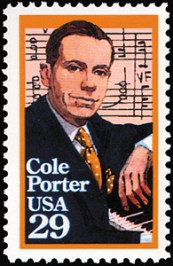
ColePorterThere is nothing worse than feeling that your father does not approve of who you are or what you want to do with the rest of your life. Of course, I am not alone in having this kind of parental disapproval. American composer and songwriter Cole Porter (who wrote Anything Goes) experienced a similar problem. At the insistence of his rich maternal grandfather for whom he was named after, he entered Yale University and then the Harvard Law School to become a lawyer. However, his true love was music. While at Yale (and secretively from his family), he wrote 300 songs and the words and music to six full-length student shows. Eventually he switched to studying harmony and counterpoint with the Harvard music faculty… the rest is history!
However, my story gets better. When my father attended my Upper St. Clair High School winter production of Scrooge (1982) involving nearly 200 choral students and the orchestra, he began to understand and accept a new perspective – what has become for me “the calling” of music education, theater, and creative collaboration with students. I sat him in the front row, while I conducted the pit orchestra literally feet from him. It was an “Upper St. Clair production” – the beginnings of what we do today – very high levels of artistry and professionalism and strong community support.

After the performance, my dad totally redeemed himself. He asked me, “You did all of this?” He praise me, said it was the greatest thing he had ever seen, and told me how proud he was of me. That was the last time he ever saw one of my shows… he died suddenly of a heart attack two years later almost on the day of my next choral musical, Joseph and the Amazing Technicolor Dreamcoat.

concert-1435286Why choose education? Well, the status of a teacher in some cultures is at the pinnacle of the society’s most cherished and respected. In fact, in some Asian countries, tradition dictates that the eldest rules the entire family, and is often considered a master teacher. The career of a teacher is on the top of the spectrum. The merchant is at the bottom. This is exactly the opposite for today’s Western countries… a worship of wealth, stockbrokers, millionaires, “things,” etc. (Of course, it should be mentioned that, using this analogy, Asian musicians are also at the bottom… considered to be nearly useless in lower socioeconomic agrarian societies.)



A wide-body of research proves that the arts help develop 21st Century learning skills, especially success in creative self-expression, critical thinking, problem solving, collaboration, and communications. We know practitioners of the Performing Arts find meaning and discover their talents and interests, and being involved in music and art brings out the appreciation of the beauty in our lives.

Although, now I’m retired, I was once there… and helped to make this happen!

For more articles on retirement by Paul K. Fox, go to https://paulkfoxusc.wordpress.com/category/retirement-resources/.

retirement-life-1385597-1

PKF

© 2016 Paul K. Fox


Tips on Personal Branding

OLYMPUS DIGITAL CAMERA

Prospective Music Teachers: Why Personal Branding Might Help You Land a Job!

“A brand is anything—a symbol, design, name, sound, reputation, emotion, employees, tone, and much more—that separates one thing from another.”

– Neil Patel and Aaron Agius

optimism-1241418Quick – Who are you? Define yourself in three words!

This is one of the most common job interview questions. In my past blogs on the subject of getting a music teaching job (see https://paulkfoxusc.wordpress.com/category/marketing-professionalism/), we explored preparing for interviews, planning portfolios, developing stories/personal anecdotes of your strengths, defining criteria for the ideal music teacher candidate, and understanding the term “professionalism” as it applies to music education. Now to wrap-up your “marketing plan,” it is time to dive into “personal branding” as it is presented by quite a few experts in the field.

business-card-1238267What is Personal Branding? Google defines it as “essentially the ongoing process of establishing a prescribed image or impression in the mind of others about an individual, group or organization.”

Branding is critical to help you “stand above the rest,” showing you have what it takes and would be a major asset to a prospective employer, and marketing your own unique qualities that would make you “a good fit” for the specific job opening. But you don’t have to take my word on this… a quick search on the Internet yields numerous articles on branding and marketing yourself.

The question is no longer IF you have a personal brand, but whether you choose to guide and cultivate the brand or to let it be defined (or assumed) by others on your behalf.

According to Shama Hyder, bestselling author of The Zen of Social Media Marketing, “The term branding has long been relegated to companies, but today almost every individual has a personal brand. Not many of us have consciously cultivated these brands, but they exist nonetheless. A digital footprint in the sands of time and space crowd sourced by friends, colleagues, and bosses. According to an AVG study, 92 percent of children under the age of two already have a digital footprint.”

At http://www.forbes.com/sites/shamahyder/2014/08/18/7-things-you-can-do-to-build-an-awesome-personal-brand/, Hyder posted “7 Things You Can Do to Build an Awesome Personal Brand,” including the following outlined summary. (Take a look – you won’t be sorry!)
  1. A young caucasian woman outdoors in a meadow, working on her computerStart thinking of yourself as a brand

  2. Audit your online presence
  3. Secure a personal website
  4. Find ways to produce value
  5. Be purposeful in what you share
  6. Associate with other strong brands
  7. Reinvent

You can learn something about branding from an accountant. In “Five Tips on Branding Yourself” (by the American Institute of CPAs) at http://www.aicpa.org/InterestAreas/YoungCPANetwork/Resources/Career/Pages/FiveTipsToBrandingYourself.aspx, steps are offered to help build a positive image and promote your professionalism. Branding helps “to remain current in your field, opens doors for you, and creates a lasting impression…”

  1. Define your brand and become an expert.
  2. Establish a presence.
  3. Generate brand awareness through networking.
  4. Remember the 3 Cs of brandingclarity, consistency, constancy.
  5. Get feedback from those who know you best—at work, at home, anywhere.

marching-band-1440110-1For #1 above, hopefully you have already read my epistle (see https://paulkfoxusc.wordpress.com/2015/07/04/marketing-yourself-and-your-k-12-music-certification/) on not limiting your options or selling yourself short as a music specialist (e.g. band director or elementary vocal teacher). If you want a job with a Pennsylvania Music K-12 Instructional certificate or equivalent, you have to be “expert” on all types and grade levels of public school music.

The music curriculum leader/department chair/lead teacher involved in the employment screening will want to know your mastery of creating lessons in everything from the foundations of “steady beat” and “matching pitch” to developing advanced technique and musicianship in any/all instrumental and vocal ensembles, including jazz improvisation, a cappella singing, and string chamber music.

However, principals, HR staff, and other administrators will likely care more about your classroom management skills, ability to communicate and work with others, personal initiative and willingness to work after school and in the evenings, record of consistent attendance (low incidence of absenteeism or tardiness re: college classes and other work history), and other personality characteristics. Believe it or not, at more than one interview, I was asked, “Since you call yourself trained as a musician, are you temperamental?”

The single most comprehensive publication on branding (and it looks like it is provided as a free service!) is The Complete Guide to Building Your Personal Brand by Neil Patel and Aaron Agius” at https://www.quicksprout.com/the-complete-guide-to-building-your-personal-brand/.

According to them, the greatest rationale for building your personal brand is that it opens up more professional opportunities. “Creating a vision for your future and implementing that vision can lead to a better job…” You should take time to read the guide’s chapters in detail:
  • your-brand-new-website-1-1058679How to Create Your Personal Brand Vision
  • How to Define Your Target Audience
  • How to Build Up Your Online and Offline Assets
  • How to Build Your Brand Through Outreach
  • How to Get Free Press Coverage
  • How to Connect with Mentors
  • How to Monitor your Brand
  • Be Yourself Because Everyone Else Is Taken

After you peruse all of the above material on personal branding, here are my top ten “takeaways” specific to every budding music teacher.

  1. Your personal brand is everything about you – your values, attitudes, integrity, initiative, work ethic, skills, and personality traits.
  2. Remember, a career in public/private school education is based on very conservative values. Be cognizant of what you say, how you look and act, and the overall image you portray. “Everything you say and do (or have ever said or done) may be used against you…”
  3. In this profession, there’s no place for too much levity or a lack of respect for conformity, longstanding traditions, and the orthodox. At my first job interview, I carelessly made a crack about signing an outdated “loyalty” oath (“I promise I am not a communist and will not try to overthrow the government…”), the result of which the superintendent gave me a major tongue-lashing and a 20-minute lecture on patriotism (but, somehow I still got the job!).
  4. shame-1431469Clean up your social media sites (Facebook, etc.). A photo of you and your college buddies drinking “adult beverages” in bathing suits at a beach may be misinterpreted. Google your name to see what comes up. How would you define the content you see of yourself online?
  5. Create a personal website to warehouse the elements of your “professional brand,” including your philosophy of music education, mission, goals, and a digital resume of your education,  experience, and accomplishments. If your college/university does not set you up with a free online site, explore “doing-it-yourself” with WordPress, Wix, or Weebly.com.
  6. The only social medium I can recommend without reservation is LinkedIn. Create and optimize your professional identity on LinkedIn, everything from getting an excellent photo of yourself to providing copious samples of your references, writing, hands-on teaching experiences, etc.
  7. If you have personal essays on your educational philosophy and vision, share your priorities as they relate to music curriculum, lesson targets, concert programming, assertive discipline, collaborative projects, and professional development, and always be ready for the most commonly asked interview questions (beat them to the punch by posting in writing your thoughts): Why is music essential to a child’s education? Why did you choose to become a music educator? Who had the greatest influence on you and why? What are your greatest strengths and weaknesses in this field?
  8. PaulFox_LogoIf you have time, design a personal logo, a symbol of you wherever you go on websites, e-mail footer, digital and printed portfolios, business cards, etc. Although I retired in 2013, I created the illustration at the above right. It implies that I am “a happy fox” (my last name), involved in music, and especially love a certain Beethoven symphony, reinforcing that I am an orchestral musician.


  9. Better than providing quick one or two-sentence answers to the interviewers’ questions, try to assemble a collection of personal anecdotes that dramatically illustrate your musical and teaching skills, critical thinking and problem solving, personality traits like patience, compassion, self-control, and thoughtfulness, and past successes. (For more information on developing story-telling skills, go to https://paulkfoxusc.wordpress.com/2015/08/02/when-it-comes-to-getting-a-job-s-is-for-successful-storytelling/).
  10. Whenever possible, archive your student teaching and other field experiences. “A picture says a thousands words!” Post short online video, audio, and photo examples of your positive interactions in music and with students in all kinds of settings.

One final thought. The best advice I have learned about branding is that it is all about “work in progress.” According to Adii Pienaar in “How to Build Your Personal Brand: The Next Step to Anything” (http://thenextweb.com/entrepreneur/2013/08/18/your-personal-brand-the-next-step-to-anything/), “Your brand is a living organism just like you are as a human and it needs to mirror the same kind of progression, evolution and maturation that you experience in your own mac-stuff-4-1500018life. Whilst legacy is important (as it gives context to your brand), continuous improvement and change should be part of how you shape your brand over time.”

He adds, “Your brand should make mistakes and you should have the opportunity to learn from them.” Just like a model college-entrance essay relating how you have persevered and adapted to life’s challenges and solved problems, your online presence should reveal your dedication to and steps towards self-improvement.

Finally, I echo Pienaar’s conclusion that there is no time like the present to get to work on personal branding: “Start today and brand shamelessly.”


PKF

© 2015 Paul K. Fox

Overview – Strategies for Landing a Music Teacher Job

“Without ambition, one starts nothing. Without work, one finishes nothing. The prize will not be sent to you. You have to win it.” – Ralph Waldo Emerson

In a challenging job market with limited openings for public/private school music educators in many geographical areas of the country, there is great competition in the screening and evaluation of the applicants. I am happy to offer some tips and techniques towards successful career preparation, employment searches, interviewing, and promotion of your image and record of past performance, experiences, achievements, behaviors, knowledge, skills, and abilities that are job-related.

The concept of marketing oneself for employment is based on several skill sets:

  • Knowing the territory
  • Making connections
  • Branding yourself
  • Storytelling about the challenges and triumphs you faced in life
  • Proving that you have “what it takes” and your skills/experiences would be a “good fit” to the needs, goals, and values of the institution, employer, and position to which you are applying
  • Being persistent and well-organized

Here is my outline of general targets for marketing professionalism and a successful job hunt. Many of these subjects have been/will be shared in current or future blogs on this site.

  1. Develop and model your skills as a “professional.” (Read my July 1, 2015 blog “The Meaning of Pro.”)
  2. Complete a self-assessment of your content knowledge, teaching skills, musicianship, and personality traits. (Prepare in advance so that you will be able to share your “best” attributes.) One model for evaluation of prospective and current educators is Charlotte Danielson’s “Four Domains” from The Framework for Teaching. (To research these, see http://danielsongroup.org/framework/).
    • Planning and Preparation
    • Classroom Environment
    • Instruction
    • Professional Responsibilities
  3. Seek out avenues (while in college or around your music education peers) to practice and improve your weakest skill areas (less familiar band/string instruments, improvement in piano accompaniment, jazz improvisation, or singing)
  4. Assemble artifacts of your professional activities, the precursor for the development of a comprehensive résumé and portfolio.
    • Bulleted list of specific academic and music accomplishments with dates
    • College assessments and transcripts
    • Scholarships and other awards
    • Education experiences (e.g. lists, photos, and/or audio/video recordings of student teaching, observations, and other field assignments, private teaching, substitute teaching, other employment in the private and public schools, conducting or performing in community ensembles, summer camps, sports, scouts, church programs, marching band sectionals or field assistance, choral accompaniment or vocal/drama/dance coachings, etc.)
    • Sample solo recital and chamber/large group concert programs
    • Sample lesson plans, learning targets, rubrics, and other student assessments
    • Original compositions and arrangements
    • Congratulatory notes and letters of reference
  5. Create a philosophy of music education. Be ready to answer the key essential questions “What is your personal mission?” and “What is the role of music in a child’s education?” (To define a broad-based vision for becoming the ultimate “total music educator,” avoiding any prejudice to, limitations in, and restrictions of a particular music specialty, see my July 4, 2015 blog “Marketing Yourself and Your K-12 Music Certification.”)
  6. Familiarize yourself with current educational jargon, terminology, trends, and acronyms, possible topics administrators may check for understanding at a future interview. If you do not know the meaning of terms like The Common Core, formative/summative assessments, or 21st Century Learning Skills, look them up. (See my July 18, 2015 blog “The Alphabet Soup of Educational Acronyms.”)
  7. Compile a set of detailed professional anecdotes based on your positive attributes (see #2 above), artifacts (#4), and examples of your professionalism (#1) – the most important successes you have had in your education, career and personal life. Metaphors, analogies, and humorous anecdotes are the foundation for excellent storytelling at interviews. (See my August 2, 2015 blog “When It Comes to to Getting a Job, ‘S’ is for Successful Storytelling.”)
  8. Pre-interview preparation
    • Creation or revision of your résumé, interview handouts, electronic portfolio, and employment website
    • Practice and drill on answering common interview questions (including self-assessments of video samples) – see examples of interview questions from the 2013 Pennsylvania Music Educators Association In-Service Conference: http://www.uscsd.k12.pa.us/Page/6361
    • Research of the school district, music program, job opening, and unique local curricular innovations
    • Development of appropriate and meaningful questions to ask the interviewer
    • Trial run (know exactly where you are going, time needed, traffic patterns, etc.)
  9. Positive interview techniques (future blog)
  10. Post interview (debriefing yourself) and organization of the job search process (another future blog)

As they say in the theater, “break a leg” at your job interview!

“Strive not to be a success, but rather to be of value.” – Albert Einstein

PKF

© 2015 Paul K. Fox

The Meaning of “Pro”

Reprinted from the Spring 2015 PMEA News

Are you a professional? Do you have the skills, habits, and attitudes of a professional in the field of education?

Webster’s New World dictionary defines the term “profession” as “a vocation or occupation requiring advanced education and training.”

However, what makes someone a true professional? What are the qualities of an individual who devotes his or her life in a profession? How can you tell the difference between just going to work in a “job” and reaching for the highest professional standards?

In short, here are some of the qualities of professionalism that school administrators seek in new candidates for music (or any subject) teaching positions. Here’s an opportunity to do a personal professional inventory.

  • A professional succeeded in and continues to embrace “higher education” and personal development. He/she updates self with “constant education” and retooling of knowledge and skills.
  • Professionals tend to seek and encourage change, to find better ways of doing something. They propose new things “for the good of the order.”
  • Like lawyers and doctors, they “practice” the job, using different techniques and resources for different situations as needed. Professionals are good problem solvers and critical thinkers.
  • Professionals accept criticism, frequently assess their job performance, and always try to self-improve.
  • They agree to adopt an open or flexible assignment of hours to work or plan/prepare/think about their job throughout the week and weekends (seemingly, on occasion, a commitment to a “24/7” schedule). They bring home their work… what the students call homework!
  • Professionals are salaried, and do not think in terms of hourly compensation, nor even expect extra pay for every task of the job assignment. They do not “punch a clock” nor count hours at their job.
  • Professional workers are generally responsible for themselves and many others. When assigned to a “team,” they allow other team-members to reap benefits and take credit for the work/successes they have done.
  • Members of a professional community have obligations for communications, attending meetings, completing paperwork, and fulfilling deadlines, and value the application of accountability, teamwork, group goals, compromise and unity of purpose, vision, creativity, perseverance, honesty/integrity, fairness, patience/calm demure, and timeliness/promptness. Professionals define and regularly model these best practices.
  • Professionals readily accept and model a corporate standard of behavior and appearance.

Remember your most inspiring teacher? Who motivated you to go into the teaching profession? Did you notice the level of commitment he or she brought to the profession… to the classroom every day?

Becoming a professional music educator is a lofty goal with high standards. It seems like there is never enough time in a day to complete everything. Music teachers (especially at the secondary level) are usually the first to arrive and the last to leave the parking lot, and often sponsor or participate in activities of their profession after-school, evenings, and even on weekends back at school… everything from directing extra rehearsals to composing/arranging/preparing music, accompaniments, lessons, etc.

Many have said that aspiring to be a music educator is a lot like a calling. One school superintendent said he expected prospective new recruits to show high energy, enthusiasm, sense of purpose, and dedication during the interview… even a supposed willingness to “lay down in front of a school bus” or “do what ever it takes” to make the students (and educational program) successful.

A professional music teacher must also achieve a balance between his/her high level musical expertise and the essential focus on the needs of “students as people” first. Ultimately, it is our privilege and mission to teach children (not just the subject matter) through the enormously powerful vehicle of music.

So, are you ready to wear the badge of a professional?

PKF