
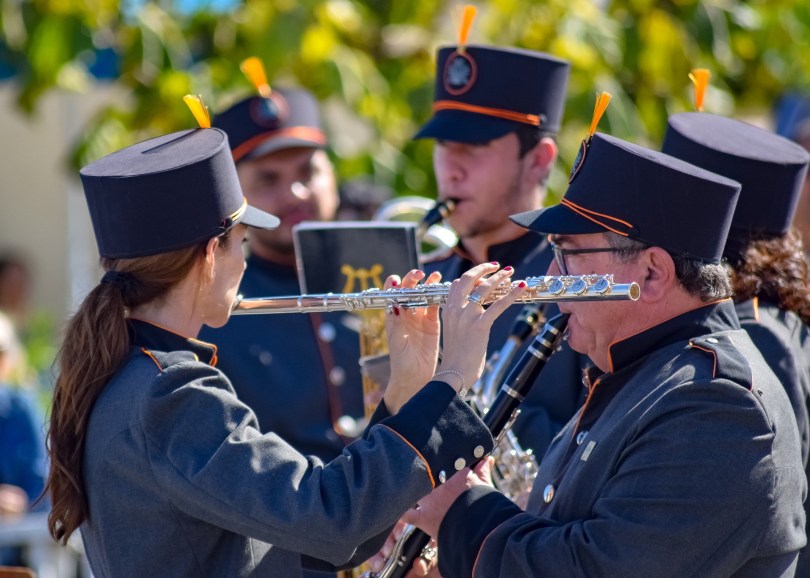


Fox’s Fireside article for adult learners
What Does It Take to Master Your Craft?
Practice with your fingers and you need all day. Practice with your mind and you will do as much in 1 1/2 hours. — Leopold Auer
Mastering music is more than learning technical skills. Practicing is about quality, not quantity. Some days I practice for hours; other days it will be just a few minutes. Practicing is not only playing your instrument, either by yourself or rehearsing with others — it also includes imagining yourself practicing. Your brain forms the same neural connections and muscle memory whether you are imagining the task or actually doing it. — Yo-Yo Ma
If I don’t practice for a day, I know it. If I don’t practice for two days, the critics know it. And if I don’t practice for three days, the public knows it. — Louis Armstrong
It is a mistake to think that the practice of my art has become easy to me. I assure you, dear friend, no one has given so much care to the study of composition as I. There is scarcely a famous master in music whose works I have not frequently and diligently studied. — Wolfgang Amadeus Mozart
How much practice is enough? 2 hours? 4 hours? More or less? What constitutes too much practicing?
To grasp this essential question, a tug-a-war of time vs. attentiveness, Noa Kageyama quotes Arthur Rubinstein, Leopold Auer, Jascha Heifetz, Donald Weilerstein and others in his article “How Many Hours a Day Should I Practice?” He centers around the basic premise that deliberate practice is more efficient, engaging, and builds self-confidence.
When it comes to understanding expertise and expert performance, psychologist Dr. K. Anders Ericsson is perhaps the world’s leading authority. His research is the basis for the “ten-year rule” and “10,000-hour rule” which suggest that it requires at least ten years and/or 10,000 hours of deliberate practice to achieve an expert level of performance in any given domain — and in the case of musicians, often closer to 25 years in order to attain an elite international level. Note that the real key here is not the amount of practice required (as the exact number of hours is debatable) but the type of practice required to attain an expert level of performance. In other words, just practicing any old way doesn’t cut it. — Kageyama
 The famous “10,000 Hour Rule” was described in the book Outliers: The Story of Success written by Malcolm Gladwell, Based on studies in elite performance, Gladwell contended that it’s “an extraordinarily consistent answer in an incredible number of fields… you need to have practiced, to have apprenticed, for 10,000 hours before you get good.”
Gladwell’s message — “people aren’t born geniuses, they get there through effort” — was seized upon by popular culture.
There is a lot of confusion about the 10,000 rule that I talk about in Outliers. It doesn’t apply to sports. And practice isn’t a SUFFICIENT condition for success. I could play chess for 100 years and I’ll never be a grand-master. The point is simply that natural ability requires a huge investment of time in order to be made manifest. Unfortunately, sometimes complex ideas get oversimplified in translation. — Gladwell
View his explanation on YouTube about his “metaphor for the extent of commitment that’s necessary for cognitive-complex fields” (how long mastery takes) here: https://www.youtube.com/watch?v=1uB5PUpGzeY.
 The 10,000 hour rule was also cited in a book by Sean Patrick: Nikola Tesla – Imagination and the Man That Invented the 20th Century:
The rule’s premise is that, regardless of whether one has an innate aptitude for an activity or not, mastery of it takes around ten thousand hours of focused, intentional practice. Analyzing the lives of geniuses in a wide range of intellectual, artistic, and athletic pursuits confirms this concept. From Mozart to Bobby Fischer to Bill Gates to the Beatles, their diverse journeys from nothing toward excellence in their respective fields shared a common denominator: the accumulation of ten thousand hours of unwavering “exercise” of their crafts. — Patrick
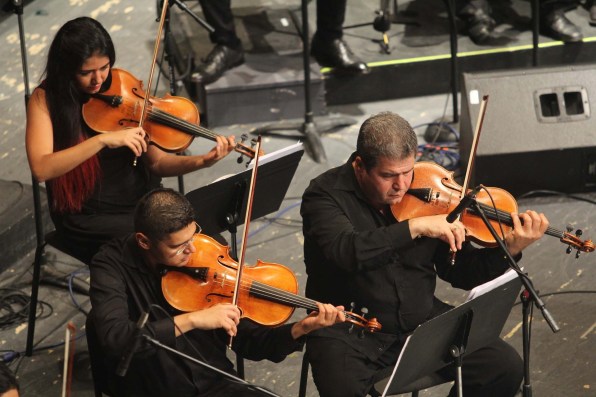
To be fair, many have taken exception to the 10,000 hour rule, in articles like “The Great Practice Myth: Debunking the 10,000 Hour Rule” by Michael Miller.
According to Ryan Branstetter in his November 2019 “The Ultimate Guide to Teaching Habits of Mind,” creating or reforming “patterns of thinking” and habits may instead take anywhere from 21 days to a year:
Have you ever heard someone tell you that it takes 21 days to form (or break) a habit? Well, scientific studies have found that to be unfounded. When it comes to something easy, such as grabbing a coffee at your local Starbucks on your way to school, it might take only a few days for a habit to form. But if it is a habit that is challenging, studies have shown that the 21-day myth may actually more like 66 days. Or for very challenging habits, it could take up to a year! — Branstetter
How about translating this prescription of 1-10 years to a weekly figure of five hours? With reading being the major focus for any stellar success in a profession, review the blog-post by Michael Simmons in Accelerated Intelligence: “Bill Gates, Warren Buffett, and Oprah All Use the 5-Hour Rule”
If 10,000 hours isn’t an absolute rule that applies across fields, what does it really take to become world class in the world of work?
…I’ve explored the personal history of many widely-admired business leaders like Elon Musk, Oprah Winfrey, Bill Gates, Warren Buffett and Mark Zuckerberg in order to understand how they apply the principles of deliberate practice.
…Many of these leaders, despite being extremely busy, set aside at least an hour a day (or five hours a week) over their entire career for activities that could be classified as deliberate practice or learning. — Simmons
 Here are the “three buckets” (principles) of Simmon’s 5-hour rule:
- Read
- Reflect
- Experiment
Specific to number one above, apparently billionaire entrepreneurs like to read a lot, quantities of time, frequency, and number of sources (quoted in the article):
- Warren Buffett spends five to six hours per day reading five newspapers and 500 pages of corporate reports.
- Bill Gates reads 50 books per year.
- Mark Zuckerberg reads at least one book every two weeks.
- Elon Musk grew up reading two books a day, according to his brother.
- Mark Cuban reads more than 3 hours every day.
- Arthur Blank, co-founder of Home Depot, reads two hours a day.
- Billionaire entrepreneur David Rubenstein reads six books a week.
- Dan Gilbert, self-made billionaire and owner of the Cleveland Cavaliers, reads one to two hours a day.

By the way, how many books do YOU read a month? What publications do you have sitting on the coffee table or bed stand awaiting to be started/finished? A quick glance at my own collection of recent nonfiction acquisitions includes these titles:
- Fewer Things Better – The Courage to Focus on What Matters Most by Angela Watson (Due Season Press and Educational Services, 2019)
- UnSelfie – Why Empathetic Kids Succeed in Our All-About-Me World by Michele Borna (Touchstone, 2016)
- The 100-Year Life – Living and Working in an Age of Longevity by Lynda Gratton and Andrew Scott (Bloomsbury, 2016)
- The Microbiome Solution – A Radical New Way to Heal Your Body from the Inside Out by Robyn Chutkan (Penguin Random House, 2015)
- The Weekend Effect – The Life-Changing Benefits of Taking Time Off and Challenging the Cult of Overwork by Katrina Onstad (Harper Collins Publishers, 2017)
(You see, I do not exclusively survey the current best-sellers or today’s fads/trends… ideas, insights, and innovations can come from anywhere and any time frame. Now that I am retired, I can “catch-up!”)

Back to musical preparation. You may have heard that saying “practice makes perfect,” generally debunked in several of my “Fox’s Firesides” for music students. I revise this concept to “perfect practice makes perfect performance” promoting “the ten times rule” in applying focus, problem solving, and repetitive drill. Check these out:
- Does Practice Makes Perfect?
- Goals for the Musical Road for Success
- Pizza, Batting Averages, and the “Ten-Times Rule”
- Life Hacks for Musicians
Finally, citing the initial reference in this blog-post by Noa Kageyama, here are five tips for deliberate practice by which we should all abide:
- Keep practicing limited to a duration that allows you to stay focused.
- Utilize times during the day when you tend to have the most energy.
- Write down and keep track of your performance goals and what you discover during your practice sessions.
- Work smarter, not harder.
- Apply various techniques of problem-solving to practicing.
He also recommends this 6-step general “problem-solving model” as adapted from various problem solving processes online:
-

asq.org Define the problem (what do I want this note/phrase to sound like?)
- Analyze the problem (what is causing it to sound like this?)
- Identify potential solutions (what can I tweak to make it sound more like I want?)
- Test the potential solutions to select the most effective one (what tweaks seem to work best?)
- Implement the best solution (make these changes permanent)
- Monitor implementation (do these changes continue to produce the results I’m looking for?)
More ideas can be researched by reading The Talent Code by Daniel Coyle or The Practice of Practice by Andrew Mason, or visit these links for further study:

The bottom line? Working “brainlessly” does not promote significant improvement. However, use of sufficient repetition, exploration, problem solving, and mindful and deliberate practice will stimulate your success in the pursuit of anything worthwhile… especially the self-realization of creative self-expression.
PKF
Photo credits (in order) from Pixabay.com:
- “band-philharmonic-orchestra” by Dimitris Vetsikas
- “practice-emoji-words-mindfulness” by John Hain
- “recycle-practice-circulate-symbol” by John Hain
- “orchestra-music-musical-concert” by Ernesto Eslava
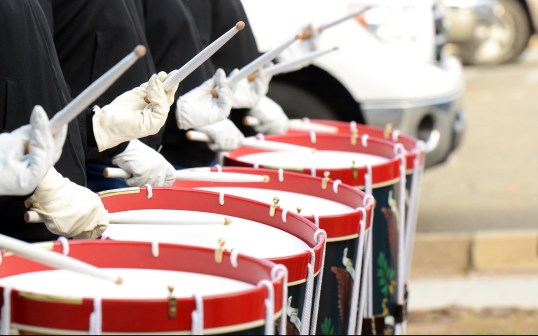
- “drummers-drums-soldiers-historic” by skeeze
- “piano-playing-music-hands-fingers” by “crystalle” or Sophie Lecat
- “guitar-music-man-play-strum-chord” by Ryan McGuire
- “singer-bbface-singing-voice-mike” by Quim Muns
- “saxophone-music-gold-gloss” by Christoph Schütz
- “wooden-train-toys-train-first-class” by Couleur

© 2019 Paul K. Fox







 paulfox.blog