

The Skills and Models of a Happy Retirement
[Portions reprinted from the state journal of the Pennsylvania Music Educators Association, PMEA News, Spring 2019 issue – All rights reserved.]

Is It TIME to Retire?
This is a personal question that no one but YOU can answer… not even your PMEA Retired Member Coordinator! By the time you read this article in the Spring edition of PMEA News, this choice may be uppermost in your mind, especially if you are within a couple years of that so-called “retirement age.” Most school districts require advance notification of an employee’s plan to retire in order to retain full benefits and exit bonuses, and to allow planning for the job replacement search and screening process. (Check your teacher’s contract!)
In music educator conference sessions, director meetings at festivals, and printed in PMEA News and the online e-publication Retired Member Network eNEWS, much has  been discussed about the “what,” “how,” and most recently, “where” of retirement, even issues of “privacy” regarding your decision. For a review of these areas and a bibliography of resources, please visit:
- The How-To-Retire-Guide (video) at https://www.youtube.com/watch?v=LluJ_0ctC4o.
- Past editions of our state journal at https://www.pmea.net/resources/pmea-news/,
- The Ultimate Retiree Resource Guide and
- Retired Member Network eNEWS archives: https://www.pmea.net/retired-members/.
The “why” of retirement is also relevant. There may be a lot of influences for someone to consider leaving their full-time career:
- Boredom or lack of stimulation in the current job
- Changing employment status or responsibilities
- Health problems (yours or other members of your family)
- Spouse retiring
- Your or family member’s desire to relocate
- Needs for caregiving (grandchildren, parents, or elderly family members)
- Travel opportunities
- Acceptance of a new position or the start or expansion of an “encore career” (higher education, music industry, travel/tour planning, or another field)
Other involuntary or more negative motivations may “encourage” you to resign your position:
- Music and/or staff are eliminated from the curriculum or building in which you teach.
- You are experiencing a decline in music program enrollment or participation.
- You feel unappreciated, unsupported, devalued, or ignored as a professional.
- You conclude you must retire early to avoid losing existing contractual benefits.

However, the most important reflection on WHEN to retire should begin with the question, “Are you ready for retirement?” and…
Do You Have What It Takes for a Happy Retirement?
A successful retirement is not “all about the money.” Certainly, you are well-advised to make an appointment with an estate planner, elder attorney, and/or financial advisor (probably all three). Bring a copy of your bank and investment statements, annual reports on your pension, social security, annuities, and insurance documents. Make sure you have the “big picture” of your net worth and accomplish the following (https://www.fisherinvestments.com/en-us):
- Determine your goals, objectives and time horizon;
- Make key distinctions between income and cash flow;
- Develop a basic plan to help achieve your retirement goals.
However, probably even more important, experts say there are many other requirements that foster preparedness to enjoying your post-full-time employment years. For example, proposed by the editorial team of the NewRetirement website, there are eight essential keys to a potential retiree’s “happy transition.” (Read the entire article for a greater perspective at https://www.newretirement.com/retirement/8-skills-you-need-for-best-retirement/.)
- A Knack for Dealing with Uncertainty
- Resilience: Can You Overcome Adversity?
- Capability to Maintain a Set of Friends
- Cash Flow Mastery
- Ability to Set Your Own Schedule and Stay Motivated
- Can You Relax?
- Capacity to Have a Purpose and Follow Passions
- Do You Know How to Manage an Overall Retirement Plan?

These concepts are supported by the book Happy Retirement: The Psychology of Reinvention by Kenneth S. Shultz (DK Publishing, 2015) which focuses on the question, “Are you psychologically prepared to retire?”
- How important is your job when it comes to getting a sense of life satisfaction?
- How many non-work activities do you have that give you a sense of purpose?
- How do you imagine your life to be once you stop working?
- How do you think retirement will affect your relationship with family and friends?
- How much energy for work do you have these days?
Being “psyched” for the “big day” also involves learning personal coping skills, modeling these characteristics of good mental health (from the book The Psychology of Retirement: Coping with the Transition from Work by Derek Milne, 2013):
- Being able to use your talents and energy productively
- Enjoying challenges and gaining pleasure from accomplishing tasks
- Being capable of sustaining a meaningful love relationship
- Finding meaning in belonging and contributing to your community
- Being responsive, sensitive, and empathic to other people’s needs and feelings
- Appreciating and responding to humor
- Coming to terms with painful experiences from the past
- Being comfortable and at ease in social situations;
- Being energetic and outgoing
- Being conscientious and responsible.

Should I or Shouldn’t I Go Now?
No, this won’t be an easy decision… but, you knew that, right? There seems to be a plethora of free advice “out there” to help (?) you deliberate. (Well, you get what you pay for!) A few samples from the Internet:
7 Signs It Is Time (http://www.plannersearch.org/financial-planning/7-signs-its-time-to-retire)
- Your bank accounts
- Your bucket lists
- Your health
- The markets
- Health care benefits
- Social Security benefits
- Your spouse
10 Signs It Is Not Time (https://www.investopedia.com/articles/personal-finance/021716/10-signs-you-are-not-ok-retire.asp)
- Struggling to pay bills
- You have lots of debt
- Have major expenses
- Don’t know your SS benefits?
- Need monthly financial plan
- Need long term financial plan
- What about the effects of inflation?
- Need to re-balance portfolio
- Retirement worries you
- You love your job

Happy retirement = busy retirement. We keep going back to what PMEA MIOSM Chair Chuck Neidhardt said about venturing into retirement – also the perfect bumper-sticker: “Have a plan!” In almost every case study, retiring music teachers must “move on” to an equally engaging and active life style, finding new purpose and meaning in their “senior years!” Considering that many professionals are “addicted to achievement” and the sudden cessation from work may cause some emotional turmoil (Sydney Lagier in US News and World Report, July 20, 2010), we should study examples of those who have happily “Crossed the Rubicon” ahead of us into “retirement bliss.”
Leaving your school employment does not mean you won’t continue doing what you have always enjoyed… personal music (or dance or drama) making, performing in or conducting an ensemble, composing, accompanying, etc. The PMEA Retiree Resource Registry – the proverbial “directory of past leaders in PA music programs” – lists many retired members who continue to offer their talents and experience to help others in the profession. This is a good place to start for asking “advice from the experts” on just about any topic… perhaps even tips on deciding WHEN to retire: https://www.pmea.net/retired-members/.
How about a couple more “models and mentors” who made this “change of life” adjustment and explored new directions towards self-reinvention in retirement?

Ben Franklin, Founding Father
“Having worked as a successful shopkeeper with a keen eye for investments, Franklin had earned his leisure, but rather than cultivate the fine art of indolence, ‘retirement,’ he said, was ‘time for doing something useful.’ Hence, the many activities of Franklin’s retirement were: scientist, statesman, and sage, as well as one-man civic society for the city of Philadelphia. His post-employment accomplishments earned him the sobriquet of ‘The First American’ in his own lifetime, and yet, for succeeding generations, the endeavor that was considered his most ‘useful’ was the working life he left behind when he embarked on a life of leisure….”
2000 – “The Year of Retirement?” for two musical superstars
Barbra Streisand, singer, songwriter, actress, and filmmaker
Garth Brooks, country-music singer and songwriter
“In 2000, Barbra Streisand performed four farewell concerts to mark her retirement from performing live. At the time, she was 58 years old and wanted to focus more on acting, directing and recording albums, reported ABC News.”
“Her retirement ended in 2016 when she returned to the stage for her The Music… The Mem’ries… The Magic! tour, which grossed $53 million over 16 performances, according to Billboard.”
“Garth Brooks shocked fans in October 2000 when he announced his plan to retire to Oklahoma until the youngest of his three daughters graduated from high school, reported Billboard. The country music superstar was 42 years old when he began his early retirement.”
“During his semi-retirement, he did a few sold-out stints at arenas and a 186-show Las Vegas residency with wife Trisha Yearwood, according to Billboard, but he largely stayed out of the spotlight. Brooks returned to touring in September 2014 and continued until December 2017, performing a total of 390 shows, reported Billboard. Forbes cited his 2017 earnings as $60 million. Together, Brooks and Yearwood are one of the richest celebrity couples.”
https://www.gobankingrates.com/net-worth/celebrities/celebrities-who-came-out-of-retirement/
“If money can buy you happiness,” supposedly these ten athletes were financially more successful after retirement, as opposed to the total earnings they generated during their original sports careers:
- Muhammad Ali
- Jim Brown
- Oscar De La Hoya
- Lenny Dykstra
- George Foreman
- Dwayne Johnson (“The Rock”)
- Magic Johnson
- Michael Jordan
- Nolan Ryan
- Dave Whelan
https://www.complex.com/sports/2012/01/10-athletes-who-made-more-money-after-retiring/
Agatha Christie, British writer
Finally, to answer the question, “What would Agatha Christie do in retirement?” best-selling author Ernie Zelinski quoted in his The Retirement Cafe website the following list of activities proposed to be “her favorite things” from the publication Agatha Christie: An Autobiography (Dodd, Mead & Co., 1977).
- Sunshine
- Apples
- Almost any kind of music
- Railway trains
- Numerical puzzles and anything to do with numbers
- Going to the sea
- Bathing and swimming
- Silence
- Sleeping
- Dreaming
- Eating
- The smell of coffee
- Lilies of the valley
- Most dogs
- Going to the theatre
Ernie concluded, “This list of activities and things that Christie loved may trigger some of the stuff that turns you on and which you can use for an active retirement. This will go a long way towards conquering retirement boredom.”
http://www.retirement-cafe.com/Fun-Things-to-Do-When-You-Retire.html

Is the time ripe for you to retire? Again, only YOU can answer that!
When it becomes the right moment for you to make that “big plunge” to “living your dreams…” KUDOS and BEST WISHES on your rebirth as you explore your own pursuit of retirement self-reinvention and post-employment “freedom!”
PKF
© 2019 Paul K. Fox
Photo credits in order from Pixabay.com: “old” by dietcheese, “man” by geralt, “elderly lady” by mabelamber, “senior” by ritae, “woman” by silviarita, “old couple” by monicavolpin, “ben-franklin” by ericdunham, “Fisherman” by paulbr75, “grandma” by fujidreams, and “wooden-train-toys-train-first-class” by Couleur.



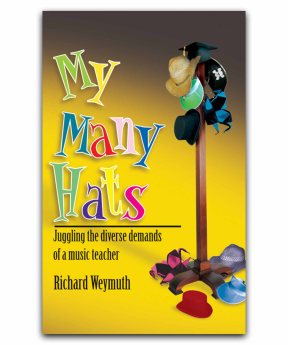 In the category of “things I wishes someone would have told me before I was hired to be a school music educator,” the inspirational book, My Many Hats: Juggling the Diverse Demands of a Music Teacher by Richard Weymuth, is a recommended “first stop” and easy “quick-read.” Published by Heritage Music Press (2005), the 130-page paperback serves as an excellent summary of the attributes (or “hats”) of a “master music teacher.” Based on the photos in his work (great “props”), I would have loved to have seen Weymuth’s conference presentations in person as he donned each hat symbolizing the necessary skill-set for a successful educator.
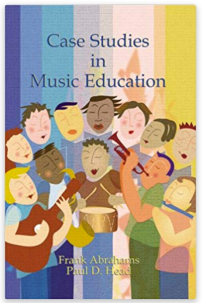 Next, I would like to direct pre-service and new music teachers to Case Studies in Music Education by Frank Abrahams and Paul D. Head. This would be an invaluable aid to “facilitate dialogue, problem posing, and problem solving” from college students (in methods classes?) and “rookie” teachers to veteran educators.
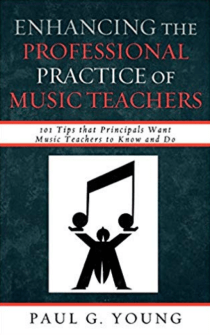 His chapters are organized into six tips:
 The first thing I want you to do (and you don’t even have to be a member of NAfME yet, although you should be!) is to take at least a half-hour, scroll down, and read through numerous NAfME “Music in a Minuet” blog-posts, bookmarking any you want to return to at a later date. Go to


 The Common Core
 Behavior management, disciplinary procedures (especially preventive practices) and posting class or ensemble rules
 However, in the methods classes that come later (perhaps in the second through fourth year?), the basics of “how-to teach” will come. Of course, as you sit in a class teaching you to “cross the break” on a clarinet or play a scale on the flute with good tone, you must also absorb (and remember) the finite steps required in the lesson to pass on this knowledge and skill, not just honk or squeak a few times to master the proficiency exam for yourself.
 You will be required to seek additional research, study, and at times “re-tool” outside what was presented in your methods courses. Some of these new “best practices” will be presented by the induction or in-service training of your school district. When I was hired by the Upper St. Clair School District, a big three+ year professional development program was the Madeline Hunter Model of Mastery Learning. Grudgingly (at first I did not see the purpose), I came to realize that labeling and defining the “eight steps of effective lesson plan design” improved my overall skills as an educator, especially in many of her strategies of “anticipatory set,” “modeling,” “checking for understanding,” and “guided practice…” none of which were ever mentioned even briefly in my five-and-a-half years in college.
  Of course, these are “trick questions.” The answer should be “I want to teach music,” or even better, “I want to teach children.” In most of the school districts across the country (with a few exceptions in the Midwest and places that accept teaching specialty certification by grade level or subject area), you are licensed to teach music in grades Pre-K to 12. At no point in any conversation with a potential administrator (or colleague who may become a member of the screening committee for a music opening) do you want to be “pigeon-holed,” or give the impression “I can only teach_____.”
 Accompany, direct/teach the drama, and choreograph the middle school musical.
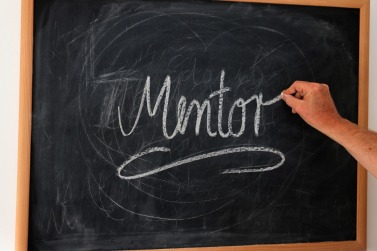 Ego and arrogance has no place in the teaching profession. Where did I hear this saying? “The more you think you know, the less you actually know.” Joining a mentoring program or finding a formal or informal veteran teacher “buddy” will go far to insuring your professional success and dodging those first-year teacher “pot holes” (dumb but common blunders) and “rookie blues.”

 Retired music teachers are another excellent resource. For example, if you live or work in Pennsylvania, many post-employed PMEA members have placed their name and contact information on the Retiree Resource Registry to serve as willing, capable, and informal consultants for pre-service, novice, or other members recently transferred into a non-major specialty “outside their comfort zone.”
 Please feel free to comment on this blog-post. What are your thoughts?
 When I was teaching full-time school orchestra music grades 5-12, the following conversation by students in my program may have been shared at the dinner table. “He wants me to spend time and listen to several outstanding players. I was a little embarrassed when he called on me in class and asked, ‘Who is your favorite violinist?’ and I could not identify a single principal string player or even the current Concertmaster of the Pittsburgh Symphony Orchestra!”
 Pittsburgh has a strong cultural base, providing a home for the world-class Pittsburgh Symphony Orchestra and Pops, the Pittsburgh Ballet and Pittsburgh Opera companies, and the Pittsburgh Civic Light Opera productions, to name a few venues. We are also most fortunate that many amateur or semi-professional groups such as the Pittsburgh Civic Orchestra, Washington Symphony, and River City Brass Band are local (some concerts presented conveniently next door in the Upper St. Clair HS Theatre). Professional soloists and chamber groups visit our city nearly every month, and opportunities to enjoy free concerts are limitless on cable/FiOS television and WQED.
 paulfox.blog