
Social Media – Revisited

Before you begin reading this article, please take a moment and peruse these past blog posts:

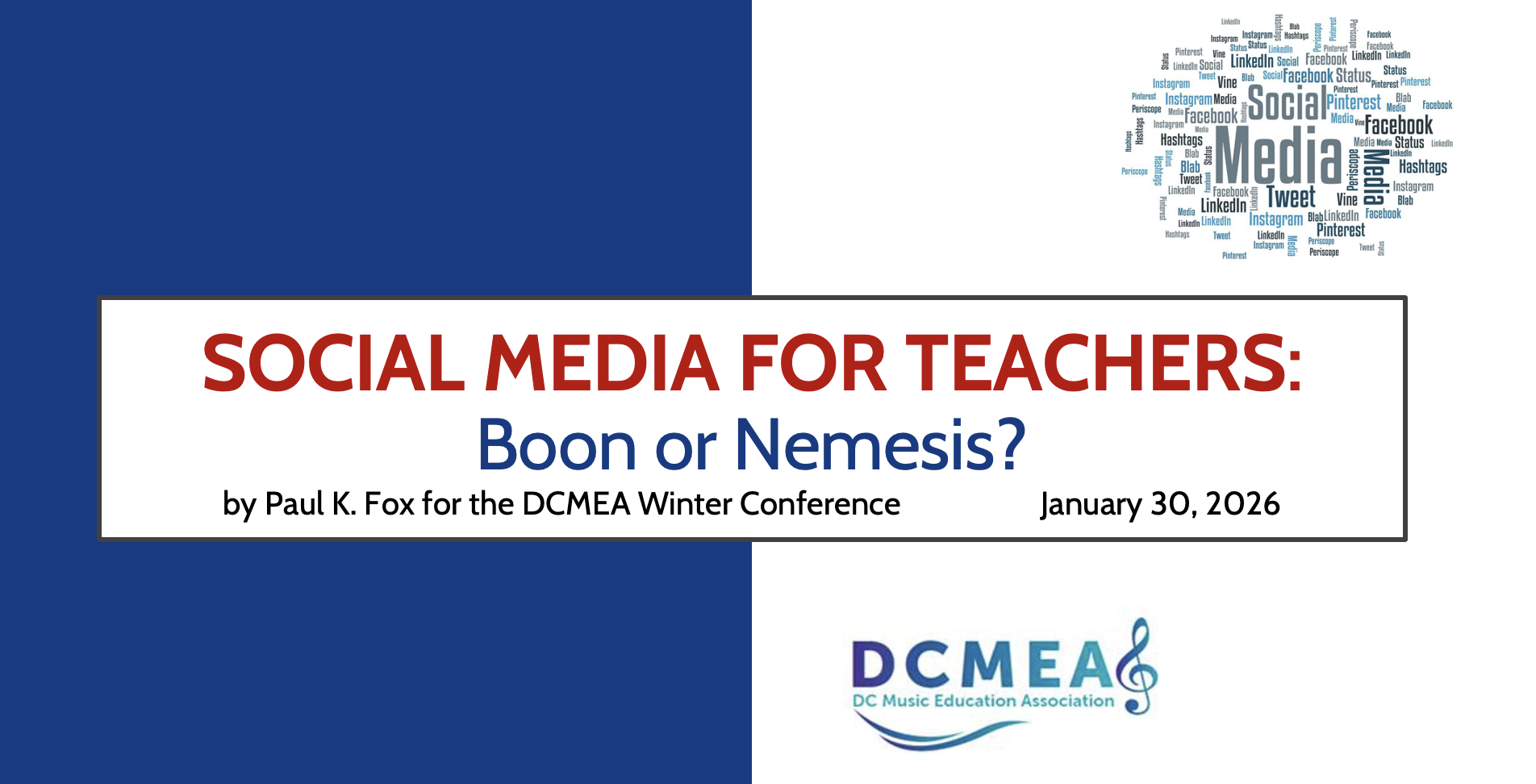
Although several of the cited research links may have expired (for example, PA Department of Education modified most of their website’s URLs), these provided the foundations of background information and references for the presentation I prepared for the DCMEA Virtual Conference in 2020 (during COVID) and serve as the starting point for the workshop I will share in-person at the DCMEA Winter Conference in January 2026. This blog provides updates and additional perspectives. Taken in combination with the above sources, you will be able to identify the benefits, positive models, precautions, and dangers of social media, social networks, professional learning networks, and sample emerging technologies as they apply to teachers’ professional development and education of students.


“THE WHY”

Before every clinic or publication I develop, I always try to spotlight the theme of “THE WHY” as preached by one of my favorite authors and motivational speakers – Simon Sinek! According to him, for organizations and individuals alike, “THE WHY” (rationale and priority) is more important than “THE WHAT” and “THE HOW.” (See this video.)

WHY is a collaborative discussion on social media essential? Why now?

 ”There’s a growing body of evidence suggesting that educators are facing increasing scrutiny regarding their social media use. Concerns include unprofessional conduct, inappropriate interactions with students, and the potential for cyberbullying and other negative impacts on student well-being.”

“Educators are increasingly concerned about how social media influences students’ social-emotional development and their interactions with others.” 
NEA Member Polling on Social Media…
NEA Impact on Social Media and Personal Devices on Mental Health
HHS Youth Mental Health and Social Media
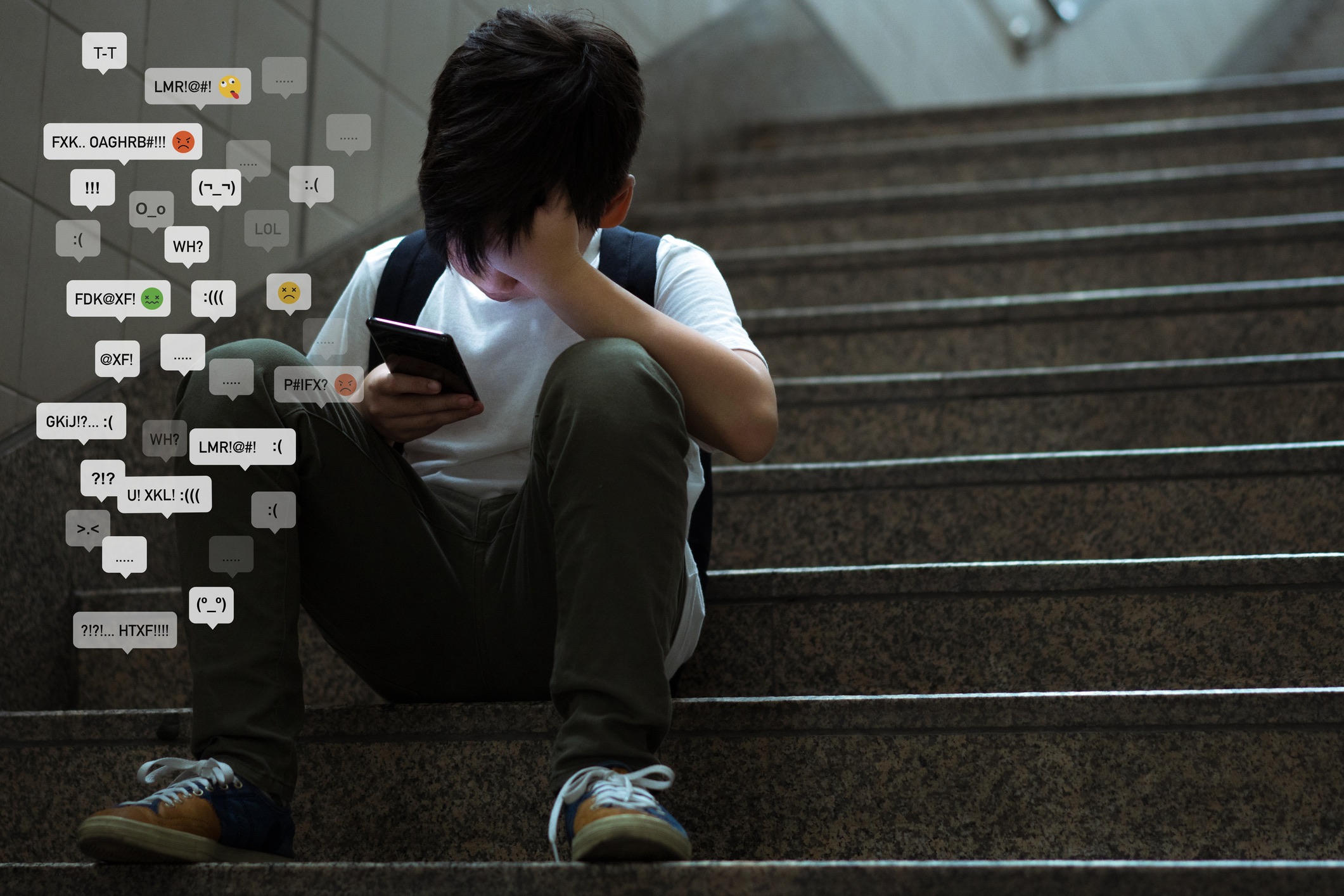
Frankly, there is still a lot of confusion about the dangers of social media, social networking, and other technology integrations into education. In Social Media – Boon or Nemesis, we mentioned that teachers should “debunk the free speech myth.” We demonstrated how the improper application of social media could get educators in trouble. Check out these sites for more info and corroborative stats:
Teacher Student Misconduct and the Critical Role of Social Media Screening
NCBA Social Media for School Employees
Social Media Hazards and Tips for Teachers
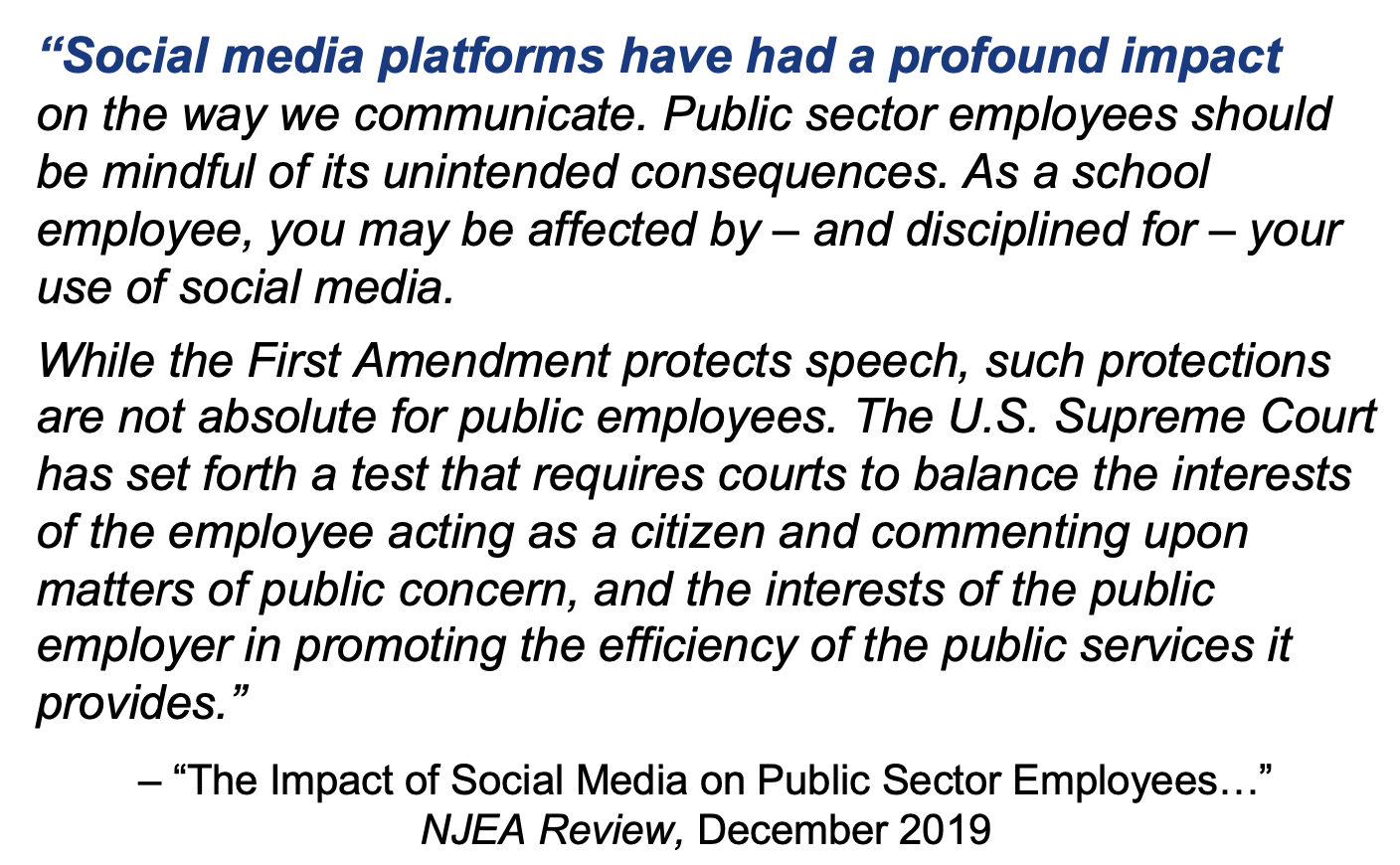
As always, our goal is to promote ethical practices in maintaining professionalism in the digital world.


“THE WHAT” Review of Definitions

“Social Media”

Social media are “websites and applications that enable users to create and share content or to participate in social networking.”
— Oxford Lexico.com online dictionary

“Social Network”

A social network is, 1. a network of social interactions and personal relationships.; 2. a dedicated website or other application which enables users to communicate with each other by posting information, comments, messages, images, etc.
— Oxford Lexico.com online dictionary

Professional Learning Community” (PLC)

A PLC is “a group of educators who meet regularly…” (usually in-person) “…to strategically enhance their teaching skills and improve student outcomes.”

versus “Professional Learning Network” (PLN)

A PLN is “a group of educators who gather more informally…” (usually in online communications) “…to problem-solve and generate ideas to enhance classroom practices. A PLN… often takes the form of an open forum, where participants can ask and answer questions based on their experiences.”
https://edtechmagazine.com/k12/article/2024/08/pln-vs-plc-perfcon


“THE HOW” Ethos of Care

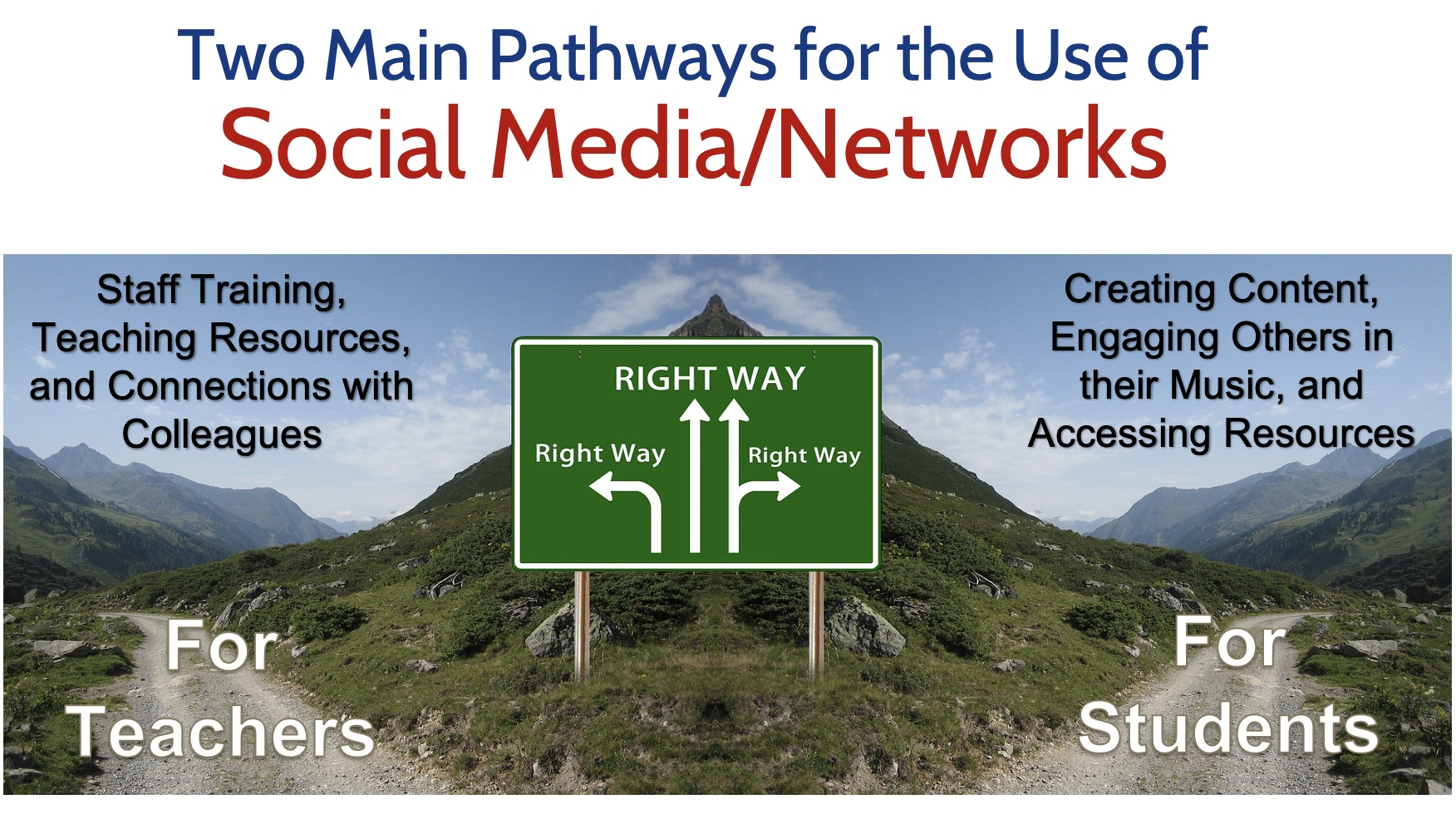
Teachers use social media to…

  • Get inspired with new teaching ideas
  • Find resources for the classroom
  • Connect with other educators
  • Stay on top of trends and news
  • participate in an online community
  • Find teacher discounts and deals
  • Follow education companies and organizations
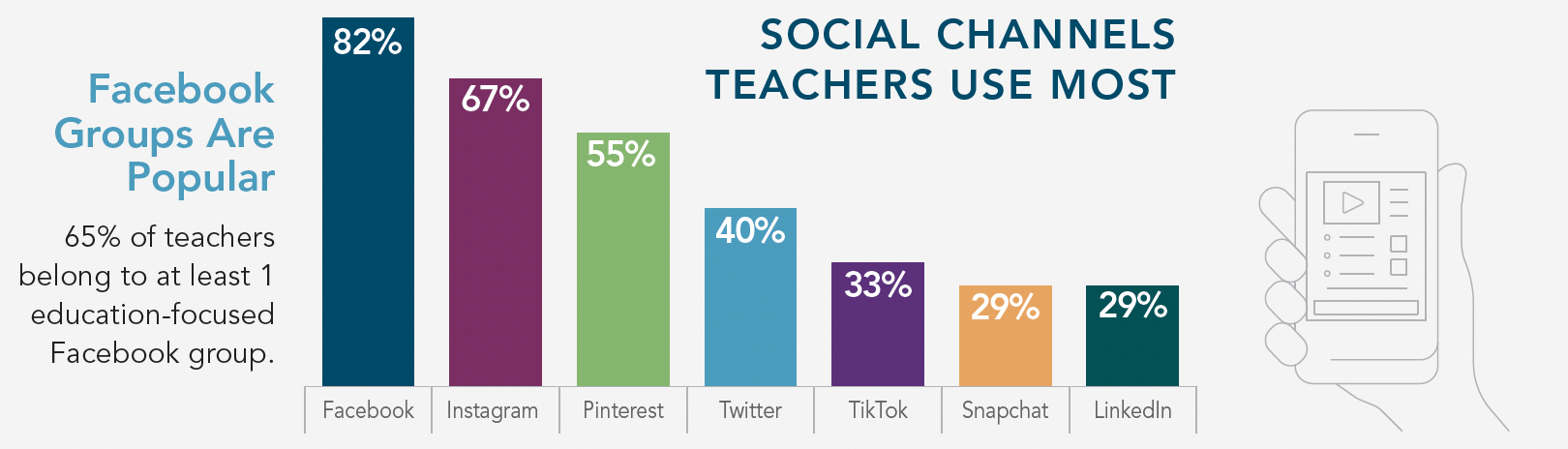
How Teachers Use Social Media
Teachers Social Media Use

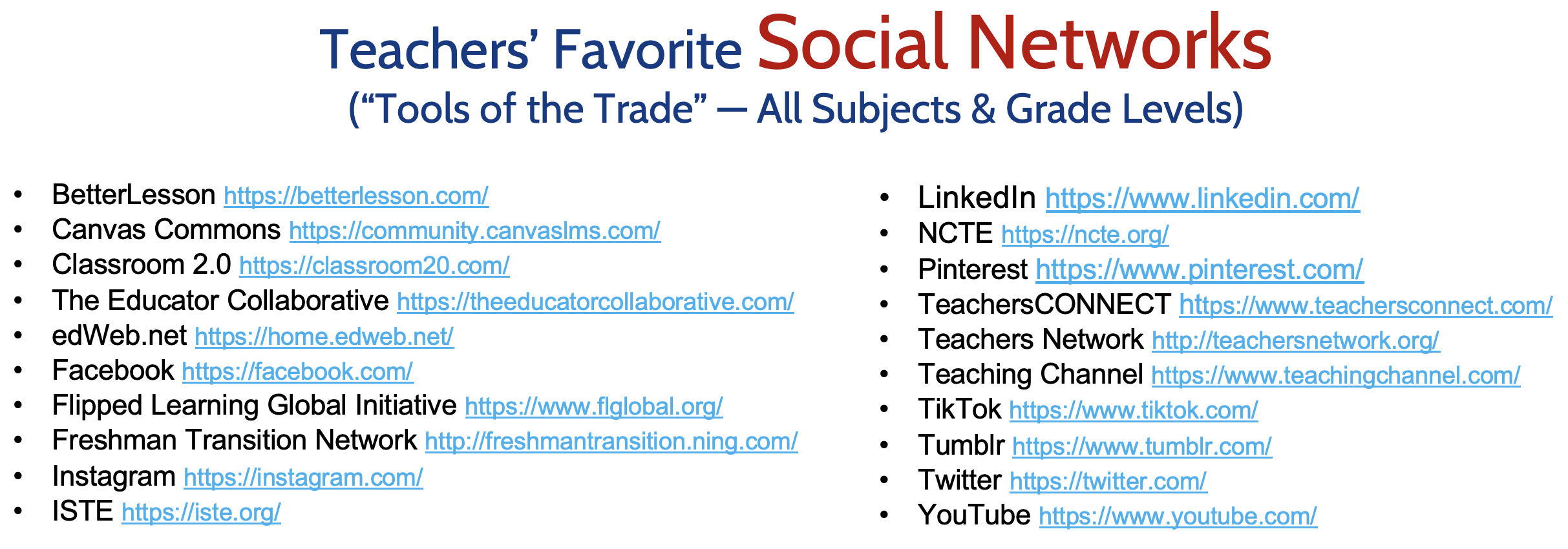
Social Networks for Teachers

We acknowledge that the benefits of social networking for educators are numerous by promoting professional collaboration and connections, including:

  1. Acquiring information to enhance understanding
  2. Keeping informed about latest developments in education
  3. Enhancing communications with students, parents, and the school community
  4. Fostering connections with colleagues in the field to expand an educator’s professional network.

Benefits of Social Media as an Educator

However, educators must exercise “sound judgment” and proper professional boundaries when using social media/networks with students. While the introduction of new technology provides many opportunities for teaching and learning, it is important to establish clear rules for appropriate student-teacher communication. In order to promote safety and appropriate boundaries while transitioning to a virtual teaching and learning environment, the Pennsylvania Professional Standards and Practices Commission offers suggestions to help educators protect themselves and their students.

  1. All technological resources and applications should be school entity-approved and only used in the manner prescribed. Ensure that you are familiar with the tools you are using in order to use them properly. 
  2. Communication with students should occur at designated times, consistent with traditional school day hours. Maintain transparency and protect yourself by keeping a record of all communications with students. 
  3. Clearly communicate when and how students should contact you and provide a timeframe for when students should expect responses to questions. 
  4. Avoid one-to-one interactions with students in chatrooms, FaceTime, Skype, or any other online space. School psychologists, school counselors and others providing one-to-one services to students should consult with school administration about the best mode of communication. 
  5. Use approved forms of communication by your school entity to connect with students and parents (i.e. Remind), use only your school email to communicate, and copy administration when communicating with parents or students. 
  6. When creating content or interacting in an online space with students, conduct yourself as you would if you were in school. If appearing on camera, dress professionally and be mindful of your surroundings and the camera’s view. 
  7. Do not “friend” or follow students on social media and do not allow students to “friend” or follow you on your personal social media. Remember, you do not have a “social” relationship with your students. 
  8. Keep your personal and professional lives separate. Do not share overly personal information about yourself with students.

PSPC Digital Tips for Educators

While exercising responsibility to maintain a respectful, safe, online environment, there are many benefits for the application of social media for students in the classroom:

  • Real-time communications can increase student engagement, collaboration, communication and overall participation
  • Many students may find it easier to participate in online discussions that in the classroom
  • Students can easily ask each other or their teacher questions about assignments outside of class
  • Students & teachers can quickly share resources at any time.
  • Teachers can easily share class announcements.
  • Social media can provide a contingency plan for last minute remote learning scenarios.
  • Students can organize school events with each other or with the help of a teacher.
  • Teachers can augment an online-only class by establishing a social media page or account simply for building community.
  • Students can practice using social platforms responsibly, including maintaining a respectful online discourse.
  • Teachers can communicate directly with parents as needed, and parents can stay informed of school news via a convenient, easily accessible platform.

However, please watch out for these potential drawbacks:

  • Social media can be a major distraction, especially if students are accessing their personal accounts independently.
  • If students primarily use social platforms to participate in class discussions, they can miss out on practicing face-to-face conversations and respectful in-person discourse.
  • Some students may see social media assignments as an opportunity to cyberbully their classmates, and there is always a risk of someone posting inappropriate content or language.

Social Media in Education


“THE WHAT” Several Success Stories

Balancing the positives and negatives and taking into account all of these precautions in order to maintaining professional boundaries, the integration of new technology into the classroom may offer excellent enrichment and increase student motivation for advanced learning. This may take many forms. Here are a few interesting models.

Prior to preparing for the DCMEA online session in 2020, I stumbled upon a truly inspiring post from Derek Muller, a gifted teacher, physicist, filmmaker, and founder of the YouTube channel Vertiasium which has captured millions of subscribers. He offers one of the BEST models of using social media to enrich the understanding of learning math and science (applicable to all fields of study), while at the same time, provides warnings against unbridled use of so-called “innovation for innovation’s sake.”

“I feel like people over the years are invariably drawn to use these words:  revolutionize and education. And there’s this sort of amnesia that we’ve had a hundred years’ worth of these predictions, worth of really groundbreaking technologies that have transformed other areas in our lives but have failed to fundamentally change the way we do education. So, I stand here today as a voice of caution, to think that the future of education is not one of revolutions…”

You need to watch this: How is Social Media Transforming the Future of Education? (2016)
Derek Muller

Say what you want about how COVID significantly disrupted our educational programs, evidence of learning loss, problems in socio-emotional development, decline of student engagement and self-motivation, rise in mental health struggles, decreased instructional time, and the effects of a new digital divide of under-served students (Annie E. Casey Foundation), happily there were surprisingly a few positive advancements the results of exploring new tools and methodologies we had to employ to tread water and cope with the catastrophe. (“When life hands you lemons, make lemonade!”)
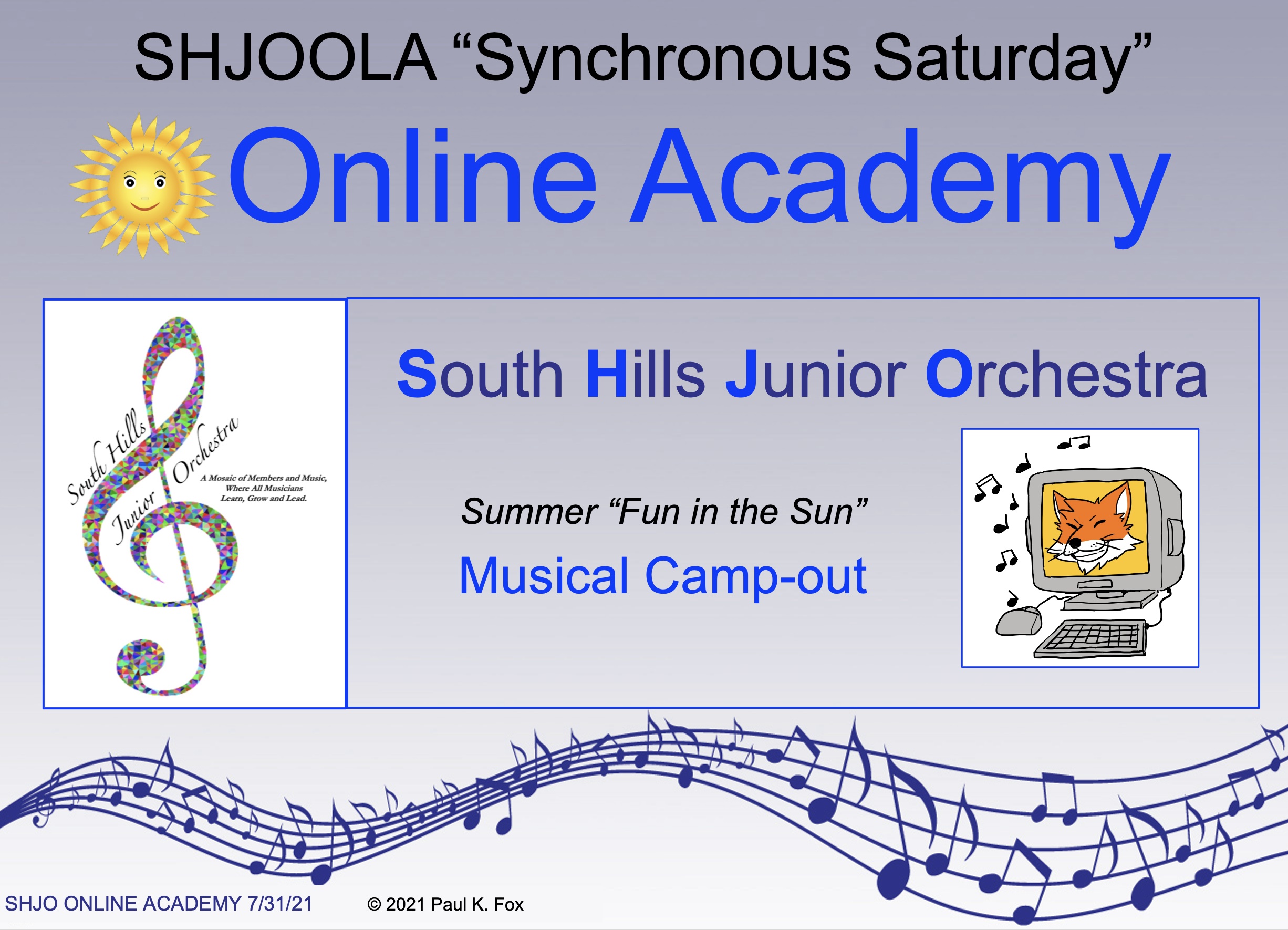
As one example, in the middle of preparing music for my community orchestra, we were shut down in 2020. No in-person rehearsals at the school. I then pivoted to creating my own online platform called SHJOOLA (South Hills Junior Orchestra Online Academy) in 2021 using MusicFirst. For a nominal yearly subscription fee, I was able to continue my Saturday morning classes (synchronous) as well as asynchronous (on-their-own time) learning using excellent applications in a virtual environment: MusicFirst Classroom, Focus on Sound, PracticeFirst, Sight-Reading Factory, Musition, Auralia, a web-based music notation program, and a huge library of method books and ensemble music. Several past blogs showed how we rolled out SHJOOLA:

The latter link above also provided a comprehensive list of supplementary resources (at the time) for online music education. Please peruse these even though some of them may have now gone inactive. We will provide supplemental links at the bottom of this article.

Another direction accented by the onslaught of the pandemic was digital streaming performances, incorporating technology in both the solo and ensemble settings. The following are two of my favorite examples of these to be viewed on YouTube:
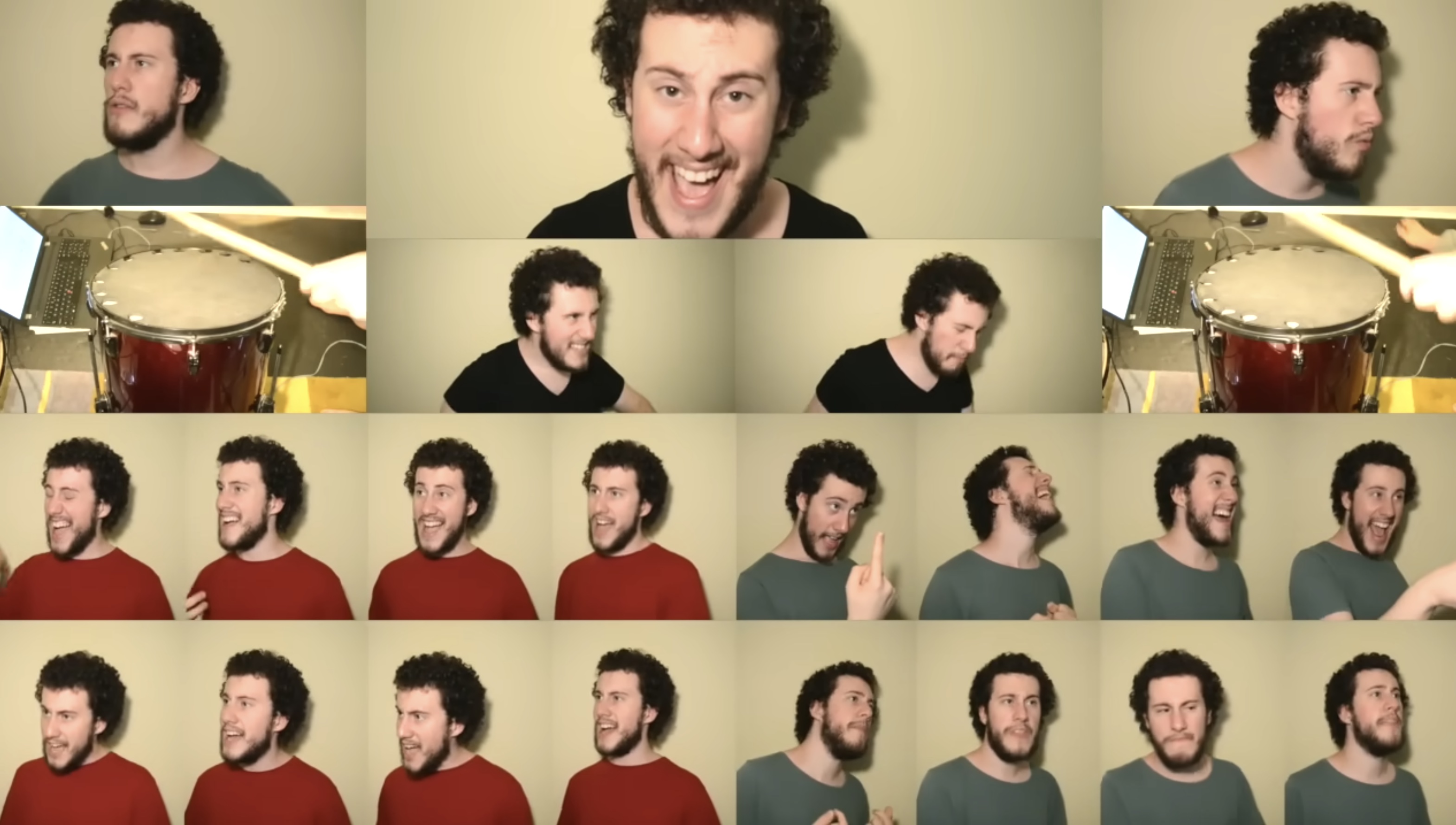
Circle of Life from Disney’s Lion King (2015-18) by Sam Robson, arranger, innovator and performer using multitrack recording of a single performer mixing as many as 50 voices at one time.
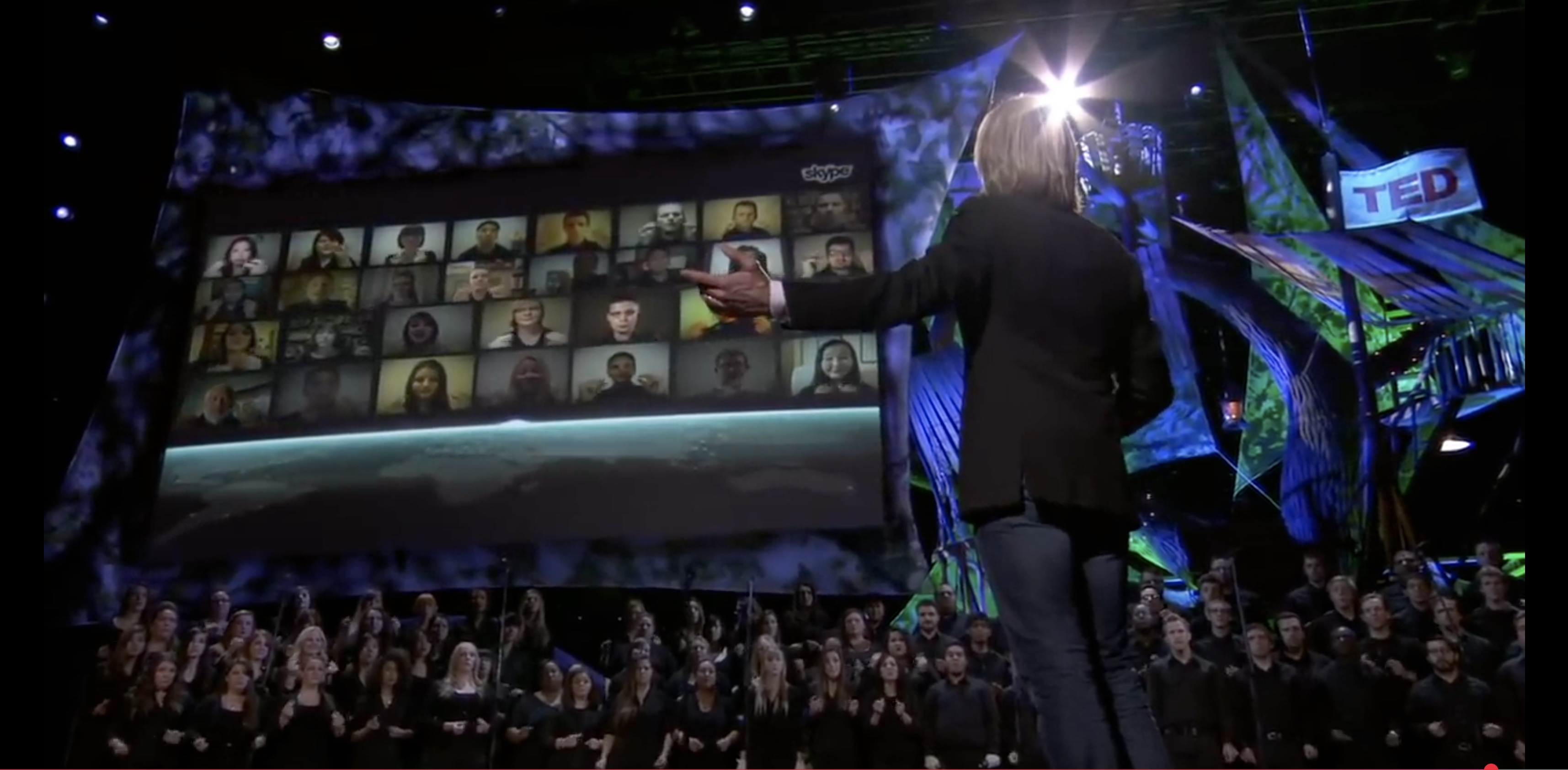
Cloudburst, a Virtual & Live Choir and TEDTALK (2013) by Eric Whitacre

Well… sorry this blog has grown to be so large! If you admit to understanding the potential hazards of and precautions for integrating social media, social networks and other technologies into education, we’ll close with the following bibliography of additional resources for further study. If that is not enough to whet your curiosity, stop back in several months to download a copy of my slide summary for the session I will present at the DCMEA Winter Conference on January 30, 2026.

Be careful stay safe and professionalbut ENJOY!

Sample Blogs

Several Major Platforms

Examples of Music Applications/Websites

PKF

© 2025 Paul K. Fox

Retirement Transitioning Advice from AI?

Season Greetings and Happy New Year from your Pennsylvania Music Educators Association State Retired Member Coordinator. Best wishes for a happy, healthy, and prosperous 2025!

First, on Christmas Eve, here are a few announcements geared to PA music educators… those who have retired from full-time teaching and anyone considering retirement over the next one to five years.

Back by popular demand (or is that just ego and in my head?), we will offer the session “Retirement 101 – the Who, What, When, Where, Why and How of Retiree Stories & Strategies” on Friday, April 11, 2025 (3:30 p.m.) during the PMEA Annual Conference at the Kalahari Resort in the Poconos. A guest panel of PMEA Retired Members will assist and offer their advice answering key questions like the following:

  1. How have you found happiness and success in retirement?
  2. What “new” hobbies, volunteer projects, trips, family connections, and encore careers have you been exploring?
  3. What did you do to reinvent yourself and how did you satisfy those essential “big three” goals of post-full-time employment: finding purpose, structure, and community?
  4. How did you navigate the early phases of retirement? imagination, anticipation, liberation, etc.
  5. What were some of the transitional “ups and downs” you experienced and how did you cope with them?
  6. What are you still doing in music and education?

We are looking for more PMEA retiree volunteers who are planning to attend the conference to join “expert panelists” Rick Coulter, Jeffrey Dent, Dan Klingbeil, Chuck Neidhardt, Louise Victor, and Rich Victor. (Just email me if you’re interested.)

Retired Members are a valuable resource to PMEA. Many of us already serve on PMEA Councils and in District or State official positions. All of us in the profession benefit from the sharing of their extensive “boots-on-the-ground” experiences and wisdom. At the upcoming conference, Retired Members can serve as Presiding Chairs and introduce a session/concert or two. In addition, plans are also underway to sponsor (possibly on Thursday, April 9) a “coffee & conversation” corner or an “ask the expert” lounge. Spaces and the schedule are packed, but if it is possible, Executive Director Abi Young is trying to fit in an informal sitting area with retirees and mentors as “friendly folks” to serve as “gurus” for PCMEA members, newcomers to a music education specialty, or recent transfers to the field. Won’t you join us?

A longstanding tradition, we will be treated to a PMEA Retired Member Breakfast on Friday morning. (Just check the box on the registration form if you are coming… and, by the way, the conference fee is only $20 for Retired Members! What a deal!)

Why Attend the PMEA Annual Conference?

“For some of us, it’s a just chance to catch-up with our colleagues, see our friends, and socialize. Others are more focused and take advantage of the near-perfect opportunity to network with other professionals, perhaps seeking new working relationships, partnerships, or even employment. Many are on a look-out for newly published music, that perfect music lesson or teaching strategy, technology tools, fund-raisers, advance educational venues, or much-needed equipment to purchase for our ensembles or classrooms. Most come to hear/see the “state of the art” in music education – concerts, demonstrations, keynote speeches, panel discussions, exhibits, research presentations, and workshops. PMEA’s PD Council would likely submit that the primary purpose of a conference is for professional self-improvement… What did Stephen Covey call it? His Habit #7 of “sharpening the saw” – to build a balanced program of self-renewal in the four areas of your life: physical, social/emotional, mental, and spiritual. Covey would insist we embrace “the process that empowers us to move on an upward spiral of growth and change, of continuous improvement.” So, in short, conferences help us “grow” – to revive, re-inspire, re-energize, rejuvenate, re-direct, and re-motivate all of us – pre-service, active in-service, and retired teachers towards making successful new connections, updating our knowledge & skills, and forming new goals.”  – PMEA Retired Member Network eNEWS Winter 2024

In addition, Kalahari Resort boasts “the world’s largest indoor water park,” the perfect place to bring family members to enjoy… especially (grand)children, (grand)nieces/nephews, etc.

Next month’s retirement blog by guest author Sierra Powell

One final announcement: In several weeks at this blog-site, we plan to feature a new guest blog entitled “Five Things You Need for a Comfortable Retirement” by Sierra Powell, along with updates of other resources for “living the dream!” See you next year?

OK, What is that “AI Thing?”

This 69-year old educator who has spent more than five decades in fostering creative self-expression in his students is fervently opposed to artificial intelligence. Actually, I thought I was allergic to “AI!” Every time I receive an Apple iPhone update or some new download for my computer, I complain, “Why have they moved that button? It doesn’t look or work the same! Why does everything have to change every month?” Slow down, techies!

However, to dabble in this new technology everyone’s talking about, I printed in my last PMEA Retired Member Network eNEWS on page one a sample article (click here for the Winter issue) compiled by AI Overview (Google). I shared this with an adult violin student from my Saturday orchestra who decided to show me the power of AI (not the old AI I am more familiar with – artistic intelligence!). She used her subscription to a ChatGPT to process my brief outline on the topic “retirement transitioning.” Below is the result generated from a few of my random notes. Created in the first person, AI matched my writing style, a chatty/informal letter printed for soon-to-retire colleagues along with research citations. Frankly, it scares me how close this sounds like something I could have composed! Can you tell it was artificially generated? Does this mean we will we have to teach this old dog (fox) new tricks?

Check out these valuable retirement hints courtesy of ChatGPT!

The Retiree Life: Navigating the Art of Reinvention & Emotional Balance

Here with some reflections, tips, and maybe even a little nudge for us all as we continue this grand adventure called retirement. Whether you’re still finding your rhythm or already feel like a pro at this, there’s always room to reflect, grow, and laugh along the way.

This week, let’s talk about something near and dear to every retiree’s journey: reinventing yourself and coping with the emotional ups and downs that come with this new chapter.

Reinventing Yourself: A Second Act Worth Applauding

Remember when we taught our students to embrace creativity and adapt to change? Turns out, retirement demands the same skills. It’s no longer just about what you did—it’s about who you are.

Reinvention isn’t about completely overhauling your identity. Think of it as expanding your repertoire. Studies show that retirees who actively pursue new interests or roles report higher life satisfaction (Wang et al., 2011). Whether it’s picking up the instrument you haven’t touched in decades, volunteering, traveling, or even starting a small business, the key is to stay engaged.

Here’s a thought experiment: What did you always wish you had time to do but never could because of lesson planning, rehearsals, or concerts? Now’s your chance. I’ve recently heard about retirees dabbling in everything from watercolor painting to writing mystery novels. One retiree even became a beekeeper—talk about a sweet second act!

(From past blogs, the Retirement 101 session, and Retired Member Network eNEWS reviews)

The Emotional Journey: Ups, Downs, and Everything in Between

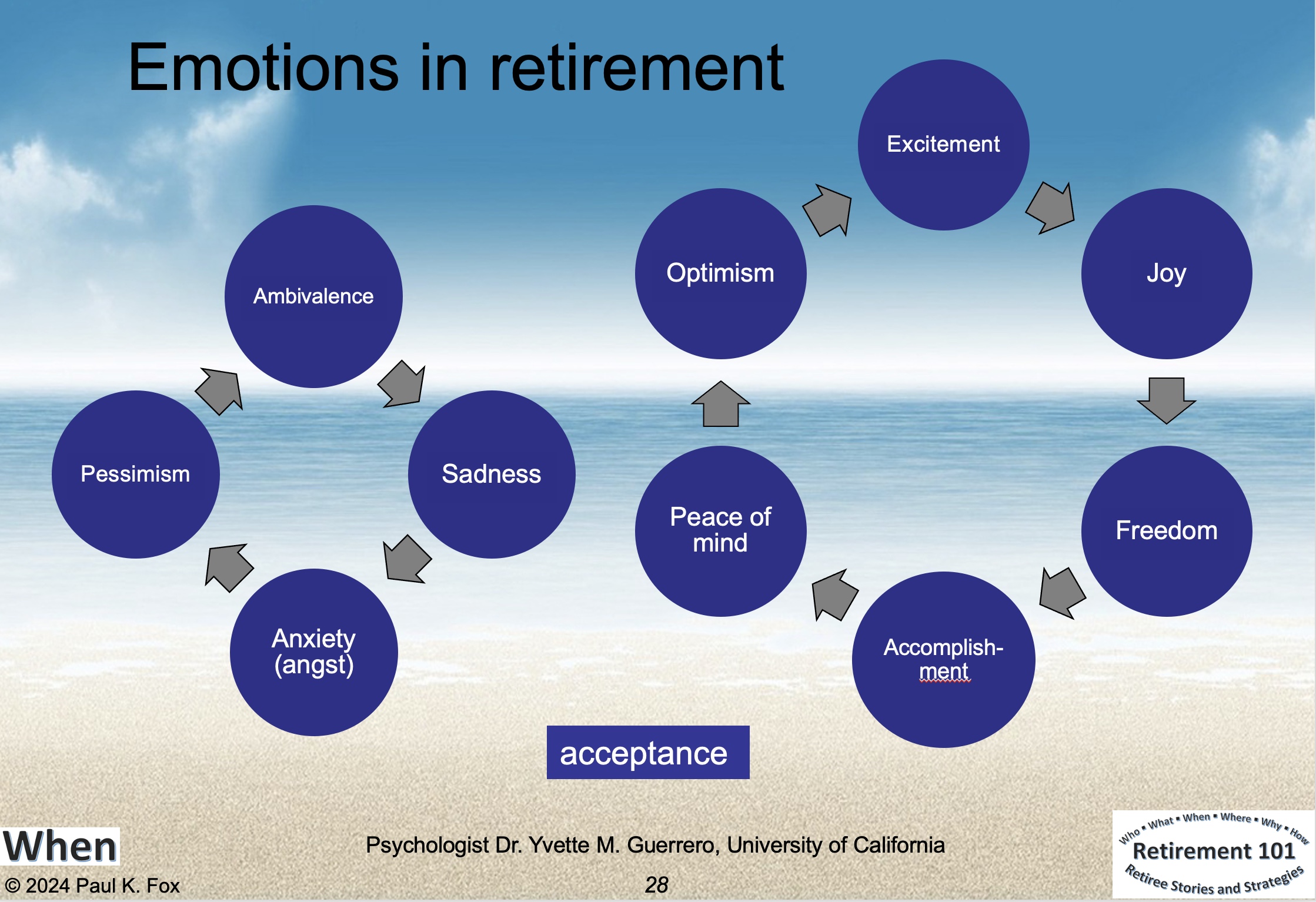
Let’s not sugarcoat it: retirement is a mixed bag. There’s the freedom (hooray!), but also the occasional pang of loss—of identity, routine, or the camaraderie we had in our teaching careers.

The good news? You’re not alone. Research by Pinquart and Schindler (2007) highlights how important it is to acknowledge these feelings rather than sweep them under the rug. Adjusting to retirement is a process, and it’s okay to feel a little off-balance at times.

Here are a few tried-and-true strategies to help you navigate the emotional terrain:

  • Stay Connected: Loneliness can creep in when you least expect it. Keep up with PMEA activities, or start a retirees’ coffee group. Who better to laugh with about the time your marching band got rained out?
  • Practice Mindfulness: Before you roll your eyes, hear me out! Even just five minutes of quiet reflection a day can reduce stress and boost mood (Chopra et al., 2020).
  • Find Meaning: Volunteering or mentoring can give you a sense of purpose that’s deeply fulfilling. You’ve got a wealth of wisdom—share it!

AI of the future?

The Bottom Line

Retirement isn’t a destination; it’s a journey. And like any good road trip, it comes with unexpected detours, scenic overlooks, and, yes, the occasional pothole. The trick is to embrace it all with curiosity and a sense of humor.

If you’re struggling, remember: reinventing yourself doesn’t happen overnight. Take it one day at a time, and don’t be afraid to reach out for support—whether it’s from family, friends, or your fellow PMEA retirees.

Let’s keep the conversation going. What’s your “second act”? Have you discovered a new hobby or way to cope with the emotional shifts of retirement? Shoot me an email or share your story at our next meeting. Together, we’ll continue to learn, grow, and make this chapter one to remember.

Until next time, keep smiling and stay curious!

References:

Wang, M., Henkens, K., & van Solinge, H. (2011). Retirement adjustment: A review of theoretical and empirical advancements. American Psychologist, 66(3), 204–213.

Pinquart, M., & Schindler, I. (2007). Changes of life satisfaction in the transition to retirement: A latent-class approach. Psychology and Aging, 22(3), 442–455.

Chopra, A., Anthonisen, S., & Reeves, A. (2020). The role of mindfulness in retirement satisfaction. Mindfulness in Aging Journal, 7(4), 312–320.

PKF

© 2024 Paul K. Fox

Unique Retiree Resources

It is always a privilege to receive email or comments from many of you regarding my past blog-posts at this site. I truly appreciate hearing from you – agree or disagree – and, whenever possible, I will “pass along” your recommendations and perspectives.

hospice-1793998_1920_unclelktThe “mission” is to help you with the transition to retirement and, when they are relevant, to communicate links to helpful sources of information. Many of these are not applicable to every retiring music teacher. However, if not issues for a family member, you might know of a friend, neighbor, colleague, or someone else who could use some direction in these eclectic topics:

  • Housing purchases/rentals, maintenance, and improvements
  • Personal security
  • Downsizing
  • Health care, eldercare, and physical fitness
  • Disabilities
  • Advance care planning
  • Medical Alert systems
  • Mattress purchase recommendations
  • Sleep guides and disorders
  • Grieving and coping with loss

We started this exposé with a previous blog, “Seniors Helping Seniors” at https://paulkfoxusc.wordpress.com/2017/05/28/seniors-helping-seniors/.

grandparents-1969824_1920_sylviebliss


Elmer George invited all of us to peruse his new website: elderville.org. It is called Resources for All Elders, and it shares lists of websites, blogs, and fact sheets on numerous senior-related themes – everything from “daily safety tips” to “volunteering.”

elderville.comSeveral great examples, his set of February 2018 articles (https://elderville.org/blog/) discuss “Five Ways Seniors Can Avoid Stress and Hassle During This Tax Season” and “Three Ways Seniors Can Get Healthy at Church.”

Specific to housing concerns, Elmer emailed me these additional avenues of help:


granny-1280445_1920_brenkee


Elizabeth Reynolds reached out to me with research on criteria for choosing the best medical alert system: https://www.reviews.com/medical-alert-systems/.  She said, “After hearing that there are 800,000 fall-related hospitalizations each year, our team created this resource in an effort to change that number.” Elizabeth added, “Our hope is that our guide may assist readers navigating their options to minimize this risk in the event of a fall.” At first, I thought her posting was a well-concealed advertisement for a particular company, until I explored her entire www.reviews.com website. Knowledge is power. Elizabeth has assembled a wide variety of resources in these areas worth further reading:

  • Reviews.comHome Services
  • Insurance
  • Financial Services
  • Home Products
  • Health and Fitness
  • Beauty
  • Pets


bed-1846251_1920_pexels


Speaking of reviews, something on which you would not probably seek advice is what mattress to purchase or finding other aids for improving your sleep. Well, if you know anyone who has had trouble getting to sleep or is seeking methods of being well-rested, let me be the first to recommend https://www.bestmattressreviews.com/, shared by Jenny Thompson. She claims her “team” has been researching the science behind sleep and reviewing sleep products to see if they really have the effects that the companies claim to have. I admit, her extensive online resource first sounded a lot like a very large commercial, but I have never known such detail and vast criteria could be involved in assessing the merits of different mattresses and sleep accessories:

  • Types: foam, innerspring, latex, and hybrid
  • Sleep position: side sleepers, back sleepers, stomach sleepers, couples
  • Other benchmarks: firm, soft, cooling, crib, organic, pain management, and user type (mattresses for pet owners, runners, people with disabilities, etc.)

It is definitely worth your time to examine the article section on specific sleeping guides:

  • bestmattressreviewsSleep disorders
  • New and expecting mothers
  • Advice for children, teenagers, and college students
  • Mental health and sleep
  • Sleep and anxiety
  • P.T.S.D. and other problems

We may all know someone who has suffered the effects of Alzheimer’s. This one recently hit home to me as I just discovered one of my long-time music teacher friends was enrolled in a memory unit.

dementia-3051832_1920_geralt

According to this website, “Alzheimer’s disease affects as many as 5 million Americans. Scientists still don’t know how to prevent, slow, or cure the disease. Meanwhile, the death rate has increased 55% over the past decade and a half, and with the silver tsunami on the horizon, the number of patients is expected to explode. Sleep problems and Alzheimer’s are interconnected. People living with Alzheimer’s experience difficulty sleeping, while people who have sleep issues earlier in life are at greater risk for developing the disease.” We should all be aware of this link for more information: https://www.bestmattressreviews.com/alzheimers-and-sleep/.


spiritfinderFinally, out of the blue, Jennifer Scott contacted me with “healthy ways to cope with a loss” with these resources to help grieving families:

Reaching out to those who may be suffering with anxiety and depression, her helpful hints will go far to alleviate stress. I found parts of her website, http://spiritfinder.org/, are also very illuminating. Thank you, Jennifer!

beach-2090091_1920_qimono


Bookmark the URL of this blog-post for future use. You never know when you might need some guidance on these miscellaneous subjects. Revisit past writings at https://paulkfoxusc.wordpress.com/for-retirees/.  Also, please stay “connected,” communicate your “views and news” in blog comments (click at the top of the page), submit your responses to the NAfME discussion platform Amplify (we have a special “retired member” community forum, or just send an email to paulkfox.usc@gmail.com.  As Tom Bodett said in commercials for a well-known motel chain: “We’ll leave the light on for you.”  

PKF

© 2018 Paul K. Fox

Photo credits (in order) from Pixabay.com: “countryside” by sasint, “hospice” by unclelkt, “grandparents” by sylviebliss, “granny” by brenkee, “bed” by pexels, “dementia” by geralt, and “beach” by qimono.


Ethics Follow-up


Part IV: More Perspectives and Resolving a Few “Loose Ends”

Prior to this article, I recommend reading the following:


ethics-cropped-2110605_1920-edman_eu

Just when you thought it was safe to read another of my blog-posts… you bump into another one on ethics and music education!

When my colleague and friend James Kimmel, PMEA District 7 Professional Development Chair, approached me to consider doing an “ethics workshop” for his annual in-service conference (October 9, 2017 at Ephrata Middle School), two questions immediately popped into my mind: “Why is this necessary?” and “Who would want to attend a session on ethics?”

Of course, being retired and having a little more unassigned time on my hands, I took it as a challenge and began some preliminary research.

The first thing I discovered is that almost no one in the public-school music education sector has had formal ethics training (myself included), unless you count a couple thirty-minute segments at a teacher induction or staff in-service program on sensitivity training, nondiscrimination and diversity awareness, anti-bullying or workplace sexual harassment policies, or a review of FERPA (family educational rights and privacy act) and HIPAA (health insurance portability and accountability act) as “ethics!”

Okay all you Pennsylvania music teachers: Before this blog series, did any of you ever see a copy of the Pennsylvania Code of Professional Practices and Conduct for Educators? Prior to working on this project, neither did I, nor did a single band director to whom I spoke at two large fall marching band festivals and several football games! Do you know that earning a teaching certificate from your state and becoming eligible to be hired as an educator means you automatically agree to be legally bound by the prevailing government’s “Code?” The ethical or discipline code of your state will define the proper interactions between the individual teacher, students, schools, and other professionals, and make explicit the values of the education profession as well as regional standards and expectations. Wouldn’t you agree that NOW would be a good time to learn the details of these inherent responsibilities?


What is a Fiduciary?

club-2492011_1920-qimonoEducators are among the singular professions which have a “fiduciary” responsibility. The term “fiduciary” can be defined as “a person or organization that owes to another the duties of good faith and trust, the highest legal duty of one party to another, and being bound ethically to act in the other’s best interests.” Joining doctors, lawyers, clergy, and mental health therapists, educators ascribe to the highest standards of training, moral decision-making (“code of ethics”), behavior (“code of conduct”), and self-regulation and assessment of the “best practices” regarding the mastery of skills and subject areas necessary to their field. However, unlike these other professionals, teachers do not receive regular and systematic pre- and in-service training on ethics, and our “clients” are a “captive audience.”  Regardless, the duty of all teachers is to act as a fiduciary in their students’ best interest and to create and maintain a safe environment for them at all times.


Ethics Violations in the News

You must have seen the news stories! In a word, the trending statistics of state and USA teacher ethics violations and misconducts are abominable! For example, according to the Pennsylvania Department of Education (PDE) where I taught and currently live, in the year 2015, there was a 200 percent increase in PA educator misconduct investigations (768 reports) compared to the number of complaints filed in 2011 (256). Within PDE disciplinary case resolutions in 2015, 41% resulted in job loss and a permanent revocation or surrender of the teaching certificate.

If your curiosity is a little on the morbid side, you can look up on the PDE website and find the names of more than 1740 educators (“offenders” and their “offenses”) who have violated their ethics and received discipline and/or criminal prosecutions or civil proceedings from March 2004 to June 2017.

Well, we don’t have to just pick on Pennsylvania “bad-boys” (and girls). According to https://www.washingtonpost.com/posteverything/wp/2015/01/20/more-teachers-are-having-sex-with-their-students-heres-how-schools-can-stop-them/?utm_term=.6ee23703b040, the following statistics give teachers everywhere a black eye from shore to shore!

  • Texas had a 27% increase over 2015-17 of alleged inappropriate teacher-student relationships
  • Kentucky schools reported more than 45 sexual relationships between teachers and students in 2011, up from 25 just a year earlier.
  • Alabama investigated 31 cases during the year ending July 2013, nearly triple the number it had investigated just four years earlier.

cube-cropped-2110612_1920-3dman_eu

Eric Simpson shared more bad news in the Journal of Music Teacher Education. His study, “An examination of the relationship of teacher certification area to sexual misconduct: Florida as a case study,” analyzed 383 samples of FL teacher discipline cases in 2007-2010 and their area(s) of certification, with these results:

  • Teachers with multiple-certifications = 35.51%
  • Music teachers ~5%
  • Most frequent offense = sexual misconduct 25.77%

But, 60% of the offending music teachers in the sample were disciplined for sexual misconduct!

Can the data get any worse? In 2004, the U.S. Department of Education released the results of the Shakeshaft national study by the American Association of University Women, with 9.6 percent of students reporting that they had suffered some form of sexual abuse during their school careers. According to http://www.slate.com/articles/news_and_politics/explainer/2012/02/is_sexual_abuse_in_schools_very_common_.html “the list of such conduct included lewd comments, exposure to pornography, peeping in the locker room, and sexual touching or grabbing. Around one in 10 students said they had been the victim of one or more such things from a teacher or other school employee, and two-thirds of those reported the incident involved physical contact.”

If these numbers are accurate and truly representative of the student population nationwide, 4.5 million students currently in grades K-12 have suffered some form of sexual abuse by an educator or school staff member.


Mandatory Reporting

Another area I did not dive into during the last three articles is our legal mandate to report colleagues who violate “The Code,” especially for sexual misconduct. My own state’s regulations (similar to most) are as follows:

“All educators who know of any action, inaction or conduct which may constitute sexual abuse or exploitation or sexual misconduct are now required to file a mandatory report with the Department and shall report such misconduct to his or her chief school administrator and immediate supervisor.”

― Pennsylvania Department of Education: http://www.pspc.education.pa.gov/Educator-Discipline-System-and-Reporting/Mandatory-Reporting/Pages/default.aspx


If you are an administrator, the statute is more wide-ranging:

“Specifically, whenever you believe that an educator is involved in misconduct that implicates his or her fitness to serve children in the schools of Pennsylvania, you should report the misconduct to the Department…”

“Reporting to PDE does not relieve [the administrator] of any other duty to report to either law enforcement and/or child protective services.”

― Pennsylvania Department of Education: http://www.pspc.education.pa.gov/Educator-Discipline-System-and-Reporting/Mandatory-Reporting/Pages/default.aspx

Another moral obligation is to simply look out for our student’s welfare and keep our eyes open for any unusual behavior, conflicts, or inconsistencies.

questions-2212771_1920-geralt_euAlways looking for the signs of…

  • Physical abuse
  • Self-abuse or thoughts of suicide
  • Sexual abuse
  • Signs of neglect
  • Patterns of abuse

Teachers are required to report any suspicions of child abuse, neglect, drug or alcohol use, and mental health problems.

Most school districts have an internal mechanism of reporting to school counselors or administrators any observations (or suspicions) of these issues… everything from falling asleep in class, being “accident-prone” (lots of unexplained injuries), confirming a high absentee rate, exhibiting mood swings (up and down), and coming to school with blurry or blood-shot eyes, etc. No accusations! You just handover your comments to the authorities, and report on what you see, not necessarily what your interpretations are for the causes of the problems.

Music teachers often work with students in close proximity before or after-school hours, and sometimes on weekends. As a marching band assistant, musical producer, festival chaperone, or trip sponsor, I always had the personal or cell phone number of my building principal in case I needed to reach out for help.


Confidentiality

These are the regulations on protecting student privacy rights, and violations of which (even unintentionally) are “breaking the law.” (Sources: www.pc3connect.org/otherdocs/confidentiality%20and%20the%20law.pdf and http://searchhealthit.techtarget.com/definition/HIPAA.)

  • Family Educational Rights and Privacy Act (FERPA) of 1974 sets parameters on accessibility and disclosure of students records.
  • Grassley Amendment (1994) details privacy of student participation in surveys, analysis, and evaluation.
  • confidential-cropped-1726367_1920-HypnoArtHealth Insurance Portability and Accountability Act (HIPAA) of 1996 provides data privacy and security provisions for safeguarding medical information.
  • Drug and alcohol treatment records of students kept by any institution receiving federal assistance are protected under Drug Abuse Office and Treatment Act (1976).
  • Records of students in special education are affected by the above laws plus Individuals with Disabilities Education Act (IDEA, 1997).

Here are few additional ethical “conundrums” on which to reflect:

  • Discussing student information in open or common areas
    • How many times have you walked through a busy hallway discussing news or concerns about a student with another colleague or family member?
    • Avoid inadvertently disclosing any personal information about students and staff members “in public.”
    • Also, one should resist speaking to students in these areas as it could become violation of student confidentiality if overheard.
  • Sharing information with other colleagues who are not directly related to the student’s situation.
    • You might be tempted to reveal interesting cases or anecdotes to colleagues… DON’T!
    • FERPA regulations state that school officials must have a “legitimate educational interest” when sharing information.
    • Just because someone is employed in the district with you does not mean they have lawful access to student info.
    • There is a great risk of others passing on this information… like gossip!
    • Rules of thumb: Ask yourself, “Why am I sharing this information?” and “How will it benefit the student?”
  • However, you should be aware of exceptions to student privacy concerns.
    • Reporting of physical abuse, sexual assault, sexual harassment, or sexual violence.
    • Suspicion of serious mental health issues that may result in danger to the student (such as suicide)
    • On the occasion when a staff member working with a student is unsure how to proceed (e.g. seeking advice on disability)


woman-441415_1920-geralt

The “Grandma Litmus Test”

We have talked about many principles in this series on “Ethics for Music Educators.” Here is something about the “process,” an “ethical decision-making model” based on…

  • “What would grandma think about my action, behavior, or decision” and
  • “How would I feel if my actions are tomorrow’s breaking news?”

Answer the following questions about the contemplated activity or decision:

  1. Is it legal?
  2. Is it consistent with the profession’s values?
  3. Is it consistent with the teacher’s code of conduct?
  4. Is it consistent with your district’s policies?
  5. Would you be comfortable if this decision was published online or in the newspaper (or made known to your “grandma”)?
  6. Does it feel right? (Is it the right thing to do?)

If you answered “NO” to any one of the questions (1, 3, and 5), do not engage in the contemplated activity and seek additional guidance.

If you answered “YES” to all of the questions (2, 4, and 6), then you may proceed with the contemplated activity. However, if you have any lingering doubts, do not hesitate to seek additional guidance.

http://www.royceassociates.com/the-grandma-litmus-test-for-ethical-behaviour/


Final Thoughts

“It’s easier to ask forgiveness than it is to get permission.”

– Rear Admiral Mary Brace Hopper, an early computer programmer

board-1848717_1920-geraltProponents of this belief will tell you to go ahead and stick your neck out, feel free to do something “for the good of the order,” and later “beg for forgiveness” if/when it goes south and your administrators say they do not approve.

This may or may not work, and I cannot label this orientation as “ethical!”

Music teachers are usually the “lone rider” in their building when it comes to doing their job. Music directors, especially those who are involved in extra-curricular activities, are deluged with making many decisions every day… sometimes even on the hour. Few people (models or mentors) will be there to help guide you in your content area.

My advice: Less experienced teachers, run everything through your fellow colleagues (informally) and principal (formally). Don’t fall back on the lame “oops” and “beg for forgiveness.” I may have felt differently when I had twice as many years of experience than the building administrators who were assigned to “supervise” me… but, even then, “venturing out without a paddle” usually did not serve the best interests of the students… There’s no reason to place “the teacher’s convenience” over the safety/welfare of the students, without first obtaining the legal and political “backup” of your bosses. “Better safe than sorry!” (I am running out of cliches!)

“Perception is reality.”

– Lee Atwater

Perceptions/appearances vs. motivation and reality: It means that your behavior and its results matter infinitely more than your intentions.

It is the responsibility of the teacher to control his or her “public brand” – how he or she wants to be perceived by students, parents, colleagues, and the public. One’s public brand can and does impact perceptions, which in turn can impinge upon effectiveness.

males-2110573_1920-3dman_euMy advice: “Forget your rights” and be more aware of your image and how your actions will look to the public. Reputations are hard to restore. Being an effective teacher is all about trust and integrity, and (sorry, one more cliche) “your actions speak louder than words!”


Teaching is the most honorable and rewarding career on this planet. The rewards far outweigh the challenges and additional responsibilities. “Making a difference” in the lives of our music students has always inspired me, and the fact we have to uphold the highest standards in moral professionalism and behavior does not phase me in the least.


The purpose of these blog-posts on ethics, sort of a “refresher” course to reflect on our internal decision-making compass, was to reinforce Lawrence Kohlman’s sixth stage of moral development – principles of conscience – and the “best practices” of professional attitudes, values, and beliefs that guide the problem-solving we face in their daily work. Hopefully this content will promote thought-provoking discussion about doing what’s right when no one is looking… because, your mother would say, “You know better!”

Please feel free to comment… I would appreciate hearing from you!

business-1753098_1280-Maialisa

PKF

© 2017 Paul K. Fox


Photo credits (in order): from FreeImages.com: “Ethics” by Olivier Le Moal; from pixabay.com “Ethics” by 3dman_eu, “Club” by qimono_eu, “Cube” by 3dman_eu, “Questions” by geralt_eu, “Confidential” by HypoArt, “Woman” by geralt_eu, “Board” by geralt_eu, “Males” by 3dman_eu, “Business” by Maialisa.