Admins Helping Teachers

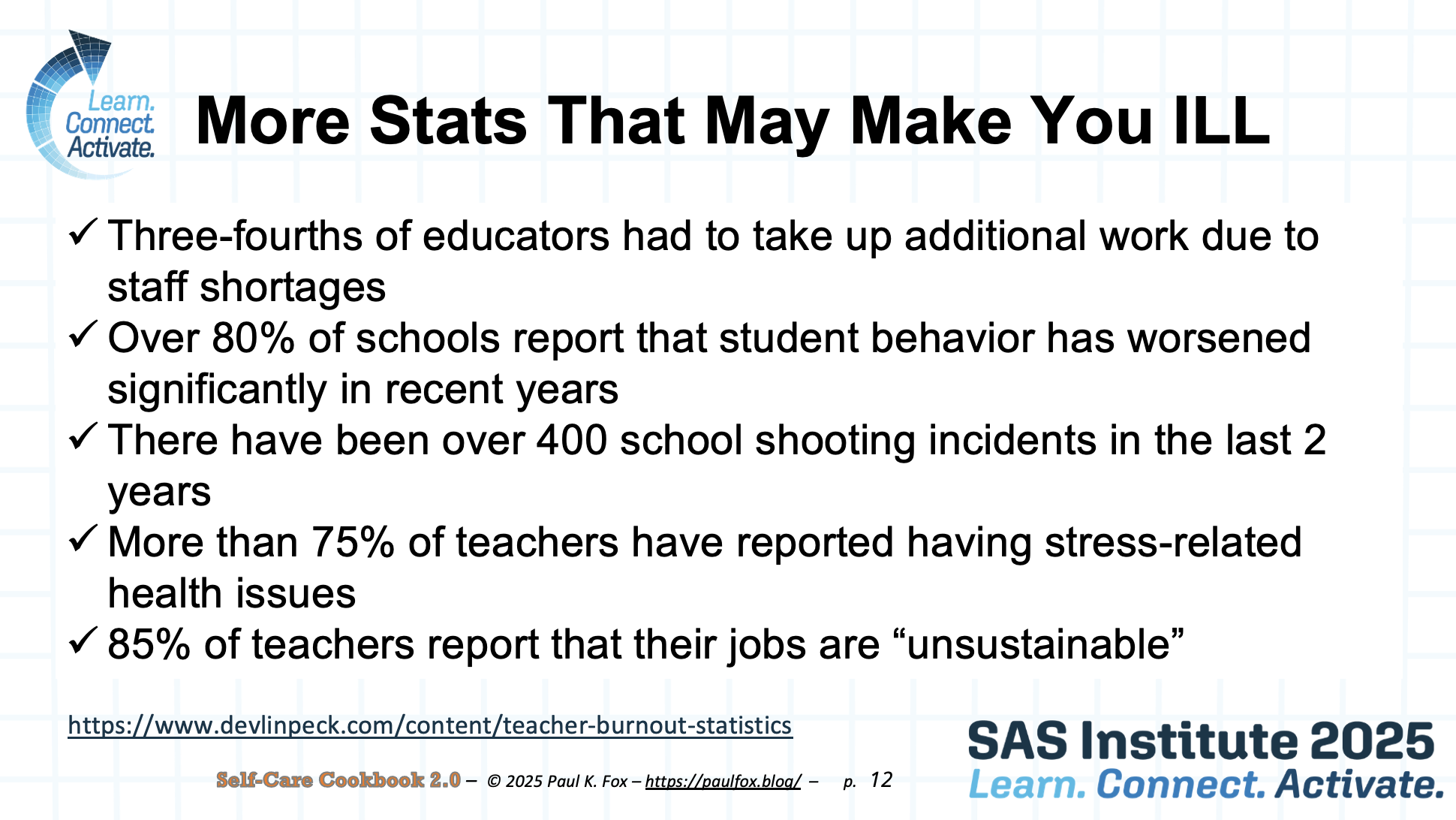
This is an introductory blog-post perusing my early research and resources on supporting educator health/wellness in advance to my presentation Self-Care Cookbook 2.0 – Recipes and Resources for School Leaders for the PA Department of Education’s SAS Institute 2025 state conference scheduled for December 8-10, 2025 in Hershey, PA. Here is the summary description for the workshop:
“Do you find the harried pace of our profession overwhelming and at times crushing when buried beneath decades of keeping our noses to the grindstone and putting everyone else’s needs above our own? Do some of your staff members say they are stressed out, constantly tired, plagued by one ailment after another, or wondering how they’re going to “keep up?” If health is interfering with your colleagues’ abilities to do their jobs and find success, balance, and meaning in their lives, then it is time for change. The purpose of this session is to empower school leaders and teachers with skills and attitudes needed to make informed decisions to promote self-improvements in their lifelong health and wellbeing, to LEARN tools for better time management and to help remediate fatigue, stress and burnout, CONNECT and collaborate with your staff to inspire unique strategies for better personal self-care, and ACTIVATE creative new approaches to foster an improved workplace environment.”

Actually, previous articles at this site have dived into this subject of educator stress, burnout, and the development of a health and wellness self-care plan to build resilience, work/life balance, and reignite our motivation and passion for teaching. For a complete overview, I recommend you revisit these:

Always start with “THE WHY”

(Inspired by keynote speaker/author Simon Sinek): Why is this discussion so important now?
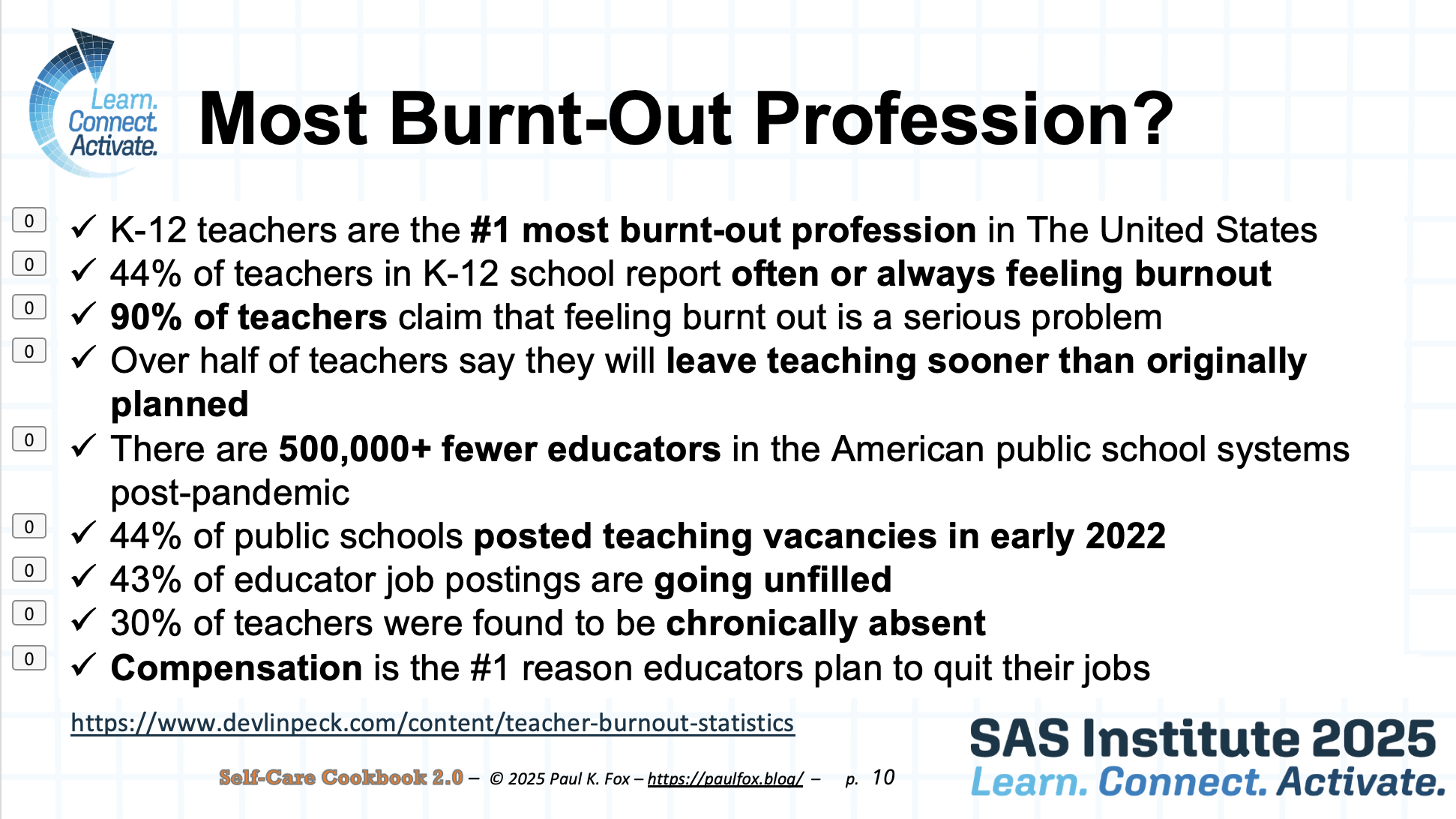
When I mentioned my research to my colleague (and former student) Dr. Timothy Wagner, Principal, Upper St. Clair High School (my former placement for full-time employment), he mentioned that this topic was timely and highly relevant, and suggested that perhaps there might be more statistics and resources “out there” on the stress of health-care workers and first-responders, which I found to be true. However, early looks have shown numerous parallels to the information in my 2023 Self-Care session.

My PDE SAS Institute session will become a “two-for-one” presentation, including the opportunity for school/system leaders, building administrators, and directors of school district professional development to also download my original “Self-Care Cookbook” (1.0) slides, recently updated for the DCMEA Annual State Conference (January 20, 2026). This self-help workshop is geared for educators to “on-their-own” explore strategies, implement use of individualized tools/remedies, and formulate new goals to improve health and wellness. Both sessions hope to cover these key questions:

  • Why is it essential to personal health to achieve balance in our lives, and how can we achieve it?
  • How does dedication to wellness lower the risk of illness, injury, and the quality of a person’s life?
  • What are the consequences of our choices in terms of time and stress management?
  • How do effective decision-making skills and goal setting influence healthier lifestyle choices?
  • What are suggestions, strategies, and samples for the development of a personal self-care plan?
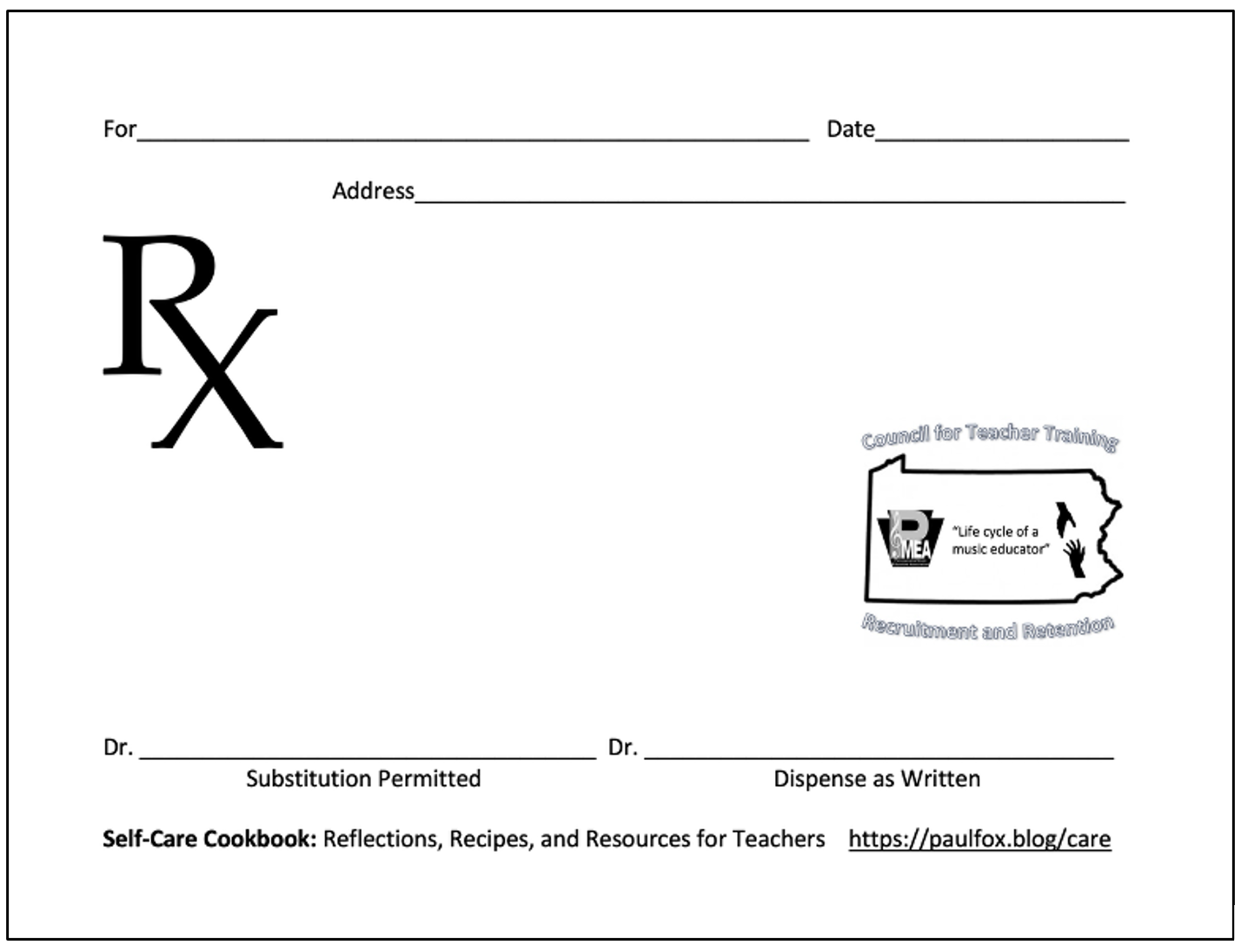
Using a facsimile of a prescription pad in Self-Care 1.0, I posed these personal reflections:

  1. How do I usually feel daily throughout the school year?
  2. What are the emotional and physical tolls of my job?
  3. What specific self-care activities do I need to incorporate to recharge and prevent burnout? 
  4. What boundaries do I need to set around my work to honor personal time?
  5. What support systems can I build and/or professional help should I seek to create a sustainable practice?
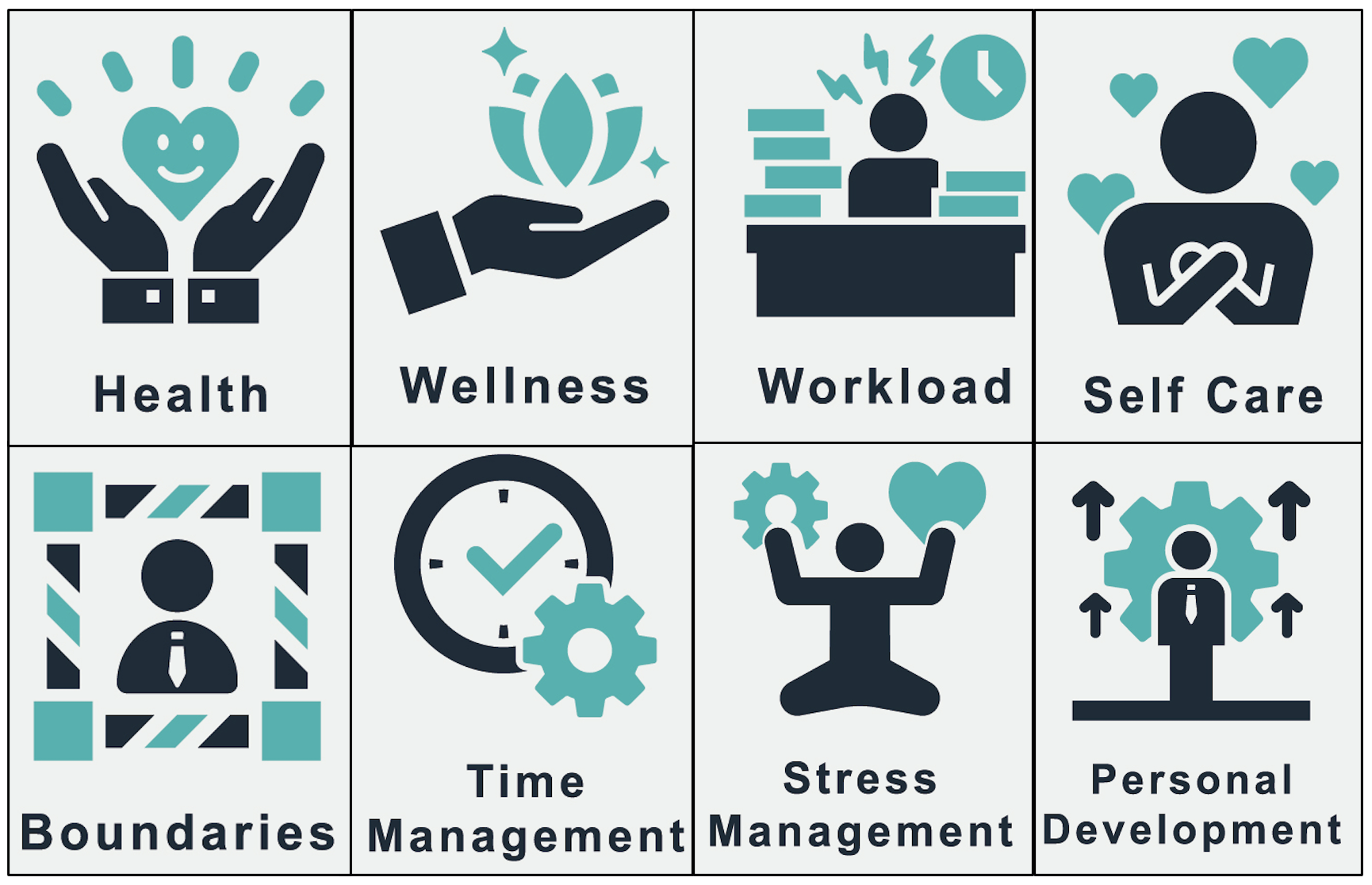
Good ideas…

How can school admins support their staff in dealing with the climbing incidences of health problems, teacher exhaustion, call-offs, evidence of burnout, and high turnover rate? Sorting through a compendium of online research, these recommendations for school leaders occur repeatedly:

  1. Probably should go without saying: Show high visibility (“be seen by all”), recognition, and know everybody’s name. This goes a long way in building a sense of belonging of the staff and students.
  2. Provide more time for breaks and planning. Engage teachers in problem solving teams to identify and implement substantive ways to give them more time. Examples: cutting back on testing and data analysis; holding fewer and shorter meetings; putting a hold on new academic initiatives while increasing mental health initiatives conducted by school-based mental health professionals; hiring individuals who can assist with administrative tasks; compensating teachers for extra work; protecting classroom time by minimizing interruptions; reducing teaching hours to allow for more prep time and follow-up time.
  3. Foster a supportive community through mentorship programs.
  4. Distill high-impact strategies into a handful of manageable priorities. Once the goals are set, give teachers specific time within the school day or week to focus solely on them.
  5. Communicate directly, clearly, and frequently. “Supportive administrators know that a teacher’s time is valuable and that administrative meetings compete with individualized education programs, data teams, professional learning committees, cross-curricular planning meetings, and much more. So if a meeting is only for sharing straightforward information, it can be an email instead. It’s not necessary to have a meeting simply because the schedule says that faculty meetings are in the cafeteria on Mondays.” – Edutopia: “4 Practical Ways Administrators Support Teachers”
  6. Treat teachers with respect like the professionals they are, increasing mutual trust by decreasing micromanagement or reducing unnecessary accountability documentation.
  7. Shadow multiple teachers to experience first-hand the reality of their typical day.
  8. Allow educators the option to attend meetings and professional development activities virtually.
  9. Involve teachers in the creation of targeted professional development activities that are the most meaningful for them.
  10. Ask teachers about what specific help they need to improve classroom management.
  11. Develop a plan (with the Board of Education?) to increase teacher compensation over time, taking into account that many administrative and clerical tasks that are now required of teachers might ultimately be delegated to less highly compensated individuals.
  12. Address staff performance issues on an individual basis rather than issuing global reprimands that don’t apply to most teachers.
  13. Implement policies that encourage work-life balance. For example, recognize measurable indications of quality teaching rather than behaviors that signal a “more is better” approach (always coming in early and staying late, volunteering for everything, talking about working all weekend to catch up, etc.).
  14. Support educators by acknowledging stress, providing professional development on self-care, and creating a culture where asking for help is normalized.
  15. Ask teachers what mental health or other supports they need to cope with their own distress. Research has demonstrated the effectiveness of introducing trauma-informed strategies, including an emphasis on compassion fatigue and secondary trauma, as well as mindfulness strategies that are part of institutionalized wellness routines.
  16. Provide “safe spaces” (SEL) where educators can express themselves without fear of being judged, and practice “Mindful Leadership” to connect with and listen to them. “Getting to know your teachers on a more personal level makes it easier to identify the best thing you can do to support them, even if teachers aren’t sure what they need. The goal should be making sure everyone made it to work okay and that they’re in good spirits and ready to tackle the day.” – 7 MINDSETS: “5 Ways Administrators Can Support SEL for Teachers”
  17. Counteract “toxic positivity” by acknowledging that teachers are hurting and need space to grieve the continued losses associated with the pandemic.

Bad ideas…

These strategies cited by Effective School Solutions will NOT help teachers in the long-term:

  1. While “wear your jeans to work” days and offering coffee and donuts occasionally are nice employee appreciation efforts, they do nothing to address the underlying issues.
  2. Offering one-shot seminars or newsletters with suggestions about individual self-care activities (breathing exercises, physical exercise, time for self, etc.) can inadvertently place further burdens on teachers, conveying the impression that they are responsible for both creating and addressing the stress that is structural in nature.
  3. Don’t conduct teacher surveys or focus groups about how to reduce teacher stress and then proceed to ignore their suggestions about what would make things better.
  4. Don’t assume that short bursts of extra time (e.g., ending a meeting early to give teachers more time) is useful. Small, unexpected pieces of free time do not help teachers catch up with work that requires concentration and focus.
  5. Don’t avoid difficult conversations to address the performance problems of individual teachers by making blanket statements/warnings to all teachers, most of whom are not engaging in the problem behavior.

“Be careful not to adopt a stance of “Toxic Positivity,” that is, a stance that accentuates the positive (“we are all in this together,” “we are strong,” “it could be worse,” “look on the bright side”) while invalidating the very real pain that everyone is experiencing. Denying or ignoring unpleasant emotions tends to make them worse, not better.
Effective School Solutions

Free Downloads

I am putting on the final touches to the SAS INSTITUTE 2025 Self-Care Cookbook 2.0 session, but have already assembled a huge bibliography of resources for your review (see below). For a “sneak preview” of my slide summary, click here. Future updates will be posted here: https://paulfox.blog/care/.

Better yet, register for the SAS Institute 2025 to see everything in person.

Sample Books

  • 180 Days of Self-Care for Busy Educators by Tina H. Boogren, Solution Tree Press (2020)
  • Awakened – Change Your Mindset to Transform Your Teaching by Angela Watson, Due Season Press & Educational Services (2023)
  • The Balanced Band Director – Productivity and Wellness Tips to Amplify Your Impact, Not Your Workload by Lesley Moffat, Morgan James Publishing (2025)
  • Demoralized – Why Teachers Leave the Profession They Love and How They Can Stay by Doris Santoro, Harvard Education Press (2018)
  • Exhausted – Why Teachers Are So Tired and What They Can Do About It by Paul Murphy, CreateSpace Independent Publishing Platform (2017)
  • Fewer Things, Better by Angela Watson (2019)
  • The Happy Teacher Habits by Michael Linsin, JME Publishing (2016)
  • Love the Job, Lose the Stress: Successful Social and Emotional Learning in the Modern Music Classroom by Lesley Moffat (2022)
  • Positive Mindset Habits for Teachers by Grace Stevens, Red Lotus 2018
  • Rekindle Your Professional Fire – Powerful Habits for Becoming a More Well-Balanced Teacher by Mike Anderson, ASCD (2024)
  • The Teacher’s Guide to Self-Care – Build Resilience, Avoid Burnout, and Bring a Happier and Healthier You to the Classroom by Sarah Forst, The Designer Teacher (2020)
  • The Teacher’s Guide to Self-Care – The Ultimate Cheat Sheet for Thriving Through the School Year by Melanie J. Pellowski, Skyhorse Publishing (2020)
  • Upbeat – Mindset, Mindfulness, and Leadership in Music Education and Beyond by Matthew Arau (GIA Publications (2022)
  • The Weekend Effect: The Life-Changing Benefits of Taking Time Off and Challenging the Cult of Overwork by Katrina Onstad, HarperOne (2024)

Sample Websites

PKF

© 2025 Paul K. Fox

Bigger Dreams, Bigger Home

How Retirees Can Upsize for Homesteading and Hosting

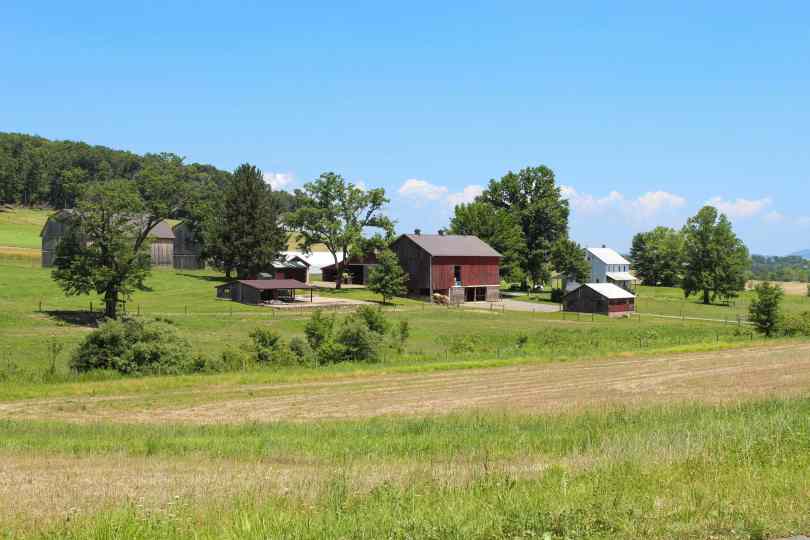
Featured image via Pexels

[Editor’s Note: My favorite and most prolific “guest blogger” Ed Carter has returned with a piece on upsizing NOT downsizing in retirement. Please enjoy (below) “Bigger Dreams, Bigger Home.” Thanks, Ed!

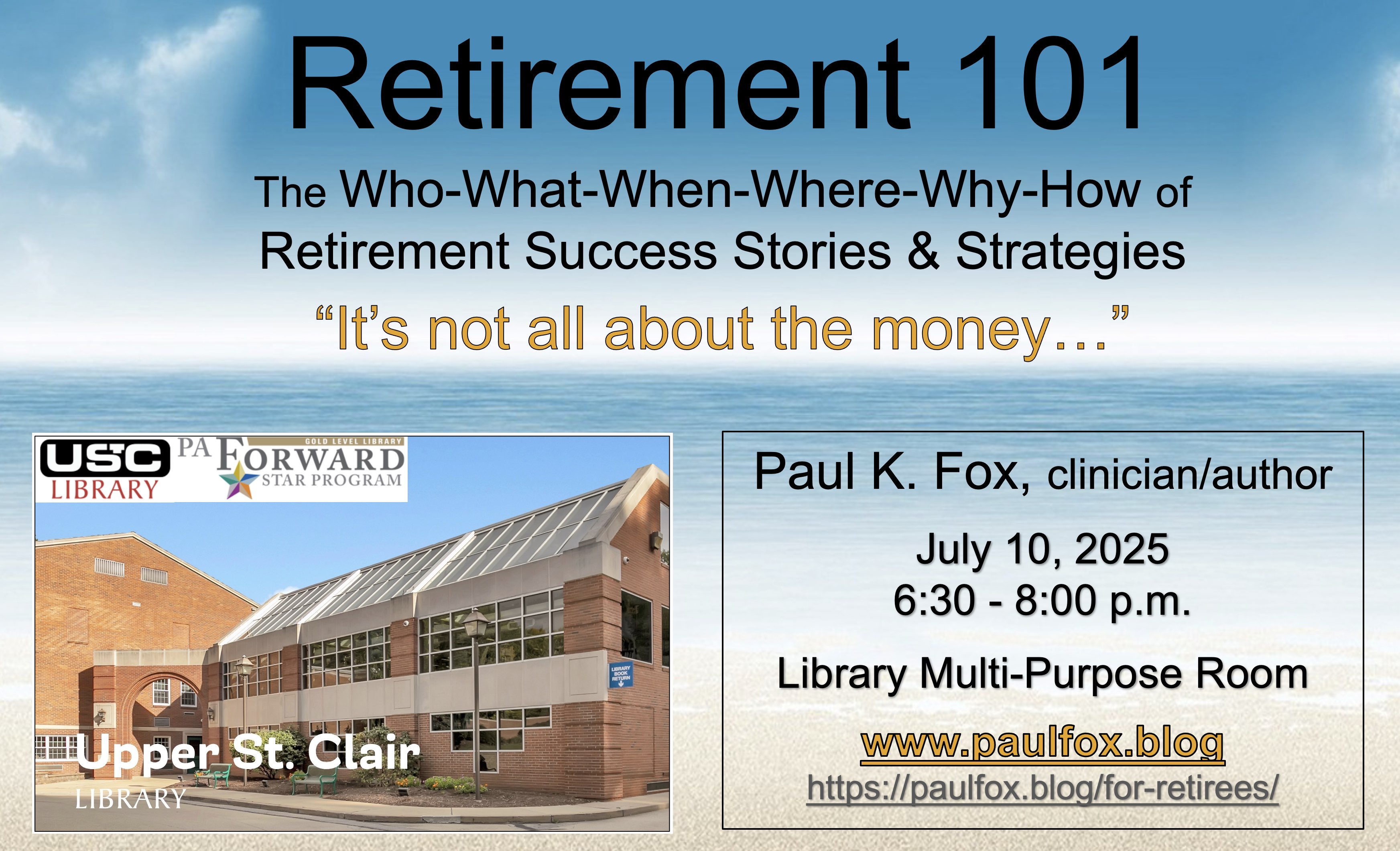
In addition, for attendees to my “Retirement 101 – It’s Not All About the Money” session at the Upper St. Clair Township Library on July 10, 2025 (and any other interested retired or soon-to-retire individuals), please click on the following links to printer-friendly copies of my slide handouts and the updated “Ultimate Retiree Resource Guide.”]


Article by Ed Carter

Retirement doesn’t always mean downsizing. For many retirees, it’s the perfect time to invest in a larger home—one with room to explore new hobbies, welcome visiting family, and enjoy the lifestyle they’ve spent years working toward. If you’re dreaming about homesteading or want to transform your home into a hub of activity and connection, buying a bigger property may be more practical than it sounds. With the right planning, you can find a home that fits your vision and your budget.

Know What You Really Want

Before you start searching, take the time to clarify what matters most to you in this “next chapter.” Are you dreaming of cultivating your own garden, raising chickens, or simply having more space to host grandkids and holiday gatherings? Think about square footage, land size, and features that support your lifestyle, like a home office, workshop, or playroom. Visualizing your daily routines in your new home can help you prioritize what’s essential versus what’s just nice to have.

Focus on Land and Layout

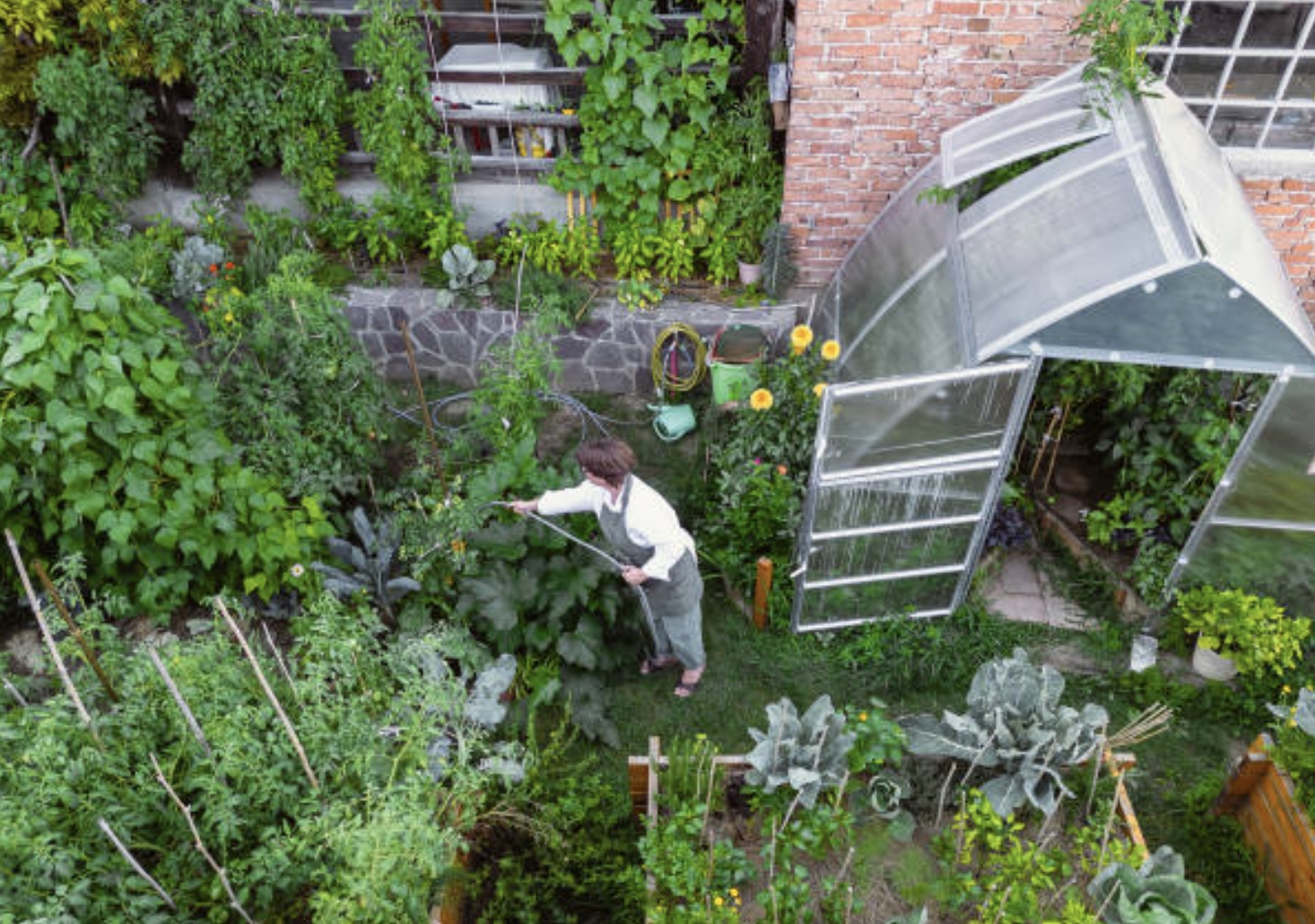
Homesteading takes space—and not just any kind of space. You’ll want to look for properties with usable land that’s suitable for gardening, small livestock, or even fruit trees. Check for sun exposure, drainage, fencing, and access to water. A good layout indoors is just as important; think open kitchens for canning or entertaining, extra rooms for hobbies or guests, and easy access from the house to outdoor areas. A few extra acres can go a long way when your goal is to live more sustainably and independently.

Transform Your Homesteading Hobby Into Income

Many retirees find that homesteading isn’t just fulfilling—it’s also a gateway to a small business. Whether you’re selling fresh eggs, handmade soaps, canned goods, or seasonal vegetables, turning your passion into profit can be deeply rewarding. Going back to school for a business degree can sharpen your skills in marketing, operations, and financial planning—key tools for running your homestead as a business. Online degrees make it easier to balance learning with daily responsibilities, and there are many inspiring online business degree success stories that prove it’s never too late to invest in yourself.

Set a Budget That Reflects Your Goals

Buying a bigger home doesn’t mean blowing through your retirement savings. Start with a clear picture of what you can comfortably spend, keeping in mind property taxes, insurance, maintenance, and any future upgrades. Talk to a financial advisor about how to structure your budget based on your income sources, and consider using proceeds from the sale of a current home if you’re upsizing. You may even find that relocating to a rural or semi-rural area gives you more for your money than staying in a high-cost urban zone.

Explore All the Financing Options

Just because you’re retired doesn’t mean you’re out of options when it comes to financing. Many retirees use a mix of cash, retirement funds, or home equity to buy a new property. Others explore mortgage options like a reverse mortgage (with careful consideration) or traditional loans with manageable terms. It’s essential to speak with a lender who understands your unique income structure post-retirement. The right financing plan ensures you get the home you want without financial stress down the line.

Use a Realtor Who Understands Your Vision

A real estate agent who knows the homesteading lifestyle can help you find properties that truly fit. They’ll understand the value of extra land, zoning laws for small-scale farming, and the features that can make your homestead thrive. Share your vision early in the process—whether it’s selling homegrown produce, raising bees, or hosting family reunions—so they can narrow your options to homes that support both functionality and comfort.

Turn Space Into Opportunity

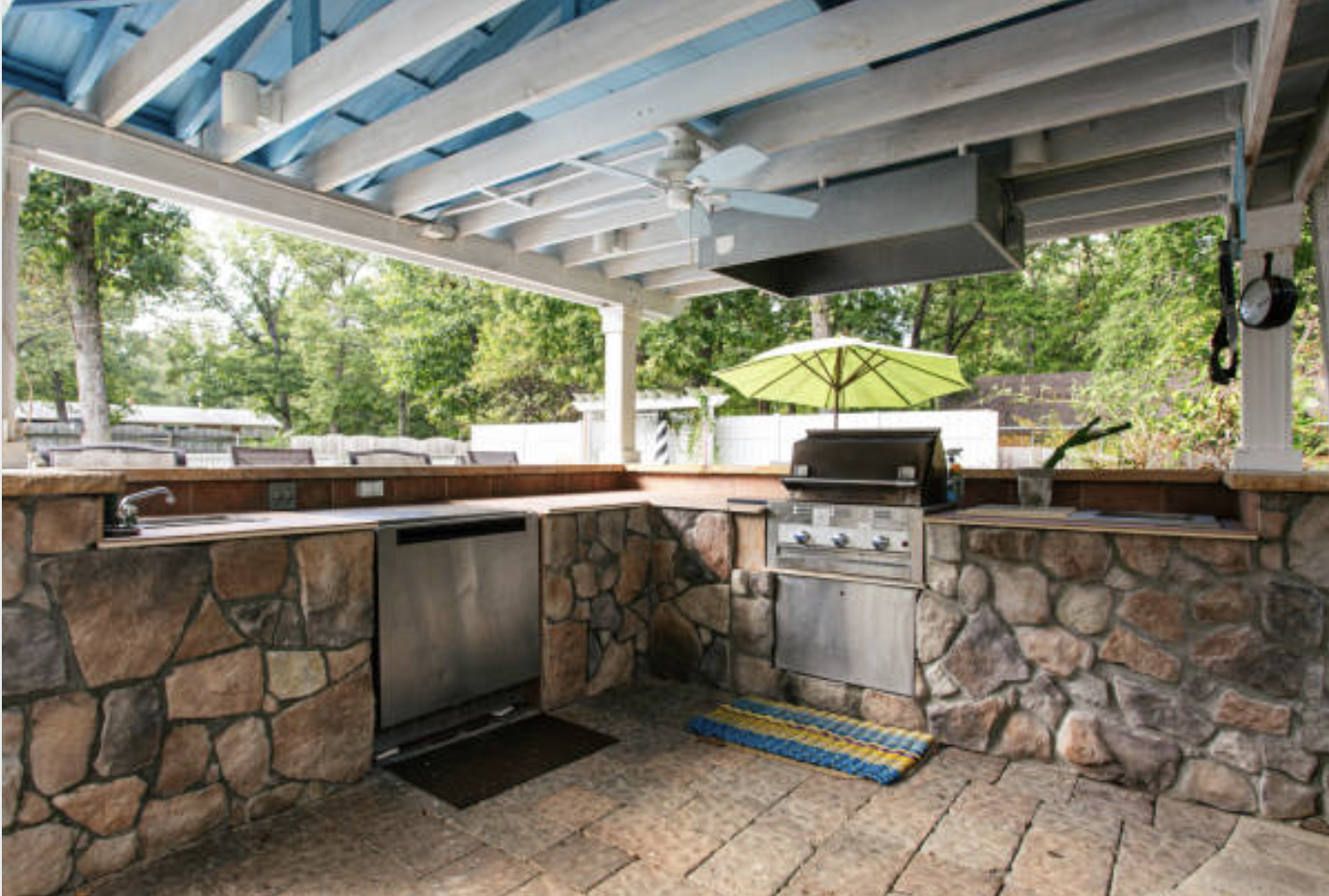
Once you find your home, think about all the ways to make the most of it. Spare bedrooms can become artist studios or guest rooms for visiting grandchildren. Garages can be converted into workshops or woodworking spaces. Basements can turn into cozy family rooms or even a small business headquarters. Outdoor space can serve multiple purposes: vegetable gardens, orchards, outdoor kitchens, or shaded play areas. With a little imagination, your home becomes a full-time lifestyle—one that supports both your hobbies and your relationships.

Buying a bigger home as a retiree isn’t about having more—it’s about doing more. It’s about designing a life that reflects your passions, supports your independence, and brings your family closer. Whether you want to dig into the soil, start a new business, or simply have space to live fully and comfortably, this move can be the start of something deeply fulfilling. With the right property, the right plan, and the right support, your next chapter can be your most exciting yet.

Peruse more insightful articles and resources here at paulfox.blog, where every post is a step towards a more fulfilling and informed life journey!

PKF

© 2025 Paul K. Fox and Ed Carter
5 Things You Need for a Comfortable Retirement

Editor’s Note: We are happy to post this retirement article by guest author Sierra Powell… concise and solid advice for all current and prospective retirees. Photo credit: https://www.pexels.com/photo/people-on-seashore-1377070/

Retirement is a new chapter– An opportunity to savor the results of years of diligence, to follow your interests, and to unwind, free from the demands of 9-to-5 employment. Reaching a comfortable retirement calls for careful decisions supporting your lifestyle and future requirements. Whether you desire to see the world, spend time with loved ones, or just enjoy a slower paced life, several essential components will enable you to have all you need for a safe, happy retirement.

Creating a Comprehensive Financial Plan

A good financial plan is the foundation of a comfortable retirement since it provides a clear road map for handling your money in the next few years. This approach covers forecasting your spending, figuring out revenue sources, and developing a plan for withdrawing money without quickly running out of savings. It goes beyond simple saving. First, project your monthly costs using the lifestyle you want. Add needs such as food, healthcare, and shelter; also include discretionary expenditures for entertainment, vacation, and hobbies. Knowing your planned costs helps you to decide if your revenue sources are adequate to meet them. You can also opt for a good local financial advisor. For example, if you live in Florida, seek a financial advisor in Tampa if you need guidance in selecting the best plan for yourself and your family.

Prioritizing Health and Wellness

Enjoying a nice retirement depends on keeping excellent health. It becomes difficult to enjoy your newly acquired independence without bodily well-being fully. Emphasize keeping active, following a healthy diet, and planning frequent doctor visits. Time spent in wellness not only improves your mood but also lowers your chance of chronic diseases that could affect your finances or quality of life. Think about adding pursuits that keep your body and mind active. Without taxing your joints too much, low-impact activities like yoga, swimming, or walking provide excellent advantages. Just as crucial is mental stimulation; consider picking up a pastime that tests your brain, acquiring a new skill, or club membership.

Building a Strong Social Network

A strong social life improves your retirement experience by offering company, encouragement, and chances to remain active. Retirement typically alters your daily schedule, particularly if most of your prior social life came from employment. By means of actions to establish and preserve a solid network of friends, family, and community ties, you may prevent emotions of isolation and loneliness, therefore influencing both mental and physical health. To meet new people and be active, join clubs, volunteer groups, or neighborhood organizations that fit your interests. To keep your social calendar full, get in touch with old pals, throw events, or schedule visits with loved ones.

Ensuring Housing Stability

Your degree of retirement comfort depends mostly on your choice of living environment. Your house should fit your way of life, be reasonably priced, and call for little upkeep. Downsizing to a smaller house, condo, or senior living complex provides the ideal balance for some between cost and convenience. Smaller spaces cut maintenance, decrease utilities and liberate resources for additional uses. Think about things like family, closeness to hospitals, and services supporting your everyday requirements. If you would like to keep your present house, think about implementing changes that would help keep aging in place. Simple adjustments that improve mobility and safety include adding grab bars in the restroom or substituting ramps for stairs.

Creating a Flexible Budget

Unexpected expenses might develop in retirement even with the finest financial preparation. Creating a flexible budget lets you negotiate these shocks without sacrificing your general financial situation. Set aside some of your savings, especially for unexpected vacation demands, house repairs, or medical bills. An emergency fund serves as a financial cushion so you may handle pressing needs without compromising your monthly income flow. Your budget should also contain a provision for discretionary expenditure for unplanned events such as family visits, holidays, or new interests. This adaptability lets you enjoy the advantages of retirement without feeling limited by your means.

Conclusion

Making decisions according to your beliefs and future vision can help you to create a comfortable retirement. Every component of your retirement plan supports your way of life and well-being, thereby enabling you to savor this new chapter with peace of mind. Accept the chance to live life on your terms, knowing that your careful planning has set a firm foundation for your next years.

In Case You’re Worried… the Status of “The Fox”

If you are a frequent visitor to this blog site, you may have noticed that, for some reason, I haven’t posted anything for almost two whole months. Cat got my tongue? Nothing to add? Busy with other things?

We have been doing what comes naturally! The most important “stuff!” Although hectic at times and in a frenzied pace, all is well! My wife and I are healthy, happy, actively engaged in the projects that matter to us, and mastering those all-essential ingredients in a healthy lifestyle (retired or not): “finding purpose, structure, and community” (reference to the book How to Retire Happy, Wild, and Free by Ernie Zelinski).

Well, I can tell you I am still vested in volunteering my expertise, experiences, and services on a number of fronts. Normally extremely verbal, I just have not had a couple hours to spare to write anything down or contribute to the voluminous material to what has become a massive archive of articles (editorials and how-to’s), links, and other resources.

What have I been doing lately?

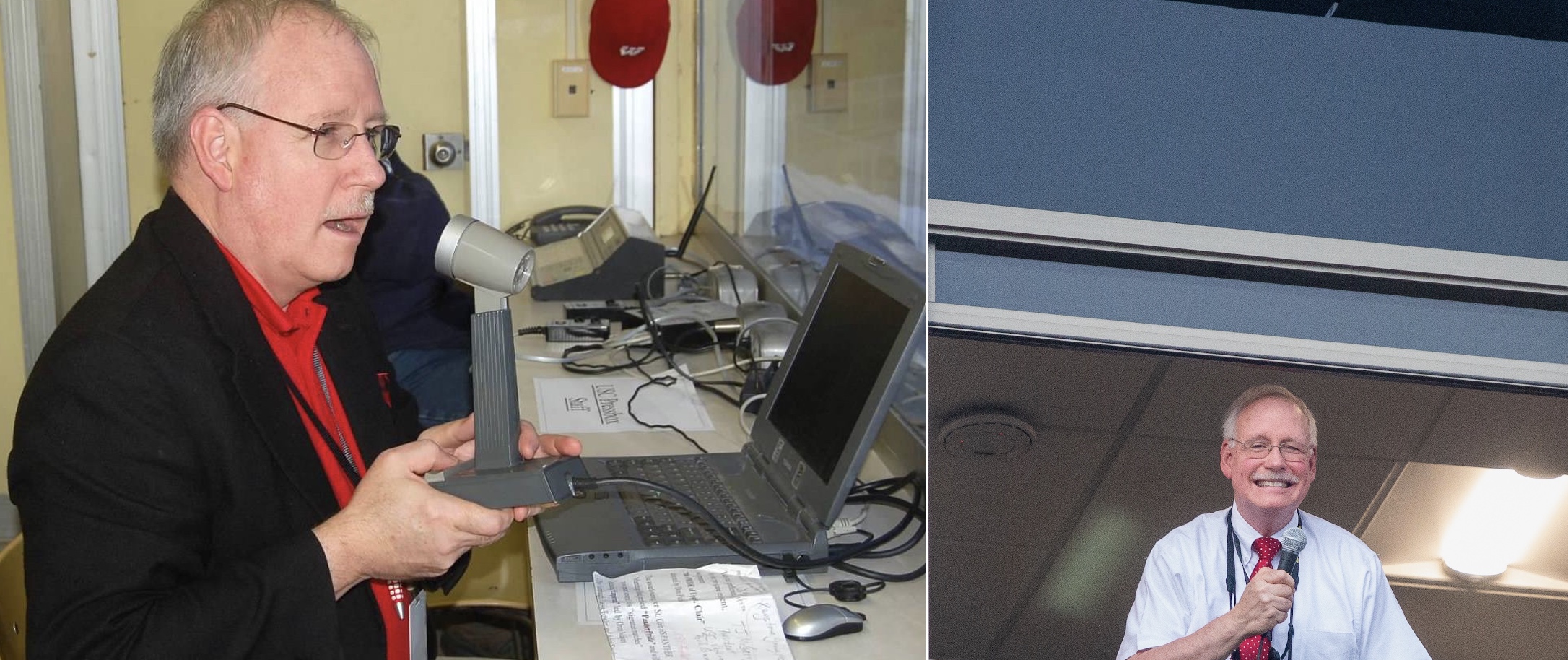
First off, we are just finishing up our marching band season. As the official admin and announcer for the “Pride of Upper St. Clair” Marching Band (I spend my time inside, not directing practices on the fields), I attend all rehearsals as attendance bookkeeper, forms manager, librarian, quasi-nurse, and when necessary, act as a sounding board or shoulder to lean on for “the band director.” This was our first year going “competitive,” participating in regional festivals of Pennsylvania Interscholastic Marching Band Association (PIMBA), and by all accounts, “we” achieved excellence. The band is unrecognizable from past years – the students are much more committed and focused – but we still have a ways to go!

Of course, all during this, our football team made it to the playoffs. On Friday, we will support our team in the “first round” WPIAL Class 5A match at Gateway HS. The extended season brings with it challenges of its own (keeping the band members on-task and embracing new goals), but the rewards outweigh the extra rehearsals. And, all through this, we are making plans (and building excitement) for the launch of the first-ever USCHS winter guard and drumline programs!

Funny thing! I’m now a part of the band’s “brand.” For 38+ years, I have been “the voice” announcing the pregame and halftime shows for Upper St. Clair High School. I’ve also emceed a couple dozen of the USCHS Marching Band Festivals, plus senior recognitions, USC Halls-of-Fame exhibitions in the stadium, and outside music invitationals. It is truly a joy to “cheerlead” our musicians… and my wife would tell you, I have a very loud broadcaster’s voice! And now, ladies and gentlemen…

In two weeks, I will conduct the fall concert of our community ensemble South Hills Junior Orchestra, now in its 40th year. Although COVID did its best to wipe out our enrollments and recruitment efforts, our online academy kept things going, and we now support a small but dedicated chamber group. (Surprisingly, I have a good balance of instrumentation including sometimes rarely-found musicians on French Horn, bassoon, bass clarinet, electric bass, and piano, but one of my trumpet players is having to read clarinet parts.) Our theme is in support of Ukraine. We just “stumbled upon” several appropriate folk songs from the region, including the tribal tunes of Russian Fantasy (Robert Bennett Brown), the ever-popular Ukrainian Bell Carol, Dance of the Slave Maidens from “Prince Igor” (by Borodin, part of the “Russian Five”), and Slovakian Folk Songs (bordering Ukraine).

After this concert, we will prepare a holiday program for a nearby assisted-living facility with most of the SHJO members each taking a turn to conduct the sing-along of carols and seasonal favorites.

If interested, we warehoused a lot of our old SHJO Online Academy media and lessons here. (Use the password symphony.)

Staying involved in my professional associations, I am happy to report I was accepted to present at two conferences, the National Association for Music Education (NAfME) Eastern Division event in Rochester, NY on April 13-16, 2023 and the Pennsylvania Music Educators Association (PMEA) Annual In-Service at the Kalahari Resort/Poconos on April 20-22, 2023. I have been asked to do my interview clinic session at both conferences and a workshop for PMEA on music educator burnout remediation, self-care, health and wellness.

In the meanwhile, not to let any grass grow under my feet (or more leaves to fall on my head), locally I have been giving teacher ethics presentations at Slippery Rock University of Pennsylvania (a wonderful class of 44 freshman music education majors – the future looks good!) and Washington & Jefferson College undergraduate and graduate education majors.

I open my session offering to give a hundred dollar bill to the first student who can correctly name the exact title of their educator’s code of conduct (PA Code of Professional Practice and Conduct – CPPC) and identify the agency which enforces it (PA Professional Standards and Practices Commission – PSPC). No one ever guesses it. (I could also likely get away with this challenge at any school faculty meeting in the Commonwealth! Educators seldom receive formal ethics training in our state – that’s why I am sharing these recent updates from the PA Department of Education!) Now that I have publicized “the big question,” I guess I’d better put away that C-note for good!

A sampling of my slides and handouts are available for perusal from the top section of the “Training/Jobs” menu bar link here, or you can find past blogs on the subject of educator decision-making presented in reverse chronological order here.

In a similar vein (and with equal passion), I have teamed-up with retired social studies teacher and attorney-at-law Thomas Bailey to sponsor continuing education classes for both educators and administrators. I am inspired by Tom’s knowledge of the PA regulation framework and school law. We just finished an excellent 25-hour approved non-PDE Act 45 course for school system leaders. You should visit his informative website here, and especially check out his court case blog here. If you are a school superintendent or administrator, our next series of online classes will begin on November 29; register for the course here.

Additional future projects include assisting on the PMEA Strategic Planning committee for “member engagement,” planning for the PMEA CRESCENDO virtual student conference scheduled for January 31, 2023 (more info here), and serving on the PMEA Council for Teacher Training, Recruitment, and Retention (I am state chair) – “the life cycle of an educator.” A wealth of free information for music educators (which I try to revise frequently) is available on sections of the PMEA website: the Council TTRR focus area (click here) and Retired Members (click here).

Outside the scope of teaching profession, I have been active as Communications Director, Fine and Performing Arts Chair, and Trustee of the Community Foundation of Upper St. Clair (CFUSC). I publicize a weekly eUPDATE (samples on the website here) to announce our township events for donors and supporters, serve as “the duck maestro” – the mascot for the annual duck races on USC Community Day, and look forward to organizing “a really big party” in celebration of the CFUSC’s 30th anniversary on April 21, 2023 at the St. Clair Country Club… although I will be in the Poconos on the same date doing a PMEA workshop! The Fox calendar is bursting with a few overlapping dates!

Besides all of the above, I am still volunteering at the hospital several days a week, pushing wheelchairs to/from procedure rooms at St. Clair Health. One thing you realize helping out in your hometown (the place you taught all those years)… you will run into many of your former students now grown up with kids of their own. It is a real joy to see them again (albeit due to the need for a colonoscopy or surgical procedure), and catch up with all those memories, their life’s successes, and future dreams.

The only personal goal that remains unfinished is consideration on how I can better distribute (dare I say “promote”) the numerous blogs that remain timely and relevant at this website. It’s just a little too overwhelming (and dense) for some passersby. A few of the links in the earlier postings may have expired and need to be updated. However, a lot of my insight, hard earned perspective (with sweat and tears), and past experiences have been poured into these writings, and I could only hope many of them could become useful tools for college music education majors, the rookie educator, those feeling challenged by today’s post-COVID times, or anyone recently transferring into the profession. Here’s another list of menus… go ahead, sight-see and enjoy the journey!

As you can see, I am not really retired… perhaps a better term would be “refired” or “redirected” or “reinvented.” If you are already “living the dream” in your post-full-time employment years or anticipate this happening in the near future, that’s how it’s done. That’s what I wish for you, too! Do you want to live-it-up to Moses’ age – supposedly 120 years old? Then, you better plan to be physically and mentally active and engaged! After all, a mind is a terrible thing to waste!

PKF

© 2022 Paul K. Fox