
Social Media – Revisited

Before you begin reading this article, please take a moment and peruse these past blog posts:

Although several of the cited research links may have expired (for example, PA Department of Education modified most of their website’s URLs), these provided the foundations of background information and references for the presentation I prepared for the DCMEA Virtual Conference in 2020 (during COVID) and serve as the starting point for the workshop I will share in-person at the DCMEA Winter Conference in January 2026. This blog provides updates and additional perspectives. Taken in combination with the above sources, you will be able to identify the benefits, positive models, precautions, and dangers of social media, social networks, professional learning networks, and sample emerging technologies as they apply to teachers’ professional development and education of students.


“THE WHY”

Before every clinic or publication I develop, I always try to spotlight the theme of “THE WHY” as preached by one of my favorite authors and motivational speakers – Simon Sinek! According to him, for organizations and individuals alike, “THE WHY” (rationale and priority) is more important than “THE WHAT” and “THE HOW.” (See this video.)

WHY is a collaborative discussion on social media essential? Why now?

 ”There’s a growing body of evidence suggesting that educators are facing increasing scrutiny regarding their social media use. Concerns include unprofessional conduct, inappropriate interactions with students, and the potential for cyberbullying and other negative impacts on student well-being.”

“Educators are increasingly concerned about how social media influences students’ social-emotional development and their interactions with others.” 
NEA Member Polling on Social Media…
NEA Impact on Social Media and Personal Devices on Mental Health
HHS Youth Mental Health and Social Media

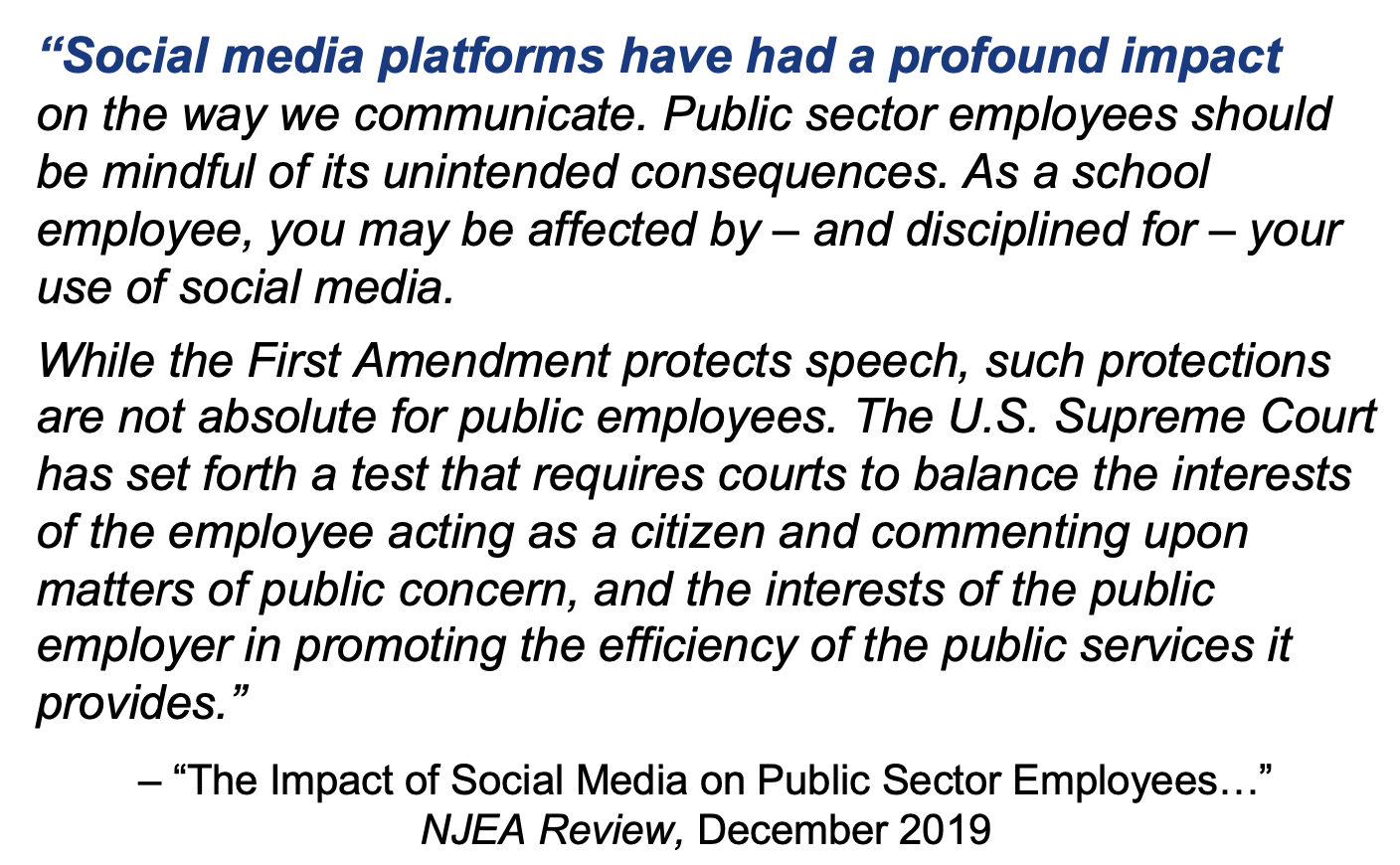
Frankly, there is still a lot of confusion about the dangers of social media, social networking, and other technology integrations into education. In Social Media – Boon or Nemesis, we mentioned that teachers should “debunk the free speech myth.” We demonstrated how the improper application of social media could get educators in trouble. Check out these sites for more info and corroborative stats:
Teacher Student Misconduct and the Critical Role of Social Media Screening
NCBA Social Media for School Employees
Social Media Hazards and Tips for Teachers
As always, our goal is to promote ethical practices in maintaining professionalism in the digital world.


“THE WHAT” Review of Definitions

“Social Media”

Social media are “websites and applications that enable users to create and share content or to participate in social networking.”
— Oxford Lexico.com online dictionary

“Social Network”

A social network is, 1. a network of social interactions and personal relationships.; 2. a dedicated website or other application which enables users to communicate with each other by posting information, comments, messages, images, etc.
— Oxford Lexico.com online dictionary

Professional Learning Community” (PLC)

A PLC is “a group of educators who meet regularly…” (usually in-person) “…to strategically enhance their teaching skills and improve student outcomes.”

versus “Professional Learning Network” (PLN)

A PLN is “a group of educators who gather more informally…” (usually in online communications) “…to problem-solve and generate ideas to enhance classroom practices. A PLN… often takes the form of an open forum, where participants can ask and answer questions based on their experiences.”
https://edtechmagazine.com/k12/article/2024/08/pln-vs-plc-perfcon


“THE HOW” Ethos of Care

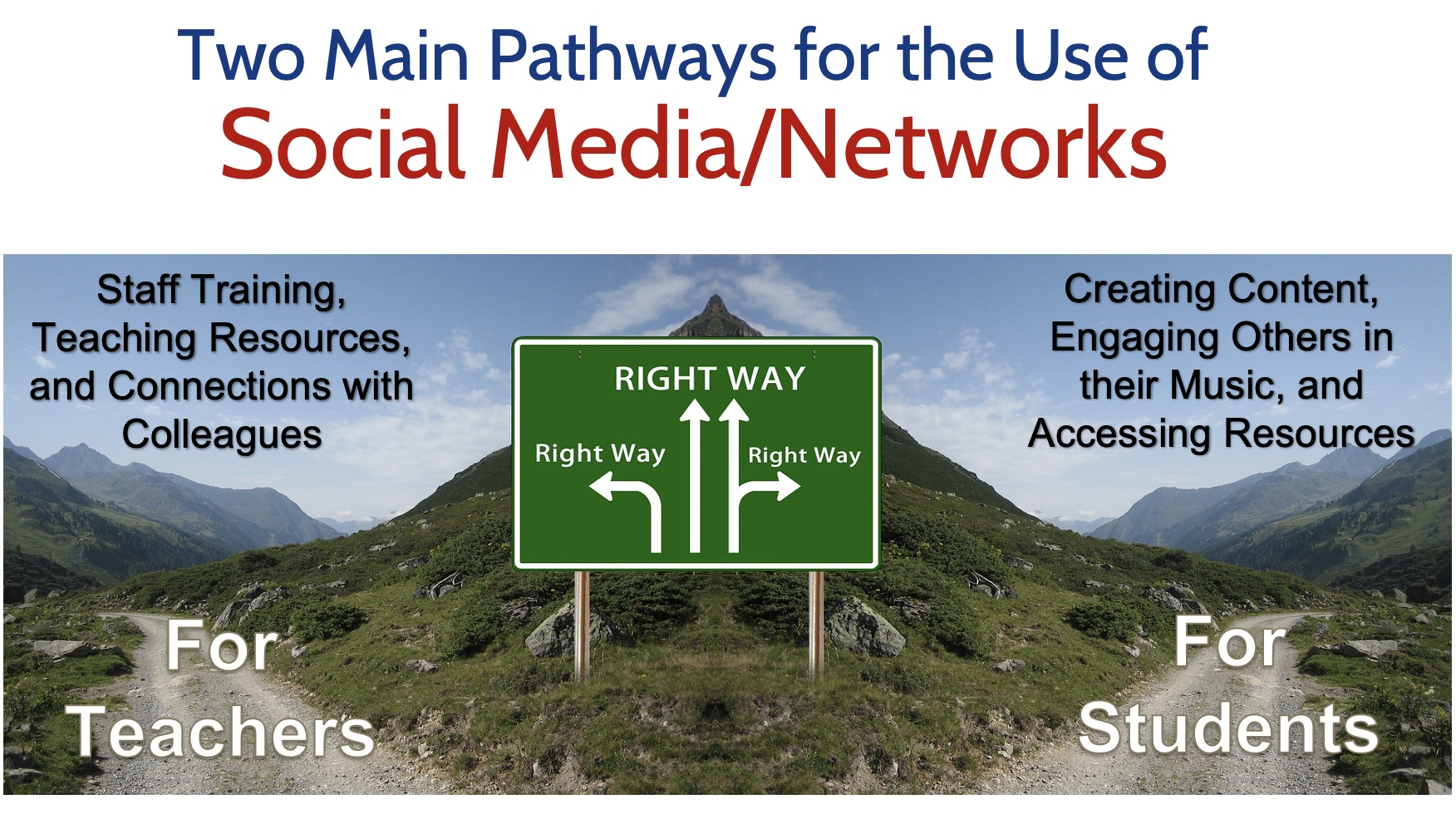
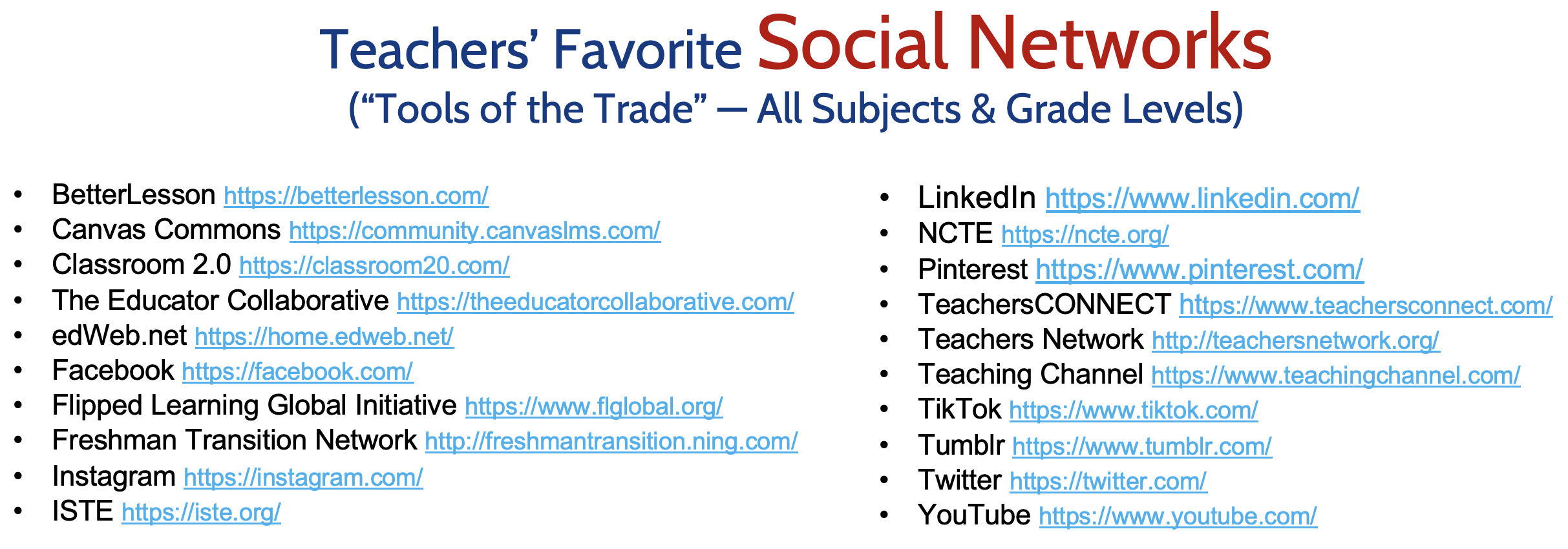
Teachers use social media to…

  • Get inspired with new teaching ideas
  • Find resources for the classroom
  • Connect with other educators
  • Stay on top of trends and news
  • participate in an online community
  • Find teacher discounts and deals
  • Follow education companies and organizations
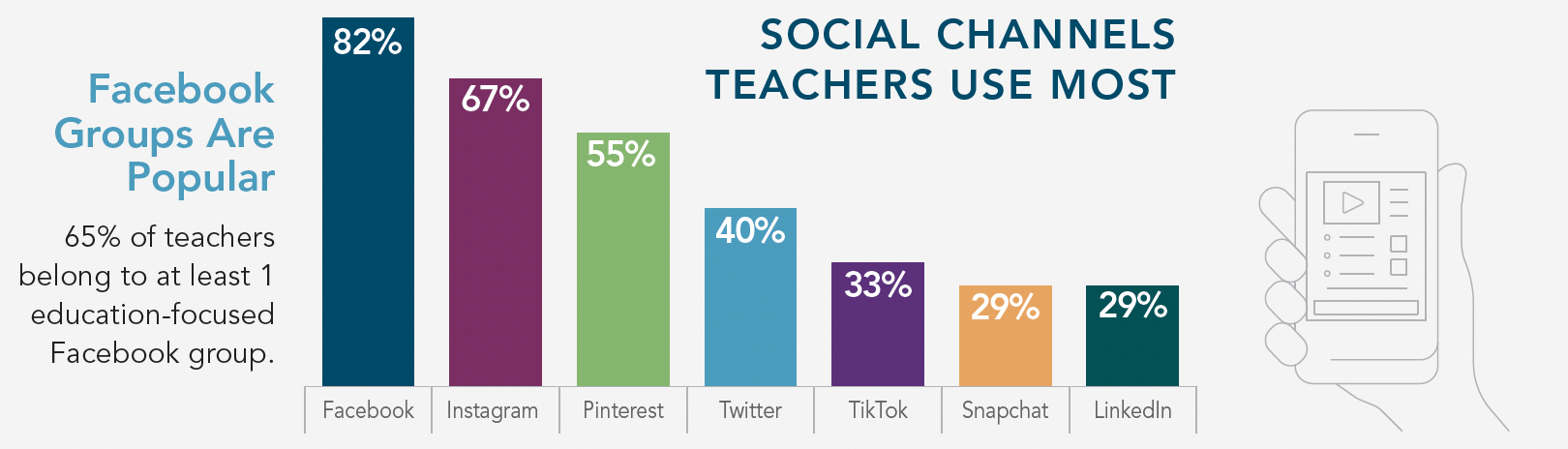
How Teachers Use Social Media
Teachers Social Media Use

Social Networks for Teachers

We acknowledge that the benefits of social networking for educators are numerous by promoting professional collaboration and connections, including:

  1. Acquiring information to enhance understanding
  2. Keeping informed about latest developments in education
  3. Enhancing communications with students, parents, and the school community
  4. Fostering connections with colleagues in the field to expand an educator’s professional network.

Benefits of Social Media as an Educator
However, educators must exercise “sound judgment” and proper professional boundaries when using social media/networks with students. While the introduction of new technology provides many opportunities for teaching and learning, it is important to establish clear rules for appropriate student-teacher communication. In order to promote safety and appropriate boundaries while transitioning to a virtual teaching and learning environment, the Pennsylvania Professional Standards and Practices Commission offers suggestions to help educators protect themselves and their students.

  1. All technological resources and applications should be school entity-approved and only used in the manner prescribed. Ensure that you are familiar with the tools you are using in order to use them properly. 
  2. Communication with students should occur at designated times, consistent with traditional school day hours. Maintain transparency and protect yourself by keeping a record of all communications with students. 
  3. Clearly communicate when and how students should contact you and provide a timeframe for when students should expect responses to questions. 
  4. Avoid one-to-one interactions with students in chatrooms, FaceTime, Skype, or any other online space. School psychologists, school counselors and others providing one-to-one services to students should consult with school administration about the best mode of communication. 
  5. Use approved forms of communication by your school entity to connect with students and parents (i.e. Remind), use only your school email to communicate, and copy administration when communicating with parents or students. 
  6. When creating content or interacting in an online space with students, conduct yourself as you would if you were in school. If appearing on camera, dress professionally and be mindful of your surroundings and the camera’s view. 
  7. Do not “friend” or follow students on social media and do not allow students to “friend” or follow you on your personal social media. Remember, you do not have a “social” relationship with your students. 
  8. Keep your personal and professional lives separate. Do not share overly personal information about yourself with students.

PSPC Digital Tips for Educators

While exercising responsibility to maintain a respectful, safe, online environment, there are many benefits for the application of social media for students in the classroom:

  • Real-time communications can increase student engagement, collaboration, communication and overall participation
  • Many students may find it easier to participate in online discussions that in the classroom
  • Students can easily ask each other or their teacher questions about assignments outside of class
  • Students & teachers can quickly share resources at any time.
  • Teachers can easily share class announcements.
  • Social media can provide a contingency plan for last minute remote learning scenarios.
  • Students can organize school events with each other or with the help of a teacher.
  • Teachers can augment an online-only class by establishing a social media page or account simply for building community.
  • Students can practice using social platforms responsibly, including maintaining a respectful online discourse.
  • Teachers can communicate directly with parents as needed, and parents can stay informed of school news via a convenient, easily accessible platform.

However, please watch out for these potential drawbacks:

  • Social media can be a major distraction, especially if students are accessing their personal accounts independently.
  • If students primarily use social platforms to participate in class discussions, they can miss out on practicing face-to-face conversations and respectful in-person discourse.
  • Some students may see social media assignments as an opportunity to cyberbully their classmates, and there is always a risk of someone posting inappropriate content or language.

Social Media in Education


“THE WHAT” Several Success Stories

Balancing the positives and negatives and taking into account all of these precautions in order to maintaining professional boundaries, the integration of new technology into the classroom may offer excellent enrichment and increase student motivation for advanced learning. This may take many forms. Here are a few interesting models.

Prior to preparing for the DCMEA online session in 2020, I stumbled upon a truly inspiring post from Derek Muller, a gifted teacher, physicist, filmmaker, and founder of the YouTube channel Vertiasium which has captured millions of subscribers. He offers one of the BEST models of using social media to enrich the understanding of learning math and science (applicable to all fields of study), while at the same time, provides warnings against unbridled use of so-called “innovation for innovation’s sake.”

“I feel like people over the years are invariably drawn to use these words:  revolutionize and education. And there’s this sort of amnesia that we’ve had a hundred years’ worth of these predictions, worth of really groundbreaking technologies that have transformed other areas in our lives but have failed to fundamentally change the way we do education. So, I stand here today as a voice of caution, to think that the future of education is not one of revolutions…”

You need to watch this: How is Social Media Transforming the Future of Education? (2016)
Derek Muller

Say what you want about how COVID significantly disrupted our educational programs, evidence of learning loss, problems in socio-emotional development, decline of student engagement and self-motivation, rise in mental health struggles, decreased instructional time, and the effects of a new digital divide of under-served students (Annie E. Casey Foundation), happily there were surprisingly a few positive advancements the results of exploring new tools and methodologies we had to employ to tread water and cope with the catastrophe. (“When life hands you lemons, make lemonade!”)
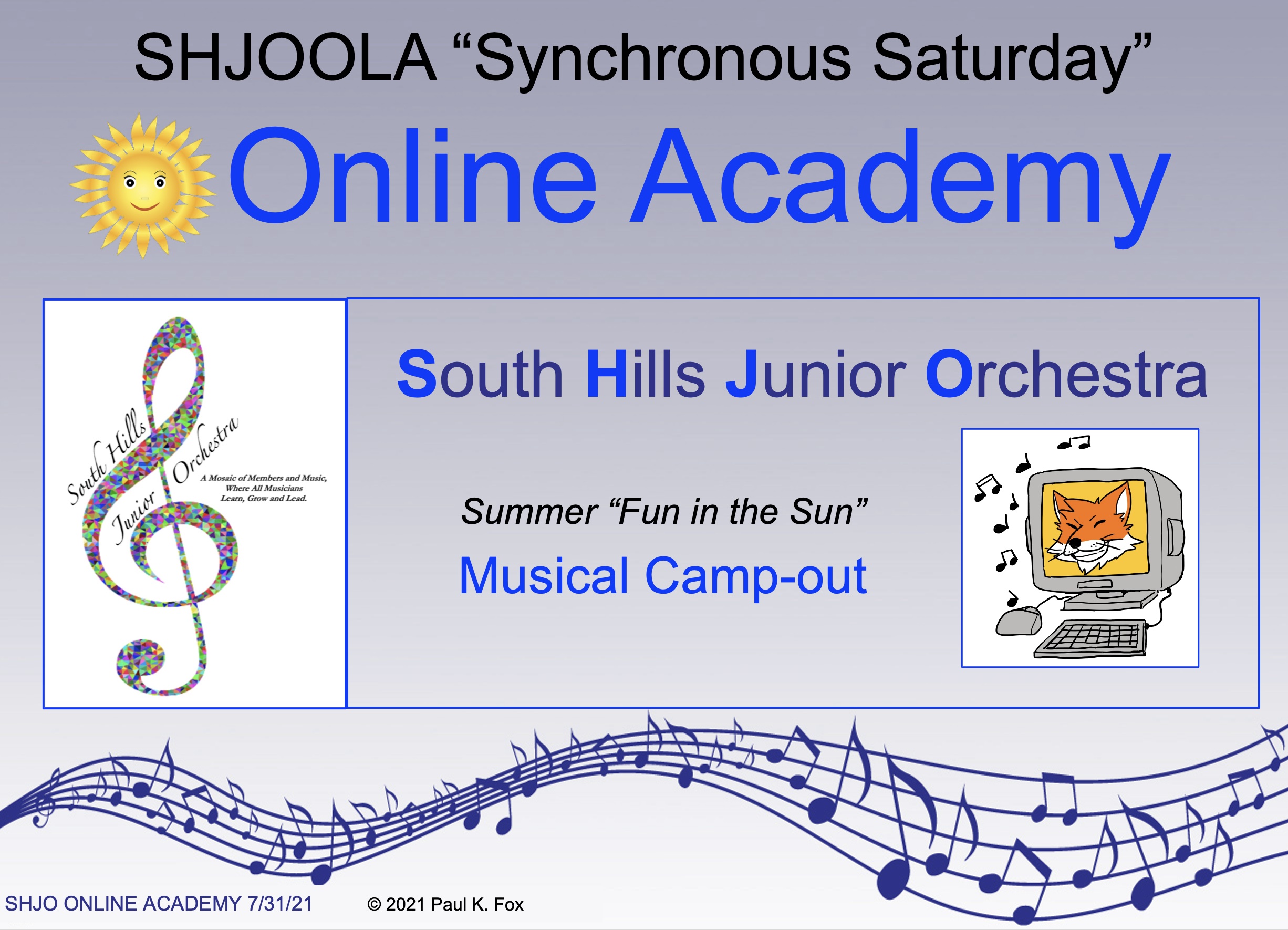
As one example, in the middle of preparing music for my community orchestra, we were shut down in 2020. No in-person rehearsals at the school. I then pivoted to creating my own online platform called SHJOOLA (South Hills Junior Orchestra Online Academy) in 2021 using MusicFirst. For a nominal yearly subscription fee, I was able to continue my Saturday morning classes (synchronous) as well as asynchronous (on-their-own time) learning using excellent applications in a virtual environment: MusicFirst Classroom, Focus on Sound, PracticeFirst, Sight-Reading Factory, Musition, Auralia, a web-based music notation program, and a huge library of method books and ensemble music. Several past blogs showed how we rolled out SHJOOLA:

The latter link above also provided a comprehensive list of supplementary resources (at the time) for online music education. Please peruse these even though some of them may have now gone inactive. We will provide supplemental links at the bottom of this article.

Another direction accented by the onslaught of the pandemic was digital streaming performances, incorporating technology in both the solo and ensemble settings. The following are two of my favorite examples of these to be viewed on YouTube:
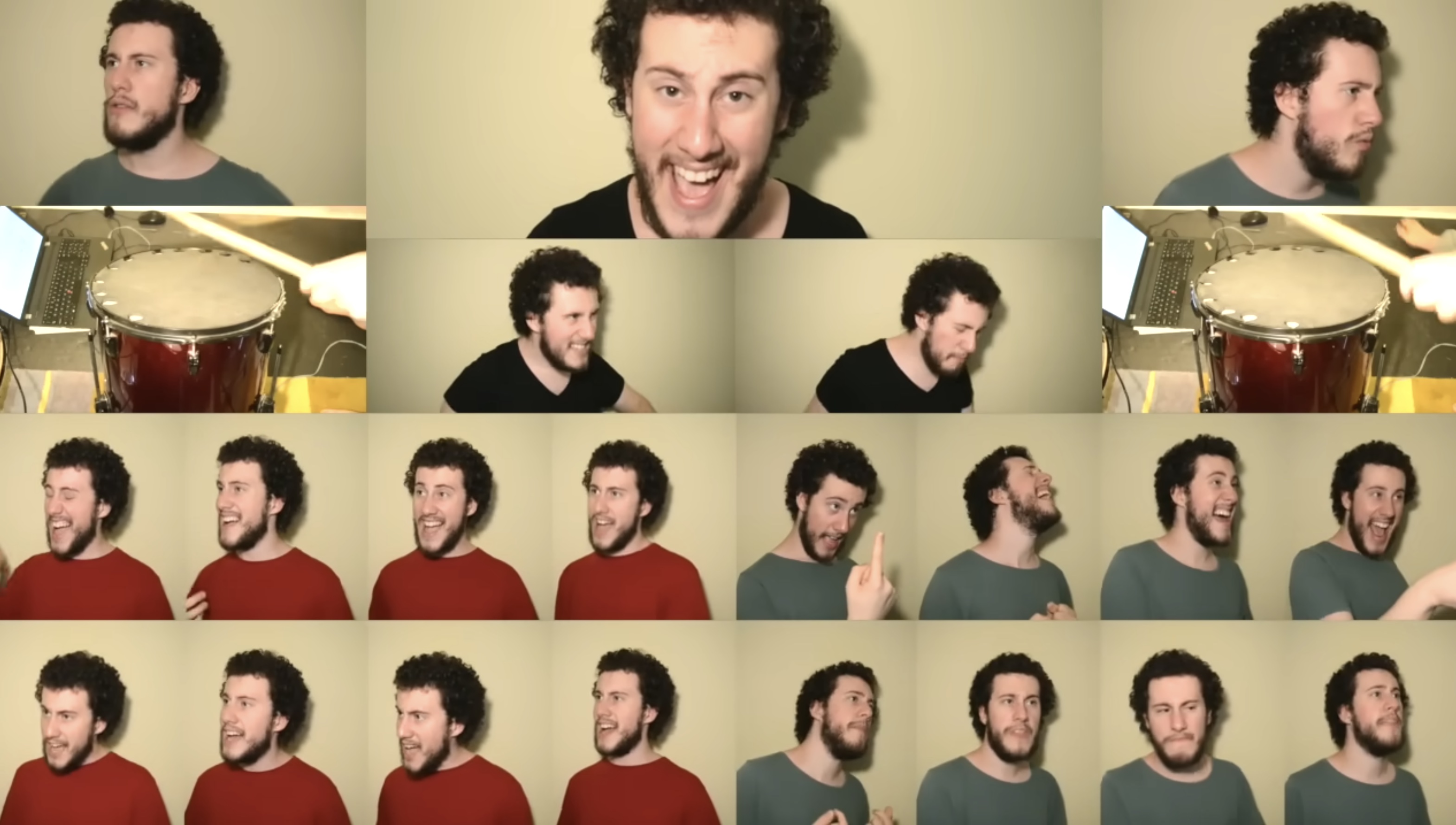
Circle of Life from Disney’s Lion King (2015-18) by Sam Robson, arranger, innovator and performer using multitrack recording of a single performer mixing as many as 50 voices at one time.
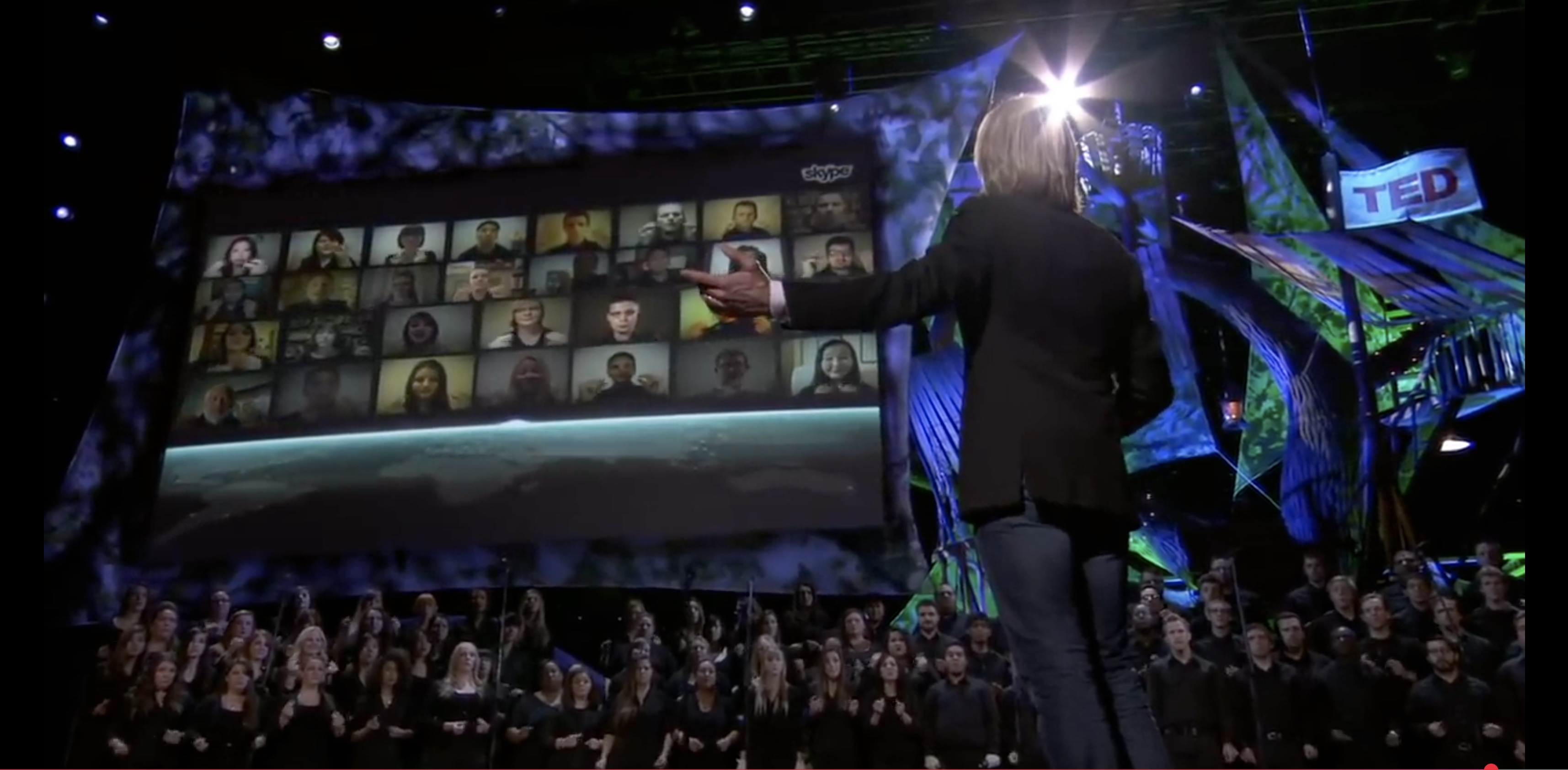
Cloudburst, a Virtual & Live Choir and TEDTALK (2013) by Eric Whitacre

Well… sorry this blog has grown to be so large! If you admit to understanding the potential hazards of and precautions for integrating social media, social networks and other technologies into education, we’ll close with the following bibliography of additional resources for further study. If that is not enough to whet your curiosity, stop back in several months to download a copy of my slide summary for the session I will present at the DCMEA Winter Conference on January 30, 2026.

Be careful stay safe and professionalbut ENJOY!

Sample Blogs

Several Major Platforms

Examples of Music Applications/Websites

PKF

© 2025 Paul K. Fox

Model Code of Ethics for Educators

Don’t you love this quote from TeachThought?

“Teaching isn’t rocket science; it’s harder!”

Teachers make as many as 1,500 decisions a day for their classes and students… that’s as many as four educational choices per minute for the average teacher given six hours of class time. Surprised? (Not if you are an educator!) Check out this corroborating research:

Of course it can be exhausting… and as fast as “things” happen, even mind-numbing at times!

What do educators rely on for guidance, a sort of internal “ethical compass” for making these decisions, many of which are snap judgments?

  • Educational background
  • Teacher “chops” (professional experience)
  • Peer and administrative support
  • Personal moral code (derived from one’s life experiences and upbringing)
  • Aspirations, values, and beliefs generally agreed upon by educational practitioners
  • State’s code of conduct and other regulations, statutes, policies, and case law
  • Professional ethics

Or all of the above?

At this juncture during my workshops on ethics, I usually quote Dr. Oliver Dreon, Assistant Professor and Coordinator of the Digital Learning Studio at Millersville University of Pennsylvania and one of the authors of the Educator Ethics and Conduct Tool Kit of the Pennsylvania Professional Standards and Practices Commission:

“From a decision-making standpoint, I tend to look at it from the perspective of Ethical Equilibrium (work by Troy Hutchings). Teachers weigh the moral (personal) dimensions with regulatory ones (the law) with the ethics of the profession…  While focusing on consequences is important, I worry that teachers may interpret this to mean that as long as they don’t break the law, they can still be unprofessional and immoral.”   

– Dr. Oliver Dreon

From college students participating in their first field observations to rookie teachers (and even veterans in the field), I recommend searching the term “ethics” on the website of your State Board of Education. In Pennsylvania, checkout the following:

Now enters probably the single most valuable document of our time, an all-encompassing philosophy for embracing the highest standards of what it means to be an ethical educator: the Model Code of Ethics for Educators (MCEE), developed under the leadership of the National Association of State Directors of Teacher Education and Certification (NASDTEC). With the collaboration of numerous development partners including the American Federation of Teachers, National Education Association, National Association of Elementary School Principals, National Association of Secondary School Principals, Council of Chief State School Officers, and American Association of Colleges of Teacher Education – to name a few – MCEE is comprised of five core principles (like spokes in a wheel – all with equal emphasis), 18 sections, and 86 standards.

“The purpose of the Model Code of Ethics for Educators (MCEE) is to serve as a shared ethical guide for future and current educators faced with the complexities of P-12 education.  The code establishes principles for ethical best practice, mindfulness, self-reflection and decision-making, setting the groundwork for self-regulation and self-accountability.  The establishment of this professional code of ethics by educators for educators honors the public trust and upholds the dignity of the profession.”

MCEE Framing Document

Although pre- and in-service training on both are essential, the differences between a “code of conduct” and a “code of ethics” are vast. Codes of conduct like the Code of Professional Practice and Conduct for Pennsylvania teachers are specific mandates and prohibitions that govern educator actions. A code of ethics is a set of principles that guide professional decision making, not necessarily issues of “right or wrong” (more shades of grey) nor defined in exact terms of law or policies. Codes of ethics are more open-ended, a selection of possible choices, usually depended on the context or circumstances of the situation.

“The interpretability of The Model Code of Ethics for Educators allows for robust professional discussions and targeted applications that are unique to every schooling community.”

Troy Hutchings, Senior Policy Advisor, NASDTEC

The music teacher and administrator colleagues with whom I have been privileged to work for more than 40 years are highly dedicated and competent visionaries who focus on “making a difference” in the lives of their students, modeling “moral professionalism” and the highest ethical standards for their classes, schools, and communities, in support of maintaining the overall integrity of the profession.

However, let’s unpack some of “the wisdom” of MCEE as it addresses the rare “nay-sayers” and entrenched teacher attitudes, failing to understand “the difference between what you have a right to do and what is right to do…” (Potter Stewart) or “doing the right thing when no one else is watching – even when doing the wrong thing is legal” (Aldo Leopold).

Here are sample negative responses, MCEE “exemplars,” and proposed assimilations for thoughtful and interactive peer discussion. Bring these to your next staff meeting or workshop, and apply them to a few mock scenarios (like these from my past blog ).

Principle I: Responsibility to the Profession

The professional educator is aware that trust in the profession depends upon a level of professional conduct and responsibility that may be higher than required by law. This entails holding one and other educators to the same ethical standards.

“I didn’t know it was wrong…”

Section I, A, 1: Acknowledging that lack of awareness, knowledge, or understanding of the Code is not, in itself, a defense to a charge of unethical conduct;

My comment: The old adage, “ignorance of the law is no excuse for breaking it.” – Oliver Wendell Holmes

“What’s the problem? I didn’t break the law!

MCEE Section I, A, 5: Refraining from professional or personal activity that may lead to reducing one’s effectiveness within the school community;

My comment: Any on or off-duty conduct or inappropriate language that undermines a teacher’s efficacy in the classroom, damages his/her position as a “moral exemplar” in the community, or demeans the employing school entity may result in loss of job, suspension or revocation of license, and/or other disciplinary sanctions.

http://pimaregionalsupport.org/event-2610673

“I’m not a rat fink…”

MCEE Section I, B, 2: Maintaining fidelity to the Code by taking proactive steps when having reason to believe that another educator may be approaching or involved in an unethical compromising situation;

My comment: As a professional with “fiduciary” responsibilities, we must look out for the welfare of our students, proactively protecting them from harm by embracing all provisions of “mandatory reporting.”

“What’s in it for me?”

MCEE Section I, C, 3: Enhancing one’s professional effectiveness by staying current with ethical principles and decisions from relevant sources including professional organizations;

MCEE Section I, C, 4: Actively participating in educational and professional organizations and associations;

My comment: Keeping up-to-date and current, we are fortunate to avail ourselves with the exhaustive tools and resources of media, music, and methods provided by groups like the Pennsylvania Music Educators Association and National Association for Music Education.

Principle II: Responsibility for Professional Competence

The professional educator is committed to the highest levels of professional and ethical practice, including demonstration of the knowledge, skills, and dispositions required for professional competence.

“What’s the big deal about standards?”

Section II, A, 1: Incorporating into one’s practice state and national standards, including those specific to one’s discipline;

My comment: As professionals, we should volunteer to help write our school’s courses of study, content units, and learning goals for the subjects we teach, and take advantage of the National Core Arts Standards, the PMEA Model Curriculum Framework, and the state’s standards.

“Not another ‘flavor-of-the-month’ in-service program!”

Section II, A, 5: Reflecting upon and assessing one’s professional skills, content knowledge, and competency on an ongoing basis;

Section II, A, 6: Committing to ongoing professional development

My comment: Always “raising the bar,” being a member of a “profession” (like medical personnel, counselors, attorneys, etc.) requires the loftiest benchmarks of self-regulation and assessment, ongoing training, retooling, and self-improvement plans, revision and enforcement of “best practices,” and application of 21st Century learning skills.

“I needed to give him credit?”

MCEE Section II, B, 1: Appropriately recognizing others’ work by citing data or materials from published, unpublished, or electronic sources when disseminating information;

My comment: Especially during this period of online/virtual/remote education brought on by COVID-19, we must reference the owners of intellectual property (including sheet music) that we use and abide by all copyright regulations. In general, it is always “best practice” to cite research or authorship “giving credit where credit is due!”

“I’m just a music teacher! Don’t ask me to do anything else!”

MCEE Section II, C, 2: Working to engage the school community to close achievement, opportunity, and attainment gaps;

My comment: We teach “the whole child,” not a specialty or specific content area! I believe our ultimate mission is to facilitate our students’ capacity and desire to learn, inspire self-direction and self-confidence, and foster future success in life.

Principle III: Responsibility to Students

The professional educator has a primary obligation to treat students with dignity and respect. The professional educator promotes the health, safety, and well being of students by establishing and maintaining appropriate verbal, physical, emotional, and social boundaries.

“It’s just a gift…”

MCEE Section III, A, 5: Considering the implication of accepting gifts from or giving gifts to students;

My comment: It is not appropriate to give a gift to a student lacking an educational purpose. In some cases, this may be defined as a “sexual misconduct.” It begs the larger question: “Do you ensure that all of your interactions with students serve an educational purpose and occur in a setting consistent with that purpose?” Also from the PA Professional Standards and Practices Commission: “Teachers should refrain from accepting gifts or favors that might impair or appear to impair professional judgment.”

“You should never touch a student!”

MCEE Section III, A, 6: Engaging in physical contact with students only when there is a clearly defined purpose that benefits the student and continually keeps the safety and well-being of the student in mind;

My comment: We were told this warning in methods classes. However, as I mentioned in a previous blog here, this “rule” has little support in research or common “best practices.” It has been my experience that on occasion, most elementary instrumental teachers assist their students in acquiring the correct playing posture and hand positions by using some (limited) physical contact. Consoling an upset student with a pat on the shoulder is not out-of-line either. The factors that may contribute to the moment being judged “okay” vs. “inappropriate” boil down to:

  • Intent
  • Setting
  • Length of time
  • Frequency or patterns of repetition
  • Comfort level of the student
  • Age level of the student
  • Happening in public
  • Who started it?
busyteacher.org

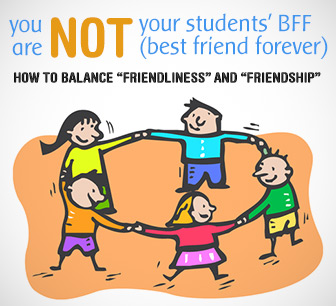
“My students are my friends!”

MCEE Section III, A, 7: Avoiding multiple relationships with students which might impair objectivity and increase the risk of harm to student learning or well-being or decrease educator effectiveness;

My comment: You cannot be their “friend.” You are their teacher, an authority figure that is looking out for them and doing what is necessary (“fiduciary” responsibilities) for their health and welfare… perhaps at times things they do not want you to do. Crossing the teacher/student boundary with familiarity, informality, and being their “confidant” or “friend” are more than just unprofessional acts – they can foster a dual relationship where roles are less defined, an ambiguity that may lead to additional inappropriate actions and educator misconduct.

“He’s weird…” or “He’s not one of us!”

MCEE Section III, B, 2: Respecting the dignity, worth, and uniqueness of each individual student including, but not limited to, actual and perceived gender, gender expression, gender identity, civil status, family status, sexual orientation, religion, age, disability, race, ethnicity, socio-economic status, and culture;

My comment: Check your prejudices and personal biases at the door. Being a teacher is all about sensitivity and caring of all individuals – students, parents, staff, etc. Embracing today’s focus on reprogramming community attitudes on “diversity,” an educator daily models the values of empathy, compassion, acceptance, and appreciation, not just settling with the “lower bar” of tolerance, allowance, and compliance!

“Wait ’til you hear what happened in class today!”

MCEE Section III, C, 1: Respecting the privacy of students and the need to hold in confidence certain forms of student communications, documents, or information obtained in the course of practice;

My comments: Gossiping about and “carrying tales” home or in the teachers’ room are serious breaches of the care and trust as well as your fiduciary responsibilities assigned to you on behalf of your students. As for “regulations,” your indiscretion may be a violation of your students’ confidentiality rights (“a federal crime” according to Family Educational Rights and Privacy Act, Grassley Amendment, Health Insurance Portability and Accountability Act, and Individuals with Disabilities Education Act). You are only permitted to share information about a student with another teacher, counselor, or administrator who is on a “needs-to-know” basis or is actively engaged in helping this student.

Principle IV: Responsibility to the School Community

The professional educator promotes positive relationships and effective interactions with members of the school community while maintaining professional boundaries.

“Don’t tell my parents!”

MCEE Section IV, A, 1: Communicating with parents/guardians in a timely and respectful manner that represents the students’ best interests;

My comment: I wish I had a nickel every time a student plead with me, “Don’t call my mom!” It is part of “moral professionalism,” your “code,” and good ethical standards to originate meaningful two-way dialogue, and if necessary, confront the parents of underachieving children. I also believe it goes on long way to nurture your relationships in the community if you notify parents when their kid has done something remarkable… “I caught him being good” or “The improvement has been extraordinary!”

“Did you hear what a staff member said about you… in front of the kids?”

MCEE Section IV, B, 1: Respecting colleagues as fellow professionals and maintaining civility when differences arise;

MCEE Section IV, B, 2: Resolving conflicts, whenever possible, privately and respectfully, and in accordance with district policy;

My comment: Before you bring up the matter with your supervisor or building administrator (which you have the right and even responsibility to do, especially if the students hear any improper speech first-hand or that the incidents rise to the level of bullying or aggressive behavior), first confirm the story. Talk to the unhappy team member one-on-one. Be calm and sensitive, but hold your ground: you must assert that his/her behavior/language is unacceptable and will not be tolerated in the future.

“Not another TEAM meeting?”

MCEE Section IV, B, 4: Collaborating with colleagues in a manner that supports academic achievement and related goals that promote the best interests of students;

My comment: We work together to insure that all educational goals are met. Open and interactive peer partnerships are helpful in the review, design, and application of new lessons, methods, media, and music.

“I was just teasing her…”

MCEE Section IV, B, 8: Working to ensure a workplace environment that is free from harassment.

My comment: Be extremely careful in the practice of any behavior or language of a kidding, sarcastic, cynical, or joking manner. It can be misinterpreted regardless of your intentions… and it can hurt someone’s feelings. And it is never appropriate or “professional” to “put down” another person.

“Don’t ask for permission… beg for forgiveness.”

MCEE Section IV, C, 3: Maintaining the highest professional standards of accuracy, honesty, and appropriate disclosure of information when representing the school or district within the community and in public communications;

My comment: Yes, I have heard this “view” a lot, advocates of whom will tell you to go ahead and stick your neck out to do something “for the good of the order,” and if needed later, “beg for forgiveness” if you decision is met with disapproval from administration. My advice? Less experienced teachers, run everything through your fellow colleagues (informally) and principal (formally). Don’t fall back on the lame “oops” and “beg for forgiveness.” I may have felt differently when I had three times as many years of experience under my belt than the supervisors who were assigned to “manage” me… but, even then, “venturing out without a paddle” usually did not serve the best interests of the students. There’s no reason to place “the teacher’s convenience” over the safety/welfare of the students. Besides, why not take advantage of the legal and political backup of your bosses if they are kept “in the loop?”

“He’s our preferred dealer and always takes care of us.”

MCEE Section IV, D, 4: Considering the implications of offering or accepting gifts and/or preferential treatment by vendors or an individual in a position of professional influence or power;

My comment: Formerly called “sweetheart deals” with music companies, you are on “shaky” ethical ground (and may also have “crossed the line” violating state laws/statutes) if you negotiate the rights of exclusive access to your school’s or booster’s purchasing. If you have any questions about your school’s policy on outside vendors, seek advice from your district’s business manager.

Principle V: Responsible and Ethical Use of Technology

The professional educator considers the impact of consuming, creating, distributing, and communicating information through all technologies. The ethical educator is vigilant to ensure appropriate boundaries of time, place, and role are maintained when using electronic communication.

“Isn’t use of social media forbidden?”

MCEE Section V, A, 1: Using social media responsibly, transparently, and primarily for purposes of teaching and learning per school and district policy. The professional educator considers the ramifications pf using social media and direct communications via technology on one’s interactions with students, colleagues, and the general public.

My comment: Professional educators’ use of a dedicated website or other social network application enables users to communicate with each other by posting information, comments, messages, images, etc. and “learn” together. However, using social media for sharing social interactions and personal relationships with your students, parents, and staff is unethical and dangerous. As they say, “a post (or snap) is forever.” Communicating digitally or electronically with students may lead to the blurring of appropriate teacher-student boundaries and create additional challenges to maintaining and protecting confidentiality.

The Final Word

In Pennsylvania (as well as the rest of the country), the statistics on school staff misconduct reports are rising alarmingly. Your own state’s “code of conduct” and the MCEE should help to clarify misunderstandings, but it has been my experience that the majority of educators do not receive regular collegiate, induction, or in-service training on educator ethics or moral professionalism. Luckily, we are fortunate to have access to many mock scenarios (see below) from state departments of education to review/discuss among ourselves common ethical conflicts and “conundrums” dealing with pedagogy, enforcement, resource allocation, relationships, and diversity. We all need to “refresh” our understanding of these issues from time to time and revisit “our codes” frequently to help “demagnetize” (and re-adjust) our decision-making compass.

Please peruse the ethics category of this blog-site for other articles and sample references below.

PKF

Resources

PIXABAY.COM GRAPHICS:

© 2021 Paul K. Fox

Ethics for Job Seekers

Employment Etiquette & Standards of Morality

Ethics is knowing the difference between what you have a right to do and what is right to do. – Potter Stewart from http://www.brainyquote.com

Definitions

Google defines ETHICS as “moral principles that govern a person’s or group’s behavior.”

For more detail and an analysis of the “essential questions” on ETHICS, check out the blog “What is Ethics?” from the Markkula Center for Applied Ethics: https://www.scu.edu/ethics/ethics-resources/ethical-decision-making/what-is-ethics/.

From another perspective, according to Investopedia, “BUSINESS ETHICS is the study of proper business policies and practices regarding potentially controversial issues, such as corporate governance, insider trading, bribery, discrimination, corporate social responsibility and fiduciary responsibilities.” The full article can be read at http://www.investopedia.com/terms/b/business-ethics.asp.

the-truth-shall-make-you-free-1201069

Declining Standards of Behavior?

Jean Twenge, the author of the 2006 book Generation Me, considers Millennials (born between 1977 and 1994), along with younger members of Generation X, to be part of what she calls “Generation Me,” possessing a preponderance of the traits of confidence and tolerance, but also a strong sense of entitlement and narcissism. Wikipedia identifies the (older) “Me” generation in the United States, referring to “the baby boomer generation and the self-involved qualities that some people associated with it.”

According to Psychology Today in a blog-post The Truth About Lying by Allison Kornet (https://www.psychologytoday.com/articles/199705/the-truth-about-lying), “Deception is rampant—and sometimes we tell the biggest lies to those we love most.”

If, as the cliché has it, the 1980s was the decade of greed, then the quintessential sin of the 1990s might just have been lying. After all, think of the accusations of deceit leveled at politicians like Bob Packwood, Marion Barry, Dan Rostenkowski, Newt Gingrich, and Bill Clinton.

Regardless of these labels of societal trends, “generalizations about the generations,” and reflections on current social values and conscience in the media, how do you come to terms with the recent headlines of inconsistent (or “inconvenient”) ethics and morality?

  • State-sponsored doping of Russian athletes
  • Volkswagen emission cheating
  • Students saying, “If we don’t get caught” or “If they don’t find out,” it’s OK.
  • The rise of online plagiarism-checking programs such as turnitin.com.
  • The cynicism about “ethics in advertising: do we expect lies?”
hand-on-a-bible-1417265

And yet, some of us still recite the Boy Scouts oath (“honesty”), “swear to tell the truth” (on a bible) in a court of law, and strive to maintain an atmosphere of honesty in the workplace (see http://www.businessinsider.com/3-essential-rules-to-workplace-honesty-2013-1  and http://smallbusiness.chron.com/create-atmosphere-honesty-workplace-10098.html).

So, are we “losing” our moral compass? Does “our word” mean anything? Do we take the easy way out and “fake a little” here and “wink a little” there? Is it affecting the way we interact with each other, in educational institutions, the marketplace, family life, and even presenting ourselves to be hired for a job?

Blame it on upbringing? Past experience? Perhaps it is safe to say one’s personal judgment may be affected by ethics. If a member of your family has a handicap parking placard, is it ever used when the handicapped individual is not riding in the car? In terms of judgment and feelings of entitlement, it is probably ill-advised to bring up anything to do with driving… fighting over parking places, cutting off someone, tooting horns at slow drivers, etc. Besides, who actually ever comes to a complete stop at a stop sign?

In the pre-employment planning stages, it is essential for you to make a honest personal and professional assessment, prepare to represent yourself accurately at interviews and on your resume and  e-portfolio, and model ethical personal branding. I would agree that “you cannot ‘fib’ and claim you are a ‘master’ of everything,” but if you are certified to teach music in grades K-12, not just band, or general music, or choir, or strings… you should state your proficiency to teach “the whole kit and caboodle.” At employment screenings, it’s more important to show you have learned the necessary 21st Century skills of critical thinking, problem-solving, collaboration, communications, creativity, and flexibility/adaptability… rather than whether you can play Paganini on the violin, sing a high “A,” improvise modern jazz styles, or piano accompany a musical production.

25774792772_259d73f98c_b

Stretching Things a Bit?

The concept of a “stretched resume” is detailed online by “Employee’s Ethics: Getting a Job, Getting a Promotion, Leaving,” Chapter 6 from the book Business Ethics. The author tells the true story of Robert Irvine, who used to host the Food Network’s popular Dinner: Impossible. He was fired when he was caught “lying” or providing gross exaggerations on his resume. You should read the interesting full account at this site: http://2012books.lardbucket.org/books/business-ethics/s10-employee-s-ethics-getting-a-jo.html.

The kind of resume misrepresentations are categorized as the following:

  • False credentials
  • False experience
  • Embellished experience
  • False chronology
  • False references

The best quote from this reference suggests that the outcome of resume misrepresentation is not worth the chances you would take if/when you are caught:

Ethical egoism means your moral responsibility is to act in your own interest no matter what that may require. This provides a license for outright résumé invention… But, as is always the case with egoism, the question must be asked whether job seekers really serve their own interests when they claim things that may later be revealed to be false or when they land jobs they later won’t be able to perform because their qualifications were fake.

This source led me to the webpage http://fakeresume.com/ (aptly named) selling the book Fake Resume: The Machiavellian Guide to Getting a Job by Max Stirner (something I am not promoting!) You can peruse a segment of his work, “Five Reasons Why You Must Lie on Your Resume To Get a Job Today” at http://fakeresume.com/five-reasons-why-you-must-lie-on-your-resume.pdf. This excerpt is from his “Everyone Lies on Their Resume” section of his website:

fake-resume-ebook-vertical

The firm Hire Right released some interesting statistics that show how rampant resume fraud is in the United States. The company’s numbers show that 80 percent of all resumes are misleading. They also show that 20 percent state fraudulent degrees and 30 percent show altered employment dates. As if those numbers are not shocking enough, 40 percent have inflated salary claims and 30 percent have inaccurate job descriptions. Furthermore, the study shows 25 percent of people listing companies that no longer exist, and 27 percent giving falsified references; and these are only the people they have caught!

Guides to Employment Ethics

Regardless of what others do or say they do, marketing exaggeration and even falsehoods will not be in your best interest.

Richard Fein, Director of Career Management, Isenberg School of Management, University of Massachusetts-Amherst via Monstertrak.com wrote an excellent career guide on this subject: “Etiquette and Ethics in Your Job Search. What Are They and Why Should You Care?” Download the following to review the definitions, distinctions, and job search scenarios involving the terms “etiquette” and “ethics.” http://www.bu.edu/hospitality/files/pdf/ETIQUETTEANDETHICSINYOURJOBSEARCH1.pdf.

Another excellent resource is the “Job Search Ethics Brochure” from the University of Pennsylvania: http://www.vpul.upenn.edu/careerservices/files/Job_Search_Ethics_Brochure.pdf. In this thoughtful publication, additional terms are defined, such as “professional,” “integrity,” and “honor.”

word-true-on-the-dices-1237241

In addition, it should be “worth your while” to access some of the Franklin College’s “Helpful Handouts” under the Career Service section of their website: http://franklincollege.edu/student-life/career-services/students-alumni/helpful-handouts/. In particular, what stood out to me was their document “Job Search Ethics and Protocol,” which Assistant Dean of Students & Director of Career Services Kirk Bixler has graciously granted me permission to reprint below. (This is an excellent summary of many of the topics/tips we have posted at this site. Click on the “Marketing Professionalism” link to the right to read past blog-posts.)

  • Do NOT give into the temptation of carelessly completing an application. Do NOT make statements on an application like “see attached résumé.” Never leave spaces blank.
  • Apply for a job only if you have some realistic level of interest.
  • Absolute honesty on your résumé is imperative. Don’t overstate or understate. Don’t downplay your skills because you haven’t been featured in Business Week.
  • Request permission to use a person as a reference. Be prepared to explain to your reference what your job search plans are. Provide the reference with examples of qualities you possess. Offer a copy of your résumé. When interviewing, have your list of references on hand.
  • Don’t take advantage of an expense account when traveling for job interviews.
  • Show up for your interview. If you are visiting a person’s place of work, make sure your appearance, including mode of dress, is appropriate for that environment. You are not a student going to class. Consider yourself a professional trying to make a positive impression. How you present yourself is a partial reflection on the person with whom you are meeting.
  • Be a bit early for your appointment. Be mindful of the other person’s time. Come in prepared with questions & knowledge of the business.
  • Ask “How would you like to be addressed?” Be on the safe side; few people are offended by “Mister” or “Ms.” Be courteous to everyone you meet.
  • Everything you say must be true. On the other hand, you don’t need to say everything.
  • 25957630814_ee6ff87fe5_oYou may be asked to say something about another student or applicant. Speak only of your abilities & strengths. It is acceptable for an interviewer to ask you about other interviews, job offers & salary offers. You are not under an obligation to give a direct answer.
  • Be aware of illegal inquires. Employers may not ask, “How much alcohol do you drink?” “Have you ever been treated for mental health problems?” “What prescription drugs do you currently take?”
  • Thank you! Thank you! Thank you! Thank-you notes are a MUST in the job search process. They may be handwritten or typed. Address them to the person with whom you had the interview.
  • Be aware of drug screening requirements.
  • Call to inquire about your status in the employer’s hiring process. If a specific time has been communicated, wait until that time has passed before contacting the employer.
  • Let the employer be the first to mention salary. End it early if you are not interested. Let the employer know you are not interested in pursuing employment.
  • When offered the job, ask for time to think it over & ask for a formal offer letter.
  • You may receive one or more job offers you decide to reject. You should convey your decision to reject a job offer orally & in writing. The considerations here are speed & certainty of delivery. Call the person who signed your offer letter. Write a brief letter, also. Do both in a timely manner.
  • Only accept a job if you are really interested. Don’t settle. Once you accept a job offer, formally remove yourself from all other job searches. DO NOT continue looking.

These final bulleted items are echoed by another prestigious institution. “Ethical Internship and Job Search Policies” is posted on the University of Notre Dame’s Career Center webpage (http://careercenter.nd.edu/students/ethical-job-search-policies/):

When accepting an offer of full-time employment or an internship (either paid or unpaid), one must have every intention of honoring that commitment.  If a student accepts an offer of employment, admission to a graduate or professional school, or other post-graduate career opportunity, he/she must withdraw from the recruiting process immediately. This includes but is not limited to:

  • Not applying to future job postings.
  • Declining all future interview invitations.
  • Canceling any active applications.
  • Contacting all recruiters to inform them of your wish to be removed from the interviewing and recruitment process (this includes all scheduled interviews).

Ethics? It all boils down to two questions: “Who are you?” and “For what do you stand?” Besides the fear of “getting caught in lies” and being fired for misrepresentation (or doing an incompetent job because you did not have the qualities for which your employer was looking), it centers on “liking what you see” when you look at yourself in the mirror. Anyway, didn’t you mommy tell you your nose gets longer when you tell a fib?

mirror-on-wall-1413751

Ethics is nothing else than reverence for life.  – Albert Schweitzer
from http://www.brainyquote.com
PKF
© 2016 Paul K. Fox