Leadership lessons for the classroom or staff development
This blog is a follow-up resource for my Empowering Educator and Student Leadership presentation at the PA Department of Education SAS INSTITUTE state conference on December 9, 2025 and provides a “fill-in-the-gap” narrative about many of the concepts we have already presented at this blog site:
If you would like to review my PDF slide summary from the SAS INSTITUTE, click here.
Did the main title (above) get your attention? What on earth could “leaders flush” have to do with this topic? In teaching (and modeling) leadership skills to my students, we discuss what it means to Faire sans Dire or “do without saying,” the English translation to this crest:
Heraldry coat of arms emblem: Earl of Ilchester
In other words, if you see something that needs to be done (flush the toilet?), don’t assume it’s someone else’s job. A true leader embraces the philosophy Carpe Diem (“seize the day”), identifies the problem and its solution, rolls up his/her sleeve, and “gets it done!”
Why teach leadership in the curriculum & extracurricular activities?
“Leadership is an essential skill that extends beyond the classroom, shaping how students engage with the world around them. Whether leading a group project, organizing an event, or voicing their opinions in discussions, leadership skills empower students to take initiative and make meaningful contributions. These abilities are not only beneficial during school years but also serve as the foundation for lifelong personal and professional success.” — Bloomster
In the past, I have used a multitude of opportunities and settings to teach these life skills in summer leadership camps, section leader and student conductor seminars, drum major and marching band captain auditions, student director, producer, and musical crew head staff meetings, and for 25+ years, preparing student counselors for a comprehensive, six-day, grades 8-12 Township String Camp program.
To sum it up, teaching leadership in Grades K-12 and college settings will:
Develop communication skills
Build confidence & self-awareness
Enhance problem-solving abilities
Encourage teamwork & collaboration
Shape future success
Why teach leadership to educators?
My December session at SAS Institute was geared to school/system leaders, department heads, and other administrators, but actually the focus on leadership as a skill set necessary for school/staff/individual professional improvement is essential for all educators and school support staff.
From district administrators and school principals to instructional coaches and curriculum coordinators, leaders in education have a direct impact on the learning outcomes of all students. According to UNESCO, educational leadership is considered one of the most influential factors on student outcomes, falling just behind engaging teaching. As a result, leadership training for educators has become an essential part of the professional development experience for teachers at all levels of education. — “Building Leadership Skills – From Classroom Teacher to Educational Leader”
The literature suggests that empowering educators with leadership training will:
Improve student achievement
Empower and retain teachers
Support new staff members
Drive innovation and adaptability
Bridge the gap between instruction and administration
Build/model a positive attitude
Enhance strategic thinking and decision-making
Promote a positive and collaborative school climate
Develop soft skills such as communication, conflict resolution, and building trust… both in and outside the classroom
Leadership assessments
“A leadership skills assessment is a formal evaluation used to identify and measure a person’s leadership potential and competencies, such as communication, decision-making, and emotional intelligence. These assessments can be used by organizations to evaluate current leaders, identify high-potential candidates for promotions, and inform hiring decisions. Common methods include personality tests, scenario-based assessments, and 360-degree feedback, with tools like CliftonStrengths, Hogan Assessments, and DISC being popular examples.” — “Leadership Assessment Test – A Complete Guide 2025”
There is a large body of information out there, especially commercial resources, for evaluating the leadership quotient and achievement of corporate managers, CEOs, CFOs, etc. I was impressed with the scope and depth of the research, including these sample firms advertising the availability of third-party consultants and advisors.
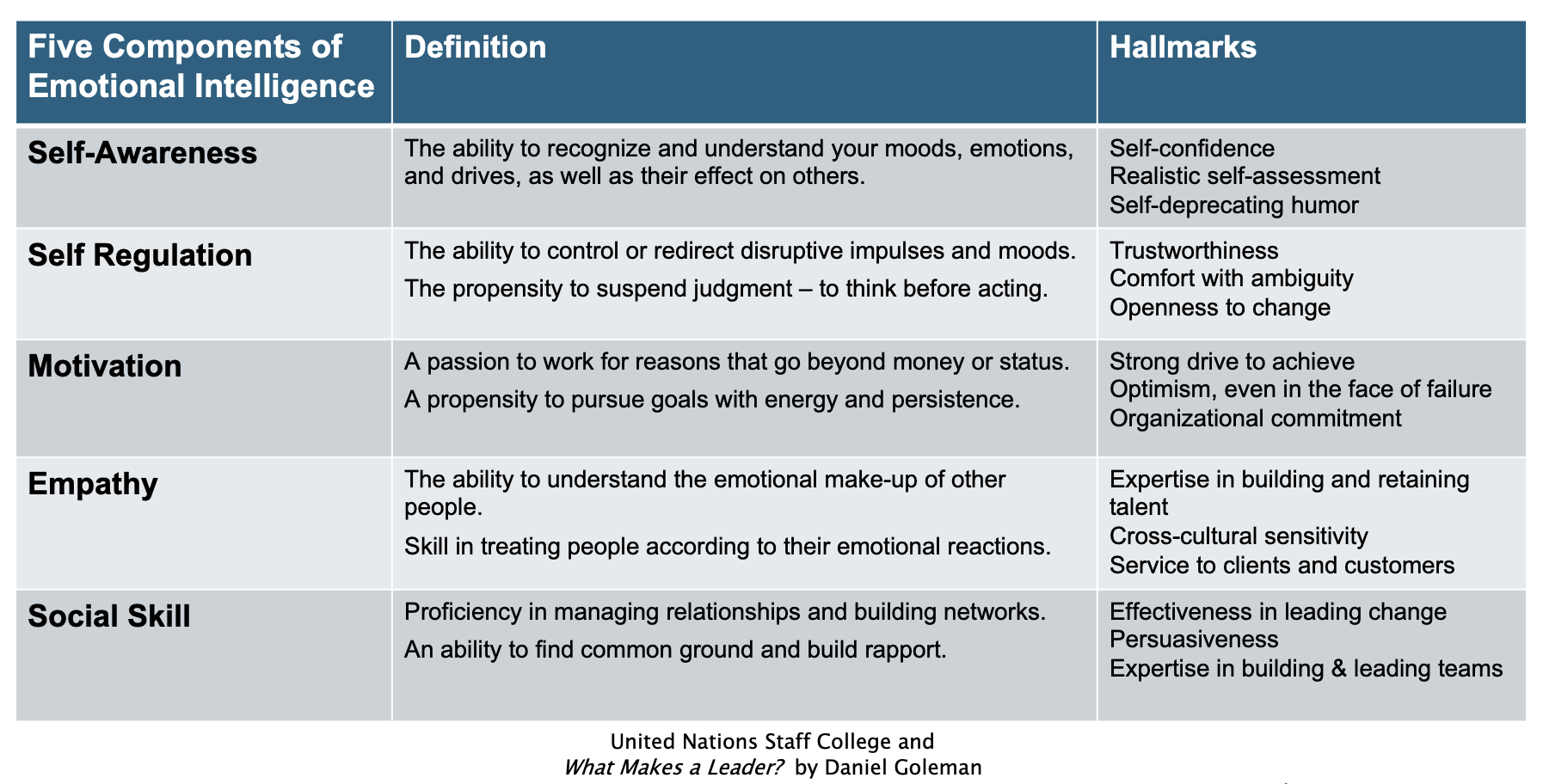
One night I randomly scanned through a handful of YouTube reels of company fraud and mismanagement (e.g., “Revenge of the Coffee Pot,” “Revenge with Karen,” and “Silent Revenge”), painting (fictitious) stories of bosses stealing intellectual property or assuming credit for the innovations/achievements of their subordinates, patent infringement, nepotism or incompetent hirings… all with arrogance, lack of professionalism, the total disregard of employee morale, and blatant patterns of poor executive decision-making, communication, emotional intelligence, strategic thinking, and the ability to influence and guide a team. “Emotional intelligence” (as defined above by Daniel Goleman in What Makes a Leader? also attributed to the United Nations Staff College) should include the “best practices” of self-awareness, self regulation, motivation, empathy, and social skills. Added to these YouTube (fake) scripted deficiencies are the mitigating effects of corporate politics, inconsistent application of compliance or HR policies, unclear contract language, and problems in the chain of command… with the eventual result of the boss receiving a fall from grace, termination, and other legal consequences. Most of these episodes imply only the Board of Directors evaluates the top executives (like school superintendents?), and even with the inclusion of employee satisfaction surveys, staff retention data, third-party auditors, and whistle-blower protections in some instances, the catastrophic actions of these leaders nearly destroy the businesses. For these videos, it seems that leadership assessments and goals are never ongoing, the benchmarks are seldom reviewed, and nothing is PROACTIVE… and therefore not preventive. Therefore, for the school district and corporate worlds alike, we need to intentionally provide formative assessments of our leaders (and ourselves). Exactly what do we need to know and do to improve?
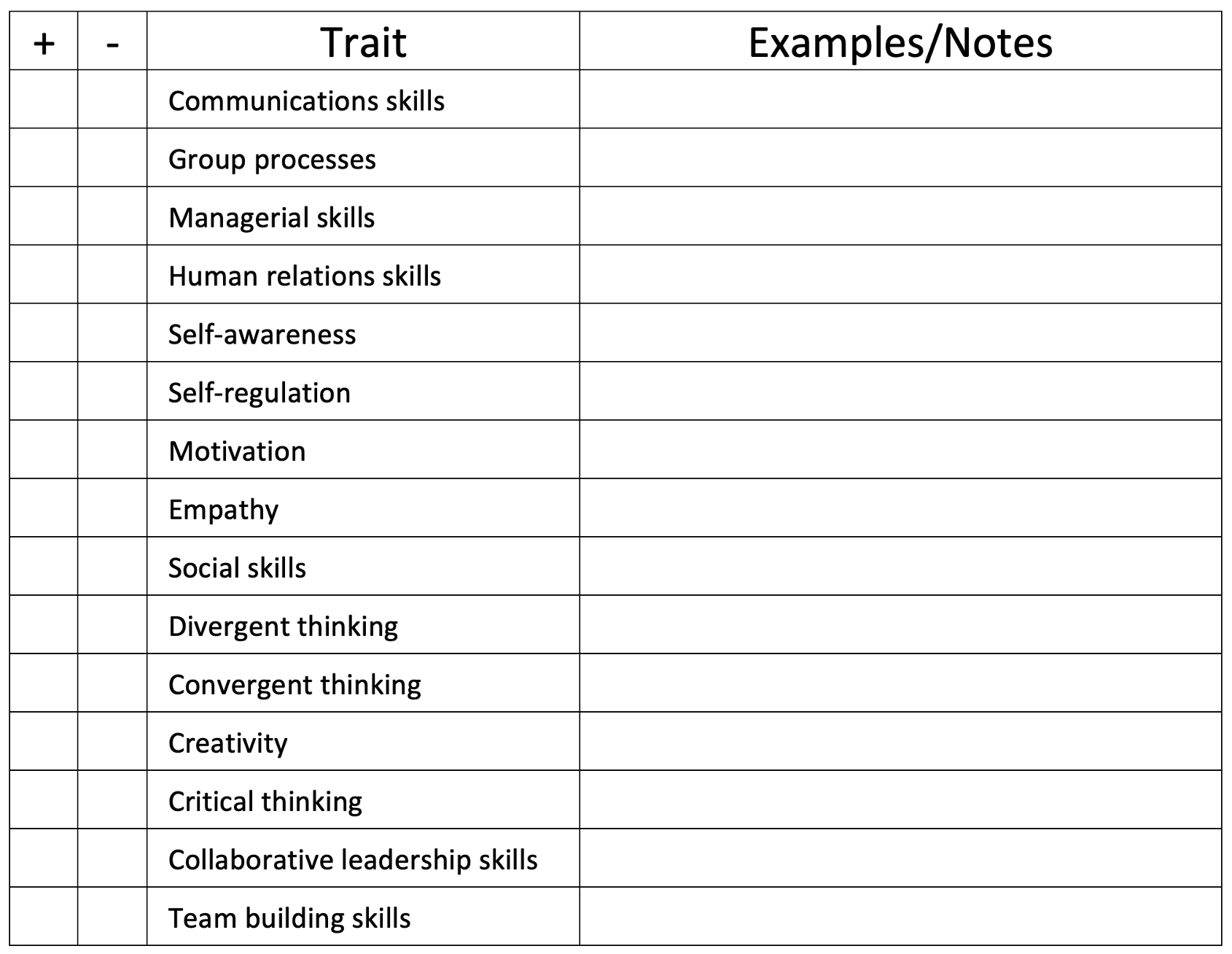
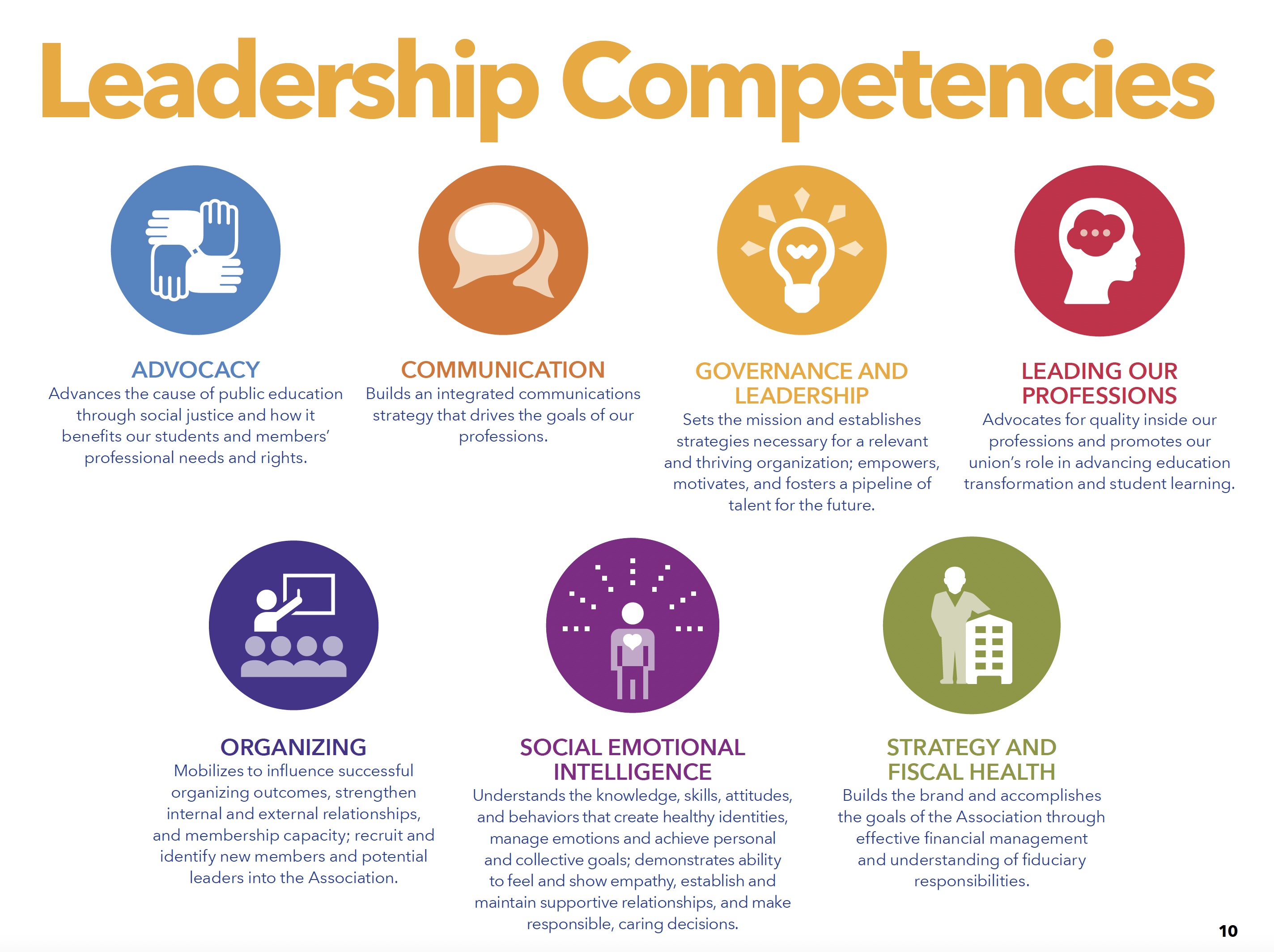
In my blog Growing Student Leaders and the SAS Institute 2025 presentation, I offered the above image as an informal personal checklist to evaluate leadership traits. Coincidentally, while I was writing this article, a scholarship committee of the Community Foundation of Upper St. Clair (for which I serve as Communications Director and Arts Chair) was developing an assessment rubric for ranking applications of a new student leadership scholarship. Although still under development, here are a few of the categories being considered:
Communication: Includes listening skills, clarity in speaking, and the ability to make others feel heard.
Integrity: Acting ethically, being trustworthy, and aligning actions with words.
Accountability: Taking ownership of actions and commitments.
Collaboration: Working effectively with others, valuing different perspectives, and resolving conflicts.
Self-awareness: Understanding one’s own strengths, weaknesses, and biases.
Drive/Initiative: A bias for action and the ability to move projects forward.
Courage: The bravery to speak truthfully, admit shortcomings, and make difficult decisions.
Humility: Recognizing the contributions of others and remaining a lifelong learner.
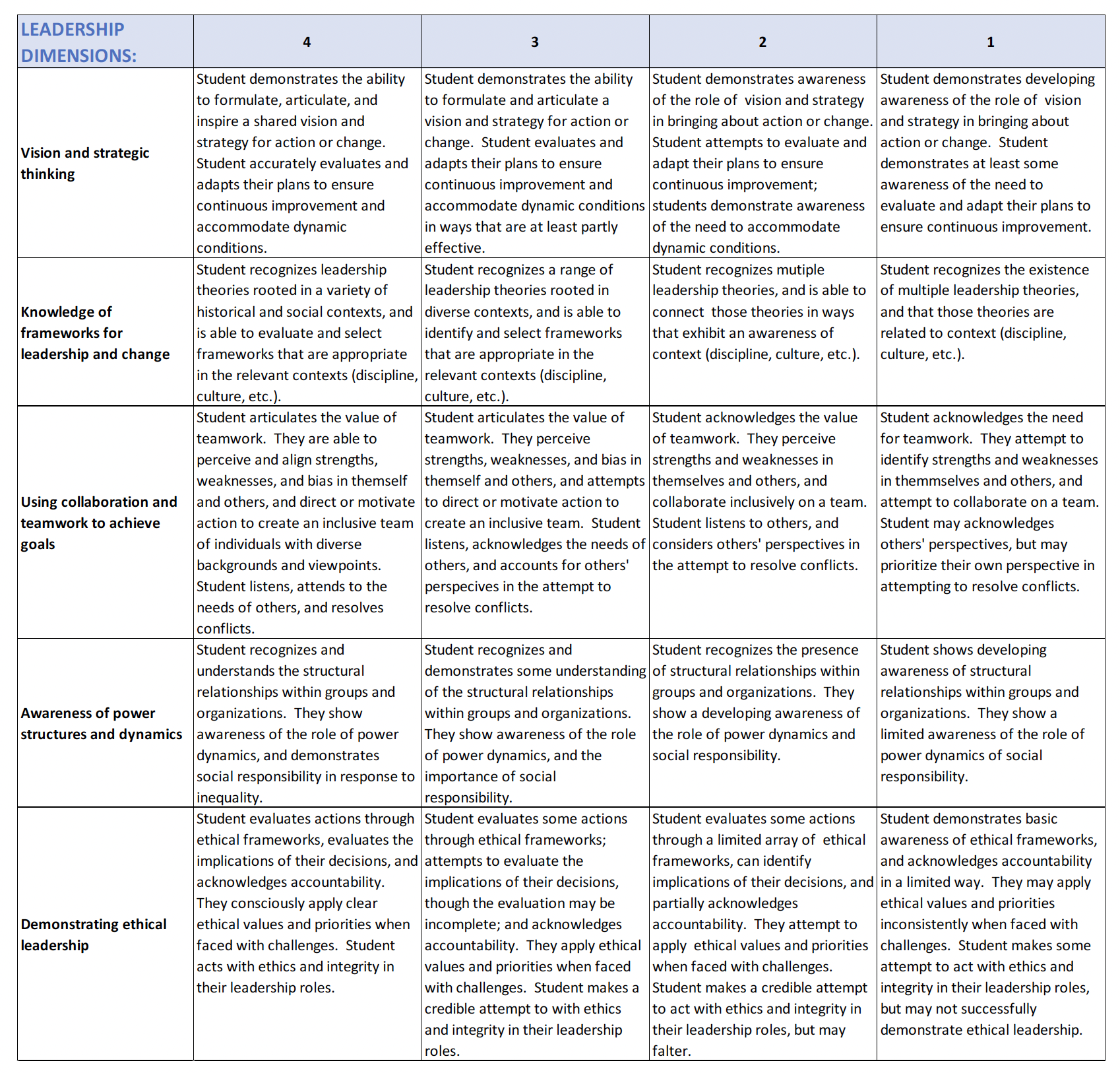
The University of Massachusetts Lowell developed the above rubric for their River Hawk Experience Distinction Leadership Program, defining specific criteria with a clear description of what each trait should look like at different performance levels, in order to provide a standardized way of measuring and assessing leadership skills
My favorite inspirational speaker Simon Sinek has also weighed in on this topic of “What Makes a Great Leader?” refining/simplifying it to just three traits:
Courage
Integrity
Communication
Additional resources
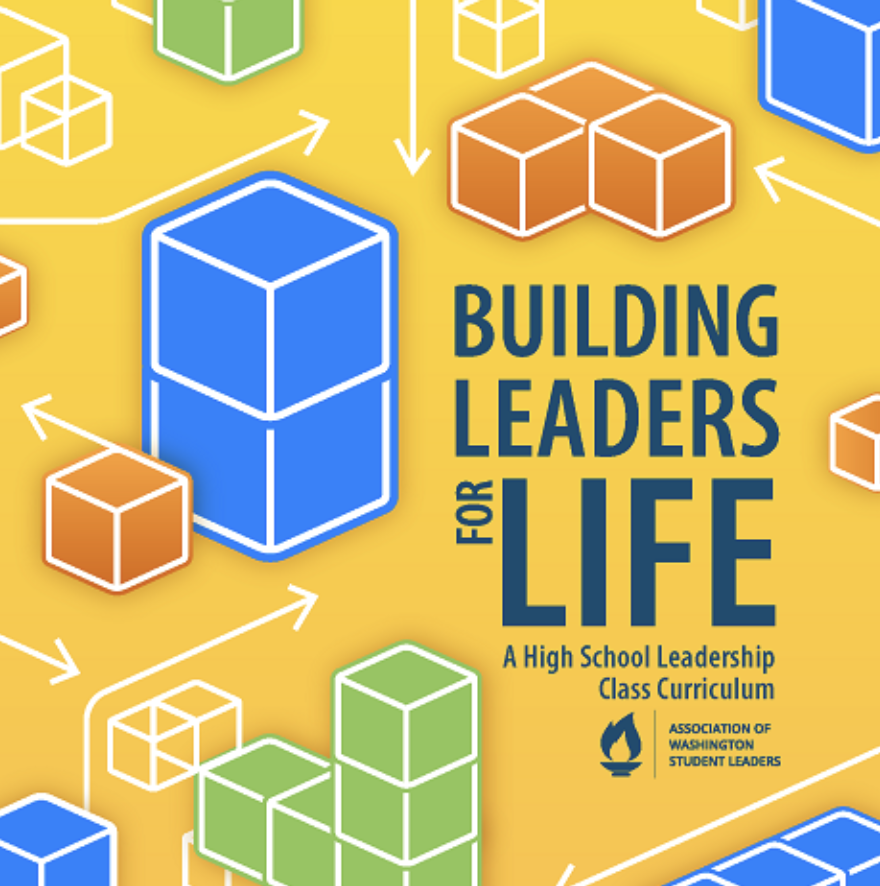
If you are an educator looking for supplemental material on developing leadership skills in your students, besides these SAS INSTITUTE 2025 slides (of which the original PowerPoint file is available to download for free in order to adapt for your classroom – please email me), I recommend perusing the full-blown “Building Leaders for Life” (second edition) curriculum (94 lessons in five subject areas, 355 pages of lesson materials, 137 student handouts) created by the Association of Washington Student Leaders (a division of the Washington School Principals’ Education Foundation). Click here to view their website. They also have a middle school and elementary series!
If you attend my SAS INSTITUTE workshop on December 9, 2025 (starting at 9:40 a.m. in Magnolia C, Hershey Lodge & Convention Center), ask me to see sample materials from their high school course of study.
Finally, here is the “homework for future leaders” I provided at the SAS INSTITUTE and during a 2024 summer camp at Upper St. Clair High School, providing additional links to many inspiring minds. Enjoy!
Leadership is not about being in charge. It is about taking care of those in your charge. — Simon Sinek
A leader is one who knows the way, goes the way, and shows the way. — John C. Maxwell
Do not follow where the path may lead. Go instead where there is no path and leave a trail. — Ralph Waldo Emerson
The greatest leader is not necessarily the one who does the greatest things. He is the one who gets people to do the greatest things. — Ronald Reagan
What you do has far greater impact than what you say. — Stephen Covey
Teachers make as many as 1,500 decisions a day for their classes and students… that’s as many as four educational choices per minute for the average teacher given six hours of class time. Surprised? (Not if you are an educator!) Check out this corroborating research:
Of course it can be exhausting… and as fast as “things” happen, even mind-numbing at times!
What do educators rely on for guidance, a sort of internal “ethical compass” for making these decisions, many of which are snap judgments?
Educational background
Teacher “chops” (professional experience)
Peer and administrative support
Personal moral code (derived from one’s life experiences and upbringing)
Aspirations, values, and beliefs generally agreed upon by educational practitioners
State’s code of conduct and other regulations, statutes, policies, and case law
Professional ethics
Or all of the above?
At this juncture during my workshops on ethics, I usually quote Dr. Oliver Dreon, Assistant Professor and Coordinator of the Digital Learning Studio at Millersville University of Pennsylvania and one of the authors of the Educator Ethics and Conduct Tool Kit of the Pennsylvania Professional Standards and Practices Commission:
“From a decision-making standpoint, I tend to look at it from the perspective of Ethical Equilibrium (work by Troy Hutchings). Teachers weigh the moral (personal) dimensions with regulatory ones (the law) with the ethics of the profession… While focusing on consequences is important, I worry that teachers may interpret this to mean that as long as they don’t break the law, they can still be unprofessional and immoral.”
– Dr. Oliver Dreon
From college students participating in their first field observations to rookie teachers (and even veterans in the field), I recommend searching the term “ethics” on the website of your State Board of Education. In Pennsylvania, checkout the following:
Now enters probably the single most valuable document of our time, an all-encompassing philosophy for embracing the highest standards of what it means to be an ethical educator: the Model Code of Ethics for Educators (MCEE), developed under the leadership of the National Association of State Directors of Teacher Education and Certification (NASDTEC). With the collaboration of numerous development partners including the American Federation of Teachers, National Education Association, National Association of Elementary School Principals, National Association of Secondary School Principals, Council of Chief State School Officers, and American Association of Colleges of Teacher Education – to name a few – MCEE is comprised of five core principles (like spokes in a wheel – all with equal emphasis), 18 sections, and 86 standards.
“The purpose of the Model Code of Ethics for Educators (MCEE) is to serve as a shared ethical guide for future and current educators faced with the complexities of P-12 education. The code establishes principles for ethical best practice, mindfulness, self-reflection and decision-making, setting the groundwork for self-regulation and self-accountability. The establishment of this professional code of ethics by educators for educators honors the public trust and upholds the dignity of the profession.”
Although pre- and in-service training on both are essential, the differences between a “code of conduct” and a “code of ethics” are vast. Codes of conduct like the Code of Professional Practice and Conduct for Pennsylvania teachers are specific mandates and prohibitions that govern educator actions. A code of ethics is a set of principles that guide professional decision making, not necessarily issues of “right or wrong” (more shades of grey) nor defined in exact terms of law or policies. Codes of ethics are more open-ended, a selection of possible choices, usually depended on the context or circumstances of the situation.
“The interpretability of The Model Code of Ethics for Educators allows for robust professional discussions and targeted applications that are unique to every schooling community.”
The music teacher and administrator colleagues with whom I have been privileged to work for more than 40 years are highly dedicated and competent visionaries who focus on “making a difference” in the lives of their students, modeling “moral professionalism” and the highest ethical standards for their classes, schools, and communities, in support of maintaining the overall integrity of the profession.
However, let’s unpack some of “the wisdom” of MCEE as it addresses the rare “nay-sayers” and entrenched teacher attitudes, failing to understand “the difference between what you have a right to do and what is right to do…” (Potter Stewart) or “doing the right thing when no one else is watching – even when doing the wrong thing is legal” (Aldo Leopold).
Here are sample negative responses, MCEE “exemplars,” and proposed assimilations for thoughtful and interactive peer discussion. Bring these to your next staff meeting or workshop, and apply them to a few mock scenarios (like these from my past blog ).
Principle I: Responsibility to the Profession
The professional educator is aware that trust in the profession depends upon a level of professional conduct and responsibility that may be higher than required by law. This entails holding one and other educators to the same ethical standards.
“I didn’t know it was wrong…”
Section I, A, 1: Acknowledging that lack of awareness, knowledge, or understanding of the Code is not, in itself, a defense to a charge of unethical conduct;
My comment: The old adage, “ignorance of the law is no excuse for breaking it.” – Oliver Wendell Holmes
“What’s the problem? I didn’t break the law!
MCEE Section I, A, 5: Refraining from professional or personal activity that may lead to reducing one’s effectiveness within the school community;
My comment: Any on or off-duty conduct or inappropriate language that undermines a teacher’s efficacy in the classroom, damages his/her position as a “moral exemplar” in the community, or demeans the employing school entity may result in loss of job, suspension or revocation of license, and/or other disciplinary sanctions.
MCEE Section I, B, 2: Maintaining fidelity to the Code by taking proactive steps when having reason to believe that another educator may be approaching or involved in an unethical compromising situation;
My comment: As a professional with “fiduciary” responsibilities, we must look out for the welfare of our students, proactively protecting them from harm by embracing all provisions of “mandatory reporting.”
“What’s in it for me?”
MCEE Section I, C, 3: Enhancing one’s professional effectiveness by staying current with ethical principles and decisions from relevant sources including professional organizations;
MCEE Section I, C, 4: Actively participating in educational and professional organizations and associations;
Principle II: Responsibility for Professional Competence
The professional educator is committed to the highest levels of professional and ethical practice, including demonstration of the knowledge, skills, and dispositions required for professional competence.
“What’s the big deal about standards?”
Section II, A, 1: Incorporating into one’s practice state and national standards, including those specific to one’s discipline;
My comment: As professionals, we should volunteer to help write our school’s courses of study, content units, and learning goals for the subjects we teach, and take advantage of the National Core Arts Standards, the PMEA Model Curriculum Framework, and the state’s standards.
“Not another ‘flavor-of-the-month’ in-service program!”
Section II, A, 5: Reflecting upon and assessing one’s professional skills, content knowledge, and competency on an ongoing basis;
Section II, A, 6: Committing to ongoing professional development
My comment: Always “raising the bar,” being a member of a “profession” (like medical personnel, counselors, attorneys, etc.) requires the loftiest benchmarks of self-regulation and assessment, ongoing training, retooling, and self-improvement plans, revision and enforcement of “best practices,” and application of 21st Century learning skills.
“I needed to give him credit?”
MCEE Section II, B, 1: Appropriately recognizing others’ work by citing data or materials from published, unpublished, or electronic sources when disseminating information;
My comment: Especially during this period of online/virtual/remote education brought on by COVID-19, we must reference the owners of intellectual property (including sheet music) that we use and abide by all copyright regulations. In general, it is always “best practice” to cite research or authorship “giving credit where credit is due!”
“I’m just a music teacher! Don’t ask me to do anything else!”
MCEE Section II, C, 2: Working to engage the school community to close achievement, opportunity, and attainment gaps;
My comment: We teach “the whole child,” not a specialty or specific content area! I believe our ultimate mission is to facilitate our students’ capacity and desire to learn, inspire self-direction and self-confidence, and foster future success in life.
Principle III: Responsibility to Students
The professional educator has a primary obligation to treat students with dignity and respect. The professional educator promotes the health, safety, and well being of students by establishing and maintaining appropriate verbal, physical, emotional, and social boundaries.
“It’s just a gift…”
MCEE Section III, A, 5: Considering the implication of accepting gifts from or giving gifts to students;
My comment: It is not appropriate to give a gift to a student lacking an educational purpose. In some cases, this may be defined as a “sexual misconduct.” It begs the larger question: “Do you ensure that all of your interactions with students serve an educational purpose and occur in a setting consistent with that purpose?” Also from the PA Professional Standards and Practices Commission: “Teachers should refrain from accepting gifts or favors that might impair or appear to impair professional judgment.”
“You should never touch a student!”
MCEE Section III, A, 6: Engaging in physical contact with students only when there is a clearly defined purpose that benefits the student and continually keeps the safety and well-being of the student in mind;
My comment: We were told this warning in methods classes. However, as I mentioned in a previous blog here, this “rule” has little support in research or common “best practices.” It has been my experience that on occasion, most elementary instrumental teachers assist their students in acquiring the correct playing posture and hand positions by using some (limited) physical contact. Consoling an upset student with a pat on the shoulder is not out-of-line either. The factors that may contribute to the moment being judged “okay” vs. “inappropriate” boil down to:
MCEE Section III, A, 7: Avoiding multiple relationships with students which might impair objectivity and increase the risk of harm to student learning or well-being or decrease educator effectiveness;
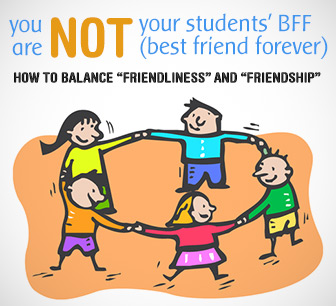
My comment: You cannot be their “friend.” You are their teacher, an authority figure that is looking out for them and doing what is necessary (“fiduciary” responsibilities) for their health and welfare… perhaps at times things they do not want you to do. Crossing the teacher/student boundary with familiarity, informality, and being their “confidant” or “friend” are more than just unprofessional acts – they can foster a dual relationship where roles are less defined, an ambiguity that may lead to additional inappropriate actions and educator misconduct.
“He’s weird…” or “He’s not one of us!”
MCEE Section III, B, 2: Respecting the dignity, worth, and uniqueness of each individual student including, but not limited to, actual and perceived gender, gender expression, gender identity, civil status, family status, sexual orientation, religion, age, disability, race, ethnicity, socio-economic status, and culture;
My comment: Check your prejudices and personal biases at the door. Being a teacher is all about sensitivity and caring of all individuals – students, parents, staff, etc. Embracing today’s focus on reprogramming community attitudes on “diversity,” an educator daily models the values of empathy, compassion, acceptance, and appreciation, not just settling with the “lower bar” of tolerance, allowance, and compliance!
“Wait ’til you hear what happened in class today!”
MCEE Section III, C, 1: Respecting the privacy of students and the need to hold in confidence certain forms of student communications, documents, or information obtained in the course of practice;
My comments: Gossiping about and “carrying tales” home or in the teachers’ room are serious breaches of the care and trust as well as your fiduciary responsibilities assigned to you on behalf of your students. As for “regulations,” your indiscretion may be a violation of your students’ confidentiality rights (“a federal crime” according to Family Educational Rights and Privacy Act, Grassley Amendment, Health Insurance Portability and Accountability Act, and Individuals with Disabilities Education Act). You are only permitted to share information about a student with another teacher, counselor, or administrator who is on a “needs-to-know” basis or is actively engaged in helping this student.
Principle IV: Responsibility to the School Community
The professional educator promotes positive relationships and effective interactions with members of the school community while maintaining professional boundaries.
“Don’t tell my parents!”
MCEE Section IV, A, 1: Communicating with parents/guardians in a timely and respectful manner that represents the students’ best interests;
My comment: I wish I had a nickel every time a student plead with me, “Don’t call my mom!” It is part of “moral professionalism,” your “code,” and good ethical standards to originate meaningful two-way dialogue, and if necessary, confront the parents of underachieving children. I also believe it goes on long way to nurture your relationships in the community if you notify parents when their kid has done something remarkable… “I caught him being good” or “The improvement has been extraordinary!”
“Did you hear what a staff member said about you… in front of the kids?”
MCEE Section IV, B, 1: Respecting colleagues as fellow professionals and maintaining civility when differences arise;
MCEE Section IV, B, 2: Resolving conflicts, whenever possible, privately and respectfully, and in accordance with district policy;
My comment: Before you bring up the matter with your supervisor or building administrator (which you have the right and even responsibility to do, especially if the students hear any improper speech first-hand or that the incidents rise to the level of bullying or aggressive behavior), first confirm the story. Talk to the unhappy team member one-on-one. Be calm and sensitive, but hold your ground: you must assert that his/her behavior/language is unacceptable and will not be tolerated in the future.
“Not another TEAM meeting?”
MCEE Section IV, B, 4: Collaborating with colleagues in a manner that supports academic achievement and related goals that promote the best interests of students;
My comment: We work together to insure that all educational goals are met. Open and interactive peer partnerships are helpful in the review, design, and application of new lessons, methods, media, and music.
“I was just teasing her…”
MCEE Section IV, B, 8: Working to ensure a workplace environment that is free from harassment.
My comment: Be extremely careful in the practice of any behavior or language of a kidding, sarcastic, cynical, or joking manner. It can be misinterpreted regardless of your intentions… and it can hurt someone’s feelings. And it is never appropriate or “professional” to “put down” another person.
“Don’t ask for permission… beg for forgiveness.”
MCEE Section IV, C, 3: Maintaining the highest professional standards of accuracy, honesty, and appropriate disclosure of information when representing the school or district within the community and in public communications;
My comment: Yes, I have heard this “view” a lot, advocates of whom will tell you to go ahead and stick your neck out to do something “for the good of the order,” and if needed later, “beg for forgiveness” if you decision is met with disapproval from administration. My advice? Less experienced teachers, run everything through your fellow colleagues (informally) and principal (formally). Don’t fall back on the lame “oops” and “beg for forgiveness.” I may have felt differently when I had three times as many years of experience under my belt than the supervisors who were assigned to “manage” me… but, even then, “venturing out without a paddle” usually did not serve the best interests of the students. There’s no reason to place “the teacher’s convenience” over the safety/welfare of the students. Besides, why not take advantage of the legal and political backup of your bosses if they are kept “in the loop?”
“He’s our preferred dealer and always takes care of us.”
MCEE Section IV, D, 4: Considering the implications of offering or accepting gifts and/or preferential treatment by vendors or an individual in a position of professional influence or power;
My comment: Formerly called “sweetheart deals” with music companies, you are on “shaky” ethical ground (and may also have “crossed the line” violating state laws/statutes) if you negotiate the rights of exclusive access to your school’s or booster’s purchasing. If you have any questions about your school’s policy on outside vendors, seek advice from your district’s business manager.
Principle V: Responsible and Ethical Use of Technology
The professional educator considers the impact of consuming, creating, distributing, and communicating information through all technologies. The ethical educator is vigilant to ensure appropriate boundaries of time, place, and role are maintained when using electronic communication.
“Isn’t use of social media forbidden?”
MCEE Section V, A, 1: Using social media responsibly, transparently, and primarily for purposes of teaching and learning per school and district policy. The professional educator considers the ramifications pf using social media and direct communications via technology on one’s interactions with students, colleagues, and the general public.
My comment: Professional educators’ use of a dedicated website or other social network application enables users to communicate with each other by posting information, comments, messages, images, etc. and “learn” together. However, using social media for sharing social interactions and personal relationships with your students, parents, and staff is unethical and dangerous. As they say, “a post (or snap) is forever.” Communicating digitally or electronically with students may lead to the blurring of appropriate teacher-student boundaries and create additional challenges to maintaining and protecting confidentiality.
The Final Word
In Pennsylvania (as well as the rest of the country), the statistics on school staff misconduct reports are rising alarmingly. Your own state’s “code of conduct” and the MCEE should help to clarify misunderstandings, but it has been my experience that the majority of educators do not receive regular collegiate, induction, or in-service training on educator ethics or moral professionalism. Luckily, we are fortunate to have access to many mock scenarios (see below) from state departments of education to review/discuss among ourselves common ethical conflicts and “conundrums” dealing with pedagogy, enforcement, resource allocation, relationships, and diversity. We all need to “refresh” our understanding of these issues from time to time and revisit “our codes” frequently to help “demagnetize” (and re-adjust) our decision-making compass.
Please peruse the ethics category of this blog-site for other articles and sample references below.
PKF
Resources
Website of Thomas W. Bailey, retired social studies teacher and attorney-at-law https://twbaileylaw.com/
American Association of Colleges for Teacher Education webinar presentation Beyond the Obvious: The Intersection of Educator Dispositions, Ethics, and Law by Troy Hutchings and David P. Thompson https://smackslide.com/slide/ethical-equilibrium-aacte-2evrqb
Empaneling the “Ethic Jury” to Review Mock Case Studies
The study of morality in professional decision-making is essential to pre- and in-service training of music teachers. Our goal should be to reinforce recommendations for the avoidance of inappropriate behavior (or even the appearance of impropriety), and defining and modeling the “best practices” of a “fiduciary” by promoting trust, fostering a safe environment for learning, acting in the best interests of our students, and upholding the overall integrity of the profession.
Full discussions and samples of “the codes” (ethics and conduct), professional aspirations, and government policies/statutes – a proverbial “curriculum” exploring ethics for music educators – have been posted at this blog-site. You should peruse these first before proceeding further:
All of these should be “required” reading. Few of us have ever received a full-blown class or induction program on ethics. Now is the time to study this topic, and as ethics expert Dr. Troy Hutchings would say, to view it through multiple perspectives – “the lens of…”
“Ethos of care”
“Educator risks”
“Consequences”
The purpose of this blog is to provide supplemental materials for personal reflection, possibly inspiring thought-provoking group dialogue during methods classes, professional development workshops, or music staff meetings.
The Rubric
It is more important to know why something is wrong, rather than simply labeling the degree of misconduct or likely discipline action. However, for the purpose of introspection during this exercise, we will first recognize “the problem” presented in each re-enactment. We will use these “color-coded” criteria, and allow “snap judgments” in the simulated evaluation by a “jury of our peers.” Put on your thinking caps! You may be surprised with the incongruities of your first impressions once the likely outcomes of these stories are revealed!
Use this tool to judge the severity of the upcoming case studies.
DEGREES OF MISCONDUCT (from bad to worst)
GREEN (not illustrated) = not a misconduct
BLUE (not illustrated) = inappropriate, unwise, or “bad for appearances” – but no consequences
PURPLE = “Unprofessional” – unlikely to result in serious consequences except possible damage to one’s professional reputation
GOLD = “Immoral” – no guarantee of consequences except may result in lowering the year-end teacher evaluation score, earning a “warning” or “write-up” by the principal/supervisor, or consideration for a job re-assignment
ORANGE = “Unethical” – which will result in discipline action and possible loss or suspension of certificate
RED = “Illegal” – which may add criminal penalties, fines, jail time, etc. All it takes is a felony or misdemeanor conviction to lose your job… and your certificate… even if it is unrelated to your employment or taking place at school.
Essential Ethical Questions
It is important to analyze your response to these reflections during your assessment of each ethical dispute:
What possible issues/concerns might this scenario raise?
How could this situation become a violation of the law, the “Code” or other school/district policies?
In this situation, what are some potential negative consequences for the teacher, students, parents, and/or school staff?
How would this episode affect a teacher’s efficacy in his/her classroom, demean the employing school entity, or damage her position as a moral exemplar in the community?
Mock Scenarios
CASE #1
Melissa S. was a 23-year-old high school music teacher who also supervised the production of the school musical. After months of practices, Miss S. became very close to several seniors including David, the male lead in the musical. She and David began sharing emails and texts with one another. Most of the communications were playfully flirtatious but not overtly sexual. Immediately after graduation, however, Miss S. and David began dating and became sexually intimate. After discovering the relationship, David’s parents filed a complaint against Miss S. with the district superintendent.
CASE #2
My drum major was suspended because she smoked pot and was caught. I needed her to run the half time show we had been practicing for months and so I attempted to convince administration that she had to participate because it was part of my curriculum and part of her grade. I decided the other kids shouldn’t be punished because of her idiocy so I worked hard to keep her in the show.
This assumes the principal will make the ethical decision in allowing or prohibiting the student leader to participate.
Let’s put this choice squarely on your shoulders (where it usually sits). What would you do if you were the one that discovered your soloist, lead, accompanist, or drum major was drinking on a school music trip? What if he or she was the one performer you counted on for an outstanding adjudication?
You walk into the Disney World cafeteria, see your student has a wine cooler on his/her tray sitting at the tables. Since no one else sees you standing there, you walk out as if nothing has happened.
CASE #3
You are taking your high school music department to Orlando. Because of the size of the trip, you have to put it out on bid. One company offers a generous “under the table” deal: “If you choose our travel agency for the Florida trip, we will throw-in the gift of a new conductor’s podium and set of two dozen music stands.” You decide to go with them.
CASE #4
James C. is a middle school music teacher who was arrested for drunk driving. After several months, the teacher goes to court and is convicted of the offense. When the district moves to have Mr. C fired for his conviction, he argues that this offense has no influence over his ability to instruct his students. Also, the episode happened during the weekend on his private time.
CASE #5
Mrs. K is a high school choral director whose husband recently divorced her. During a lesson one day, she breaks down in front of her class. In an attempt to calm the students, she explains her emotional state and discusses the end of her marriage. After school that day, a male student visits Mrs. K to see if she has recovered. The student explains that his parents are also divorcing and he understands her feelings. The student begins stopping in to see Mrs. K more frequently and the pair begins spending more time outside of class supporting each other. Mrs. K’s colleagues start to become suspicious of her relationship with the student and report the teacher’s actions to their principal.
Food for Thought – Suggestive Answers
Please keep in mind my disclaimer, “I am not an attorney, a member of a human resource staff, nor a research scholar or expert on school ethics.” However, although retired, I continue to teach (part-time) and face day-to-day decision-making… now for more than 40 years. These are my responses to the above cases. I welcome your comments, and any input from highly respected leaders in the field of educator ethics like Dr. Troy Hutchings (Chair of Education, University of Phoenix) and Dr. Oliver Dreon (Associate Professor, Millersville State University of Pennsylvania).
RESPONSE TO CASE #
ETHICS VIOLATION:In my opinion, this would likely result in loss of employment and revocation of her certificate. The debate in some areas of the world supports that it may be permissible to have an intimate relationship with a former student as long as it did not start while the student was at school. We have learned that the American Psychological Association has an ethical guideline of non-fraternization for at least two years post-treatment, while the National Association of Social Workers has a one year moratorium for sexual involvement with a client. However, frankly, in the teaching profession, due to the inherent power imbalance that can influence inappropriate relationships between teachers and students or former students – even after graduation: Are either of these models relevant?
ETHICS VIOLATION:Most would say this was a serious noncompliance with the school district’s drug and alcohol policy, violation of the local laws governing underage consumption, and likely breach of your fiduciary responsibility. No decision is a decision… walking away means you condone the behavior. What if the drinker becomes sick or has an accident and gets hurt “on your watch?”
ETHICS VIOLATION:Better check your state’s code of ethics. From the Pennsylvania Code of Professional Practices and Conduct, “No educator is permitted to accept personal or financial gain or advantage (other than their contractual compensation package) through their work in a school system.” Interpretations may disagree on a “true-life” experience: At a music conference, I was invited to a special dinner celebrating the “best clients” by a vendor representative who insisted on picking up the tab. Minimal infraction? Would you change your misconduct rating if the party took place at Hooters? How about at a strip club?
ETHICS VIOLATION:The convicted drunk driver did not win his argument. He probably would lose his job and faced criminal penalties! Although he may still hold his teaching certificate, it is unlikely he will ever be considered for employment as a teacher in any state.
ETHICS VIOLATION:Did you initially interpret this as the choral director being misguided, emotionally immature, and only exhibiting unprofessional conduct by allowing the sharing their mutual feelings and experiences? According to the author of this scenario, after investigation, she was asked to resign from her position, and she complied. She did not lose her certificate… but could have depending on state or district regulations and the extent of her off-school behavior.
Of course, ETHICAL ISSUES are not always black and white… no one will ever agree on one definitive set of moral standards. My purpose here was only to inspire thinking and a fresh perspective on this topic… probably succeeding in creating more questions than answers in your mind.
Definitions and Revisiting MCEE
To summarize, lets review the well-stated foundations of “right or wrong” making up our “ethical equilibrium,” and these concepts that represent the compass of decision-making in education:
Personal Morality: “Personal values and beliefs derived from one’s life experiences… subjective and may or may not align with community mores.”
Regulations of Law: “Policies, statues, and judicial activity that articulate conduct absolutes.”
Professional Ethics: “Professional ethical standards that assist practitioners within situation and systemic contexts in choosing the best course-of-action.”
Professional Dispositions: “Agreed upon professional attitudes, values and beliefs to be held by educational practitioners.”
Finally, at this juncture, it would be most appropriate for you to recap your thoughts and correlate your “judgments” of the above scenarios with the National Association of State Directors of Teacher Education and Certification Model Code of Ethics for Educators. If you have not read this comprehensive document, “do it now!” You should also review your own state’s code of ethics.
This is all about BALANCE and exercising extreme care and sensitivity in meeting the needs of our students. Keep “fighting the good fight” and your commitment to ETHICS and the highest standards of what E.A. Wynn refers to as “moral professionalism” in his research article, “The Moral Dimension of Teaching.”
PKF
Special Thanks to These Sources of Mock Scenarios
Pennsylvania Educator Ethics and Conduct Toolkit by Dr. Oliver Dreon, Sandi Sheppeard, and the Professional Standards and Practices Commission
Nebraska Professional Practices Commission
Connecticut Teacher Education & Mentoring Program
Featured photo credit from FreeImages.com:
“Ethics” by Olivier Le Moal
Remaining photo credits in order from pixabay.com:
I keep a close watch on this heart of mine
I keep my eyes wide open all the time
I keep the ends out for the tie that binds
Because you’re mine, I walk the line. — Johnny Cash
Johnny Cash sang his love song, “I walk the line…” but for teachers in the education profession, it is a “fine line” to maintain the standards and appearances of professionalism, morality, and ethical codes of conduct in the school workplace.
The purpose of this blog series is to explore an introduction to the definitions, philosophy, and practices of teacher ethics, integrity, professional standards, and behavior “codes,” and some of the available resources, perspectives, and “legalese” on proper relationships among students, parents, and other professionals, appropriate student-teacher boundaries, warnings of vulnerabilities and dilemmas at the workplace, and tips to avoid the problems of unacceptable appearances and actions.
However, the disclaimer is that I am not an attorney, human resource manager, nor scholar on school ethics, nor was I ever trained in a single workshop, college class, teacher induction or in-service program on this subject. After reading this article, you should immediately visit the website of your state’s education department, and search on the topic of “code of ethics” or “code of conduct.” A few examples of the “real deal” are listed below, and yes, you must study “every word of” the entire document and applicable rules from the state you are/will be employed.
According to Snopes (see http://www.snopes.com/language/document/1872rule.asp), the following “rules of conduct for teachers” — one of the similar “the way we were” documents of questionable origin — may have been circulating since at least the 1930s.
“Nobody has ever been able to verify the authenticity of this list of rules. It has been reproduced in countless newspapers and books over the last fifty years, and copies of it have been displayed in numerous museums throughout North America, with each exhibitor claiming that it originated with their county or school district.”
However accurate, one can only marvel at the real or perceived grimness of the late nineteenth/early twentieth century American schoolteacher’s lot: “the profession was lowly regarded, the work was physically demanding and involved long hours on the job, the position paid poorly, retirement benefits were non-existent, and teachers were expected to be among the most morally upright members of their community.”
Sample Rules for (Female) Teachers 1915
You will not marry during the term of your contract.
You are not to keep company with men.
You must be home between the hours of 8 PM and 6 AM unless attending a school function.
You may not loiter downtown in ice cream stores.
You may not travel beyond the city limits unless you have the permission of the chairman of the board.
You may not ride in a carriage or automobile with any man except your father or brother.
You may not smoke cigarettes.
You may not dress in bright colors.
You may under no circumstances dye your hair.
You must wear at least two petticoats.
Your dresses may not be any shorter than two inches above the ankles.
To keep the classroom neat and clean, you must sweep the floor at least once a day, scrub the floor at least once a week with hot, soapy water, clean the blackboards at least once a day, and start the fire at 7 AM to have the school warm by 8 AM.
Like medicine and law, teaching is a “professional practice,” a “conservative” occupation with high expectations and close public scrutiny. Although many have considered the 24/7 nature of a career in music education a “calling,” the true qualities of the teaching professional include these values also embraced by doctors and attorneys:
Achievement of higher education, constant training and retooling, specific goals, and self-improvement
Adoption and refinement of “best practices”
Habits of creativity, critical thinking, problem solving, and communication skills
Acceptance of criticism, peer review, teamwork, compromise, and group vision
High standards of behavior, etiquette, appearance, language, and ethics
According to “The California BTES – Overview of the Ethnographic Study” by David Berliner and William Tikunoff, “an effective teacher” is distinguished by exceptionally high standards:
Effective teachers score high on accepting, adult involvement, attending, consistency of message, conviviality, cooperation, student engagement, knowledge of subject, monitoring learning, optimism, pacing, promoting self-sufficiency, and structuring.
Effective teachers score low on abruptness, belittling, counting hours or “clock punching,” defiance, illogical statements, mood swings, oneness (treating whole as “one”), and recognition-seeking. — David Berliner and William Tikunoff
Referred to as “moral professionalism” (see Wynne, E.A. 1995. “The moral dimension of teaching.” In A.C. Ornstein Ed. Teaching: Theory into Practice. pp. 190-202. Boston: Alyn and Bacon), the bar is further raised:
Coming to work regularly and on time
Being well informed about their student-matter
Planning and conducting classes with care
Regularly reviewing and updating instructional practices
Cooperating with, or if necessary, confronting parents of underachieving students
Cooperating with colleagues and observing school policies so the whole institution works effectively
Tactfully but firmly criticizing unsatisfactory school policies and proposing constructive improvement
Ethics
Webster’s definition of eth·icsis “the discipline dealing with what is good and bad and with moral duty and obligation” or “a set of moral principles.” Others have tried to clarify the meaning of these terms with more in depth interpretations:
Ethics is knowing the difference between what you have a right to do and what is right to do. — Potter Stewart
Ethical behavior is doing the right thing when no one else is watching – even when doing the wrong thing is legal. — Aldo Leopold
Ethics and morals relate to “right” and “wrong” conduct. While they are sometimes used interchangeably, they are different: ethics refer to rules provided by an external source, e.g., codes of conduct in workplaces or principles in religions. Morals refer to an individual’s own principles regarding right and wrong.
According to Laurie Futterman, former Heart Transplant Coordinator at Jackson Memorial Medical Center and now chair of the science department and gifted middle school science teacher at David Lawrence Jr. K-8 Center, “ethics is a branch of moral philosophy.” Futterman wrote the following in the March 31, 2015 issue of Miami Herald about how ethics “involves defending and recommending concepts of right and wrong conduct.”
“In discussion however, ethics can become eclipsed by commingling concepts of values and morals. They all provide behavioral rules, so what are the differences?
Values are rules from which we make our personal decisions about what is right and what is wrong, good or bad. Values help direct us to what is more important and past what is less important. This helps guide us when making decisions.
Morals tend to be broad yet are more far reaching because of their strong link to good and bad. We judge others by their morals rather than their values.
Ethics, in contrast, are a set of rules that tend to be adopted and upheld by a group of people. This could include medical ethics, journalism and advertising ethics and educational ethics. So ethics or intent, tends to be viewed as something upheld and adopted internally, such as professionalism, while morals are ideals we impose on others.”
In addition, there are distinctions between “Codes of Conduct” and “Codes of Ethics.” Although they both provide self-regulation of (un)acceptable behaviors, frequently the Code of Ethics outlines a set of principles that affect/govern decision making, while the Code of Conduct delineates specific behaviors that are required or prohibited and governs actions.
For the sake of our discussion here about ethics in education, I will add the qualifier that a “violation of ethics” is usually associated with significant consequences or punishment, like charges of medical malpractice or lawyers facing an “ethics committee” hearing. Confirmed unethical behavior may result in censure, suspension of license or certification, or other discipline action. Most state education governing entities post legally-binding “educator discipline acts” or codes of professional standards, ethics, and/or behavior, with extensive penalties.
Discipline
The grounds for imposition of discipline are broad and far-reaching, and will be governed by the state or county education system to where you are employed. As an example, “the laws” defining infractions in Pennsylvania are:
Immorality
Incompetency
Intemperance
Cruelty
Negligence
Sexual misconduct, abuse or exploitation
Violation of the PA Code for Professional Practice and Conduct Section 5(a)(10)
Illegal use of professional title
Failure to comply with duties under this act, including the mandatory reporting duties in section 9a.
Actions taken by an educator to threaten, coerce or discriminate or otherwise retaliate against an individual who in good faith reports actual or suspected misconduct under this act or against complainants, victims, witnesses or other individuals participating or cooperating in proceedings under this act.
Violations range from exhibiting poor behavior or even the semblance of impropriety to “breaking the code” or criminal offenses. (Yes, “appearances” can get you in trouble, due to one’s interpretations of the above charges of “immorality,” “intemperance,” and “negligence!”) In short, from bad (unprofessional) to worse (illegal), this illustration defines misconducts.
The first two on the bottom of the figure (unprofessional or immoral incidents) may only (?) result in damage to one’s professional reputation, lowering the year-end teacher evaluation score, earning a “warning” or “write-up” by the principal/supervisor, or a job re-assignment, but unethical or illegal conduct usually results in further investigation and possible major (and often permanent) disciplinary action:
Private Reprimand
Public Reprimand
Suspension (temporary termination of certificate)
Revocation (termination of certificate)
Surrender (of certificate)
Supplemental Sanctions
Legal (Criminal) Action (fines, suspension, jail time, other penalties)
Civil Action
Ethical Equilibrium: Consequential “Codes of Conduct” vs. Professional Ethics
“From a decision-making standpoint, I tend to look at it from the perspective of Ethical Equilibrium (some work by Troy Hutchings). Teachers weigh the moral (personal) dimensions with regulatory ones (the law) with the ethics of the profession (ethics of teaching?). While focusing on consequences is important, I worry that teachers may interpret this to mean that as long as they don’t break the law, they can still be unprofessional and immoral.”
– Dr. Oliver Dreon, Associate Professor at Millersville University and author of the Pennsylvania Professional Standards and Practices Commission Ethics Tool Kit.
The foundations of “what’s right or wrong” and what your mother always said was “behaving appropriately when no one is watching you” are all about professional ethical standards that guide decision-making. The work of Troy Hutchings (among other leaders in this field) helps to further clarify these sometimes blurred definitions:
Personal Morality: “Personal values and beliefs derived from one’s life experiences… subjective and may/may not align with community mores.”
Regulations of Law: “Policies, statues, and judicial activity that articulate conduct absolutes.”
Professional Ethics: Professional ethical standards that assist practitioners within situation and systemic contexts in choosing the best course-of-action.”
Professional Dispositions: “Agreed upon professional attitudes, values and beliefs to be held by educational practitioners.”
See the slide below borrowed from the American Association of Colleges for Teacher Education webinar presentation “Beyond the Obvious: The Intersection of Educator Dispositions, Ethics, and Law” by Troy Hutchings and David P. Thompson.
In other words, the intent of these essays on ethics is not to emphasize the “lowest standards of acceptable behavior” or the consequences of misconduct for music teachers. We will strive to move from “obedience and punishment orientation” (stage 1) and “self-interest orientation” (stage 2) to “social contract orientation” (stage 5) and “universal ethical principles (stage 6) of Lawrence Kohlberg’s “Six Stages of Moral Development.” (See http://ww3.haverford.edu/psychology/ddavis/p109g/kohlberg.stages.html).
Sample Codes of Ethics
One of the best examples endorsed by many states, college education methods programs, and other institutions, the National Association of State Directors of Teacher Education and Certification has published its “Model Code of Ethics for Educators” (see http://www.nasdtec.net/?page=MCEE_Doc) outlining the following principles:
Responsibility to the Profession
Responsibility for Professional Competence
Responsibility to Students
Responsibility to the School Community
Responsible and Ethical Use of Technology
In addition, it would be valuable to study the standards proclaimed by other organizations, such as
The latter “Music Code of Ethics” was revised and ratified in 1973 by the Music Educators National Conference (now the National Association for Music Education), American Federation of Musicians, and the American Association of School Administration (now the School Superintendent’s Association). It is worth reading mutual agreement of these parties regarding which performance events are sanctioned for music education programs and those that are only appropriate for professional musicians who make their livelihood in the field of “entertainment.”
To be continued…
Part II: The Nitty Gritty will review:
Societal Changes Promoting Ethical Disputes
The Role of Education in Upholding Standards of Behavior
Philosophies in Moral Development
Sample Code of Professional Practices and Conduct
The Teacher-Student Relationship
Vulnerabilities
Social Media
Special thanks and credits go to Dr. Oliver Dreon, Associate Professor at Millersville University (in Pennsylvania), and one of the authors of the Pennsylvania’s Educator Ethics and Conduct Toolkit,the source of much of the research, quotes, and perspective of this three-part series comes.
Photo credits (in order) from FreeImages.com: “Ethics” by Olivier Le Moal, “Piano Prodigy” by Crissy Pauley, “Old School House” by Vikki Hansen, “On the Phone Closing the Deal” by Michael Roach, “Balance” by Stephen Stacey, “Gavel” by Jason Morrison, and “Music” by Ricardo Vasquez.
From another perspective, according to Investopedia, “BUSINESS ETHICS is the study of proper business policies and practices regarding potentially controversial issues, such as corporate governance, insider trading, bribery, discrimination, corporate social responsibility and fiduciary responsibilities.” The full article can be read at http://www.investopedia.com/terms/b/business-ethics.asp.
Declining Standards of Behavior?
Jean Twenge, the author of the 2006 book Generation Me, considers Millennials (born between 1977 and 1994), along with younger members of Generation X, to be part of what she calls “Generation Me,” possessing a preponderance of the traits of confidence and tolerance, but also a strong sense of entitlement and narcissism. Wikipedia identifies the (older) “Me” generation in the United States, referring to “the baby boomer generation and the self-involved qualities that some people associated with it.”
If, as the cliché has it, the 1980s was the decade of greed, then the quintessential sin of the 1990s might just have been lying. After all, think of the accusations of deceit leveled at politicians like Bob Packwood, Marion Barry, Dan Rostenkowski, Newt Gingrich, and Bill Clinton.
Regardless of these labels of societal trends, “generalizations about the generations,” and reflections on current social values and conscience in the media, how do you come to terms with the recent headlines of inconsistent (or “inconvenient”) ethics and morality?
State-sponsored doping of Russian athletes
Volkswagen emission cheating
Students saying, “If we don’t get caught” or “If they don’t find out,” it’s OK.
The rise of online plagiarism-checking programs such as turnitin.com.
The cynicism about “ethics in advertising: do we expect lies?”
So, are we “losing” our moral compass? Does “our word” mean anything? Do we take the easy way out and “fake a little” here and “wink a little” there? Is it affecting the way we interact with each other, in educational institutions, the marketplace, family life, and even presenting ourselves to be hired for a job?
Blame it on upbringing? Past experience? Perhaps it is safe to say one’s personal judgment may be affected by ethics. If a member of your family has a handicap parking placard, is it ever used when the handicapped individual is not riding in the car? In terms of judgment and feelings of entitlement, it is probably ill-advised to bring up anything to do with driving… fighting over parking places, cutting off someone, tooting horns at slow drivers, etc. Besides, who actually ever comes to a complete stop at a stop sign?
In the pre-employment planning stages, it is essential for you to make a honest personal and professional assessment, prepare to represent yourself accurately at interviews and on your resume and e-portfolio, and model ethical personal branding. I would agree that “you cannot ‘fib’ and claim you are a ‘master’ of everything,” but if you are certified to teach music in grades K-12, not just band, or general music, or choir, or strings… you should state your proficiency to teach “the whole kit and caboodle.” At employment screenings, it’s more important to show you have learned the necessary 21st Century skills of critical thinking, problem-solving, collaboration, communications, creativity, and flexibility/adaptability… rather than whether you can play Paganini on the violin, sing a high “A,” improvise modern jazz styles, or piano accompany a musical production.
Stretching Things a Bit?
The concept of a “stretched resume” is detailed online by “Employee’s Ethics: Getting a Job, Getting a Promotion, Leaving,” Chapter 6 from the book Business Ethics. The author tells the true story of Robert Irvine, who used to host the Food Network’s popular Dinner: Impossible. He was fired when he was caught “lying” or providing gross exaggerations on his resume. You should read the interesting full account at this site: http://2012books.lardbucket.org/books/business-ethics/s10-employee-s-ethics-getting-a-jo.html.
The kind of resume misrepresentations are categorized as the following:
False credentials
False experience
Embellished experience
False chronology
False references
The best quote from this reference suggests that the outcome of resume misrepresentation is not worth the chances you would take if/when you are caught:
Ethical egoism means your moral responsibility is to act in your own interest no matter what that may require. This provides a license for outright résumé invention… But, as is always the case with egoism, the question must be asked whether job seekers really serve their own interests when they claim things that may later be revealed to be false or when they land jobs they later won’t be able to perform because their qualifications were fake.
This source led me to the webpage http://fakeresume.com/ (aptly named) selling the book Fake Resume: The Machiavellian Guide to Getting a Job by Max Stirner (something I am not promoting!) You can peruse a segment of his work, “Five Reasons Why You Must Lie on Your Resume To Get a Job Today” at http://fakeresume.com/five-reasons-why-you-must-lie-on-your-resume.pdf. This excerpt is from his “Everyone Lies on Their Resume” section of his website:
The firm Hire Right released some interesting statistics that show how rampant resume fraud is in the United States. The company’s numbers show that 80 percent of all resumes are misleading. They also show that 20 percent state fraudulent degrees and 30 percent show altered employment dates. As if those numbers are not shocking enough, 40 percent have inflated salary claims and 30 percent have inaccurate job descriptions. Furthermore, the study shows 25 percent of people listing companies that no longer exist, and 27 percent giving falsified references; and these are only the people they have caught!
Guides to Employment Ethics
Regardless of what others do or say they do, marketing exaggeration and even falsehoods will not be in your best interest.
Richard Fein, Director of Career Management, Isenberg School of Management, University of Massachusetts-Amherst via Monstertrak.com wrote an excellent career guide on this subject: “Etiquette and Ethics in Your Job Search. What Are They and Why Should You Care?” Download the following to review the definitions, distinctions, and job search scenarios involving the terms “etiquette” and “ethics.” http://www.bu.edu/hospitality/files/pdf/ETIQUETTEANDETHICSINYOURJOBSEARCH1.pdf.
In addition, it should be “worth your while” to access some of the Franklin College’s “Helpful Handouts” under the Career Service section of their website: http://franklincollege.edu/student-life/career-services/students-alumni/helpful-handouts/. In particular, what stood out to me was their document “Job Search Ethics and Protocol,” which Assistant Dean of Students & Director of Career Services Kirk Bixler has graciously granted me permission to reprint below. (This is an excellent summary of many of the topics/tips we have posted at this site. Click on the “Marketing Professionalism” link to the right to read past blog-posts.)
Do NOT give into the temptation of carelessly completing an application. Do NOT make statements on an application like “see attached résumé.” Never leave spaces blank.
Apply for a job only if you have some realistic level of interest.
Absolute honesty on your résumé is imperative. Don’t overstate or understate. Don’t downplay your skills because you haven’t been featured in Business Week.
Request permission to use a person as a reference. Be prepared to explain to your reference what your job search plans are. Provide the reference with examples of qualities you possess. Offer a copy of your résumé. When interviewing, have your list of references on hand.
Don’t take advantage of an expense account when traveling for job interviews.
Show up for your interview. If you are visiting a person’s place of work, make sure your appearance, including mode of dress, is appropriate for that environment. You are not a student going to class. Consider yourself a professional trying to make a positive impression. How you present yourself is a partial reflection on the person with whom you are meeting.
Be a bit early for your appointment. Be mindful of the other person’s time. Come in prepared with questions & knowledge of the business.
Ask “How would you like to be addressed?” Be on the safe side; few people are offended by “Mister” or “Ms.” Be courteous to everyone you meet.
Everything you say must be true. On the other hand, you don’t need to say everything.
You may be asked to say something about another student or applicant. Speak only of your abilities & strengths. It is acceptable for an interviewer to ask you about other interviews, job offers & salary offers. You are not under an obligation to give a direct answer.
Be aware of illegal inquires. Employers may not ask, “How much alcohol do you drink?” “Have you ever been treated for mental health problems?” “What prescription drugs do you currently take?”
Thank you! Thank you! Thank you! Thank-you notes are a MUST in the job search process. They may be handwritten or typed. Address them to the person with whom you had the interview.
Be aware of drug screening requirements.
Call to inquire about your status in the employer’s hiring process. If a specific time has been communicated, wait until that time has passed before contacting the employer.
Let the employer be the first to mention salary. End it early if you are not interested. Let the employer know you are not interested in pursuing employment.
When offered the job, ask for time to think it over & ask for a formal offer letter.
You may receive one or more job offers you decide to reject. You should convey your decision to reject a job offer orally & in writing. The considerations here are speed & certainty of delivery. Call the person who signed your offer letter. Write a brief letter, also. Do both in a timely manner.
Only accept a job if you are really interested. Don’t settle. Once you accept a job offer, formally remove yourself from all other job searches. DO NOT continue looking.
When accepting an offer of full-time employment or an internship (either paid or unpaid), one must have every intention of honoring that commitment. If a student accepts an offer of employment, admission to a graduate or professional school, or other post-graduate career opportunity, he/she must withdraw from the recruiting process immediately. This includes but is not limited to:
Not applying to future job postings.
Declining all future interview invitations.
Canceling any active applications.
Contacting all recruiters to inform them of your wish to be removed from the interviewing and recruitment process (this includes all scheduled interviews).
Ethics? It all boils down to two questions: “Who are you?” and “For what do you stand?” Besides the fear of “getting caught in lies” and being fired for misrepresentation (or doing an incompetent job because you did not have the qualities for which your employer was looking), it centers on “liking what you see” when you look at yourself in the mirror. Anyway, didn’t you mommy tell you your nose gets longer when you tell a fib?






























 However, the disclaimer is that I am not an attorney, human resource manager, nor scholar on school ethics, nor was I ever trained in a single workshop, college class, teacher induction or in-service program on this subject. After reading this article, you should immediately visit the website of your state’s education department, and search on the topic of “code of ethics” or “code of conduct.” A few examples of the “real deal” are listed below, and yes, you must study “every word of” the entire document and applicable rules from the state you are/will be employed.
 According to Snopes
  Achievement of higher education, constant training and retooling, specific goals, and self-improvement

 a “violation of ethics” is usually associated with significant consequences or punishment, like charges of medical malpractice or lawyers facing an “ethics committee” hearing. Confirmed unethical behavior may result in censure, suspension of license or certification, or other discipline action. Most state education governing entities post legally-binding “educator discipline acts” or codes of professional standards, ethics, and/or behavior, with extensive penalties.
 defines misconducts.




 You may be asked to say something about another student or applicant. Speak only of your abilities & strengths. It is acceptable for an interviewer to ask you about other interviews, job offers & salary offers. You are not under an obligation to give a direct answer.
 paulfox.blog