

Leadership lessons for the classroom or staff development
This blog is a follow-up resource for my Empowering Educator and Student Leadership presentation at the PA Department of Education SAS INSTITUTE state conference on December 9, 2025 and provides a “fill-in-the-gap” narrative about many of the concepts we have already presented at this blog site:
If you would like to review my PDF slide summary from the SAS INSTITUTE, click here.
Did the main title (above) get your attention? What on earth could “leaders flush” have to do with this topic? In teaching (and modeling) leadership skills to my students, we discuss what it means to Faire sans Dire or “do without saying,” the English translation to this crest:

In other words, if you see something that needs to be done (flush the toilet?), don’t assume it’s someone else’s job. A true leader embraces the philosophy Carpe Diem (“seize the day”), identifies the problem and its solution, rolls up his/her sleeve, and “gets it done!”
Why teach leadership in the curriculum & extracurricular activities?
“Leadership is an essential skill that extends beyond the classroom, shaping how students engage with the world around them. Whether leading a group project, organizing an event, or voicing their opinions in discussions, leadership skills empower students to take initiative and make meaningful contributions. These abilities are not only beneficial during school years but also serve as the foundation for lifelong personal and professional success.”
— Bloomster
In the past, I have used a multitude of opportunities and settings to teach these life skills in summer leadership camps, section leader and student conductor seminars, drum major and marching band captain auditions, student director, producer, and musical crew head staff meetings, and for 25+ years, preparing student counselors for a comprehensive, six-day, grades 8-12 Township String Camp program.
To sum it up, teaching leadership in Grades K-12 and college settings will:
- Develop communication skills
- Build confidence & self-awareness
- Enhance problem-solving abilities
- Encourage teamwork & collaboration
- Shape future success
Why teach leadership to educators?
My December session at SAS Institute was geared to school/system leaders, department heads, and other administrators, but actually the focus on leadership as a skill set necessary for school/staff/individual professional improvement is essential for all educators and school support staff.
From district administrators and school principals to instructional coaches and curriculum coordinators, leaders in education have a direct impact on the learning outcomes of all students. According to UNESCO, educational leadership is considered one of the most influential factors on student outcomes, falling just behind engaging teaching. As a result, leadership training for educators has become an essential part of the professional development experience for teachers at all levels of education.
— “Building Leadership Skills – From Classroom Teacher to Educational Leader”
School improvement rarely occurs without effective leadership, and school leadership is only second to classroom teaching in its influence on student achievement. A new evidence review report from Global School Leaders paints a complex and ever-changing picture of school leaders, with their roles, responsibilities, and impact varying around the world.
— 3 Reasons Why School Leadership Is Vital to Teacher Success”
The literature suggests that empowering educators with leadership training will:
- Improve student achievement
- Empower and retain teachers
- Support new staff members
- Drive innovation and adaptability
- Bridge the gap between instruction and administration
- Build/model a positive attitude
- Enhance strategic thinking and decision-making
- Promote a positive and collaborative school climate
- Develop soft skills such as communication, conflict resolution, and building trust… both in and outside the classroom
Leadership assessments
“A leadership skills assessment is a formal evaluation used to identify and measure a person’s leadership potential and competencies, such as communication, decision-making, and emotional intelligence. These assessments can be used by organizations to evaluate current leaders, identify high-potential candidates for promotions, and inform hiring decisions. Common methods include personality tests, scenario-based assessments, and 360-degree feedback, with tools like CliftonStrengths, Hogan Assessments, and DISC being popular examples.”
— “Leadership Assessment Test – A Complete Guide 2025”
There is a large body of information out there, especially commercial resources, for evaluating the leadership quotient and achievement of corporate managers, CEOs, CFOs, etc. I was impressed with the scope and depth of the research, including these sample firms advertising the availability of third-party consultants and advisors.
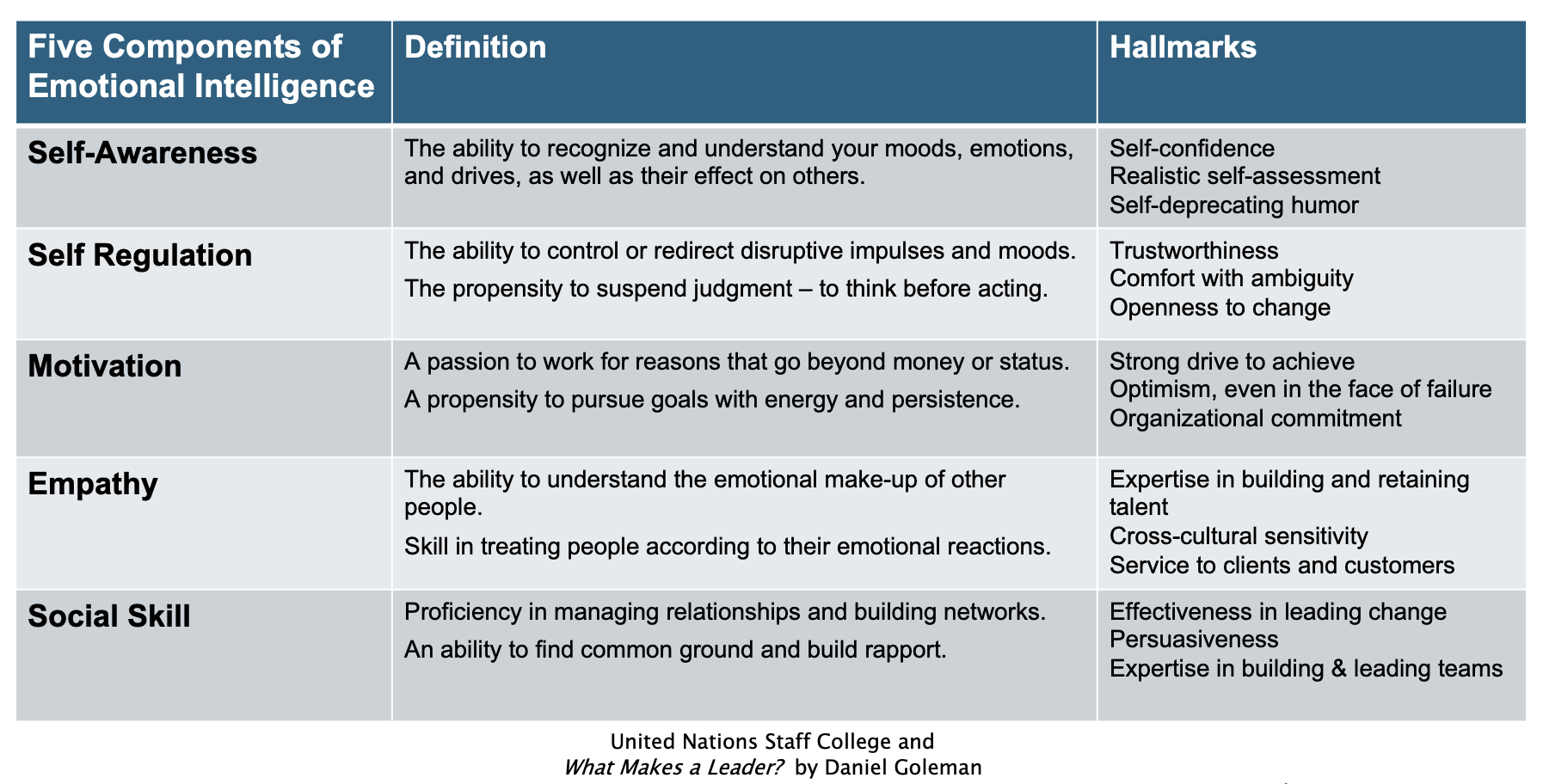
One night I randomly scanned through a handful of YouTube reels of company fraud and mismanagement (e.g., “Revenge of the Coffee Pot,” “Revenge with Karen,” and “Silent Revenge”), painting (fictitious) stories of bosses stealing intellectual property or assuming credit for the innovations/achievements of their subordinates, patent infringement, nepotism or incompetent hirings… all with arrogance, lack of professionalism, the total disregard of employee morale, and blatant patterns of poor executive decision-making, communication, emotional intelligence, strategic thinking, and the ability to influence and guide a team. “Emotional intelligence” (as defined above by Daniel Goleman in What Makes a Leader? also attributed to the United Nations Staff College) should include the “best practices” of self-awareness, self regulation, motivation, empathy, and social skills. Added to these YouTube (fake) scripted deficiencies are the mitigating effects of corporate politics, inconsistent application of compliance or HR policies, unclear contract language, and problems in the chain of command… with the eventual result of the boss receiving a fall from grace, termination, and other legal consequences. Most of these episodes imply only the Board of Directors evaluates the top executives (like school superintendents?), and even with the inclusion of employee satisfaction surveys, staff retention data, third-party auditors, and whistle-blower protections in some instances, the catastrophic actions of these leaders nearly destroy the businesses. For these videos, it seems that leadership assessments and goals are never ongoing, the benchmarks are seldom reviewed, and nothing is PROACTIVE… and therefore not preventive. Therefore, for the school district and corporate worlds alike, we need to intentionally provide formative assessments of our leaders (and ourselves). Exactly what do we need to know and do to improve?
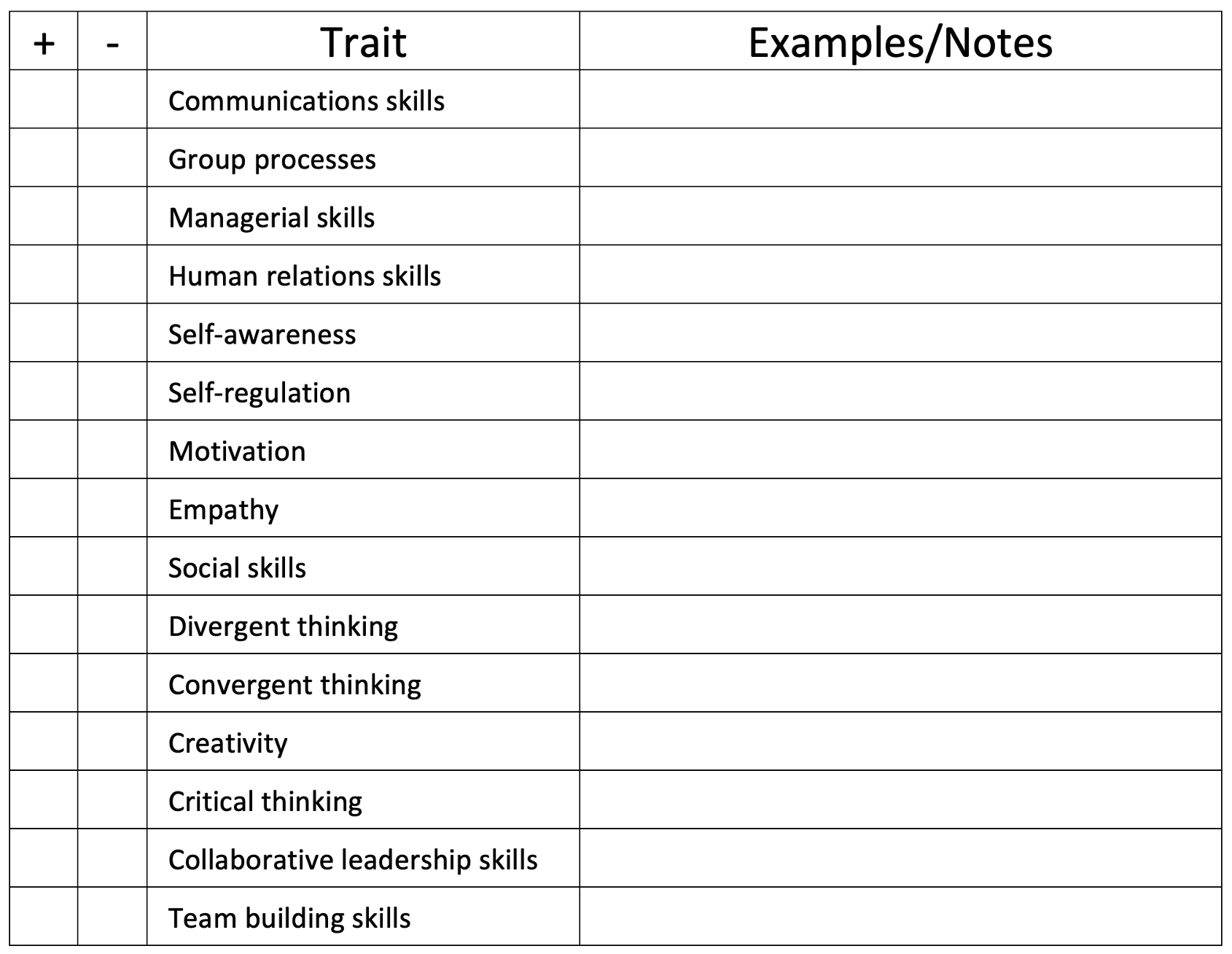
In my blog Growing Student Leaders and the SAS Institute 2025 presentation, I offered the above image as an informal personal checklist to evaluate leadership traits. Coincidentally, while I was writing this article, a scholarship committee of the Community Foundation of Upper St. Clair (for which I serve as Communications Director and Arts Chair) was developing an assessment rubric for ranking applications of a new student leadership scholarship. Although still under development, here are a few of the categories being considered:
- Communication: Includes listening skills, clarity in speaking, and the ability to make others feel heard.
- Integrity: Acting ethically, being trustworthy, and aligning actions with words.
- Accountability: Taking ownership of actions and commitments.
- Collaboration: Working effectively with others, valuing different perspectives, and resolving conflicts.
- Self-awareness: Understanding one’s own strengths, weaknesses, and biases.
- Drive/Initiative: A bias for action and the ability to move projects forward.
- Courage: The bravery to speak truthfully, admit shortcomings, and make difficult decisions.
- Humility: Recognizing the contributions of others and remaining a lifelong learner.
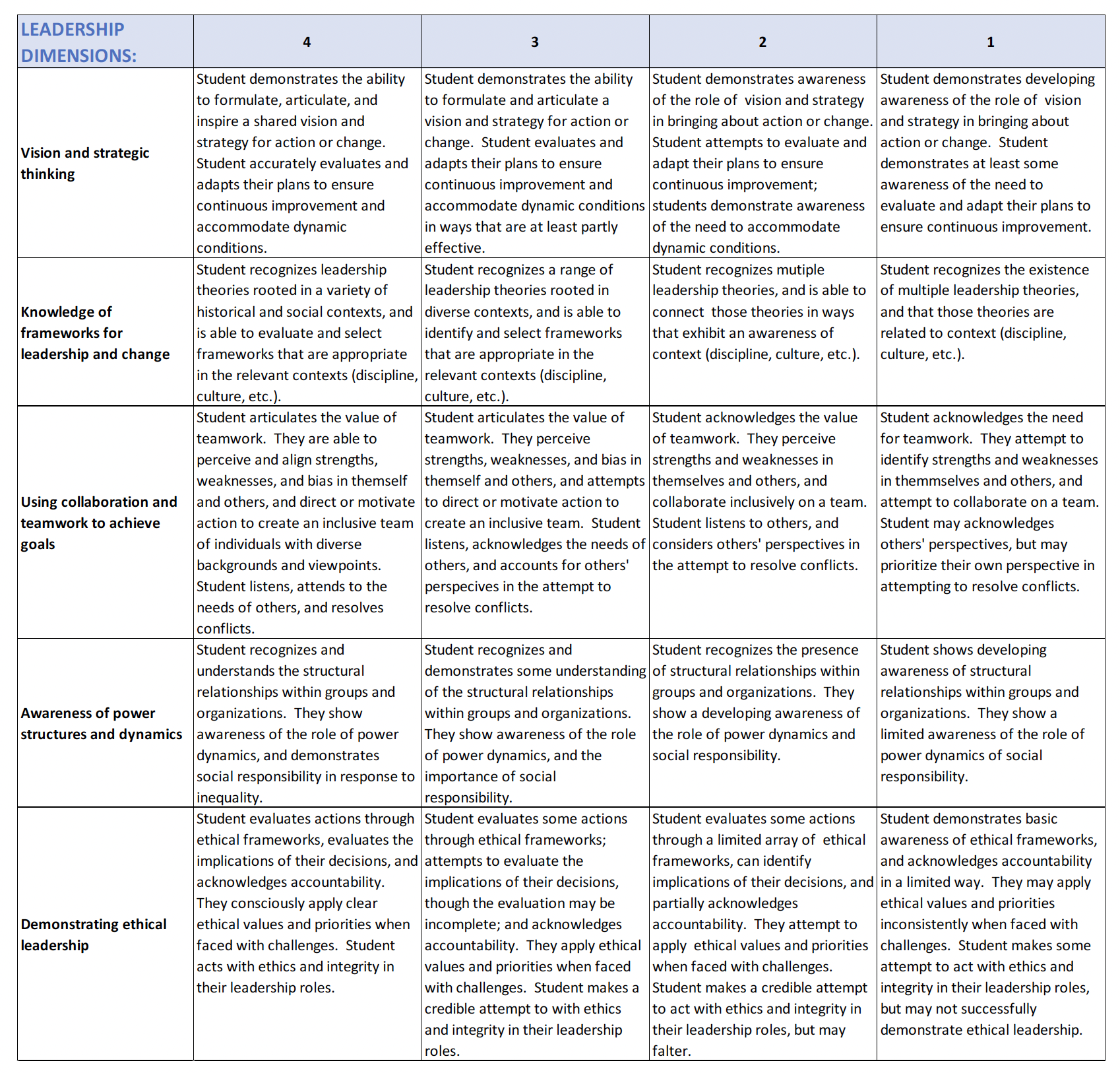
The University of Massachusetts Lowell developed the above rubric for their River Hawk Experience Distinction Leadership Program, defining specific criteria with a clear description of what each trait should look like at different performance levels, in order to provide a standardized way of measuring and assessing leadership skills
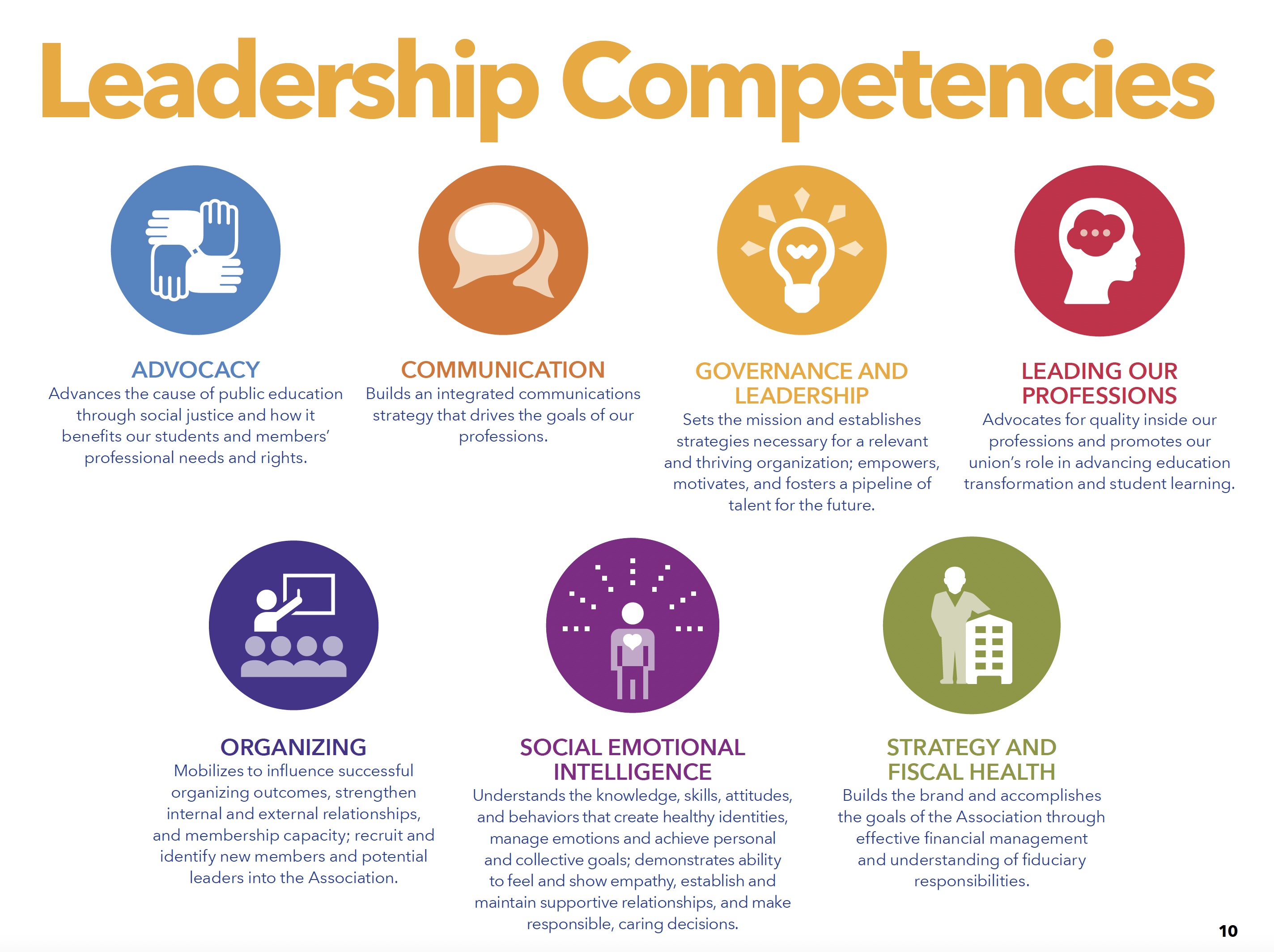
In addition, the National Education Association has created the above NEA Leadership Competency Guide worth downloading.
My favorite inspirational speaker Simon Sinek has also weighed in on this topic of “What Makes a Great Leader?” refining/simplifying it to just three traits:
- Courage
- Integrity
- Communication
Additional resources
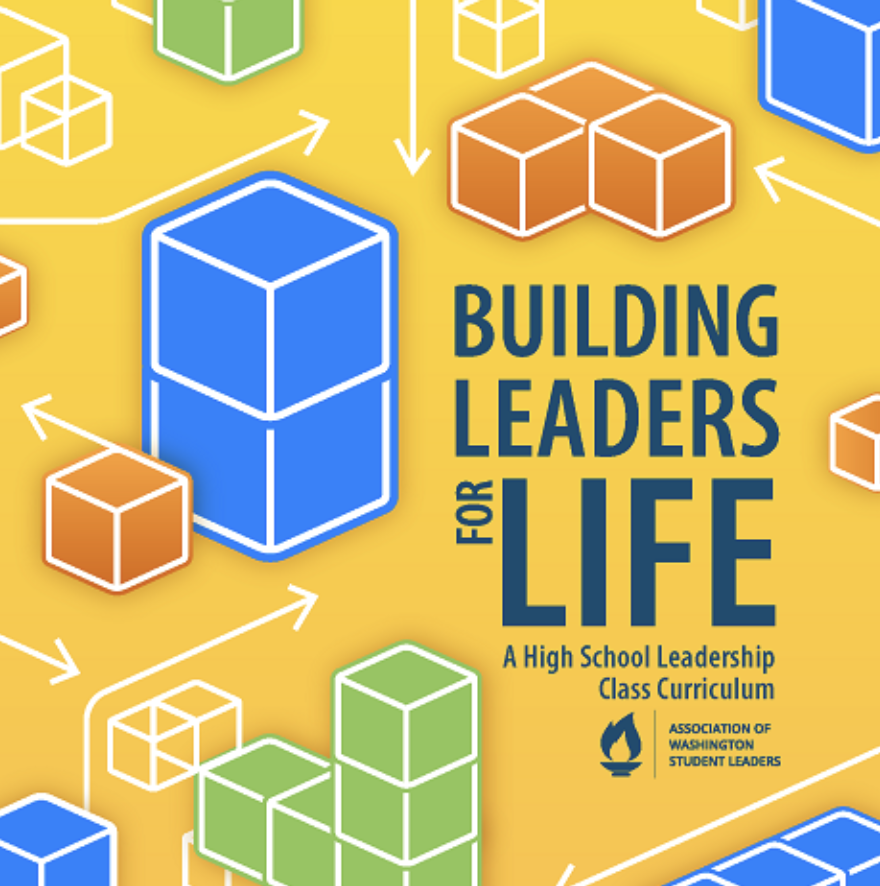
If you are an educator looking for supplemental material on developing leadership skills in your students, besides these SAS INSTITUTE 2025 slides (of which the original PowerPoint file is available to download for free in order to adapt for your classroom – please email me), I recommend perusing the full-blown “Building Leaders for Life” (second edition) curriculum (94 lessons in five subject areas, 355 pages of lesson materials, 137 student handouts) created by the Association of Washington Student Leaders (a division of the Washington School Principals’ Education Foundation). Click here to view their website. They also have a middle school and elementary series!
If you attend my SAS INSTITUTE workshop on December 9, 2025 (starting at 9:40 a.m. in Magnolia C, Hershey Lodge & Convention Center), ask me to see sample materials from their high school course of study.
Finally, here is the “homework for future leaders” I provided at the SAS INSTITUTE and during a 2024 summer camp at Upper St. Clair High School, providing additional links to many inspiring minds. Enjoy!
Leadership is not about being in charge. It is about taking care of those in your charge. — Simon Sinek
A leader is one who knows the way, goes the way, and shows the way. — John C. Maxwell
Do not follow where the path may lead. Go instead where there is no path and leave a trail.
— Ralph Waldo EmersonThe greatest leader is not necessarily the one who does the greatest things. He is the one who gets people to do the greatest things. — Ronald Reagan
What you do has far greater impact than what you say. — Stephen Covey
PKF
© 2025 Paul K. Fox





 Over the years, I have been a strong advocate of equal-access to music and the arts as an essential part the education of all children. This blog will give me an opportunity to put a lot of my thoughts in one place. I am aware that there are many people “out there” who offer the premise that studying music makes you successful in other areas, and you will see that this assumption is well-supported. However, I am not a brain scientist. I cannot confirm research that seems to point to a direct correlation that “the music itself makes us smarter.” It could be that students who are attracted to and become proficient in the arts are somehow uniquely “wired,” have a greater work ethic, or are better intellectually “equipped” to become successful engineers, doctors, lawyers, educators, scientists – you name the career – and enjoy life-long happiness and self-realization. So many of those music-in-our-schools-month fliers say “music is basic,” “music is math,” “music is reading,” “music is science,” etc. and they are right! So, it’s not wrong to bring it up. But we should be fully aware that the primary goal of an education in the arts is for the development of creative self-expression.
 the one who had the greatest influence on my going into a career of music teaching was Eugene Reichenfeld, who I saw the last period of every day in Orchestra at Penn Hills HS, at least once a week in a private lesson and rehearsals of the Wilkinsburg Civic Symphony on Thursday nights, and over the three summers at the Kennerdell Music and Arts Festival in Venango County. What a role model! Partially blind and losing his hearing, Mr. Reichenfeld played violin, cello, and guitar, and taught uninterrupted until three weeks before he died at the ripe old age of 103!
 Did your father ever realize why you chose music? In December 1986, Dad came to my choral/orchestra department production of Scrooge, involving over 250 students at my second career assignment, Upper St. Clair High School. After the closing curtain, he came up to me and asked, “Did you do all of this yourself? I answered, “Well, I had a lot of help. I did prepare the students on the dialogue parts in the script, the leads’ solos, chorus harmonies, and orchestra accompaniment, but I needed a drama specialist for coaching the actors and a choreographer for the dances. And yes, I am also the show’s producer, responsible for the printing of the program and tickets, finding people to assist in sewing the costumes, building the sets, running the stage tech, and applying the make-up.” After a short pause, he said something I will never forget: “Wow! This was incredible! You really made a difference to so many of your students’ lives.” He was proud of me, and finally expressed it! (It was a good thing too… he died suddenly of a heart attack exactly two years later when I was in the middle of staging USCHS’s Joseph and the Amazing Technicolor Dreamcoat.)


 Musical (sound smart)
 Transforming the way schools should be run, the multiple intelligences theory suggests that teachers be trained to present their lessons in a wide variety of ways using music, cooperative learning, art activities, role play, multimedia, field trips, inner reflection, and much more. This approach truly “customizes the learning” and provides eight or more potential pathways to learning.
 Innovation
 The
The 




 unified county or state system. “Big Brother” does not dictate all aspects of what is taught.
 needs of a very diversified clientele.
 for success in today’s higher education and jobs. Sure, we want our children to excel at reading, writing, understanding and solving math problems, but now more than ever, we need to place higher priority and greater amounts of time and resources to the goal of teaching students to create and express themselves, and to learn originality, inventiveness, personal innovation, initiative, self-direction, flexibility, adaptability, openness to new and diverse perspectives, and ambiguity.
 My first act as superintendent would be the planning and institution of several new teacher in-service programs.
 Meaning – the purpose is the journey, giving more meaning to life from inside yourself.
 Taking a page from the leadership philosophy of the current superintendent (Dr. Patrick O’Toole) for the Upper St. Clair School District, my former employer, I would install new administrative positions that foster creative self-expression and educational innovation. Our “customization” tagline (logo to the right) is ambitious, unique for most public schools, and articulates the USC organization’s core functions, culture and mission. However, I believe it needed the intentional assignment of extra managerial manpower and flexible foresight in staffing in order to fulfill the school district mission statement: “Developing lifelong learners and responsible citizens for a global society is the mission of the Upper St. Clair School District, served by a responsive and innovative staff who in partnership with the community provides learning experiences that nurture the uniqueness of each child and promotes happiness and success.”
 Sir Ken Robinson says the studies show the longer students stay in school the less creative they become. It is all about the willingness to accept risk, instead of seeking conformity or the “one right answer.” We need to venture out from our “comfort zone,” be different, try new ideas or angles, and even fail miserably once in awhile along the way.
 In our society, at times we do value risk taking. Steven E. Landsburg, author of Armchair Economist: Economics and Everyday Life says that the reason we pay CEOs so much money (in the millions plus stock options and golden parachutes) is to provide enough security for the company executive to take more chances and find new ways to make even more money. Quoted from his book:
 Speaking of balancing “risk and rules,” just how creative are YOU? Have you heard about Chindogu, the Japanese concept that combines ingenuity and inventiveness with the absurb?
  To improve the instruction, both in learning creativity and more creative teaching, let’s move towards practicing more divergent thinking. Teachers would be asked to post in front of their class the “innovative idea of the week” or “creative target for the day.”
 assessments, often called authentic, comprehensive, or performance assessments, are usually designed by the teacher to gauge students’ understanding of material. Examples of these measurements are open-ended questions, written compositions, oral presentations, projects, experiments, and portfolios of student work.
 Day one, there would be more rigorous high school graduation requirements of four years of music or art courses for every student enrolled at the high school. Yes, that would mean hiring a few more teachers… but the payoffs would be instantly evident and promote exponential growth in the creative quotient of every student!
 Every administrator and teacher in my buildings would be expected to “practice what we preach” and develop their own artistry by participating in an instrumental ensemble, chorus, classes in painting or drawing, pottery or jewelry making, sewing, woodworking, acting, dancing, etc. Sure, as “the boss,” I would even allow some of this during school time. Can you imagine the positive effect it would have on the ensemble programs in all buildings if the teachers, principals, and other school staff also explored singing, playing in the band or orchestra, or performing on stage in the musicals?
 According to CETA, “This approach to teaching is grounded in the belief that learning is actively built, experiential, evolving, collaborative, problem-solving, and reflective. These beliefs are aligned with current research about the nature of learning and with the Constructivist learning theory.” CETA outlined the following “best practices” of this theory that align with arts integration:
 A lot more (ahem) innovative research is needed to merge both creativity and the Common Core (and other so-called “new” educational initiatives when they inevitably come down the pike). Below are a few additional resources. In my “administration,” it would be common practice to share these at faculty and staff meetings… and look for more ways to intentional bring creativity skill instruction to the forefront.
 for NCASS on connections between the CCSS and the Next Generation Arts Standards.
 paulfox.blog