Leaders Flush!

Leadership lessons for the classroom or staff development

This blog is a follow-up resource for my Empowering Educator and Student Leadership presentation at the PA Department of Education SAS INSTITUTE state conference on December 9, 2025 and provides a “fill-in-the-gap” narrative about many of the concepts we have already presented at this blog site:
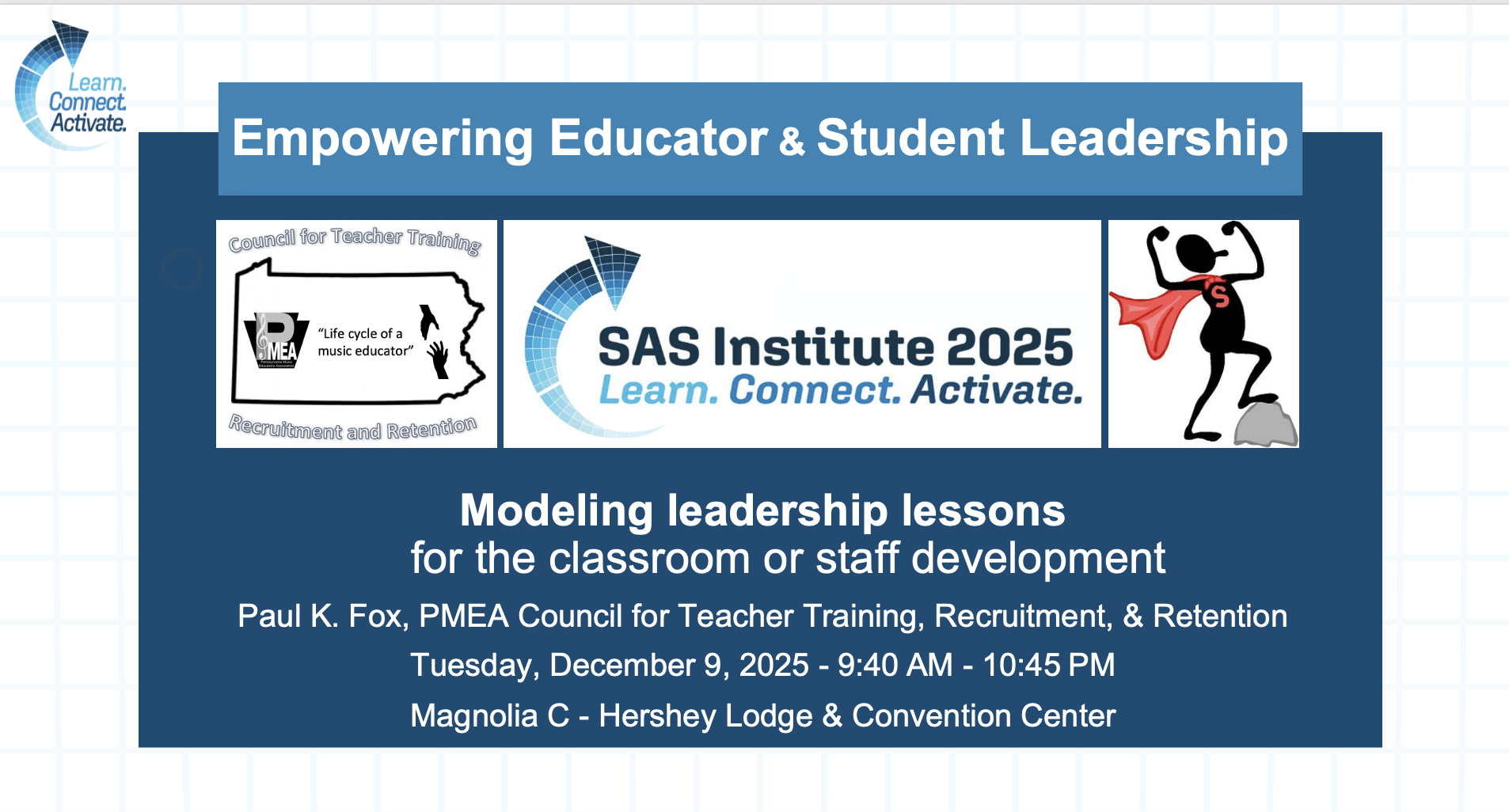
If you would like to review my PDF slide summary from the SAS INSTITUTE, click here.

Did the main title (above) get your attention? What on earth could “leaders flush” have to do with this topic? In teaching (and modeling) leadership skills to my students, we discuss what it means to Faire sans Dire or “do without saying,” the English translation to this crest:

Heraldry coat of arms emblem: Earl of Ilchester

In other words, if you see something that needs to be done (flush the toilet?), don’t assume it’s someone else’s job. A true leader embraces the philosophy Carpe Diem (“seize the day”), identifies the problem and its solution, rolls up his/her sleeve, and “gets it done!”

Why teach leadership in the curriculum & extracurricular activities?

“Leadership is an essential skill that extends beyond the classroom, shaping how students engage with the world around them. Whether leading a group project, organizing an event, or voicing their opinions in discussions, leadership skills empower students to take initiative and make meaningful contributions. These abilities are not only beneficial during school years but also serve as the foundation for lifelong personal and professional success.”
Bloomster

In the past, I have used a multitude of opportunities and settings to teach these life skills in summer leadership camps, section leader and student conductor seminars, drum major and marching band captain auditions, student director, producer, and musical crew head staff meetings, and for 25+ years, preparing student counselors for a comprehensive, six-day, grades 8-12 Township String Camp program.

To sum it up, teaching leadership in Grades K-12 and college settings will:

  • Develop communication skills
  • Build confidence & self-awareness
  • Enhance problem-solving abilities
  • Encourage teamwork & collaboration
  • Shape future success

Why teach leadership to educators?

My December session at SAS Institute was geared to school/system leaders, department heads, and other administrators, but actually the focus on leadership as a skill set necessary for school/staff/individual professional improvement is essential for all educators and school support staff.

From district administrators and school principals to instructional coaches and curriculum coordinators, leaders in education have a direct impact on the learning outcomes of all students. According to UNESCO, educational leadership is considered one of the most influential factors on student outcomes, falling just behind engaging teaching. As a result, leadership training for educators has become an essential part of the professional development experience for teachers at all levels of education.
“Building Leadership Skills – From Classroom Teacher to Educational Leader”

School improvement rarely occurs without effective leadership, and school leadership is only second to classroom teaching in its influence on student achievement. A new evidence review report from Global School Leaders paints a complex and ever-changing picture of school leaders, with their roles, responsibilities, and impact varying around the world.
3 Reasons Why School Leadership Is Vital to Teacher Success”
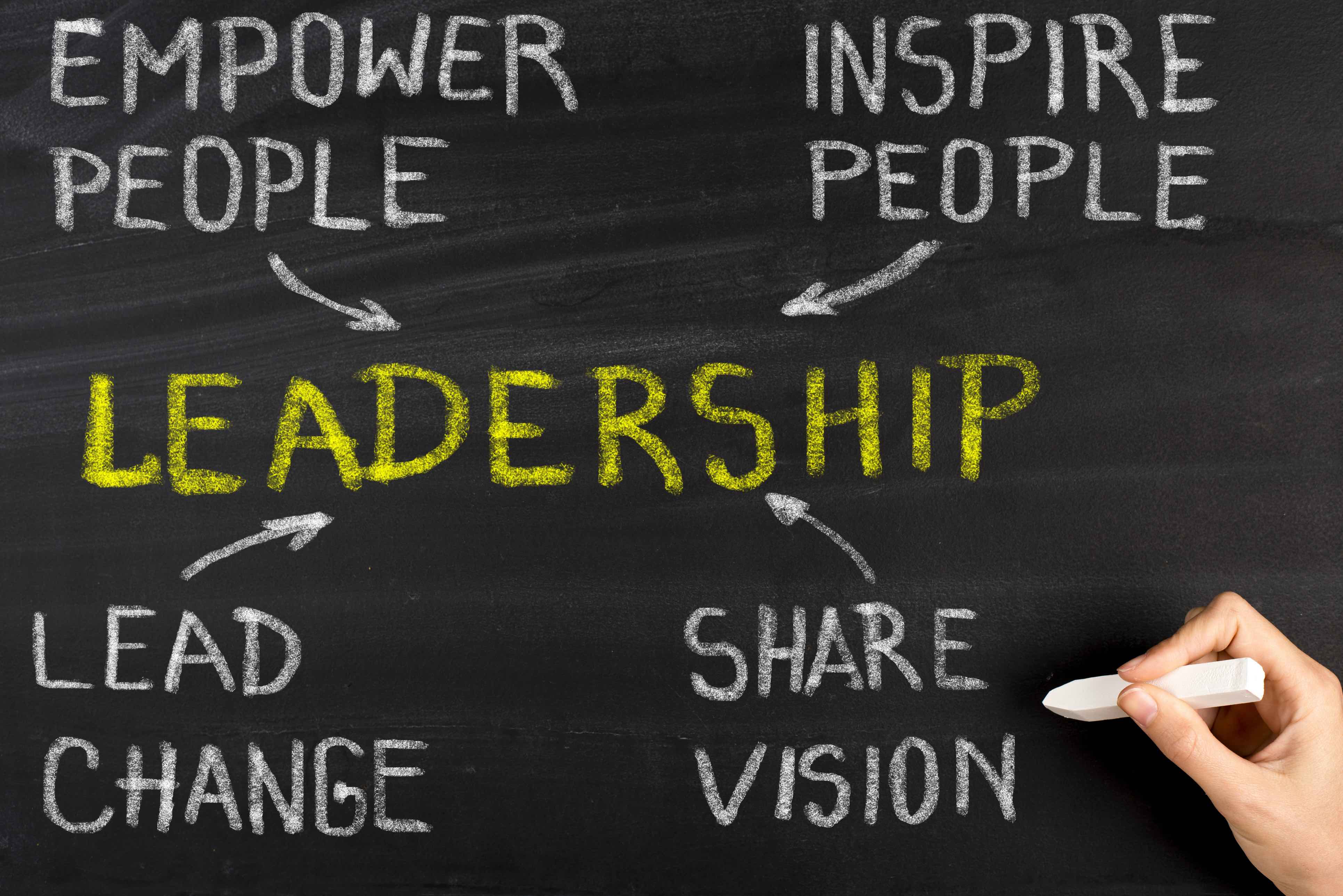
The literature suggests that empowering educators with leadership training will:

  • Improve student achievement
  • Empower and retain teachers
  • Support new staff members
  • Drive innovation and adaptability
  • Bridge the gap between instruction and administration
  • Build/model a positive attitude
  • Enhance strategic thinking and decision-making
  • Promote a positive and collaborative school climate
  • Develop soft skills such as communication, conflict resolution, and building trust… both in and outside the classroom

Leadership assessments

“A leadership skills assessment is a formal evaluation used to identify and measure a person’s leadership potential and competencies, such as communication, decision-making, and emotional intelligence. These assessments can be used by organizations to evaluate current leaders, identify high-potential candidates for promotions, and inform hiring decisions. Common methods include personality tests, scenario-based assessments, and 360-degree feedback, with tools like CliftonStrengths, Hogan Assessments, and DISC being popular examples.” 
“Leadership Assessment Test – A Complete Guide 2025”

There is a large body of information out there, especially commercial resources, for evaluating the leadership quotient and achievement of corporate managers, CEOs, CFOs, etc. I was impressed with the scope and depth of the research, including these sample firms advertising the availability of third-party consultants and advisors.
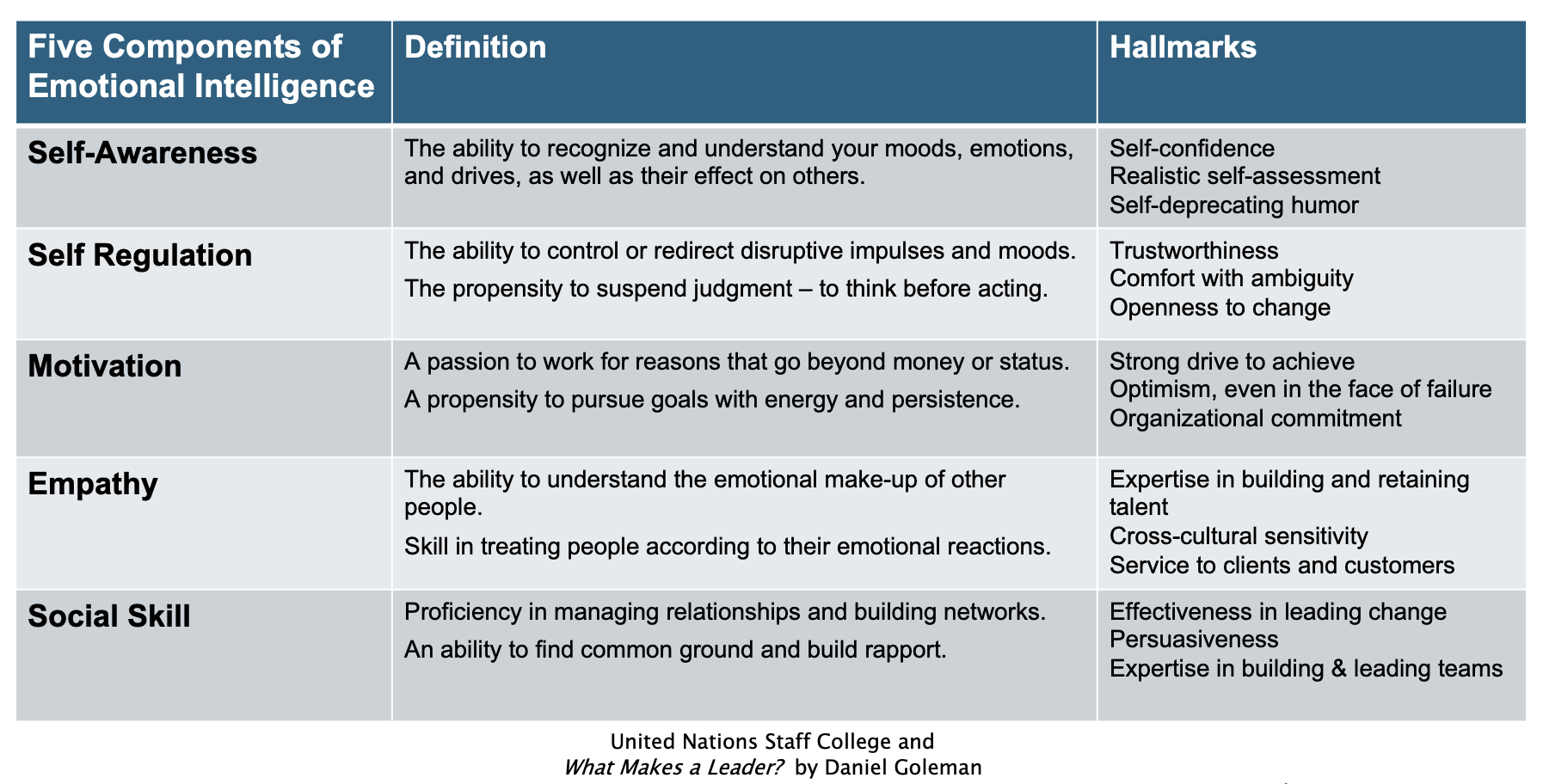
One night I randomly scanned through a handful of YouTube reels of company fraud and mismanagement (e.g., “Revenge of the Coffee Pot,” “Revenge with Karen,” and “Silent Revenge”), painting (fictitious) stories of bosses stealing intellectual property or assuming credit for the innovations/achievements of their subordinates, patent infringement, nepotism or incompetent hirings… all with arrogance, lack of professionalism, the total disregard of employee morale, and blatant patterns of poor executive decision-making, communication, emotional intelligence, strategic thinking, and the ability to influence and guide a team. “Emotional intelligence” (as defined above by Daniel Goleman in What Makes a Leader? also attributed to the United Nations Staff College) should include the “best practices” of self-awareness, self regulation, motivation, empathy, and social skills. Added to these YouTube (fake) scripted deficiencies are the mitigating effects of corporate politics, inconsistent application of compliance or HR policies, unclear contract language, and problems in the chain of command… with the eventual result of the boss receiving a fall from grace, termination, and other legal consequences. Most of these episodes imply only the Board of Directors evaluates the top executives (like school superintendents?), and even with the inclusion of employee satisfaction surveys, staff retention data, third-party auditors, and whistle-blower protections in some instances, the catastrophic actions of these leaders nearly destroy the businesses. For these videos, it seems that leadership assessments and goals are never ongoing, the benchmarks are seldom reviewed, and nothing is PROACTIVE… and therefore not preventive. Therefore, for the school district and corporate worlds alike, we need to intentionally provide formative assessments of our leaders (and ourselves). Exactly what do we need to know and do to improve?
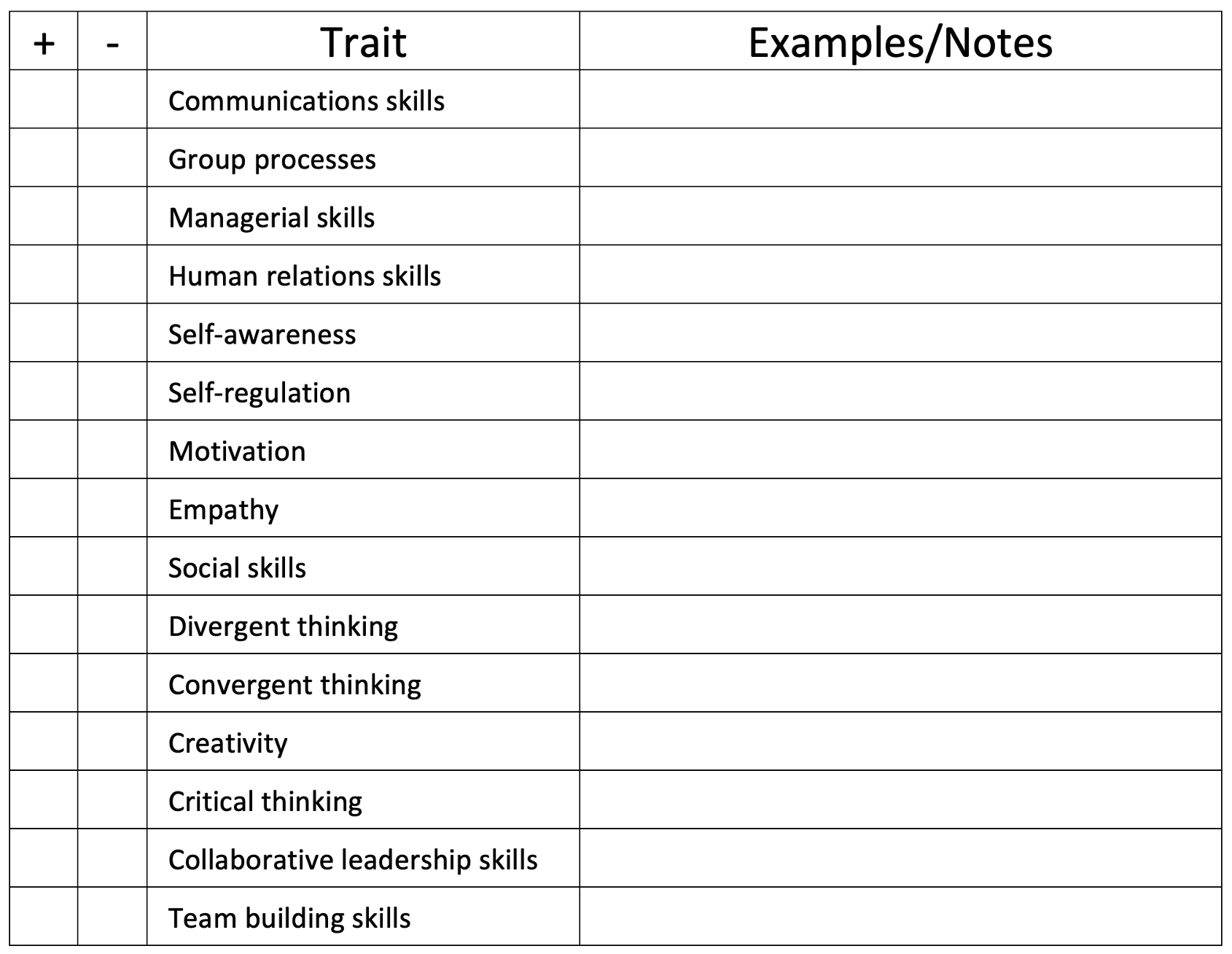
In my blog Growing Student Leaders and the SAS Institute 2025 presentation, I offered the above image as an informal personal checklist to evaluate leadership traits. Coincidentally, while I was writing this article, a scholarship committee of the Community Foundation of Upper St. Clair (for which I serve as Communications Director and Arts Chair) was developing an assessment rubric for ranking applications of a new student leadership scholarship. Although still under development, here are a few of the categories being considered:

  • Communication: Includes listening skills, clarity in speaking, and the ability to make others feel heard.
  • Integrity: Acting ethically, being trustworthy, and aligning actions with words.
  • Accountability: Taking ownership of actions and commitments.
  • Collaboration: Working effectively with others, valuing different perspectives, and resolving conflicts.
  • Self-awareness: Understanding one’s own strengths, weaknesses, and biases.
  • Drive/Initiative: A bias for action and the ability to move projects forward.
  • Courage: The bravery to speak truthfully, admit shortcomings, and make difficult decisions.
  • Humility: Recognizing the contributions of others and remaining a lifelong learner.
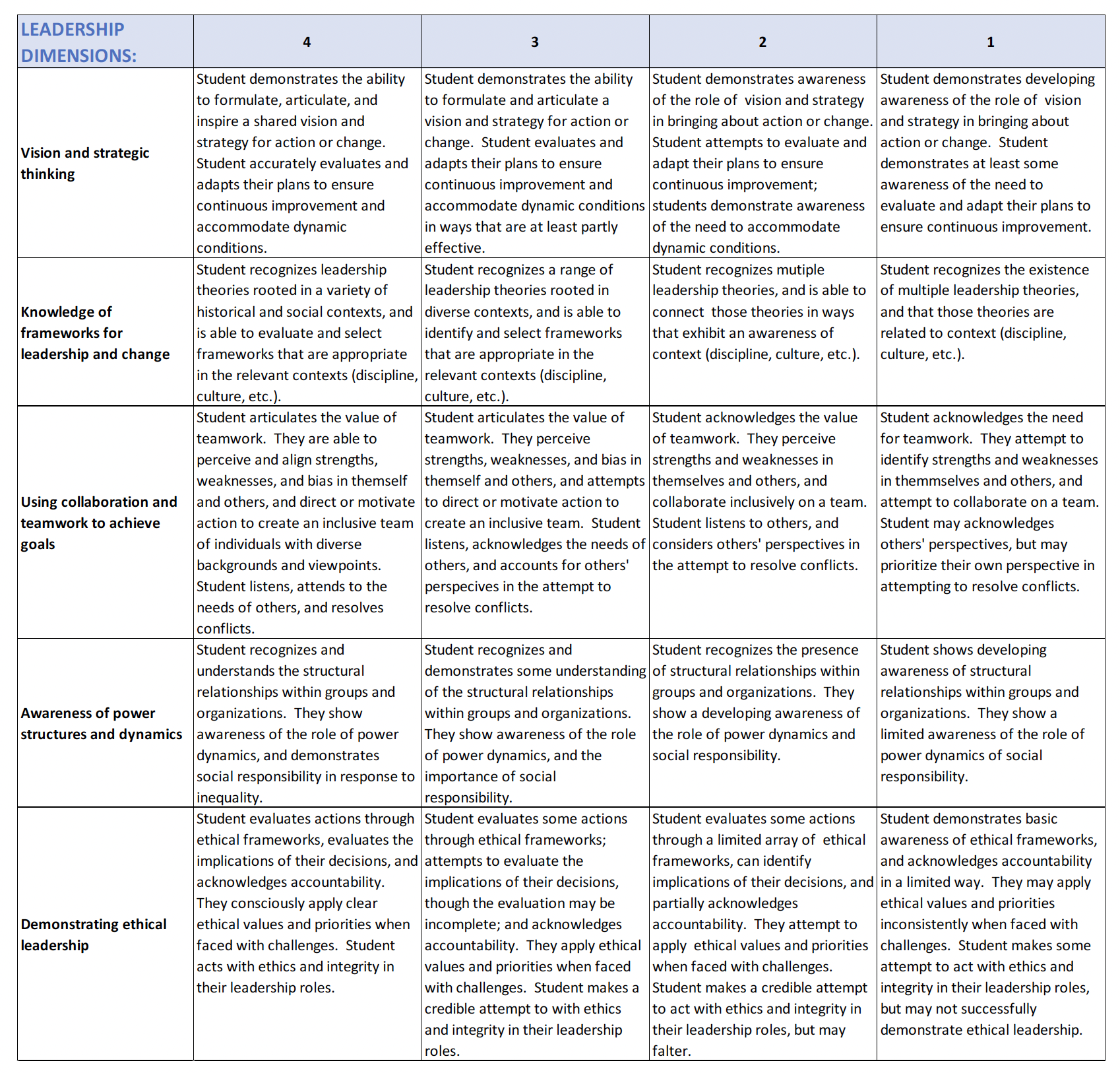
The University of Massachusetts Lowell developed the above rubric for their River Hawk Experience Distinction Leadership Program, defining specific criteria with a clear description of what each trait should look like at different performance levels, in order to provide a standardized way of measuring and assessing leadership skills
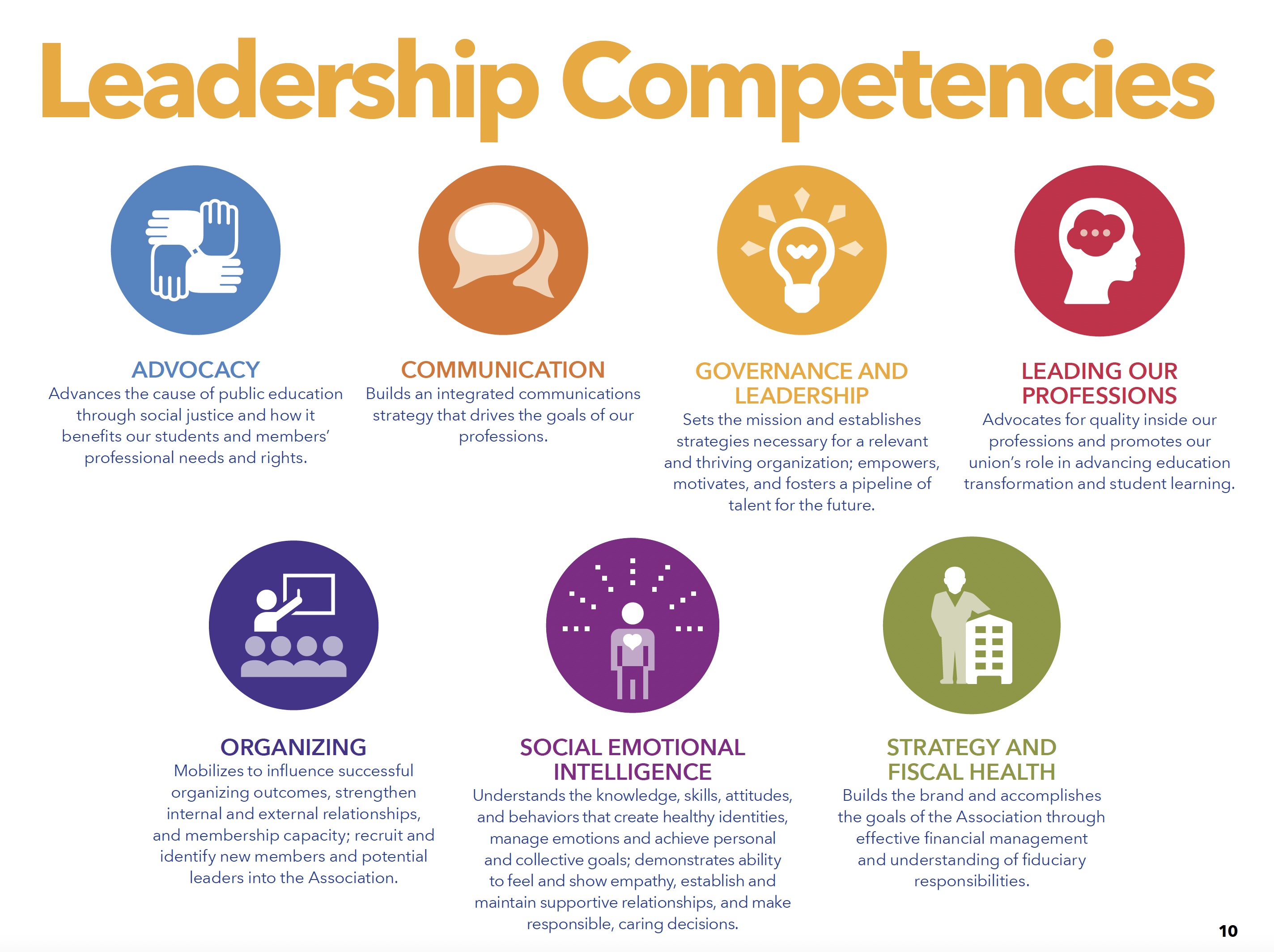
In addition, the National Education Association has created the above NEA Leadership Competency Guide worth downloading.

My favorite inspirational speaker Simon Sinek has also weighed in on this topic of “What Makes a Great Leader?” refining/simplifying it to just three traits:

  • Courage
  • Integrity
  • Communication

Additional resources

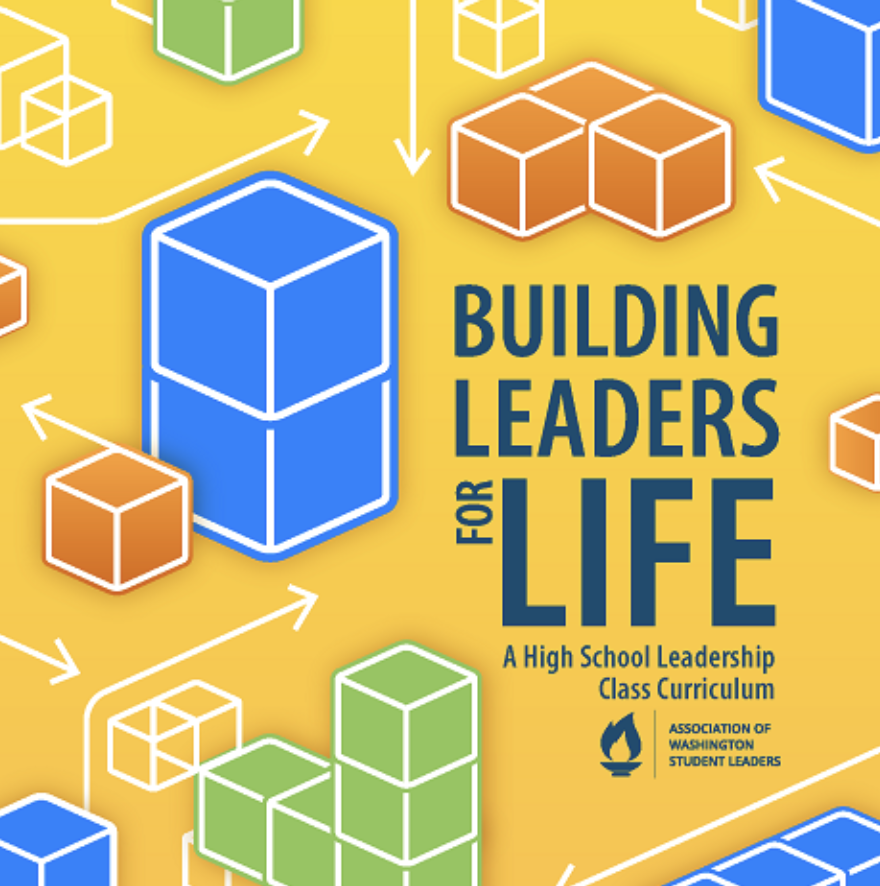
If you are an educator looking for supplemental material on developing leadership skills in your students, besides these SAS INSTITUTE 2025 slides (of which the original PowerPoint file is available to download for free in order to adapt for your classroom – please email me), I recommend perusing the full-blown “Building Leaders for Life” (second edition) curriculum (94 lessons in five subject areas, 355 pages of lesson materials, 137 student handouts) created by the Association of Washington Student Leaders (a division of the Washington School Principals’ Education Foundation). Click here to view their website. They also have a middle school and elementary series!

If you attend my SAS INSTITUTE workshop on December 9, 2025 (starting at 9:40 a.m. in Magnolia C, Hershey Lodge & Convention Center), ask me to see sample materials from their high school course of study.

Finally, here is the “homework for future leaders” I provided at the SAS INSTITUTE and during a 2024 summer camp at Upper St. Clair High School, providing additional links to many inspiring minds. Enjoy!


Leadership is not about being in charge. It is about taking care of those in your charge. — Simon Sinek

A leader is one who knows the way, goes the way, and shows the way. — John C. Maxwell

Do not follow where the path may lead. Go instead where there is no path and leave a trail.
— Ralph Waldo Emerson

The greatest leader is not necessarily the one who does the greatest things. He is the one who gets people to do the greatest things. — Ronald Reagan

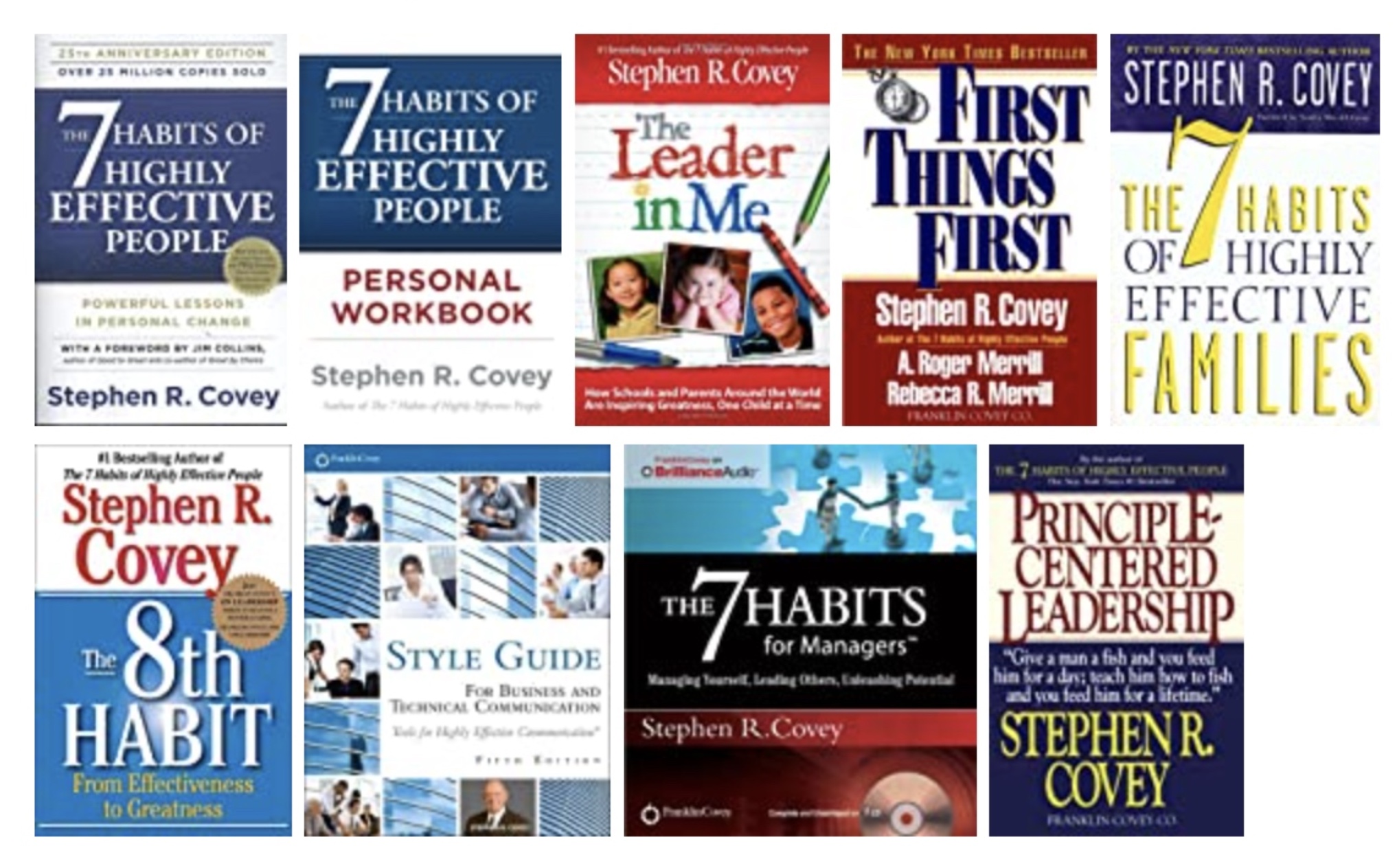
What you do has far greater impact than what you say. — Stephen Covey

PKF

© 2025 Paul K. Fox

Retirement Transitioning Advice from AI?

Season Greetings and Happy New Year from your Pennsylvania Music Educators Association State Retired Member Coordinator. Best wishes for a happy, healthy, and prosperous 2025!

First, on Christmas Eve, here are a few announcements geared to PA music educators… those who have retired from full-time teaching and anyone considering retirement over the next one to five years.

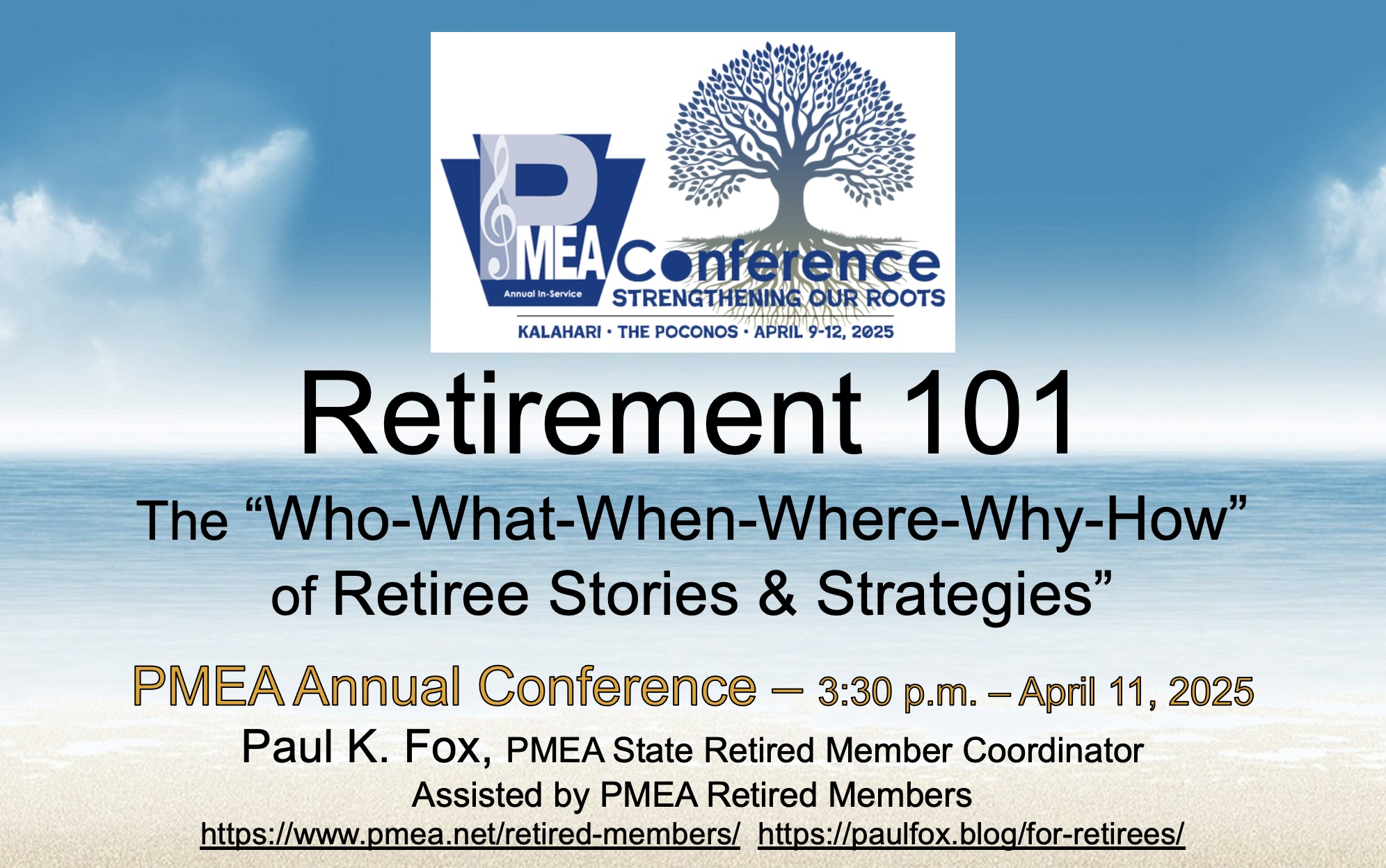
Back by popular demand (or is that just ego and in my head?), we will offer the session “Retirement 101 – the Who, What, When, Where, Why and How of Retiree Stories & Strategies” on Friday, April 11, 2025 (3:30 p.m.) during the PMEA Annual Conference at the Kalahari Resort in the Poconos. A guest panel of PMEA Retired Members will assist and offer their advice answering key questions like the following:

  1. How have you found happiness and success in retirement?
  2. What “new” hobbies, volunteer projects, trips, family connections, and encore careers have you been exploring?
  3. What did you do to reinvent yourself and how did you satisfy those essential “big three” goals of post-full-time employment: finding purpose, structure, and community?
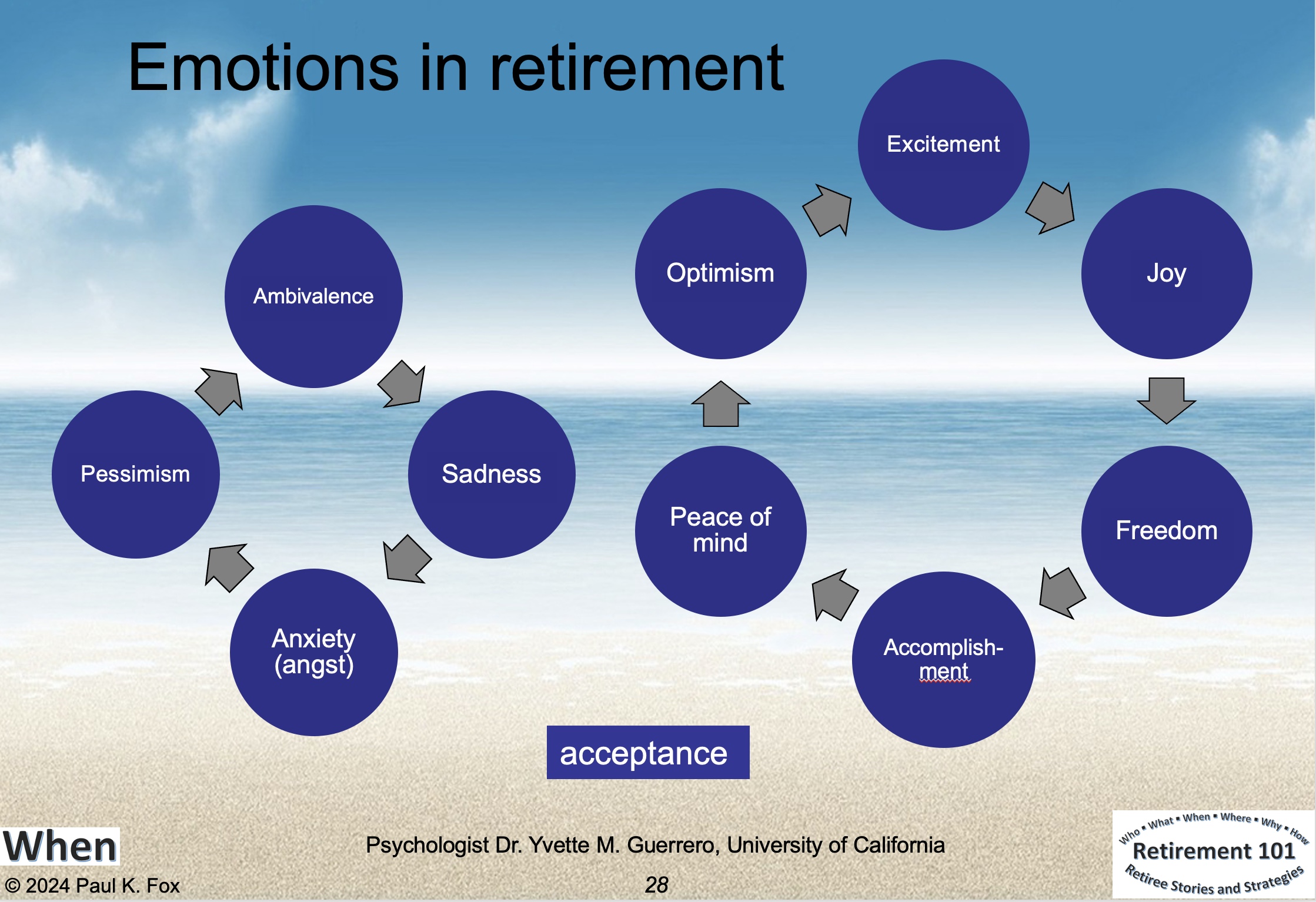
  4. How did you navigate the early phases of retirement? imagination, anticipation, liberation, etc.
  5. What were some of the transitional “ups and downs” you experienced and how did you cope with them?
  6. What are you still doing in music and education?

We are looking for more PMEA retiree volunteers who are planning to attend the conference to join “expert panelists” Rick Coulter, Jeffrey Dent, Dan Klingbeil, Chuck Neidhardt, Louise Victor, and Rich Victor. (Just email me if you’re interested.)

Retired Members are a valuable resource to PMEA. Many of us already serve on PMEA Councils and in District or State official positions. All of us in the profession benefit from the sharing of their extensive “boots-on-the-ground” experiences and wisdom. At the upcoming conference, Retired Members can serve as Presiding Chairs and introduce a session/concert or two. In addition, plans are also underway to sponsor (possibly on Thursday, April 9) a “coffee & conversation” corner or an “ask the expert” lounge. Spaces and the schedule are packed, but if it is possible, Executive Director Abi Young is trying to fit in an informal sitting area with retirees and mentors as “friendly folks” to serve as “gurus” for PCMEA members, newcomers to a music education specialty, or recent transfers to the field. Won’t you join us?

A longstanding tradition, we will be treated to a PMEA Retired Member Breakfast on Friday morning. (Just check the box on the registration form if you are coming… and, by the way, the conference fee is only $20 for Retired Members! What a deal!)

Why Attend the PMEA Annual Conference?

“For some of us, it’s a just chance to catch-up with our colleagues, see our friends, and socialize. Others are more focused and take advantage of the near-perfect opportunity to network with other professionals, perhaps seeking new working relationships, partnerships, or even employment. Many are on a look-out for newly published music, that perfect music lesson or teaching strategy, technology tools, fund-raisers, advance educational venues, or much-needed equipment to purchase for our ensembles or classrooms. Most come to hear/see the “state of the art” in music education – concerts, demonstrations, keynote speeches, panel discussions, exhibits, research presentations, and workshops. PMEA’s PD Council would likely submit that the primary purpose of a conference is for professional self-improvement… What did Stephen Covey call it? His Habit #7 of “sharpening the saw” – to build a balanced program of self-renewal in the four areas of your life: physical, social/emotional, mental, and spiritual. Covey would insist we embrace “the process that empowers us to move on an upward spiral of growth and change, of continuous improvement.” So, in short, conferences help us “grow” – to revive, re-inspire, re-energize, rejuvenate, re-direct, and re-motivate all of us – pre-service, active in-service, and retired teachers towards making successful new connections, updating our knowledge & skills, and forming new goals.”  – PMEA Retired Member Network eNEWS Winter 2024

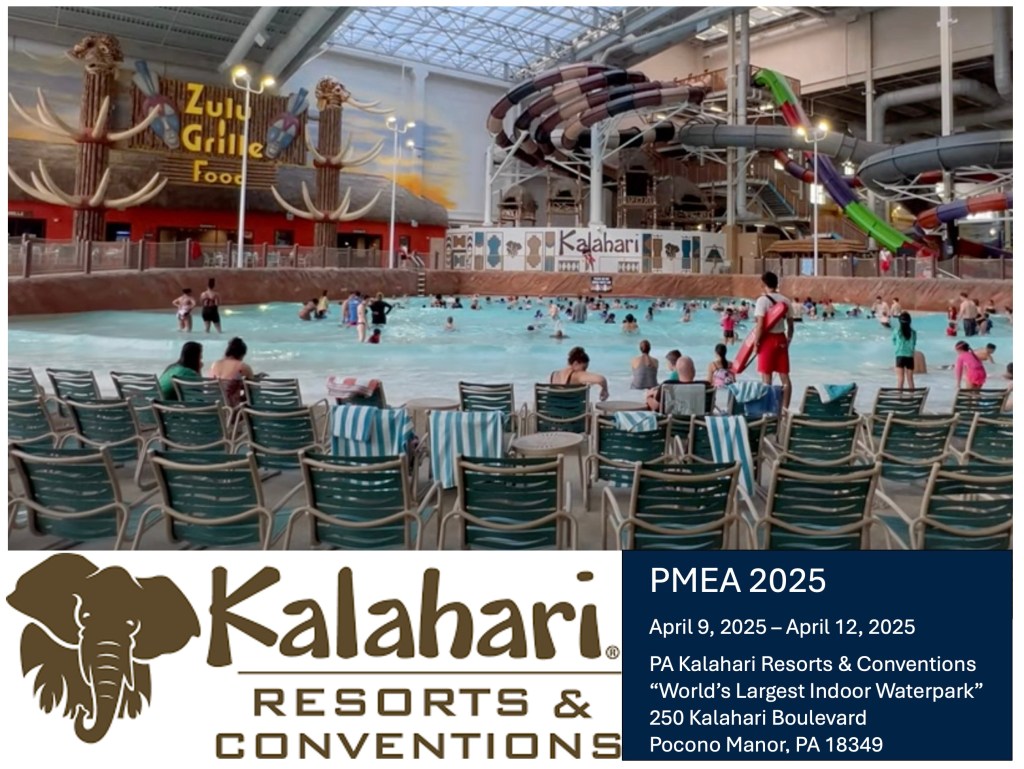
In addition, Kalahari Resort boasts “the world’s largest indoor water park,” the perfect place to bring family members to enjoy… especially (grand)children, (grand)nieces/nephews, etc.

Next month’s retirement blog by guest author Sierra Powell

One final announcement: In several weeks at this blog-site, we plan to feature a new guest blog entitled “Five Things You Need for a Comfortable Retirement” by Sierra Powell, along with updates of other resources for “living the dream!” See you next year?

OK, What is that “AI Thing?”

This 69-year old educator who has spent more than five decades in fostering creative self-expression in his students is fervently opposed to artificial intelligence. Actually, I thought I was allergic to “AI!” Every time I receive an Apple iPhone update or some new download for my computer, I complain, “Why have they moved that button? It doesn’t look or work the same! Why does everything have to change every month?” Slow down, techies!

However, to dabble in this new technology everyone’s talking about, I printed in my last PMEA Retired Member Network eNEWS on page one a sample article (click here for the Winter issue) compiled by AI Overview (Google). I shared this with an adult violin student from my Saturday orchestra who decided to show me the power of AI (not the old AI I am more familiar with – artistic intelligence!). She used her subscription to a ChatGPT to process my brief outline on the topic “retirement transitioning.” Below is the result generated from a few of my random notes. Created in the first person, AI matched my writing style, a chatty/informal letter printed for soon-to-retire colleagues along with research citations. Frankly, it scares me how close this sounds like something I could have composed! Can you tell it was artificially generated? Does this mean we will we have to teach this old dog (fox) new tricks?

Check out these valuable retirement hints courtesy of ChatGPT!

The Retiree Life: Navigating the Art of Reinvention & Emotional Balance

Here with some reflections, tips, and maybe even a little nudge for us all as we continue this grand adventure called retirement. Whether you’re still finding your rhythm or already feel like a pro at this, there’s always room to reflect, grow, and laugh along the way.

This week, let’s talk about something near and dear to every retiree’s journey: reinventing yourself and coping with the emotional ups and downs that come with this new chapter.

Reinventing Yourself: A Second Act Worth Applauding

Remember when we taught our students to embrace creativity and adapt to change? Turns out, retirement demands the same skills. It’s no longer just about what you did—it’s about who you are.

Reinvention isn’t about completely overhauling your identity. Think of it as expanding your repertoire. Studies show that retirees who actively pursue new interests or roles report higher life satisfaction (Wang et al., 2011). Whether it’s picking up the instrument you haven’t touched in decades, volunteering, traveling, or even starting a small business, the key is to stay engaged.

Here’s a thought experiment: What did you always wish you had time to do but never could because of lesson planning, rehearsals, or concerts? Now’s your chance. I’ve recently heard about retirees dabbling in everything from watercolor painting to writing mystery novels. One retiree even became a beekeeper—talk about a sweet second act!

(From past blogs, the Retirement 101 session, and Retired Member Network eNEWS reviews)

The Emotional Journey: Ups, Downs, and Everything in Between

Let’s not sugarcoat it: retirement is a mixed bag. There’s the freedom (hooray!), but also the occasional pang of loss—of identity, routine, or the camaraderie we had in our teaching careers.

The good news? You’re not alone. Research by Pinquart and Schindler (2007) highlights how important it is to acknowledge these feelings rather than sweep them under the rug. Adjusting to retirement is a process, and it’s okay to feel a little off-balance at times.

Here are a few tried-and-true strategies to help you navigate the emotional terrain:

  • Stay Connected: Loneliness can creep in when you least expect it. Keep up with PMEA activities, or start a retirees’ coffee group. Who better to laugh with about the time your marching band got rained out?
  • Practice Mindfulness: Before you roll your eyes, hear me out! Even just five minutes of quiet reflection a day can reduce stress and boost mood (Chopra et al., 2020).
  • Find Meaning: Volunteering or mentoring can give you a sense of purpose that’s deeply fulfilling. You’ve got a wealth of wisdom—share it!

AI of the future?

The Bottom Line

Retirement isn’t a destination; it’s a journey. And like any good road trip, it comes with unexpected detours, scenic overlooks, and, yes, the occasional pothole. The trick is to embrace it all with curiosity and a sense of humor.

If you’re struggling, remember: reinventing yourself doesn’t happen overnight. Take it one day at a time, and don’t be afraid to reach out for support—whether it’s from family, friends, or your fellow PMEA retirees.

Let’s keep the conversation going. What’s your “second act”? Have you discovered a new hobby or way to cope with the emotional shifts of retirement? Shoot me an email or share your story at our next meeting. Together, we’ll continue to learn, grow, and make this chapter one to remember.

Until next time, keep smiling and stay curious!

References:

Wang, M., Henkens, K., & van Solinge, H. (2011). Retirement adjustment: A review of theoretical and empirical advancements. American Psychologist, 66(3), 204–213.

Pinquart, M., & Schindler, I. (2007). Changes of life satisfaction in the transition to retirement: A latent-class approach. Psychology and Aging, 22(3), 442–455.

Chopra, A., Anthonisen, S., & Reeves, A. (2020). The role of mindfulness in retirement satisfaction. Mindfulness in Aging Journal, 7(4), 312–320.

PKF

© 2024 Paul K. Fox

Bookends – Part 3

As summer draws to a close and schools begin to reopen, we look forward to the coming autumn season (and hopefully some relief from the scorching weather). After all, tomorrow will be the first day of classes at my former place of employment (and the dress rehearsal for Friday’s marching band senior show). Soon we’ll enjoy one of my favorite transitions of the year! In Western Pennsylvania, deciduous trees will gradually change color (some bright red, orange and yellow) and then shed their leaves… the perfect metaphor for the final sections of my “Bookends” series.

(Yes, fall is a month away… but, as you can see, the stores are way ahead in anticipation of the changing seasons!)

Autumn is a season of harvest, a time to reap the rewards of our hard work and reflect on the blessings in our lives. The Fall Equinox is a reminder for us to assess our accomplishments instead of our shortcomings.

www.inspiringactions.com

We return to a discussion first introduced last October in Bookends – Part One – The Life Cycle of a Successful and Happy Music Educator, exploring:

  • Stage 4: Veteran/Sustaining Years (this blog)
  • Stage 5: Next Chapter/Living the Dream (future blog)

When do we become “experts” in our field? When are we “master teachers?” Do we ever reach the apex of our achievements, the crowning glory of our career, or the pinnacle of our profession?

Never! You snooze, you lose. If you stop expanding on your knowledge and skills, forgo exploring new ideas, methods, and media, or become stagnant and settling into a rut at work, you might as well RETIRE (“Stage 5”). Instead, I direct you to revisit “Stage 3” in Bookends II here. As dedicated educators, the focus must be on constant retooling… reviewing/revising “best practices,” setting new goals, and building on the existing networks and engagement in the profession. These have always been the essential elements of a true professional.

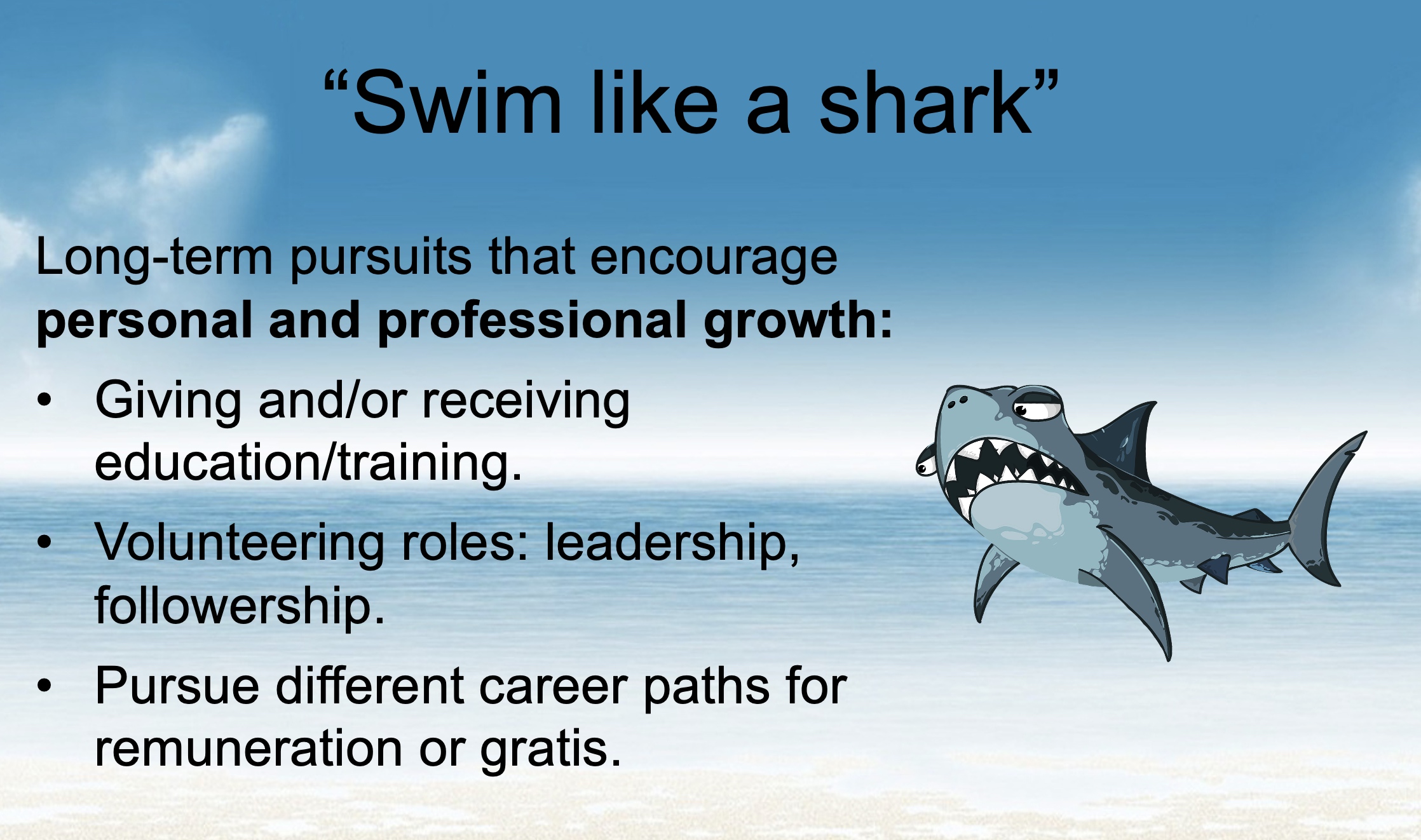
Now I should mention that during our middle-years, we sometimes return to education, get advanced degrees, new certifications or teaching specialties, apply for new job assignments, etc. When my PMEA colleague and fellow music teacher retiree John D’Ascenzo left full-time teaching, he went on to pursue a doctorate degree. Also appropriate for our next Bookends section, I have often quoted his analogy for all career stages to “swim like a shark” (since a shark never stops moving, even when it is sleeping). Sage advice for us all!

During my whirlwind of more than five decades in the field of music education, I went through several “first-year-of-teaching” passages, such as accepting my first job in general music at Edgewood School District (1978-1980), then being hired to direct strings (grades 6-12) at Upper St. Clair School District in 1979 followed by a 16-year appointment to the USCHS choral program of over 200 singers in 1980 on… transitions requiring massive job retraining and revitalized professional development. I may have not appreciated the stress of these “hurry up and relearn” periods at the time, but these periodic challenges made me GROW. In the end, I “lived” and embraced Robert Frost’s poem, “The Road Not Taken.” It may have not been the initial pathway I imagined for myself when I started in music education, but “I took the one less traveled by, And that has made all the difference.”

To this day, this violist and orchestra director has NO REGRETS teaching so many years outside of his so-called “specialty” or emphasis! It comes back to me every time I run into former choral or musical students, those I taught in those early years of being a vocal novice (at times when I felt less prepared). My past instrumentalists/singers/actors reminisce a little and literally rave about their musical experiences and what they meant to them.

My emphasis to foster success in our “veteran years” is also on teacher self-care: health and wellness, burnout prevention or remediation, stress and time management, and personal life and work balance.

Let’s start with examining the probable causes of STRESS in TEACHERS:

  • Overwhelming workload, long hours, and/or challenging classroom situations
  • Lack of administrative or social supports
  • Feeling a lack of respect, loss of job autonomy, or not being valued or appreciated in the organization or assignment
  • Dysfunctional or hostile work environment
  • Inconsistent hydration and consumption of a balanced diet and healthy quantities (length, depth, and frequency) of rest and sleep
  • Irregular amounts of daily aerobic physical exercise
  • Misuse of the voice at work and inadequate hearing conservation and protection from over-exposure to sound
  • Deficient scheduling of opportunities for mindfulness, meditation, and/or reflection
  • Deprivation of personal outlets for creative self-expression (not related to job) and the lack of time to explore hobbies, interests, and socialization with family and friends
  • Infrequent use of sick days or vacations even when they are needed for restorative health

We all have experienced at least a few of these “bumps along the road” (but hopefully NOT most of them). Although I generally had very supportive administrators throughout my years in the public schools (and no one would claim I exhibited any symptoms of “burnout”), I did model a few of the inconsistent habits of personal health (diet, sleep, etc.) and an unbalanced work/personal life schedule. And, perhaps it could be said that I did some of my best work totally exhausted!

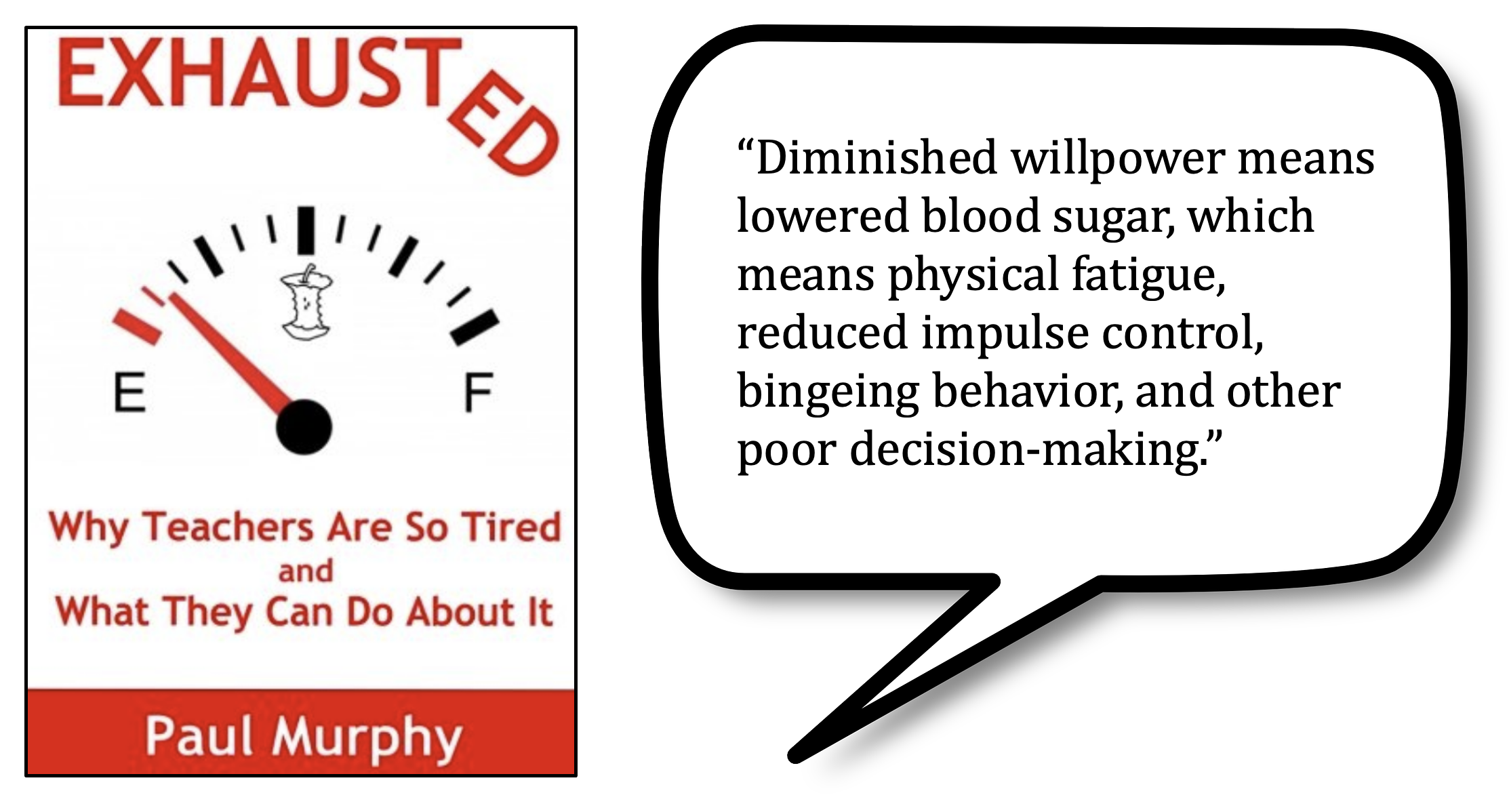
As I have written in past blogs (especially here in “Burned Out or Bummed Out”), the best book I know on “teacher exhaustion” is by Paul Murphy (2017), and subtitled Why Teachers Are Do Tired and What They Can Do About It. I strongly recommend it as “a required read” for all new AND veteran teachers.

Besides being aware of your “body chemistry” (especially what the challenges of constant willpower, deferred gratification, and relentless scheduling can do to lower your blood glucose levels later in the day), to quote Murphy, some of his suggestions for remediation are NOT so easy to follow:

  • Work less/fewer hours
  • Time before school is worth more than twice as much as time after school
  • Use class time to check work
  • Leverage technology
  • Don’t grade everything
  • Stop assigning things

Sorry! My wife and I modeled the behavior of “more-than-full-time” music teachers with after-school rehearsals of marching bands, musicals, community orchestras, chamber ensembles, private lessons, music festival preparation, etc. How in the world do you work fewer hours? Also, since most music teachers do not assign “paper” homework requiring teacher correction, “checking for understanding” and in-class formative assessment could improve efficiency. Sometimes we are own worst enemies… We should “keep it simple” and focus on the priorities. That brings us to time management.

My favorite strategies for organizing our time and fostering a better work/life balance involve these resources (click on links below to past blogs at this site). PLEASE STUDY THESE!

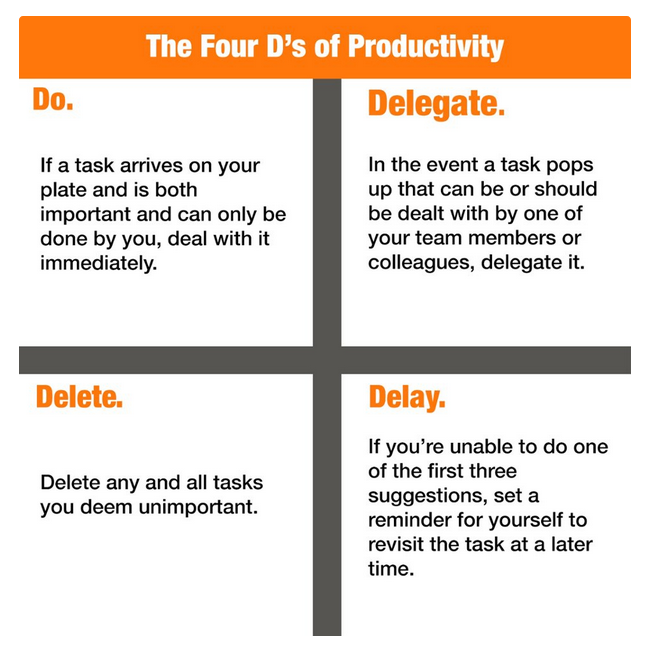
I return to the “Four D’s” concepts several times in past writings, and the “system” can be applied digitally as well… as long as you make a concerted effort to take the necessary time (10-20 minutes) every day to manage the up-front decision-making to “do immediately,” file, or weed out most of the “voluminous noise” (distractions) you get in email, texts, voicemail, snail-mail, etc. Get ready to push the “delete” button… over and over again!

Then there are a few more ideas in “Top Ten Organizing Tips…” and any of the books by Stephen Covey (below). I particularly like the philosophy/demonstration attributed to him re: “start with the big rocks!”

Also, if you are a member of NAfME (National Association for Music Education), search their vast library of related blogs here, several articles to which I was fortunate to have contributed.

Final thoughts for the “sustaining years” of your profession and to avoid any touches of BURNOUT is to develop a self-care plan. My first go-to for building meaningful wellness habits comes from “What Self-Care Is and What it Isn’t.” In past health and wellness workshops, I echo these “basics.”

  • Promote a nutritious, healthy diet, and hydrate often.
  • Get enough sleep.
  • Exercise.
  • Follow-up with medical care.
  • Use relaxation exercises and/or practice meditation.
  • Spend enough time with loved ones.
  • Do at least one relaxing activity every day, whether it’s taking a walk or spending 30 minutes unwinding.
  • Do at least one pleasurable activity every day, from going to the cinema, cooking, or meeting with friends.
  • Find opportunities to laugh.

Self-care can take many forms, such as physical, spiritual, and emotional self-care. It’s an important factor in maintaining health and well-being.

Self-care might range from a hot soak and yoga to everyday activities like preparing meals you want to eat or dressing in your choice of style.

Self-care is not an indulgence. The WHO recognizes it as a crucial aspect of health maintenance.

Tailoring self-care for your budget, season in life, and personal needs for whole body wellness, inside and out, can be energizing and exciting in itself.

https://psychcentral.com/blog/what-self-care-is-and-what-it-isnt

Veteran full-time educators: To sustain and nurture success in the middle to twilight years of your career (Stage 4), seek to understand and practice personal wellness and work/life balance while continuing your pursuits in self-motivation, self-assessment, self-energizing, self-(re)invention, and “growing” personally and professionally, and if it becomes necessary, promote the diagnosis, prevention and self-remediation of debilitating stress and burnout.

PKF

© 2024 Paul K. Fox