Our second in a series on publications and other resources for self-care, health, wellness, and remediation of stress and burnout of music educators addresses one of the core issues for all of us — chronic fatigue.

The medical definition is comprehensive:
Fatigue is a lingering tiredness that is constant and limiting. With fatigue, you have unexplained, persistent, and relapsing exhaustion. It’s similar to how you feel when you have the flu or have missed a lot of sleep. If you have chronic fatigue, or systemic exertion intolerance disease (SEID), you may wake in the morning feeling as though you’ve not slept. Or you may be unable to function at work or be productive at home. You may be too exhausted even to manage your daily affairs. — WebMD
In the NAfME community forum Amplify, another colleague turned me on to the book Exhausted — Why Teachers Are So Tired and What They Can Do About It by Paul Murphy (2017). Most of this blog will focus on a review of this work. I also recommend you visit his very informative website of blog-posts: Teacher Habits.
If you’re like most teachers, being tired at the end of the day is a way of life. We’ve become so accustomed to it that it’s hard to imagine how things could be any different. We get through out mornings with coffee, our afternoons with Diet Coke, and the ends of our school days with the iron strength of our will. We leave the building exhausted, having so much at work that there’s little left over for our families or even ourselves. — Paul Murphy
So, what is the scope of the problem? What can we do about it?
What Is a Teacher?
Are you a teacher? If so, are you also a classroom work foreman, logistics manager, guide, drill sergeant, disciplinarian, cheerleader, data entry clerk, cultural advocate, or analyst? Maybe you are all of these things and more. Maybe, we need to look at educators in a new context of what teaching really is in most schools, and whether it should be given cultural, economic and technological change.
Merriam-Webster’s says “teach” is a verb, with several simple definitions that repeat themselves but ideologically are these five things:
- to cause to know something
- to guide the studies of
- to make known and accepted
- to impart the knowledge of
- to conduct instruction regularly.
— LeiLani Cauthen
Personally, I have always glorified the mission and “calling” of becoming an educator.
Teachers model the “habits” of
 Focus
Focus- Self-discipline
- Self-motivation
- Self-assessment and self-improvement
- Work ethic
- Highest standards of behavior, appearance, and ethics
We serve as
- Fiduciaries, looking out for the welfare of students
- Model exemplars, both on and off school time
- Self-starters, intrinsically motivated and goal-oriented
- Professionals 24/7 – always “on the job”
This bar is further raised by the public’s and our very own highest expectations of the “nine characteristics of a great teacher” by Maria Orlando in Faculty Focus:
- A great teacher respects students.
- A great teacher creates a sense of community and belonging in the classroom.
- A great teacher is warm, accessible, enthusiastic and caring.
- A great teacher sets high expectations for all students.
- A great teacher has his own love of learning.
- A great teacher is a skilled leader.
- A great teacher can “shift-gears…”
- A great teacher collaborates with colleagues on an ongoing basis.
- A great teacher maintains professionalism in all areas…
I wouldn’t have it any other way! But these standards must take a toll on our health, wellness, and work/life balance!

Stress and Data on Teacher Exhaustion
Do you find yourself tired most of the time? Quoted in Exhausted by Paul Murphy, does this sound like YOU?
- “I’m exhausted, and every weekend, I spend at least one day in my pajamas.”
- “I feel like work never ends.”
- “I love my students, and I have a really good class this year, but I’m done and ready for a break.”
- “I was so tired that I ended up missing out on family’s holiday dinner.”
Why is this so prevalent? According to Paul Murphy, “the answer, in a word, is STRESS! Teachers are incredibly stressed-out people, especially when they are at work.”
He shares some scary statistics:
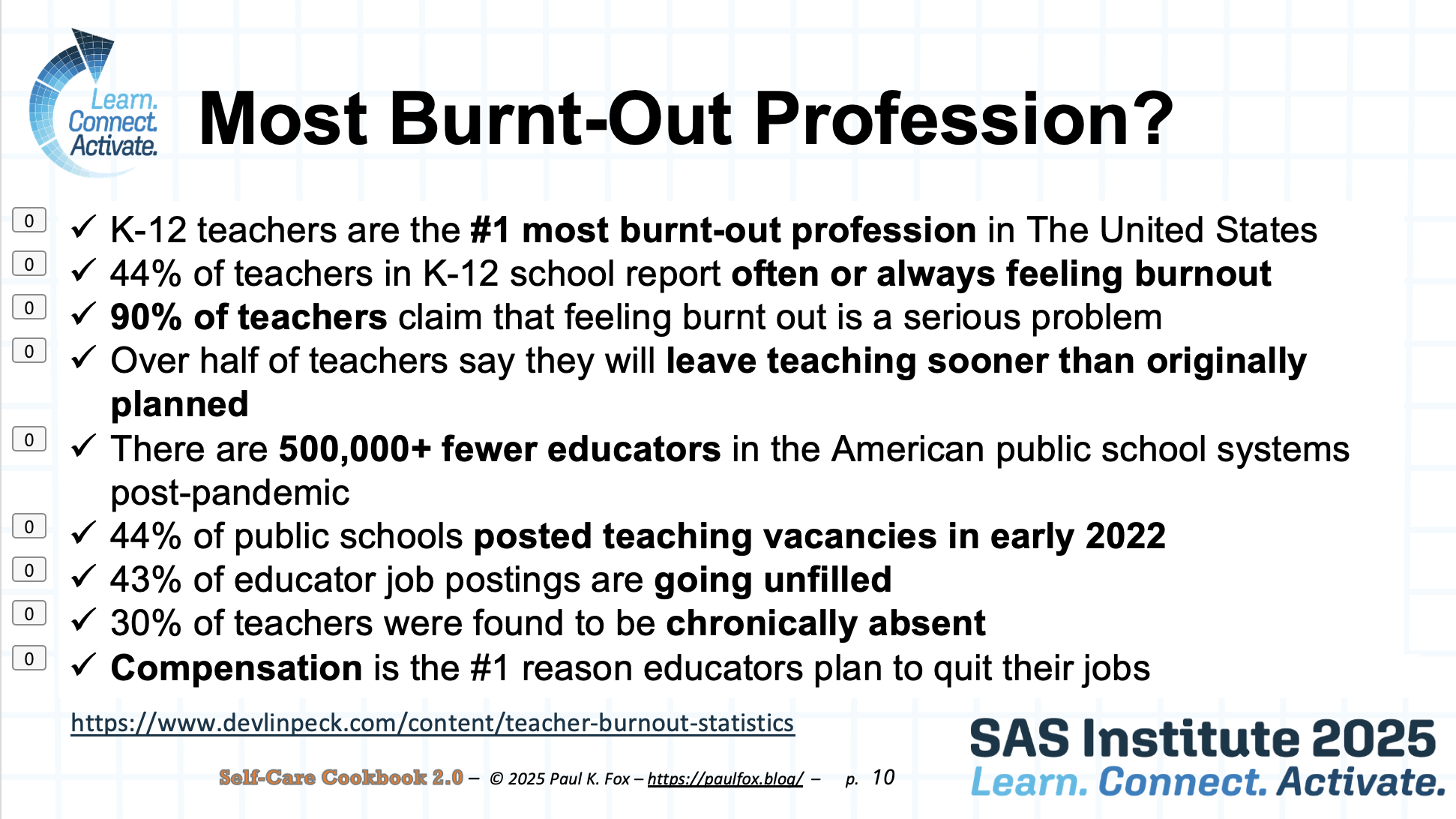
Because our culture tendency to demand more of educators, that stress is on the rise. In 1985, 36% of teachers reported feeling great stress at least several days a week. Today, that number is 51%. Only doctors report higher levels of stress on the job.
The costs are high. A recent study of the U.S. Department of Education found a 10% of new teachers don’t return for second year. Nearly 185 new teachers are gone within five years. Many young people, perhaps persuaded by on his federal and Teacher should buy what they see on social media, won’t even entertain the thought of teaching. Between 2009 and 2014, enrollments in teacher preparation programs fell about 35% in the U.S., reducing the supply of available teachers by nearly a quarter-million. — Paul Murphy
These figures are supported by other sources as well. The American Federation of Teachers reported here that “61% of educators say their work is always or often stressful,” and, worse yet, “50% say they don’t have the same enthusiasm as when they started teaching.”

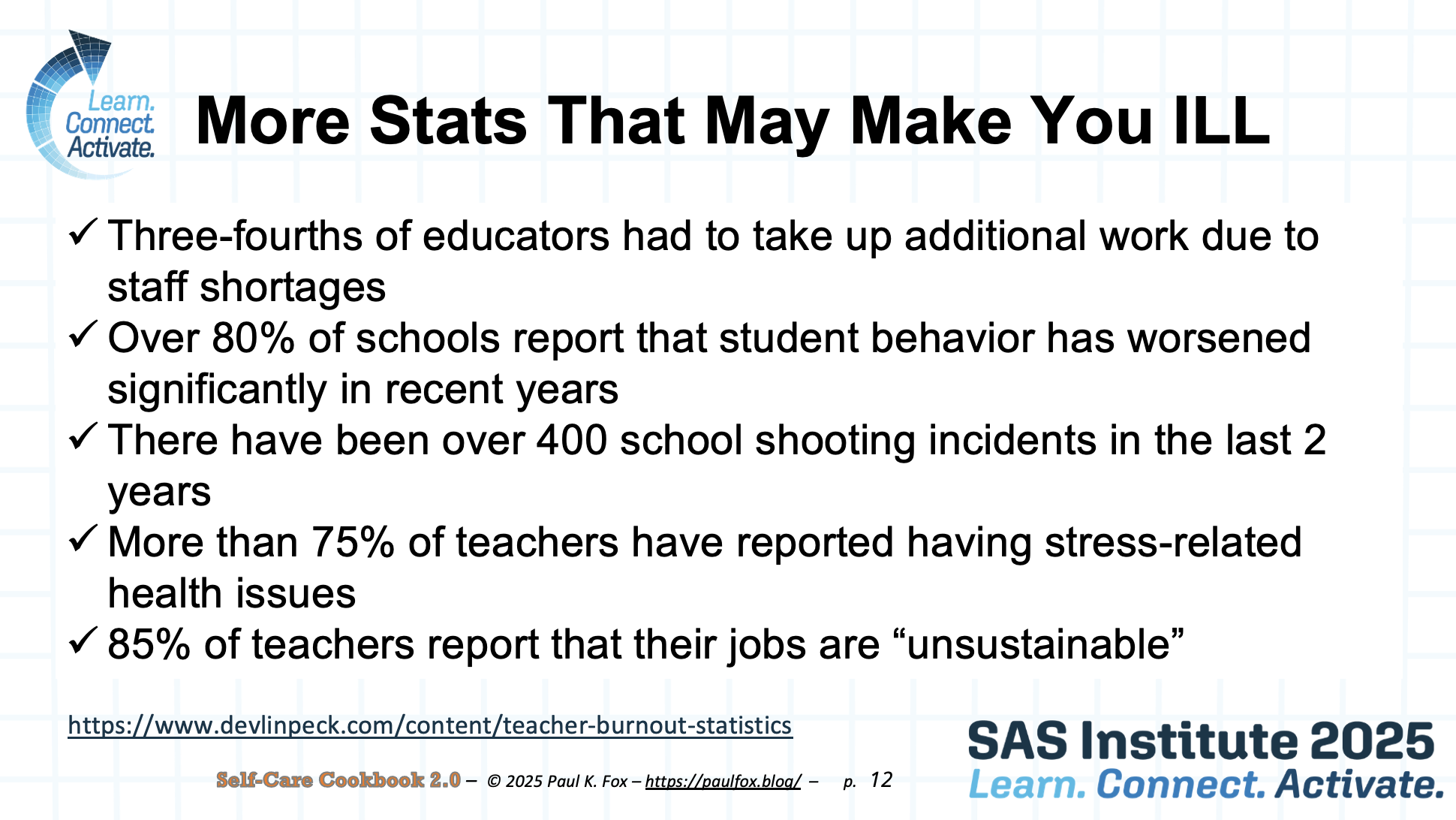
In addition, according to James Anthony in “7 Conclusions from the World’s Largest Teacher Burnout Survey” posted here, 75% of teachers complained of health problems such as shortness of breath, dizziness, heart palpitations or chest pain, or regular headaches or stomach aches — symptoms often associated with a failure to deal with stress. His conclusion? “This is a worrying sign that pressure and workload of many teaching jobs is having a very real physical impact on many teachers.”
From the Back Cover of the Book
You should definitely grab a copy of Exhausted. Paul Murphy promises you will learn:
 Why even good days with your students leave you drained.
- What tired teachers have in common with doctors, major league baseball managers, and interview committees.
- How Jeb Bush’s failure in the 2016 presidential primaries is related to your own fatigue.
- What long distance runners, one of history’s greatest weightlifters, and a Stanford psychologist can teach you about the powerful influence of your mind.
He says you will find solutions to these problems and understand:
- What teachers can learn from baristas and airline agents.
- What supermarket layouts can teach us about the dangers of decision making.
- Why AC/DC doesn’t belong in your classroom.
- What an insurance agent’s plane crash can teach us about belief.
Who is this Paul Murphy guy? His own bio, the last section of the book, is unique:
Paul Murphy is a third-grade teacher in Michigan. This fall, he started his 20th year in the classroom. His writing focuses on improving the lives of teachers, both inside the classroom and out. He enjoys reading, writing, travel, exercise, craft beer, and Cheetos. His feet are perpetually cold, he bites his nails, and he regularly (and almost instinctively at this point) changes the lyrics to songs to make them inappropriate, much to the chagrin of his wife and daughter.

The Science of Exhaustion
The best way to review the innards of a publication and get to the nitty-gritty may be to frame a few guiding questions, to follow an outline summary on which to reflect while reading many of the early chapters:
- How many decisions do you make before you ever teach a single class every morning? What effect do they have on you?
- What is the link of willpower (ego depletion* and delayed gratification) to exhaustion?
- What do doctors say about the constant exercise of self-control and blood glucose levels, and why is the time of the day critical?
- What is “morning morality” and what does it have to do with planning your day as a teacher?
*Psychologist Roy Baumeister coined the term “ego depletion” after he found that humans have a limited supply of willpower. He compares willpower to a muscle, which can strengthen but also wear out with use. Ego depletion has a general effect, meaning that using self-control in one area of your life erodes your ability to self-regulate in other parts of your life. Baumeister found that exerting self-control results in a significant drop in blood-sugar levels. Low blood sugar leads to physical fatigue, which is why you’re so tired, even though the heaviest thing you lifted was a textbook. — Paul Murphy
A few of my observations. Willpower is actually “won’t-do-power,” and represents the chronic stress teachers and other professionals place on themselves everyday: saying “NO” to such things as sleeping-in an extra 10-15 minutes, staying on your diet by passing by that Dunkin Donuts shop on the way to school, forgoing the idle chit-chat from the teacher’s room on the way to the photocopier, not allowing yourself to be distracted by a TV program instead of doing your own homework, delaying an update of your social media sites or reading personal email instead of finishing your lesson plans, grades, or the forms the principal requested for completion by the end of the week.
In other words, facing up to all of those grown-up expectations that grown-ups must do! There’s no room for youthful indulgences or “goof-off time” as an adult!

Paul Murphy says, “Whatever you call it… resisting temptation, will power, self-control, self-discipline, grit, perseverance, self-regulation, or determination, science has proven that it exhausts us.”
Teachers endlessly self regulate. We hold back sarcastic rejoinders, walk away from lazy students when we what we really want to do is lecture them, keep her honest thoughts about the principles latest he’ll conceive ideas to ourselves, respond professionally to disrespectful emails from parents, work with students when we want to do anything but, plan the next day one would rather check Facebook, and bite our tongues when we’d like to drop F-bombs. We force ourselves to work when we feel like taking a break. We redirect students when we’d rather just let the behaviors go and avoid the resultant excuses and conflicts. We keep teaching even though we really, really have to pee. Teachers use a lot of willpower. — Paul Murphy
Couldn’t say it better myself!
Another personal observation also seems to be supported by Paul Murphy. I have found that “earlier is better” for doing creative tasks, solving problems, or completing highly detailed work. Most mornings (in retirement), I reserve my first two hours for writing. Others say that the AM is best for practicing or composing, when you feel the freshest! The closer to having a meal or having slept all night (which revitalizes our supplies of self-regulation and blood sugar), the better for tackling something hard… which for a teacher might mean facing the challenge of a “difficult parent” phone call, student discipline report, or conference with an “unhappy” administrator.

Strategies for Releasing/Postponing Tension
Paul Murphy recommends that, instead of using up your willpower reserves to fight off the urge to snap at someone or suppressing your anger, “simply notice something else that requires less willpower” or distract yourself. Postponing can also be effective: Have your tantrum “not now, but later.” (Schedule your nervous breakdown for another day?) Often, once some time has passed, you may find your frustration has abated.
Another technique for alleviating stress is to actually do a deliberate exercise to release your emotions and desires… in a more controlled and constructive way.
I sometimes receive an email from a parent or supervisor that angers me. My instinct is to return fire. That’s a bad instinct, but it doesn’t mean I have to hold in those feelings. It also doesn’t mean I should vent to other teachers or my wife. They’ve got their own problems, and nobody really wants to hear mine. What I do instead is write my honest, no-holds-barred rebuttal. I let it all out, hammering the keyboard and plastering my screen with vitriol. I read it and re-read until it effectively conveys the righteous indignation I so strongly feel.
Then I don’t send it!
It released my anger, and it’s there for me to revisit. On those few occasions when I have gone back to reread these unsent missives, my anger is gone. I wonder why I was so outraged at the time. They’re actually embarrassing to read. If you do this a few times, you begin to realize that your initial feelings are often an overreaction (and also the result of depleted willpower and low blood sugar) and it becomes easier to avoid indulging them. — Paul Murphy

Intense Emotions = Model Teacher?
Who is a better teacher? An energetic, passionate, and always “fired-up” one, or a professional who exerts a calm, introspective, and less intense attitude? Some studies do show that an enthusiastic, engaging teacher who is passionate about his subject is more effective than a “dull” or less dynamic teacher who seems to dislike his job, but what of the costs? Again, in Murphy’s book, we have more research to the rescue: “…Science has proven that intense emotions tire us out!”
I’ll explain why teachers should aim for a feeling of inner calm for large chunks of their day. I’ll argue that the expectation we have for ourselves and other teachers to be constantly enthusiastic is counterproductive in the short-term and ultimately damaging to the education system in the long-run. And I’ll explain how being calm will not only conserve your energy, but will make your classroom a better learning environment for your students. — Paul Murphy
Another reason to buy his book!

The Mind Is a Terrible Thing to Waste!
Finally, our very own thoughts are amazingly powerful tools. Our brain can either help or make things worse! “If you believe a task is going to be difficult, it will be.” We all know that “positive talk” can alleviate the effects of stress, and can inspire greater levels of achievement. But, what about the relationship of negative thoughts to fatigue?
Almost every distance runner talks of hitting a wall. In 2012, Spanish researchers wanted to know what went through runners’ minds as they neared exhaustion, and they found exactly what you’d expect: the harder the runners work and the longer they run, the more negative their thoughts become. No surprise there.
 But then a group of British and dutch researchers asked an interesting question. They wondered if everyone had it backwards. Did the discomfort of physical fatigue cause the runners to think negatively, like everyone assumed, or did the runners negative thoughts make them more physically tired and sore? It was a chicken and egg question.
The researchers found 24 healthy adults and had each complete a grueling ride on a stationary bike until they were exhausted. Then they were sent home for two weeks. During that time, half of the subjects were trained in positive self talk, a technique many sports psychologist coaches teach athletes to combat negative thinking that can lead to poor performance. The other 12 subjects were left alone. Then the researchers called them all back to hop on the bikes again.
On average, those who receive positive self talk training performed more than 17% better on their second ride than they had on their first. There was no improvement among members of the control group. — Paul Murphy
He goes into great detail that the driving force behind our exhaustion may not even be the hours we work, the challenges we face in the classroom, or the lack of support we perceive from administration or parents. It may rest in our thoughts. And, he analyzes the negative effects of “worrying” and the concept of “mind over matter!”

The Schedule That Doesn’t Help
Tiger Woods was known for so many “firsts” and breaking numerous golfing records in his early career. Many credited his success to his extreme focus, perseverance, and self-discipline. It was documented that he practiced golf 7-8 hours every day and worked out two or three hours more:
 6:30 a.m. an hour of cardio
- 7:30 a.m. one hour of lower-body weight training
- 8:30 a.m. high protein/low-fat breakfast
- 9:00 a.m. two hours on the driving range
- 11:00 a.m. practicing putting
- 11:30 a.m. playing nine holes
- 2:00 p.m. healthy lunch
- 2:30 p.m. two to four more hours on the golf course
- 6:00 p.m. back in the gym working on upper-body
- 7:00 p.m. dinner and relaxation
Then we learn about his personal “crash of 2009” when everything seemed to unravel:
- Extra-marital affairs
- Personal calls to escort services
- Wife, discovering his “extra-curricular” activities, assaulting him
- DUI arrest
- Divorce
- Destruction of his reputation
- Injuries
- Poor golf play
Certainly, Tiger had some deep-seated psychological issues. But I can’t help wondering if his remarkable self-discipline left him depleted to the point that he was unable to fight off his most distracted urges at the close of his ego-depleting days. Yes, he only had to focus for five hours during a round of golf, but Tiger Woods used will power from the time he woke up to the time he started texting port stars. His is a cautionary tale for anyone who spends large parts of the day exercising self-control. As teachers, there are lessons to be learned. — Paul Murphy
Your own strict daily regiment may also contribute to your feelings of “total exhaustion.” Music teachers are usually their own worst enemies. We take on responsibilities for the  sake of the music program, add a new ensemble, schedule after-school time to teach a solo or instrumental part, and plan more weekend and evening “learning activities” or events beyond the scope of most other academic subject teachers. It was not unusual for me to be at school by 6:45 a.m., eat lunch in my car on the way to my second or third assignment as an itinerant, stop for a quick “date” and dinner out with my wife, return to school for band, orchestra, or musical practices, and not get home until 9 or or 10 p.m. As a retiree, I now ask, “What ever happened to all of this stamina and endurance?” Pushing wheel chairs only four hours a day three times a week at a local hospital, I sometimes find myself wanting to take a “power nap” when I get home! Never you fear: the healthy “calendar of a retired music teacher” is as busy (and hectic) as full-time employment… We always say, “I wonder how I ever had the time to do all of these things and work at the same time!”
However, to put it in perspective, here is a copy of my former professional schedule that I was (mostly self-) assigned to teach grades 5-12 strings in three buildings, manage the fall play and spring musical, assist the marching band, work with the superintendent on school district public relations projects, prepare for PMEA and NAfME music festivals, and serve as my district’s Performing Arts Curriculum Leader.
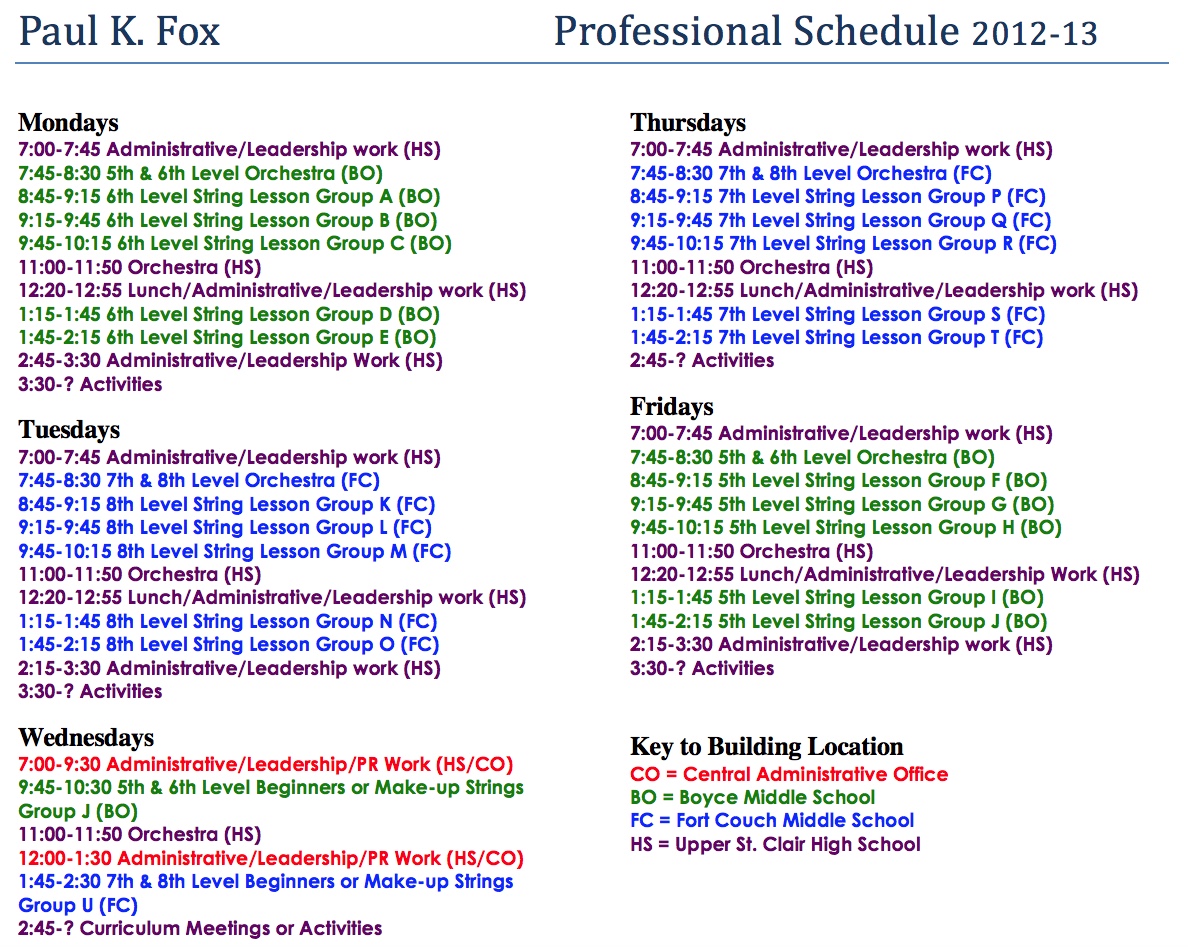
As an administrator, the number of “contact hours” over the maximum was irrelevant; it was never an option to submit a grievance to the teacher’s union. Actually, I accepted the responsibility of planning what I thought was necessary for the success of my program, my students, and my music staff… no matter what the cost! Sound familiar?

Other Remedies to Lower Tension and Exhaustion
This is just “the tip of the iceberg” for an analysis of the book Exhausted. Part two which we have not covered here is entitled “What To Do About It.”
More recommendations for better time management, remediation of teacher burnout, development of a self-care plan, and techniques for stress reduction will be addressed in future blogs. At this point, from three excellent sources, these tips may steer you towards improved rest, personal life/work balance, and general health/wellness. Stay tuned for more at https://paulfox.blog/care/.
Numbers 1-6: Paul Murphy: Exhausted: Why Teachers Are So Tired and What They Can Do About It http://teacherhabits.com/about/
Numbers 7-15: Raphailia Michael: “What Is Self-Care, and What It Isn’t” at PsychCentral https://psychcentral.com/blog/what-self-care-is-and-what-it-isnt-2/
Numbers 16-22: Lesley Moffat: I Love My Job But It’s Killing Me https://squ.re/2TaXoAr and (also see this blogpost)
- Work less/fewer hours
- Time before school is worth more than twice as much as time after school
- Use class time to check student work
- Leverage technology
- Don’t grade everything
- Stop assigning things
- Create a “NO” (I will not do) list
- Promote a nutritious, healthy diet
- Get enough sleep
- Follow-up with medical care as needed
- Use relaxation exercises and/or practice meditation
- Spend enough time with loved ones
- Do at least one relaxing activity every day, whether it’s spending 30 minutes unwinding, listening to music, or taking a walk
- Do at least one pleasurable activity every day, from going to the cinema, cooking, or meeting friends
- Make opportunities to laugh
- Take a break from social media
- Seek out ways to compliment others
- Allow someone to go ahead of you in line at the store
- Set your alarm for nine minutes earlier and use those nine minutes to listen to an inspiring song
- Turn off notifications on your phone and/or avoid electronic devices for the first hour of your day
- Take deep breaths when you encounter spped bumps and stop signs/lights during your daily commute
- Stay hydrated
PKF
Photo credits (in order) from Pixabay.com
-
“cat-tired-sleep-rest-dreams-relax” by “ulleo” or Ulrike Leone
-
“french-bulldog-dog-on-the-couch” by Mylene2401
-
-
“lion-predator-mane-big-cat-yawn” by Alexas_Fotos
-
-
“chihuahua-dog-puppy-baby-sleep” by “Didgeman” or Thomas B.
-
“fuchs-animal-tired-sleep-sweet” by Cifer88
-
“zoo-jaguar-animal-sleeping-sleep” by edmondlafoto
-
“brain-mind-psychology-idea-drawing” by ElisaRiva
-
“runner-training-fit-athlete” by skeeze
-
“dog-beagle-drowsy-bored” by DrawnByShaun
-
-
“hurry-stress-time-management” by TeroVesalainen
-
“monkey-ape-zoo-rest-relax-animal” by kachi
© 2019 Paul K. Fox







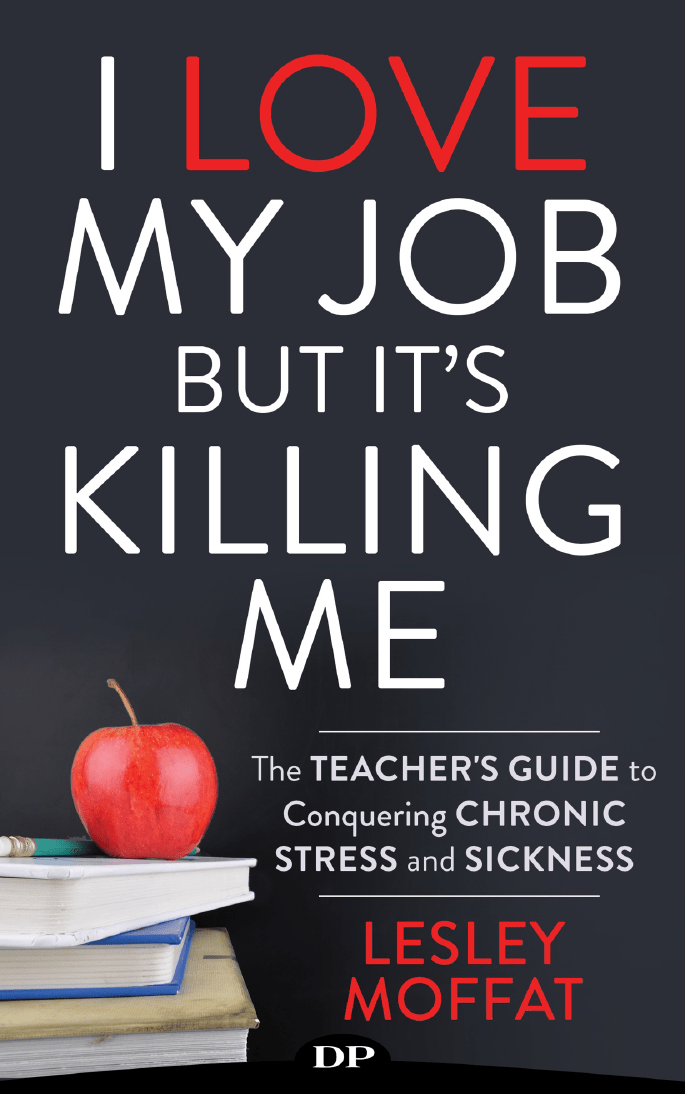

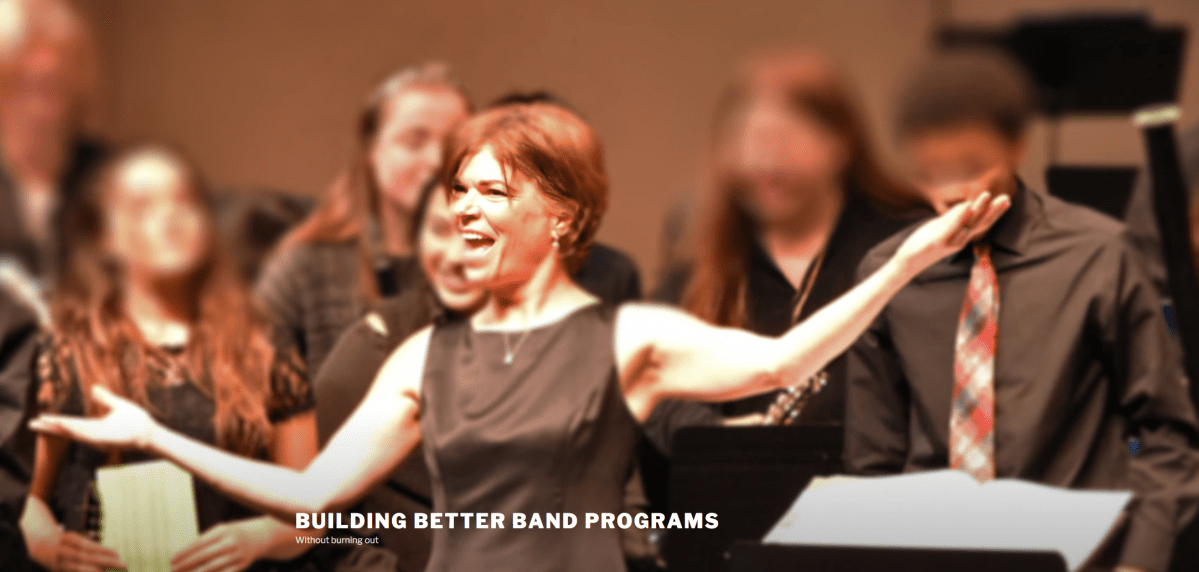



 Now in her fourth decade as a high school band director, Lesley Moffat has worked with thousands of people, helping them not only achieve musical goals (including repeated performances at Carnegie Hall, Disney Theme Parks, Royal Caribbean cruise ships, and competitions and festivals all over the US and Canada), but also teaching them how to develop the long-term life skills they need to be successful in the world.
 paulfox.blog