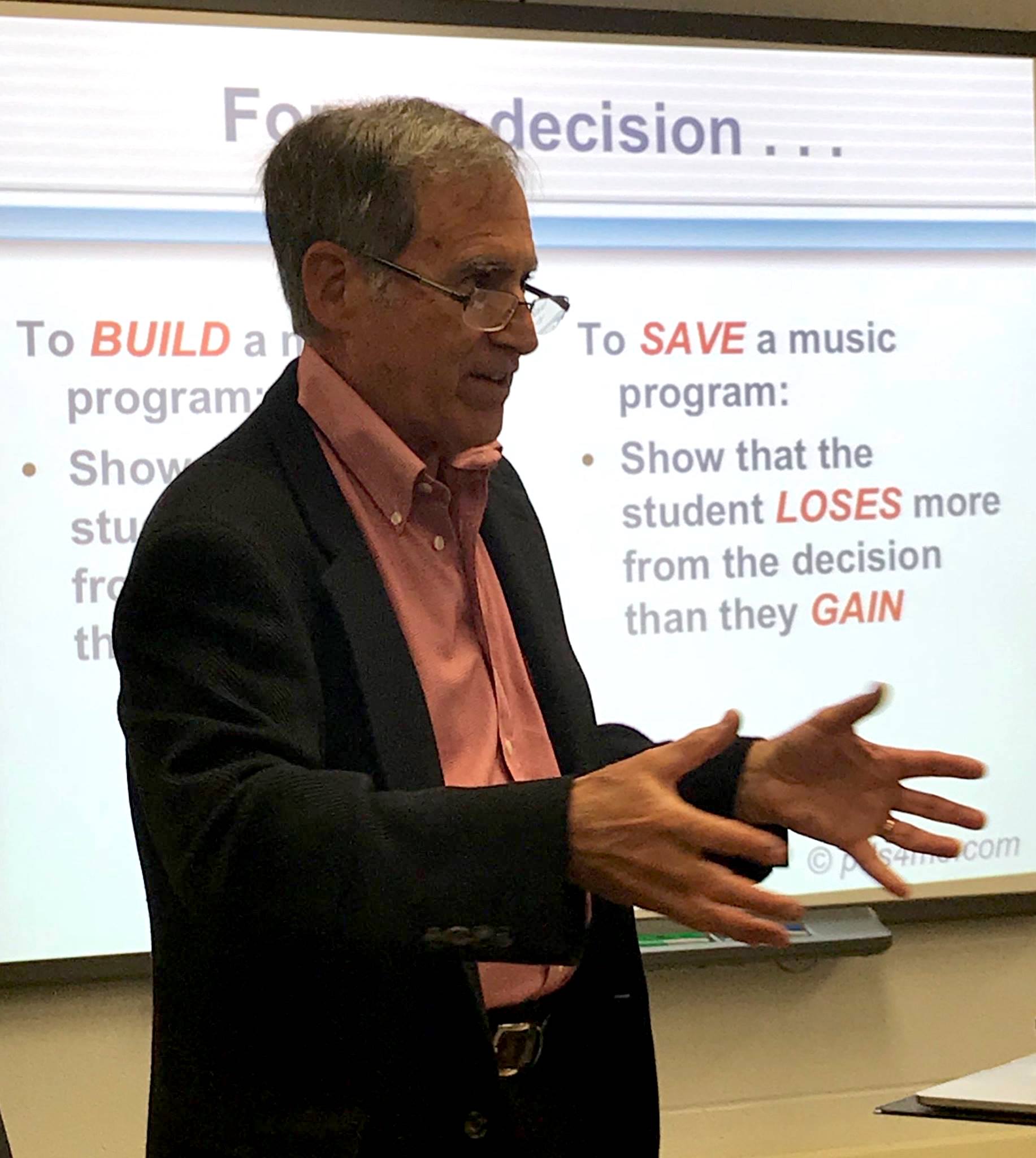
Leaders Flush!

Leadership lessons for the classroom or staff development

This blog is a follow-up resource for my Empowering Educator and Student Leadership presentation at the PA Department of Education SAS INSTITUTE state conference on December 9, 2025 and provides a “fill-in-the-gap” narrative about many of the concepts we have already presented at this blog site:
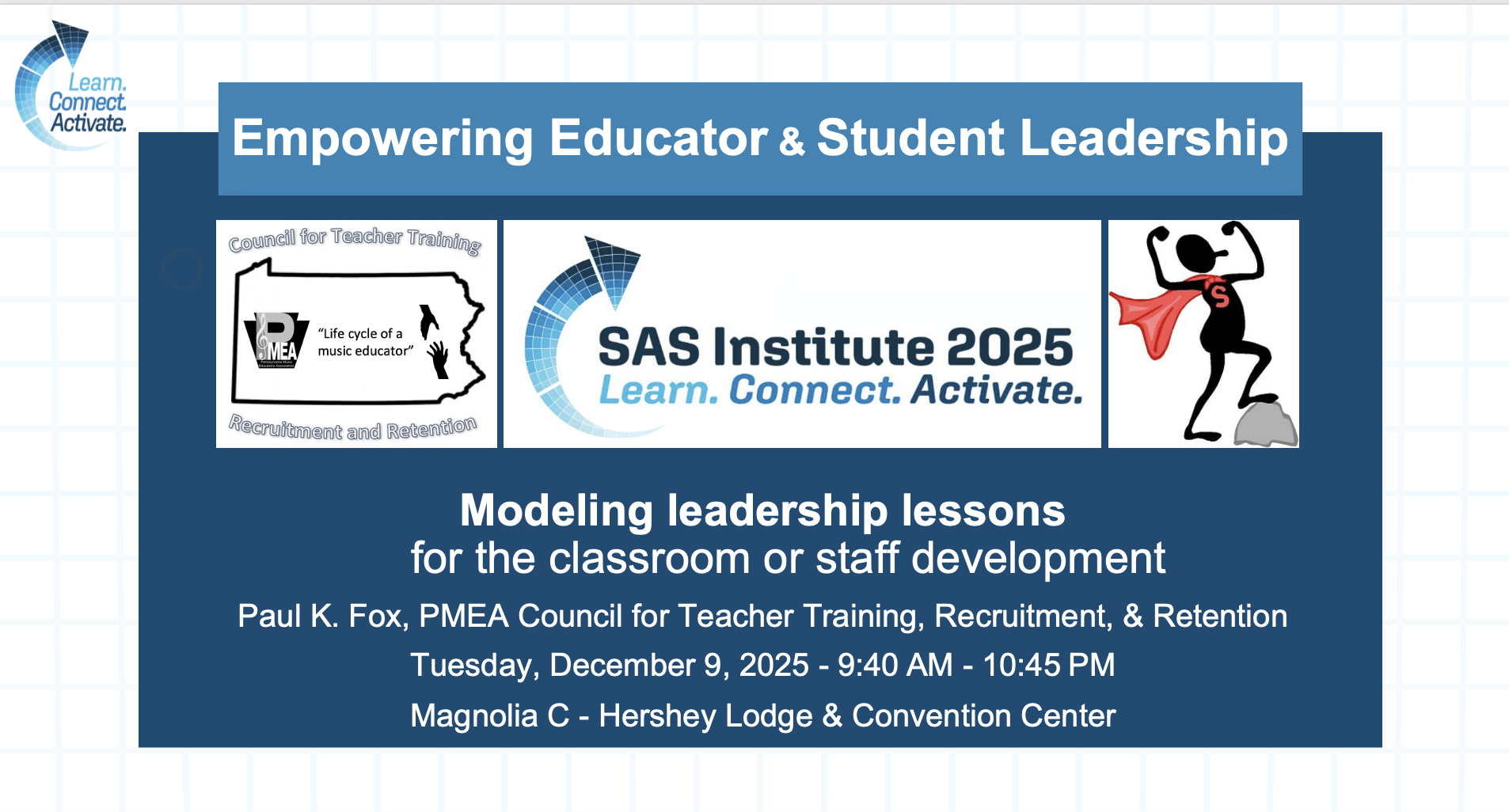
If you would like to review my PDF slide summary from the SAS INSTITUTE, click here.

Did the main title (above) get your attention? What on earth could “leaders flush” have to do with this topic? In teaching (and modeling) leadership skills to my students, we discuss what it means to Faire sans Dire or “do without saying,” the English translation to this crest:

Heraldry coat of arms emblem: Earl of Ilchester

In other words, if you see something that needs to be done (flush the toilet?), don’t assume it’s someone else’s job. A true leader embraces the philosophy Carpe Diem (“seize the day”), identifies the problem and its solution, rolls up his/her sleeve, and “gets it done!”

Why teach leadership in the curriculum & extracurricular activities?

“Leadership is an essential skill that extends beyond the classroom, shaping how students engage with the world around them. Whether leading a group project, organizing an event, or voicing their opinions in discussions, leadership skills empower students to take initiative and make meaningful contributions. These abilities are not only beneficial during school years but also serve as the foundation for lifelong personal and professional success.”
Bloomster

In the past, I have used a multitude of opportunities and settings to teach these life skills in summer leadership camps, section leader and student conductor seminars, drum major and marching band captain auditions, student director, producer, and musical crew head staff meetings, and for 25+ years, preparing student counselors for a comprehensive, six-day, grades 8-12 Township String Camp program.

To sum it up, teaching leadership in Grades K-12 and college settings will:

  • Develop communication skills
  • Build confidence & self-awareness
  • Enhance problem-solving abilities
  • Encourage teamwork & collaboration
  • Shape future success

Why teach leadership to educators?

My December session at SAS Institute was geared to school/system leaders, department heads, and other administrators, but actually the focus on leadership as a skill set necessary for school/staff/individual professional improvement is essential for all educators and school support staff.

From district administrators and school principals to instructional coaches and curriculum coordinators, leaders in education have a direct impact on the learning outcomes of all students. According to UNESCO, educational leadership is considered one of the most influential factors on student outcomes, falling just behind engaging teaching. As a result, leadership training for educators has become an essential part of the professional development experience for teachers at all levels of education.
“Building Leadership Skills – From Classroom Teacher to Educational Leader”

School improvement rarely occurs without effective leadership, and school leadership is only second to classroom teaching in its influence on student achievement. A new evidence review report from Global School Leaders paints a complex and ever-changing picture of school leaders, with their roles, responsibilities, and impact varying around the world.
3 Reasons Why School Leadership Is Vital to Teacher Success”
The literature suggests that empowering educators with leadership training will:

  • Improve student achievement
  • Empower and retain teachers
  • Support new staff members
  • Drive innovation and adaptability
  • Bridge the gap between instruction and administration
  • Build/model a positive attitude
  • Enhance strategic thinking and decision-making
  • Promote a positive and collaborative school climate
  • Develop soft skills such as communication, conflict resolution, and building trust… both in and outside the classroom

Leadership assessments

“A leadership skills assessment is a formal evaluation used to identify and measure a person’s leadership potential and competencies, such as communication, decision-making, and emotional intelligence. These assessments can be used by organizations to evaluate current leaders, identify high-potential candidates for promotions, and inform hiring decisions. Common methods include personality tests, scenario-based assessments, and 360-degree feedback, with tools like CliftonStrengths, Hogan Assessments, and DISC being popular examples.” 
“Leadership Assessment Test – A Complete Guide 2025”

There is a large body of information out there, especially commercial resources, for evaluating the leadership quotient and achievement of corporate managers, CEOs, CFOs, etc. I was impressed with the scope and depth of the research, including these sample firms advertising the availability of third-party consultants and advisors.
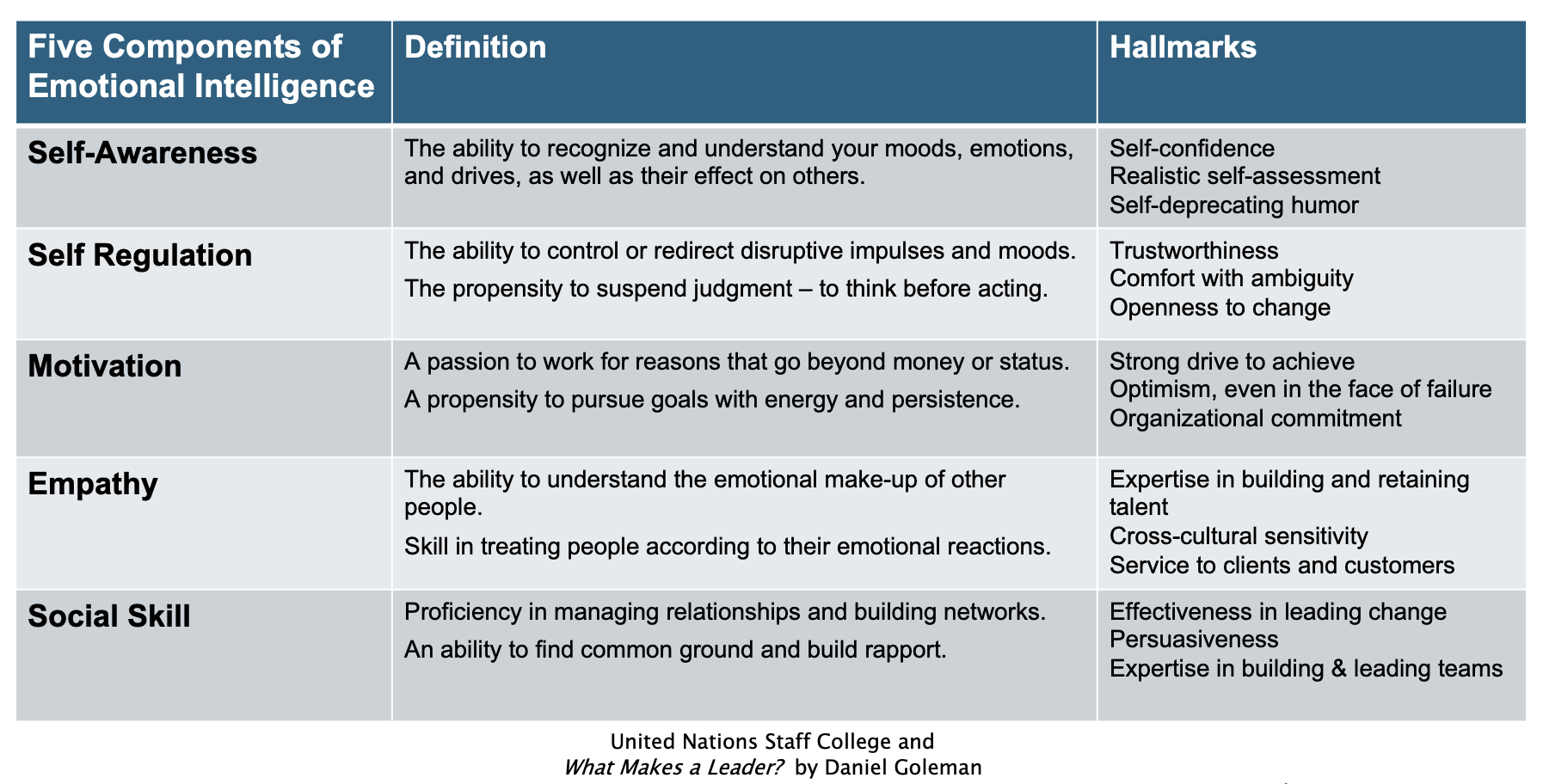
One night I randomly scanned through a handful of YouTube reels of company fraud and mismanagement (e.g., “Revenge of the Coffee Pot,” “Revenge with Karen,” and “Silent Revenge”), painting (fictitious) stories of bosses stealing intellectual property or assuming credit for the innovations/achievements of their subordinates, patent infringement, nepotism or incompetent hirings… all with arrogance, lack of professionalism, the total disregard of employee morale, and blatant patterns of poor executive decision-making, communication, emotional intelligence, strategic thinking, and the ability to influence and guide a team. “Emotional intelligence” (as defined above by Daniel Goleman in What Makes a Leader? also attributed to the United Nations Staff College) should include the “best practices” of self-awareness, self regulation, motivation, empathy, and social skills. Added to these YouTube (fake) scripted deficiencies are the mitigating effects of corporate politics, inconsistent application of compliance or HR policies, unclear contract language, and problems in the chain of command… with the eventual result of the boss receiving a fall from grace, termination, and other legal consequences. Most of these episodes imply only the Board of Directors evaluates the top executives (like school superintendents?), and even with the inclusion of employee satisfaction surveys, staff retention data, third-party auditors, and whistle-blower protections in some instances, the catastrophic actions of these leaders nearly destroy the businesses. For these videos, it seems that leadership assessments and goals are never ongoing, the benchmarks are seldom reviewed, and nothing is PROACTIVE… and therefore not preventive. Therefore, for the school district and corporate worlds alike, we need to intentionally provide formative assessments of our leaders (and ourselves). Exactly what do we need to know and do to improve?
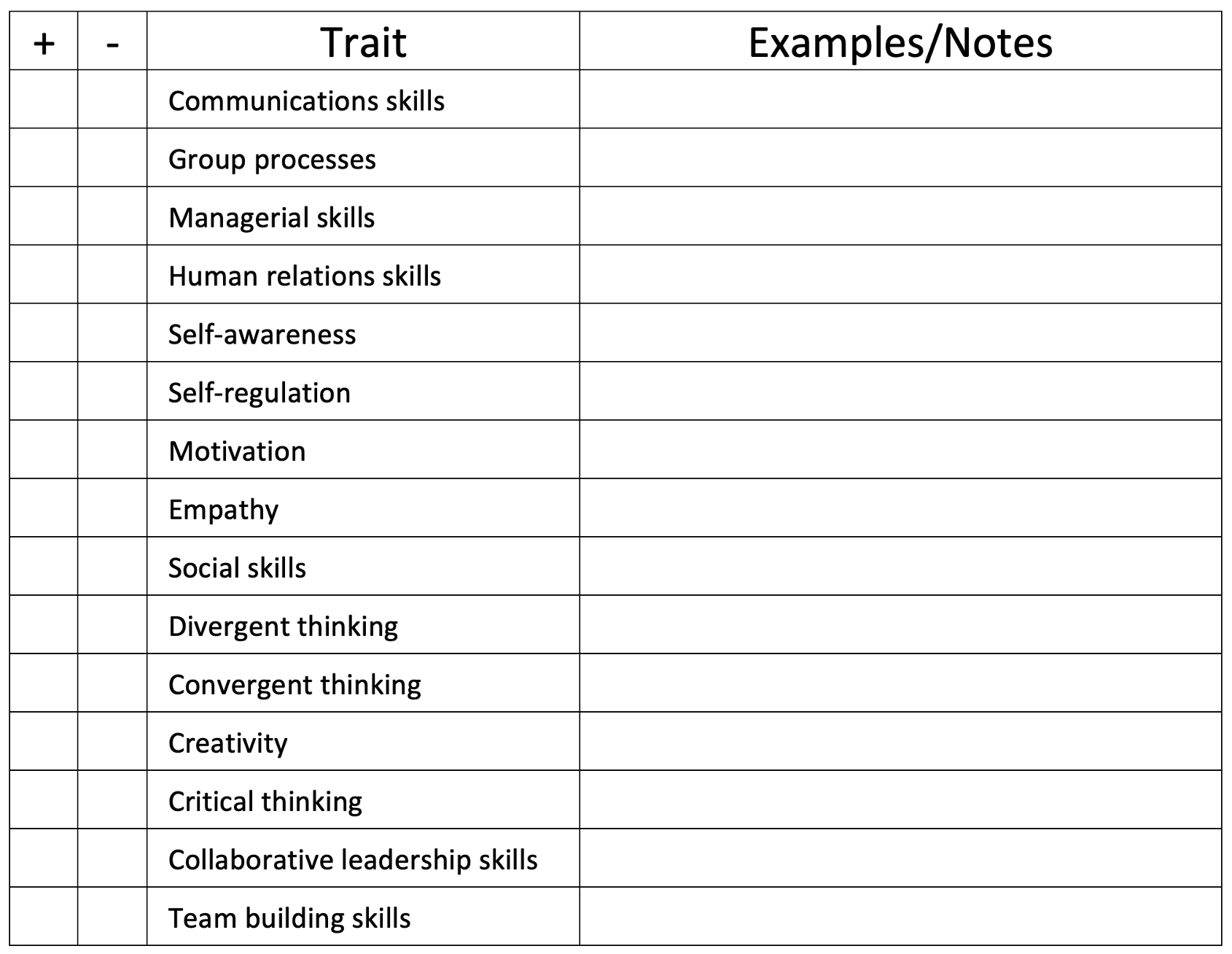
In my blog Growing Student Leaders and the SAS Institute 2025 presentation, I offered the above image as an informal personal checklist to evaluate leadership traits. Coincidentally, while I was writing this article, a scholarship committee of the Community Foundation of Upper St. Clair (for which I serve as Communications Director and Arts Chair) was developing an assessment rubric for ranking applications of a new student leadership scholarship. Although still under development, here are a few of the categories being considered:

  • Communication: Includes listening skills, clarity in speaking, and the ability to make others feel heard.
  • Integrity: Acting ethically, being trustworthy, and aligning actions with words.
  • Accountability: Taking ownership of actions and commitments.
  • Collaboration: Working effectively with others, valuing different perspectives, and resolving conflicts.
  • Self-awareness: Understanding one’s own strengths, weaknesses, and biases.
  • Drive/Initiative: A bias for action and the ability to move projects forward.
  • Courage: The bravery to speak truthfully, admit shortcomings, and make difficult decisions.
  • Humility: Recognizing the contributions of others and remaining a lifelong learner.
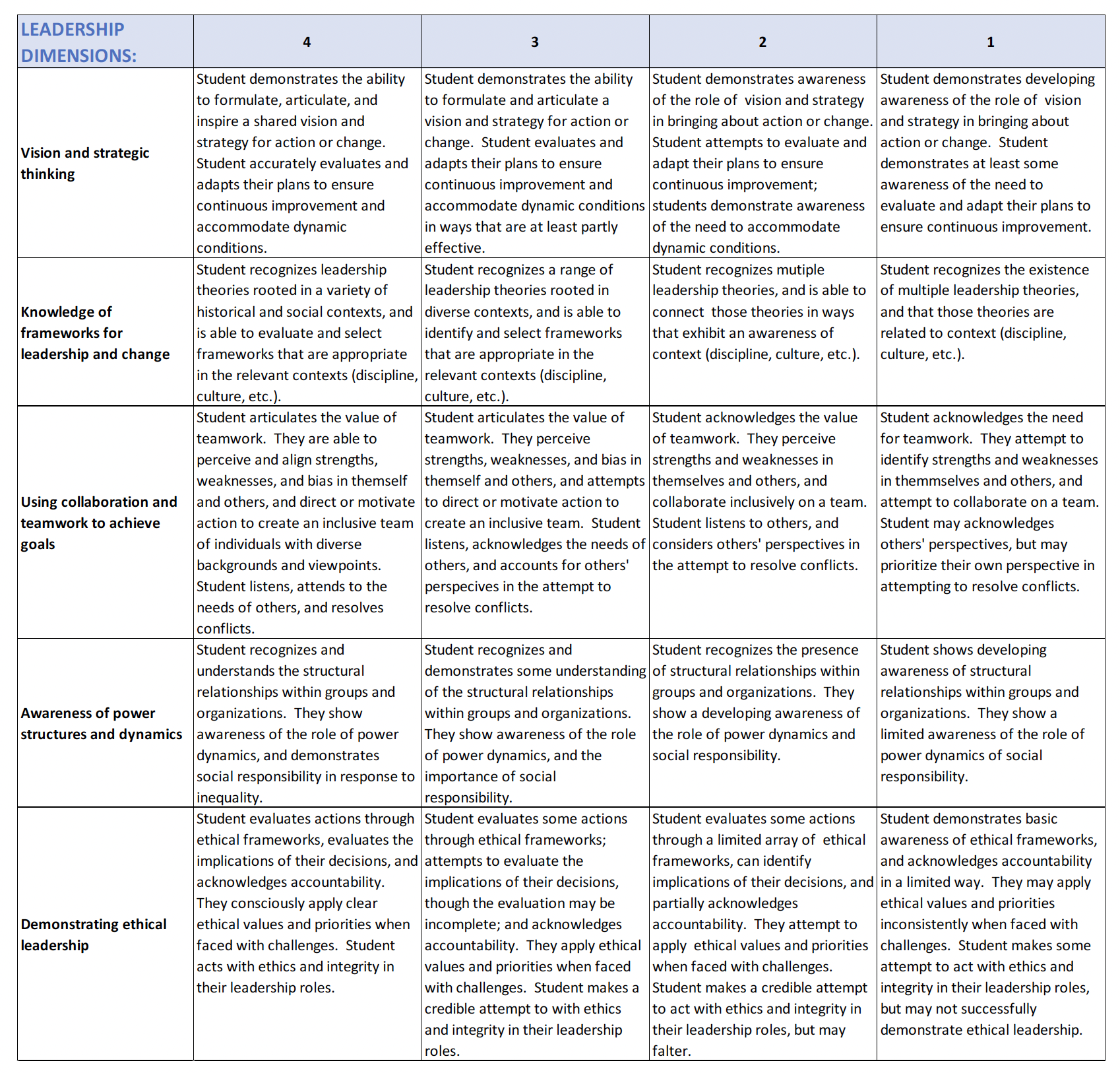
The University of Massachusetts Lowell developed the above rubric for their River Hawk Experience Distinction Leadership Program, defining specific criteria with a clear description of what each trait should look like at different performance levels, in order to provide a standardized way of measuring and assessing leadership skills
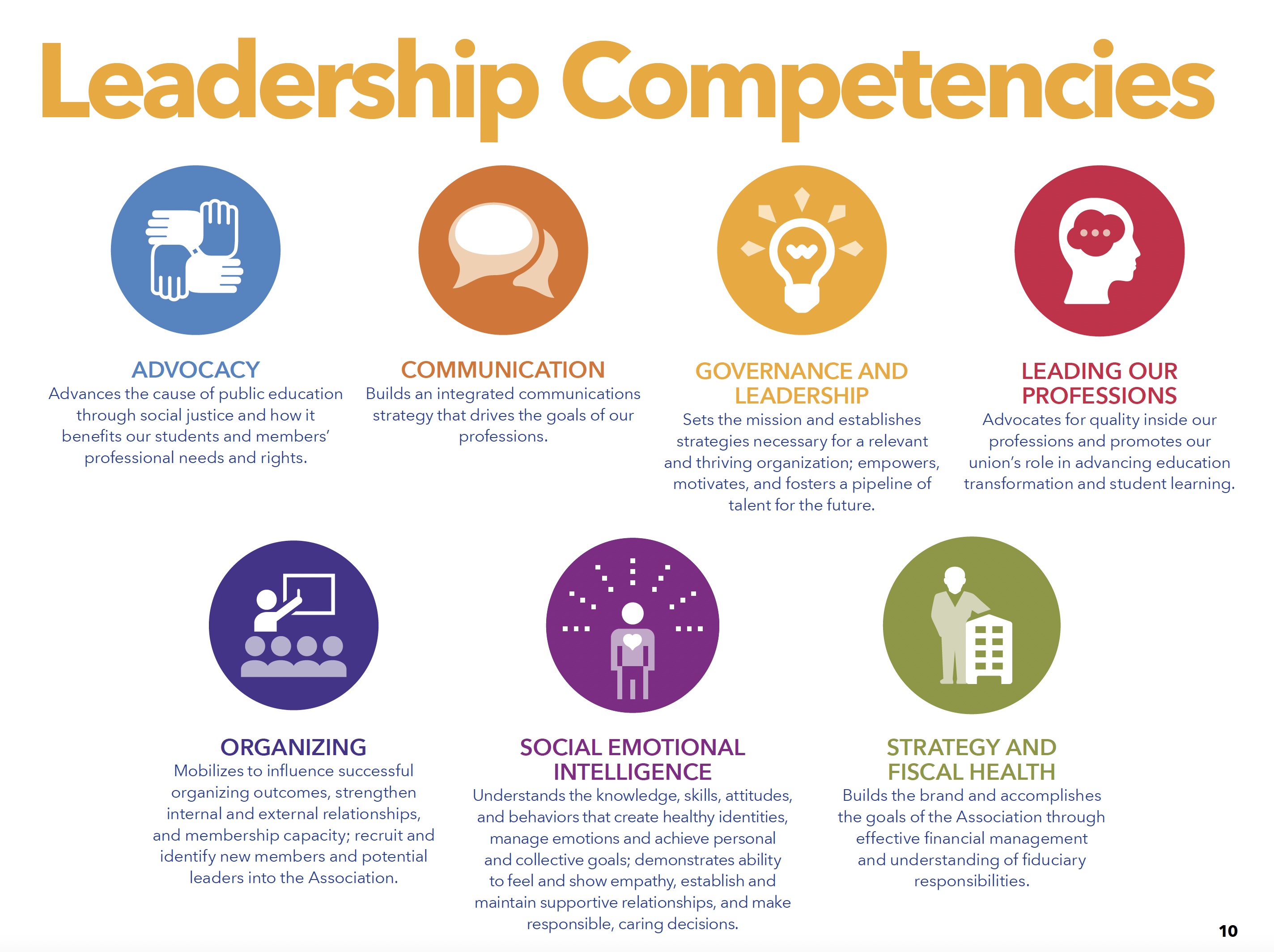
In addition, the National Education Association has created the above NEA Leadership Competency Guide worth downloading.

My favorite inspirational speaker Simon Sinek has also weighed in on this topic of “What Makes a Great Leader?” refining/simplifying it to just three traits:

  • Courage
  • Integrity
  • Communication

Additional resources

If you are an educator looking for supplemental material on developing leadership skills in your students, besides these SAS INSTITUTE 2025 slides (of which the original PowerPoint file is available to download for free in order to adapt for your classroom – please email me), I recommend perusing the full-blown “Building Leaders for Life” (second edition) curriculum (94 lessons in five subject areas, 355 pages of lesson materials, 137 student handouts) created by the Association of Washington Student Leaders (a division of the Washington School Principals’ Education Foundation). Click here to view their website. They also have a middle school and elementary series!

If you attend my SAS INSTITUTE workshop on December 9, 2025 (starting at 9:40 a.m. in Magnolia C, Hershey Lodge & Convention Center), ask me to see sample materials from their high school course of study.

Finally, here is the “homework for future leaders” I provided at the SAS INSTITUTE and during a 2024 summer camp at Upper St. Clair High School, providing additional links to many inspiring minds. Enjoy!


Leadership is not about being in charge. It is about taking care of those in your charge. — Simon Sinek

A leader is one who knows the way, goes the way, and shows the way. — John C. Maxwell

Do not follow where the path may lead. Go instead where there is no path and leave a trail.
— Ralph Waldo Emerson

The greatest leader is not necessarily the one who does the greatest things. He is the one who gets people to do the greatest things. — Ronald Reagan

What you do has far greater impact than what you say. — Stephen Covey

PKF

© 2025 Paul K. Fox

Bookends – Part Two

The Life Cycle of a Successful and Happy Music Educator

Joyous Holidays, Season Greetings, and Happy New Year from “The Foxes!” This is a time for reflection and gratitude… and we feel blessed for all the opportunities allowing us to share our insights, gifts and experiences with other music education professionals.

We hope to inspire YOU and literally model the concepts in this blog series. We continue with our discussion first introduced a month ago in Bookends – Part One – The Life Cycle of a Successful and Happy Music Educator, exploring:

  • Stage 3: Inservice/Growing Years (this blog)
  • Stage 4: Veteran/Sustaining Years (future blog)
  • Stage 5: Next Chapter/Living the Dream (future blog)

This article is an abstract from a session presented to Seton Hill University music education student teachers on October 17, 2023. Click on this link to download the slide summary in PDF format.

“I have written a lot of articles in support of these topics… now compiling them for your easy access. Depending on your current status and interests, feel free to peruse the checklists (links) in this series. It is possible a few of the resources contained within these blogs have gone inactive, but I believe enough are there for you to gain the insight, tools and motivation to achieve professional development for life.”

– Paul Fox

Stage 3 – Inservice/Growing Years

[ ] 8. Becoming a Music Educator: For a review of Bookends – Part One, take a step backward and revisit what you have done to “get ready” for your “rookie years.” Take special note on the things-to-do list (“secrets”) as a first-year educator (perhaps completed during your student teaching semester):

  • Subscribe to a discounted NAfME + PMEA first-year membership (If you are a recent college graduate in your first year of teaching, or if you are the spouse of a current or retired NAfME member, contact NAfME at 800-336-3768 or email memberservices@nafme.org) to find out if you qualify for a reduced rate.
  • Hook up to PMEA Mentor or other state’s MEA support program for new teachers.
  • Look into finding an informal advisor in the PMEA Retiree Resource Registry for PA music teachers.
  • Need to fill in a few gaps missing from your college courses in skills and knowledge? Continue your “enrichment” viewing PMEA Webinars and the exhaustive video library in the NAfME Academy.
  • Take advantage of earning professional development credits just for reading an article in the NAfME Music Educators Journal
  • At some point you will be writing/editing curriculum, so research the awesome resource of Model Curriculum Framework (Have to be a PMEA member)
  • Too busy to participate in the PMEA Annual Conference or NAfME national events? Look into going to a PMEA summer conference (usually at a lower-cost!). Check out your own state’s MEA discounts and offers for collegiate members and new teachers!
  • Numerous free and timely blog posts from NAfME Music in a Minuet and here (paulfox.blog).

[ ] 9. The Care & Feeding of Your Principal: Although not covered in any detail during the Seton Hill University presentation, it is recommended that you read in its entirety “The New Teacher’s Guide to Fostering Positive Relations and Good Interactions with School Administrators” offering a wealth of excellent recommendations from these trustworthy sources:

A favorite question I pose to college music ed seniors is, “In what professional associations are you a member and actively involved?” For the price of consuming one fewer Starbucks latte a week, you can open up the Wonderful World of “C’s” – Contacts, Coachings, and other Connections, including research and resources that will benefit your Continuing Education. You can’t afford NOT to join groups like these.

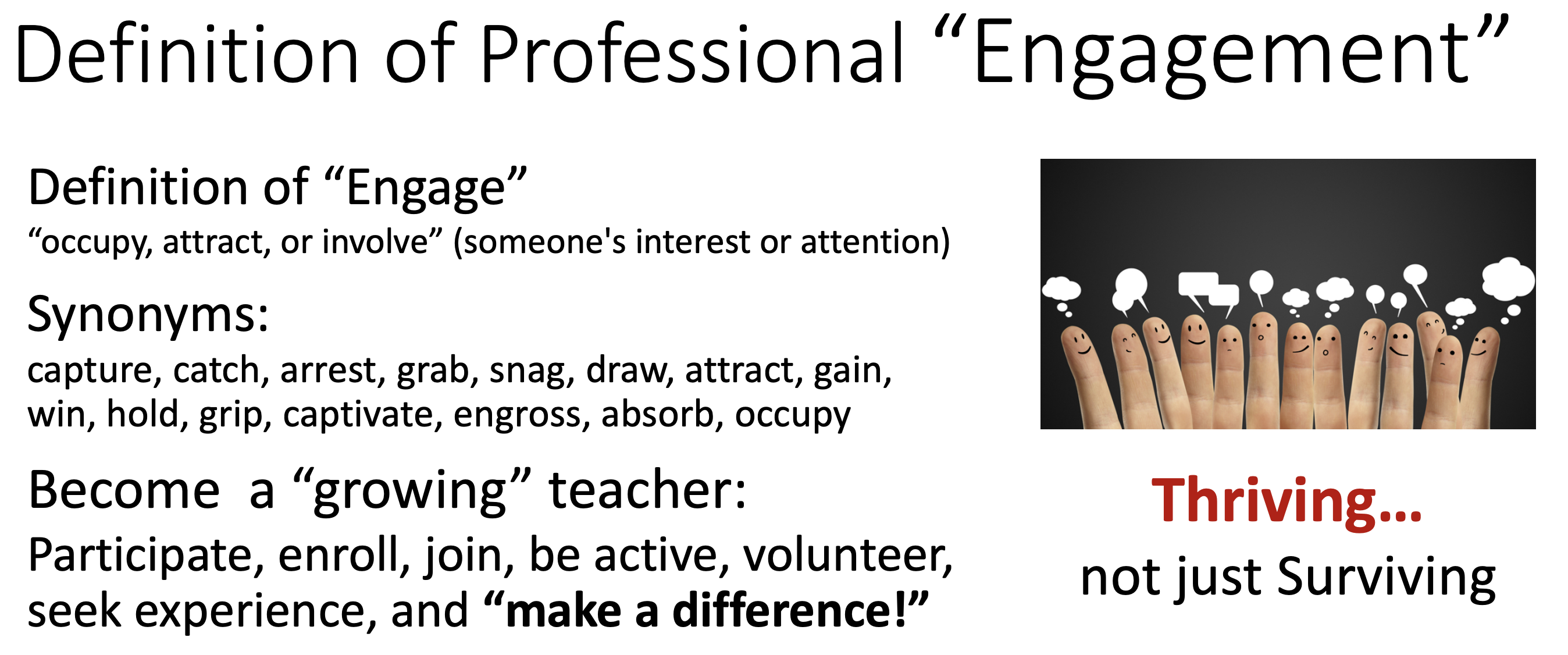
To help “nail down” a few related definitions critical to personal growth and career development in our profession, especially “engagement,” “professionalism,” “collaboration,” and “networking,” please take a little time to travel and consume the following archived blog postings.

[ ] 10. The Meaning of PRO: This is one of the oldest articles at the paulfox.blog site. How about a little soul searching? Are you truly a professional? Do you have the skills, habits, and attitudes of a professional in the field of education?

[ ] 11. Transitioning from Collegiate to Professional (Part II): New teachers have to move away from “book learning” or higher education research and emphasize “practical application,” and at the same time, assess the precise areas needed for immediate (re-)training… everything from new exposure to specialized teaching areas and grade level focus for the job to which you have been assigned, to the enhanced skills of classroom management, student assessment, curriculum writing, class or ensemble warm-up materials, music repertoire and programming, etc.

While we are on the subject, it is important to intentionally seek out mentors or consultants in your early years of becoming an educator. PMEA offers a mentoring program (read all about it here) and PMEA Retired Members are also an excellent resource to “phone a friend” for advice as needed (see their section on the PMEA website here). That leads us to the next most essential “habit” of attending professional conferences… #12 below.

[ ] 12. Getting the Most Out of Music Conferences: Our PMEA Annual Conference sites are cyclical. This article, written on March 5, 2017, showcased that year’s event at the Erie Bayfront Convention Center – coincidentally the same location for this year’s PMEA Annual Conference: April 17-20, 2023. For a sneak peek at the proposed sessions and guest performers, click here.

There are a myriad of conferences offered every year… something for everybody in just about every state. Make plans to go, “recharge your batteries,” and pick up new state-of-the-art ideas, lessons, music, technology, etc. Again, you cannot afford NOT to attend… or becoming stale in your teaching or “stuck in a rut!” Besides, going to your state’s or national conferences and regional workshops are FUN places to meet other like-minded, inspiring colleagues! This is how professionals network, collaborate, and share their “latest and greatest!

A couple upcoming events:

What are you waiting for? It’s time to DIVE INTO your customized career development!

Coming Soon…

Bookends Part Three – Stages 4 & 5

PKF

© 2023 Paul K. Fox

Giving Back to the Association

A Pep Talk for Teachers to Become “Team Members!”

I found myself this past Monday morning with a few extra minutes checking my almost empty “to-do” list and, with the exception of planning to watch the Pittsburgh Steelers football game and the endless chore of raking leaves in my yard (I immediately rejected the latter), I discovered I had very few professional or personal priorities to focus on this week! Wow! Some additional “free time!” Shh… don’t tell anyone!

Down time? As I mentioned in a previous blog-post, since the summer, things had been a little hectic for “this retiree.” When I accepted the position of “admin” to the marching band of the school from where I retired, I discovered how fast we can fill up our schedules with meetings, rehearsals, and performances… to the point that it is hard to imagine how I could possibly have done all of this unless I retired from the regular job! My wife jokingly said, “Those were the days!” (perhaps a little unsympathetically?) as she watched me takeoff for band camp, parent salute nights, late night away football games, etc., while she remained cozy at home. “Been there. Done that! Not anymore!”

Only one professional association got me through more than five decades in music education and 35+ years of full-time directing, equipping me to handle the twists and turns of an ever-changing career (e.g., becoming a choral director even though I had never sang in a high school or college choir), and even attending music festivals as a viola and tuba student for four years in the Penn Hills school district. Who do I credit for giving me this “life force,” “teacher chops,” and music mastery? PMEA. We are so fortunate to have this priceless “collaboration of our colleagues,” numerous resources for the benefit of our own professional development, and services we provide to our music students. Cut me and I bleed PMEA blue!

How Are YOU Feeling?

This blog’s “call to action” is necessary because of the turmoil the pandemic has left the arts education community, new school health and safety mandates, re-prioritization of district resources (in some places away from the arts in spite of the need for more not less social emotional learning), reports of the drop in music participant enrollments, decrease in membership renewals, and teacher shortages.

The crush of COVID-19 and all of the program delays, suspensions, (and hopefully not) permanent losses have made this one of the most challenging times I can ever recall. The only way we can get through this is “together…” and frankly, “if you’re not part of the solution, you’re part of the problem!” This is NO TIME to let your membership and involvement lapse! PMEA and other professional music education organizations (like NAfME, ACDA, ASTA) need your “dedication to the cause,” willingness to help “the team” and one other,  and active participation.

Collegiate members, full active members, and retired members – all of us joining forces – can truly “make a difference!” No matter how busy or stressed you are and how much you feel you are “slugging it out in the trenches” alone, we all need to become partners and devote time for and dedication to the associations we are blessed to have right now that support music educators in the Commonwealth, the nation, and the profession.

The Essential Role of Associations

It does not matter which profession you have chosen! You NEED an ASSOCIATION!

Google English Dictionary provided by Oxford Languages

The architects may have defined “this essential bond” best:

Membership in the relevant professional organization is one of the things that separates a profession from a conventional job. It is a key element that defines a professional. Membership in one’s professional organization is expected of all professionals. It is important to support the advancement of one’s profession, and becoming a member of the professional organization is a part of that advancement.

Involvement with a professional society will afford the participant an opportunity to network with other colleagues in industry and practice. Making connections with others who have similar interests reinforces why one has chosen this career. It enables new professionals to associate with senior members of the profession and learn from them. Joining a professional organization is critical in keeping abreast of the latest knowledge and practices locally, regionally, and globally. It helps the professional to stay abreast of current issues and opportunities and will also assist in personal advancement for the member who becomes involved.

Many professional organizations offer continuing education, seminars, and lectures along with other opportunities for learning. An active participant will have the opportunity to serve in professional development. Working with people outside of one’s own firm and volunteering will build leadership skills. Opportunities for working with the community for the betterment of society and the local economy will be available. There will be possibilities for making real contributions to the human condition through projects the professional organization may take on as a part of giving back to the community. There are events that will call for public speaking skills and professional visibility which will assist in moving one’s career to another level by connecting with other professions and local leaders in the area. The profession will benefit from members’ service and the members will be rewarded in return by such things as personal fulfillment, professional enrichment, and building a stronger resume as a result.

Further definition of the professional responsibilities and ethical practices will come in part from the professional organization. It is a central core for regulation, education, revitalization, networking and service. Joining a professional organization provides occasions and experiences to renew one’s enthusiasm for the practice of interior design. The interaction can be both inspirational and enlightening. Being a member of a professional organization is a symbiotic relationship between the organization and the member that will benefit them both.

Alabama Board for Registered Interior Designers

My “top-ten” benefits for membership in a professional association like PMEA are:

  1. Development and sharing of the standards and best practices of the profession
  2. Student festivals and music performance assessments
  3. Professional development and career advancement opportunities: workshops, conferences, and publications
  4. Leadership training
  5. Collaborative projects such as health and wellness seminars, ethics training, library of online resources, etc.
  6. Networking opportunities
  7. Models and resources for curriculum writing
  8. Coaching and mentoring resources
  9. Resources in job hunting and interviewing techniques
  10. Advocacy of music education and “a voice” (more political “clout”) in defining future government public policy

So, What’s in it for Me?

Review a few of the synonyms of “association” mentioned above: “alliance,” “consortium,” “coalition,” “connection,” etc. I am sure you’ve heard the saying: “TEAM stands for Together Everyone Achieves More.” Or, to quote the philosopher Aristotle: “the whole is greater than the sum of its parts.”

The easiest way for me to show the value of joining PMEA and becoming more active, engaged, and successful in your teaching assignment (no matter what the primary specialty – general music, vocal, band, strings, jazz, music theory, technology, etc) is to take a snapshot of the benefits displayed on the www.pmea.net website. Why try to reinvent the wheel? You might be surprised the extent of the HELP that is available just around the corner! Go ahead… click away! Take a peek at what you may be missing!

On a personal note, PMEA has provided me the insight, inspiration, and opportunities for substantial career growth, “places to go and people to meet” to fill-in-the-gaps of the skill training I may have felt were missing, for example methods and media for teaching a high school choral program for more than 16 years and directing/producing 37+ musicals. In addition, PMEA and NAfME have been the sole institutions that I have turned to for more than 50 years for their sponsorship of choral and orchestral music festivals and other enrichment that have provided my students new and highly motivating musical challenges and countless state-of-the-art once-in-a-lifetime experiences.

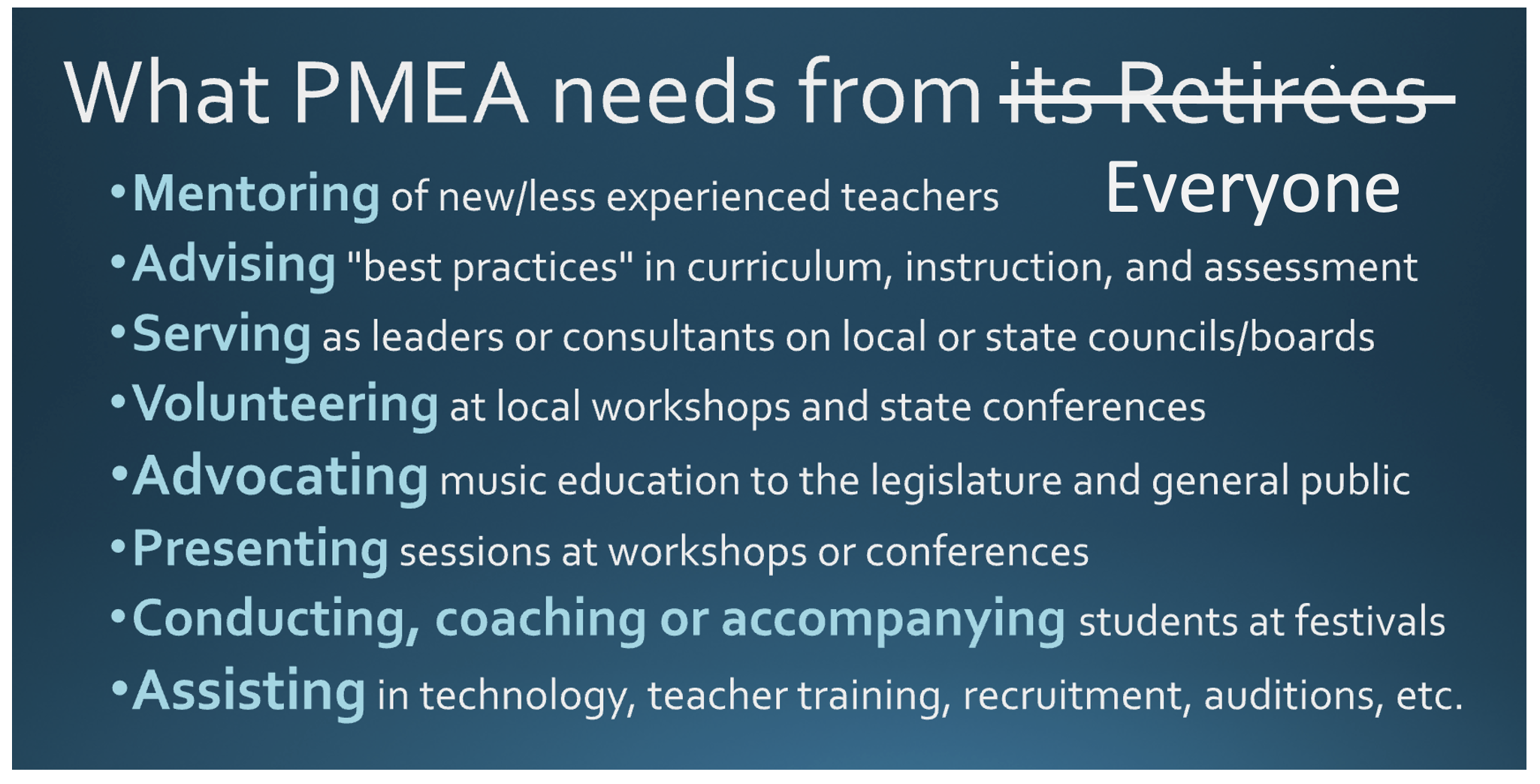
So now, reflect on the title of this blog! It is essential to give back to our association – to help it achieve its mission: “to advance comprehensive and innovative music education for all students through quality teaching, rigorous learning, and meaningful music engagement.” We’re all in this together, and together we can make it better! Slide #6 at the bottom of the retired members’ webpage proposes what PMEA needs from all members (not just retirees):

The number one thing you can do for ANY association is to pay your annual dues, attend its meetings, be active and HELP OUT! In return, PMEA can assist you in finding and sustaining your passions! What are you waiting for? If you have not renewed for the 2021-2022 year, please visit this PMEA membership webpage.

PKF

© 2021 Paul K. Fox

Pictures from Pixabay.com by artist Augusto Ordóñez

The Future of Music Education

Spring 2020 Final Lecture to the Music Education Graduate Students

by Rich Victor, PMEA Past State President and Adjunct Instructor for the University at Buffalo Graduate School Online

victor logos

Originally posted in the Facebook group PLAN: The PA Leadership Advocacy Network


This course, “Supervision of Music Learning Programs,” was focused on programs as they existed before this year. Obviously, some things have changed.

What has changed and what has stayed the same? To answer that question let’s take another look at this graphic from Unit 4.

Rich Victor Decision Making Process

All decisions should flow from the mission statement. That should not change.

As you discovered, most school district mission statements focus on ideals such as “success, life-long learning, and becoming responsible citizens in the community.” An effective music department mission statement will be in alignment with the stated district mission. It will inform the administration and the community how the study of music helps the district achieve their stated mission through the skills and knowledge children learn in music. It also explains what children would lose if the subject were not offered because no other discipline is available in the school district where children can learn those skills and knowledge as well as in music classes.

The school mission and the department mission define the WHY.

Victor3Once the WHY has been determined, then the district must determine the WHAT. WHAT learning activities need to be offered to the students in the district in order to help them achieve the desired outcomes stated in the mission? The answer to that question should help determine the curriculum for music.

The content for the music curriculum is determined partially by the district and department missions, partially by state mandated Arts Standards, partially by local school district inter-disciplinary curriculum requirements, and partially by the music department’s desire to provide each child with a comprehensive and high-quality music education based on National Standards.

The outcomes from those learning activities – the WHAT – should not change.

In pre-COVID-19 times, the next decision would be to determine how much time is needed for students to master the curriculum and succeed in their activities. How many years will each facet of that curriculum require? How many hours of instruction should be allocated in each year and WHEN should that time be scheduled in order to provide the maximum number of learning opportunities for each child?

The WHEN might stay synchronous or change to asynchronous instruction. The number of instructional hours provided to each teacher and each subject may need to be flexible. That is yet to be determined and we should prepare for all possibilities. However, keep in mind that the WHEN should not alter the WHAT.

Once it is decided how many hours of instruction should be allocated annually and when Victor2those hours would be scheduled, then the district must figure out exactly how many teachers will be needed to deliver that instruction and what qualifications those teachers should possess. The “WHO” part of the process – the staffing piece of the puzzle – should still be driven by the needs of the curriculum and should not change.
It will be the HOW and WHERE parts of this process where the largest changes will occur.

Obviously, the decision WHERE teachers and students will be in the fall will impact HOW music will be taught and what equipment and materials can be used for learning activities.

Facilities in school buildings must be adapted to provide appropriate space for instructional activities to take place and to conveniently store all of the materials and equipment used in those activities while following whatever social distancing protocols and approved procedures for safely handling musical materials are adopted. The WHERE may continue to be the student’s home or a combination of school and distance learning. Once again, we need to prepare for all possibilities.

The most important thing to keep in mind is that the outcomes of the K-12 music curriculum – the WHAT – should not change. Teachers need to keep “the end in mind” rather than just focusing in on their own period of time with each student. Then, following the principles of Understanding by Design, K-12 music staff must work as a team to create appropriate learning activities that are designed to help each student make progress through each grade and ultimately achieve the specific learning outcomes Victor1of the K-12 music program using the WHEN, WHO, HOW and WHERE pieces that we will have to work with.

As my friend and colleague Bob Morrison said in a recent presentation “Change the HOW not the WHAT!”

Yes, it will be challenging. The challenges caused by these changes may appear to be daunting at first, but they are not insurmountable!

Fortunately, there are some great thinkers in our profession who are already coming up with ideas to make the best of the situation for both classroom and performance teachers. Even if you are the only music teacher in your school district – you are NOT alone! Wonderful ideas for solutions to these challenges can be found in social media and through webinars.

The most important thing to know at this time is that discussions are occurring right now in every school district throughout the country. When students might return to school, and how classes might be scheduled will be determined soon. You must be proactive and become part of that decision-making process BEFORE the decisions are made! Be at the table so that decisions affecting music education in your district happen WITH you and not TO you.

The future of music education is in YOUR hands. It will be what you make it. Good luck and keep in touch!

Editor’s note: As a follow-up to Rich Victor’s article, check out these PMEA webpages:


UB1

About the Guest Blogger

Victor0Richard Victor is currently Adjunct Instructor for the University at Buffalo Graduate School Online.

Richard Victor had a 37-year career as State College Area High School Band Director. In 1987, he was also appointed to the position of Coordinator of Music for the State College Area School District. He was President of the Pennsylvania Music Educators Association (PMEA) from 2000-2002 and served as its Advocacy Chair. He was President of the PA Unit of the International Association of Jazz Educators (IAJE) from 1989-1993, the PMEA All-State Jazz Coordinator and PMEA News Jazz Editor from 1993-1998, and chair for the NAfME Council for Jazz Education from 2014-2018. He has also served on the advisory board for the NAfME Teaching Music magazine and held the office of President of the Penn State Alumni Blue Band Association. Other professional memberships include Phi Beta Mu and The Gordon Institute for Music Learning (GIML).

Mr. Victor has been a guest conductor and adjudicator for concert band and jazz events in Delaware, Maryland, Pennsylvania, and Virginia, and currently serves as an instrumental adjudicator for Music in the Parks. He frequently provides services as a clinician, consultant, and/or featured speaker for school districts and music events throughout Pennsylvania. He has presented sessions at five NAfME (formerly MENC) national conferences, three NAfME Eastern Division conferences, and the 2008 Americans for the Arts National Convention. He also has been a presenter for six different MEA state conferences, three JEN National Conferences, and three International Conferences on Music Learning Theory.