

“Books & Links & Resources… Oh, My”
Now retired and “far from ground zero,” I admit I don’t have a clear roadmap nor “magic pill” for a definitive plan to remediate educator stress, burnout, exhaustion, demoralization, and negative school climate. My disclaimer: So-called “expert recommendations” on self-care strategies towards better health and wellness, coping skills, and time management may not be applicable to every setting, situation, nor individual need. In other words, no prescription can cure every educator’s symptoms.
However, from recent conversations with those “still in the trenches” and colleagues who endured those horrible COVID (and post-pandemic) years in the schools, we need to address “the elephant in the room” (viewpoints of systemic breakdowns and loss of admin or community supports) and propose fresh looks into self- and school system improvements.
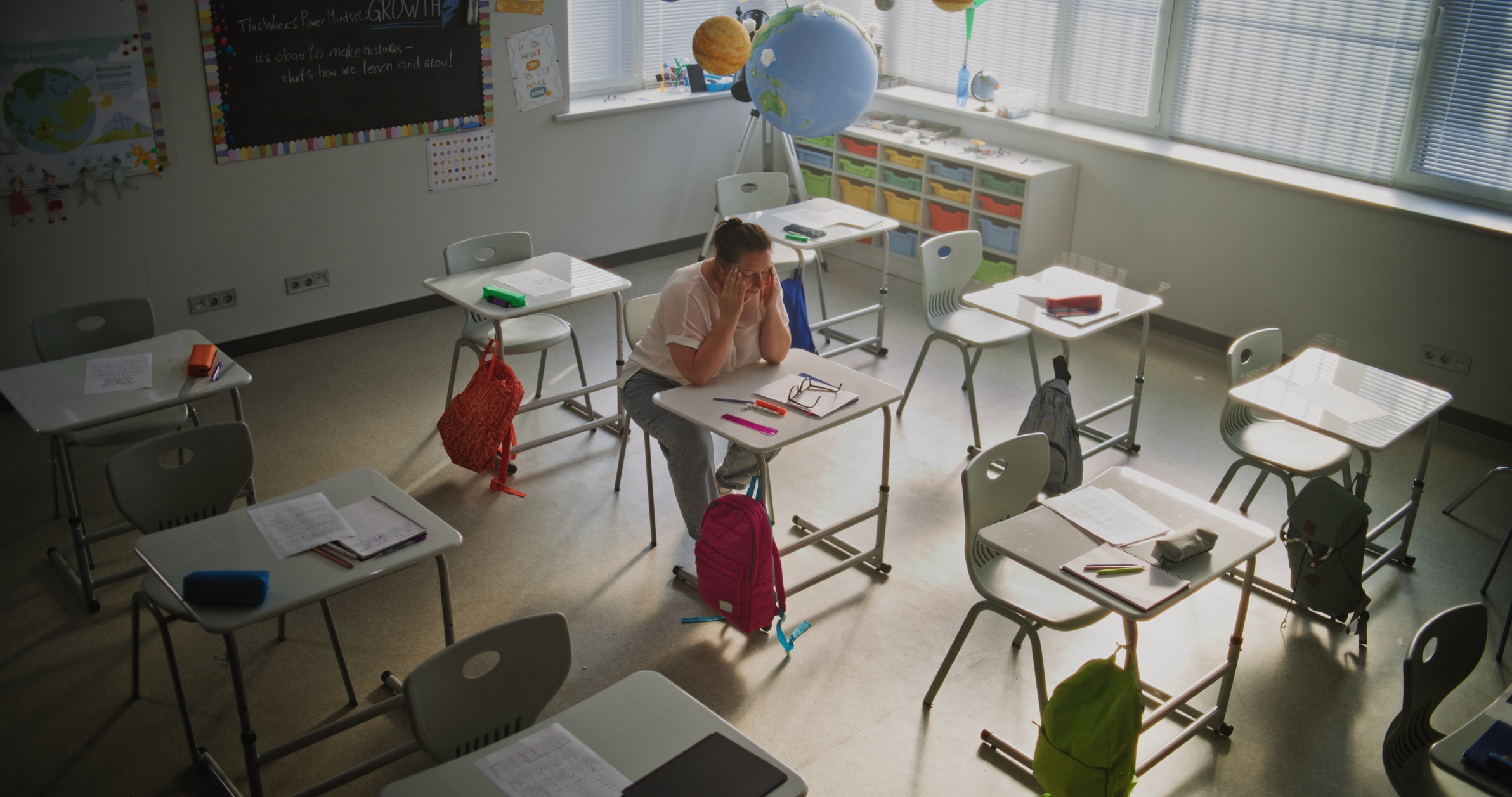
My friend Thomas Bailey (who has created a comprehensive ethics course for PA teachers and admins alike – refer to these past blogs 1, 2, & 3) and I have heard many “horror stories” of day-to-day dysfunctions, micromanagement and disrespect of teachers, a general lack of support and professionalism, and unhealthy/unsustainable policies, practices, and patterns of work environments at school. We have witnessed angry parents storming school board meetings, staff shortages with some positions going unfulfilled for months or longer, uncertified teachers placed in classrooms, overloaded teaching schedules, classroom management problems, increased risks and incidents of school violence, class sizes on the rise, and significantly less educator planning time.
In short, according to the blog Teacher Burnout Statistics – Why Teachers Quit in 2026, K-12 educators are in the most burned out profession in the world:
- 57% of U.S. teachers reported burnout in 2026, versus 36% of similar working adults (RAND, 2026)
- 18% of teachers intended to leave their jobs in 2026 (RAND, 2026)
- Managing student behavior is the #1 source of teacher stress, cited by 52% of teachers (RAND, 2026)
- 77% of teachers say their job is frequently stressful, and 68% say it is overwhelming (Pew Research Center, 2024)
- 78% of teachers have thought about quitting since the pandemic (University of Missouri, 2025)
- 74% of public schools struggled to fill at least one teaching vacancy for the 2024-25 school year (NCES)
- K-12 teachers were the most burned-out profession in Gallup’s most recent occupational ranking, at 52% (Gallup, 2022)
- About 8% of public school teachers leave the profession each year (NCES)
- Teachers worked an average of 49 hours per week in 2025, about 10 more than they were contracted for (RAND, 2025)
So, since the intent for this paulfox.blog site is to serve as a repository of professional development and insightful conversations for career development, I feel there is a need to share any new “finds,” innovative ideas (even those considered controversial), research, and other resources with the hopes that they may spark even an infinitesimal growth in sustained advancements in personal and staff resilience, self-care, motivation and passion for teaching, and work/life balance… as well as the goal for philosophical and structural changes in school climate and culture in order to promote positive employee morale and wellbeing.
Past blogs on this subject (and, when available, their accompanying conference slides decks) should be reviewed:
- Admins Helping Teachers – November 5, 2025
SAS INSTITUTE 2025 “Self-Care Cookbook 2.0 – Recipes & Resources for School Leaders” - Teachers Takes Charge of Your Wellness – The Five C’s of Self-Care – April 1, 2025
PMEA/DCMEA “Self-Care Cookbook 1.0 for Individual Educators” - Burned Out or Bummed Out? – August 16, 2020
- Teacher Self-Care During the Pandemic – May 25, 2020
- Stressed Out? – February 13, 2020
- Do You Always Feel Exhausted? – December 9, 2019
- Is Your Job Killing You? – October 6, 2019
- Other materials at this site are archived here
If you peruse the above links to my past articles, you will find the mentioning of several outstanding books to begin your journey towards the rejuvenescence of self-care. Please beg, borrow, (ahem – steal?), or purchase these to begin.
The Lesley Moffat Series (both are SUPER!)
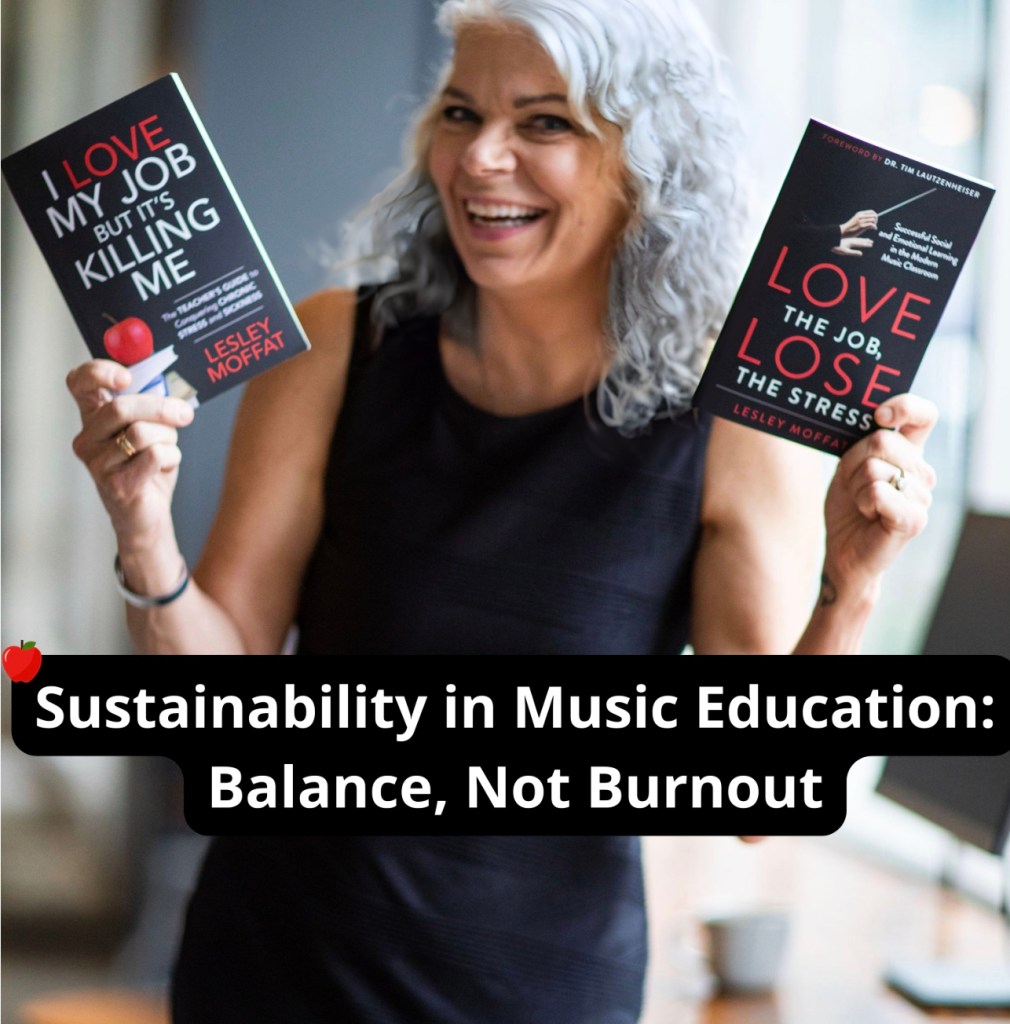
Click here for her website.
In addition to I Love My Job But It’s Killing Me and Love the Job, Lose the Stress, you should also check out her newest publication, The Balanced Band Director! Her notes:
Over the years, I realized something important:
Most band directors don’t need more ideas. They need fewer drains on their energy.
They need systems that respect their values, their standards, and their humanity.That belief is at the heart of everything I share now—through my books, my podcast, my coaching, and the tools I’ve built specifically for music educators. The strategies I teach aren’t theoretical. They’re the same ones that have helped me and hundreds of others move from constant depletion to a career that still challenges me without consuming me.
Being a Balanced Band Director doesn’t mean lowering the bar.
It means removing the noise, the overload, and the unnecessary friction that makes this job harder than it has to be.
Upbeat – Mindset, Mindfulness & Leadership in Music Education & Beyond by Matthew Arau

Click here for his website.
The book is divided into three parts – Ignite, Inspire, and Lead – and addresses numerous topics such as these:
- Self-care for optimal mental, emotional, and physical wellness
- The transformative power of positivity and gratitude
- Growth mindset
- Mindful breathing and listening in an ensemble setting
- Internal self-reflection to outward expressions of leadership …and more!
Valuable contributions by author Angela Watson

Click here for her website.
She defines the goal of Awakened – Change Your Mindset to Transform Your Teaching:
Showing up in the classroom as the best version of yourself each day requires serious mental fortitude. This book will empower you to develop the resilient, flexible, positive mindset you need to:
Change your perception of setbacks by replacing judgment with curiosity.
Observe your thoughts and select the ones that create results you want.
Honor your intuition, mind-body connection, and emotions for the insights they provide.
Let go of bias, unrealistic expectations, standards, and comparisons.
Practice radical acceptance to stay motivated even when you don’t see results.
Realize a sense of accomplishment in a job that’s truly never done.
In addition, as a closure to my own self-care workshops, I have always used these “motivating beliefs” illustrated in her first book, Fewer Things Better:
- I am worthy of better and change is possible for me right now.
- I set my own expectations in life and in teaching.
- I know what is important and allocate time accordingly.
- I ensure my needs are met to prevent overwhelm and exhaustion.
Now for the “Newer” Curriculum
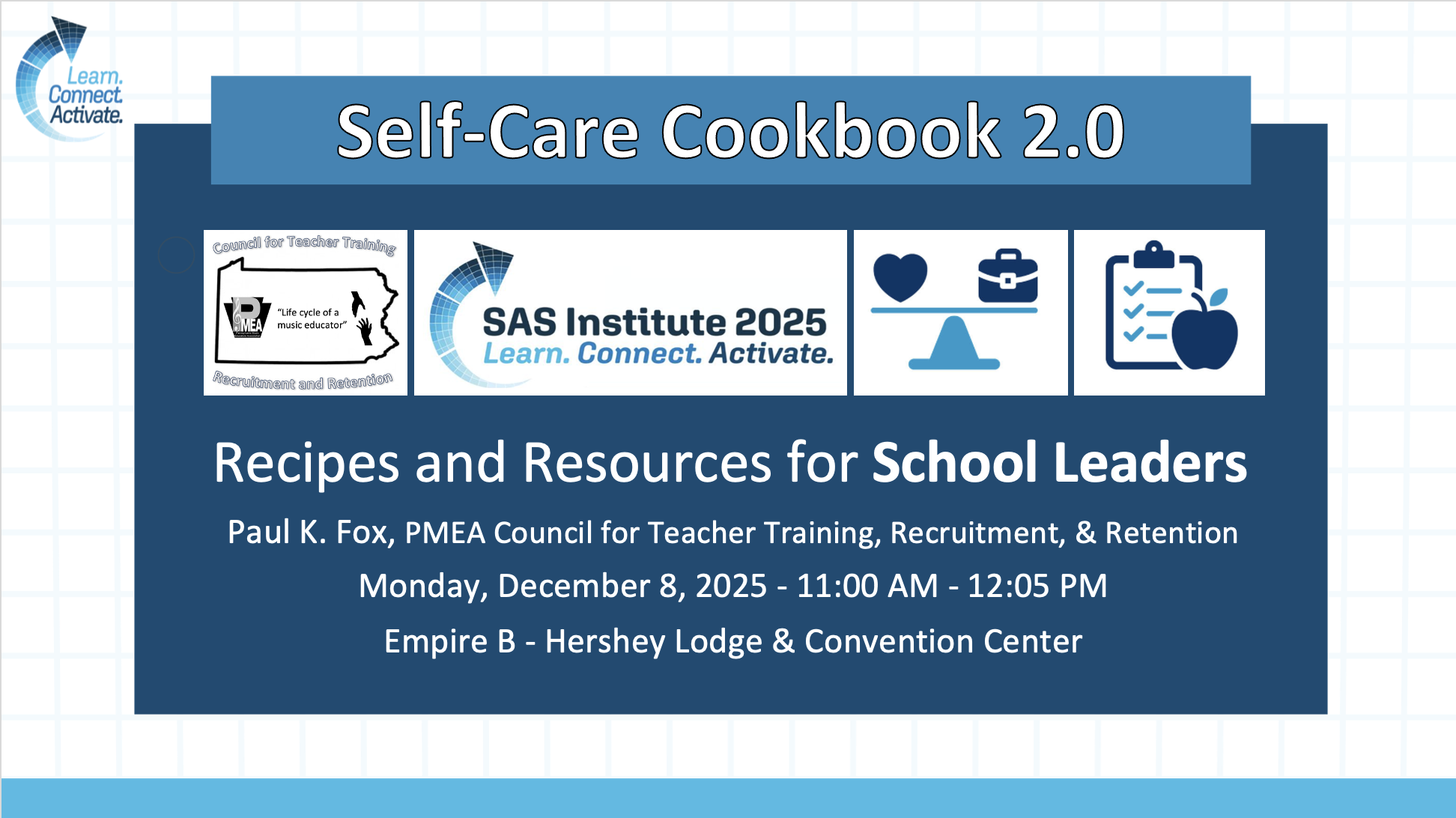
If we could “wave a magic wand” and instantly transform the climate and culture in the schools, what would we do? During my PA Department of Education SAS Institute presentation for admins in December 2025, we explored a wide variety of key concepts, concentrated on more “teacher asks of administration” that are backed by multiple sources:
- Give teachers the respect that they deserve.
- Show that you value their time.
- Streamline communications. Hold fewer or shorter team or faculty meetings (substitute some with emails?).
- Set and adhere to healthy boundaries for work/life balance.
- Prove that you trust them.
- Protect classroom time by minimizing interruptions.
- Reduce unnecessary accountability documentation.
- Never underestimate your staff. Professionalize your language when discussing your staff with parents and other stakeholders.
- Acknowledge their struggles and show that you appreciate the work they are doing.
- Involve teachers in the creation of targeted professional development activities that are the most meaningful for them.
- Ask teachers about what specific help they need to improve classroom management.
- Ask teachers what mental health or other supports they need to cope with their own distress.
- Reframe your role as school leader. Shift from a school principal’s current focus on operations and compliance to a fuller picture of instructional leadership: a more “hands-on” approach to supports for student success, social-emotional learning, and a deeper emphasis on school culture, wellness, and community engagement.
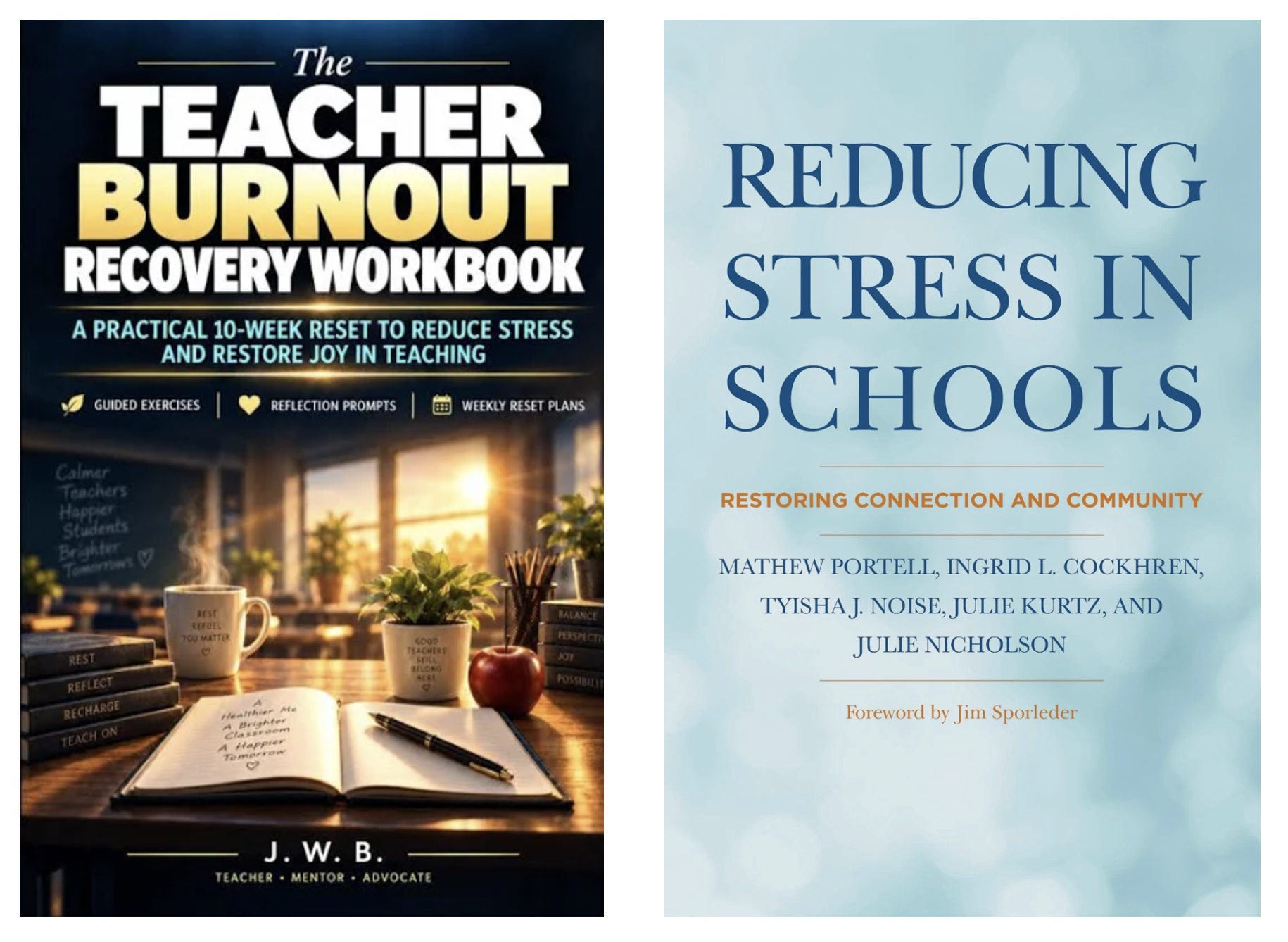
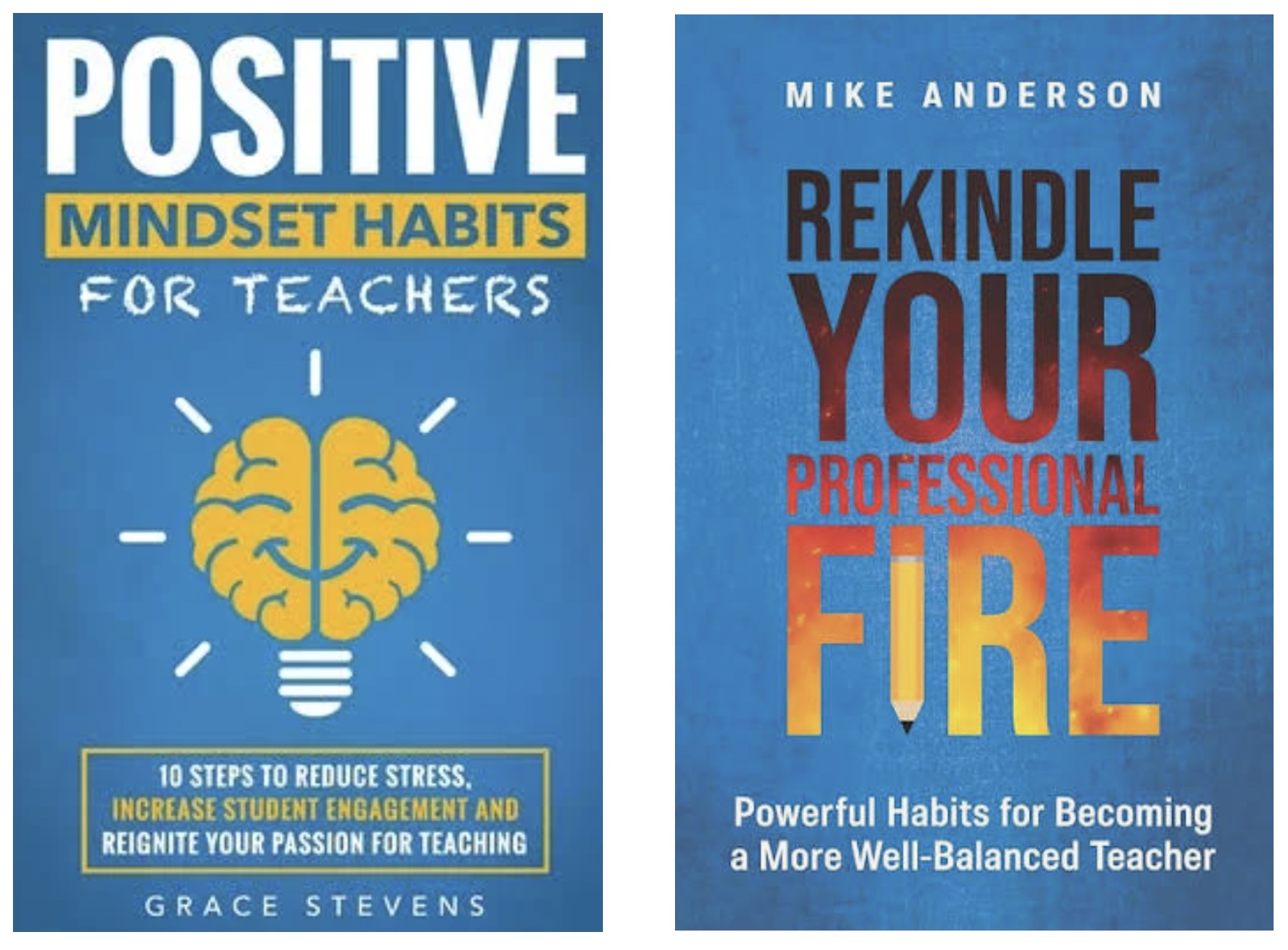
Over the next 6-12 months, I plan to post a handful of new research and resources for your perusal. Here is a sneak preview of several books for an advanced and closer look.
Additional References
These were updated from my last conference handout for Self-Care Cookbook 2.0. Enjoy!
- Anderson, Michael: Rekindle Your Professional Fire – Powerful Habits for Becoming a More Well-Balanced Teacher
https://leadinggreatlearning.com/books-by-mike/rekindle-your-professional-fire/ - Anthony, James: “7 Conclusions from the World’s Largest Teacher Burnout Survey”
https://notwaitingforsuperman.org/teacher-burnout-statistics/ - Arau, Matthew: Upbeat! Mindset, Mindfulness, and Leadership in Music Education and Beyond
https://giamusic.com/resource/upbeat-book-g10550 - Boogren, Tina H: 180 Days of Self-Care for Busy Educators
https://www.academia.edu/100358944/180_Days_of_Self_Care_for_Busy_Educators - Covey, Stephen: First Things First
https://www.franklincovey.com/the-7-habits/habit-3.html - Effective School Solutions: “Authentic Teacher Self Care – No Toxic Positivity Here!”
https://effectiveschoolsolutions.com/teacher-self-care/ - Forst, Sarah: The Teacher’s Guide to Self-Care – Build Resilience, Avoid Burnout, & Bring a Happier & Healthier You to the Classroom
https://igniteinspirecourses.com/course/the-teachers-guide-to-self-care-build-resilience-avoid-burnout-and-bring-a-happier-and-healthier-you-to-the-classroom/ - The Graide Network: “The Epidemic of Teacher Stress”
https://www.thegraidenetwork.com/blog-all/2018/8/1/crayons-and-cortisol-the-epidemic-of-teacher-stress - Jang, Nancy: “15 Ways to Reduce Teacher Stress”
https://www.scholastic.com/teachers/blog-posts/nancy-jang/15-ways-reduce-teacher-stress/ - Kuebel, Christa: Music Educators Journal, June 2019 “Health and Wellness for In-Service and Future Music Teachers” https://journals.sagepub.com/doi/abs/10.1177/0027432119846950
- Linsin, Michael: The Happy Teacher Habits
https://smartclassroommanagement.com/ - Michael, Raphailia: PsychCentral “What Self-Care Is & What It Isn’t”
https://psychcentral.com/blog/what-self-care-is-and-what-it-isnt-2/ - Moffat, Lesley: The Balanced Band Director and Love the Job, Lose the Stress
https://mpowerededucator.com/ - Mumford, Chris: Hey Teach! “9 Stress Management Strategies Every Teacher Needs to Know”
https://www.wgu.edu/heyteach/article/9-stress-management-strategies-every-teacher-needs-know1612.html - Murphy, Paul: Exhausted: Why Teachers Are So Tired and What They Can Do About It
https://www.amazon.in/Exhausted-Teachers-Tired-What-About/dp/1976433371 - New Leaders: “How School Leaders Can Create the Conditions for Teacher Self Care”
https://www.newleaders.org/blog/how-school-leaders-can-create-the-conditions-to-support-teacher-self-care - Onstad, Katrina: The Weekend Effect – The Life-Changing Benefits of Taking Time Off and Challenging the Cult of Overwork
https://katrinaonstad.com/books/ - Pearlman, Laurie; Saakvitne, Karen: Transforming the Pain: A Workbook on Vicarious Traumatization and ReachOut Schools, “Developing a Self-Care Plan”
https://schools.au.reachout.com/articles/developing-a-self-care-plan - Pellowski, Melanie J.: The Teacher’s Guide to Self-Care – The Ultimate Cheat Sheet for Thriving Through the School Year
https://melaniepellowski.com/books/the-teachers-guide-to-self-care/ - Pillar, Wendy: Education Week “Six Signs & Solutions for Teacher Burnout”
https://www.edweek.org/tm/articles/2014/05/20/ctq-pillars-signs-of-solutions-for-burnout.html - Richardson, Kelsey: “5 Tips How Administrators Can Give Teachers the Respect They Deserve” https://www.teachingtoprogress.com/post/5-tips-how-administrators-can-give-teachers-the-respect-they-deserve
- Salvador, Karen: Music Educators Journal, December 2019 “Sustaining the Flame – (Re)Igniting Joy in Teaching Music” https://journals.sagepub.com/doi/abs/10.1177/0027432119873701
- School-Based Health Alliance: ”Building a Wellness Team”
https://tools.sbh4all.org/hallways-to-health/building-a-wellness-team/ - Smith, Melinda; Segal, Jeanne; Robinson,, Lawrence; Regal, Robert: HelpGuide “Burnout Prevention and Treatment” https://www.helpguide.org/articles/stress/burnout-prevention-and-recovery.htm
- Stevens, Grace: Positive Mindset Habits for Teachers
https://happy-classrooms.com/wp-content/uploads/2018/05/WorkbookPositiveMindsetsTeachers.pdf - Watson, Angela: Awakened – Change Your Mindset to Transform Your Teaching
https://truthforteachers.com/awakened/ - Watson, Angela: Fewer Things, Better
https://www.amazon.com/Fewer-Things-Better-Courage-Matters/dp/0982312741/ref=sr_1_1 - Weisler, Joseph: “Classroom Narratives – Healing in Education” podcast and The Emotionally-Equipped Educator
https://josephweisler.com/ - Yamasawa, Jill : Edutopia “4 Practical Ways Administrators Support Teachers”
https://www.edutopia.org/article/4-practical-ways-administrators-support-teachers/
PKF
© 2026 Paul K. Fox






 When I was teaching full-time school orchestra music grades 5-12, the following conversation by students in my program may have been shared at the dinner table. “He wants me to spend time and listen to several outstanding players. I was a little embarrassed when he called on me in class and asked, ‘Who is your favorite violinist?’ and I could not identify a single principal string player or even the current Concertmaster of the Pittsburgh Symphony Orchestra!”
 Pittsburgh has a strong cultural base, providing a home for the world-class Pittsburgh Symphony Orchestra and Pops, the Pittsburgh Ballet and Pittsburgh Opera companies, and the Pittsburgh Civic Light Opera productions, to name a few venues. We are also most fortunate that many amateur or semi-professional groups such as the Pittsburgh Civic Orchestra, Washington Symphony, and River City Brass Band are local (some concerts presented conveniently next door in the Upper St. Clair HS Theatre). Professional soloists and chamber groups visit our city nearly every month, and opportunities to enjoy free concerts are limitless on cable/FiOS television and WQED.
