The “New” Model for Modern Music Education

by Katherine Langford

We welcome this month’s guest blogger, Katherine Langford, who describes herself as “a digital marketing consultant, writer, freelancer, WordPress enthusiast, and coffee lover.” Thank you, Katherine! PKF

Music education has transformed dramatically in recent years. Traditional classrooms and rigid lessons are giving way to creative, flexible learning models that blend technology, collaboration, and real-world experience. The new model for modern music education isn’t just about mastering an instrument anymore—it’s about nurturing creativity, adaptability, and digital fluency.

Whether you’re a teacher, a student, or a parent trying to understand this shift, this guide will walk you through everything you need to know about the new model for modern music education and how it’s reshaping the way we learn, teach, and perform music.

What Defines the “New” Model for Modern Music Education?

The new model for modern music education is built on accessibility, inclusivity, and innovation. In the past, learning music often required private lessons, expensive instruments, and long practice hours under strict instruction. Now, technology has made learning more interactive, affordable, and engaging.

This model integrates online platforms, digital tools, and peer learning to create a dynamic environment. Students can watch video tutorials, join virtual ensembles, or even receive online class help from experienced musicians. It allows learners to progress at their own pace while receiving instant feedback and guidance.

Another major shift is the focus on creativity over perfection. Instead of emphasizing technical mastery alone, educators now encourage improvisation, digital composition, and personal expression. This approach builds confidence and helps students connect emotionally with their craft.

The Rise of Online Learning in Music Education

Online learning has become a cornerstone of modern music education. With platforms like YouTube, MasterClass, and specialized e-learning sites, anyone can access lessons from world-class musicians. Students can now learn piano, guitar, singing, or music production without leaving home.

These online classes are highly interactive, offering personalized feedback and practice tools. Some programs include live sessions, enabling real-time interaction with instructors and classmates. The flexibility to study from anywhere attracts learners of all ages and skill levels.

Online music education also supports busy professionals and students balancing multiple commitments. Many ask, Can I take my online class for music while working full-time? The answer is yes. With self-paced modules, recorded lessons, and flexible scheduling, anyone can continue learning without disrupting daily life.

Key Features of Modern Music Education

The new model for music learning focuses on a few core features that make it different from traditional instruction.

1. Technology Integration
Modern classrooms use music software, apps, and digital instruments. Tools like GarageBand, Ableton Live, and Sibelius help students compose, record, and edit their music. This hands-on digital experience prepares them for real-world music careers.

2. Collaboration and Global Access
Students can collaborate with others worldwide through online jam sessions or group projects. This exposure broadens cultural understanding and inspires new creative styles.

3. Personalized Learning Paths
AI-driven platforms now assess student progress and customize lesson plans. Learners receive targeted exercises that focus on areas needing improvement. This keeps motivation high and ensures steady progress.

4. Performance and Portfolio Building
Instead of graded recitals, students can build online portfolios, showcasing their songs or performances. This practical experience helps them prepare for music schools or careers in the industry.

Why Modern Music Education Matters Today

Music education today goes beyond traditional training. It prepares students for an evolving creative economy where adaptability and digital literacy matter.

The new model equips students with real-world skills such as sound design, audio editing, and digital marketing for music. These are essential for anyone pursuing a career in the modern music industry.

Additionally, it nurtures emotional intelligence. Creating and performing music helps students manage stress, improve focus, and build resilience. These soft skills translate into better academic and personal outcomes.

Another reason this new approach matters is its inclusivity. Learners who once couldn’t access quality lessons due to location or cost can now participate through online classes. Music education is no longer limited to elite institutions—it’s open to everyone.

The Role of Teachers in Modern Music Education

Teachers remain at the heart of music education, but their role has evolved. Instead of being strict evaluators, they now act as mentors, facilitators, and collaborators.

Educators guide students through self-directed learning, helping them explore interests while mastering key concepts. They encourage experimentation and critical thinking rather than rote memorization.

Teachers also integrate multimedia tools into lessons, using interactive notation software, metronome apps, and virtual instruments. This keeps learning engaging and relevant.

Modern instructors understand that today’s learners consume music differently. They balance traditional techniques with contemporary styles, helping students connect classical foundations to genres like pop, jazz, or digital soundscapes.

The Impact of Technology on Music Learning

Technology has completely reshaped how music is created and taught. From recording studios to smartphone apps, innovation drives engagement and creativity.

Students can record, mix, and share their music instantly. They can join online communities, collaborate virtually, or receive detailed feedback through smart analysis tools.

Some schools use virtual reality to simulate live performance environments. This helps students overcome stage anxiety and refine their skills before performing in real-life situations.

Moreover, digital sheet music platforms make learning more interactive. Instead of flipping pages, learners can annotate, loop sections, and practice efficiently.

Technology also enables inclusive learning. Students with disabilities can use adaptive devices or apps that make instruments more accessible. This reinforces the principle that music truly belongs to everyone.

How Online Class Help Supports Music Learners

Many students struggle with consistency or technical challenges while learning online. That’s where online class help becomes valuable. Expert tutors assist learners in managing lessons, assignments, and projects.

They provide feedback, correct mistakes, and ensure students stay on track. This type of support bridges the gap between traditional mentoring and independent study.

For example, if a student is learning music theory but struggles with notation, they can seek online class help for one-on-one guidance. This approach ensures understanding without the stress of falling behind.

It’s especially useful for those pursuing formal music degrees remotely. Expert assistance ensures academic integrity while keeping the learning experience enriching.
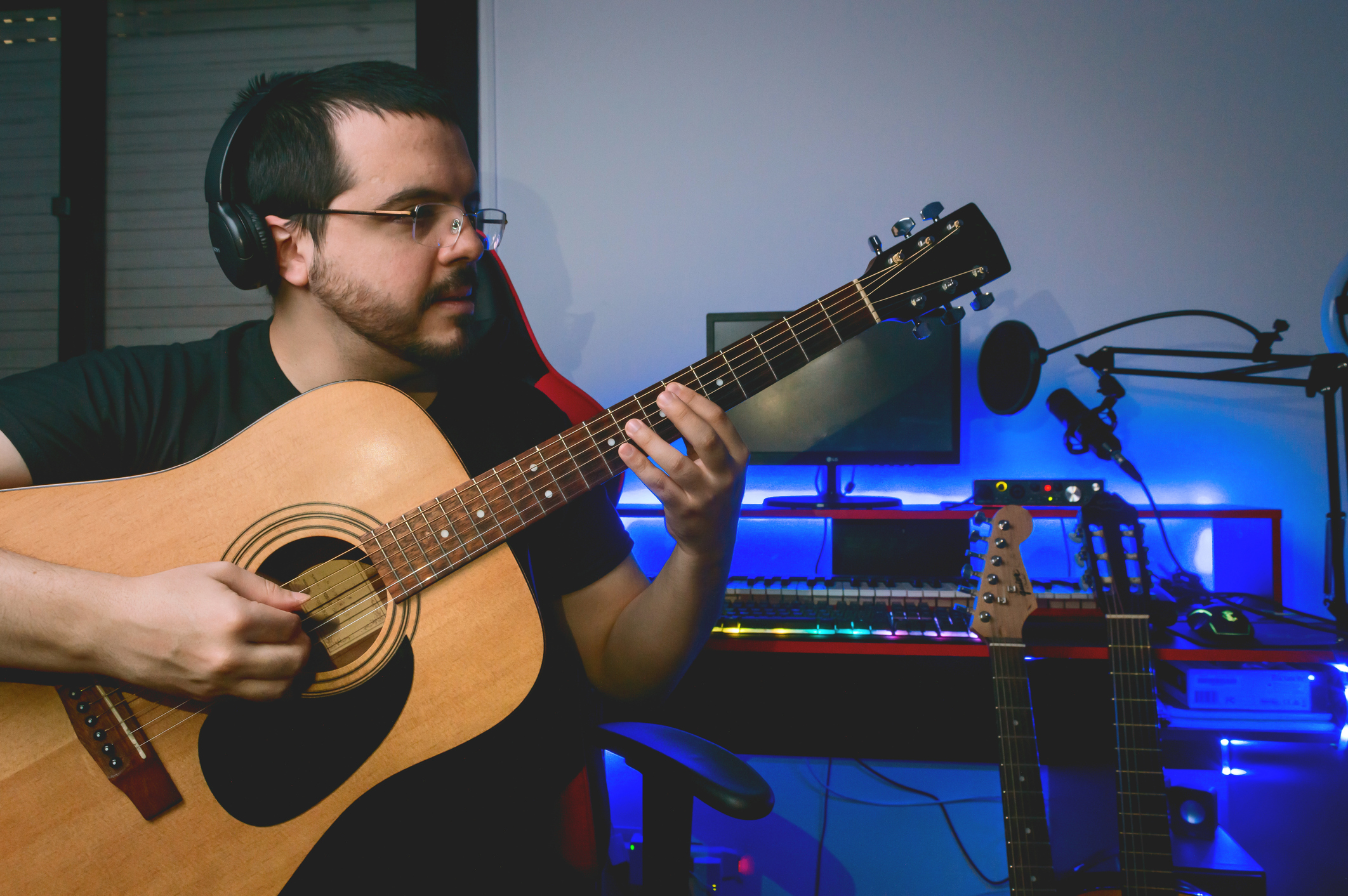
Common Question: Is Online Music Education as Effective as In-Person Lessons?

Many learners wonder if virtual learning can match the impact of face-to-face instruction. The short answer is yes, it can be just as effective—sometimes even more.

Online music education offers flexibility and access to diverse expertise that local lessons may lack. You can study jazz composition with a teacher from New York or classical violin from a maestro in Vienna.

Additionally, digital lessons allow unlimited practice and playback. Students can review recorded sessions anytime, reinforcing understanding and mastery.

However, success depends on commitment and quality instruction. Active participation, consistent practice, and seeking feedback are key to thriving in online music education.

Challenges Facing the New Model for Modern Music Education

While modern approaches have many benefits, challenges still exist. Internet connectivity, lack of physical interaction, and screen fatigue can affect engagement.

Students may also struggle with motivation when learning alone. This is where teacher support and community involvement become crucial. Encouraging virtual collaborations and online performances helps maintain enthusiasm.

Another concern is access to instruments. Not every learner can afford quality equipment or digital tools. Schools and institutions need to bridge this gap by providing resources or scholarships for talented students.

Despite these obstacles, the benefits of digital and hybrid learning far outweigh the drawbacks. With ongoing innovation, these challenges are gradually being addressed.

The Future of Modern Music Education

The future of music education looks bright and interconnected. We’ll see more hybrid classrooms combining online and offline experiences. Students might attend physical rehearsals while collaborating digitally with international peers.

Artificial intelligence will continue shaping learning paths, analyzing performances, and suggesting improvements. Virtual and augmented reality will simulate live concerts and recording studios for immersive training.

Most importantly, inclusivity and creativity will remain the foundation of this evolving system. Every learner, regardless of background, will have the opportunity to express themselves musically.

The new model is creating musicians who not only play instruments but also understand technology, production, and storytelling. They’ll be ready to thrive in an industry that values both art and innovation.

How Students Can Get the Most Out of Modern Music Education

If you’re a student exploring the new world of music learning, here are some helpful tips:

  1. Set clear goals. Decide what you want to achieve before starting lessons.
  2. Stay consistent. Practice regularly, even if only for short sessions.
  3. Use technology wisely. Try apps, online lessons, and recording tools to track progress.
  4. Engage with others. Join online groups, perform live sessions, and exchange feedback.
  5. Seek guidance. Don’t hesitate to reach out for online class help when needed.

These small steps ensure that your learning remains enjoyable and productive.

The Cultural Shift in How We Value Music Education

In the past, music education was often viewed as a luxury. Today, it’s recognized as a vital part of cognitive and emotional development. Studies show that learning music improves memory, discipline, and communication skills.

The modern model has made music more inclusive, integrating it into mainstream education and digital life. Whether through school programs, online platforms, or personal study, students now see music as both an art and a skill for life.

Cultural acceptance has grown too. Parents now appreciate the value of creative subjects, realizing they develop critical thinking and empathy. This shift has expanded the reach of music education across age groups and professions.

Conclusion: Embracing the New Model for Modern Music Education

The new model for modern music education is more than just a trend, it’s a necessary evolution. It reflects how we live, learn, and connect in the digital age.

By combining technology, collaboration, and creativity, this approach empowers learners to explore their potential fully. Whether you’re learning to produce music, master an instrument, or compose original songs, the tools and opportunities are at your fingertips.

PKF

© 2025 Katherine Langford and Paul K. Fox

Leaders Flush!

Leadership lessons for the classroom or staff development

This blog is a follow-up resource for my Empowering Educator and Student Leadership presentation at the PA Department of Education SAS INSTITUTE state conference on December 9, 2025 and provides a “fill-in-the-gap” narrative about many of the concepts we have already presented at this blog site:

If you would like to review my PDF slide summary from the SAS INSTITUTE, click here.

Did the main title (above) get your attention? What on earth could “leaders flush” have to do with this topic? In teaching (and modeling) leadership skills to my students, we discuss what it means to Faire sans Dire or “do without saying,” the English translation to this crest:

Heraldry coat of arms emblem: Earl of Ilchester

In other words, if you see something that needs to be done (flush the toilet?), don’t assume it’s someone else’s job. A true leader embraces the philosophy Carpe Diem (“seize the day”), identifies the problem and its solution, rolls up his/her sleeve, and “gets it done!”

Why teach leadership in the curriculum & extracurricular activities?

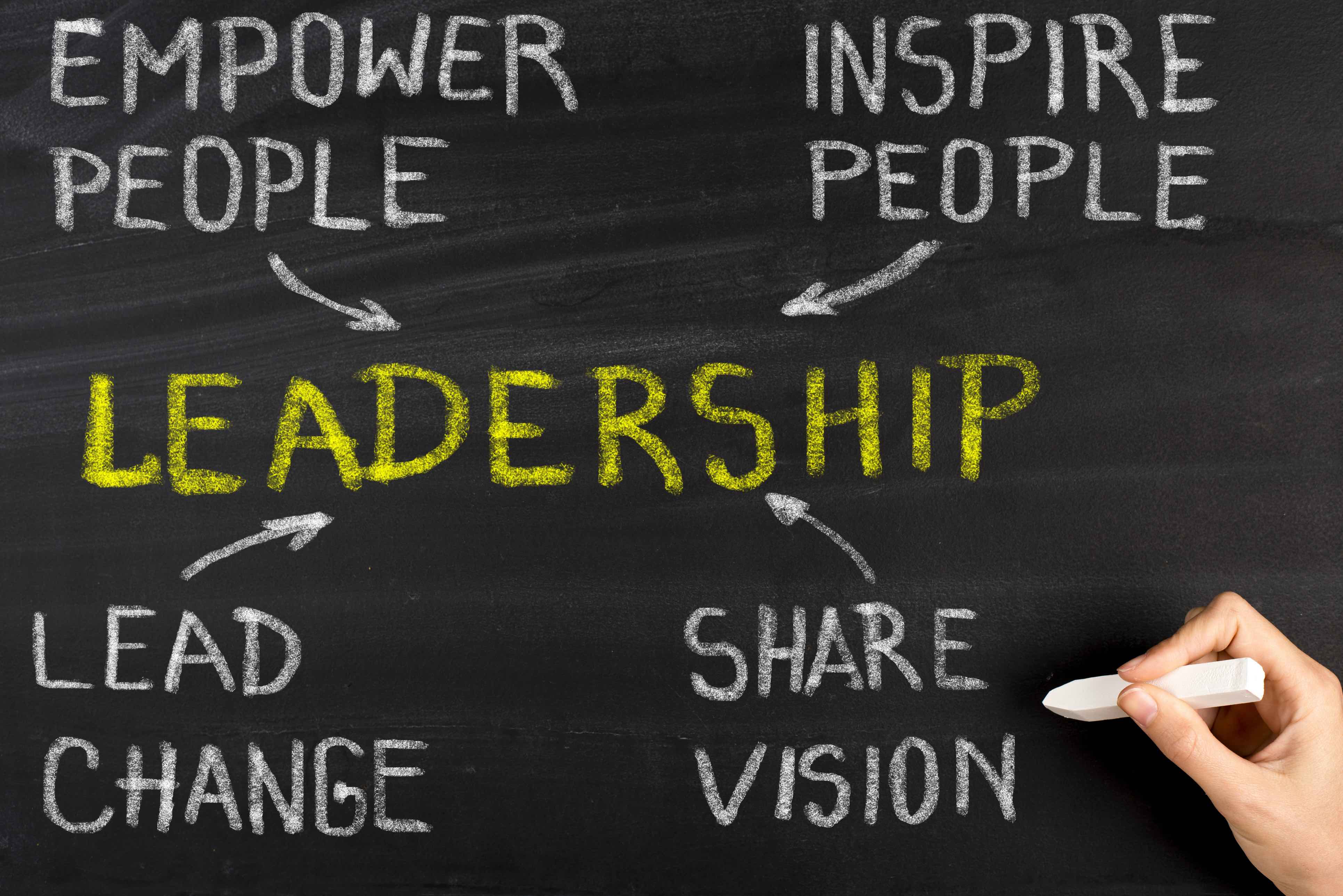
“Leadership is an essential skill that extends beyond the classroom, shaping how students engage with the world around them. Whether leading a group project, organizing an event, or voicing their opinions in discussions, leadership skills empower students to take initiative and make meaningful contributions. These abilities are not only beneficial during school years but also serve as the foundation for lifelong personal and professional success.”
Bloomster

In the past, I have used a multitude of opportunities and settings to teach these life skills in summer leadership camps, section leader and student conductor seminars, drum major and marching band captain auditions, student director, producer, and musical crew head staff meetings, and for 25+ years, preparing student counselors for a comprehensive, six-day, grades 8-12 Township String Camp program.

To sum it up, teaching leadership in Grades K-12 and college settings will:

  • Develop communication skills
  • Build confidence & self-awareness
  • Enhance problem-solving abilities
  • Encourage teamwork & collaboration
  • Shape future success

Why teach leadership to educators?

My December session at SAS Institute was geared to school/system leaders, department heads, and other administrators, but actually the focus on leadership as a skill set necessary for school/staff/individual professional improvement is essential for all educators and school support staff.

From district administrators and school principals to instructional coaches and curriculum coordinators, leaders in education have a direct impact on the learning outcomes of all students. According to UNESCO, educational leadership is considered one of the most influential factors on student outcomes, falling just behind engaging teaching. As a result, leadership training for educators has become an essential part of the professional development experience for teachers at all levels of education.
“Building Leadership Skills – From Classroom Teacher to Educational Leader”

School improvement rarely occurs without effective leadership, and school leadership is only second to classroom teaching in its influence on student achievement. A new evidence review report from Global School Leaders paints a complex and ever-changing picture of school leaders, with their roles, responsibilities, and impact varying around the world.
3 Reasons Why School Leadership Is Vital to Teacher Success”

The literature suggests that empowering educators with leadership training will:

  • Improve student achievement
  • Empower and retain teachers
  • Support new staff members
  • Drive innovation and adaptability
  • Bridge the gap between instruction and administration
  • Build/model a positive attitude
  • Enhance strategic thinking and decision-making
  • Promote a positive and collaborative school climate
  • Develop soft skills such as communication, conflict resolution, and building trust… both in and outside the classroom

Leadership assessments

“A leadership skills assessment is a formal evaluation used to identify and measure a person’s leadership potential and competencies, such as communication, decision-making, and emotional intelligence. These assessments can be used by organizations to evaluate current leaders, identify high-potential candidates for promotions, and inform hiring decisions. Common methods include personality tests, scenario-based assessments, and 360-degree feedback, with tools like CliftonStrengths, Hogan Assessments, and DISC being popular examples.” 
“Leadership Assessment Test – A Complete Guide 2025”

There is a large body of information out there, especially commercial resources, for evaluating the leadership quotient and achievement of corporate managers, CEOs, CFOs, etc. I was impressed with the scope and depth of the research, including these sample firms advertising the availability of third-party consultants and advisors.

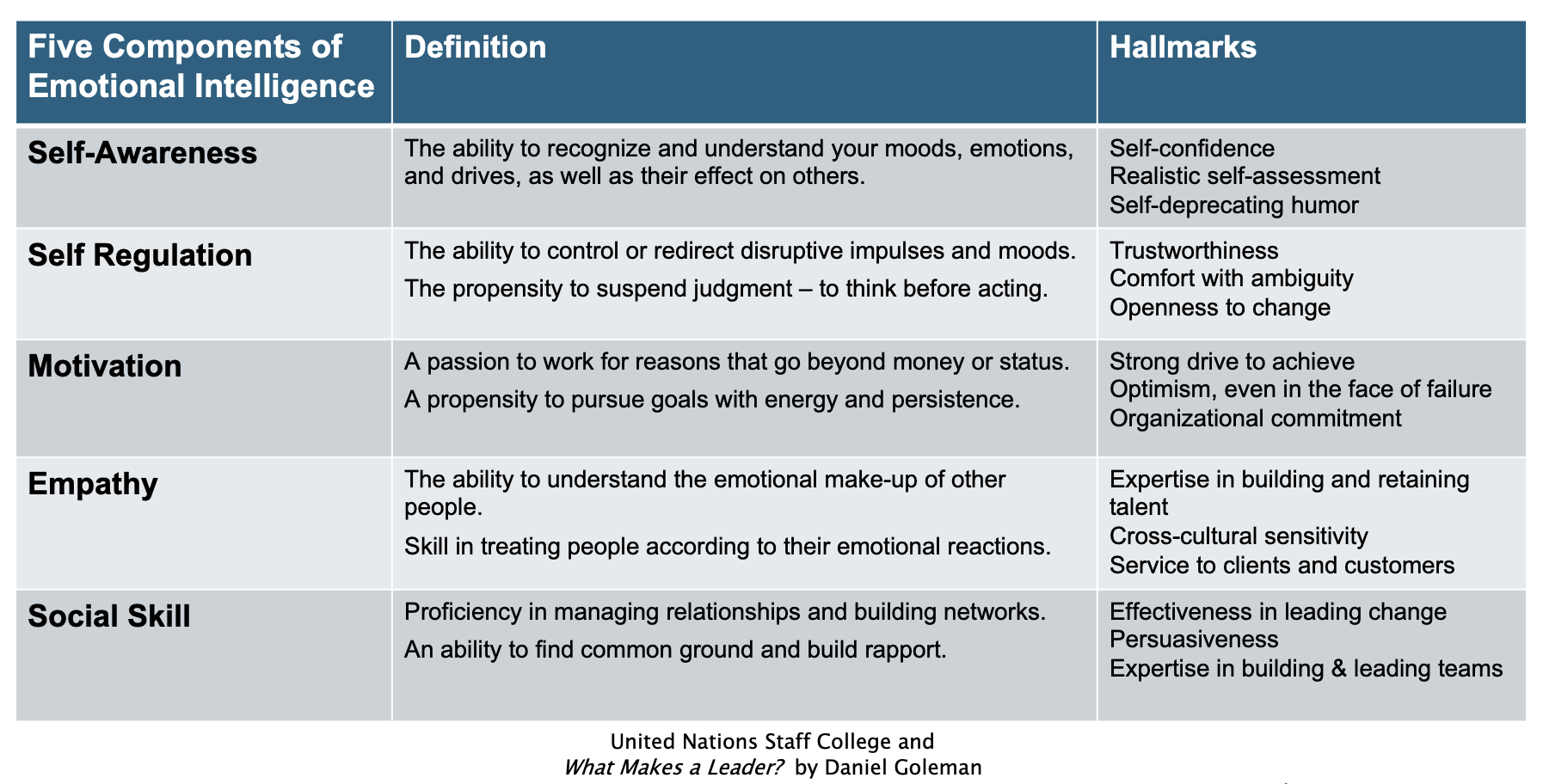
One night I randomly scanned through a handful of YouTube reels of company fraud and mismanagement (e.g., “Revenge of the Coffee Pot,” “Revenge with Karen,” and “Silent Revenge”), painting (fictitious) stories of bosses stealing intellectual property or assuming credit for the innovations/achievements of their subordinates, patent infringement, nepotism or incompetent hirings… all with arrogance, lack of professionalism, the total disregard of employee morale, and blatant patterns of poor executive decision-making, communication, emotional intelligence, strategic thinking, and the ability to influence and guide a team. “Emotional intelligence” (as defined above by Daniel Goleman in What Makes a Leader? also attributed to the United Nations Staff College) should include the “best practices” of self-awareness, self regulation, motivation, empathy, and social skills. Added to these YouTube (fake) scripted deficiencies are the mitigating effects of corporate politics, inconsistent application of compliance or HR policies, unclear contract language, and problems in the chain of command… with the eventual result of the boss receiving a fall from grace, termination, and other legal consequences. Most of these episodes imply only the Board of Directors evaluates the top executives (like school superintendents?), and even with the inclusion of employee satisfaction surveys, staff retention data, third-party auditors, and whistle-blower protections in some instances, the catastrophic actions of these leaders nearly destroy the businesses. For these videos, it seems that leadership assessments and goals are never ongoing, the benchmarks are seldom reviewed, and nothing is PROACTIVE… and therefore not preventive. Therefore, for the school district and corporate worlds alike, we need to intentionally provide formative assessments of our leaders (and ourselves). Exactly what do we need to know and do to improve?

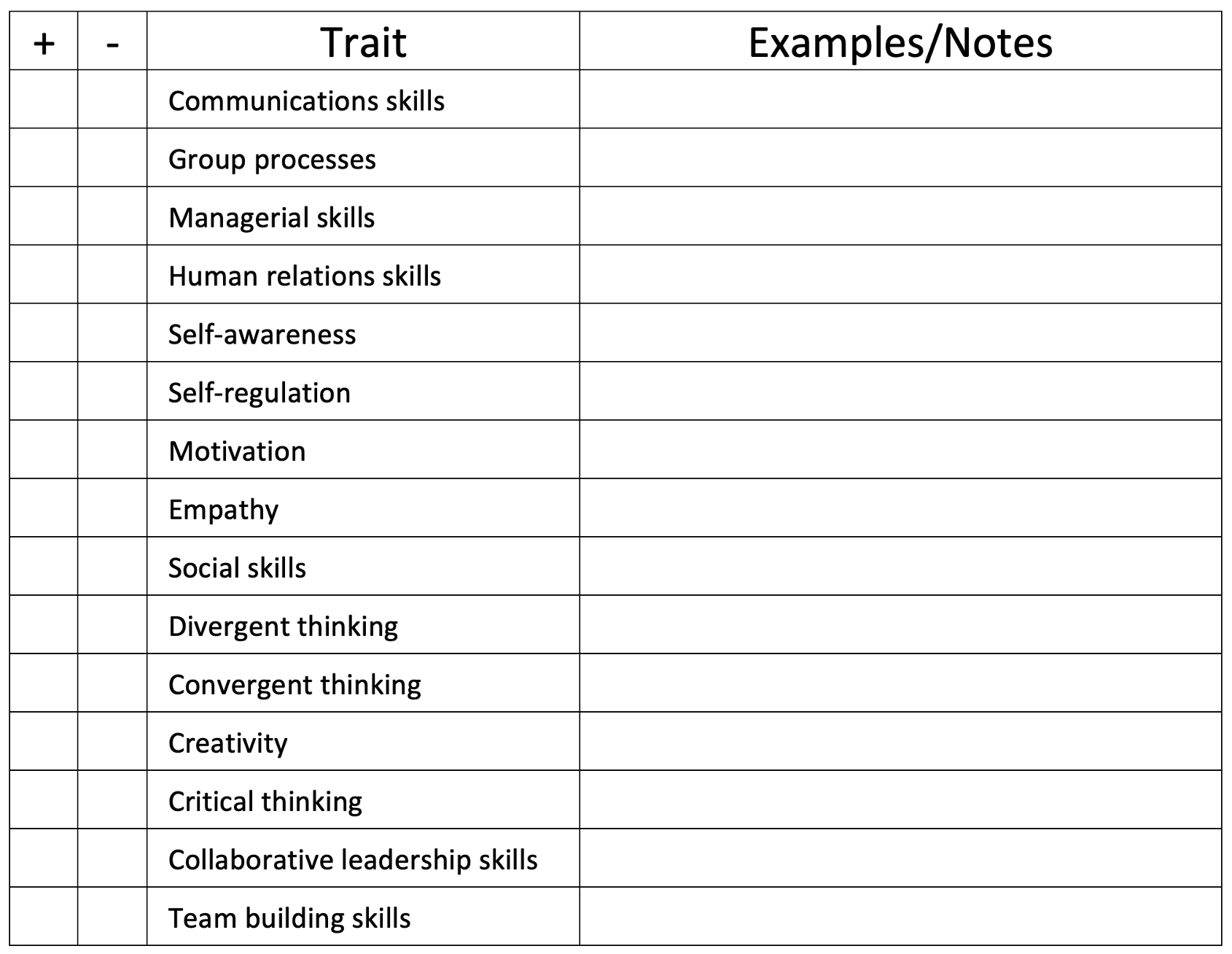
In my blog Growing Student Leaders and the SAS Institute 2025 presentation, I offered the above image as an informal personal checklist to evaluate leadership traits. Coincidentally, while I was writing this article, a scholarship committee of the Community Foundation of Upper St. Clair (for which I serve as Communications Director and Arts Chair) was developing an assessment rubric for ranking applications of a new student leadership scholarship. Although still under development, here are a few of the categories being considered:

  • Communication: Includes listening skills, clarity in speaking, and the ability to make others feel heard.
  • Integrity: Acting ethically, being trustworthy, and aligning actions with words.
  • Accountability: Taking ownership of actions and commitments.
  • Collaboration: Working effectively with others, valuing different perspectives, and resolving conflicts.
  • Self-awareness: Understanding one’s own strengths, weaknesses, and biases.
  • Drive/Initiative: A bias for action and the ability to move projects forward.
  • Courage: The bravery to speak truthfully, admit shortcomings, and make difficult decisions.
  • Humility: Recognizing the contributions of others and remaining a lifelong learner.

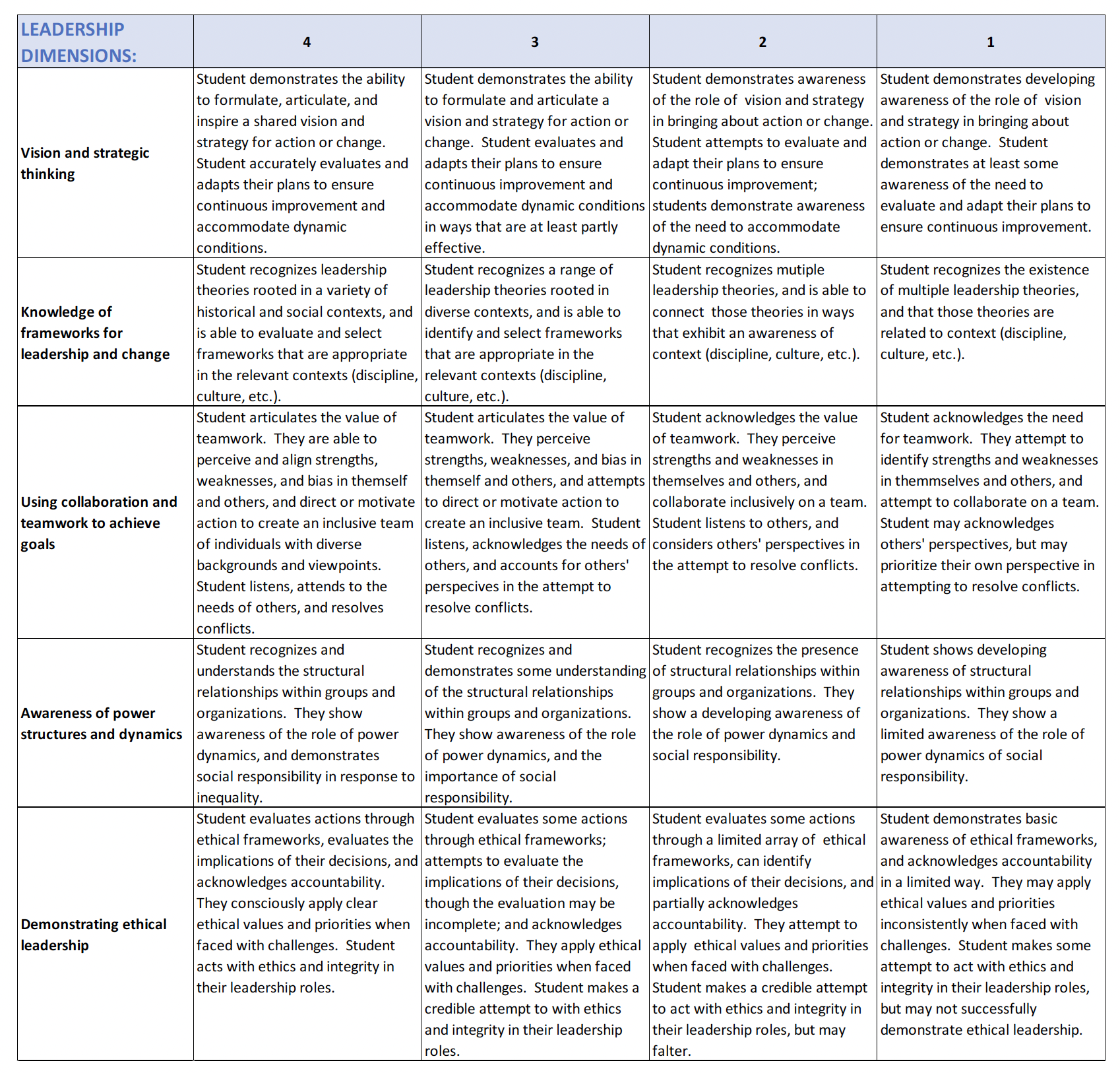
The University of Massachusetts Lowell developed the above rubric for their River Hawk Experience Distinction Leadership Program, defining specific criteria with a clear description of what each trait should look like at different performance levels, in order to provide a standardized way of measuring and assessing leadership skills

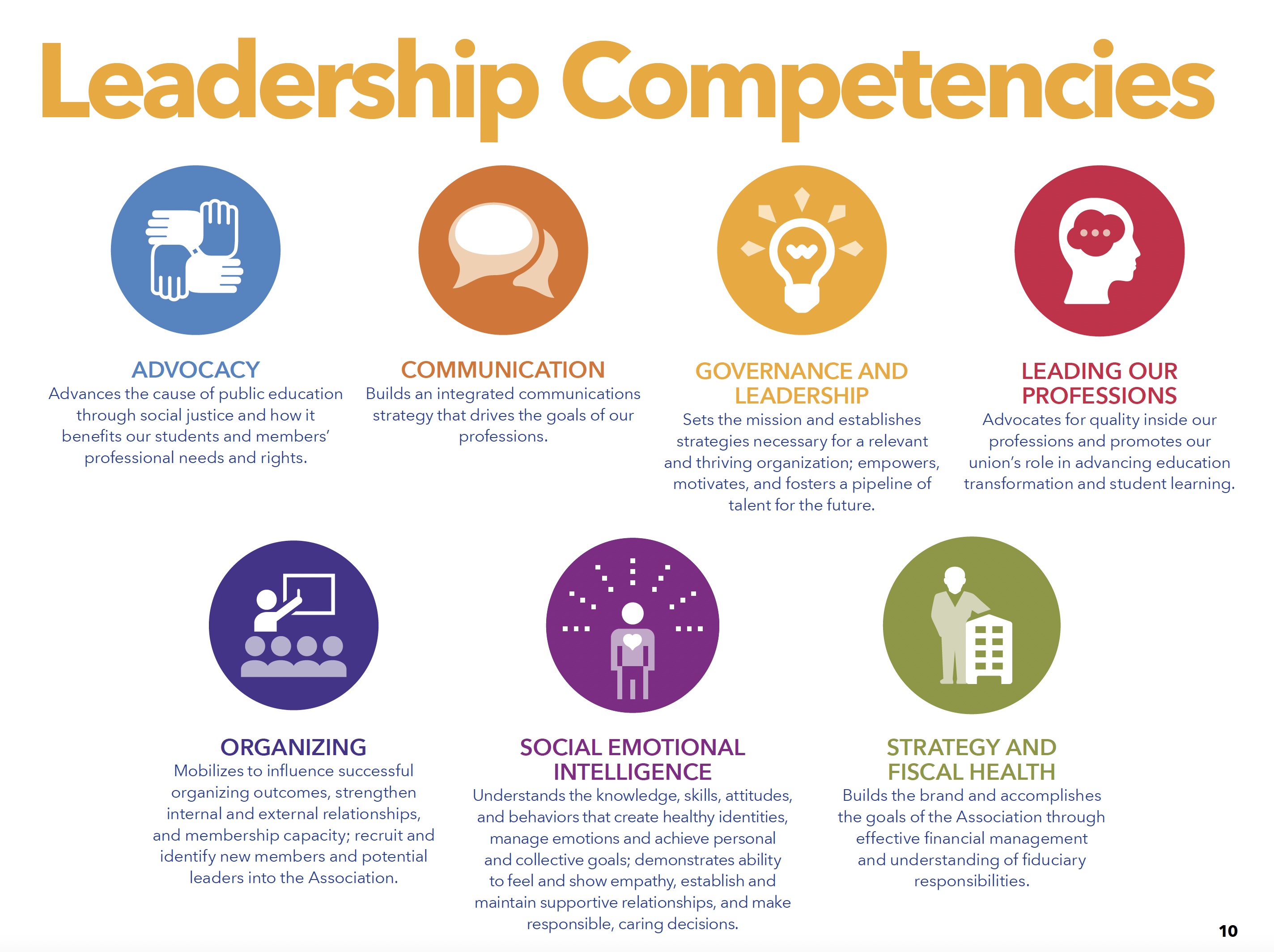
In addition, the National Education Association has created the above NEA Leadership Competency Guide worth downloading.

My favorite inspirational speaker Simon Sinek has also weighed in on this topic of “What Makes a Great Leader?” refining/simplifying it to just three traits:

  • Courage
  • Integrity
  • Communication

Additional resources

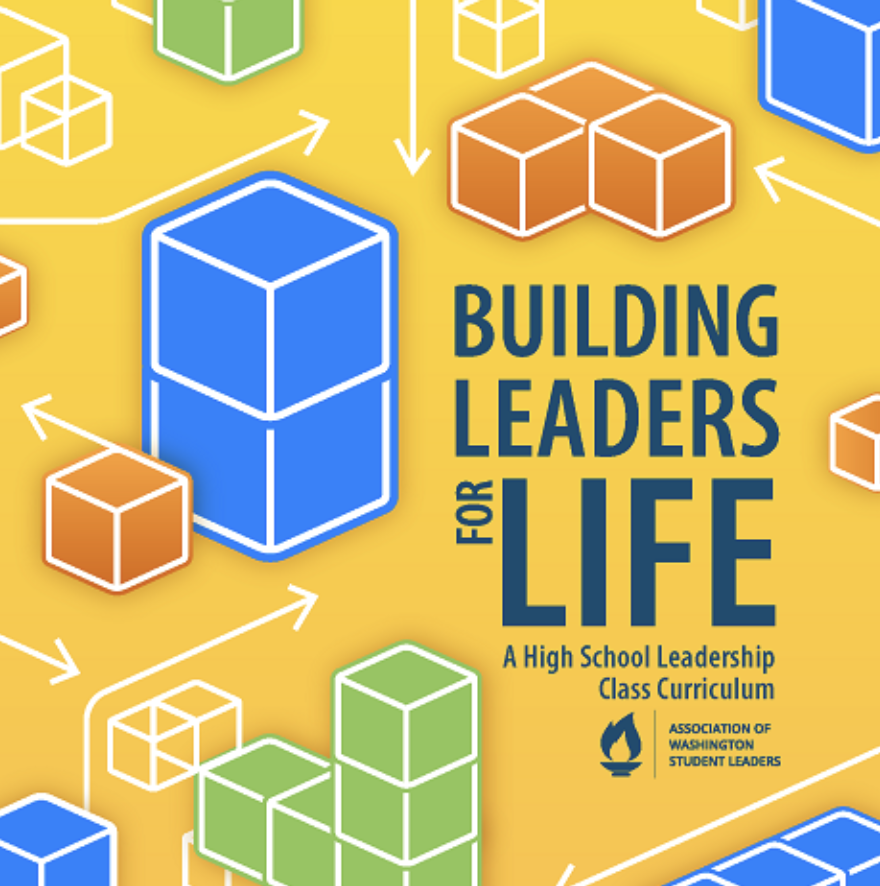
If you are an educator looking for supplemental material on developing leadership skills in your students, besides these SAS INSTITUTE 2025 slides (of which the original PowerPoint file is available to download for free in order to adapt for your classroom – please email me), I recommend perusing the full-blown “Building Leaders for Life” (second edition) curriculum (94 lessons in five subject areas, 355 pages of lesson materials, 137 student handouts) created by the Association of Washington Student Leaders (a division of the Washington School Principals’ Education Foundation). Click here to view their website. They also have a middle school and elementary series!

If you attend my SAS INSTITUTE workshop on December 9, 2025 (starting at 9:40 a.m. in Magnolia C, Hershey Lodge & Convention Center), ask me to see sample materials from their high school course of study.

Finally, here is the “homework for future leaders” I provided at the SAS INSTITUTE and during a 2024 summer camp at Upper St. Clair High School, providing additional links to many inspiring minds. Enjoy!


Leadership is not about being in charge. It is about taking care of those in your charge. — Simon Sinek

A leader is one who knows the way, goes the way, and shows the way. — John C. Maxwell

Do not follow where the path may lead. Go instead where there is no path and leave a trail.
— Ralph Waldo Emerson

The greatest leader is not necessarily the one who does the greatest things. He is the one who gets people to do the greatest things. — Ronald Reagan

What you do has far greater impact than what you say. — Stephen Covey

PKF

© 2025 Paul K. Fox

Body Language & Interviewing for a Job

More Sources to Prep You to Make a Good Impression at Employment Screenings

If you have been closely following this section of the https://paulkfoxusc.wordpress.com blog-site on “Marketing Professionalism,” you have consumed a lot of advice on numerous topics for preparing for the job search, developing your personal brand, and especially “conquering” employment interviews, such as:

body-language-3-1240767This article’s focus will be on the seemingly intangible… “body language!” Many say that during the interview, first impressions are critical — “the first ten seconds will create the interviewer’s first judgments about you, and then after four minutes, it’s all over.” The research also suggests that during the interview, the evaluation of your merit is based 7% on what you say, 38% on your voice or how you say it, and 55% on our facial expressions and non-verbal cues.

A good starting point to the introduction of “nonverbal communication” was posted by Jonathan Burston in his Interview Expert Academy website: http://www.interviewexpertacademy.com/body-language-the-3c-triangle/:

Using a triangle to symbolize his concepts, the “3Cs of Body Language” are:

  • Context of the situation/environment you are in… with friends (relaxed) or the boss (more stressed)
  • Clusters or groups of body language signals that you give off unconsciously
  • Congruence or links between what the person is saying, the tone of their voice, and the signals their body is giving off

He summarizes, “The 3C Triangle will help you understand the core parts of reading body language. Next time you’re with someone, either a friend, family member, work colleague or an interviewer, remember to use the 3C’s. Keep practicing.”

Probably one of the most unique presentations on this subject is a TED talk filmed in 2012: “Your Body Language Shapes Who You Are” by Amy Cuddy. Check out the transcript at http://www.ted.com/talks/amy_cuddy_your_body_language_shapes_who_you_are/transcript?language=en.

“Social psychologist Amy Cuddy shows how “power posing” — standing in a posture of confidence, even when we don’t feel confident — can affect testosterone and cortisol levels in the brain, and might even have an impact on our chances for success.”

Although some of her findings referenced in her talk are an ongoing debate among social scientists, Amy Cuddy’s research on body language reveals that we may be able to change other people’s perceptions — and even our own body chemistry — by simply changing body positions.

body-language-6-1240752Some of Cuddy’s assertions:

  • “When we think about nonverbal behavior, or body language — but we call it nonverbals as social scientists – it’s language, so we think about communication. When we think about communication, we think about interactions.”
  • “What are nonverbal expressions of power and dominance? …In the animal kingdom, they are about expanding. So you make yourself big, you stretch out, you take up space, you’re basically opening up.”
  • “What do we do when we feel powerless? We do exactly the opposite. We close up. We wrap ourselves up. We make ourselves small. We don’t want to bump into the person next to us.”
  • “We know that our minds change our bodies, but is it also true that our bodies change our minds? And when I say minds, in the case of the powerful, what am I talking about? …I’m talking about thoughts and feelings and the sort of physiological things that make up our thoughts and feelings, and in my case, that’s hormones.”
  • “Powerful people tend to be, not surprisingly, more assertive and more confident, more optimistic. They actually feel they’re going to win even at games of chance. They also tend to be able to think more abstractly…They take more risks.”
  • “Tiny tweaks can lead to big changes… Before you go into the next stressful evaluative situation, for two minutes, try doing this, in the elevator, in a bathroom stall, at your desk behind closed doors… Configure your brain to cope the best in that situation. Get your testosterone up. Get your cortisol down. Don’t leave that situation feeling like, oh, I didn’t show them who I am. Leave that situation feeling like, I really feel like I got to say who I am and show who I am.”

From Monster website, a very comprehensive article worth reviewing is “Body Language Can Make or Break a Job Interview” by Robert Ordona at https://www.monster.com/career-advice/article/body-language-can-make-or-break-a-job-interview-hot-jobs. He cites several body language experts. “You could be saying how great you are, but your body could be giving your true feelings away,” says Alison Craig, image consultant and author of Hello Job! How to Psych Up, Suit Up, & Show Up. Mark Bowden, author of Winning Body Language, agrees with Craig – and with the highly regarded Mehrabian communication study, which found that “if what’s coming out of your mouth doesn’t match what your body is saying, your audience is more likely to believe your body.”

Ordona’s blog-post sections provide the “nitty-gritty” of nonverbal communications:

  • Your “Great Entrance”
  • Showing your “good side”
  • First impressions
  • Handshakes
  • The walk to the interview
  • At the interview
  • The art of departing

Excerpts from Craig, Bowden, and Ordona’s work, here is a “top-ten list” of body language do’s (green) and don’ts (red):

  1. Be aware that the interview may start in the parking lot… you never know who may be observing you from a window or standing near you in the hallway. Regardless how you feel (inside yourself), model an attitude of outward calm, purpose, and confidence. This is no time to be frantically searching for your copies of your resume.
  2. The receptionist or secretary in the office may be informally assessing you (and the administrator may ask their opinion), so let them “observe you without letting on that you know they are watching.” Whenever possible, sit at right angles or offer your profile to them. “It makes them feel comfortable, and if they’re comfortable, they’re more likely to form a good impression.”
  3. While waiting, sit with good posture, back straight, and your chest open – additional signs you are “confident and assertive.” Don’t hunch your shoulders or tuck your chin into your chest, which may imply you are “closed off.” Don’t try to appear to comfortable or informal, for example “elongating your legs or throwing your arm across the back of the chair,” as it might make you look arrogant.
  4. If you can tell, try facing the direction from where the interviewer will come; “it’ll make the greeting more graceful.” Also, “don’t have so much stuff on your lap that you’re clumsily moving everything aside when you’re called.”
  5. body-language-5-1240757Practice handshaking with a friend before taking interviews. Avoid “the overly aggressive or death grip” as well as “the limp handshake.” Since you are going to shake with your right hand, arrange your belongings on your left side. “Offer your hand with you palm slightly up so that your interviewer’s hand covers yours,” a sign that “you’re giving them status.”

  6. Even the walk to the interview room is the perfect to time to use good body language: follow the hiring manager or assistant “to show you understand the protocol” (“I follow your lead”), mirroring that person’s tempo and demeanor, showing “you can easily fit into the environment.”
  7. Once in the interview room, it’s okay to place a slim portfolio on the table, “especially if you’ll be presenting its contents,” but place your other belongings on the floor beside you. “Holding a briefcase or handbag on your lap will make you seem as though you’re trying to create a barrier around yourself.” Again, it is recommended you sit a slight angle to offer your profile, avoiding creating a defensive barrier.
  8. Sit up straight and display your neck, chest, and stomach area, a signal to the interviewer that you’re open. “Avoid leaning forward, which makes you appear closed off.”
  9. Sit about a foot away from the table and keep hand gestures at a level above the desk (or slightly lower) and below your collarbone. Your goal is to communicate that “you’re centered, controlled, and calm – and that you want to help.”
  10. The final advice at the end of interview: “Gather your belongings calmly, rise smoothly, smile, and nod your head. If shaking hands with everyone in the room isn’t convenient, at least shake hands with the hiring manager and the person who brought you to the interview space.”

Another interesting online resource is Forbes, “10 Body Language Interview Mistakes” at http://www.forbes.com/pictures/lml45lide/10-body-language-interview-mistakes-2/#76cf48105767. Eleven slides illustrate suggestions about eye contact, the way you fix your hair, crossing your arms, and other “physical slip-ups in your next interview.”

Finally, Yohana Desta offers “9 Simple Body Language Tips for Your Next Job Interview” on Mashable at http://mashable.com/2014/11/17/body-language-job-interview/#UZoXdE1FEsqB.

“Job interviews are notorious tightrope walks. You want to be confident, but not obnoxious; intelligent but not a know-it-all. Trying to find a balance and also explain why you deserve a job is hard enough. But what if your body language could help you out?” – Yohana Desta

body-language-8-1240743Although “the experts” are not always in consensus, especially on the subjects of eye contact and leaning posture, Desta’s tips summarized below provide additional enlightenment on how to use body language to promote a positive image:

  1. Sit all the way back in your seat.
  2. Don’t go for direct eye contact.
  3. Use hand gestures while speaking.
  4. Show your palms.
  5. Plant your feet on the ground.
  6. Work on your walk.
  7. Nod your head while listening.
  8. Lean in.

In a challenging job market with limited openings for public/private school music educators in many geographical areas of the country, there is great competition in the screening and evaluation of the applicants. Hopefully these suggestions from “the experts on body language” will help you better prepare for employment interviews… and land that job you always wanted!

PKF

© 2017 Paul K. Fox

Picture credits: Photographers John Evans and Henk L. at http://www.freeimages.com