Leaders Flush!

Leadership lessons for the classroom or staff development

This blog is a follow-up resource for my Empowering Educator and Student Leadership presentation at the PA Department of Education SAS INSTITUTE state conference on December 9, 2025 and provides a “fill-in-the-gap” narrative about many of the concepts we have already presented at this blog site:
If you would like to review my PDF slide summary from the SAS INSTITUTE, click here.

Did the main title (above) get your attention? What on earth could “leaders flush” have to do with this topic? In teaching (and modeling) leadership skills to my students, we discuss what it means to Faire sans Dire or “do without saying,” the English translation to this crest:

Heraldry coat of arms emblem: Earl of Ilchester

In other words, if you see something that needs to be done (flush the toilet?), don’t assume it’s someone else’s job. A true leader embraces the philosophy Carpe Diem (“seize the day”), identifies the problem and its solution, rolls up his/her sleeve, and “gets it done!”

Why teach leadership in the curriculum & extracurricular activities?

“Leadership is an essential skill that extends beyond the classroom, shaping how students engage with the world around them. Whether leading a group project, organizing an event, or voicing their opinions in discussions, leadership skills empower students to take initiative and make meaningful contributions. These abilities are not only beneficial during school years but also serve as the foundation for lifelong personal and professional success.”
Bloomster

In the past, I have used a multitude of opportunities and settings to teach these life skills in summer leadership camps, section leader and student conductor seminars, drum major and marching band captain auditions, student director, producer, and musical crew head staff meetings, and for 25+ years, preparing student counselors for a comprehensive, six-day, grades 8-12 Township String Camp program.

To sum it up, teaching leadership in Grades K-12 and college settings will:

  • Develop communication skills
  • Build confidence & self-awareness
  • Enhance problem-solving abilities
  • Encourage teamwork & collaboration
  • Shape future success

Why teach leadership to educators?

My December session at SAS Institute was geared to school/system leaders, department heads, and other administrators, but actually the focus on leadership as a skill set necessary for school/staff/individual professional improvement is essential for all educators and school support staff.

From district administrators and school principals to instructional coaches and curriculum coordinators, leaders in education have a direct impact on the learning outcomes of all students. According to UNESCO, educational leadership is considered one of the most influential factors on student outcomes, falling just behind engaging teaching. As a result, leadership training for educators has become an essential part of the professional development experience for teachers at all levels of education.
“Building Leadership Skills – From Classroom Teacher to Educational Leader”

School improvement rarely occurs without effective leadership, and school leadership is only second to classroom teaching in its influence on student achievement. A new evidence review report from Global School Leaders paints a complex and ever-changing picture of school leaders, with their roles, responsibilities, and impact varying around the world.
3 Reasons Why School Leadership Is Vital to Teacher Success”
The literature suggests that empowering educators with leadership training will:

  • Improve student achievement
  • Empower and retain teachers
  • Support new staff members
  • Drive innovation and adaptability
  • Bridge the gap between instruction and administration
  • Build/model a positive attitude
  • Enhance strategic thinking and decision-making
  • Promote a positive and collaborative school climate
  • Develop soft skills such as communication, conflict resolution, and building trust… both in and outside the classroom

Leadership assessments

“A leadership skills assessment is a formal evaluation used to identify and measure a person’s leadership potential and competencies, such as communication, decision-making, and emotional intelligence. These assessments can be used by organizations to evaluate current leaders, identify high-potential candidates for promotions, and inform hiring decisions. Common methods include personality tests, scenario-based assessments, and 360-degree feedback, with tools like CliftonStrengths, Hogan Assessments, and DISC being popular examples.” 
“Leadership Assessment Test – A Complete Guide 2025”

There is a large body of information out there, especially commercial resources, for evaluating the leadership quotient and achievement of corporate managers, CEOs, CFOs, etc. I was impressed with the scope and depth of the research, including these sample firms advertising the availability of third-party consultants and advisors.
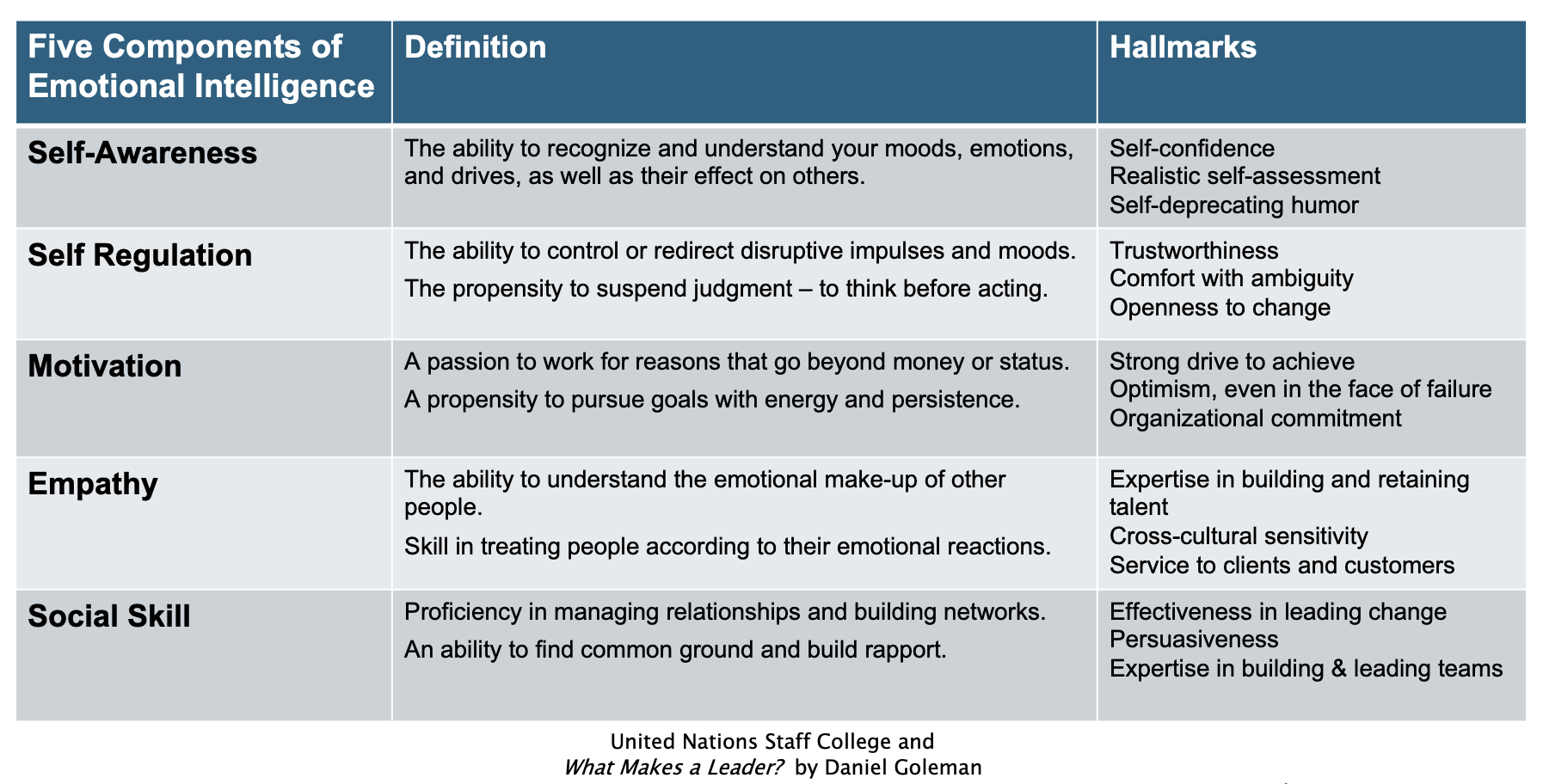
One night I randomly scanned through a handful of YouTube reels of company fraud and mismanagement (e.g., “Revenge of the Coffee Pot,” “Revenge with Karen,” and “Silent Revenge”), painting (fictitious) stories of bosses stealing intellectual property or assuming credit for the innovations/achievements of their subordinates, patent infringement, nepotism or incompetent hirings… all with arrogance, lack of professionalism, the total disregard of employee morale, and blatant patterns of poor executive decision-making, communication, emotional intelligence, strategic thinking, and the ability to influence and guide a team. “Emotional intelligence” (as defined above by Daniel Goleman in What Makes a Leader? also attributed to the United Nations Staff College) should include the “best practices” of self-awareness, self regulation, motivation, empathy, and social skills. Added to these YouTube (fake) scripted deficiencies are the mitigating effects of corporate politics, inconsistent application of compliance or HR policies, unclear contract language, and problems in the chain of command… with the eventual result of the boss receiving a fall from grace, termination, and other legal consequences. Most of these episodes imply only the Board of Directors evaluates the top executives (like school superintendents?), and even with the inclusion of employee satisfaction surveys, staff retention data, third-party auditors, and whistle-blower protections in some instances, the catastrophic actions of these leaders nearly destroy the businesses. For these videos, it seems that leadership assessments and goals are never ongoing, the benchmarks are seldom reviewed, and nothing is PROACTIVE… and therefore not preventive. Therefore, for the school district and corporate worlds alike, we need to intentionally provide formative assessments of our leaders (and ourselves). Exactly what do we need to know and do to improve?
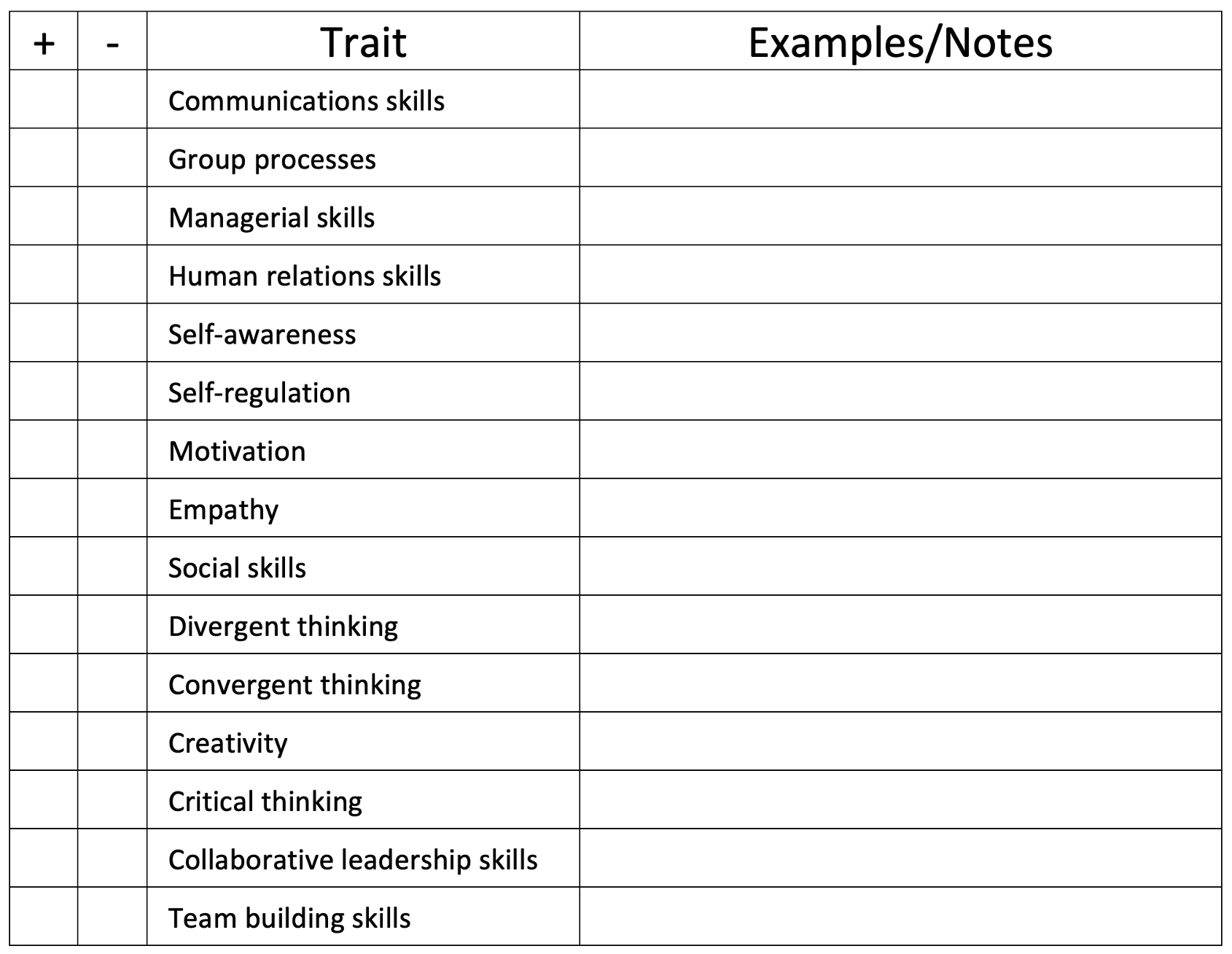
In my blog Growing Student Leaders and the SAS Institute 2025 presentation, I offered the above image as an informal personal checklist to evaluate leadership traits. Coincidentally, while I was writing this article, a scholarship committee of the Community Foundation of Upper St. Clair (for which I serve as Communications Director and Arts Chair) was developing an assessment rubric for ranking applications of a new student leadership scholarship. Although still under development, here are a few of the categories being considered:

  • Communication: Includes listening skills, clarity in speaking, and the ability to make others feel heard.
  • Integrity: Acting ethically, being trustworthy, and aligning actions with words.
  • Accountability: Taking ownership of actions and commitments.
  • Collaboration: Working effectively with others, valuing different perspectives, and resolving conflicts.
  • Self-awareness: Understanding one’s own strengths, weaknesses, and biases.
  • Drive/Initiative: A bias for action and the ability to move projects forward.
  • Courage: The bravery to speak truthfully, admit shortcomings, and make difficult decisions.
  • Humility: Recognizing the contributions of others and remaining a lifelong learner.
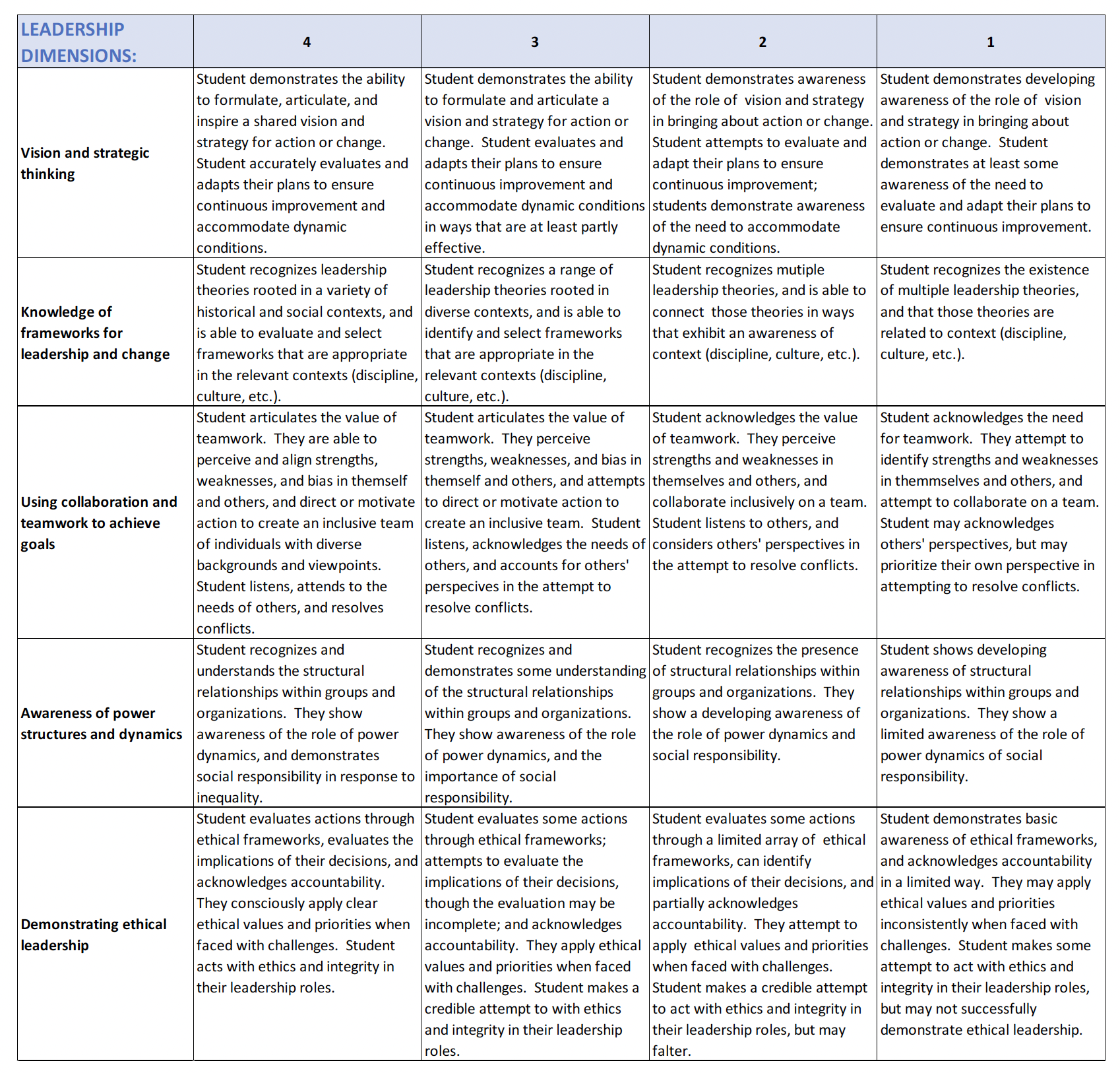
The University of Massachusetts Lowell developed the above rubric for their River Hawk Experience Distinction Leadership Program, defining specific criteria with a clear description of what each trait should look like at different performance levels, in order to provide a standardized way of measuring and assessing leadership skills
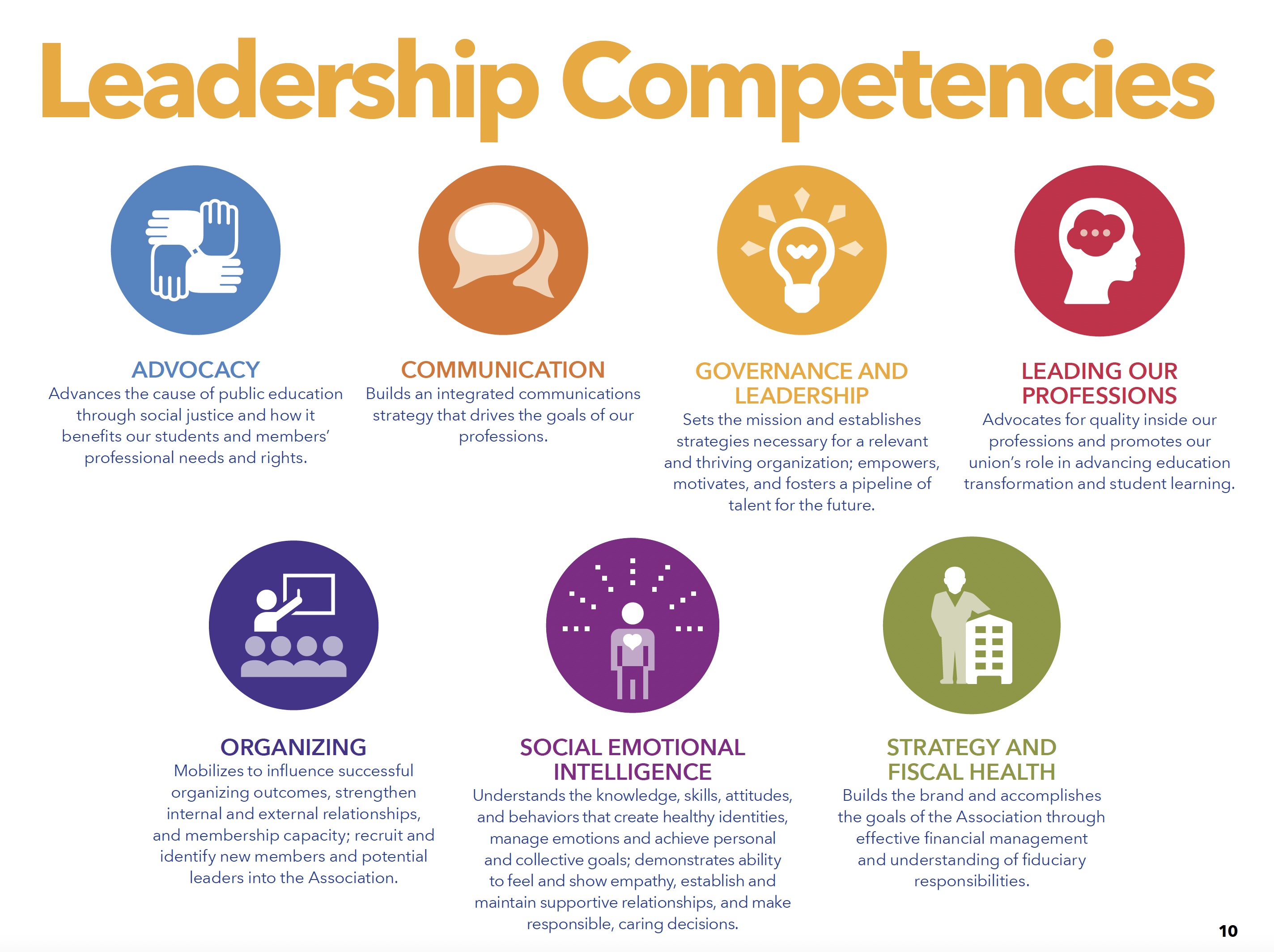
In addition, the National Education Association has created the above NEA Leadership Competency Guide worth downloading.

My favorite inspirational speaker Simon Sinek has also weighed in on this topic of “What Makes a Great Leader?” refining/simplifying it to just three traits:

  • Courage
  • Integrity
  • Communication

Additional resources

If you are an educator looking for supplemental material on developing leadership skills in your students, besides these SAS INSTITUTE 2025 slides (of which the original PowerPoint file is available to download for free in order to adapt for your classroom – please email me), I recommend perusing the full-blown “Building Leaders for Life” (second edition) curriculum (94 lessons in five subject areas, 355 pages of lesson materials, 137 student handouts) created by the Association of Washington Student Leaders (a division of the Washington School Principals’ Education Foundation). Click here to view their website. They also have a middle school and elementary series!

If you attend my SAS INSTITUTE workshop on December 9, 2025 (starting at 9:40 a.m. in Magnolia C, Hershey Lodge & Convention Center), ask me to see sample materials from their high school course of study.

Finally, here is the “homework for future leaders” I provided at the SAS INSTITUTE and during a 2024 summer camp at Upper St. Clair High School, providing additional links to many inspiring minds. Enjoy!


Leadership is not about being in charge. It is about taking care of those in your charge. — Simon Sinek

A leader is one who knows the way, goes the way, and shows the way. — John C. Maxwell

Do not follow where the path may lead. Go instead where there is no path and leave a trail.
— Ralph Waldo Emerson

The greatest leader is not necessarily the one who does the greatest things. He is the one who gets people to do the greatest things. — Ronald Reagan

What you do has far greater impact than what you say. — Stephen Covey

PKF

© 2025 Paul K. Fox

On the Road Again (2023)

“Doing My Thing…” — Professional Development Conferences for Music Educators

It’s been awhile since I posted here… arguably the longest editorial break I have taken since retirement and starting this blog-site. What’s that line retirees often say? “It’s a good thing I am retired from my job; otherwise I would not have enough time to do everything!”

This has been an extremely busy couple months of renovating three bathrooms, promoting the 30th Anniversary Gala Celebration of the Community Foundation of Upper St. Clair featuring a CASINO NIGHT & the local band NO BAD JUJU (to which I can’t even go because it is on the same day as PMEA), staffing a transition of new editors and an office manager for the UPPER ST. CLAIR TODAY community magazine, “keeping my hand in” by conducting a small nonprofit community ensemble (now in our 40th season of the South Hills Junior Orchestra), volunteering at the hospital (see my Tales from a Wheelchair Jockey article), developing new PDE Act 45 and 48 programs on ethics (school system leaders and educators respectively), and… (deep breath): preparing four PowerPoint presentations for two music conferences in April. Yes, and loving every minute of this frenzied activity!

Pennsylvania and Eastern Division music education colleagues: Hopefully by now, you have registered for the coming conferences on the horizon:

NAfME Eastern Division Conference, April 13-16, 2023, Rochester, NY

PMEA Annual Conference, April 19-22, 2023, in the Poconos

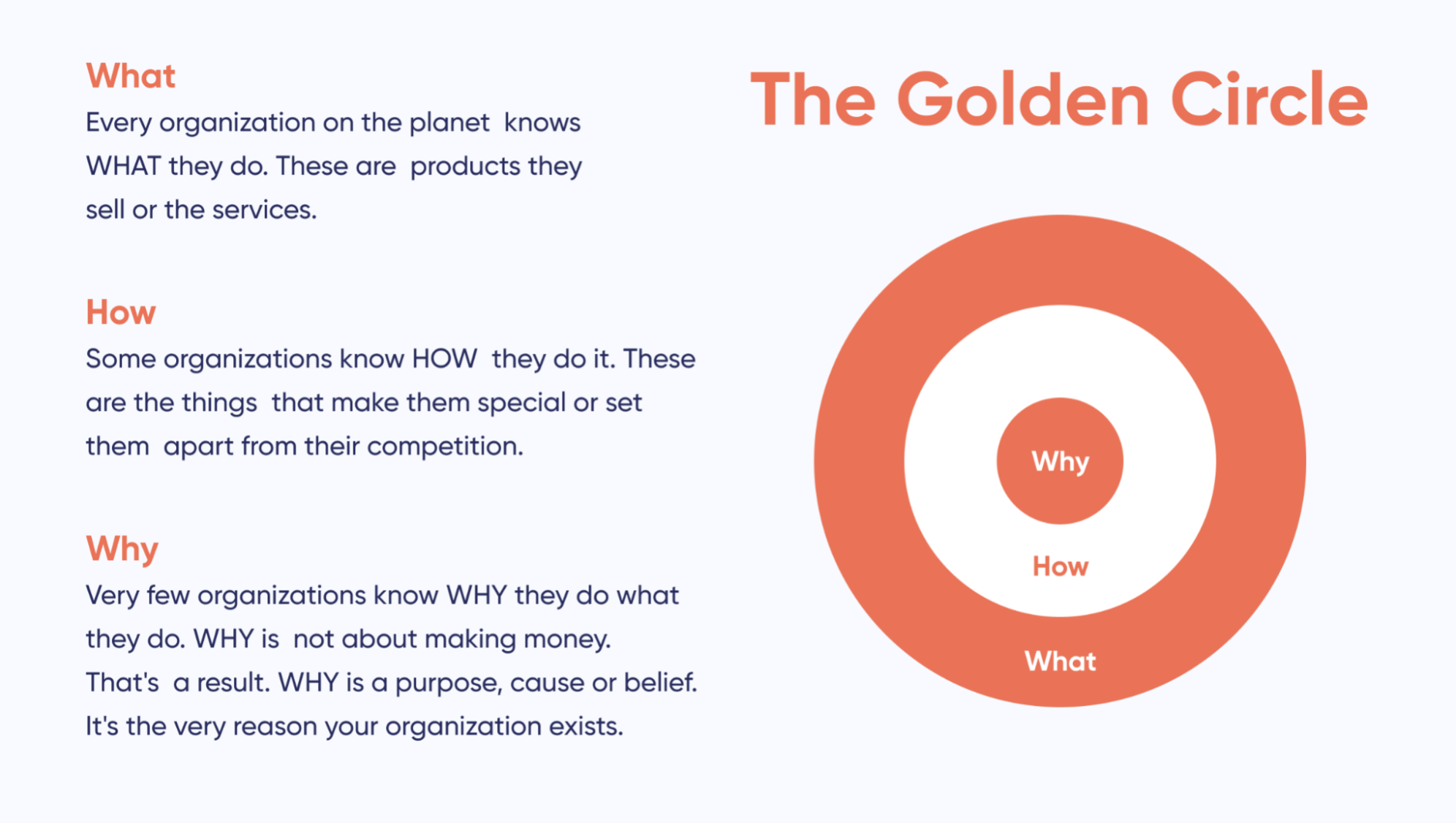
Now to quote the inspiration of Simon Sinek — his theory of value proposition to ‘start with why’ — how leaders can inspire cooperation, trust, and change based on research into how the most successful organizations think, act, and communicate if they start with why. Check out his rationale with The Golden Circle:

The “why” of attending your professional development conferences, “sharpening your saw” (self-renewal by Stephen Covey) aka “recharging your batteries,” learning what’s new and innovative on the forefront of “the state of the art,” and networking with colleagues, and has been addressed often in past blogs:

Simply put — to maintain your mastery of music and methods and build on your “best practices” and professionalism, you MUST attend as many educational conferences and workshops as possible!

Now to my “bags of tricks” for April 2023

Mark your calendars:

April 15, 2023 at 10:45 a.m. in Hyatt Susan B. Anthony (NAfME) – OR –
April 21, 2023 at 11:30 p.m. in Kalahari Suite 40/50 (PMEA)

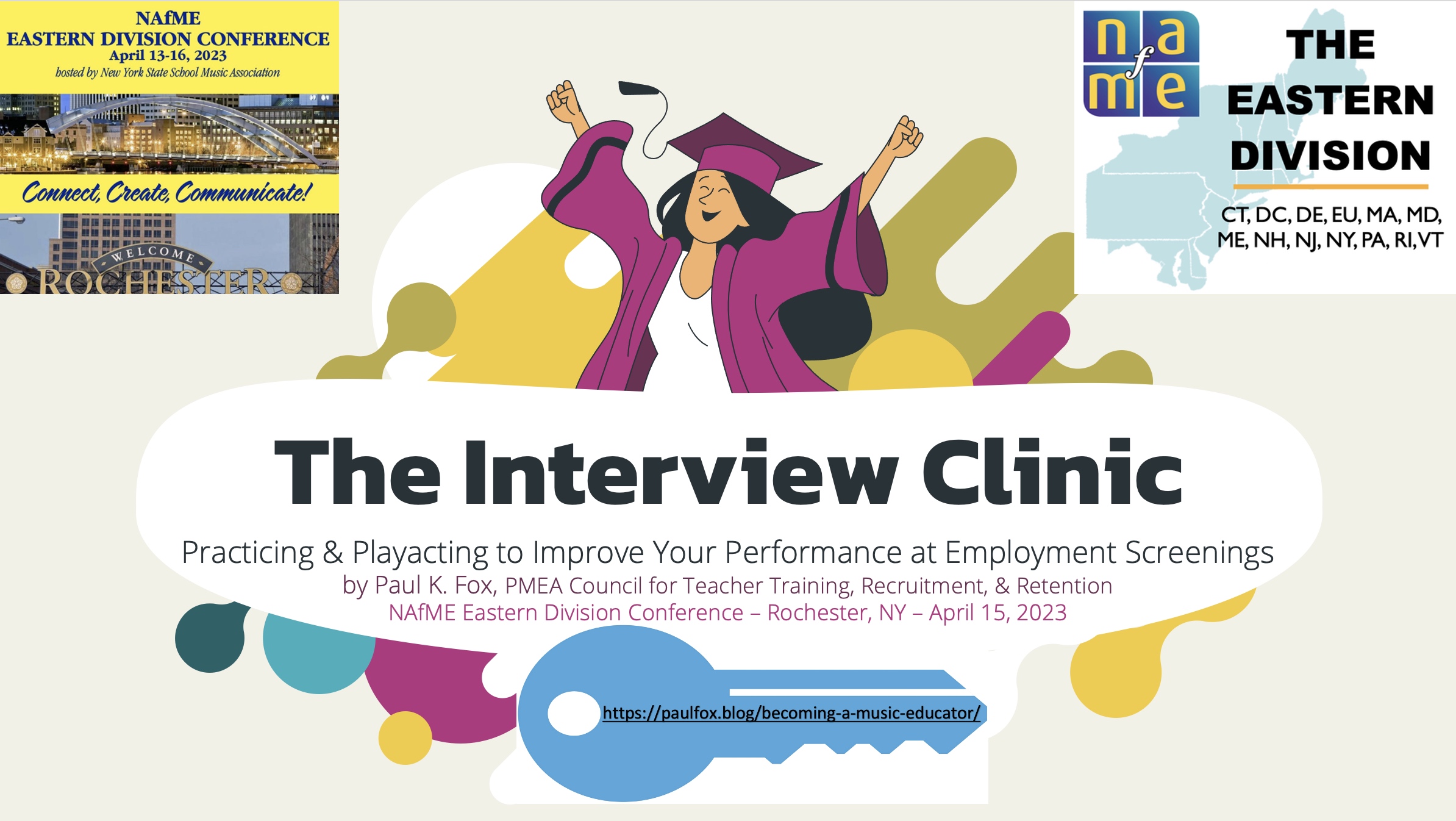
I was blessed to have been asked to present THE INTERVIEW CLINIC — Practicing & Playacting to Improve Your Performance at Employment Screenings at both the NAfME and PMEA conferences. This will be FUN! Perfect for college music education majors, soon-to-be or recent graduates, new transfers to the profession, teachers seeking to change positions while openings seem to be “heating up,” or first-timers looking for employment, the session targets will provide interactive exercises to build self-confidence and develop better insights, practices, and strategies to successfully land a job. “The key is in the preparation” of:

  • Standards—Defining/modeling professionalism, versatility, and ethics
  • Marketing—Branding, networking, and selling yourself
  • Skills—Interviewing, storytelling, and organizing
  • Assessment—Observing, reviewing, diagnosing, and improving

Interactive exercises, you say? Yes! Get ready to meet new people and perhaps dive into a few activities slightly outside your “comfort zone!” (We promise NOT to embarrass anyone!) We will break up into small groups or “duet partners,” and explore defining our professional “essence,” telling anecdotes about our strengths and past problems we have “crushed,” and focusing on learning “the golden gift of gab” — storytelling.

Portions of this workshop will come from material in the past posts Storytelling, etc. Part 2 and When it Comes to Getting-a-Job, S Is for Successful Storytelling. (Your homework? Peruse these before coming to either session at NAfME or PMEA!)

As always, articles, resources, and slide summaries will be posted under the “Training/Jobs” menu tab (above).

Mark your calendars:

April 20, 2023 at 3:00 p.m. in Kalahari Suite 30 (PMEA)

How many of you feel at times a little overwhelmed, exhausted, stressed out, disorganized, demoralized, or disenfranchised?

Are you at the end of your rope and wondering how you’re going to “keep it all together” over the next week, month, year?

Is your health is interfering with your ability to do your job and find success, balance, and meaning in your personal life and relationships? Then… it is time for a change.

We are still dealing with the effects of the pandemic which has brought on a “gap year” to most of our music programs, the stress of “working harder not smarter,” more teacher burnouts, and the resulting bail outs, staff shortages, and/or job cuts. We need to embrace NEW strategies for personal self-care and SEL (social and emotional learning). Do you still enjoy teaching? How have you coped with all of the changes? How will you achieve a better work/life balance and skills in time/priority management and personal health and wellness?

The prescriptions and RECIPES towards stress reduction and developing a self-care plan are here! Doug Sands, a consulting hypnotist and founder of AnywhereHypnosis.com, joins me to “throw in everything and the kitchen sink” to alleviate these problems, with NO cookie-cutter, “one-size-fits-all” solutions from the chefs:

  • What has COVID done to all of us?
  • Instant personal online stress assessment
  • Taking an inventory of the ingredients towards a healthier lifestyle
  • Definitions, symptoms, and remediations for teacher stress and burnout
  • Why teachers are so exhausted and what to do about it
  • Time management tips
  • Breathe like a Navy SEAL
  • Coping and learning “acceptance”
  • How to “coach overwhelm!”
  • The role of meals, movement, music, and mindfulness (thank you, Lesley Moffat!)
  • From MEJ: A suggested self-care plan and “cognitive distortions” to avoid
  • Focusing on ONE self-care strategy from a “sea of solutions”

We’re in this together… so we need to join forces and SHARE the secret recipes for a happier life! Add your own “baking tips,” and I promise, you’ll leave with a better understanding of how we all can celebrate the coming year or decades in music education!

By the way, my “mindfulness partner” for this workshop, Doug Sands, promises us he will not hypnotize any of us during this session (although he could!).

For more about his work, including “15 Rapid Tools (and Counting) to Wipe Out Anxiety, Stress, and Panic,” please go to his website here.

You are invited to stop in to see him at his PMEA booth in the Kalahari exhibit hall.

POST-CONFERENCE NOTE: Doug sent us his Anti-Panic Toolkit entitled, 15 Rapid Tools (and Counting) to Wipe out Anxiety, Stress, and Panic – Wherever They Strike! Click here.

If you would like a sneak preview of the revised handout for the Self-Care workshop, go to the Care menu section at the top menu bar.

Taking a peek at our recent past…

Workshop for Orchestra & String Teachers

In case you missed the PMEA District 5 Professional Development Day, my wife Donna and I presented “Plucking Our Minds” at Grove City College on February 20, 2023.

We were privileged to “share some of our secret sauces” gleaned from over 80 combined years of experience on a variety of topics:

  • CommUNITY Music-Making
  • Online Academy
  • Summer String Camp
  • Assessment Projects
  • Collaborative/Creativity Projects
  • Library of “Fox Firesides”

If would be a shame to waste these resources… and reading them could inspire new adaptations to your instrumental program.

Click here for a copy of the slide handouts. Feel free to comment (above) or send an email to me (paulkfox.usc@gmail.com) if you have any questions.

Our Crystal Ball

Future Accredited Workshops on Ethics in Education

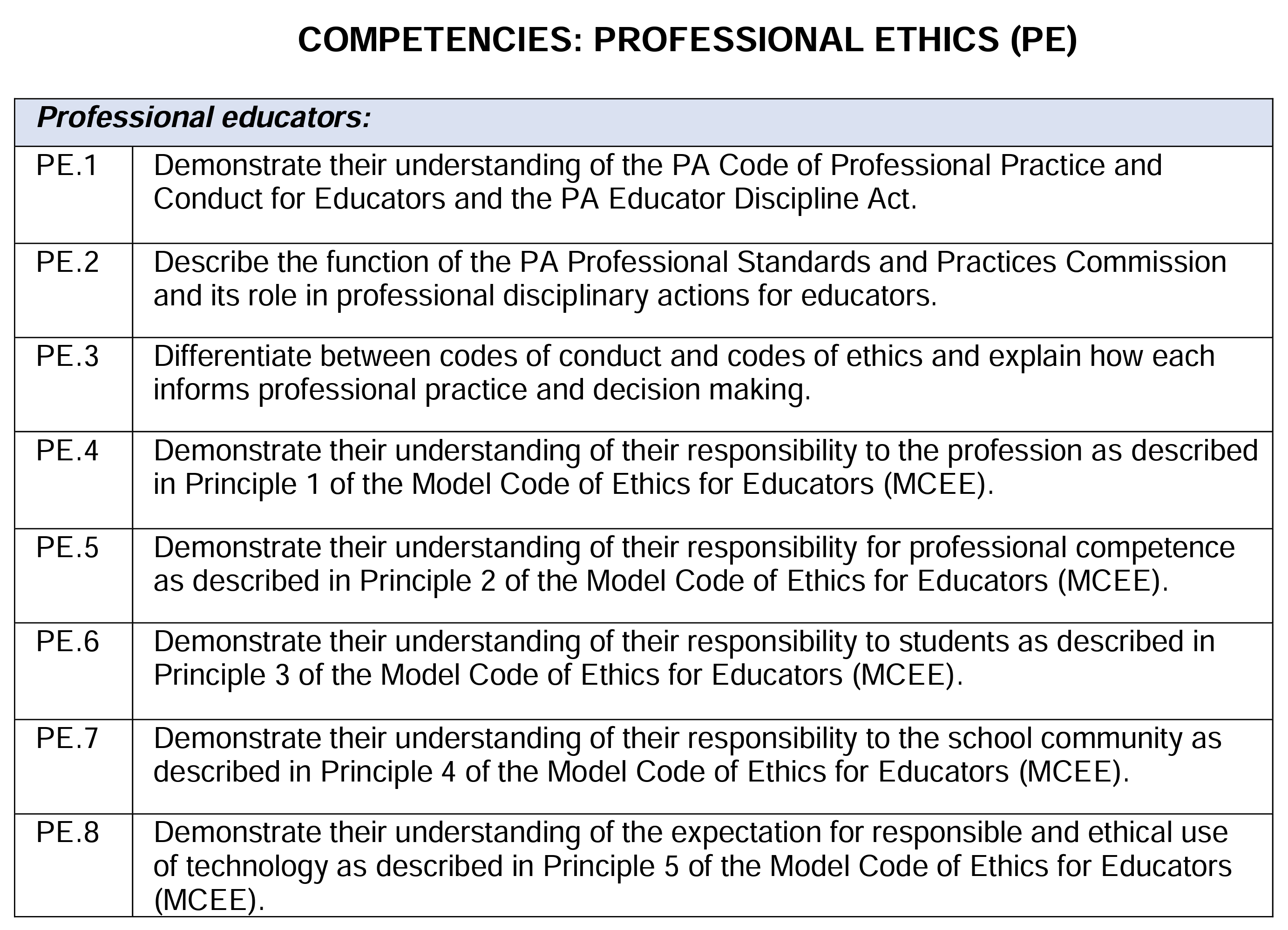
Are you aware that the Pennsylvania Department of Education (PDE) has recently revised the PA educators’ Code of Professional Practice and Conduct AND adopted the Model Code of Ethics for Educators developed by the National Association of State Directors for Teacher Education and Certification? Have you seen the new Professional Ethics Program Framework Guidelines? PA Chapter 49 requires instruction in professional ethics to be integrated in educator preparation, induction, and continuing professional development programs as follows:

  • Continuing professional development programs must integrate the professional ethics competencies no later than the 2023-24 academic year.
  • Educator preparation and induction programs must integrate the professional ethics competencies no later than the 2024-25 academic year.

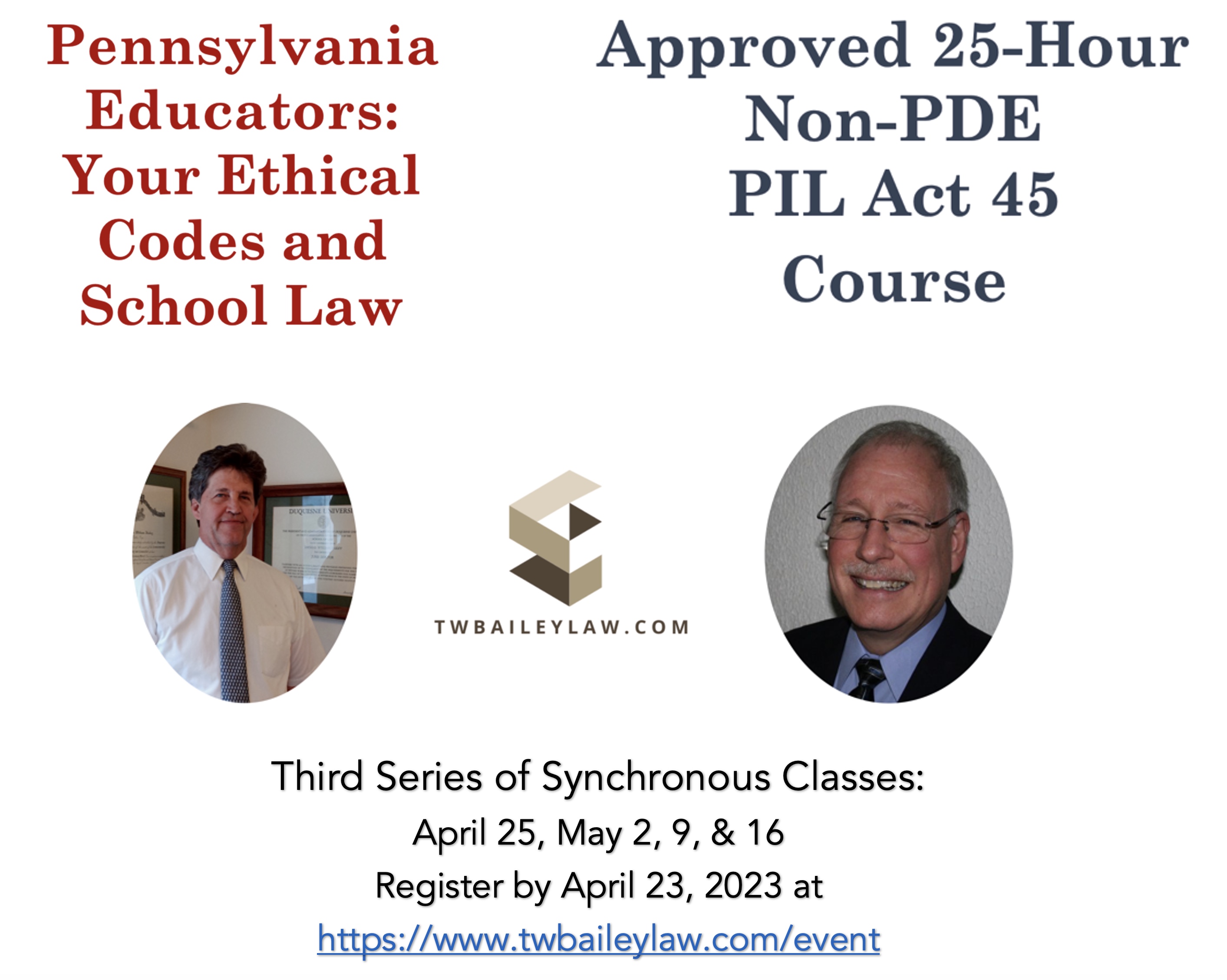
Not one to let grass grow (or mud sink) under his feet, retired social studies teacher, current attorney-at-law, and past PMEA conference presenter Thomas Bailey has partnered with me to design new ethics training classes for school system leaders (25-hour Act 45 PIL course) and educators (four-hour Act 48 continuing education course). In addition, we are introducing a new “hybrid” program for school administrators involving four-hour pre-recorded asynchronous webcasts (site license), along with a three-hour synchronous webinar using the webcast videos and adding facilitated interactive discussions of three ethical case studies either via Zoom OR in-person follow-up workshops led by both clinicians.

In Depth Ethics Training for PA Educators:

  • PA Model Code of Ethics for Educators
  • PA Code of Professional Practice and Conduct
  • Professional Standards and Practices Commission
  • PA Educator Discipline Act

Click here for to register for Act 45 PIL Course.
Next series: April 25, May 2, 9, & 16, 2023

Click here for more information on the Ethics Webcast/Webinar and general information/landing page for the TWBaileyLaw website.

Click here for timeline of educator ethics presentations and clinicians’ bios.

Also review the Educators Court Case Blog and William Penn SD vs. PDE Blog.

Numerous articles have already been published on the subject of educator ethics, professionalism, and decision-making:

Hope to see you at one of these conferences or workshop sessions! Yes, it means a lot more to attend these IN PERSON!

PKF

© 2023 Paul K. Fox