Engaging Retiring/Retired Educators

Ask not what NAfME or your state MEA can do for you, but what YOU, a retiree, can do for your professional association and music education.
An adaptation of the famous excerpt from the 35th U.S. President John F. Kennedy’s inaugural address of January 20, 1961.
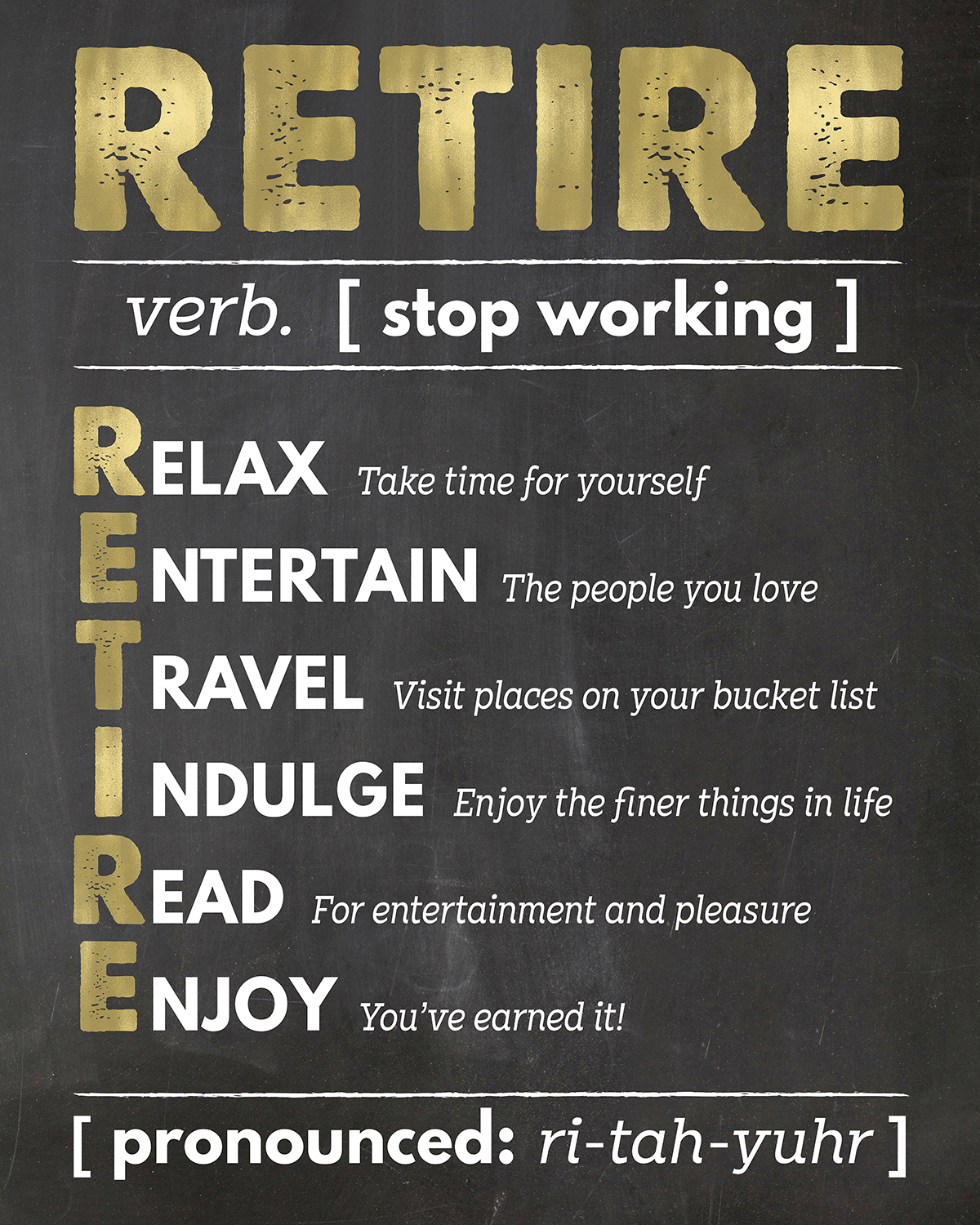
Surfing the ‘Net, I found an appropriate acronym for R.E.T.I.R.E. by Tangled Tulip Designs in pinterestRelax, Entertain, Travel, Indulge, Read and Enjoy! Most retirees would probably agree! The cessation of full-time employment may offer a great release from the day-to-day stress and drudgery of the job and the freedom to venture out, self-reinvent, make future goals, nurture relationships, and explore new personal growth opportunities.

Many attribute embracing a career in music education as “a calling” as opposed to just a form of employment or livelihood. From my experience, I have witnessed that most music educators are passionate for the cause of fostering creative self-expression in their students, more of a 24/7 mission, bringing intense focus and dedication to their lifework.

More to the point: Do we ever truly retire from making music ourselves and fostering this love in others?

THE “WHY!” Retirees matter and are critically needed!

One of my favorite inspirational speakers (Simon Sinek) would say, “start with the WHY!” WHY is this discussion on professional engagement of retired educators so important today?

  1. Their need: An informal poll of my former local educators and administrators revealed that half of them “hate retirement!” According to Dr. Robert P. Delamontagne in his book Retiring Mind (Fairview Imprints), “50% of retirees will suffer some form of acute emotional distress. This is potentially a very large problem given the fact that 10,000 people are becoming eligible for Social Security every day for the next 20 years in the US alone.” Remember this statistic the next time a senior citizen cuts you off on the road or bangs a shopping cart into your leg at the checkout!
  2. Our need: We are facing shortages of qualified teaching candidates across the country with unfilled openings in public school music positions and the critical need of training/mentoring the new hires.
  3. Society’s need: All of our voices should be combined to support the advocacy of music education, actively promoting access to school music by sharing its academic and social benefits with decision-makers, building relationships with administrators and policymakers, and utilizing resources from organizations like NAfME and the NAMM Foundation.

Despite its proven benefits, music education is often the first program to face budget cuts in schools. This is especially concerning in underserved communities, where access to music programs can be life-changing. Now more than ever, we must advocate for music education to ensure that every child has the opportunity to experience its benefits. Investing in music education is an investment in the future of our communities — helping to cultivate the next generation of creative, resilient, and innovative leaders. 
“Why Music Education Matters More Now Than Ever” by Music Will, February 2025

For eleven years (and counting), I serve as the Pennsylvania Music Educators Association (PMEA) Retired Member State Coordinator, as well as the Past State Chair (current member) of the PMEA Council for Teacher Training, Recruitment and Retention. I believe my responsibility to the state association is two-fold:

  • Assist soon-to-retire professionals in achieving a smooth transition to a happy and satisfying retirement; to help them cope with the commonly-experienced emotional ups-and-downs of this life passage, wrestling with the question “what do you want to be or do when you grow up?” and making new life lesson plans and personal goals.
  • Reach out to and build meaningful connections with retirees in order to fully engage them towards becoming active in their professional association; to recount, represent, and revitalize the activities of our post full-time employed music educators.

This article proposes a roadmap of crucial pathways to help music teachers approach “retirement bliss” while tapping into their hard-earned knowledge, strengths, and experiences by cultivating the benefits of their renewed participation in our professional associations.

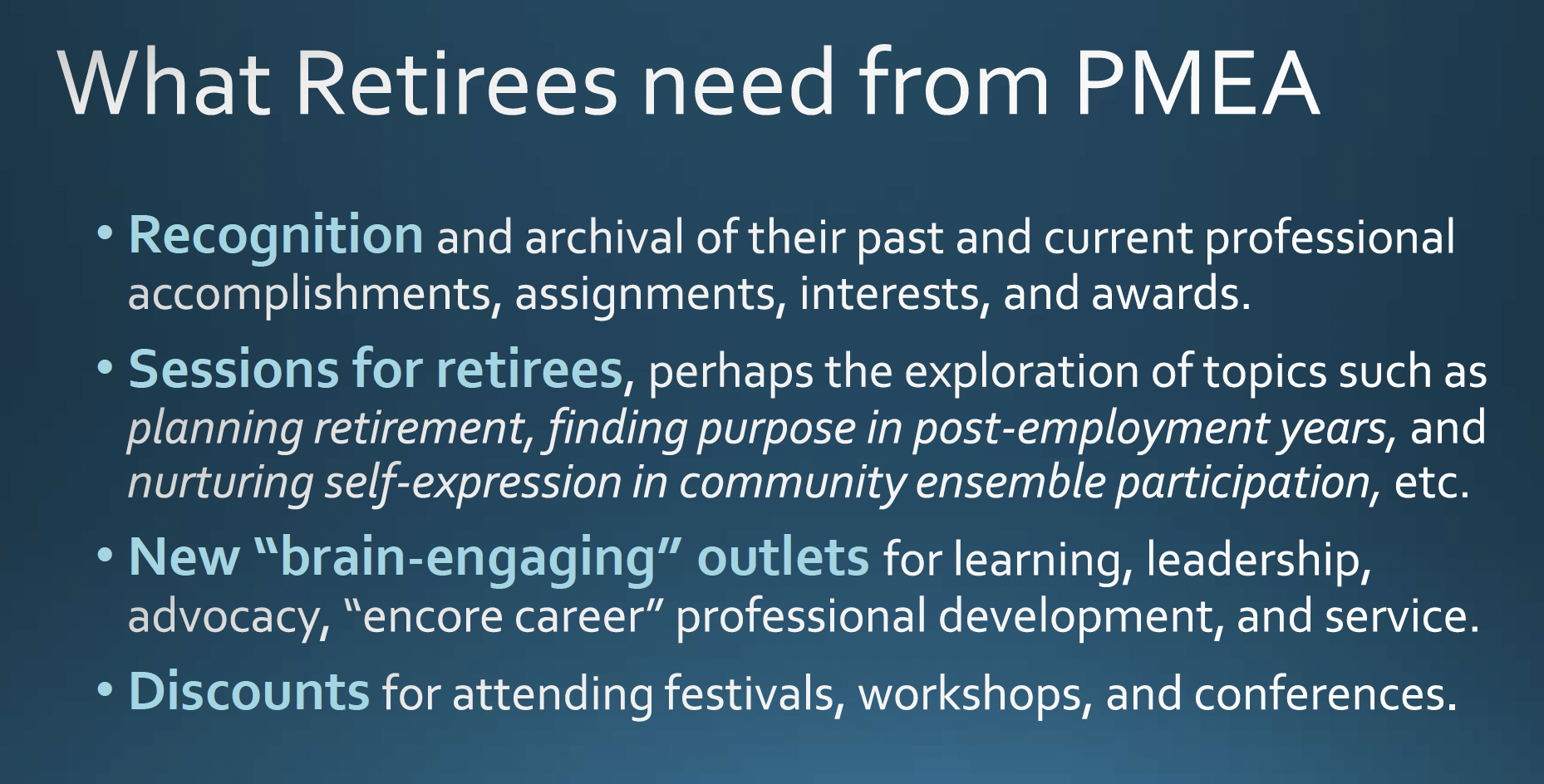
What can NAfME and State MEAs offer retirees?

You have devoted your entire life to inspiring the development of personal artistry and “ah-ha” musical moments in others. Now it is your turn to reap the benefits (and privileges) of this commitment to the profession. NAfME and your MEAs can provide the resources and motivation of “sharing and caring,” directing retirees “places to go, people to meet, and things to do” for fulfilling that “next chapter” or (perhaps better terms) the “refirement” or “rewirement” of senior living.

Do you feel “needed” and know you “make a difference?” Research has shown that the one of the most important motivators for involvement in a professional association is that its members recognize that they are essential to its success. This quote is from Revitalizing Retirement: Reshaping Your Identity, Relationships, and Purpose by Nancy Schlossberg, attributed to Rosenberg/McCullough:

 “It has been suggested that one problem of retirement is that one no longer matters; others no longer depend on us… The reward of retirement, involving a surcease from labor, can be the punishment of not mattering. Existence loses its point and savor when one no longer makes a difference.”

Most people who are one to five years away from “pulling their pin” and putting in their walking papers “do not know what they do not know.” Experts agree: “Retirement preparation is not only about the money!” Our silver-haired colleagues who have already Crossed the Rubicon and are now “living the dream” in retirement can share their trials, tribulations, and (more importantly) numerous success stories about coping with this transition!
NAfME, PMEA and this paulfox.blog/for-retirees site have archived an exhaustive number of self-help articles. Check out this omnibus NAfME blog “Retirement Prep Top-Ten Treasures.”

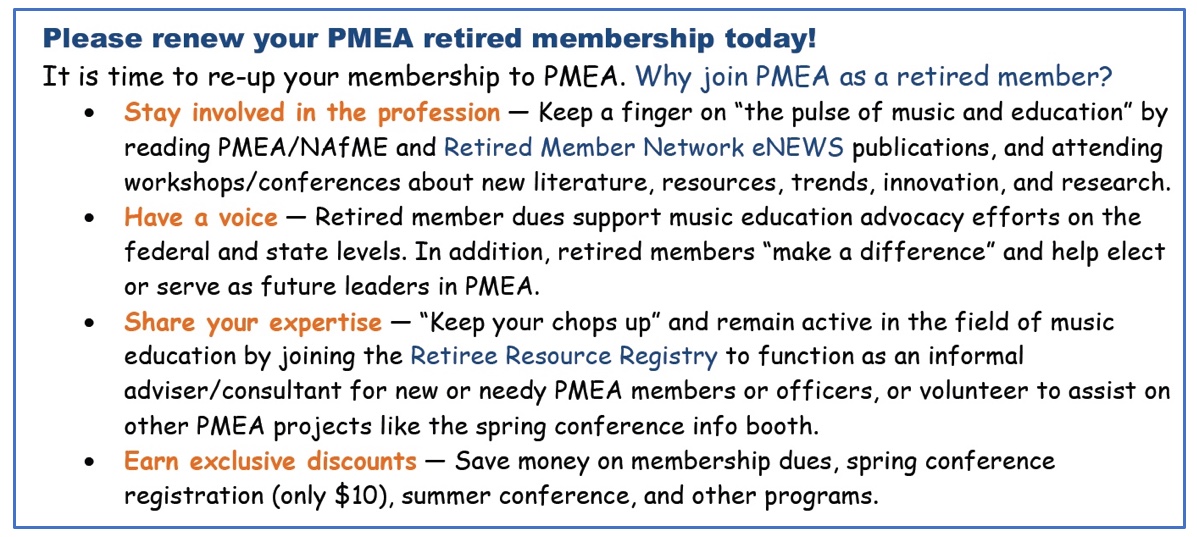
The benefits of retired MEA membership are numerous. Besides providing helpful transitioning advice, these advantages also come to mind:

  1. Answers to questions like “What have you always wanted to sing, compose, play, record, conduct, write, publish or present?” and “Where can I share my hard-won expertise and help others in the field?”
  2. Networks and contacts to help you develop “encore careers” in other musical or educational arenas (e.g., higher education, music industry, festival organization, travel/tour planning, composition, guest conducting, private studio teaching, church music, etc.)
  3. Opportunities to “rekindle your expressiveness” by participation in adult community or full/part time performance groups (playing “gigs”)
  4. Places to go/things to see/hear: NAfME/MEA conferences, workshops, and concerts
  5. Exclusive discounts and other benefits (reduced dues and registration fees)
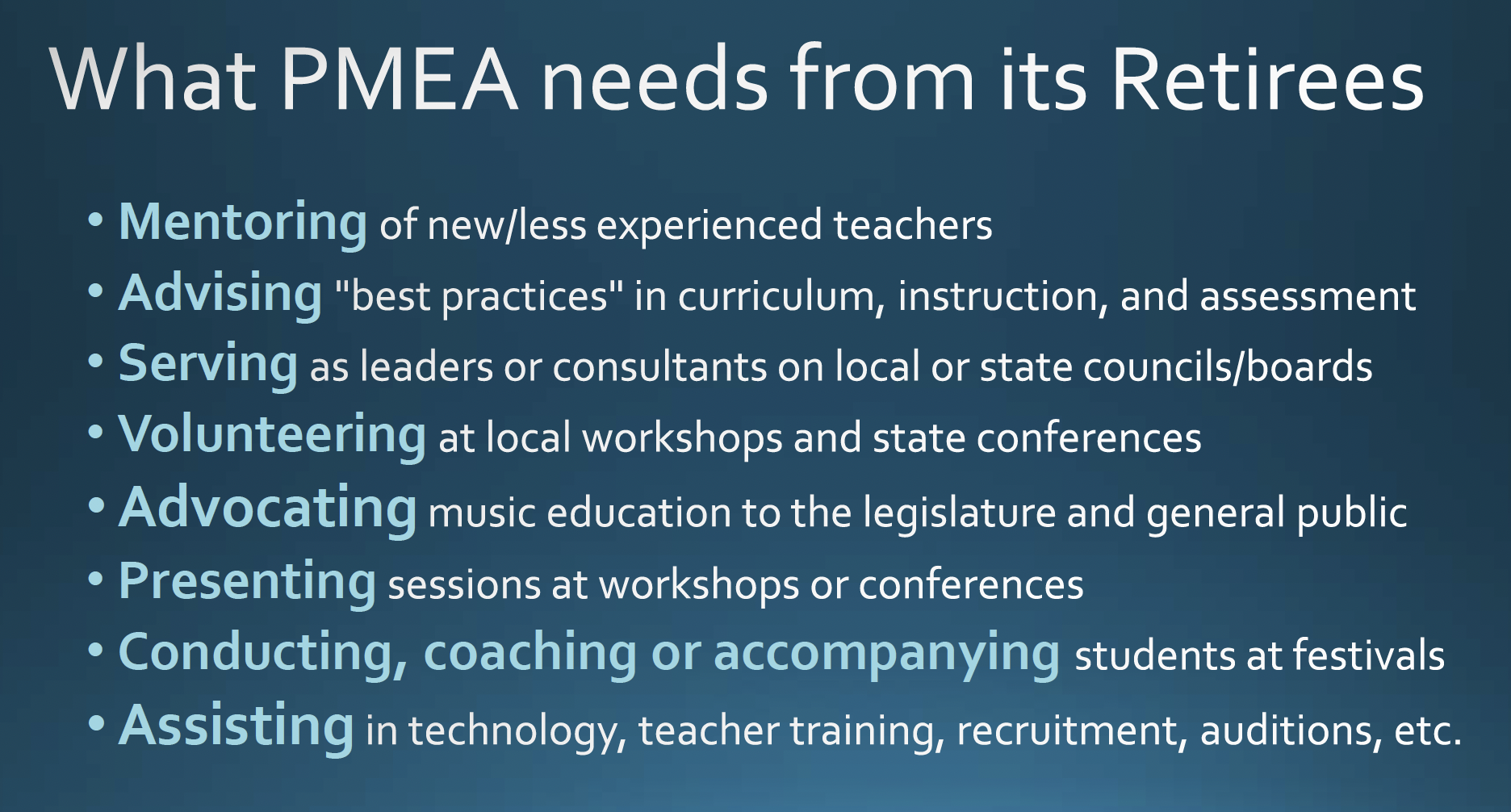
What can retirees offer NAfME and their state MEA?

The relationship of active and retired membership in our MEAs is symbiotic. We know from the history of our associations, “giving back to the profession” remains a high priority with most retirees. This may come in many forms and settings:

  • Leadership or membership in local, state, or national MEA/NAfME office, staff, advisor, or council/committee position
  • Advocates for the promotion of music education to local and state government officials
  • Service as presiding chair or member of the conference or workshop planning committee
  • Service as evaluator of performance groups, conference sessions, or articles for publication
  • Judges of local/state MEA adjudication or commercial festival
  • Accompanists, coaches, arrangers, or guest conductors for festivals or school/community groups
  • Services to the local music teacher in private teaching, piano playing, marching band charting, sectional coaching, choreography, music technology, instrumental repair, stage tech, etc.
  • Writers for state MEA and NAfME publications and blog sites
  • Contributors to online music education forums or the NAfME Connections
  • Donors to and/or fund-raisers of music education charitable projects, scholarship initiatives, etc.
The PMEA Model of Retired Member Participation
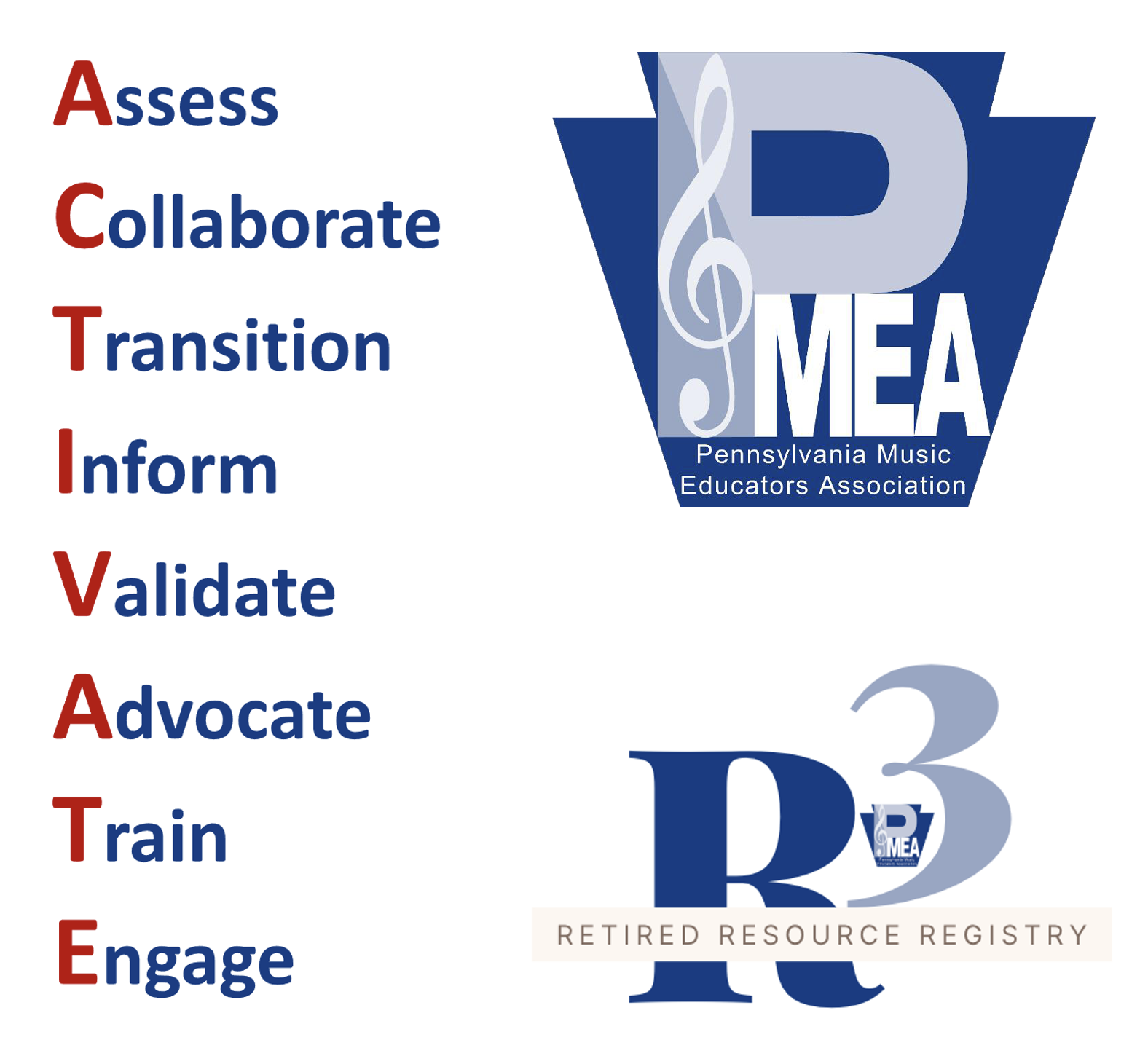
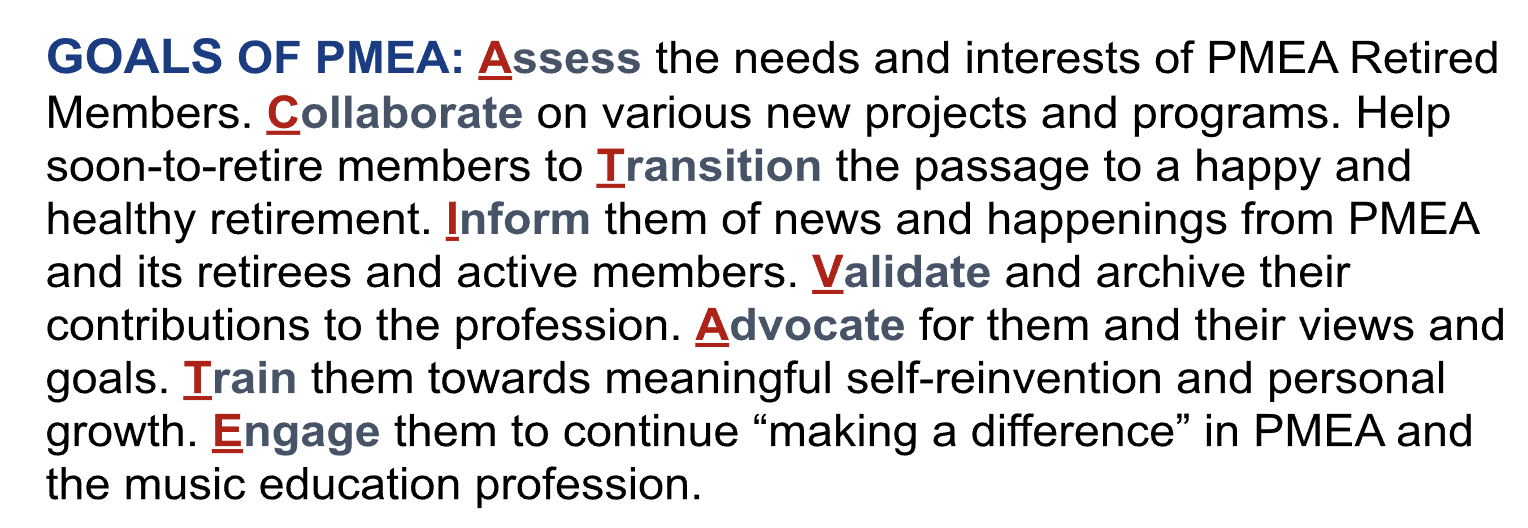
PMEA values the vast wealth of experience and contributions of our retired members. We’re proud of the many programs we offer to retirees and invite you to visit our website to peruse additional information and sample digital newsletters and articles.

Retired members in Pennsylvania are involved in:

  • PMEA elected and appointed offices, staff, committee chairs, and membership on councils
  • PMEA Strategic Plan and Bylaws, Conference Planning, and other state/regional committees
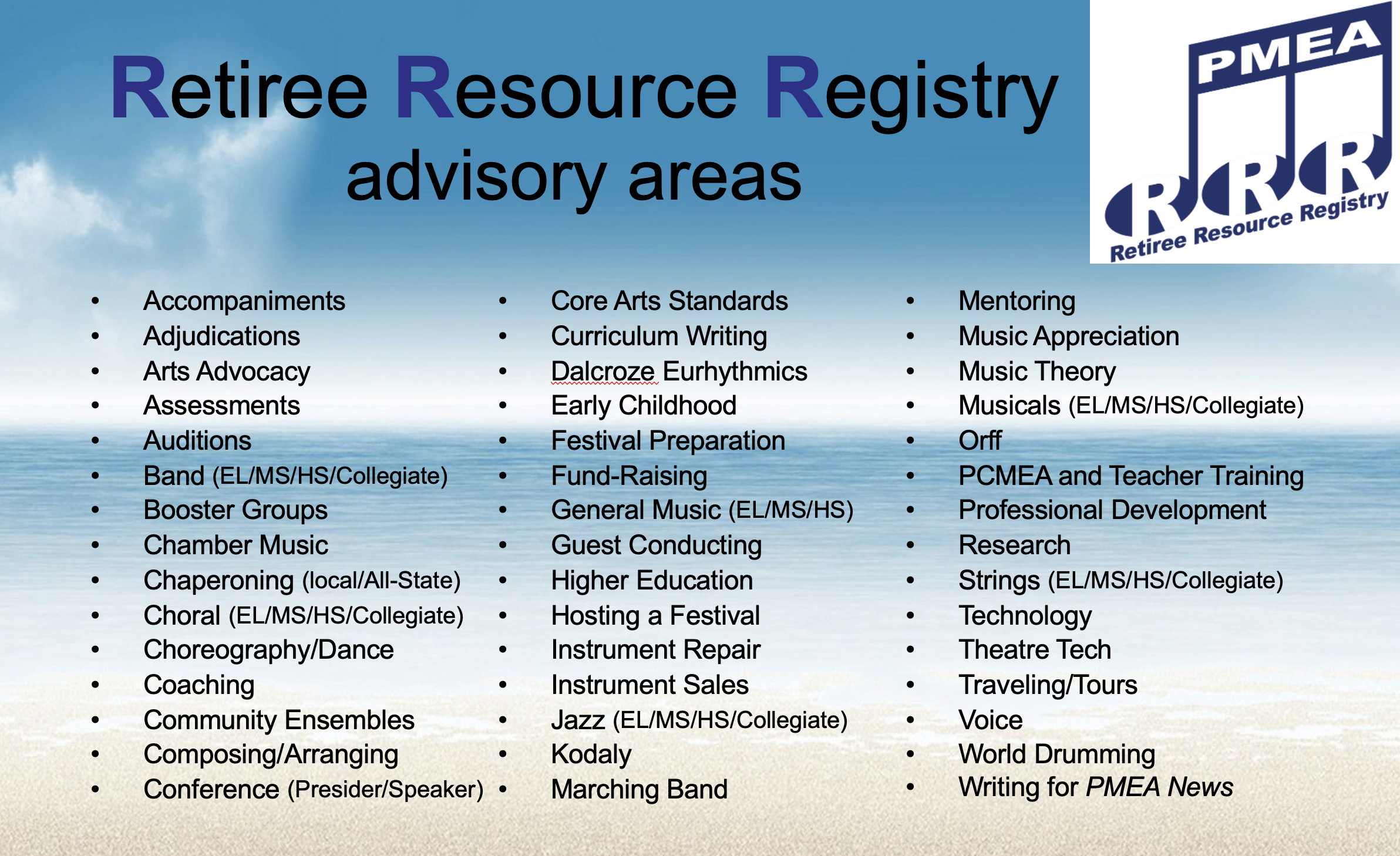
  • Retired Resource Registry* (informal mentoring for new teachers and transfers)
  • How-to-Retire Webinar, Prepping for Retirement, and the Ultimate Retiree Resource Guide
  • Retired Member Breakfast at PMEA Annual Conference
  • Retirement 101 (The Who, What, When, Where, Why, and How) session at PMEA Annual Conference (training for all members retiring or soon-to-retire)
  • Maintenance of PA Community Band, Chorus, Orchestra, and Theater group catalogs
  • Maintenance of PMEA member compositions library
  • Mock Job Interview Committee for music education majors
  • Coffee & Conversations informal “ask an expert” lounge at PMEA Annual Conference
  • Volunteering as presiding chairs for sessions and registration aides at conferences/workshops
  • Pool of conference clinicians, guest lecturers, and members on discussion panels
  • Participation in “Sponsor a Collegiate to Attend the Conference” campaigns
  • All-State Program Patron, or contributor to the annual Irene Christman Scholarship or Margaret Bauer Grant programs.
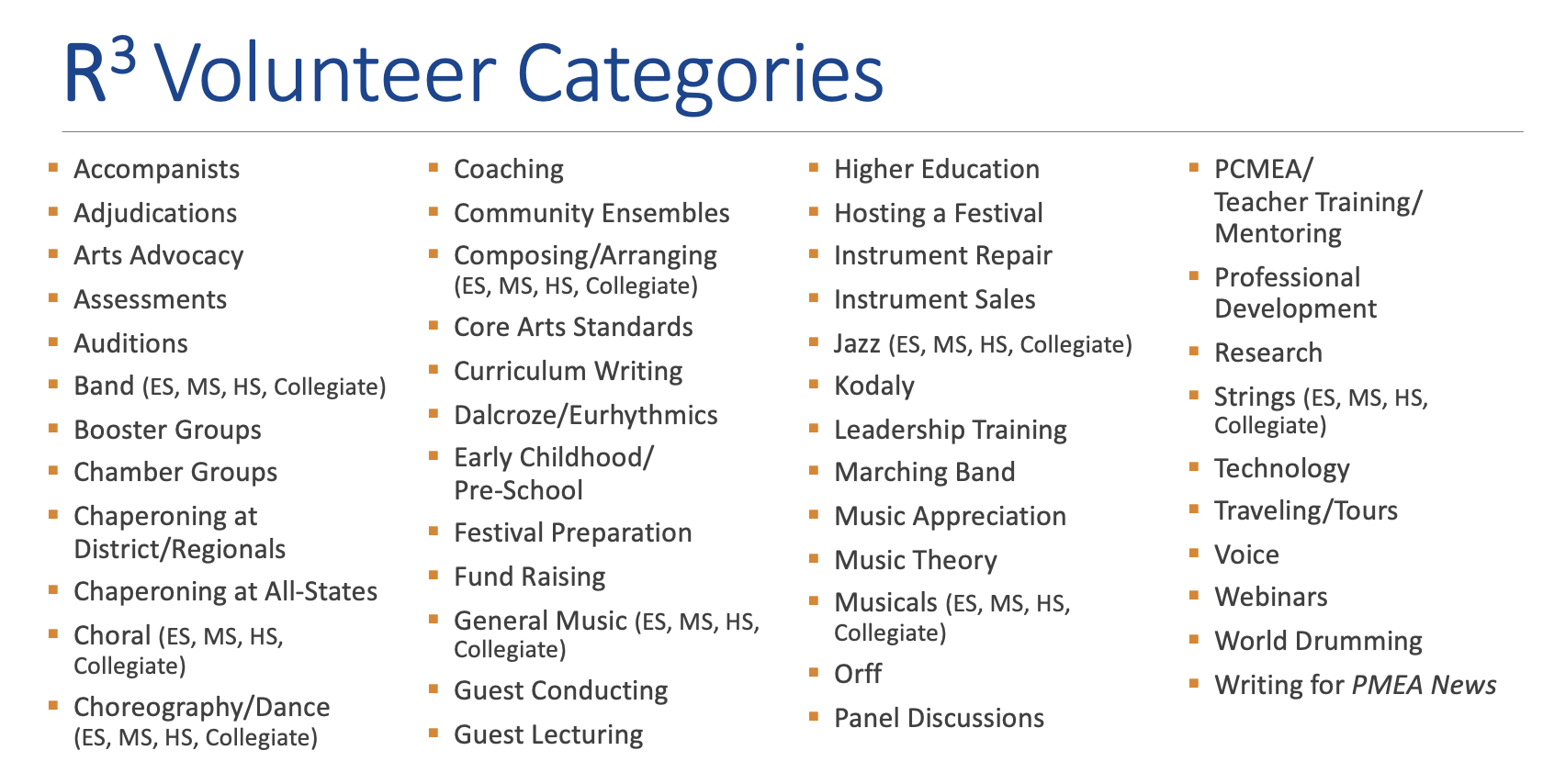
As of October 1, 2025, there are 61 advisors in the PMEA Retired Resource Registry.

*During their annual membership registration, PMEA Retired Members may choose to sign-up for the R3 Retired Member Registry (above volunteer categories) to become available to informally offer advice to college music education majors, new hires, transfers, and newcomers to any music specialty. R3 members may handle inquiries like “What warm-up would you recommend for my middle school choir?” OR “Do you have an idea for an elementary string ensemble concert opener?” OR “How do you teach improvisation… steady beat… breath support?”

The other option with more time commitment is that Retired Members can be officially “trained” as a PMEA Mentor and be assigned to specific individuals who request assistance in their early career assignments.

Coda

How can we help?

What is the future of retired music educator professional engagement? In a word: connections!

Last month, I reached out to Elizabeth Welsh Lasko, NAfME Assistant Executive Director for Membership, Organizational Development, and Marketing Communications and “volunteered” OUR assistance. I suggested that, in keeping with the NAfME 2022 Vision Statement “…an association where all people are heard, seen, and feel they belong throughout their lifelong experiences in music” we should all intentionally recruit more hands-on involvement of our retirees. I pointed out that in the late 1980s, we had a Music Educators National Conference (MENC) Committee for Retired Members led by a National Chairman who served on the NAfME National Assembly. (An excellent booklet, TIPS: Retirement for Music Educators, Copyright © 1989 MENC, was compiled by A. Verne Wilson, then the Past National Chairman of the MENC Committee for Retired Music Educators.)

Ms. Lasko encouraged me to “reach out to retirees” beginning with this article. At the next NAfME Eastern Division Conference, I plan to hold a meeting of retired members, and also connect with all state MEA retired member coordinators (those states who have them). We’re available and on the move! Let’s collaborate and share our resources!
Finally, just for fun, I recently posted the blog “For Book Lovers – Retired or Not” on NAfME Connections (formerly called Amplify). There are already 1,810 members in the NAfME “Retired Members Community.” Please JOIN US! Using this forum, get in touch with me, and respond with YOUR OWN retirement stories, strategies, perspectives on this “life passage,” and more ideas to grow the professional engagement of our music teacher retirees.

Happy trails!

© 2025 Paul K. Fox

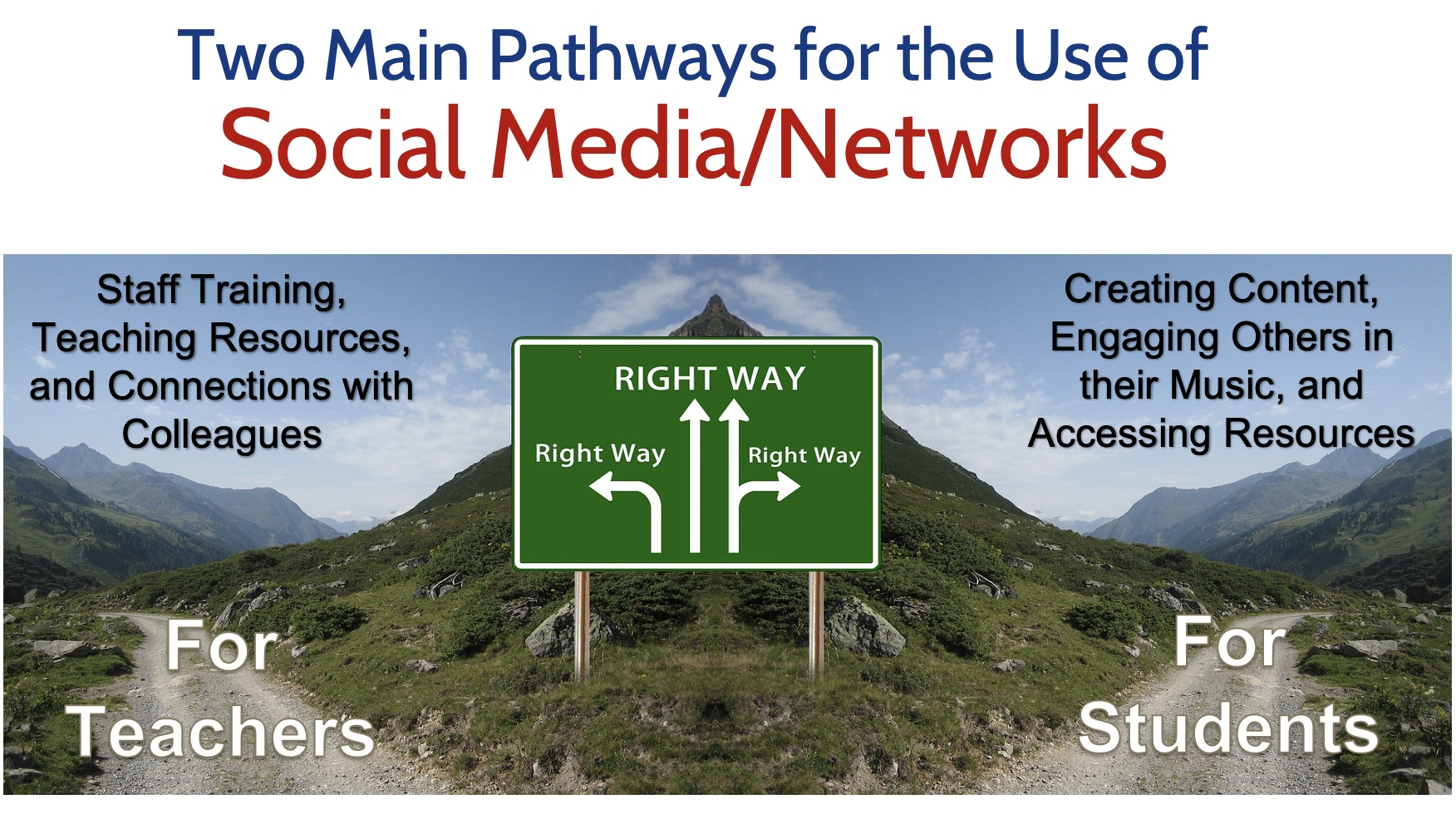
Social Media – Revisited

Before you begin reading this article, please take a moment and peruse these past blog posts:

Although several of the cited research links may have expired (for example, PA Department of Education modified most of their website’s URLs), these provided the foundations of background information and references for the presentation I prepared for the DCMEA Virtual Conference in 2020 (during COVID) and serve as the starting point for the workshop I will share in-person at the DCMEA Winter Conference in January 2026. This blog provides updates and additional perspectives. Taken in combination with the above sources, you will be able to identify the benefits, positive models, precautions, and dangers of social media, social networks, professional learning networks, and sample emerging technologies as they apply to teachers’ professional development and education of students.


“THE WHY”

Before every clinic or publication I develop, I always try to spotlight the theme of “THE WHY” as preached by one of my favorite authors and motivational speakers – Simon Sinek! According to him, for organizations and individuals alike, “THE WHY” (rationale and priority) is more important than “THE WHAT” and “THE HOW.” (See this video.)

WHY is a collaborative discussion on social media essential? Why now?

 ”There’s a growing body of evidence suggesting that educators are facing increasing scrutiny regarding their social media use. Concerns include unprofessional conduct, inappropriate interactions with students, and the potential for cyberbullying and other negative impacts on student well-being.”

“Educators are increasingly concerned about how social media influences students’ social-emotional development and their interactions with others.” 
NEA Member Polling on Social Media…
NEA Impact on Social Media and Personal Devices on Mental Health
HHS Youth Mental Health and Social Media

Frankly, there is still a lot of confusion about the dangers of social media, social networking, and other technology integrations into education. In Social Media – Boon or Nemesis, we mentioned that teachers should “debunk the free speech myth.” We demonstrated how the improper application of social media could get educators in trouble. Check out these sites for more info and corroborative stats:
Teacher Student Misconduct and the Critical Role of Social Media Screening
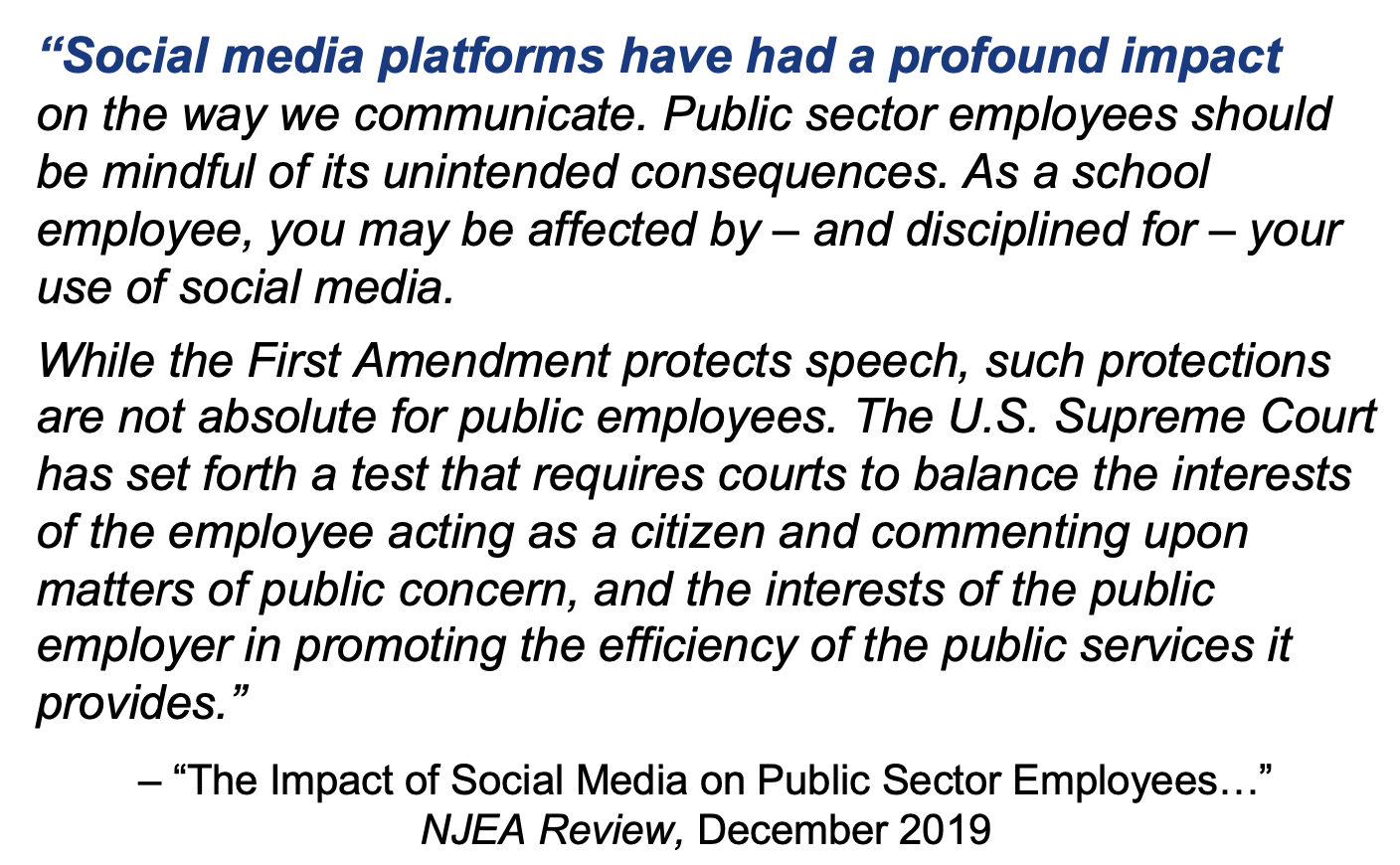
NCBA Social Media for School Employees
Social Media Hazards and Tips for Teachers

As always, our goal is to promote ethical practices in maintaining professionalism in the digital world.


“THE WHAT” Review of Definitions

“Social Media”

Social media are “websites and applications that enable users to create and share content or to participate in social networking.”
— Oxford Lexico.com online dictionary

“Social Network”

A social network is, 1. a network of social interactions and personal relationships.; 2. a dedicated website or other application which enables users to communicate with each other by posting information, comments, messages, images, etc.
— Oxford Lexico.com online dictionary

Professional Learning Community” (PLC)

A PLC is “a group of educators who meet regularly…” (usually in-person) “…to strategically enhance their teaching skills and improve student outcomes.”

versus “Professional Learning Network” (PLN)

A PLN is “a group of educators who gather more informally…” (usually in online communications) “…to problem-solve and generate ideas to enhance classroom practices. A PLN… often takes the form of an open forum, where participants can ask and answer questions based on their experiences.”
https://edtechmagazine.com/k12/article/2024/08/pln-vs-plc-perfcon


“THE HOW” Ethos of Care

Teachers use social media to…

  • Get inspired with new teaching ideas
  • Find resources for the classroom
  • Connect with other educators
  • Stay on top of trends and news
  • participate in an online community
  • Find teacher discounts and deals
  • Follow education companies and organizations

How Teachers Use Social Media
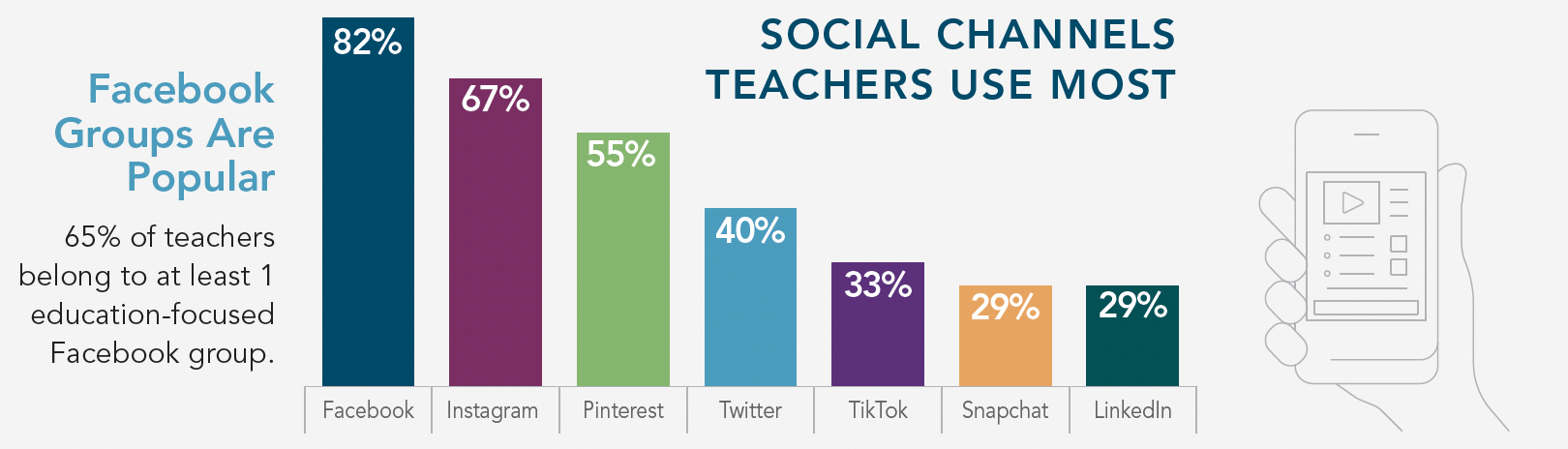
Teachers Social Media Use

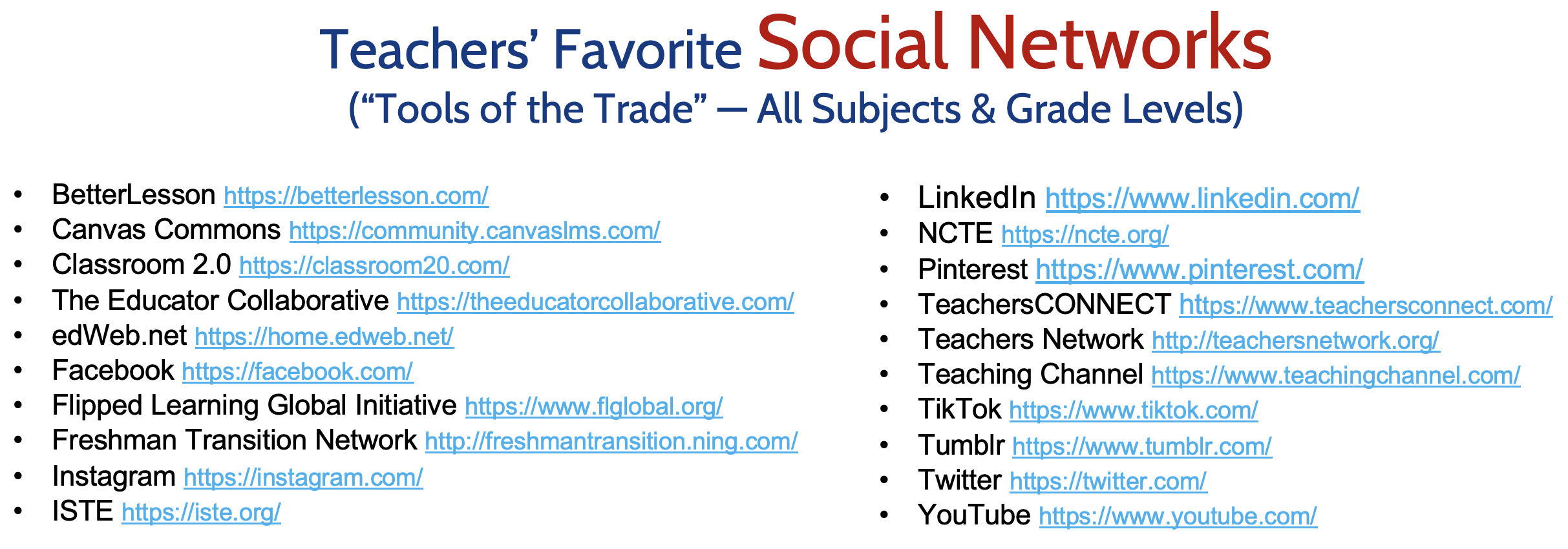
Social Networks for Teachers

We acknowledge that the benefits of social networking for educators are numerous by promoting professional collaboration and connections, including:

  1. Acquiring information to enhance understanding
  2. Keeping informed about latest developments in education
  3. Enhancing communications with students, parents, and the school community
  4. Fostering connections with colleagues in the field to expand an educator’s professional network.

Benefits of Social Media as an Educator

However, educators must exercise “sound judgment” and proper professional boundaries when using social media/networks with students. While the introduction of new technology provides many opportunities for teaching and learning, it is important to establish clear rules for appropriate student-teacher communication. In order to promote safety and appropriate boundaries while transitioning to a virtual teaching and learning environment, the Pennsylvania Professional Standards and Practices Commission offers suggestions to help educators protect themselves and their students.

  1. All technological resources and applications should be school entity-approved and only used in the manner prescribed. Ensure that you are familiar with the tools you are using in order to use them properly. 
  2. Communication with students should occur at designated times, consistent with traditional school day hours. Maintain transparency and protect yourself by keeping a record of all communications with students. 
  3. Clearly communicate when and how students should contact you and provide a timeframe for when students should expect responses to questions. 
  4. Avoid one-to-one interactions with students in chatrooms, FaceTime, Skype, or any other online space. School psychologists, school counselors and others providing one-to-one services to students should consult with school administration about the best mode of communication. 
  5. Use approved forms of communication by your school entity to connect with students and parents (i.e. Remind), use only your school email to communicate, and copy administration when communicating with parents or students. 
  6. When creating content or interacting in an online space with students, conduct yourself as you would if you were in school. If appearing on camera, dress professionally and be mindful of your surroundings and the camera’s view. 
  7. Do not “friend” or follow students on social media and do not allow students to “friend” or follow you on your personal social media. Remember, you do not have a “social” relationship with your students. 
  8. Keep your personal and professional lives separate. Do not share overly personal information about yourself with students.

PSPC Digital Tips for Educators

While exercising responsibility to maintain a respectful, safe, online environment, there are many benefits for the application of social media for students in the classroom:

  • Real-time communications can increase student engagement, collaboration, communication and overall participation
  • Many students may find it easier to participate in online discussions that in the classroom
  • Students can easily ask each other or their teacher questions about assignments outside of class
  • Students & teachers can quickly share resources at any time.
  • Teachers can easily share class announcements.
  • Social media can provide a contingency plan for last minute remote learning scenarios.
  • Students can organize school events with each other or with the help of a teacher.
  • Teachers can augment an online-only class by establishing a social media page or account simply for building community.
  • Students can practice using social platforms responsibly, including maintaining a respectful online discourse.
  • Teachers can communicate directly with parents as needed, and parents can stay informed of school news via a convenient, easily accessible platform.

However, please watch out for these potential drawbacks:

  • Social media can be a major distraction, especially if students are accessing their personal accounts independently.
  • If students primarily use social platforms to participate in class discussions, they can miss out on practicing face-to-face conversations and respectful in-person discourse.
  • Some students may see social media assignments as an opportunity to cyberbully their classmates, and there is always a risk of someone posting inappropriate content or language.

Social Media in Education


“THE WHAT” Several Success Stories

Balancing the positives and negatives and taking into account all of these precautions in order to maintaining professional boundaries, the integration of new technology into the classroom may offer excellent enrichment and increase student motivation for advanced learning. This may take many forms. Here are a few interesting models.

Prior to preparing for the DCMEA online session in 2020, I stumbled upon a truly inspiring post from Derek Muller, a gifted teacher, physicist, filmmaker, and founder of the YouTube channel Vertiasium which has captured millions of subscribers. He offers one of the BEST models of using social media to enrich the understanding of learning math and science (applicable to all fields of study), while at the same time, provides warnings against unbridled use of so-called “innovation for innovation’s sake.”

“I feel like people over the years are invariably drawn to use these words:  revolutionize and education. And there’s this sort of amnesia that we’ve had a hundred years’ worth of these predictions, worth of really groundbreaking technologies that have transformed other areas in our lives but have failed to fundamentally change the way we do education. So, I stand here today as a voice of caution, to think that the future of education is not one of revolutions…”

You need to watch this: How is Social Media Transforming the Future of Education? (2016)
Derek Muller

Say what you want about how COVID significantly disrupted our educational programs, evidence of learning loss, problems in socio-emotional development, decline of student engagement and self-motivation, rise in mental health struggles, decreased instructional time, and the effects of a new digital divide of under-served students (Annie E. Casey Foundation), happily there were surprisingly a few positive advancements the results of exploring new tools and methodologies we had to employ to tread water and cope with the catastrophe. (“When life hands you lemons, make lemonade!”)

As one example, in the middle of preparing music for my community orchestra, we were shut down in 2020. No in-person rehearsals at the school. I then pivoted to creating my own online platform called SHJOOLA (South Hills Junior Orchestra Online Academy) in 2021 using MusicFirst. For a nominal yearly subscription fee, I was able to continue my Saturday morning classes (synchronous) as well as asynchronous (on-their-own time) learning using excellent applications in a virtual environment: MusicFirst Classroom, Focus on Sound, PracticeFirst, Sight-Reading Factory, Musition, Auralia, a web-based music notation program, and a huge library of method books and ensemble music. Several past blogs showed how we rolled out SHJOOLA:

The latter link above also provided a comprehensive list of supplementary resources (at the time) for online music education. Please peruse these even though some of them may have now gone inactive. We will provide supplemental links at the bottom of this article.

Another direction accented by the onslaught of the pandemic was digital streaming performances, incorporating technology in both the solo and ensemble settings. The following are two of my favorite examples of these to be viewed on YouTube:

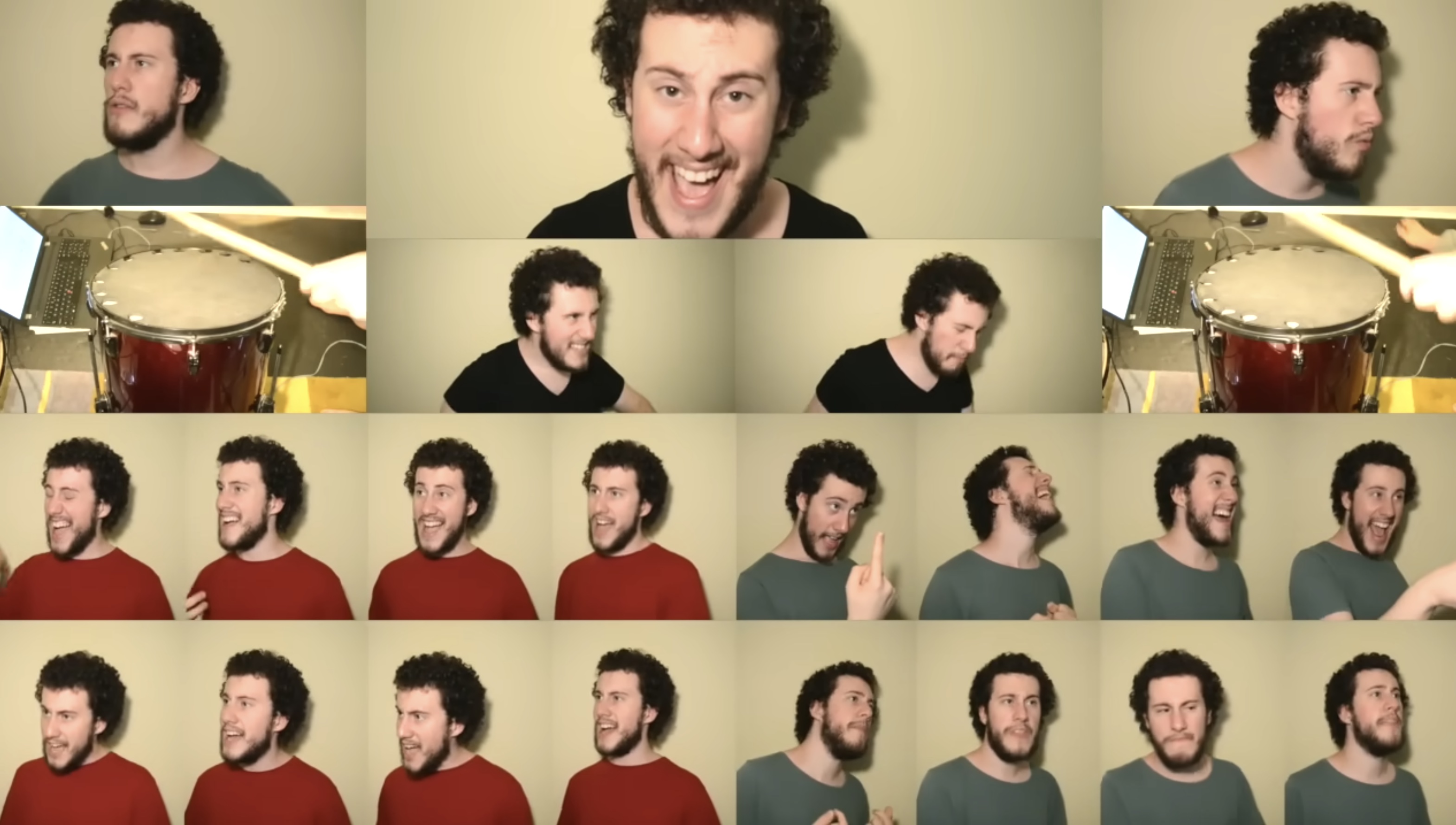
Circle of Life from Disney’s Lion King (2015-18) by Sam Robson, arranger, innovator and performer using multitrack recording of a single performer mixing as many as 50 voices at one time.

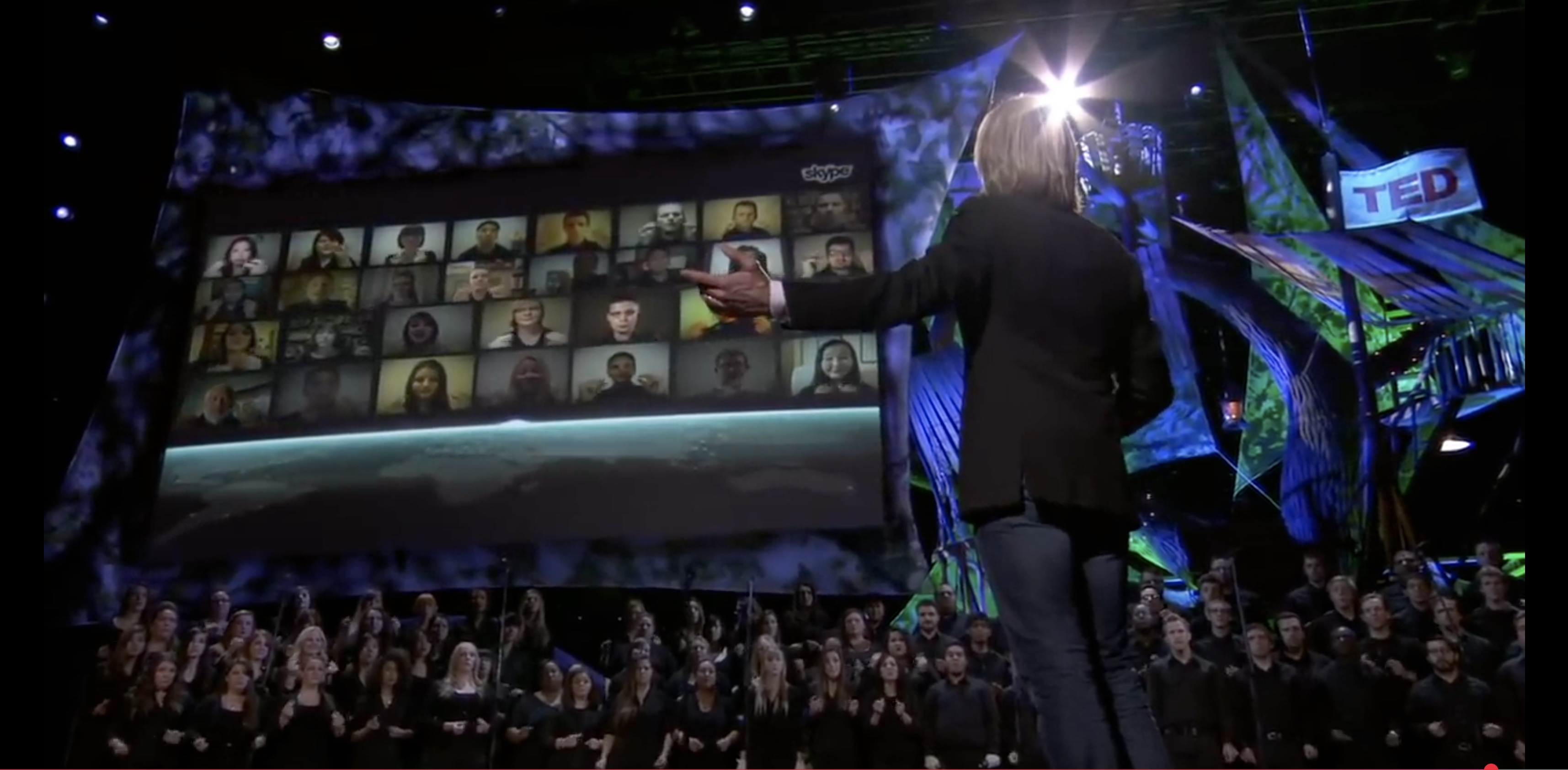
Cloudburst, a Virtual & Live Choir and TEDTALK (2013) by Eric Whitacre

Well… sorry this blog has grown to be so large! If you admit to understanding the potential hazards of and precautions for integrating social media, social networks and other technologies into education, we’ll close with the following bibliography of additional resources for further study. If that is not enough to whet your curiosity, stop back in several months to download a copy of my slide summary for the session I will present at the DCMEA Winter Conference on January 30, 2026.

Be careful stay safe and professionalbut ENJOY!

Sample Blogs

Several Major Platforms

Examples of Music Applications/Websites

PKF

© 2025 Paul K. Fox

70 and Out?

Editor’s Note: Sorry! I don’t usually use this forum to rant or rave and complain… but, since I am almost flat on my back right now, I need to vent. Hopefully, other “seniors” who read this blog will find some benefits to this article and the research links below.

Keep up the “good fight” to maintain your own health and wellness! PKF

Mobility!

It’s the single most important thing in retirement! “If you ain’t got it, you’ve got nothing.”

There’s nothing worse than losing one’s ability to get around.

When I retired, I couldn’t imagine any limitation to my physical activities (with the exception of doing those ambitious squat thrusts of my youth or running a full gallop with my Yorkiepoo). Sure, as we age, many of us may experience more minor aches and pains caused by the effects slowly progressing arthritis, a touch of foot neuropathy or plantar fasciitis, overuse of our muscles in strenuous activity, lifting, or carrying heavy objects, or other issues, but these “challenges” don’t usually slow us down too much. And yes, I explored a few of those media-hyped over-the-counter topical remedies “everyone” claims will alleviate foot and muscular pain. How many of these do you recognize? Alphabetically I dabbled in Advil Targeted Relief, Aspercreme with Lidocaine, Blue Emu, IcyHot, Nervive, Penetrex, Salonpas, and Voltaren. I even bought several pairs of expensive shoes with custom insoles and orthotics. The foot pain has since mysteriously “gone away” (probably due to some excellent PT and regular bouts of stretching/flexing), which has led me to focus more on a new, annoying development – slight knee pain – for which the docs say may be early onset “bone-on-bone” (Knee Osteoarthritis).

Be proactive, Mr. Fox, I said!

Get off your duff, stretch, and move around more. (At regular intervals, my loving wife and the Apple Watch on my arm continually nag me to stand, move, and exercise!) So I can brag I made a concerted effort to lose weight (down 30 pounds and no longer need blood pressure medicine) and even put myself on a regime of online “old man yoga/chair” exercises (an app costing $38/month – but, after some progress in “core tightening” over several months, I abandoned them!). I’ve sought the services of a good physical therapist to help me through what will eventually be knee replacement surgery (but, if I do their daily prescriptions to build my leg muscles, perhaps the cutting won’t be needed for another decade or two! By the way, musicians/music teachers make good patients of PT because we know the importance of practicing regularly – even on the day of the lesson!) I have a good orthopedic surgeon in my back pocket, and during my last visit with him, I was able to say “no” to cortisone injections. Things seemed to be getting better!

But, all of this came to a crashing halt.

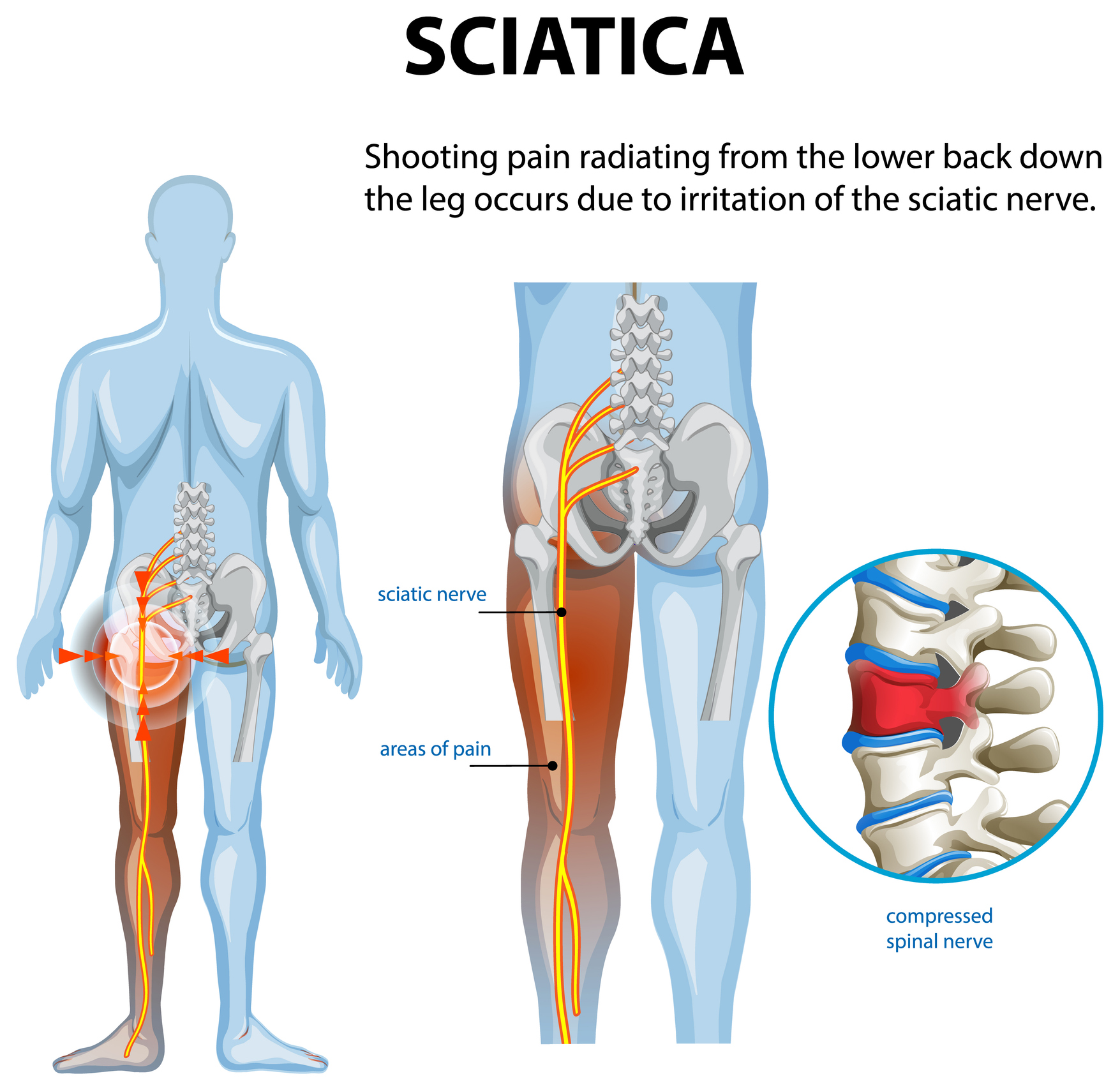
Several weeks ago, I struggled to raise a very heavy conductor’s stand (to which I will eventually chew-out the manufacturer of a poorly designed/awkward-positioned height adjustment screw). After my first dose of extra-strength Advil wore off, I felt like I had pulled a muscle in my back. It went away in a day or two, so I didn’t think much of it. But, five days later, when I woke up and climbed out of bed, suddenly any pressure I placed on my right leg gave me excruciating pain. I have been told this is probably sciatica or a “pinched nerve.” The pain is so bad that when I first get up or stand for even a few minutes on my right foot, I double-over and cannot move. I use any object around me to support myself such as countertops, tables, desks, shelving, etc., and feeling helpless literally “hobble around” trying to get from place to place. Even rolling over in bed the wrong way can cause an extreme surge of this pain which radiates down the entire leg. It has slowed down my activity to a crawl.

The timing could not have been more perfect!

Last week, I attended our state music teachers’ conference. After the five-and-a-half hour trip to the other end of the state (which everyone says with sciatica, you are never supposed to sit that long!), I planted myself in an electric wheelchair to get from place to place, fulfilling my normal PMEA duties such as taking candid photographs of the events and running a session or two. The (level 9) intense pain seems to come and go and I have gone to a doctor to receive a new script for physical therapy including an analysis to pinpoint the exact location of this unhappy nerve and what exercises may help. X-rays so far have shown only a little arthritis of the spine; apparently no herniated disks. (Is this what we all have to look forward to – “a little arthritis” – as we mature?) If it does not get better soon, I may consider going to a chiropractor. Have you had your first introduction to a cane? At the conference, I went to the local Rite Aid and bought one (along with a “TENS-machine,” although I have not unwrapped it yet and will need help setting up the “Transcutaneous Electrical Nerve Stimulation” device). Thank God for the Internet, because I even needed to search for instructions on which hand to use the cane and how to adjust its length (my physical therapist checked it). It does provide some stability so that I can walk around without knocking books off shelves or outside, but it’s not a long-term solution.

I wish I could tell you I have some good news to report, but… as of today, we have not figured out the cause or location of the problem. I am on prednisone and it is only slightly alleviating the pain. Sitting in my office chair (right now) gives me a dull pain (number 2-3). Weight bearing can raise that number up to 8-9. My wife (who is a saint) has been waiting on me hand-and-foot (and she has a few of her own aches and pains!). My doggies are unhappy because they are receiving fewer long walks and they were kicked out of the bed so I can stretch (and so my restlessness would not keep them up all night). I have had to postpone my hospital volunteer work (I can’t push wheelchairs) and curtail a lot of other scheduled activities. With several concerts coming up for our local community orchestra, I am considering conducting in a chair from the podium… and I may have to miss marching in the annual Community Day Parade on May 17 when I usually serve as the “duck maestro” for the Community Foundation of Upper St. Clair’s GREAT DUCK RACE fundraiser.

I’m turning 70 next week!

Several weeks ago, I would have told you I am CELEBRATING the big 7-0! I revel in the freedom of retirement, the joy of “refiring” or “rewiring” myself to explore new projects, refocusing energy on favorite past hobbies and “mindful” pursuits, catching up with former students and colleagues, helping others as a music educator mentor, presenting workshops on teacher self-care, ethics training, interviewing, and retirement transitioning (take a look at my latest professional brochure here), subscribing to the retiree doctrine “it’s not my sandbox anymore” avoiding the jobs/tasks I no longer want to do, and literally… “living the dream.”

Now, I must face these new challenges head-on, and I will! I will not allow myself to “retire” (that old definition to “withdraw” or “resign”). I will fight any acquiescent acceptance of increasing disability, disengagement, depression, unnecessary significant medical intervention, or long-term advanced pain management! Yes, this is a SELF TALK: They say most recovery from sciatica is very slow! If you share this condition, don’t get discouraged!

Mobility.

I want it back! I want to return to modeling what author Ernie Zelinski says in his book How to Retire Happy, Wild and Free are the essential ingredients for a meaningful and satisfying retirement and life passage to self-reinvention, renewing the quest of finding “purpose, structure, and community” throughout our golden years.

Sample Additional Research on Sciatica

https://pmc.ncbi.nlm.nih.gov/articles/PMC1895638/

https://my.clevelandclinic.org/health/diseases/12792-sciatica

https://www.health.harvard.edu/blog/taming-pain-sciatica-people-time-heals-less-2017071212048

PKF

© 2025 Paul K. Fox

Returning to the Classroom in Retirement

Smart Planning for a Fulfilling Experience

Blog photo credit: pexels-cottonbro-6158658

In a past retirement articles (e.g. this one) and conference or workshop presentations for soon-to-retire music educators, I echoed the views of my esteemed music education colleague Dr. John D’Ascenzo on the importance of post-employment learning. (He earned his PhD after his retirement from teaching!) John shared three primary concepts with references: “Swim like a shark” (encouraging retirees to continue long-term pursuits that involve personal and professional growth; the analogy: sharks never stop swimming – even in their sleep!); “Lose the fear of failure and need for approval” (promoting strategies to build confidence and self-efficacy); “Network, Network, Network.” (developing more social and professional interactions, activities not necessarily centered on music or education, but those that broaden horizons by producing personal satisfaction and a sense of purpose and maintaining overall health). See page 5 in the PMEA Retired Member Network eNEWS, August 2018

Ed Carter, our guest blogger for March 2025, brings us new perspectives on a return to education and self-reinvention once retirees choose to “pull their pin” and leave their initial profession. Previous articles by Ed Carter at this site include Monetizing Our Skills and Passions – Creative Ways for Musicians to Make Money Beyond Gigs, Unleashing Your Sound – A Musicians Guide to Making Waves and Gaining Fans, Music and Literacy Skills – How to Use One to Improve the Other, and Do You Have a Side-Gig? Four Tips for Artists Seeking An Extra Income Stream. Thank you, Ed! (PKF)

Article by Ed Carter

Retirement marks the beginning of a new chapter, and for many, that includes the pursuit of education. Whether it’s earning a degree, gaining new skills, or exploring personal interests, going back to school later in life offers intellectual stimulation, social engagement, and personal fulfillment. However, it’s important to approach this decision with careful planning – considering financial factors, time commitments, and the right learning environment. With the right strategy, furthering education in retirement can be both rewarding and transformative.

Improving Campus Accessibility for Retirees

When considering a return to school during retirement, evaluating campus accessibility is vital. With a significant portion of retirees no longer driving, understanding available transportation options becomes crucial. Many campuses offer amenities like elevators and ramps, but these may not be comprehensive, posing challenges for those with mobility issues. By thoroughly researching and planning for these logistical aspects, you can significantly enhance your educational experience and ensure a smoother transition back to academia.

Upgrading Your Retirement with Online Education

Pursuing an online degree during retirement offers a flexible and convenient way to enrich your skills and knowledge. This approach allows you to balance studies with other commitments, making it an ideal choice for lifelong learning. Also, if you’re looking to enhance your leadership and project management abilities, the importance of bachelor of business management studies cannot be overstated. Plus the networking opportunities provided by such programs can lead to valuable connections and potential job prospects, as many positions are filled through personal referrals.

Rediscovering the Joy of Learning

When considering a return to school during retirement, it’s essential to focus on the joy of learning rather than career advancement. Embracing lifelong learning can significantly enhance your personal growth and satisfaction, offering a chance to stay mentally active and engaged. By adopting this mindset, you enrich your life and maintain relevance in a rapidly changing world, even if re-entering the workforce is not your primary goal.

Budgeting for Education in Retirement

When planning to return to school during retirement, it’s essential to anticipate and budget for potential educational expenses. These costs can include commuting, whether through maintaining a personal vehicle or using public transportation. While these expenses might not be as high as when you were working, they remain significant. Additionally, technology expenses, such as purchasing a new laptop or software, can quickly add up. Supplies like textbooks and other materials are another area where costs can unexpectedly rise, impacting your overall retirement budget.

Choosing Between In-Person and Online Learning

When planning to return to education during retirement, weighing the benefits of in-person versus online learning is essential. Attending classes on campus can be challenging due to daily travel, which might be inconvenient if you live far from the institution. This could lead to increased costs and time spent on transportation, potentially affecting your overall learning experience. On the other hand, online classes offer the convenience of studying from home, eliminating the need for a commute and providing access to course materials at any time. This flexibility not only saves time and money but also allows you to manage other commitments more effectively. However, it’s important to consider potential feelings of isolation that can come with online learning.

Protecting Your Data in Educational Platforms

As you plan to return to school during retirement, it’s essential to understand the importance of safeguarding your personal data on educational platforms. The digital education sector is a significant repository of personal information, making it a target for cybercriminals. The education industry has been experiencing high rates of cyber threats, including phishing scams and ransomware attacks. To protect your data, it’s crucial to implement strong cybersecurity practices, such as being cautious of suspicious emails and ensuring your devices are secure against malware.

Volunteering: A Path to Enriching Retirement

Engaging in campus volunteering during retirement offers a fulfilling way to connect with diverse individuals and make a positive societal impact. By participating in community projects, you can build relationships with students, faculty, and local residents, fostering a sense of shared purpose. These initiatives often tackle important issues like environmental sustainability and educational support, allowing you to contribute to meaningful causes. Volunteering not only enhances personal growth by developing valuable skills but also strengthens community bonds.

Returning to school in retirement is more than just an academic pursuit – it’s an opportunity to grow, connect, and embrace lifelong learning. Choosing the right program, managing costs, and setting realistic goals can help ensure a meaningful and enjoyable experience. Whether for career advancement, personal enrichment, or the joy of learning, education at any age is a powerful investment in yourself and your future.

© 2025 Paul K. Fox and Ed Carter

Those Were the Good Ol’ Days

The “E” in RETIREMENT is for Energy, Engagement, Excitement, and Endurance

This blog is all about how to stay young and vibrant – BECOMING A VOLUNTEER! Geared to those of us who have retired, this is very personal and unique to every individual, no matter what the age!

Do you remember the song, “Those Were the Days” performed by Mary Hopkins (1968), the Fifth Dimension (1969), and even Dolly Parton (2000)?

Those were the days my friend
We thought they’d never end
We’d sing and dance forever and a day
We’d live the life we choose
We’d fight and never lose
For we were young and sure to have our way.
La la la la
Those were the days, oh yes those were the days

In June 2021, I went back to work. Well, not exactly full-time… but it felt that way!

Remember the times as music educators we spent 15-18 hours a day or more thinking, planning, creating, teaching, problem-solving, schlepping stuff, sweating, and working out beyond the regular school day and during summer months with major music projects like the marching band, spring musical, music adjudication trip, etc.?

Asked by my friend and current Upper St. Clair School District performing arts curriculum leader/HS band director Dr. John Seybert, I signed on to the newly-expanded extracurricular activity (ECA) position as administrative assistant and announcer of the marching band for the school from which I had retired. Filling in the gaps, taking attendance, handling mounds of paperwork, interacting with a whole new generation of music students, and learning a few new software applications along the way like FamilyID, Canvas, Remind, and the district’s Blackboard website, I threw my hat in the ring, not just to continue to serve as the voice of the “Pride of Upper St. Clair” at football games halftime shows (now in my 36th year), but to manage the full schedule of rehearsals, meetings, performances, and blessedly (?) exhausting 24/7 week-long band camp. I forgot how it felt to get up at 6 a.m. and return home around 9:30 p.m.

It has been exhilarating. It has been exhausting!

On another stage, when the local COVID stats fell two months ago, I was invited back to our local community hospital to serve as a volunteer – discharging patients from their rooms or escorting them from the outpatient surgery or endoscopy units. Yes, I was called upon to somehow restore the physical demands I (used-to) place on my personal stamina. Fully fatigued and expended after a shift of 4-7 hours of driving my wheelchair taxis (sometimes carrying over-sized people even though we’re only supposed to move those weighing 250 pounds or less), I find myself yearning for a retiree “power-nap,” only to regroup for the next day’s challenging schedule and another early-morning wake-up.

The best part of these 8-15 hours per week? Choosing one of the finest medical facilities in our metropolitan area – St. Clair Hospital (now “Health”) – I have the chance to meet former music students (grown up), their kids, parents and grandparents, friends, and other acquaintances at their greatest need. And, there’s almost no finer escort “call” than going to the family birth center and bringing to the car a new mommy and two-day-old baby… sharing that special moment with an alum or school staff member!

It has been exhilarating. It has been exhausting!

WHAT

In past articles on a satisfying retirement, I often quote the book How to Retire Happy, Wild, and Free, the search for self-reinvention and new avenues for fulfilling those essential needs of “purpose, structure, and community” that employment had previously provided us. Author Ernie Zelinski’s definition of “purpose” are these goals:

  • To make a difference in people’s lives
  • To make a contribution
  • To find creative expression
  • To take part in discovery
  • To help preserve the environment
  • To accomplish or achieve a challenging task
  • To improve health and well-being

We learn from Revitalizing Retirement: Reshaping Your Identity, Relationships, and Purpose by Nancy Schlossberg that for retirees it is important to feel “needed” and that pursuits that foster “mattering” are crucial to a positive self-esteem, good mental health, and stable life balance.

It has been suggested that one problem of retirement is that one no longer matters; others no longer depend on us…

The reward of retirement, involving a surcease from labor, can be the punishment of not mattering. Existence loses its point and savor when one no longer makes a difference.”   

– Rosenberg and McCullough

The opposite of “mattering” is feeling “marginalized.” I would rather feel worn-out than useless/ignored/discarded!

In his book Design Your Dream Retirement, Dave Hughes recaps with his four essential ingredients of life balance:

  1. Physical activity
  2. Mental stimulation
  3. Social interaction
  4. Personal fulfillment

If you read my bio in the “about” tab above, I think all would agree: mission accomplished! I’ve made myself extremely busy. (Perhaps I “matter” a little too much?) “It’s a good thing I am retired… I would not have enough time to do all of these things if I still had a job!”

Yes, it FEELS good!

WHY

Now some rationale from the online pundits. First, review the article “Why Elderly People Should Volunteer.” According to the “experts,” volunteering is:

  • Socially beneficial
  • Good for mental cognition
  • Giving back to the community
  • Physically engaging
  • An opportunity to learn something new
  • Flexible
  • A strategy to fill up your day
  • The reason you get out of bed in the morning

Of course, one has to be careful and follow your doctor’s advice on what tasks will not overwhelm you! The CDC and other medical professionals urge adopting a “safe” routine of regular physical activity as a part of an older adult’s life. Check out websites like https://www.cdc.gov/physicalactivity/basics/activities-olderadults.htm and https://www.cdc.gov/mmwr/preview/mmwrhtml/00001482.htm. Besides keeping your mind active, increasing your physical activity as a volunteer while “living the dream” in retirement will:

  • Reduce the risk of serious illnesses (heart disease, type II diabetes, and depression
  • Help you manage a “healthy weight”
  • Improve your balance and coordination
  • Decrease the risk of falls or other injuries

Talk with your doctor to find out if your health condition limits, in any way, your ability to be active. Then, work with your doctor to come up with a physical activity plan that matches your abilities. If your condition stops you from meeting the minimum recommended activity levels, try to do as much as you can. What’s important is that you avoid being inactive.

Centers for Disease Control and Prevention

Volunteering is all about being more eleemosynary (adjective defined as “generous, charitable, gratuitous, or philanthropic”). In my workshops on retirement transitioning, I frequently quote two gurus on the benefits of “giving back.”

With a frequently untapped wealth of competencies and experiences, older people have much to give. This fact, coupled with fewer requirements for their time, gives them unique opportunity to assume special kinds of helping roles.

– Mary Baird Carlsen – Meaning-Making: Therapeutic Processes in Adult Development

Our increased longevity and generally better health has opened our eyes to new and increased opportunities to contribute to the betterment of society through civic, social, and economic engagement in activities we believe in.

– Jo Ann Jenkins, CEO of AARP – Disrupt Aging

HOW

But you already knew all of this, right? There are so many ways to “bring it on” and “make a difference” in your “golden years.” (Wow – three cliches in a row!)

There are so many directions you can go to offer your free time to volunteer:

  • Escort at local hospital or nursing home
  • Walk dogs at animal shelter
  • Serve in charitable fund-raising projects
  • Assist food banks and meals-on-wheels agencies
  • Enlist as special advocate for abused or neglected children
  • Work as hospice volunteer
  • Maintain parks, trails, nature habitats, or recreation centers
  • Host an international student
  • Become a youth director, mentor, or scout leader
  • Teach summer school, night classes or Performing Arts workshops
  • Give guided tours or lectures as a docent at a local museum
  • Apply office management and clerical skills to benefit libraries and other nonprofit associations
  • Run a school club (share your hobby)

As trained music educators, we can share our precious skills in creative self-expression :

  • Accompany, coach, or guest conduct school/community groups, college ensembles, or music festivals.
  • Run for office or chair a committee or council of your state or local MEA association
  • Serve as presiding chair or member of the your state’s MEA planning committee or listening committees for the music in-service conferences
  • Participate as guest lecturer or panel discussion member at a conference, workshop, or college methods program
  • Judge adjudication festivals
  • Help plan or manage a local festival or workshop
  • Assist the local music teacher in private teaching, piano playing, marching band charting, sectional coaching, set-up of music technology, instrument repair, etc.
  • Write for your professional organizations’ publications (like PMEA or NAfME)

If you are a retired music teacher and member of PMEA, you could sign-up for the Retiree Resource Registry and serve as an informal consultant to others still “slugging it out” in the trenches. Go to the PMEA retired member focus area for more information.

More sources to peruse on this subject:

Anyway, back to a little “bragging!” At least “yours truly” is holding his own and hopefully contributing what he can to the success and welfare of others! Are you? In my retirement pastime, I refuse to sit idle, binge-watch movies on Netflix, or view hours of boring TV. To quote another song’s lyrics, this “senior citizen” will never lament…

Life is so unnerving
For a servant who’s not serving
He’s not whole without a soul to wait upon
Ah, those good old days when we were useful
Suddenly those good old days are gone
Ten days we’ve been rusting
Needing so much more than dusting
Needing exercise, a chance to use our skills
Most days we just lay around the castle
Flabby, fat, and lazy
You walked in and oops-a-daisy!

“Be Our Guest” from Beauty and the Beast

So, what’s your story?

PKF

iStock by Getty images:

Images from Pixabay:

© 2021 Paul K. Fox

The Importance of Music Education

One Teacher’s Views on the Advocacy of Music in the Schools

Here are partial transcripts, excerpts, and commentary about this blogger’s perspectives on the value and benefits of music education, paraphrased from the program The Edge, produced by the Peters Township High School On-Air Talent class: Episode No. 45, “The Importance of Music Education,”https://archive.org/details/The_Edge_-_Episode_45_-_The_Importance_of_Music_Education


The Edge Episode 45


music-1781579_1280_GDJOver the years, I have been a strong advocate of equal-access to music and the arts as an essential part the education of all children. This blog will give me an opportunity to put a lot of my thoughts in one place. I am aware that there are many people “out there” who offer the premise that studying music makes you successful in other areas, and you will see that this assumption is well-supported. However, I am not a brain scientist. I cannot confirm research that seems to point to a direct correlation that “the music itself makes us smarter.” It could be that students who are attracted to and become proficient in the arts are somehow uniquely “wired,” have a greater work ethic, or are better intellectually “equipped” to become successful engineers, doctors, lawyers, educators, scientists – you name the career – and enjoy life-long happiness and self-realization. So many of those music-in-our-schools-month fliers say “music is basic,” “music is math,” “music is reading,” “music is science,” etc. and they are right! So, it’s not wrong to bring it up. But we should be fully aware that the primary goal of an education in the arts is for the development of creative self-expression.

In short: music for music’s sake.

When revising our Fine and Performing Arts mission and goals of music education for Middle States accreditation, the music and art teachers in my district centered on several primary goals. Probably the most important one was “to promote the skills of creative self-expression by using music, art, dance, and/or drama as vehicles for defining the students’ self-identity, learning concepts, communicating thoughts and feelings, and exploring mankind’s musical heritage in order to gain a broad cultural and historical perspective.” This statement was written many years ago… prior to the advent of Internet and social media, but perhaps it is even more relevant today!

However, there’s plenty of room here to provide you a wide spectrum of rationale and research from multiple vantage points.

It was my joy to be interviewed by host Sam D’Addieco, a junior percussion player in my South Hills Junior Orchestra. This link takes you to a 30-minute Vimeo recorded in the Peters Township Community Television studio on May 6, 2019. Although this was his assignment for a media class, it really prompted me to do some additional introspection about “what I think I think.” These were some of the issues we discussed… by no means verbatim, but, after all, this is my website. Now I can say what I really meant…

harp-3961060_1920_Noemi-Italy

Initial Questions and Responses

  1. Why did you choose to become a music educator? Music teaching is the greatest job in the world. Every day you deal with the inspirational subject matter of music, and then share it with students who want to be in your class! What could be any better? We guide students towards finding their personal identities, innate artistic and expressive potentials, and successes in making music.
  2. What inspired you to become a music educator in the first place? Were you always going to be a music teacher? I was one of those “goobers” who wanted to “live” in the music room… if I could, participating in band and orchestra eight periods a day! But, up to my Freshman year, I was going to be a doctor or surgeon, thinking that the field of medicine, “saving people’s lives,” would be the most exalted career. That is until my Special Biology teacher gave each of us a needle, alcohol swipe, and blood type testing strip, and I found out I was too squeamish to poke myself. What did I really want to do with my life? Share my love of music!
  3. How did you get started in music? Before grade school, my mother signed me up for piano lessons, and I practiced on our Howard baby grand (Baldwin brand) at home reveling in its big, beautiful tone. At school in California, I started out on the snare drum. My piano teacher also introduced me to the violin in the summer between fifth and sixth grade. After that, every new band director I had when I moved to different school districts in Western Pennsylvania switched me to a “what was needed for the band” instrument (baritone then tuba), and my private string teacher moved me to the viola, probably due to the length of my fingers, which eventually became my “major” in college.
  4. Did you have any mentors that helped you along the way? I was blessed with many outstanding music educators, school directors, conductors of local community orchestras, and private instructors. Probablymusic-students-246844_1920_musikschule the one who had the greatest influence on my going into a career of music teaching was Eugene Reichenfeld, who I saw the last period of every day in Orchestra at Penn Hills HS, at least once a week in a private lesson and rehearsals of the Wilkinsburg Civic Symphony on Thursday nights, and over the three summers at the Kennerdell Music and Arts Festival in Venango County. What a role model! Partially blind and losing his hearing, Mr. Reichenfeld played violin, cello, and guitar, and taught uninterrupted until three weeks before he died at the ripe old age of 103!
  5. Any regrets? Absolutely not! My classmates in college dubbed me “mister music ed.” But some of my well-meaning supporters saw other skills in me and tried to talk me into other pursuits. From my senior year in high school to four of five years enrolled in Carnegie-Mellon University, my string professor George Grossman prepared me for employment as a professional musician, even to consider auditioning for the Pittsburgh Symphony Orchestra. I said, I want to teach students! My CMU music department chair Robert Page and Fine Arts Dean Akram Midani in 1977 urged me to look into enrolling in Harvard summer arts management courses. Again: I want to teach students! Believe-it-or-not, even my own dad encouraged me to rethink my plans. After attending my first Edgewood Elementary 4th grade musical production (1979), he marveled about how much time I devoted  to making music… 6-7 days a week including evenings! He asked me what were my earnings. We compared my first-year salary of $8200 vs. his position as manager in the nuclear division of Westinghouse Company (move the decimal point to the right – nearly $82,000 annual compensation). He suggested a partnership. “Why don’t you join with me, form a company together, and become entrepreneurs, and with a little luck and your obvious work ethic, we could both make a million dollars in a few years.”
  6. conductor-4189841_1280_GordonJohnsonDid your father ever realize why you chose music? In December 1986, Dad came to my choral/orchestra department production of Scrooge, involving over 250 students at my second career assignment, Upper St. Clair High School. After the closing curtain, he came up to me and asked, “Did you do all of this yourself? I answered, “Well, I had a lot of help. I did prepare the students on the dialogue parts in the script, the leads’ solos, chorus harmonies, and orchestra accompaniment, but I needed a drama specialist for coaching the actors and a choreographer for the dances. And yes, I am also the show’s producer, responsible for the printing of the program and tickets, finding people to assist in sewing the costumes, building the sets, running the stage tech, and applying the make-up.” After a short pause, he said something I will never forget: “Wow! This was incredible! You really made a difference to so many of your students’ lives.” He was proud of me, and finally expressed it! (It was a good thing too… he died suddenly of a heart attack exactly two years later when I was in the middle of staging USCHS’s Joseph and the Amazing Technicolor Dreamcoat.)


Statistics in Support of Music Education

What is the purpose of music in schools? Why is it important to take a creative arts elective throughout your middle to high school education?

smart-187696_1920_RondellMelling

Okay, we can start with the huge body of research published just about everywhere that indicates “music makes you smarter.” Here are just a few examples and sample supportive documentation. (Please take the time to peruse these links!)

Other skills:

singer-1545903_1920_hawk5555

More attitudes:

Several more general links, additional literature that supports the inclusion of music in the school curriculum:


violin-1617787_1920_sarab123

Learning Styles and “Intelligences”

Ever felt like you were a square peg trying to fit in a round hole? Now, lets dive into the concept that “music is a means to learning.”

Intelligence is often defined as our intellectual potential; something we are born with, something that can be measured, and a capacity that is difficult to change. In recent years, however, other views of intelligence have emerged. Also, more research has been applied to learning styles and preferences… all to promote better success in education.

“Many of us are familiar with three general categories in which people learn: visual learners, auditory learners, and kinesthetic learners. Beyond these three general categories, many theories of and approaches toward human potential have been developed.”

— North Illinois University: https://www.niu.edu/facdev/_pdf/guide/learning/howard_gardner_theory_multiple_intelligences.pdf

In 1983, the theory of “multiple intelligences” was formed by Dr. Howard Gardner, Professor Education at Harvard University, and widely read in his initial book offering Frames of Mind: The Theory of Multiple Intelligences.

Supported by Thomas Armstrong (books such as Multiple Intelligences in the Classroom), “the traditional notion of intelligence, based on I.Q. testing, is far too limited.” Instead, Dr. Gardner proposed nine different intelligences to account for a broader range of human potential in children and adults (the first one is my favorite):

  • choral-3871734_1280_gustavorezendeMusical (sound smart)
  • Naturalist (nature smart)
  • Logical-mathematical (number/reasoning smart)
  • Existential (life smart)
  • Interpersonal (people smart)
  • Bodily-kinesthetic (body smart)
  • Linguistic (word smart)
  • Intra-personal (self smart)
  • Spatial (picture smart)

“Dr. Gardner says that our schools and culture focus most of their attention on linguistic and logical-mathematical intelligence. We esteem the highly articulate or logical people of our culture. However, Dr. Gardner says that we should also place equal attention on individuals who show gifts in the other intelligences: the artists, architects, musicians, naturalists, designers, dancers, therapists, entrepreneurs, and others who enrich the world in which we live. Unfortunately, many children who have these gifts don’t receive much reinforcement for them in school. Many of these kids, in fact, end up being labeled “learning disabled,” “ADD (attention deficit disorder,” or simply underachievers, when their unique ways of thinking and learning aren’t addressed by a heavily linguistic or logical-mathematical classroom.”

— American Institute for Learning and Human Development: http://www.institute4learning.com/resources/articles/multiple-intelligences/

saxophone-3246650_1920_congerdesignTransforming the way schools should be run, the multiple intelligences theory suggests that teachers be trained to present their lessons in a wide variety of ways using music, cooperative learning, art activities, role play, multimedia, field trips, inner reflection, and much more. This approach truly “customizes the learning” and provides eight or more potential pathways to learning.

“If a teacher is having difficulty reaching a student in the more traditional linguistic or logical ways of instruction, the theory of multiple intelligences suggests several other ways in which the material might be presented to facilitate effective learning.”

— Thomas Armstrong: http://www.institute4learning.com/resources/articles/multiple-intelligences/

“While a person might be particularly strong in a specific area, such as musical intelligence, he or she most likely possesses a range of abilities. For example, an individual might be strong in verbal, musical, and naturalistic intelligence.”

— Kendra Cherry: https://www.verywellmind.com/gardners-theory-of-multiple-intelligences-2795161

The bottom line? We need music in the schools for a variety of reasons, not the least to systemically and intentionally provide avenues of learning for “music smart” kids as well as to share resources that all teachers across the disciplines may use to enrich their lessons, differentiate the instruction, and “reach” their students.


Ever Heard of the Four C’s?

How about defending the rationale that “music makes connections, within us and from the world around us?” Easy!

Music and art courses offer great rigor in developing 21st Century learning skills:

band-526330_1920_Greyerbaby

Released by the Partnership for 21st Century Skills (2010), the best resource I found when this movement made the headlines was this P21 Arts Skills Map. It was developed to “illustrate the intersection between 21st Century Skills and the Arts. The maps will enable educators, administrators and policymakers to gain concrete examples of how 21st Century Skills can be integrated into core subjects.” With so much more detail, this document provides skill definitions, core subject interactions, outcomes and examples:

  • Critical Thinking and Problem Solving
  • Communication
  • Collaboration
  • Creativity
  • stones-451329_1920_dweedon1Innovation
  • Information Literacy
  • Media Literacy
  • Information, Communication, and Technology Literacy
  • Flexibility and Adaptability
  • Initiative and Self-Direction
  • Social and Cross-Cultural Skills
  • Productivity and Accountability
  • Leadership and Responsibility
  • Interdisciplinary Themes

“The music classroom is a perfect place to teach critical thinking and problem solving,” says MENC [now NAfME] member Donna Zawatski. Instead of giving students the answers, she asks questions that will clarify the process and lead to better solutions from the students. “Students will define the problem, come up with solutions based on their previous experience, create, and then reflect on what they’ve created,” she says.

— Donna Zawatski, “4C + 1C = 1TGMT,” Illinois Music Educator, Volume 71, No. 3.


Creativity is Number One!

One of my favorite educational gurus, probably an expert on creativity in the schools, is Sir Ken Robinson. His most viewed Ted-Talk “Do Schools Kill Creativity?” (18 million+) should be required of all pre-service teachers. A great story-teller with a wonderfully dry English sense of humor, Robinson tells a narrative about a child who was not “behaving” very well in school… “coloring outside the lines” and fidgeting in class. According to the primary teacher, she was distracting the other students, and was hard to “contain” and keep her sitting in her seat.

At the insistence of school staff, the parents took the little girl to a psychiatrist. He did a battery of tests on her to find out why she was so “antsy” and… The counselor’s analysis? He said to her parents: “Your child is not sick. She is a dancer. She likes to express herself in movement. Take her to a school that emphasizes dancing.”

ballet-3362682_1920_sobima

A “quick-from-the-hip” diagnosis might have resulted in prescribing drugs in order to “calm her down” and make her “fit in” better with the traditional school setting.

The rest of the story? The incident he was talking about described the childhood of the super-successful multi-millionaire English ballerina and choreographer of Cats and Phantom of the Opera on Broadway, the late Gillian Lynne.

Creativity is probably the single most essential learning skill… and I have devoted a whole section of my website on the subject, starting with “Creativity in Education” to numerous blogs here.


Flexible Thinking, Adaptability, and Problem Solving

In the interview, I asked the question, “What is 1 + 1 + 1?” What I meant to elicit was, “Besides the obvious response of 3, how many different answers can you find to solve this math problem?”

  • 111
  • 11 (in binary)
  • 1 (draw it in the air, one vertical line and two horizontal lines making the Roman numeral I)

Living in the real world (as well as learning the arts), there are very few “one-right answers!” Unlike other subject areas and pursuits, music fosters abstract decision-making in situations where there are no standard answers, analysis of and response to nonverbal communication, and adaptations and respect of divergent styles and methods for personal expression and thinking.

piano-78492_1920_nightowl

The arts foster divergent thinking (the ability to consciously generate new ideas that branch out to many possible solutions for a given problem) as well as convergent thinking (the ability to correctly hone in to a single correct solution to a problem).  According to Professor Curtis Bonk on his insightful “Best of Bob” – Instructional Strategies for Thinking, Collaboration, and Motivation” website, “In creativity, convergent thinking often requires taking a novel approach to the problem, seeing the problem from a different perspective, or making a unique association  between parts of the problem.”

“Knowledge is only a rumor until it lives in the muscle.”

— Proverb quoted by Brené Brown, author of Daring Greatly


Are You of the “Right Mind?”

First, take the Left-Brain/Right-Brain test at the “Best of Bob” website above.

RThe 60s work of Nobel Peace Prize scientist Dr. Roger Sperry pointed to different sections of the brain being used for unique functions of the mind. Accordingly, the left brain is supposed to be more verbal, analytical, and orderly than the right brain. It’s sometimes called the digital brain. It’s better at things like reading, writing, and computations. In contrast, the right brain is purported to be more visual and intuitive. It’s sometimes referred to as the analog brain. It has a more creative and less organized way of thinking.

However, portions of his research, especially about brain hemisphere dominance have been disputed.

“Magnetic resonance imaging of 1,000 people revealed that the human brain doesn’t actually favor one side over the other. The networks on one side aren’t generally stronger than the networks on the other side.”

“The two hemispheres are tied together by bundles of nerve fibers, creating an information highway. Although the two sides function differently, they work together and complement each other. You don’t use only one side of your brain at a time.”

“Whether you’re performing a logical or creative function, you’re receiving input from both sides of your brain. For example, the left brain is credited with language, but the right brain helps you understand context and tone. The left brain handles mathematical equations, but right brain helps out with comparisons and rough estimates.”

Healthline: https://www.healthline.com/health/left-brain-vs-right-brain

brain-2062055_1920_ElisaRiva.jpg

Here is what I believe. Parts of what we do in music, like interpretation, expressiveness, phrasing, aesthetic sensitivity, and perception of man’s creations around us, etc. involve imagination and intuition, and are more holistic, intuitive – I will call it “right” brained.

In his book A Whole New Mind – Why Right-Brainers Will Rule the World, Daniel Pink, formerly a lawyer and the speechwriter to Vice President Al Gore, forecast that most future careers throughout the world will involve the learning skills normally attributed to the right side of the brain – innovation, invention, ingenuity, adaptability, critical thinking and problem-solving, etc., not jobs that are dominated by predetermined or routine actions, instructions, scripting (e.g. tasks that can be done by robots, Legal Zoom for simple wills, or 1-800 tech help hotlines).

I recommend looking into Pink’s books and his “Discussion Guide for Educators.”

wow-3569893_1920_geralt

In conclusion, with so many memories swimming around in my mind, I was asked by Sam what I thought was the greatest achievement of my career (or perhaps he meant what single student did I “inspire” to greatness?).  I replied that there were far too many to count, those blessed “AH HA” moments when a musician, singer, actor, or dancer goes for his dream and realizes his potential… “I made it!” Sometimes they don’t believe in themselves, are afraid to try, and the teacher has to nudge or encourage them. But, once it happens, you can see the sparkle in their eyes! And, even in retirement, they never let you forget their accomplishment(s) and the difference you made in their lives!

Finally, I agree wholeheartedly with the following statements regarding music’s role in everything from self-esteem development to building “symphonic” relationships and connections between seemingly unrelated or dissociated items or events – “putting the pieces of the puzzle together!”

“To be able to play a musical instrument (increasingly well), to be able to express oneself musically, to become friends with others making the same accomplishments, to reach musical goals and achievements — these things help people feel good about themselves. That has lasting value as it relates to nearly all other things in their lives, according to the music educators.”

The Herald Paladium, September 10, 2000

Music also boosts creativity and the ability to see the relationships between seemingly unrelated things—enhancing all learning. Children who have studied music develop faster socially, mentally, and even physically.

Woodwind Brasswind: “How Music Study Relates to Nearly Every School Discipline”

children-246848_1920_musikschule

Simply put, making music in school and life-long learning as adults are FUN! It nurtures our inner voice, feelings, and self-worth. We enjoy the social interactions of participation in an ensemble. Literally, we explore our artistic “souls” and embrace the beauty within and around us. A career of 40+ years of directing orchestras, both in formalized classes and community/youth groups, has been the most inspirational and life-satisfying of pursuits… something I hope I can do for many more years until I reach Moses’ age!

PKF


Photo credits in order from Pixabay.com:

wooden-train-2066492_1920_Couleur

© 2019 Paul K. Fox
WHEN Should You Retire?

The Skills and Models of a Happy Retirement

[Portions reprinted from the state journal of the Pennsylvania Music Educators Association, PMEA News, Spring 2019 issue – All rights reserved.]


man-2546107_1920_geralt

Is It TIME to Retire?

This is a personal question that no one but YOU can answer… not even your PMEA Retired Member Coordinator! By the time you read this article in the Spring edition of PMEA News, this choice may be uppermost in your mind, especially if you are within a couple years of that so-called “retirement age.” Most school districts require advance notification of an employee’s plan to retire in order to retain full benefits and exit bonuses, and to allow planning for the job replacement search and screening process. (Check your teacher’s contract!)

In music educator conference sessions, director meetings at festivals, and printed in PMEA News and the online e-publication Retired Member Network eNEWS, much has pmeabeen discussed about the “what,” “how,” and most recently, “where” of retirement, even issues of “privacy” regarding your decision. For a review of these areas and a bibliography of resources, please visit:

The “why” of retirement is also relevant. There may be a lot of influences for someone to consider leaving their full-time career:

  1. Boredom or lack of stimulation in the current job
  2. Changing employment status or responsibilities
  3. Health problems (yours or other members of your family)
  4. Spouse retiring
  5. Your or family member’s desire to relocate
  6. Needs for caregiving (grandchildren, parents, or elderly family members)
  7. Travel opportunities
  8. Acceptance of a new position or the start or expansion of an “encore career” (higher education, music industry, travel/tour planning, or another field)

Other involuntary or more negative motivations may “encourage” you to resign your position:

  • Music and/or staff are eliminated from the curriculum or building in which you teach.
  • You are experiencing a decline in music program enrollment or participation.
  • You feel unappreciated, unsupported, devalued, or ignored as a professional.
  • You conclude you must retire early to avoid losing existing contractual benefits.

elderly-lady-4025995_1920_MabelAmber

However, the most important reflection on WHEN to retire should begin with the question, “Are you ready for retirement?” and…

Do You Have What It Takes for a Happy Retirement?

A successful retirement is not “all about the money.” Certainly, you are well-advised to make an appointment with an estate planner, elder attorney, and/or financial advisor (probably all three). Bring a copy of your bank and investment statements, annual reports on your pension, social security, annuities, and insurance documents. Make sure you have the “big picture” of your net worth and accomplish the following (https://www.fisherinvestments.com/en-us):

  • Determine your goals, objectives and time horizon;
  • Make key distinctions between income and cash flow;
  • Develop a basic plan to help achieve your retirement goals.

However, probably even more important, experts say there are many other requirements that foster preparedness to enjoying your post-full-time employment years. For example, proposed by the editorial team of the NewRetirement website, there are eight essential keys to a potential retiree’s “happy transition.” (Read the entire article for a greater perspective at https://www.newretirement.com/retirement/8-skills-you-need-for-best-retirement/.)

  1. A Knack for Dealing with Uncertainty
  2. Resilience: Can You Overcome Adversity?
  3. Capability to Maintain a Set of Friends
  4. Cash Flow Mastery
  5. Ability to Set Your Own Schedule and Stay Motivated
  6. Can You Relax?
  7. Capacity to Have a Purpose and Follow Passions
  8. Do You Know How to Manage an Overall Retirement Plan?

senior-2642041_1920_RitaE2

These concepts are supported by the book Happy Retirement: The Psychology of Reinvention by Kenneth S. Shultz (DK Publishing, 2015) which focuses on the question, “Are you psychologically prepared to retire?”

  1. How important is your job when it comes to getting a sense of life satisfaction?
  2. How many non-work activities do you have that  give you a sense of purpose?
  3. How do you imagine your life to be once you stop working?
  4. How do you think retirement will affect your relationship with family and friends?
  5. How much energy for work do you have these days?

Being “psyched” for the “big day” also involves learning personal coping skills, modeling these characteristics of good mental health (from the book The Psychology of Retirement: Coping with the Transition from Work by Derek Milne, 2013):

  • Being able to use your talents and energy productively
  • Enjoying challenges and gaining pleasure from accomplishing tasks
  • Being capable of sustaining a meaningful love relationship
  • Finding meaning in belonging and contributing to your community
  • Being responsive, sensitive, and empathic to other people’s needs and feelings
  • Appreciating and responding to humor
  • Coming to terms with painful experiences from the past
  • Being comfortable and at ease in social situations;
  • Being energetic and outgoing
  • Being conscientious and responsible.


woman-3186741_1920_silviarita

Should I or Shouldn’t I Go Now?

No, this won’t be an easy decision… but, you knew that, right? There seems to be a plethora of free advice “out there” to help (?) you deliberate. (Well, you get what you pay for!) A few samples from the Internet:

7 Signs It Is Time (http://www.plannersearch.org/financial-planning/7-signs-its-time-to-retire)

  1. Your bank accounts
  2. Your bucket lists
  3. Your health
  4. The markets
  5. Health care benefits
  6. Social Security benefits
  7. Your spouse

10 Signs It Is Not Time (https://www.investopedia.com/articles/personal-finance/021716/10-signs-you-are-not-ok-retire.asp)

  1. Struggling to pay bills
  2. You have lots of debt
  3. Have major expenses
  4. Don’t know your SS benefits?
  5. Need monthly financial plan
  6. Need long term financial plan
  7. What about the effects of inflation?
  8. Need to re-balance portfolio
  9. Retirement worries you
  10. You love your job

old-couple-2435629_1920_MonicaVolpin_

Happy retirement = busy retirement. We keep going back to what PMEA MIOSM Chair Chuck Neidhardt said about venturing into retirement – also the perfect bumper-sticker: “Have a plan!” In almost every case study, retiring music teachers must “move on” to an equally engaging and active life style, finding new purpose and meaning in their “senior years!” Considering that many professionals are “addicted to achievement” and the sudden cessation from work may cause some emotional turmoil (Sydney Lagier in US News and World Report, July 20, 2010), we should study examples of those who have happily “Crossed the Rubicon” ahead of us into “retirement bliss.”

Leaving your school employment does not mean you won’t continue doing what you have always enjoyed… personal music (or dance or drama) making, performing in or conducting an ensemble, composing, accompanying, etc. The PMEA Retiree Resource Registry – the proverbial “directory of past leaders in PA music programs” – lists many retired members who continue to offer their talents and experience to help others in the profession. This is a good place to start for asking “advice from the experts” on just about any topic… perhaps even tips on deciding WHEN to retire: https://www.pmea.net/retired-members/.

How about a couple more “models and mentors” who made this “change of life” adjustment and explored new directions towards self-reinvention in retirement?

ben-franklin-3589235_1920_ericdunham

Ben Franklin, Founding Father
“Having worked as a successful shopkeeper with a keen eye for investments, Franklin had earned his leisure, but rather than cultivate the fine art of indolence, ‘retirement,’ he said, was ‘time for doing something useful.’ Hence, the many activities of Franklin’s retirement were: scientist, statesman, and sage, as well as one-man civic society for the city of Philadelphia. His post-employment accomplishments earned him the sobriquet of ‘The First American’ in his own lifetime, and yet, for succeeding generations, the endeavor that was considered his most ‘useful’ was the working life he left behind when he embarked on a life of leisure….”

https://www.theatlantic.com/business/archive/2015/09/how-america-lost-track-of-benjamin-franklins-definition-of-success/400808/

2000 – “The Year of Retirement?” for two musical superstars
Barbra Streisand, singer, songwriter, actress, and filmmaker
Garth Brooks, country-music singer and songwriter
“In 2000, Barbra Streisand performed four farewell concerts to mark her retirement from performing live. At the time, she was 58 years old and wanted to focus more on acting, directing and recording albums, reported ABC News.”

“Her retirement ended in 2016 when she returned to the stage for her The Music… The Mem’ries… The Magic! tour, which grossed $53 million over 16 performances, according to Billboard.”

“Garth Brooks shocked fans in October 2000 when he announced his plan to retire to Oklahoma until the youngest of his three daughters graduated from high school, reported Billboard. The country music superstar was 42 years old when he began his early retirement.”

“During his semi-retirement, he did a few sold-out stints at arenas and a 186-show Las Vegas residency with wife Trisha Yearwood, according to Billboard, but he largely stayed out of the spotlight. Brooks returned to touring in September 2014 and continued until December 2017, performing a total of 390 shows, reported Billboard. Forbes cited his 2017 earnings as $60 million. Together, Brooks and Yearwood are one of the richest celebrity couples.”

https://www.gobankingrates.com/net-worth/celebrities/celebrities-who-came-out-of-retirement/

grandma-736004_1920_fujidreams_

“If money can buy you happiness,” supposedly these ten athletes were financially more successful after retirement, as opposed to the total earnings they generated during their original sports careers:

  • Muhammad Ali
  • Jim Brown
  • Oscar De La Hoya
  • Lenny Dykstra
  • George Foreman
  • Dwayne Johnson (“The Rock”)
  • Magic Johnson
  • Michael Jordan
  • Nolan Ryan
  • Dave Whelan

https://www.complex.com/sports/2012/01/10-athletes-who-made-more-money-after-retiring/


Agatha Christie, British writer
Finally, to answer the question, “What would Agatha Christie do in retirement?” best-selling author Ernie Zelinski quoted in his The Retirement Cafe website the following list of activities proposed to be “her favorite things” from the publication Agatha Christie: An Autobiography (Dodd, Mead & Co., 1977).

  • Sunshine
  • Apples
  • Almost any kind of music
  • Railway trains
  • Numerical puzzles and anything to do with numbers
  • Going to the sea
  • Bathing and swimming
  • Silence
  • Sleeping
  • Dreaming
  • Eating
  • The smell of coffee
  • Lilies of the valley
  • Most dogs
  • Going to the theatre

Ernie concluded, “This list of activities and things that Christie loved may trigger some of the stuff that turns you on and which you can use for an active retirement. This will go a long way towards conquering retirement boredom.”

http://www.retirement-cafe.com/Fun-Things-to-Do-When-You-Retire.html

fisherman-1624704_1920_paulbr75_

Is the time ripe for you to retire? Again, only YOU can answer that!

When it becomes the right moment for you to make that “big plunge” to “living your dreams…” KUDOS and BEST WISHES on your rebirth as you explore your own pursuit of retirement self-reinvention and post-employment “freedom!”

PKF

© 2019 Paul K. Fox



Photo credits in order from Pixabay.com: “old” by dietcheese, “man” by geralt, “elderly lady” by mabelamber, “senior” by ritae, “woman” by silviarita, “old couple” by monicavolpin, “ben-franklin” by ericdunham, “Fisherman” by paulbr75, “grandma” by fujidreams, and “wooden-train-toys-train-first-class” by Couleur.

wooden-train-2066492_1920_Couleur


A Collection of Collegiate “Treasures”

3 by 3: Essential Books + Websites for Music Ed Majors

By now, at least several weeks after the holiday/winter break, most of you have probably returned to school and are “back at it” fulfilling your studies in music and education methods. Welcome to the New Year (2019) and good luck on meeting your goals!

It has been my pleasure to present numerous workshops and conference sessions for pre-service, in-service, and retired music educators on a variety of topics: interviewing for a job, marketing professionalism, ethics, transitioning to retirement, supercharging the musical, etc., and have been asked on occasion, “Where do you find all of the information, research, and resources for your blog-posts and talks?

Well.. I’m glad you asked!

book-841171_1920_PourquoiPas

It would be hard to credit one or a few sources on reliable data, insights, and recommendations for career development. The following “gems” – a few ideas from someone who has taught music for more than 40 years – are just my New Year’s “gifts” to you… hopefully useful in your undergraduate or advance degree studies. Please enjoy!

This is probably the wrong time to suggest making a few “buys” for the sake of educational enrichment. College students are bombarded with many required readings of their (often expensive) textbooks and handouts from their comprehensive higher education courses of study. It is somewhat daunting to “cover all the bases,” especially when you may want specific advice and “answers” as a result of being recently thrown into “the real world” of field observations and student teaching. What else would a prospective music teacher need or have time to read? How can we better prepare you for the challenges of our profession?

Since you have to order books (or borrow them from a library), we’ll start with the printed publications. Here are my “top three” for your immediate consideration.


My Many Hats

My Many HatsIn the category of “things I wishes someone would have told me before I was hired to be a school music educator,” the inspirational book, My Many Hats: Juggling the Diverse Demands of a Music Teacher by Richard Weymuth, is a recommended “first stop” and easy “quick-read.” Published by Heritage Music Press (2005), the 130-page paperback serves as an excellent summary of the attributes (or “hats”) of a “master music teacher.” Based on the photos in his work (great “props”), I would have loved to have seen Weymuth’s conference presentations in person as he donned each hat symbolizing the necessary skill-set for a successful educator.

A quote from the author in his Introduction:

“I want my hats to put a smile on your face as you read this book, just as they do for the airport security guards as they go through my bags at the airport. They ask, “Are you a magician? A clown? An entertainer?” My answer is, “Yes, I am a teacher.”

His Table of Contents tells it all:

  1. The Hat of a Ringmaster: Managing your classroom and your time
  2. The Hat of a Leader: Setting the direction and tone of your classroom
  3. The Hat of a Scholar: Learning when “just the facts” are just fine, and when they aren’t
  4. The Hat of a Disciplinarian: The Three C’s: Caring, Consistency, and Control
  5. The Hat of an Eagle: Mastering your eagle eye
  6. The Hat of a Crab: Attitude is everything; what’s yours?
  7. The Hat of a Juggler: Balancing a complicated and demanding class schedule
  8. The Hat of a Banker: Fund raising and budgeting
  9. The Hat of an Artistic Director: Uniforms and musicals and bulletin boards, oh my!
  10. The Hat of a Lobster: Establishing the proper decorum with your students
  11. The Hat of a Pirate: Finding a job you will treasure
  12. The Hat of a Bear: Learning to “grin and bear it” in difficult situations
  13. The Hat of a Peacock: Having and creating pride in your program
  14. The Hat of Applause: Rewarding and recognizing yourself
  15. The Hat of a Flamingo: Sticking out your neck and flapping your wings

Here are a couple sections that should be emphasized if you are currently a junior or senior music education major.

All student or first-year teachers should focus on his/her three C’s of class discipline in Chapter 4: “Caring, Consistency, and Control.” In order to resolve problems and seek advice from local mentors (especially help from second and third-year teachers who may have just gone through similar conflicts), he poses these questions:

  • What is the specific discipline problem that is currently bothering you?
  • Who could you interview in your educational community to help with this problem?
  • How did they handle the problem?
  • What discipline solutions worked and what didn’t work?

girl-3718522_1920_nastya_gepp

Those getting ready for the job search and interviewing process this year must turn to Chapter 11 immediately! “Just like a pirate, you are searching for your treasure, or at least a job you will treasure.” Suggesting that first-year teachers should stay in their assignment for a minimum of three years (to show “you are a stable teacher and are dedicated to the district”), Weymuth offers guidance in these areas:

  • The Application Process
    • Cover Letter
    • Résumé
  • The Interview
    • Make a Good Impression
    • The First-Class Interview
    • Frequently Asked Questions
  • The Second Interview

The book is worth the $17.95 price alone for the interview questions on pages 85-88.

Once you “land a job” and are assigned extra-curricular duties like directing after-school ensembles, plays, and perhaps fund-raising for trips, shows, uniforms, or instruments, come back to Chapter 8 for “The Hat of a Banker” and Chapter 9 for “The Hat of an Artistic Director.” His guidelines for moneymaking and record-keeping include insightful sub-sections on:

  • Planning and Administering a Fund-Raising Activity
  • Possible Fund-Raisers
  • Motivating Students to Sell, Sell, Sell (Set Goals, Prizes, and Tracking)
  • Budgeting

Having previously posted a blog on “Supercharging the School Musical,”  I was impressed with his pages 65-69 on “Show and Concert Choir Dress” and The Musical,” and especially the “Appendix – Resources Books for Producing a Musical” in the back of the book.


Case Studies in Music Education

Case Studies in Music EducationNext, I would like to direct pre-service and new music teachers to Case Studies in Music Education by Frank Abrahams and Paul D. Head. This would be an invaluable aid to “facilitate dialogue, problem posing, and problem solving” from college students (in methods classes?) and “rookie” teachers to veteran educators.

Using the format of Introduction, Exposition, Development, Improvisation, and Recapitulation known by all music professionals, each chapter presents a scenario with a moral dilemma that many music educators face in the daily execution of their teaching responsibilities.


“How should a music teacher balance learning and performing? What is the best way to handle an angry parent? What are the consequences of the grades teachers assign? What are the best ways to discipline students? How should teachers relate to the administrators and to other teachers? The emphasis here is not on the solution, but on the process. There are many viable approaches to nearly every obstacle, but before any meaningful long-term solutions can be made, teachers must identify their own personal philosophy of music education and recognize those traits that are admirable in another’s style.”

―Excerpt from back cover of Case Studies in Music Education, Second Edition, by Frank Abrahams and Paul D. Head

Case Studies in Music Education provides a frank discussion about the critical real-world issues music teachers face but are rarely addressed in college courses:

  • Balancing the goals of learning and performing music
  • Communications and relationships with parents, administrators, and other staff
  • “Fair use” and other copyright laws

If you are seeking more reflection and peer review of ethical issues in the music education profession, good for you! Few music teachers ever talk about the “e” word. What’s important is not only becoming aware of your state’s/district’s statues on the “teacher’s code of conduct” and dress/behavior expectations, but developing your own ethical “compass” for all professional decision-making. A good companion to the Abrahams and Head book is to peruse my previous blogs on ETHICS (posted in reverse chronological order).


fatigued-1822678_1920_sasint

Enhancing the Professional Practice of Music Teachers

“Book number three” is probably the most expensive, and I could only wish you were already exposed to it in one of your music education courses. If you have not seen it, go ahead and “bite the bullet” in the purchase of Enhancing the Professional Practice of Music Teachers: 101 Tips that Principals Want Music Teachers to Know and Do by Paul G. Young, published by Rowman & Littlefield in 2009. [Note: Be sure to give them your NAfME membership number for a 25% discount!]

“If you want to improve your professional performance and set yourself apart from your colleagues—in any discipline—these tips are for you. If you desire anything less than achieving the very best, you won’t want this book. Rather than addressing research and theory about music education or the “how-to’s” of teaching, Enhancing the Professional Practice of Music Teachers focuses on common-sense qualities and standards of performance that are essential for success-everywhere. Whether you’re considering a career in music education, entering your first year of teaching, or nearing the end of a distinguished tenure, this advice applies to musicians in any setting. Affirming quality performance for experienced teachers and guiding, nurturing, and supporting the novice, Young outlines what great music teachers do. Easy to read and straightforward, read it from beginning to end or focus on tips of interest. Come back time and again for encouragement, ideas, and affirmation of your choice to teach music.”

– https://nafme.org/reading-list-music-educators/

ENhancing the Professional Practice of Music TeachersHis chapters are organized into six tips:

  • Tips That Establish Effective Practice with Students
  • Tips That Support Recruitment
  • Tips That Enhance Instruction
  • Tips That Enhance the Profession
  • Tips for Personal Growth
  • Tips for Professional Growth

Paul Young is a musician and band director who later became an elementary school principal. His book is derived from his experience as a music student, music teacher, and educational leader. The intent of the publication is to guide both new and experienced teachers in continued personal and professional growth. He uses his experience as an administrator to point out to music teachers the traits he has seen in individuals who have become successful in the profession.

Now that you ordered at least one of these for personal research and growth, I should point out other sources of book recommendations for the budding music educator, courtesy of NAfME:


Online Resources

Okay, now comes the “easy-peasy” part, and even more importantly, it’s mostly FREE!

NAfME blogThe first thing I want you to do (and you don’t even have to be a member of NAfME yet, although you should be!) is to take at least a half-hour, scroll down, and read through numerous NAfME “Music in a Minuet” blog-posts, bookmarking any you want to return to at a later date. Go to https://nafme.org/category/news/music-in-a-minuet/. Get ready to be totally immersed into the music education profession in a way no college professor can do, with articles like the following (just a recent sampling):


learn-868815_1920_geralt

Hopefully you did receive a little cash in your Christmas stocking… or something from grandma! Now is time to “belly up to the bar” and pay your dues. Every professional school music educator should be a member of their “national association…” NAfME!

Once you do this, get ready to reap countless benefits! First, besides offering a discounted rate for all collegiate members, you will be eligible for a significant price break for full active membership renewal during your first-year of teaching! Then, the doors will open wide to you for all of the many NAfME member services such as classroom resources, professional development, news and publications, special offers for members, etc.

Amplify

Once you are a NAfME member, open up your browser, and go immediately to the NAfME AMPLIFY community discussion platform, instructions posted here. Getting started on AMPLIFY is easy:

  • Go to community.nafme.org.
  • Edit your profile using your NAfME.org member username and personal password.
  • Control what information is visible on your profile.
  • Join/subscribe to communities of your choice – you will automatically be enrolled in Music Educator Central, our general community for all NAfME Members.
  • Control the frequency and format of email notifications from Amplify.

If you prefer, they have created a video or quick-start guide here to set-up your account’s profile, demonstrate the features, and provide some help navigating through the AMPLIFY menus.

Once you familiarize yourself with the forum, find the “Music Educator Central” and “Collegiate” discussion groups… and start reading. If you have a question, post it. AMPLIFY connects you with as many as 60,000 other NAfME members… a powerful resource for networking and finding out “tried and true” techniques, possible solutions to scenarios or problems in the varied settings of school music assignments, and the sharing of news, trends, perspectives, and more!

Try it… you’ll like it! When you feel comfortable with the platform, contribute your own posts, thoughtful responses to comments from the reflections of your “colleagues,” teaching anecdotes, personal pet-peeves, and ???  – you name it! The sky is the limit!

brass-3099922_1920_emkanicepic

Tooting My Own Horn… the “Paulkfoxusc” Website (now paulfox.blog)

Finally, if you have indeed “blown the budget” over family holiday purchases, I can suggest one freebie website that archives a comprehensive listings of blog-posts, links, and books. Under the category of “marketing professionalism,” you can search through blogs placed online in reverse chronological order at https://paulkfoxusc.wordpress.com/category/marketing-professionalism/ or you can “take everything in” from one super-site entitled “Becoming a Music Educator” at https://paulkfoxusc.wordpress.com/becoming-a-music-educator/.

Of course, I have a few “favorite” articles which may provide you a great start to your journey of self-fulfillment:

ipad-820272_1920_1_fancycrave1

Best wishes on you continuing your advancement and personal enrichment towards the realization of a wonderful career in music education!

PKF

© 2019 Paul K. Fox
 

Photo credits in order from Pixabay.com: “student” by geralt, “book” by PourquoiPas, “girl” by nastya_gepp, “fatigued” by sasint, “learn” by geralt, “brass” by emkanicepic, and “iPad” by fancycrave1


“Act Well Your Part; There the Honor Lies…”

Amateur/Community Theater Groups in PA

pmeaReprinted from the Fall 2016 PMEA News, the state journal of the Pennsylvania Music Educators Association


Opportunities abound for “hands-on” participation in community theater, volunteering as an actor, singer, dancer, musician, props or scenery painter, make-up artist, costume seamstress, stage technician, usher, box office sales or marketing staff, etc. As you can see at the PMEA link below, there are numerous amateur groups throughout the state.

The payback of theater involvement (for all ages, full and part-time workers, soon-to-retire, and retired members) is well-documented. For example, according to the www.openartsalliance.com, “Theatre is one of the oldest and most influential art forms. It combines interpersonal skills with intrapersonal awareness. Just think about ALL the benefits that theatre can offer artists young and old alike!”

  1. Self-confidence and risk taking
  2. Imagination and creative self-expression
  3. Empathy and tolerance
  4. Cooperation and collaboration
  5. Concentration
  6. Communication skills
  7. Emotional outlet
  8. Problem solving
  9. Fun and relaxation
  10. Self-discipline
  11. Trust
  12. Memory
  13. Social awareness
  14. Aesthetic appreciation
  15. Physical fitness

drama-1436610-1With the help of PMEA State Director of Member Engagement Joshua Gibson, PMEA retired members researched and compiled a PA community theater directory, to join the listings of bands, orchestras, and choruses posted on the PMEA retired members’ website.

This project was daunting! Just because a group advertises as serving as a local “civic theater,” it does not mean there are “open” auditions for non-Equity actors, or volunteers can lend a hand in making the sets/costumes or running the stage tech (although everyone usually asks for money or unpaid ushers!). It was found that some semi-professional companies act very “community” oriented, while others are really “closed shops!” Even if it was hard to discern their “amateur” status or opportunities for nonprofessionals, most PA organizations and contact information were included… to allow PMEA members to find out for themselves if the association would accept non-union actors, etc.

Another problem was that many small theater groups do not maintain a web-page. We had trouble confirming they were active (names or locations changed a lot, too). Scores of amateur drama companies are likely missing. Please consider this a “first draft” and send all corrections to paulkfox.usc@gmail.com.

For retiring and retired PMEA members, good advice comes from Ernie J. Zelinski, author of the book How to Retire Happy, Wild, and Free.

Zelinski“Two essentials for successful retirement are sufficient funds to live on and sufficient things to live for. You may have the funds and a list of interests, hobbies, and leisure activities that will keep you busy. Nonetheless, if you want your retirement to be satisfying, these activities may not be enough. You may need an overriding purpose.

“While describing retirement, George Bernard Shaw concluded, ‘A perpetual holiday is a good working definition of hell.’ Shaw was right in that retirement can be hell for those who don’t put any purpose into it. On the other hand, for people who have some major purpose to their lives, retirement can be heaven.”

You have heard it before… For a happy, healthy, and meaningful retirement, revisit your “creative roots,” the reason you went into music in the first place. Have you always wanted to explore or nurture the “thespian” in you? Here’s your resource to get started today! Get out there! “Bring down the house.” “Break a leg!”

Additional sources of information:

To download the updated PMEA Amateur/Community Theater Company listings for Pennsylvania, please click on the link at http://www.pmea.net/retired-members/.

PKF

© 2017 Paul K. Fox

renew-your-membership2

This article is a complimentary re-issue to motivate retired music educators to join their professional association. For more information, please go to PMEA website http://www.pmea.net/membership-information/ and read the blog-post “PMEA in Retirement – What’s in it for Me?”


(Photo credits: Loretta Humble and Shamseer Sureash Kumar at FreeImages.com)