Bigger Dreams, Bigger Home

How Retirees Can Upsize for Homesteading and Hosting

Featured image via Pexels

[Editor’s Note: My favorite and most prolific “guest blogger” Ed Carter has returned with a piece on upsizing NOT downsizing in retirement. Please enjoy (below) “Bigger Dreams, Bigger Home.” Thanks, Ed!

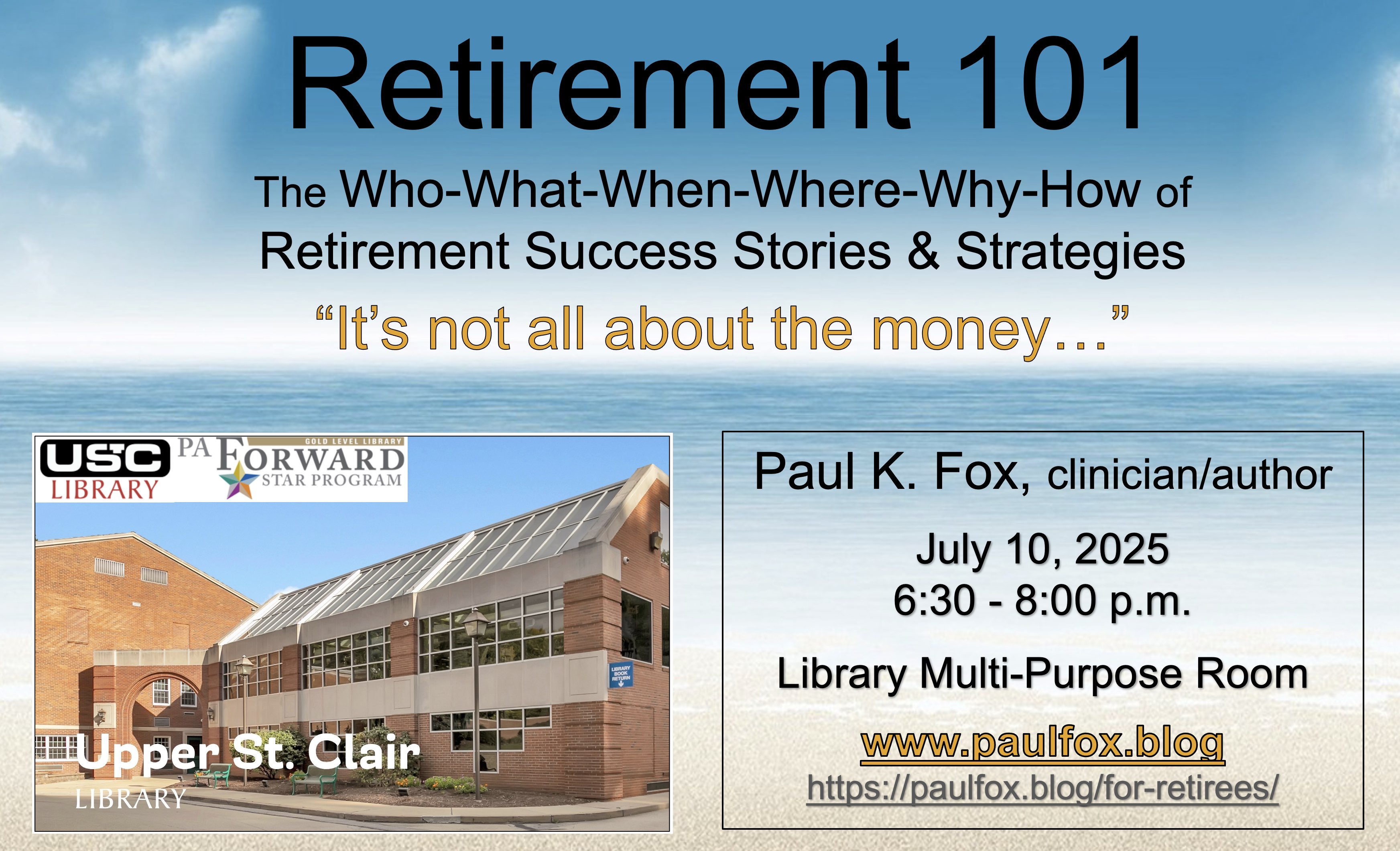
In addition, for attendees to my “Retirement 101 – It’s Not All About the Money” session at the Upper St. Clair Township Library on July 10, 2025 (and any other interested retired or soon-to-retire individuals), please click on the following links to printer-friendly copies of my slide handouts and the updated “Ultimate Retiree Resource Guide.”]


Article by Ed Carter

Retirement doesn’t always mean downsizing. For many retirees, it’s the perfect time to invest in a larger home—one with room to explore new hobbies, welcome visiting family, and enjoy the lifestyle they’ve spent years working toward. If you’re dreaming about homesteading or want to transform your home into a hub of activity and connection, buying a bigger property may be more practical than it sounds. With the right planning, you can find a home that fits your vision and your budget.

Know What You Really Want

Before you start searching, take the time to clarify what matters most to you in this “next chapter.” Are you dreaming of cultivating your own garden, raising chickens, or simply having more space to host grandkids and holiday gatherings? Think about square footage, land size, and features that support your lifestyle, like a home office, workshop, or playroom. Visualizing your daily routines in your new home can help you prioritize what’s essential versus what’s just nice to have.

Focus on Land and Layout

Homesteading takes space—and not just any kind of space. You’ll want to look for properties with usable land that’s suitable for gardening, small livestock, or even fruit trees. Check for sun exposure, drainage, fencing, and access to water. A good layout indoors is just as important; think open kitchens for canning or entertaining, extra rooms for hobbies or guests, and easy access from the house to outdoor areas. A few extra acres can go a long way when your goal is to live more sustainably and independently.

Transform Your Homesteading Hobby Into Income

Many retirees find that homesteading isn’t just fulfilling—it’s also a gateway to a small business. Whether you’re selling fresh eggs, handmade soaps, canned goods, or seasonal vegetables, turning your passion into profit can be deeply rewarding. Going back to school for a business degree can sharpen your skills in marketing, operations, and financial planning—key tools for running your homestead as a business. Online degrees make it easier to balance learning with daily responsibilities, and there are many inspiring online business degree success stories that prove it’s never too late to invest in yourself.

Set a Budget That Reflects Your Goals

Buying a bigger home doesn’t mean blowing through your retirement savings. Start with a clear picture of what you can comfortably spend, keeping in mind property taxes, insurance, maintenance, and any future upgrades. Talk to a financial advisor about how to structure your budget based on your income sources, and consider using proceeds from the sale of a current home if you’re upsizing. You may even find that relocating to a rural or semi-rural area gives you more for your money than staying in a high-cost urban zone.

Explore All the Financing Options

Just because you’re retired doesn’t mean you’re out of options when it comes to financing. Many retirees use a mix of cash, retirement funds, or home equity to buy a new property. Others explore mortgage options like a reverse mortgage (with careful consideration) or traditional loans with manageable terms. It’s essential to speak with a lender who understands your unique income structure post-retirement. The right financing plan ensures you get the home you want without financial stress down the line.

Use a Realtor Who Understands Your Vision

A real estate agent who knows the homesteading lifestyle can help you find properties that truly fit. They’ll understand the value of extra land, zoning laws for small-scale farming, and the features that can make your homestead thrive. Share your vision early in the process—whether it’s selling homegrown produce, raising bees, or hosting family reunions—so they can narrow your options to homes that support both functionality and comfort.

Turn Space Into Opportunity

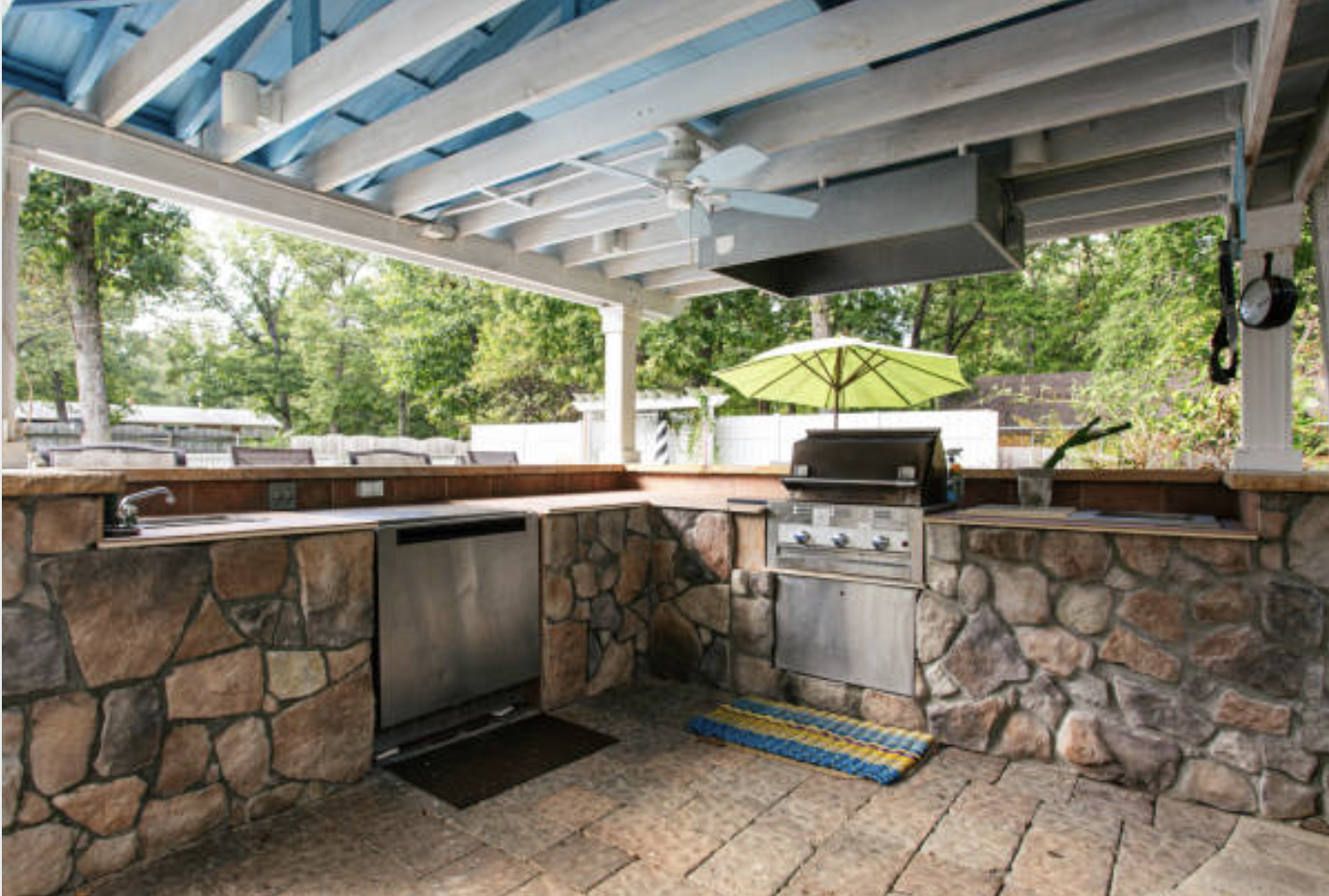
Once you find your home, think about all the ways to make the most of it. Spare bedrooms can become artist studios or guest rooms for visiting grandchildren. Garages can be converted into workshops or woodworking spaces. Basements can turn into cozy family rooms or even a small business headquarters. Outdoor space can serve multiple purposes: vegetable gardens, orchards, outdoor kitchens, or shaded play areas. With a little imagination, your home becomes a full-time lifestyle—one that supports both your hobbies and your relationships.

Buying a bigger home as a retiree isn’t about having more—it’s about doing more. It’s about designing a life that reflects your passions, supports your independence, and brings your family closer. Whether you want to dig into the soil, start a new business, or simply have space to live fully and comfortably, this move can be the start of something deeply fulfilling. With the right property, the right plan, and the right support, your next chapter can be your most exciting yet.

Peruse more insightful articles and resources here at paulfox.blog, where every post is a step towards a more fulfilling and informed life journey!

PKF

© 2025 Paul K. Fox and Ed Carter

Returning to the Classroom in Retirement

Smart Planning for a Fulfilling Experience

Blog photo credit: pexels-cottonbro-6158658

In a past retirement articles (e.g. this one) and conference or workshop presentations for soon-to-retire music educators, I echoed the views of my esteemed music education colleague Dr. John D’Ascenzo on the importance of post-employment learning. (He earned his PhD after his retirement from teaching!) John shared three primary concepts with references: “Swim like a shark” (encouraging retirees to continue long-term pursuits that involve personal and professional growth; the analogy: sharks never stop swimming – even in their sleep!); “Lose the fear of failure and need for approval” (promoting strategies to build confidence and self-efficacy); “Network, Network, Network.” (developing more social and professional interactions, activities not necessarily centered on music or education, but those that broaden horizons by producing personal satisfaction and a sense of purpose and maintaining overall health). See page 5 in the PMEA Retired Member Network eNEWS, August 2018

Ed Carter, our guest blogger for March 2025, brings us new perspectives on a return to education and self-reinvention once retirees choose to “pull their pin” and leave their initial profession. Previous articles by Ed Carter at this site include Monetizing Our Skills and Passions – Creative Ways for Musicians to Make Money Beyond Gigs, Unleashing Your Sound – A Musicians Guide to Making Waves and Gaining Fans, Music and Literacy Skills – How to Use One to Improve the Other, and Do You Have a Side-Gig? Four Tips for Artists Seeking An Extra Income Stream. Thank you, Ed! (PKF)

Article by Ed Carter

Retirement marks the beginning of a new chapter, and for many, that includes the pursuit of education. Whether it’s earning a degree, gaining new skills, or exploring personal interests, going back to school later in life offers intellectual stimulation, social engagement, and personal fulfillment. However, it’s important to approach this decision with careful planning – considering financial factors, time commitments, and the right learning environment. With the right strategy, furthering education in retirement can be both rewarding and transformative.

Improving Campus Accessibility for Retirees

When considering a return to school during retirement, evaluating campus accessibility is vital. With a significant portion of retirees no longer driving, understanding available transportation options becomes crucial. Many campuses offer amenities like elevators and ramps, but these may not be comprehensive, posing challenges for those with mobility issues. By thoroughly researching and planning for these logistical aspects, you can significantly enhance your educational experience and ensure a smoother transition back to academia.

Upgrading Your Retirement with Online Education

Pursuing an online degree during retirement offers a flexible and convenient way to enrich your skills and knowledge. This approach allows you to balance studies with other commitments, making it an ideal choice for lifelong learning. Also, if you’re looking to enhance your leadership and project management abilities, the importance of bachelor of business management studies cannot be overstated. Plus the networking opportunities provided by such programs can lead to valuable connections and potential job prospects, as many positions are filled through personal referrals.

Rediscovering the Joy of Learning

When considering a return to school during retirement, it’s essential to focus on the joy of learning rather than career advancement. Embracing lifelong learning can significantly enhance your personal growth and satisfaction, offering a chance to stay mentally active and engaged. By adopting this mindset, you enrich your life and maintain relevance in a rapidly changing world, even if re-entering the workforce is not your primary goal.

Budgeting for Education in Retirement

When planning to return to school during retirement, it’s essential to anticipate and budget for potential educational expenses. These costs can include commuting, whether through maintaining a personal vehicle or using public transportation. While these expenses might not be as high as when you were working, they remain significant. Additionally, technology expenses, such as purchasing a new laptop or software, can quickly add up. Supplies like textbooks and other materials are another area where costs can unexpectedly rise, impacting your overall retirement budget.

Choosing Between In-Person and Online Learning

When planning to return to education during retirement, weighing the benefits of in-person versus online learning is essential. Attending classes on campus can be challenging due to daily travel, which might be inconvenient if you live far from the institution. This could lead to increased costs and time spent on transportation, potentially affecting your overall learning experience. On the other hand, online classes offer the convenience of studying from home, eliminating the need for a commute and providing access to course materials at any time. This flexibility not only saves time and money but also allows you to manage other commitments more effectively. However, it’s important to consider potential feelings of isolation that can come with online learning.

Protecting Your Data in Educational Platforms

As you plan to return to school during retirement, it’s essential to understand the importance of safeguarding your personal data on educational platforms. The digital education sector is a significant repository of personal information, making it a target for cybercriminals. The education industry has been experiencing high rates of cyber threats, including phishing scams and ransomware attacks. To protect your data, it’s crucial to implement strong cybersecurity practices, such as being cautious of suspicious emails and ensuring your devices are secure against malware.

Volunteering: A Path to Enriching Retirement

Engaging in campus volunteering during retirement offers a fulfilling way to connect with diverse individuals and make a positive societal impact. By participating in community projects, you can build relationships with students, faculty, and local residents, fostering a sense of shared purpose. These initiatives often tackle important issues like environmental sustainability and educational support, allowing you to contribute to meaningful causes. Volunteering not only enhances personal growth by developing valuable skills but also strengthens community bonds.

Returning to school in retirement is more than just an academic pursuit – it’s an opportunity to grow, connect, and embrace lifelong learning. Choosing the right program, managing costs, and setting realistic goals can help ensure a meaningful and enjoyable experience. Whether for career advancement, personal enrichment, or the joy of learning, education at any age is a powerful investment in yourself and your future.

© 2025 Paul K. Fox and Ed Carter

5 Things You Need for a Comfortable Retirement

Editor’s Note: We are happy to post this retirement article by guest author Sierra Powell… concise and solid advice for all current and prospective retirees. Photo credit: https://www.pexels.com/photo/people-on-seashore-1377070/

Retirement is a new chapter– An opportunity to savor the results of years of diligence, to follow your interests, and to unwind, free from the demands of 9-to-5 employment. Reaching a comfortable retirement calls for careful decisions supporting your lifestyle and future requirements. Whether you desire to see the world, spend time with loved ones, or just enjoy a slower paced life, several essential components will enable you to have all you need for a safe, happy retirement.

Creating a Comprehensive Financial Plan

A good financial plan is the foundation of a comfortable retirement since it provides a clear road map for handling your money in the next few years. This approach covers forecasting your spending, figuring out revenue sources, and developing a plan for withdrawing money without quickly running out of savings. It goes beyond simple saving. First, project your monthly costs using the lifestyle you want. Add needs such as food, healthcare, and shelter; also include discretionary expenditures for entertainment, vacation, and hobbies. Knowing your planned costs helps you to decide if your revenue sources are adequate to meet them. You can also opt for a good local financial advisor. For example, if you live in Florida, seek a financial advisor in Tampa if you need guidance in selecting the best plan for yourself and your family.

Prioritizing Health and Wellness

Enjoying a nice retirement depends on keeping excellent health. It becomes difficult to enjoy your newly acquired independence without bodily well-being fully. Emphasize keeping active, following a healthy diet, and planning frequent doctor visits. Time spent in wellness not only improves your mood but also lowers your chance of chronic diseases that could affect your finances or quality of life. Think about adding pursuits that keep your body and mind active. Without taxing your joints too much, low-impact activities like yoga, swimming, or walking provide excellent advantages. Just as crucial is mental stimulation; consider picking up a pastime that tests your brain, acquiring a new skill, or club membership.

Building a Strong Social Network

A strong social life improves your retirement experience by offering company, encouragement, and chances to remain active. Retirement typically alters your daily schedule, particularly if most of your prior social life came from employment. By means of actions to establish and preserve a solid network of friends, family, and community ties, you may prevent emotions of isolation and loneliness, therefore influencing both mental and physical health. To meet new people and be active, join clubs, volunteer groups, or neighborhood organizations that fit your interests. To keep your social calendar full, get in touch with old pals, throw events, or schedule visits with loved ones.

Ensuring Housing Stability

Your degree of retirement comfort depends mostly on your choice of living environment. Your house should fit your way of life, be reasonably priced, and call for little upkeep. Downsizing to a smaller house, condo, or senior living complex provides the ideal balance for some between cost and convenience. Smaller spaces cut maintenance, decrease utilities and liberate resources for additional uses. Think about things like family, closeness to hospitals, and services supporting your everyday requirements. If you would like to keep your present house, think about implementing changes that would help keep aging in place. Simple adjustments that improve mobility and safety include adding grab bars in the restroom or substituting ramps for stairs.

Creating a Flexible Budget

Unexpected expenses might develop in retirement even with the finest financial preparation. Creating a flexible budget lets you negotiate these shocks without sacrificing your general financial situation. Set aside some of your savings, especially for unexpected vacation demands, house repairs, or medical bills. An emergency fund serves as a financial cushion so you may handle pressing needs without compromising your monthly income flow. Your budget should also contain a provision for discretionary expenditure for unplanned events such as family visits, holidays, or new interests. This adaptability lets you enjoy the advantages of retirement without feeling limited by your means.

Conclusion

Making decisions according to your beliefs and future vision can help you to create a comfortable retirement. Every component of your retirement plan supports your way of life and well-being, thereby enabling you to savor this new chapter with peace of mind. Accept the chance to live life on your terms, knowing that your careful planning has set a firm foundation for your next years.

A Collection of Collegiate “Treasures”

3 by 3: Essential Books + Websites for Music Ed Majors

By now, at least several weeks after the holiday/winter break, most of you have probably returned to school and are “back at it” fulfilling your studies in music and education methods. Welcome to the New Year (2019) and good luck on meeting your goals!

It has been my pleasure to present numerous workshops and conference sessions for pre-service, in-service, and retired music educators on a variety of topics: interviewing for a job, marketing professionalism, ethics, transitioning to retirement, supercharging the musical, etc., and have been asked on occasion, “Where do you find all of the information, research, and resources for your blog-posts and talks?

Well.. I’m glad you asked!

book-841171_1920_PourquoiPas

It would be hard to credit one or a few sources on reliable data, insights, and recommendations for career development. The following “gems” – a few ideas from someone who has taught music for more than 40 years – are just my New Year’s “gifts” to you… hopefully useful in your undergraduate or advance degree studies. Please enjoy!

This is probably the wrong time to suggest making a few “buys” for the sake of educational enrichment. College students are bombarded with many required readings of their (often expensive) textbooks and handouts from their comprehensive higher education courses of study. It is somewhat daunting to “cover all the bases,” especially when you may want specific advice and “answers” as a result of being recently thrown into “the real world” of field observations and student teaching. What else would a prospective music teacher need or have time to read? How can we better prepare you for the challenges of our profession?

Since you have to order books (or borrow them from a library), we’ll start with the printed publications. Here are my “top three” for your immediate consideration.


My Many Hats
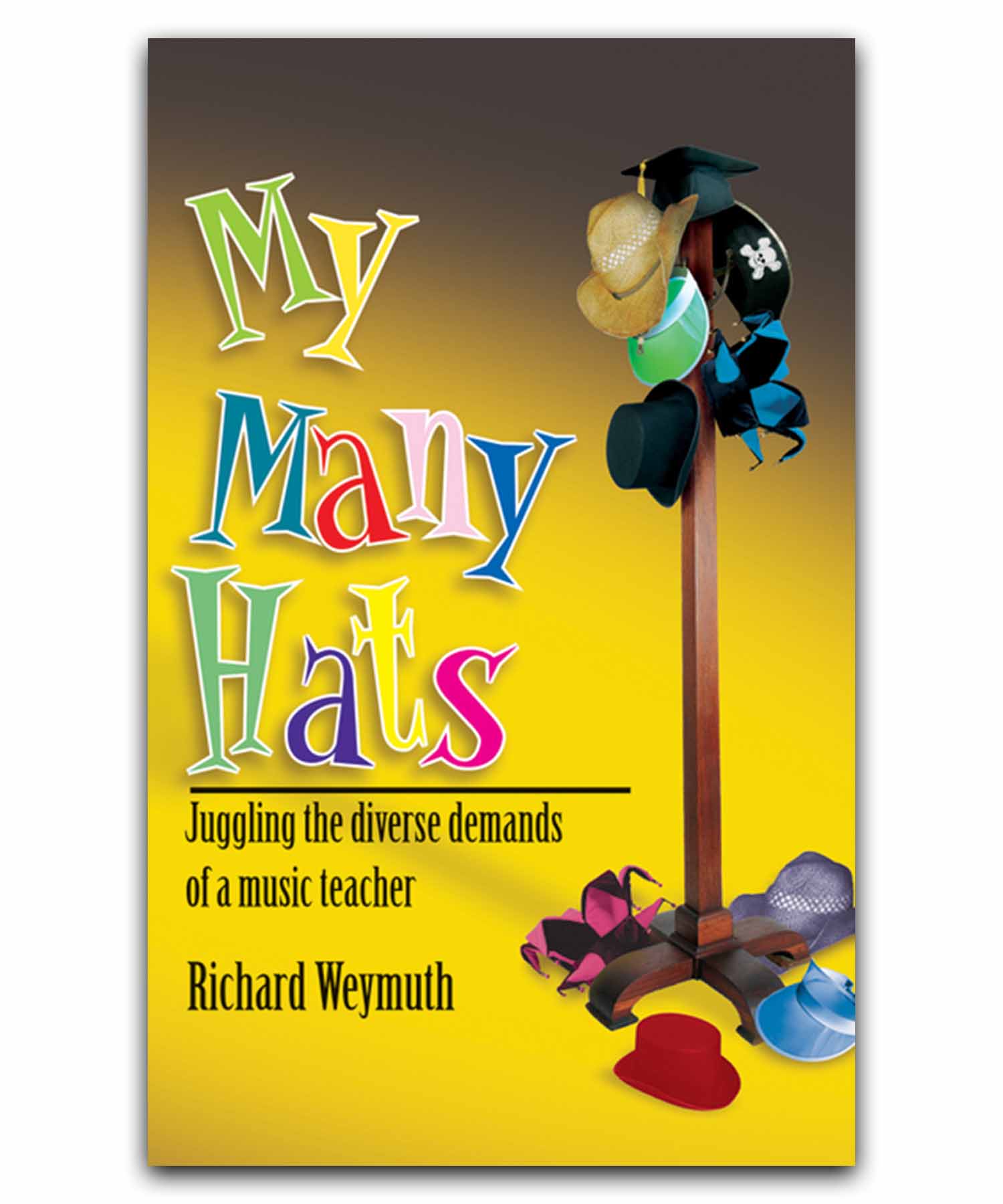
My Many HatsIn the category of “things I wishes someone would have told me before I was hired to be a school music educator,” the inspirational book, My Many Hats: Juggling the Diverse Demands of a Music Teacher by Richard Weymuth, is a recommended “first stop” and easy “quick-read.” Published by Heritage Music Press (2005), the 130-page paperback serves as an excellent summary of the attributes (or “hats”) of a “master music teacher.” Based on the photos in his work (great “props”), I would have loved to have seen Weymuth’s conference presentations in person as he donned each hat symbolizing the necessary skill-set for a successful educator.

A quote from the author in his Introduction:

“I want my hats to put a smile on your face as you read this book, just as they do for the airport security guards as they go through my bags at the airport. They ask, “Are you a magician? A clown? An entertainer?” My answer is, “Yes, I am a teacher.”

His Table of Contents tells it all:

  1. The Hat of a Ringmaster: Managing your classroom and your time
  2. The Hat of a Leader: Setting the direction and tone of your classroom
  3. The Hat of a Scholar: Learning when “just the facts” are just fine, and when they aren’t
  4. The Hat of a Disciplinarian: The Three C’s: Caring, Consistency, and Control
  5. The Hat of an Eagle: Mastering your eagle eye
  6. The Hat of a Crab: Attitude is everything; what’s yours?
  7. The Hat of a Juggler: Balancing a complicated and demanding class schedule
  8. The Hat of a Banker: Fund raising and budgeting
  9. The Hat of an Artistic Director: Uniforms and musicals and bulletin boards, oh my!
  10. The Hat of a Lobster: Establishing the proper decorum with your students
  11. The Hat of a Pirate: Finding a job you will treasure
  12. The Hat of a Bear: Learning to “grin and bear it” in difficult situations
  13. The Hat of a Peacock: Having and creating pride in your program
  14. The Hat of Applause: Rewarding and recognizing yourself
  15. The Hat of a Flamingo: Sticking out your neck and flapping your wings

Here are a couple sections that should be emphasized if you are currently a junior or senior music education major.

All student or first-year teachers should focus on his/her three C’s of class discipline in Chapter 4: “Caring, Consistency, and Control.” In order to resolve problems and seek advice from local mentors (especially help from second and third-year teachers who may have just gone through similar conflicts), he poses these questions:

  • What is the specific discipline problem that is currently bothering you?
  • Who could you interview in your educational community to help with this problem?
  • How did they handle the problem?
  • What discipline solutions worked and what didn’t work?

girl-3718522_1920_nastya_gepp

Those getting ready for the job search and interviewing process this year must turn to Chapter 11 immediately! “Just like a pirate, you are searching for your treasure, or at least a job you will treasure.” Suggesting that first-year teachers should stay in their assignment for a minimum of three years (to show “you are a stable teacher and are dedicated to the district”), Weymuth offers guidance in these areas:

  • The Application Process
    • Cover Letter
    • Résumé
  • The Interview
    • Make a Good Impression
    • The First-Class Interview
    • Frequently Asked Questions
  • The Second Interview

The book is worth the $17.95 price alone for the interview questions on pages 85-88.

Once you “land a job” and are assigned extra-curricular duties like directing after-school ensembles, plays, and perhaps fund-raising for trips, shows, uniforms, or instruments, come back to Chapter 8 for “The Hat of a Banker” and Chapter 9 for “The Hat of an Artistic Director.” His guidelines for moneymaking and record-keeping include insightful sub-sections on:

  • Planning and Administering a Fund-Raising Activity
  • Possible Fund-Raisers
  • Motivating Students to Sell, Sell, Sell (Set Goals, Prizes, and Tracking)
  • Budgeting

Having previously posted a blog on “Supercharging the School Musical,”  I was impressed with his pages 65-69 on “Show and Concert Choir Dress” and The Musical,” and especially the “Appendix – Resources Books for Producing a Musical” in the back of the book.


Case Studies in Music Education
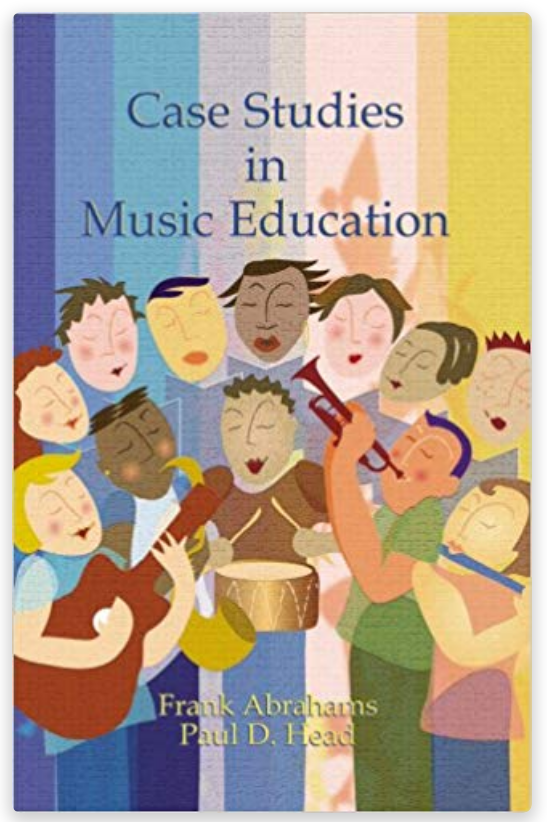
Case Studies in Music EducationNext, I would like to direct pre-service and new music teachers to Case Studies in Music Education by Frank Abrahams and Paul D. Head. This would be an invaluable aid to “facilitate dialogue, problem posing, and problem solving” from college students (in methods classes?) and “rookie” teachers to veteran educators.

Using the format of Introduction, Exposition, Development, Improvisation, and Recapitulation known by all music professionals, each chapter presents a scenario with a moral dilemma that many music educators face in the daily execution of their teaching responsibilities.


“How should a music teacher balance learning and performing? What is the best way to handle an angry parent? What are the consequences of the grades teachers assign? What are the best ways to discipline students? How should teachers relate to the administrators and to other teachers? The emphasis here is not on the solution, but on the process. There are many viable approaches to nearly every obstacle, but before any meaningful long-term solutions can be made, teachers must identify their own personal philosophy of music education and recognize those traits that are admirable in another’s style.”

―Excerpt from back cover of Case Studies in Music Education, Second Edition, by Frank Abrahams and Paul D. Head

Case Studies in Music Education provides a frank discussion about the critical real-world issues music teachers face but are rarely addressed in college courses:

  • Balancing the goals of learning and performing music
  • Communications and relationships with parents, administrators, and other staff
  • “Fair use” and other copyright laws

If you are seeking more reflection and peer review of ethical issues in the music education profession, good for you! Few music teachers ever talk about the “e” word. What’s important is not only becoming aware of your state’s/district’s statues on the “teacher’s code of conduct” and dress/behavior expectations, but developing your own ethical “compass” for all professional decision-making. A good companion to the Abrahams and Head book is to peruse my previous blogs on ETHICS (posted in reverse chronological order).

 

fatigued-1822678_1920_sasint

Enhancing the Professional Practice of Music Teachers

“Book number three” is probably the most expensive, and I could only wish you were already exposed to it in one of your music education courses. If you have not seen it, go ahead and “bite the bullet” in the purchase of Enhancing the Professional Practice of Music Teachers: 101 Tips that Principals Want Music Teachers to Know and Do by Paul G. Young, published by Rowman & Littlefield in 2009. [Note: Be sure to give them your NAfME membership number for a 25% discount!]

“If you want to improve your professional performance and set yourself apart from your colleagues—in any discipline—these tips are for you. If you desire anything less than achieving the very best, you won’t want this book. Rather than addressing research and theory about music education or the “how-to’s” of teaching, Enhancing the Professional Practice of Music Teachers focuses on common-sense qualities and standards of performance that are essential for success-everywhere. Whether you’re considering a career in music education, entering your first year of teaching, or nearing the end of a distinguished tenure, this advice applies to musicians in any setting. Affirming quality performance for experienced teachers and guiding, nurturing, and supporting the novice, Young outlines what great music teachers do. Easy to read and straightforward, read it from beginning to end or focus on tips of interest. Come back time and again for encouragement, ideas, and affirmation of your choice to teach music.”

– https://nafme.org/reading-list-music-educators/
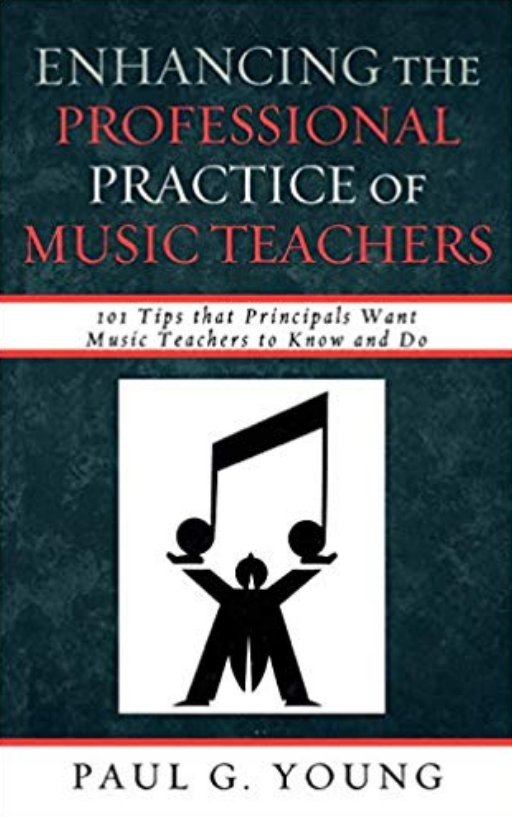
ENhancing the Professional Practice of Music TeachersHis chapters are organized into six tips:

  • Tips That Establish Effective Practice with Students
  • Tips That Support Recruitment
  • Tips That Enhance Instruction
  • Tips That Enhance the Profession
  • Tips for Personal Growth
  • Tips for Professional Growth

Paul Young is a musician and band director who later became an elementary school principal. His book is derived from his experience as a music student, music teacher, and educational leader. The intent of the publication is to guide both new and experienced teachers in continued personal and professional growth. He uses his experience as an administrator to point out to music teachers the traits he has seen in individuals who have become successful in the profession.

Now that you ordered at least one of these for personal research and growth, I should point out other sources of book recommendations for the budding music educator, courtesy of NAfME:


Online Resources

Okay, now comes the “easy-peasy” part, and even more importantly, it’s mostly FREE!
NAfME blogThe first thing I want you to do (and you don’t even have to be a member of NAfME yet, although you should be!) is to take at least a half-hour, scroll down, and read through numerous NAfME “Music in a Minuet” blog-posts, bookmarking any you want to return to at a later date. Go to https://nafme.org/category/news/music-in-a-minuet/. Get ready to be totally immersed into the music education profession in a way no college professor can do, with articles like the following (just a recent sampling):
 

learn-868815_1920_geralt

Hopefully you did receive a little cash in your Christmas stocking… or something from grandma! Now is time to “belly up to the bar” and pay your dues. Every professional school music educator should be a member of their “national association…” NAfME!

Once you do this, get ready to reap countless benefits! First, besides offering a discounted rate for all collegiate members, you will be eligible for a significant price break for full active membership renewal during your first-year of teaching! Then, the doors will open wide to you for all of the many NAfME member services such as classroom resources, professional development, news and publications, special offers for members, etc.

Amplify

Once you are a NAfME member, open up your browser, and go immediately to the NAfME AMPLIFY community discussion platform, instructions posted here. Getting started on AMPLIFY is easy:

  • Go to community.nafme.org.
  • Edit your profile using your NAfME.org member username and personal password.
  • Control what information is visible on your profile.
  • Join/subscribe to communities of your choice – you will automatically be enrolled in Music Educator Central, our general community for all NAfME Members.
  • Control the frequency and format of email notifications from Amplify.

If you prefer, they have created a video or quick-start guide here to set-up your account’s profile, demonstrate the features, and provide some help navigating through the AMPLIFY menus.

Once you familiarize yourself with the forum, find the “Music Educator Central” and “Collegiate” discussion groups… and start reading. If you have a question, post it. AMPLIFY connects you with as many as 60,000 other NAfME members… a powerful resource for networking and finding out “tried and true” techniques, possible solutions to scenarios or problems in the varied settings of school music assignments, and the sharing of news, trends, perspectives, and more!

Try it… you’ll like it! When you feel comfortable with the platform, contribute your own posts, thoughtful responses to comments from the reflections of your “colleagues,” teaching anecdotes, personal pet-peeves, and ???  – you name it! The sky is the limit!

brass-3099922_1920_emkanicepic

Tooting My Own Horn… the “Paulkfoxusc” Website (now paulfox.blog)

Finally, if you have indeed “blown the budget” over family holiday purchases, I can suggest one freebie website that archives a comprehensive listings of blog-posts, links, and books. Under the category of “marketing professionalism,” you can search through blogs placed online in reverse chronological order at https://paulkfoxusc.wordpress.com/category/marketing-professionalism/ or you can “take everything in” from one super-site entitled “Becoming a Music Educator” at https://paulkfoxusc.wordpress.com/becoming-a-music-educator/.

Of course, I have a few “favorite” articles which may provide you a great start to your journey of self-fulfillment:

ipad-820272_1920_1_fancycrave1

Best wishes on you continuing your advancement and personal enrichment towards the realization of a wonderful career in music education!

PKF

© 2019 Paul K. Fox


Photo credits in order from Pixabay.com: “student” by geralt, “book” by PourquoiPas, “girl” by nastya_gepp, “fatigued” by sasint, “learn” by geralt, “brass” by emkanicepic, and “iPad” by fancycrave1




T-Minus Three Years… and Counting!

Countdown to a Smooth and Satisfying Retirement

KONICA MINOLTA DIGITAL CAMERA

Are you retired, retiring this year or next, or thinking about “Crossing the Rubicon” to post-employment bliss over the next three or more years?

According to Ken Dychtwald, psychologist, gerontologist, and CEO of Age Wave, research on aging, health, and work issues defines five stages of retirement:

  • Stage 1: Imagination (5 to 15 years before retirement)
  • Stage 2: Anticipation (1 to 5 years before retirement)
  • Stage 3: Liberation (first year of retirement)OLYMPUS DIGITAL CAMERA
  • Stage 4: Re-engagement (1 to 15 years after retirement)
  • Stage 5: Reconciliation (ages late 70s and early 80s)

As reported by USA TODAY at https://www.usatoday.com/story/money/personalfinance/2014/10/12/five-stages-of-retirement/16975707/, these first three stages provide opportunities to rethink, recharge, reinvent, and even retool new ways to redefine one’s life-purpose and meaning, become productive, and begin that new chapter in their lives. The studies emphasize the need for the famous Boy Scouts’ motto – “be prepared” – and you should start reflecting on “what you are going to be when you grow up” at least three years prior to “the big day!”

Many people want to continue to work. In fact, 72% of pre-retirees, age 50 and older, say they want to keep working after they retire, according to a recent survey sponsored by Merrill Lynch in partnership with Age Wave. Almost half (47%) of current retirees either are working, have worked, or plan to work in retirement, the survey found.

Many people also want to devote more time to their family and friends. Some want to continue to learn, and others want to enjoy their favorite hobbies and develop new ones…

— Ken Dychtwald

The bottom line is, as suggested in “Retire Happy – What You Can Do Now to Guarantee a Great Retirement” in the USA TODAY/Nolo Series by Ralph Warner and Richard Stim, prior to leaving the work force, you should make a concerted effort to anticipate “life after work,” including:

  • Cultivate interests outside work
  • Lead a healthier lifestyle
  • Revitalize family relationships
  • Spend more time with spouse
  • Embrace spirituality or meditation
  • Nurture friendships and make new friends.


old-couple-1429242

FIRST THINGS FIRST

So, are YOU ready to retire from full-time music teaching? Are you sure?

For me, I cry out HURRAY for the FREEDOM, and enthusiastically take on exploring raising puppies, home improvements, more personal music making, conducting, writing, photography, community service, and volunteer work. And, as you can imagine, my calendar is as full as it has ever been!

However, not all of our newly retired colleagues feel the same way… at least, not at first. It should be said that not everyone may be ready to retire. Often heard employment complaints aside, “be careful for what you wish!” In general, few are ambivalent about this transition… leaving the day-to-day highly pressured, detailed, “rat-race” most music teachers embrace to jumping into the wide-open horizons of new vision, focus, and directions. Recent retirees either love or hate this “passage.”

— Paul K. Fox

If you are not sure of your current mental and financial preparation for retirement, checkout “7 Signs It’s Time to Retire” at http://www.plannersearch.org/financial-planning/7-signs-its-time-to-retire, and equally as important, “Ten Signs It’s Not Okay to Retire” at http://www.investopedia.com/articles/personal-finance/021716/10-signs-you-are-not-ok-retire.asp.

Have you seen this quote by Dr. Robert P. Delamontagne from his book Retiring Mind (Fairview Imprints, 2010), which provides statistics that are actually a little alarming?

50% of retirees will suffer some form of acute emotional distress. This is potentially a very large problem given the fact that 10,000 people are becoming eligible for Social Security every day for the next 20 years in the US alone.

— Dr. Robert P. Delamontagne

I also recommend taking the quiz, “Are You Psychologically Ready for Retirement?” at http://www.nextavenue.org/quiz-are-you-psychologically-ready-for-retirement/ from the book, Happy Retirement: The Psychology of Reinvention by Kenneth S. Shultz (DK Publishing, 2015), asking these five essential questions:

  1. How important is your job when it comes to getting a sense of life satisfaction?
  2. How many non-work activities do you have that give you a sense of purpose?
  3. How do you imagine your life to be once you stop working?
  4. How do you think retirement will affect your relationship with family and friends?
  5. How much energy for work do you have these days?


senior-portraits-2-1258401-loretta-humble

HAVE A PLAN

In the article “Are You Emotionally Ready to Retire?” published by the Wisconsin Medical Journal, Maureen E. Hansen illustrates the need for an “emotional retirement plan.” (Please visit https://www.wisconsinmedicalsociety.org/_WMS/publications/wmj/pdf/103/4/53.pdf).

The transition from a structured to an unstructured lifestyle can be unnerving if you are not prepared. When our clients retire, they often feel as if they are on vacation for the first month or so. After that, the realization that they are not returning to work starts to sink in. This is when anxiety can creep in. However, the process of adjusting can be far less stressful if you establish a plan well in advance.

— Maureen E. Hansen

She emphasizes that both financial and non-financial aspects of retirement need to be addressed. “Long before your going-away party at the office, you need to decide what you want for your retirement—leisure time, volunteer work, establishing a legacy?” Here are her several key issues to consider:

  1. Set lifestyle goals.
  2. Build a network.
  3. Consider your spouse’s feelings.
  4. Live your dream.

From Bankrate (http://www.bankrate.com/retirement/10-things-to-do-before-you-retire/), here is a checklist of considerations you should revisit as often as necessary before taking the retirement plunge:

  1. Prepare a balance sheet
  2. Get rid of debt
  3. Conduct a house check
  4. Assess life insurance needs
  5. Think about long-term care insurance
  6. Consider variable annuities
  7. Oversee estate planning
  8. Ditch college expenses
  9. Look at the big picture with a planner
  10. Prepare a budget

The Internet is deluged with a multitude of recommendations on retirement prep. Here are couple more to peruse at your leisure:


senior-portraits-1-1258399-loretta-humble

DOWN TO MORE SPECIFICS

In the August 26, 2017 PMEA Retired Member Network eNEWS, I shared the link to the AARP blog-post “10 Steps to Get You Ready for Retirement” at http://www.aarp.org/work/social-security/info-05-2011/10-steps-to-retire-every-day.html, with the following “executive summary” (but be sure to read the entire article for the detail):

  • Step 1: Define Your Retirement
  • Step 2: Take Stock of Your “Assets”
  • Step 3: Evaluate Your Health – Now
  • Step 4: Determine When to Collect Social Security
  • Step 5: Network Through Social Media & Other Methods
  • Step 6: Decide How Much You Want (or Need) to Work
  • Step 7: Create a Retirement Budget
  • Step 8: Find New Ways to Cut Your Expenses (Start Saving More)
  • Step 9: Prepare for the Unexpected
  • Step 10: Stick to Your Plan

I also offered my (now) “top-seven tips” for getting ready to “living the dream” for future PA music educator retirees:

  1. Download the Ultimate Retiree Resource Guide and peruse the myriad of contributions by “true experts in the field of retirement” posted on the PMEA retired member website: https://www.pmea.net/wp-content/uploads/2014/10/ultimate-retiree-resource-guide-111717.pdf.
  2. Scan through the plethora of other blog-posts at https://paulkfoxusc.wordpress.com/for-retirees/ and the official PMEA Retired Members’ website: https://www.pmea.net/retired-members/.
  3. Purchase a book or two by the “masters” of retirement transitioning (check out these authors and others from the sources above: David Borchard, Julie Cameron, Robert Delmontagne, Dave Hughes, Steven Price, Kenneth Shultz, Hyrum Smith, Verne Wilson, and Ernie Zelinski).
  4. Family Meeting: If you are married, sit down with your spouse (with no distractions) and map out the essential “who, what, when, where, and how” of retirement. Are you both ready to venture into your “golden years?” Are you and your wife/husband on the same page?
  5. dad-1-tommi-gronlundPSERS (PA pension fund) Planning: 12 months or more away from your projected retirement date, attend a “Foundations for Your Future” program (even attend it more than once), and request a retirement estimate (form PSRS-151), after which you will need to schedule the all-important “Exit Counseling Session.”
  6. Make an appointment with an estate planner, elder attorney, and/or financial advisor (probably all three). Bring a copy of your bank and investment statements, PSERS reports, social security, annuities, and insurance documents. You may need help in determining which PSERS “plan” to adopt. While you’re at it, update your will and other legal documents.
  7. To stay “connected” with your professional associations (e.g. Pennsylvania Music Educators Association and National Association for Music Education), be sure to update your personal profile at “headquarters” with your personal (not school) email address. Continue to participate in music and education, and reap the benefits of significantly discounted retired membership dues and conference registration fees. See the blog-post “PMEA in Retirement – What’s in it for Me?” at https://paulkfoxusc.wordpress.com/2016/12/15/pmea-in-retirement-whats-in-it-for-me/.

Finally, if you have not done so, I encourage you to revisit my last retirement blog-post   (https://paulkfoxusc.wordpress.com/2017/08/03/new-dreams-and-horizons/). Review those six essential things to do when you are a couple years “out” from making that “great leap to freedom,” solid advice from TIPS – Retirement for Music Educators book by Verne A. Wilson (MENC 1989), and to learn more about “nipping in the bud” those pesky retirement conundrums:

  1. Self-Identity and Change
  2. Free Time?
  3. Energy and Fortitude
  4. Losing Control and Perpetual Care

Yes, planning ahead makes all the difference. On this topic, our last inspiration also comes from TIPS – Retirement for Music Educators.

If you were planning to spend the rest of your life in another country, you would want to learn as much about it as possible. You would read books about the climate, people, history, and architecture. You would talk to people who had lived there. You might even learn a bit of its language. Old age is like another country. You’ll enjoy it more if you have prepared yourself before you go.

— B. F. Skinner and Margaret Vaughn

Best wishes for a happy retirement!

senior-portraits-4-1258408-loretta-humble

PKF

© 2017 Paul K. Fox


Photo credits from FreeImages.com (in order): “Happy Days” by Crissy Pauley, “Senior with Red Wine” by Walter Groesel, “Hour-Glass” by Aleksandra P., “Old Couple” by Ricardo Santengini, and “Senior Portraits 2” by Loretta Humble, “Senior Portraits 1” by Loretta Humble, “Dad 1” by Tommi Gronlund, and “Senior Portraits 4” by Loretta Humble.