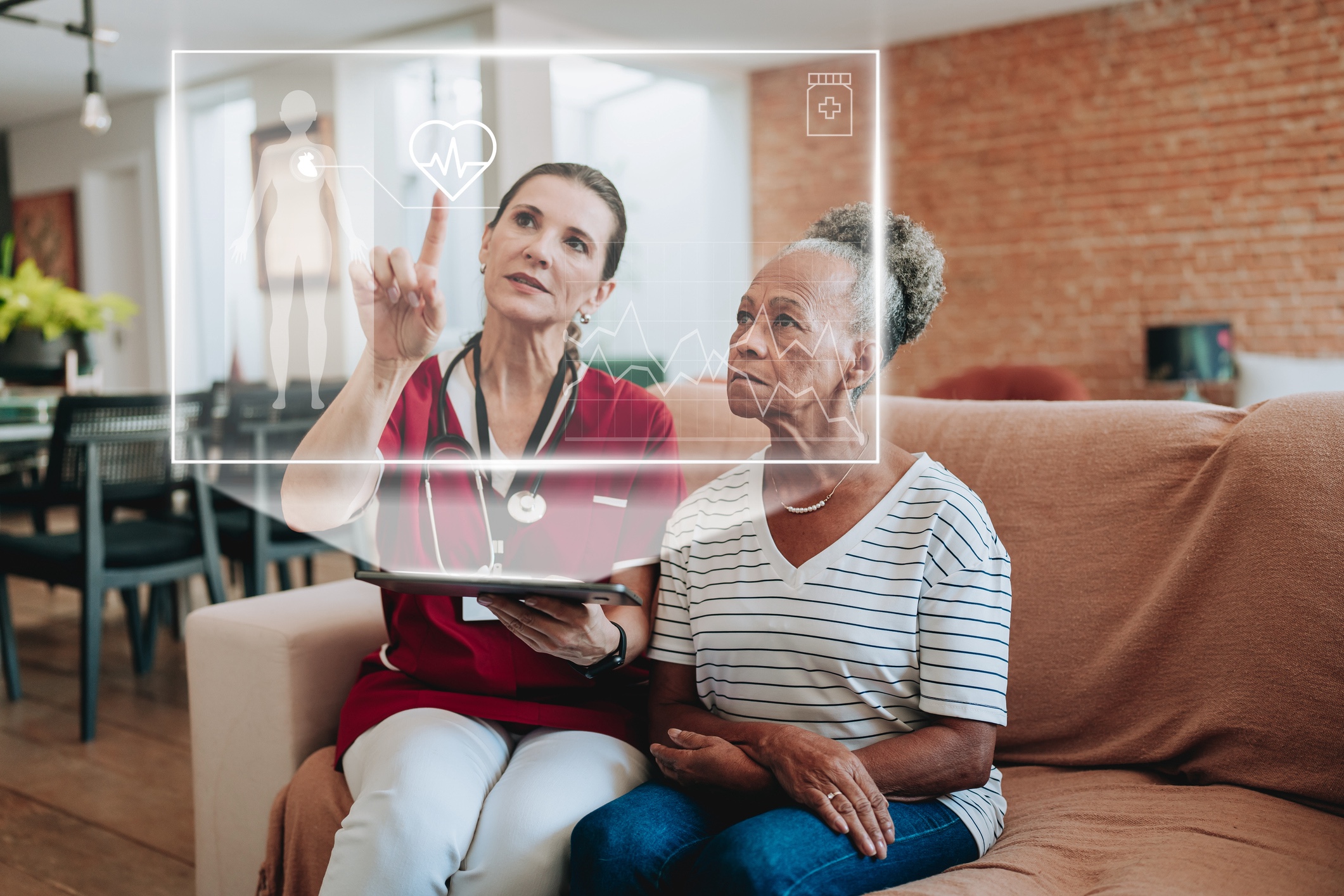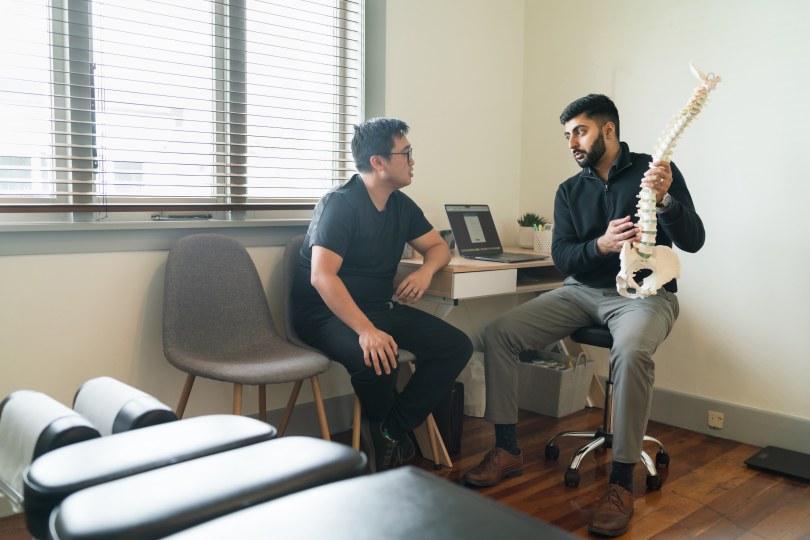
5 Common Misconceptions About Chiropractors

Myths of Chiropractic Care

Those of you who follow these periodic blog-posts may remember my April 18, 2025 “rant” entitled “70 and Out? – Mobility!” If you have ever experienced severe back or neck pain, I recommend revisiting this piece and skeptics, also read the article below. My chiropractors literally “saved me!” In my opinion, better than any MRI/x-ray, weeks of standard physical therapy, or MD intervention (pills, shots or surgeries), the chiropractic care of George and his son Benjamin Fraudin offered me the fastest progressive recovery while guiding me to take “baby steps” towards less pain, better mobility and flexibility! They diagnosed the exact location of my compressed discs, manually adjusted my spine, and provided exercises to help me transition out of the acute phase of my sciatica. I’m coming up to my one-year anniversary of needing a cane, TENS machine, and the rental of an electric wheelchairs during the four-day PMEA Annual Conference at Kalahari Resort in the Poconos. THANK YOU, Fraudin Advanced Chiropractic and Rehab in Pittsburgh, PA.

This following guest post authored by Jeanett Tapia was shared by Intouch Chiropractic. Intouch Chiropractic is a boutique chiropractic practice in San Diego, CA, specializing in NUCCA upper cervical care, spinal decompression, and advanced therapeutic treatments. 

If you’ve spent any time researching ways to manage pain, improve your balance, or simply stay mobile as you get older, you’ve probably come across chiropractic care. And if you’re like many of us who’ve reached our retirement years, you may have also come across a reason not to try it, whether from a well-meaning friend, an outdated article, or simply an image stuck in your head of someone’s spine being violently “cracked” into submission.

Here’s the truth: many of the most persistent beliefs about chiropractic care are simply wrong. And those misconceptions may be quietly standing between you and a better quality of life.

Let’s clear the air.
Misconception #1: “Chiropractic care means painful cracking and twisting”

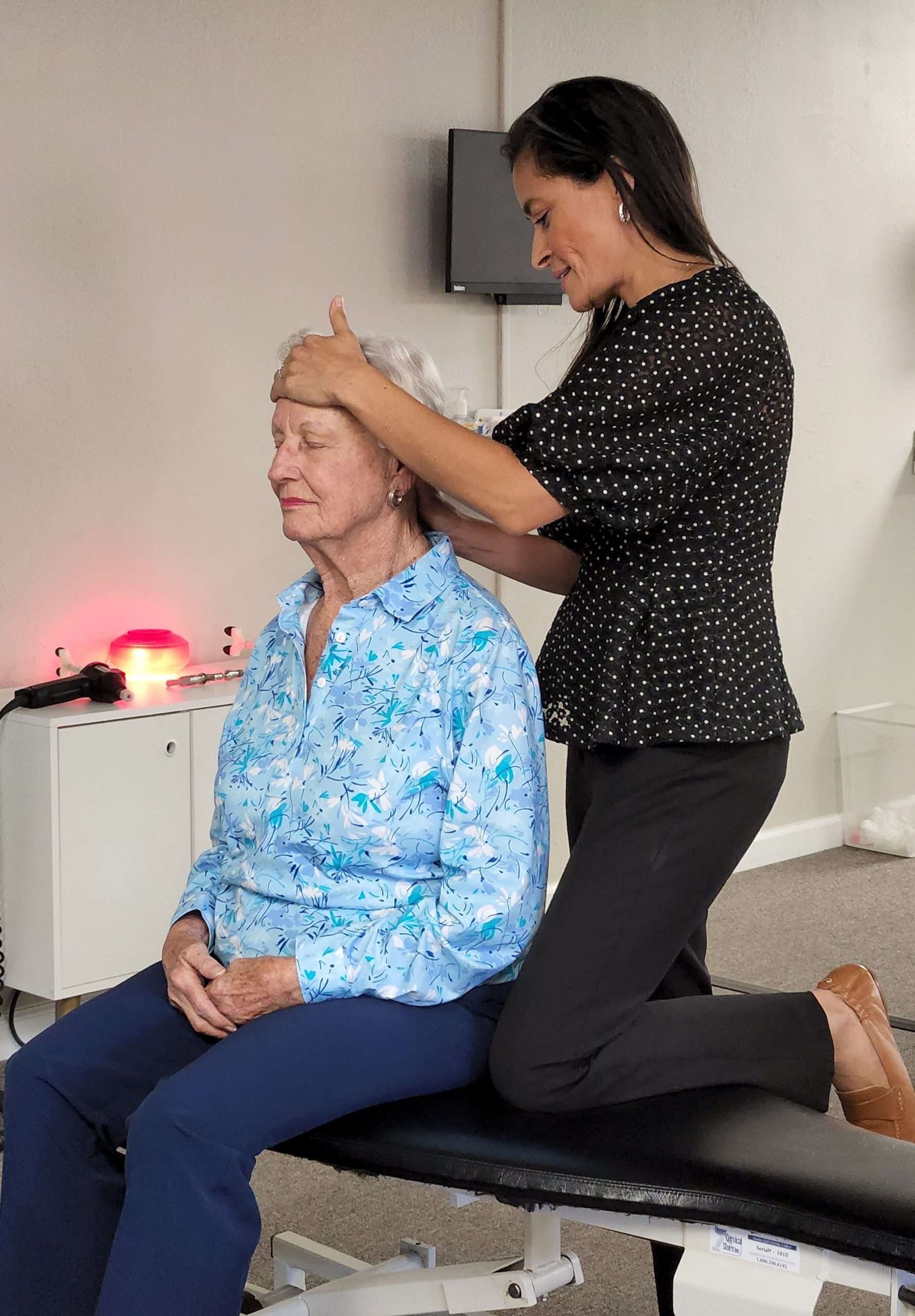
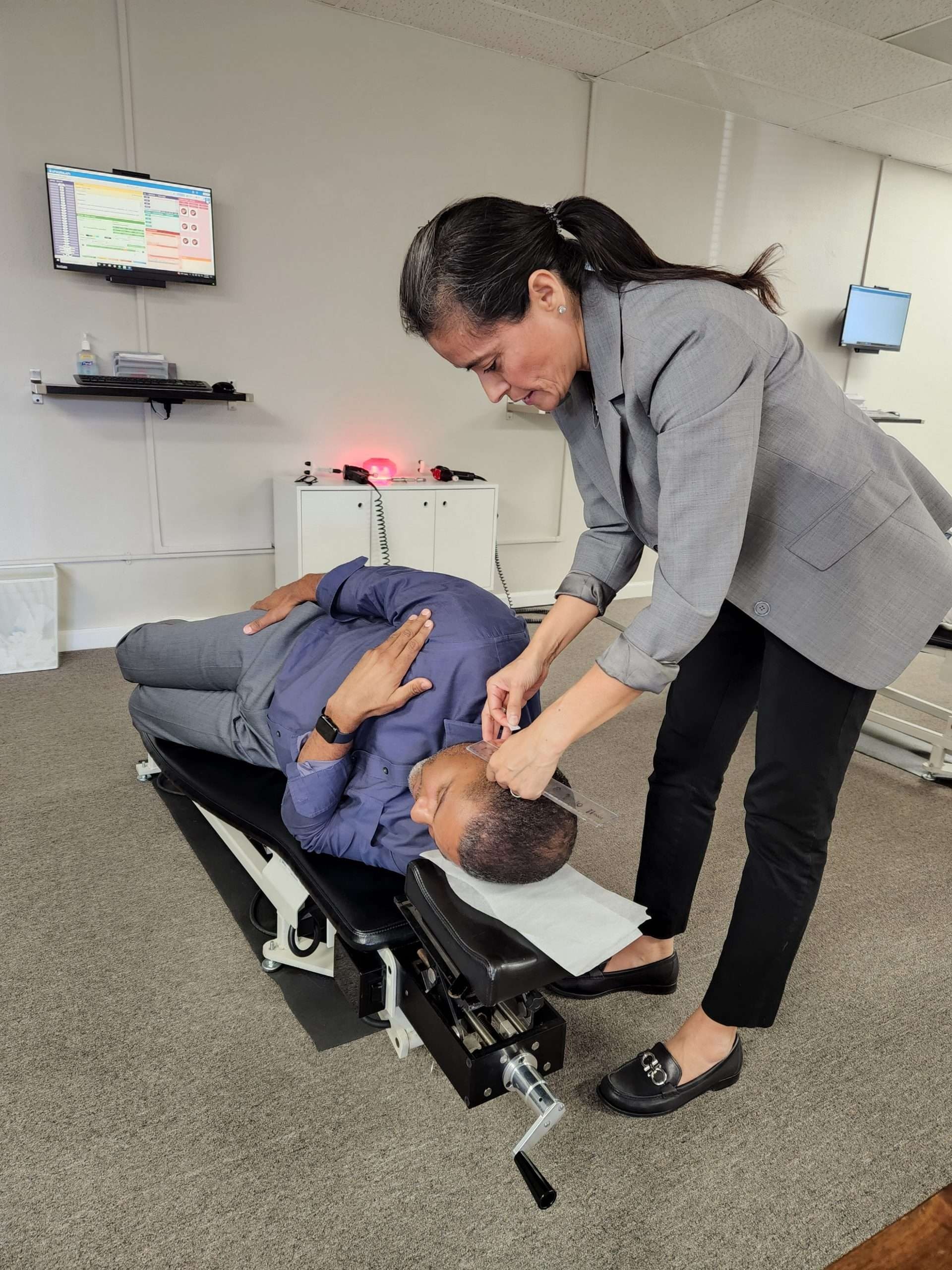
This is, by far, the most common reason seniors avoid exploring chiropractic care. The dramatic neck-snap you’ve seen on TV or heard about secondhand bears little resemblance to what many modern chiropractic practices actually do.

In fact, there are even highly specialized approaches, like NUCCA (National Upper Cervical Chiropractic Association), that involve zero popping, cracking, or twisting of the spine whatsoever. NUCCA chiropractic care focuses on a precise, gentle correction of the atlas vertebra (the top bone of the spine), using only a light, calculated touch near the base of the skull. Most patients are surprised by how mild the treatment feels.

For seniors, retirees, or anyone with concerns about bone density or joint sensitivity, this kind of approach can be a genuine game-changer. 

Misconception #2: “It’s too risky for older adults”

Many seniors assume chiropractic care is designed for younger, healthier bodies and that it carries real danger for those with osteoporosis, arthritis, or other age-related conditions. This concern is understandable, but largely unfounded when care is delivered by a qualified, experienced practitioner.

Trained chiropractors assess every patient individually, reviewing medical history, imaging, and physical condition before determining an approach. Techniques are adapted specifically for older adults, emphasizing comfort and safety at every step. Research consistently shows that when performed by a qualified professional, chiropractic care can improve mobility and decrease pain without serious risk, even in elderly patients.

Are there chiropractors that should be avoided? Absolutely. But that’s true with any profession or expertise. For seniors looking for things like treatment for chronic back pain, a good chiropractor can go a long way.
Misconception #3: “Chiropractors only treat back pain”

It’s true that most people walk into a chiropractor’s office with back pain. But limiting chiropractic care to a single symptom is like saying a cardiologist only treats chest pain.

Spinal misalignment, particularly at the top of the cervical spine, can affect far more than your back. Common conditions that respond well to chiropractic care, especially for older adults, include:

  • Chronic neck pain and stiffness
  • Headaches and migraines
  • Balance and coordination problems (a major fall-risk factor for seniors)
  • Joint pain and reduced range of motion
  • Sleep disturbances and fatigue
  • Brain fog and reduced mental clarity

For retirees trying to stay active, whether that means walking the golf course, playing with grandchildren, or simply navigating daily life with confidence, these benefits matter enormously.

Misconception #4: “You’ll need to go forever once you start”

This misconception often comes from a misunderstanding of how chiropractic care works. While some patients choose to make regular maintenance visits a part of their long-term wellness routine (similar to dental checkups), you are never “locked in.”

Many patients come in with a specific concern, receive a course of treatment, and achieve lasting relief, particularly with upper cervical approaches like NUCCA, which aim to deliver corrections that hold over time rather than requiring constant repeat adjustments. The goal is always to restore your body’s natural alignment so that it can maintain itself more effectively.

Your treatment plan is yours. A good chiropractor will communicate clearly, set realistic expectations, and respect your pace and goals.

Misconception #5: “It’s not real medicine, my doctor won’t approve”

Chiropractic care has long suffered from an image problem as being “fringe” or unscientific. That reputation is increasingly outdated. Numerous peer-reviewed studies demonstrate the efficacy of chiropractic adjustments for pain management, mobility improvement, and quality of life, and many primary care physicians now actively refer patients to chiropractors as part of a complementary care plan.

For seniors especially, the appeal of a drug-free, non-surgical approach to managing chronic pain and maintaining mobility is hard to overstate. 

It’s not about replacing your doctor, it’s about giving your body more tools to work with.

Why This Matters for Retirees and Seniors

Mobility is independence. The ability to move freely, stay balanced, and live without chronic pain directly shapes the quality of your retirement years. Chiropractic care, particularly the gentle, precision-based approaches now available, offers a compelling, low-risk option for seniors who want to stay active and avoid the side effects of long-term medication use.

If you’ve dismissed chiropractic care based on any of the myths above, it may be worth taking a second look, especially at upper cervical approaches designed with your comfort and safety in mind.

PKF

© 2026 Paul K. Fox and Eric White

.
Retirement Transitioning Advice from AI?

Season Greetings and Happy New Year from your Pennsylvania Music Educators Association State Retired Member Coordinator. Best wishes for a happy, healthy, and prosperous 2025!

First, on Christmas Eve, here are a few announcements geared to PA music educators… those who have retired from full-time teaching and anyone considering retirement over the next one to five years.

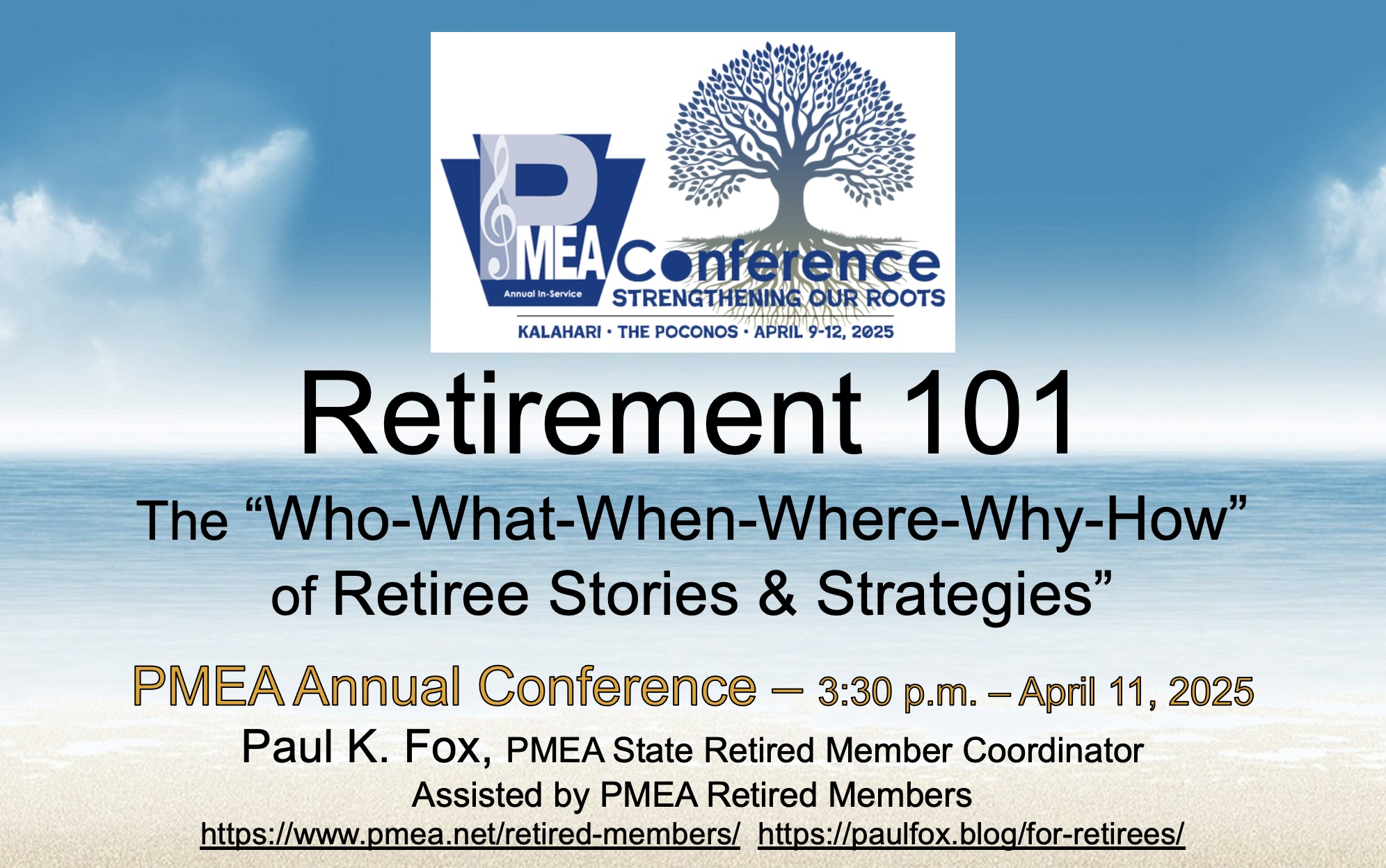
Back by popular demand (or is that just ego and in my head?), we will offer the session “Retirement 101 – the Who, What, When, Where, Why and How of Retiree Stories & Strategies” on Friday, April 11, 2025 (3:30 p.m.) during the PMEA Annual Conference at the Kalahari Resort in the Poconos. A guest panel of PMEA Retired Members will assist and offer their advice answering key questions like the following:

  1. How have you found happiness and success in retirement?
  2. What “new” hobbies, volunteer projects, trips, family connections, and encore careers have you been exploring?
  3. What did you do to reinvent yourself and how did you satisfy those essential “big three” goals of post-full-time employment: finding purpose, structure, and community?
  4. How did you navigate the early phases of retirement? imagination, anticipation, liberation, etc.
  5. What were some of the transitional “ups and downs” you experienced and how did you cope with them?
  6. What are you still doing in music and education?

We are looking for more PMEA retiree volunteers who are planning to attend the conference to join “expert panelists” Rick Coulter, Jeffrey Dent, Dan Klingbeil, Chuck Neidhardt, Louise Victor, and Rich Victor. (Just email me if you’re interested.)

Retired Members are a valuable resource to PMEA. Many of us already serve on PMEA Councils and in District or State official positions. All of us in the profession benefit from the sharing of their extensive “boots-on-the-ground” experiences and wisdom. At the upcoming conference, Retired Members can serve as Presiding Chairs and introduce a session/concert or two. In addition, plans are also underway to sponsor (possibly on Thursday, April 9) a “coffee & conversation” corner or an “ask the expert” lounge. Spaces and the schedule are packed, but if it is possible, Executive Director Abi Young is trying to fit in an informal sitting area with retirees and mentors as “friendly folks” to serve as “gurus” for PCMEA members, newcomers to a music education specialty, or recent transfers to the field. Won’t you join us?

A longstanding tradition, we will be treated to a PMEA Retired Member Breakfast on Friday morning. (Just check the box on the registration form if you are coming… and, by the way, the conference fee is only $20 for Retired Members! What a deal!)

Why Attend the PMEA Annual Conference?

“For some of us, it’s a just chance to catch-up with our colleagues, see our friends, and socialize. Others are more focused and take advantage of the near-perfect opportunity to network with other professionals, perhaps seeking new working relationships, partnerships, or even employment. Many are on a look-out for newly published music, that perfect music lesson or teaching strategy, technology tools, fund-raisers, advance educational venues, or much-needed equipment to purchase for our ensembles or classrooms. Most come to hear/see the “state of the art” in music education – concerts, demonstrations, keynote speeches, panel discussions, exhibits, research presentations, and workshops. PMEA’s PD Council would likely submit that the primary purpose of a conference is for professional self-improvement… What did Stephen Covey call it? His Habit #7 of “sharpening the saw” – to build a balanced program of self-renewal in the four areas of your life: physical, social/emotional, mental, and spiritual. Covey would insist we embrace “the process that empowers us to move on an upward spiral of growth and change, of continuous improvement.” So, in short, conferences help us “grow” – to revive, re-inspire, re-energize, rejuvenate, re-direct, and re-motivate all of us – pre-service, active in-service, and retired teachers towards making successful new connections, updating our knowledge & skills, and forming new goals.”  – PMEA Retired Member Network eNEWS Winter 2024

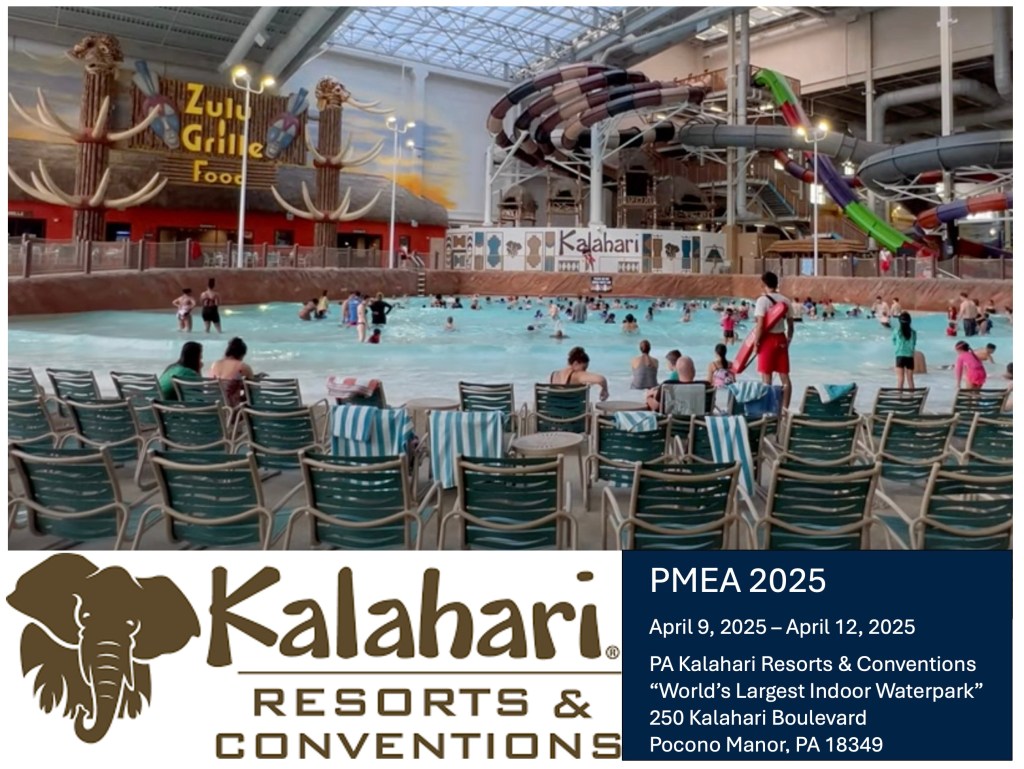
In addition, Kalahari Resort boasts “the world’s largest indoor water park,” the perfect place to bring family members to enjoy… especially (grand)children, (grand)nieces/nephews, etc.

Next month’s retirement blog by guest author Sierra Powell

One final announcement: In several weeks at this blog-site, we plan to feature a new guest blog entitled “Five Things You Need for a Comfortable Retirement” by Sierra Powell, along with updates of other resources for “living the dream!” See you next year?

OK, What is that “AI Thing?”

This 69-year old educator who has spent more than five decades in fostering creative self-expression in his students is fervently opposed to artificial intelligence. Actually, I thought I was allergic to “AI!” Every time I receive an Apple iPhone update or some new download for my computer, I complain, “Why have they moved that button? It doesn’t look or work the same! Why does everything have to change every month?” Slow down, techies!

However, to dabble in this new technology everyone’s talking about, I printed in my last PMEA Retired Member Network eNEWS on page one a sample article (click here for the Winter issue) compiled by AI Overview (Google). I shared this with an adult violin student from my Saturday orchestra who decided to show me the power of AI (not the old AI I am more familiar with – artistic intelligence!). She used her subscription to a ChatGPT to process my brief outline on the topic “retirement transitioning.” Below is the result generated from a few of my random notes. Created in the first person, AI matched my writing style, a chatty/informal letter printed for soon-to-retire colleagues along with research citations. Frankly, it scares me how close this sounds like something I could have composed! Can you tell it was artificially generated? Does this mean we will we have to teach this old dog (fox) new tricks?

Check out these valuable retirement hints courtesy of ChatGPT!

The Retiree Life: Navigating the Art of Reinvention & Emotional Balance

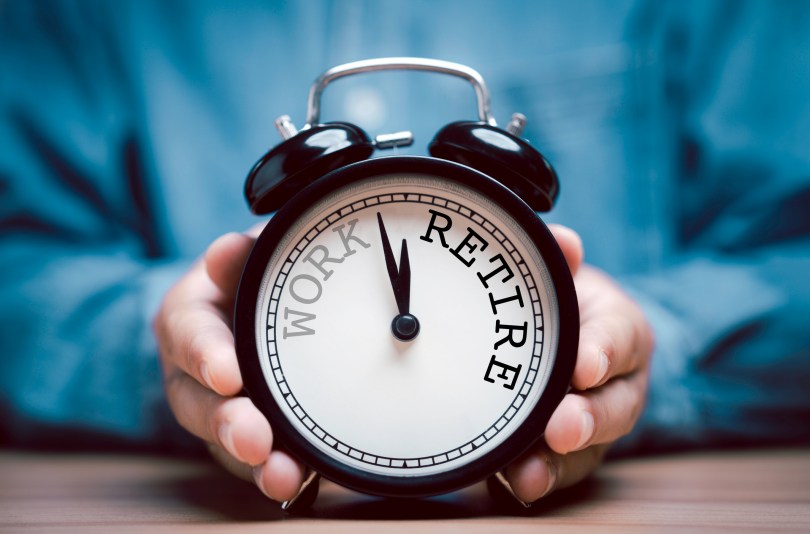
Here with some reflections, tips, and maybe even a little nudge for us all as we continue this grand adventure called retirement. Whether you’re still finding your rhythm or already feel like a pro at this, there’s always room to reflect, grow, and laugh along the way.

This week, let’s talk about something near and dear to every retiree’s journey: reinventing yourself and coping with the emotional ups and downs that come with this new chapter.

Reinventing Yourself: A Second Act Worth Applauding

Remember when we taught our students to embrace creativity and adapt to change? Turns out, retirement demands the same skills. It’s no longer just about what you did—it’s about who you are.

Reinvention isn’t about completely overhauling your identity. Think of it as expanding your repertoire. Studies show that retirees who actively pursue new interests or roles report higher life satisfaction (Wang et al., 2011). Whether it’s picking up the instrument you haven’t touched in decades, volunteering, traveling, or even starting a small business, the key is to stay engaged.

Here’s a thought experiment: What did you always wish you had time to do but never could because of lesson planning, rehearsals, or concerts? Now’s your chance. I’ve recently heard about retirees dabbling in everything from watercolor painting to writing mystery novels. One retiree even became a beekeeper—talk about a sweet second act!

(From past blogs, the Retirement 101 session, and Retired Member Network eNEWS reviews)

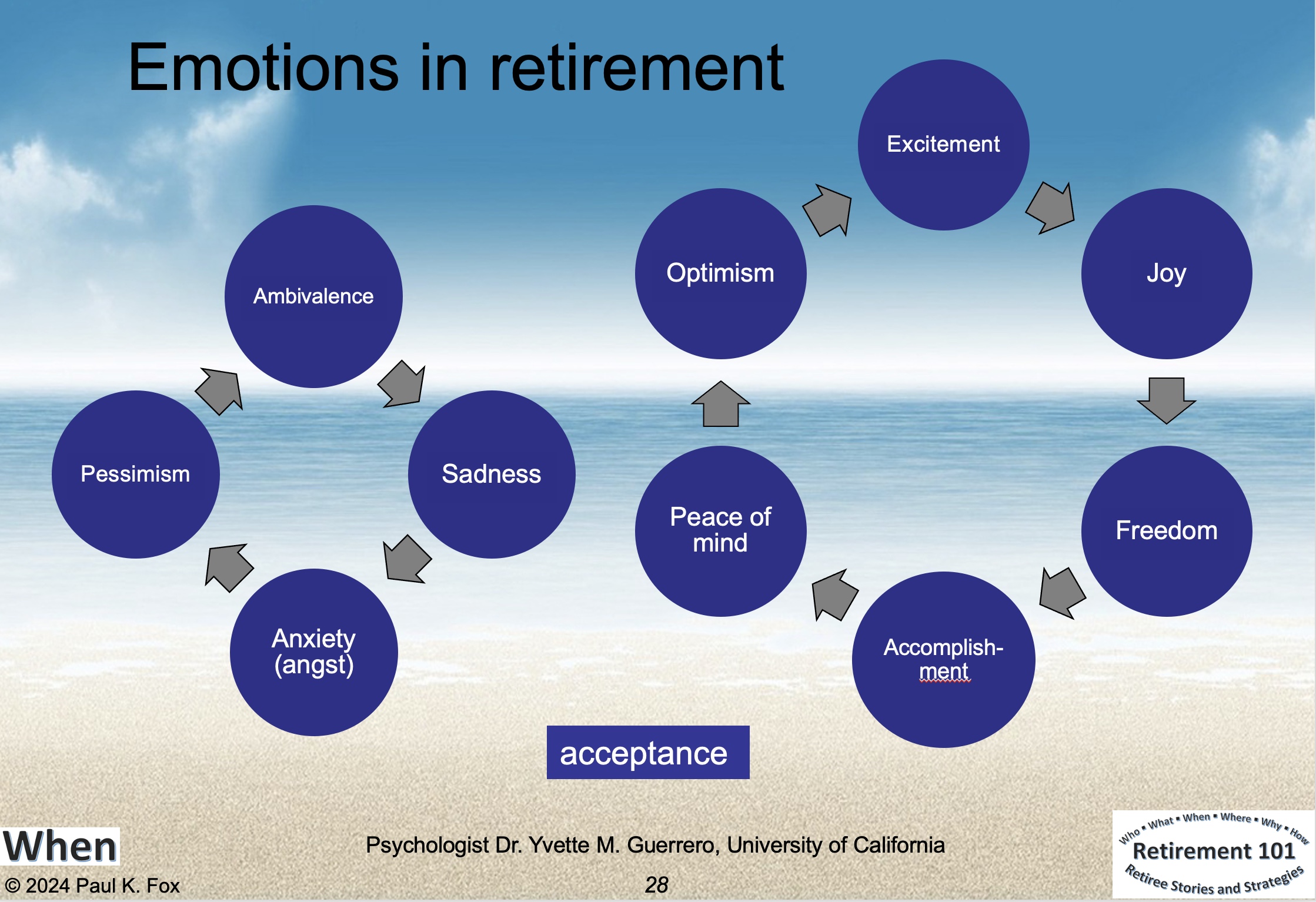
The Emotional Journey: Ups, Downs, and Everything in Between

Let’s not sugarcoat it: retirement is a mixed bag. There’s the freedom (hooray!), but also the occasional pang of loss—of identity, routine, or the camaraderie we had in our teaching careers.

The good news? You’re not alone. Research by Pinquart and Schindler (2007) highlights how important it is to acknowledge these feelings rather than sweep them under the rug. Adjusting to retirement is a process, and it’s okay to feel a little off-balance at times.

Here are a few tried-and-true strategies to help you navigate the emotional terrain:

  • Stay Connected: Loneliness can creep in when you least expect it. Keep up with PMEA activities, or start a retirees’ coffee group. Who better to laugh with about the time your marching band got rained out?
  • Practice Mindfulness: Before you roll your eyes, hear me out! Even just five minutes of quiet reflection a day can reduce stress and boost mood (Chopra et al., 2020).
  • Find Meaning: Volunteering or mentoring can give you a sense of purpose that’s deeply fulfilling. You’ve got a wealth of wisdom—share it!

AI of the future?

The Bottom Line

Retirement isn’t a destination; it’s a journey. And like any good road trip, it comes with unexpected detours, scenic overlooks, and, yes, the occasional pothole. The trick is to embrace it all with curiosity and a sense of humor.

If you’re struggling, remember: reinventing yourself doesn’t happen overnight. Take it one day at a time, and don’t be afraid to reach out for support—whether it’s from family, friends, or your fellow PMEA retirees.

Let’s keep the conversation going. What’s your “second act”? Have you discovered a new hobby or way to cope with the emotional shifts of retirement? Shoot me an email or share your story at our next meeting. Together, we’ll continue to learn, grow, and make this chapter one to remember.

Until next time, keep smiling and stay curious!

References:

Wang, M., Henkens, K., & van Solinge, H. (2011). Retirement adjustment: A review of theoretical and empirical advancements. American Psychologist, 66(3), 204–213.

Pinquart, M., & Schindler, I. (2007). Changes of life satisfaction in the transition to retirement: A latent-class approach. Psychology and Aging, 22(3), 442–455.

Chopra, A., Anthonisen, S., & Reeves, A. (2020). The role of mindfulness in retirement satisfaction. Mindfulness in Aging Journal, 7(4), 312–320.

PKF

© 2024 Paul K. Fox