
Food for Thought for “Getting Your Stuff Together”
Once in awhile, someone suggests an article that might be suitable for everyone who stumbles upon this website… retired (but very busy) music teachers, active music educators, collegiates, and music students of all ages. Of course, I cannot resist putting together my own list of ways to become a better time manager and efficiency expert… mainly because I was never that organized when I taught classes in three buildings, assisted in marching band, produced plays and musicals, and served as a curriculum leader during my 35+-year career. (“Do as I say, don’t do as I do…” or did!) It’s now easy to recommend… and after trolling the Internet a little, backing up this advice with numerous “expert” protagonists.
1. Throw out the “to-do list” and use a calendar
“Millionaires don’t use to-do lists. If something truly matters to you, put it on your calendar. You’ll be amazed at how much the likelihood of getting it done increases.”
– Srinivas Rao at https://getpocket.com/explore/item/why-calendars-are-more-effective-than-to-do-lists
According to The Muse (https://www.themuse.com/advice/8-expertbacked-secrets-to-making-the-perfect-todo-list), “41% of to-do tasks are never completed.” Janet Choi on LifeHacker (https://lifehacker.com/5967563/master-the-art-of-the-to-do-list-by-understanding-how-they-fail) maintains that for most people, there are four problems for using to-do lists:
- We have too many to-do’s.
- We’re not good at making to-do lists.
- We give ourselves too much time.
- “The future is full of unknowns, interruptions, and change.”
 Supported by Dan Ariely and his team at Timeful (a company acquired by Google), Srinivas Rao writes at https://getpocket.com/explore/item/why-calendars-are-more-effective-than-to-do-lists that we should throw away the to-do list and use a calendar app like Google Calendar for tasks and reminders, to set goals, and to schedule meetings.
Srinivas adds, “Just the act of putting these things on the calendar for some reason seems to significantly increase the likelihood that I actually do them.”
2. But there’s still a good reason for keeping your a note-taking app.
Combine a virtual assistant like Apple “Siri” or Amazon “Alexa” with an application like “Evernote” for “brainstorming” to get your thoughts organized.
Perhaps creating to-do lists may or may not work in your day-to-day environment, but the use of note-taking apps with voice-activated personal assistants may be the ticket to sketch out your short to long-term planning and even respond to email or other forms of writing drafts. Basically, I find I talk faster than I can type!
Jill Duffy offers these assessment criteria for picking the “best for you” digital note-taking tool at the blog-site Zapier (see https://zapier.com/blog/best-note-taking-apps/):
 Easy to set-up
- East to use
- Specialized to fit your needs
- Good value (some require no subscription fees)
She reviews Evernote (my personal favorite), Microsoft OneNote, Paper, Quip, and Simplenote for day-to-day use.
A lot of my blog writing is generated using voice recognition by Siri dropped into the Evernote app. It has worked well for me. However, if you are running errands in the car, or even taking a longer trip on the highway, it is not recommended to dictate your manuscript while driving! Your attention is drawn away from watching the road to check on the status of your “writings,” and Siri does not always hear things right the first time! Even if you do not look at your phone while talking to your device, you will find that your distracted “brainstorming out-loud” may cause you to miss an exit or even sit unresponsive at a green light. Never note-take and drive at the same time!

3. Of course, you have to set priorities!
I was never good at going from brainstorming to finalizing the goals and action plans! It seems easier to “think outside the box” than to construct that multi-leveled box of jobs!
Tatyana Sussex at Liquid Paper (https://www.liquidplanner.com/blog/how-to-prioritize-work-when-everythings-1/) proposes these steps for “How to Prioritize Work When Everything Is Number 1.”
- Collect a list of all your tasks.
- Identify urgent vs. important.
- Assess value.
- Ordered tasks by estimated effort.
- Be flexible and adaptable.
- Know when to cut.
Benjamin Brandall contributes additional insight on systems for prioritizing at https://www.process.st/how-to-prioritize-tasks/, defining “the Four D’s” (see section #5) and my favorite concept, “When you have two frogs to eat, eat the ugliest one first.”
Finally, should you feel you need it, definitely revisit the inspiration of Stephen Covey, especially in his book, First Things First or this website: https://www.franklincovey.com/the-7-habits/habit-3.html.
4. Creative things should come first!
 As musicians and music teachers, this suggestion may hit home: Do something that stimulates your “right brain” with acts of personal self-expression or artistry every day, and schedule it both intentionally and early!
What makes you want to get out of bed in the morning? Playing an instrument or singing? Composing? Writing? Painting or drawing?
I have previously blogged about ways to enhance your daily creativity quotient:
- https://paulkfoxusc.wordpress.com/2016/02/17/an-engaged-mind-makes-for-a-happy-retiree/
- https://paulkfoxusc.wordpress.com/2016/05/01/lessons-in-creativity/
- https://paulkfoxusc.wordpress.com/2016/07/16/more-lessons-in-creativity/
I also like this Inc. article: “32 Easy Exercises to Boost Your Creativity Every Day.”
“Here is what I’ve learned from these creative warm-ups: my thinking continues to be more flexible and multi-dimensional throughout the day. I approach work challenges with less fear and more playfully; I’m more open to see things in new and unexpected ways… And that makes all the difference.”
– Ayse Birsel, author of

5. Adhere to the “four D’s” system of productivity.
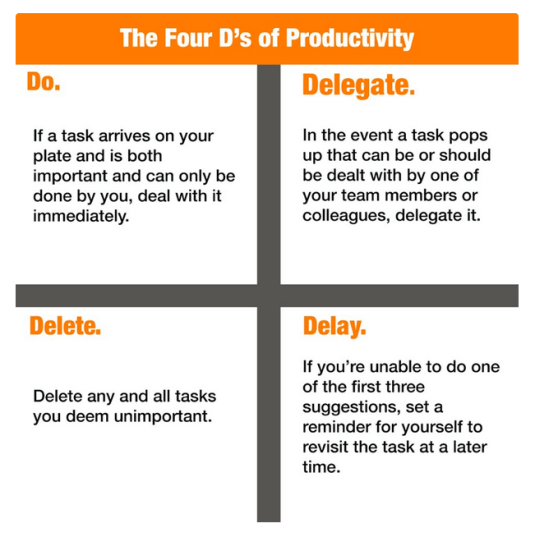
Have you heard of Priority Manager or other systems of paper and digital notes management? My favorite… the four D’s was previously blogged at https://paulkfoxusc.wordpress.com/2017/12/01/help-how-does-one-keep-up/.
- Do it! (Act on it immediately!)
- Delay or Date it! (Assign it to the future!)
- Delegate it! (Give it to someone else to do!) or
- Dump it! (Delete or move it into the trash)
Check out the practical advice unveiled at https://blog.hubspot.com/sales/4-ds-of-productivity. I particularly liked Mike Renahan’s visual which sums up the system:
6. Devote at least 30 minutes a day to professional reading.
“Why did the busiest person in the world, former president Barack Obama, read an hour a day while in office?”
“Why has the best investor in history, Warren Buffett, invested 80% of his time in reading and thinking throughout his career?”
“Why has the world’s richest person, Bill Gates, read a book a week during his career? And why has he taken a yearly two-week reading vacation throughout his entire career?”
Answer? “If you’re not spending five hours per week learning, you’re being irresponsible.”
– Michael Simmons at https://qz.com/work/1124490/5-hour-rule-if-youre-not-spending-5-hours-per-week-learning-youre-being-irresponsible/
***
“In the busy teaching day, it can often be the last thing on your mind to dive into some professional reading. So, why should you make it a priority and how can you utilize your time effectively to fit it in?”
– Hazel Brinkworth at https://www.teachertoolkit.co.uk/2018/10/09/time-to-read/
It seems obvious, doesn’t it? Teachers have to “keep up” with their “craft,” explore  developing innovations, trends, and movements in their field, and embrace better instructional techniques and use of media for their students!
“I don’t have time” means you are not a true professional. Doctors and other medical care providers, lawyers, investment counselors, clergy, etc. – you name the “profession” – must continually renew their knowledge-base and “sharpen their saws.” Regular reading and attending conferences help motivate you, “recharge your batteries,” retool for the formation of new goals, review better strategies, and introduce improved teaching methods, materials, literature, and technologies.
The aforementioned Teacher Toolkit website scripts tips on how to get started:
- Focus your topic of interest.
- Know where to look.
- Listen instead of reading!
- Set aside a regular time slot in your week.
- Find a quiet place.

7. Cut back on your “screen time,” especially closer to your bedtime.
“There’s a lot of debate about how much screen time is too much screen time, specifically for children, but also for adults. Likely you’ve heard about how it’s a good idea to stop using our electronics in the evening so you can wind your brain down for bed. But when it comes to screen time, the only thing that seems conclusive is that there’s such a thing as too much and that it may be different for everyone and depend on the circumstances.”
–
Interesting Engineering blog-site offers these “11 Easy Ways to Reduce Your Screen Time” (https://interestingengineering.com/11-easy-ways-to-reduce-your-screen-time).
- Eat your meals without a screen
- Limit your non-work screen time
- Don’t watch movies or TV in bed
- Cut down on computer socializing
- Set a timer
- Ban phone charging from the bedroom
- Take up another hobby for boredom
- Schedule a meeting phone call instead of using chat
- Think of other ways to access information
- Get your news in a condensed feed
- Exercise while you watch
8. Are you getting enough sleep?
 The answer is… probably not.
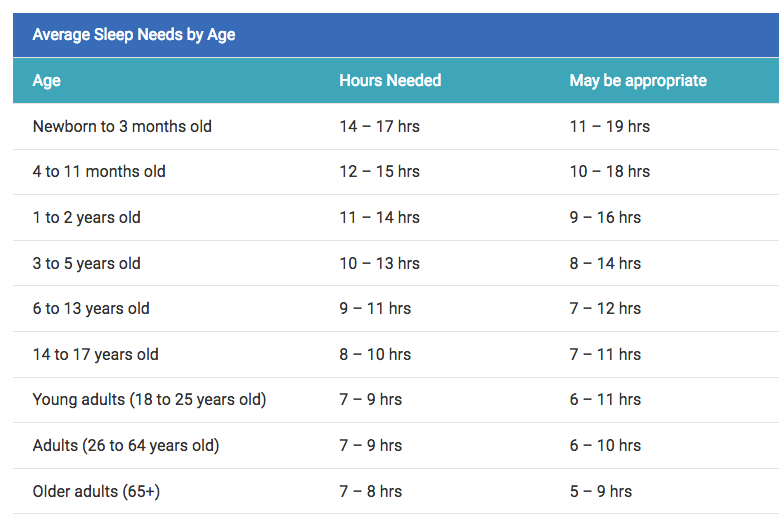
According to a 2013 Gallup Study (the last year Gallup published a sleep study), the average American sleeps only 6.8 hours a day — and that number may be getting worse over the last several years.
Most experts recommend we receive 7 to 9 hours per night, but the quality of sleep is just as important as the quantity. The HelpGuide website (https://www.helpguide.org/articles/sleep/sleep-needs-get-the-sleep-you-need.htm/) posted this chart with data from the National Sleep Foundation:
Brittney Morgan at https://www.apartmenttherapy.com/how-to-hack-your-sleep-schedule-and-get-your-full-8-hours-242712 suggested these remedies:
- Ease into an earlier bedtime.
- Rethink how you use alarms.
- Create a sleep routine.
- Unplug and de-stress before bed.
- Write out your thoughts.
- Limit alcohol and caffeine
 I remember when I taught full-time and was in the middle of a full-blown musical production, I sometimes laid awake feeling “stirred up” inside trying to think of all the things I needed to do the next day. #5 of Brittney’s list is solved by putting a legal pad and a good pen by your bed stand, and without awakening your spouse, roll over and jot down a few of your “don’t forgets.” Or if you prefer to use the magic of technology, you can do this digitally… take a minute or so and use your tablet or smartphone, but don’t stay up very long and let the screen’s blue-light make your insomnia worse. Revisit title heading #2 above for note-taking apps.
It’s absolutely amazing the number of sources you can find on the web for additional advice for improving your sleep habits:
- https://www.organizeyourselfskinny.com/tips-for-creating-better-sleep-habits/
- https://www.thesleepdoctor.com/how-to-sleep-better/
- https://www.pushdoctor.co.uk/blog/43-ways-to-sleep-better
- https://bettersleep.org/better-sleep/top-15-better-sleep-tips/
9. Get rid of the stuff you don’t need
“Now and again, everyone faces a big life transition. For me, it was when I lost my father — right around the time I realized my kids were rapidly growing up (funny how that sneaks up on you, huh?). I started to think about how I really wanted to live my day-to-day life. From the clothes on my body to stuff in my home, I wanted to stop perpetuating things that made me feel bad about myself.”
“Much like Gilligan and his infamous “three hour tour,” what I thought might be a quick clean-out extravaganza turned into an epic, six-month journey through the nether reaches of my closets and my psyche. Along the way, I learned many things from Maeve about organization — and more than a few things about myself that changed my relationship with my stuff.”
“This is tough for anyone, but it’s a crucial step in regaining control over your stuff. I was really honest with myself, and resolved to not beat myself up over getting rid of (or donating) things we didn’t need — even if they were in good shape. When you start to think of your things as part of an ecosystem for your life, it becomes easier to pare down to only the stuff you really love.”
–
Ask yourself, how often do you “purge the junk” from your home?
Showcased on Beginning Minimalist, Joshua Becker also shares “10 Creative Ways to De-Clutter Your House” at https://www.becomingminimalist.com/creative-ways-to-declutter/. Be sure to read what he refers to the Oprah Winfrey Closet Hanger Experiment, now my “new favorite” way of discarding seldom-worn clothing.
10. Don’t forget to organize your living spaces.
In “7 Smart Organizing Tricks You Probably Have Not Tried” (https://www.realsimple.com/home-organizing/organizing/smart-organizing-tricks), Louisa Kamps recommends these logical time-savers and better spacing engineering techniques:
- Expose everything in your dresser drawers
- Store like with like.
- Be mindful of the pleasure your possessions give you.
- Keep your workspace clean and clutter free.
- Streamline your files.
- Create effective to-do lists (or see #1 above)
- Make “mise-en-place” a way of life.
Need more household tips? One Crazy House also provides a wealth of ideas in their blog-post, “17 Clever Organizing Tricks You’ll Wish You’d Known Sooner” by Donella Crigger at https://www.onecrazyhouse.com/organizing-tips-tricks/. And, if seventeen are not enough, what about over a hundred? Go to the Good Housekeeping’s site: https://www.goodhousekeeping.com/home/tips/g2610/best-organizing-tips/.
Hopefully these hints help you “tidy up” for the New Year, and bring you more productivity, peace of mind, and joy in your lives!
PKF
© 2018 Paul K. Fox

Photo credits in order from Pixabay.com: “young” by kaboompics, “checklist” by TeroVesalainen, “paper” by rawpixel, “important” by geralt, “cello” by enbuscadelosdragones0, “board”by rawpixel, “mobile” by kaboompics, “iPhone” by JESHOOTScom, “male” by Engin_Akyurt, “spiral-notebook” by kathrin, “minimalism” by bohemienne, “clutter” by Kasman, and “ring-binders” by AbsolutVision.

 The purpose of this short SHJO “Series to Share” is to get you started with some basic “how-to steps” to learn how to conduct. Truly, for success in directing an ensemble, the only thing you need to do is “give it a try” and practice those beat patterns with your favorite musical selections. During the Saturday SHJO rehearsals in December, we will give you the opportunity to direct the entire group and provide you a few hints!
 The mission of South Hills Junior Orchestra, which rehearses and performs at the Upper St. Clair High School in Pittsburgh, PA, is to support and nurture local school band and orchestra programs, to develop knowledge, understanding, performance skills, and an appreciation of music, to increase an individual member’s self-esteem and self-motivation, and to continue to advance a life-long study of music. Members of the Orchestra learn, grow, and achieve positions of leadership to serve their fellow members.
 documented to a great extent, stress, burnout, and stage fright have become real concerns for music education majors completing their coursework, juries/recitals/concerts, methods exams, student teaching, and other field experiences. This may be affecting statistics on college enrollments, graduation rates, and job placements!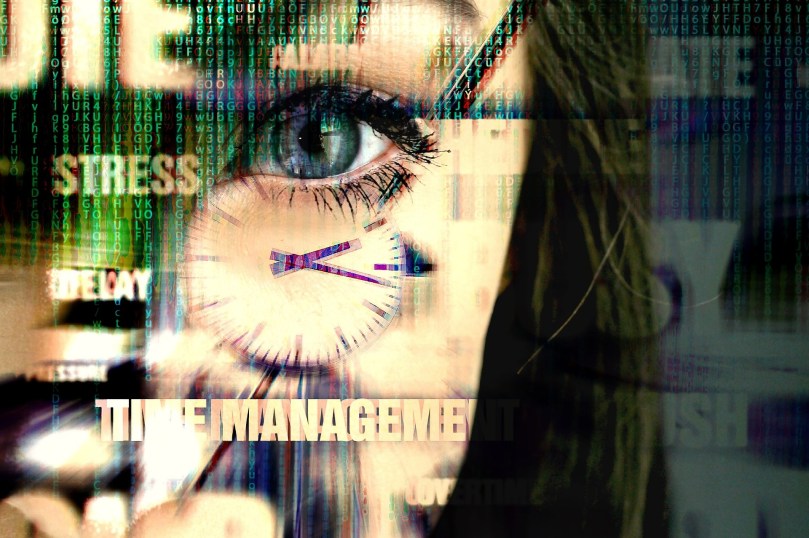
 College funding
 Music Teacher Education
 Learning to “manage your burdens,” class schedules, assignments, calendar, etc.
 2009), “deep listening” as “a way of hearing in which we are fully present with what is happening in the moment” (Barbezat and Bush 2014), contemplative movement activities including methodologies of Orff, Kodaly, Dalcroze, and Gordon adapted for other music teaching contexts (Benedict, 2010), walking meditation, tai chi ch’uan, yoga, and labyrinth walking (Center for Contemplative Mind in Society, 2016), contemplative reading, writing, and other self-help practices.



 “When musicians think about performing, they eventually think about performance anxiety — ‘stage fright.’ Performance anxiety can be defined as a physical and mental deviation from a ‘normal state’ and is perhaps one of the most misunderstood areas of performance practice… A reduction in anxiety levels especially with musicians with extensive formal training may actually diminish performance quality. For musicians with low mastery skills, the prudent approach would seem to be to undertake more formal training.” — Donald L. Hamann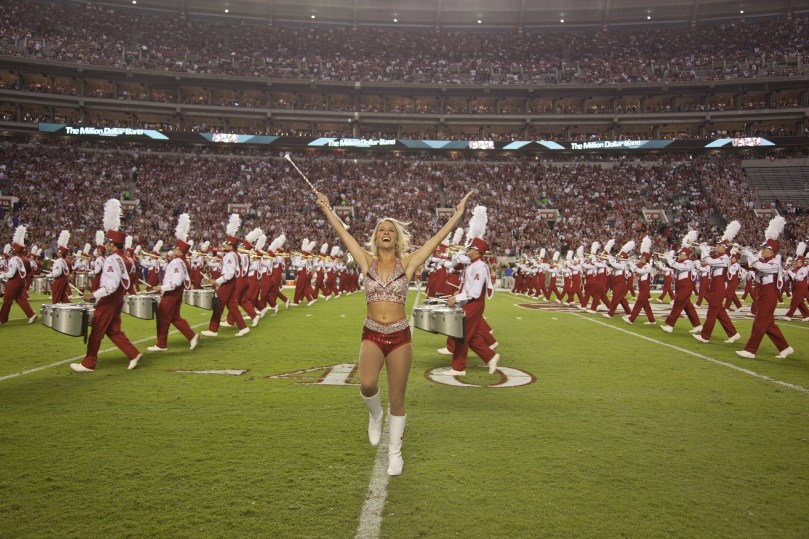

 Job placement

 you to reflect and respond to “what would you do?” and even re-orient you to the paradoxes in which you may encounter that may not seem to offer an obvious resolution.
 Use of social media networks to support student learning versus the risk of crossing the student/teacher boundary with inappropriate informal communications? (See
  To foster meaningful scrutiny and study of the bulleted issues in bold above, we will sort these problems by Principle III “Responsibility to Students” and Principle IV “Responsibility to the School Community” of the National Association of State Directors of Teacher Education and Certification (NASDTEC) “Model Code of Ethics for Educators” (MCEE):



 MY SOLUTION: This is more common than you would like. This episode compels you to figure out how to wear two unique hats simultaneously – the educator and the judge. Assuming you were clear (in writing) on the requirements of the try-outs, even sharing the blank rubric that would be used for the evaluations, you are now charged to find the “best” person for each lead assignment based on a number of criteria:
 Workplace” are applicable






 now would be the perfect time to explore supplemental resources and get a “head-start” on additional pre-service training for next fall. These tips are especially valuable to anyone entering his/her senior or final year as a music education major, finely honing in and marketing your skills as a professional in order to be prepared for finding and succeeding at your first job.

 Mix and mingle to improve your networking opportunities


 Understanding specific educational jargon and the latest approaches, applications, and technologies in the profession (e.g. Backwards Design, The Common Core, Whole Child Initiatives, Multiple Intelligences, Depth of Knowledge and Higher Order of Thinking Skills, Formative, Summative, Diagnostic, and Authentic Assessment, etc. – Do you know the meaning of these terms?)
 You need to ask yourself the question, “What are my greatest weaknesses in music education?” Or, to put it another way, “What school assignments would I feel the least confident to teach? After earning your state’s all-essential credential, your certificate will likely be general and only say “music Pre-K to Grade 12.” Administrators will expect you can “do it all” – introducing jazz improvisation at the middle school, accompany on the piano or guitar all of the songs in the grades 1-6 music textbook series, directing the marching band at the high school or the musical at the middle school, starting an elementary string program, etc.
 Since music teachers are all “fiduciaries” (do you know the meaning of the word?) and legally responsible for our “charges,” wouldn’t it be a good idea to review our state’s regulations and code of conduct, and hear about the challenges and pitfalls of ethical decision-making before we jump in and get “over our heads,” so-to-speak?
 ask your cooperating teacher (or his/her supervisor’s) permission. Some school districts have “do not photo” rosters. (However, in my district, only a few elementary students were “on the list” and most defaulted to a “permissible” status unless the parent opted out. The principal’s secretary had a record of all exceptions.) It is also suggested that you focus your camera mostly on YOU and not the students, from the back of the classroom or rehearsal facility (possibly from afar), so that the student faces are not clearly discernible. To respect their privacy, in the recorded excerpts, do not use any segment announcing the names of your students.



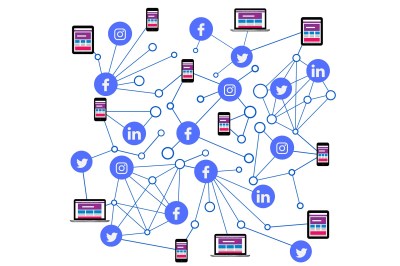
 When MySpace and Facebook came upon the scene in 2003 and 2004, most school administrators recommended “stay away from these.” The online sharing and archiving of photos initiated the adoption of many other social media apps (Flickr and later Instagram, Tumblr, Snapchat, etc), which provoked new challenges in maintaining privacy, appropriateness, and professionalism. Danger, danger, danger!
 Communicating digitally or electronically with students may lead to the blurring of appropriate teacher-student boundaries and create additional challenges to maintaining and protecting confidentiality.
 www.gmajormusictheory.org
 Pennsylvania State Education Association (PSEA):
  posts with your school’s location.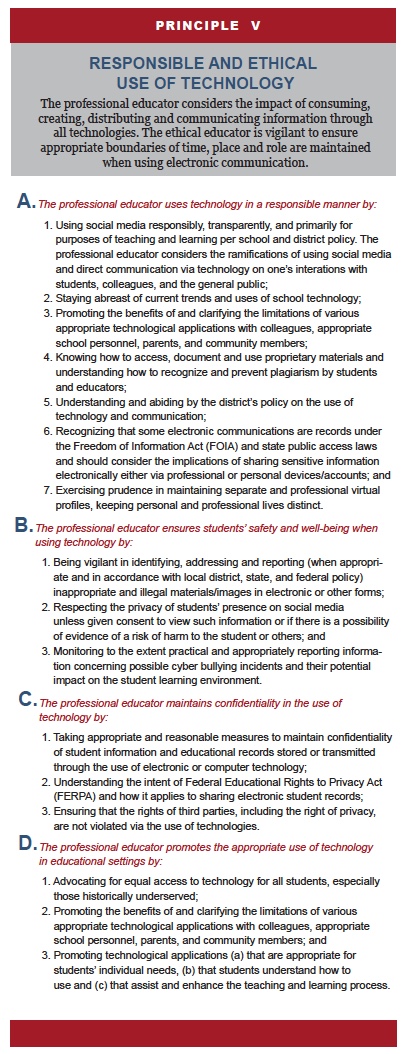
 To “wrap-up” our final segment, we will review the development of a professional “marketing plan.” This is blog #3 out of 3. (Be sure to also check out
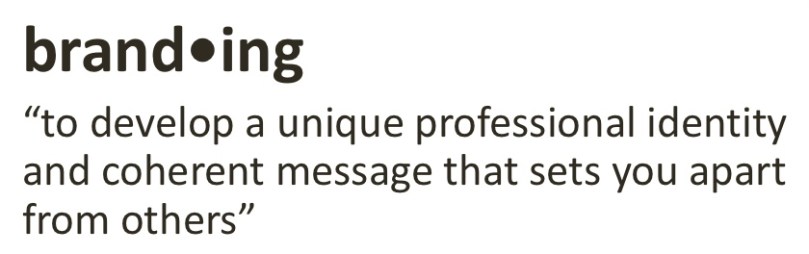
 Shama Hyder posted “7 Things You Can Do to Build an Awesome Personal Brand” at
 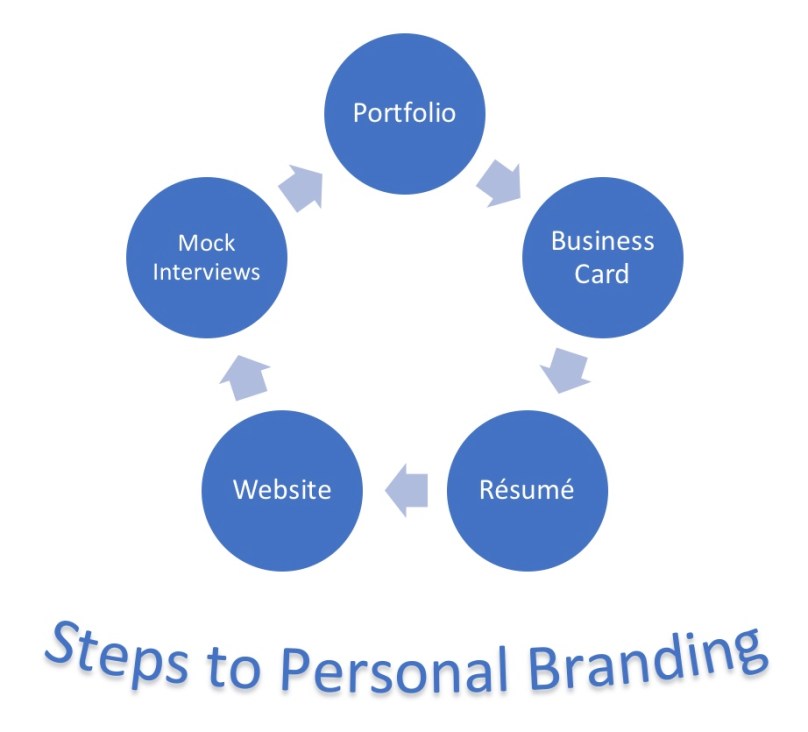 The branding process involves first developing your philosophy of music education, archiving your awards and accomplishments, documenting your grades and
  experiences, and collecting stories/personal anecdotes of your strengths. The next steps include the creation of a written and electronic portfolio, business card, resume, and website. Finally, you must compile/assemble everything together and practice (and self-assess) your “story-telling skills” to answer those important questions at well-rehearsed “mock interviews.”
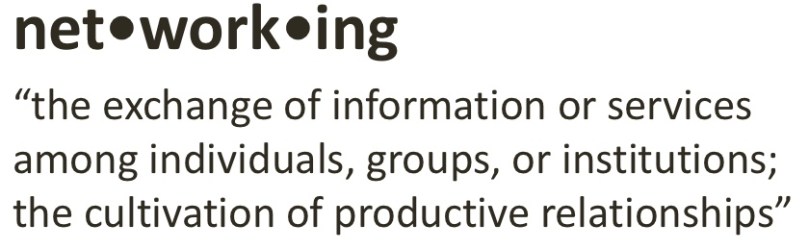
 As I laid out in a previous blog “Networking Niceties: The ‘How-To Schmooze’ Guide for Prospective Music Teachers” at
  The above blog-post also explores setting up a good organizational system to manage your professional contacts.
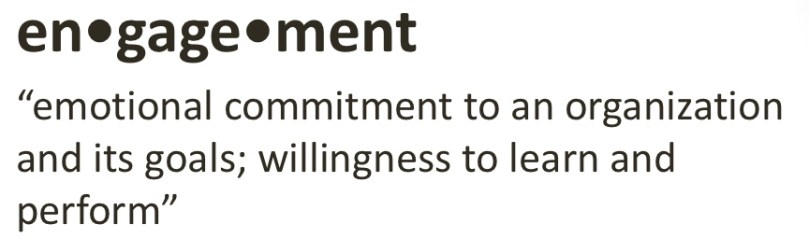
 Self-reflection of the professional’s teaching practices and modification of these as needed to match changes in the environment and circumstances

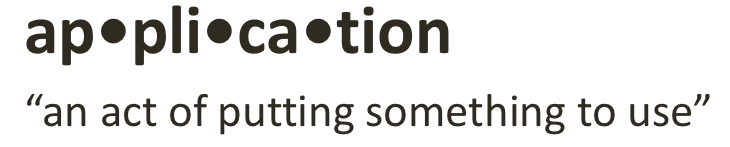
 The Common Core
 Behavior management, disciplinary procedures (especially preventive practices) and posting class or ensemble rules
 However, in the methods classes that come later (perhaps in the second through fourth year?), the basics of “how-to teach” will come. Of course, as you sit in a class teaching you to “cross the break” on a clarinet or play a scale on the flute with good tone, you must also absorb (and remember) the finite steps required in the lesson to pass on this knowledge and skill, not just honk or squeak a few times to master the proficiency exam for yourself.
 Of course, these are “trick questions.” The answer should be “I want to teach music,” or even better, “I want to teach children.” In most of the school districts across the country (with a few exceptions in the Midwest and places that accept teaching specialty certification by grade level or subject area), you are licensed to teach music in grades Pre-K to 12. At no point in any conversation with a potential administrator (or colleague who may become a member of the screening committee for a music opening) do you want to be “pigeon-holed,” or give the impression “I can only teach_____.”
 Accompany, direct/teach the drama, and choreograph the middle school musical.
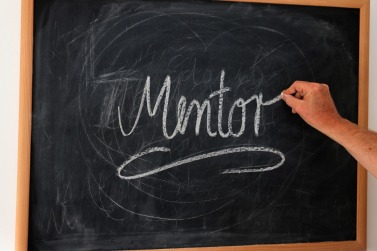 Ego and arrogance has no place in the teaching profession. Where did I hear this saying? “The more you think you know, the less you actually know.” Joining a mentoring program or finding a formal or informal veteran teacher “buddy” will go far to insuring your professional success and dodging those first-year teacher “pot holes” (dumb but common blunders) and “rookie blues.”

 Retired music teachers are another excellent resource. For example, if you live or work in Pennsylvania, many post-employed PMEA members have placed their name and contact information on the Retiree Resource Registry to serve as willing, capable, and informal consultants for pre-service, novice, or other members recently transferred into a non-major specialty “outside their comfort zone.”
 Please feel free to comment on this blog-post. What are your thoughts?
 Before long, you will shed the label and function of a “college student” (although still remaining a life-long learner… and never stop the quest for new knowledge and self-improvement!). The focus will shift from YOU to YOUR STUDENTS. The prerequisites for a career in education are unique and do not resemble the same challenges as success in business, manufacturing, retail, service industry, or becoming an entrepreneur, blue-collar worker, or even a composer or professional musician. The sooner you realize these are world’s apart, the better, and now is the time to finish your major and life-changing transformation to… a professional music educator.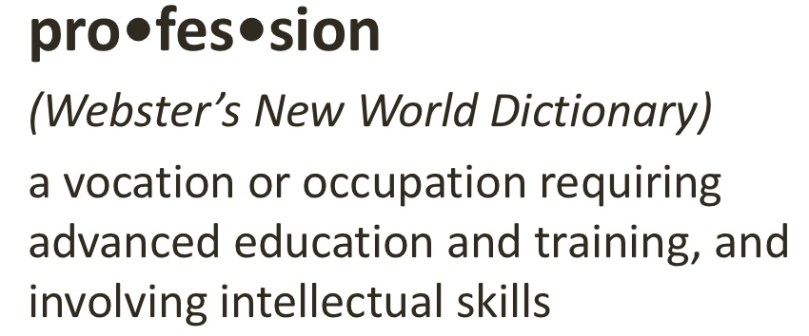
 Updates self with “constant education” and retooling
 Cooperation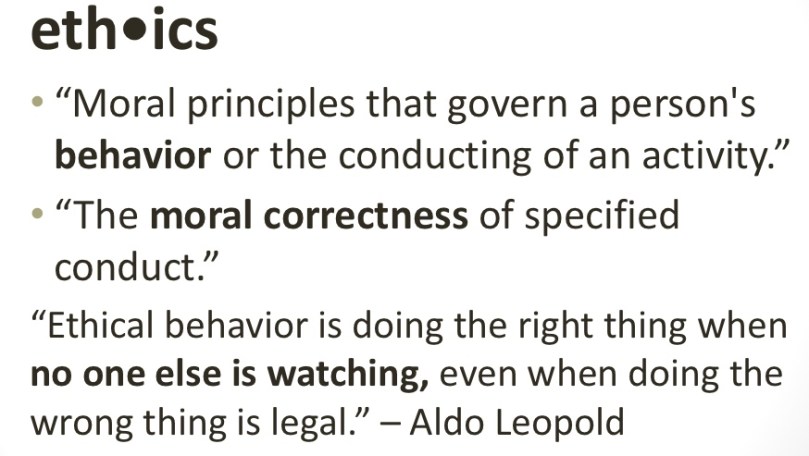
 National Association of State Directors of Teacher Education and Certification proposes these principles:
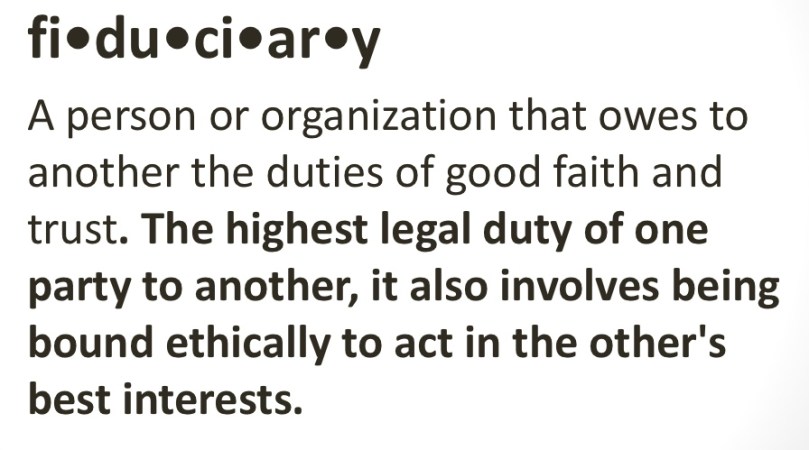 Here’s another query. What five groups of people are both “professionals” and “fiduciaries…” and have a legal responsibility to serve the best interests of their “clients?” The answer is… doctors/nurses, lawyers, counselors (both mental health and investment), the clergy, and… teachers.
  Although teachers seem to be the only one of these who DO NOT have formal pre- or in-service ethics training, and our “charges” represent a “captive audience,” our duty is clear: to act as a fiduciary for our students’ best interest, and to create and maintain a safe environment for them at all times.
 What do you believe about teaching?
 Take time to peruse these and others. Most of these sites also offer excellent examples of personal branding and marketing of the prospective job hunters’ experiences, skills, and achievements… material for our next blog on this topic.