
The Final Leap from Pre-Service to In-Service:
The Metamorphosis and Integration of Philosophy, Maturity, and Teacher Preparation
Are you ready to assume the role of a music teacher? Besides the completion of your coursework and field experiences, have you acquired the necessary attitude and personal skills? Do you “have what it takes” to become an ethical role-model, leader, and “fiduciary” responsible for the welfare and special needs of your students?
 Before long, you will shed the label and function of a “college student” (although still remaining a life-long learner… and never stop the quest for new knowledge and self-improvement!). The focus will shift from YOU to YOUR STUDENTS. The prerequisites for a career in education are unique and do not resemble the same challenges as success in business, manufacturing, retail, service industry, or becoming an entrepreneur, blue-collar worker, or even a composer or professional musician. The sooner you realize these are world’s apart, the better, and now is the time to finish your major and life-changing transformation to… a professional music educator.
This series for college music education majors will explore perspectives and definitions involving the evolution and (dare we say?) “modulation” to a productive and successful career in music teaching.
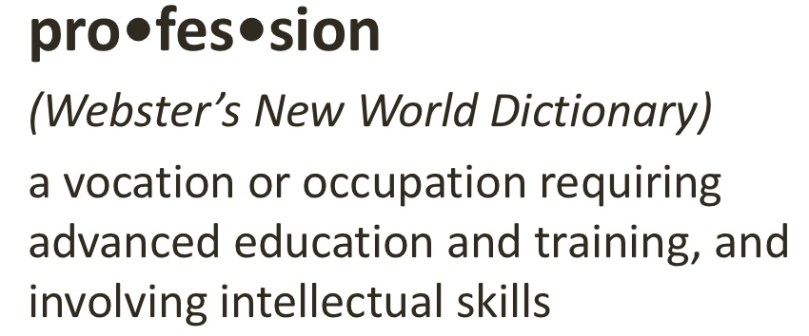
Professionalism
What does a “professional educator” look like? Do you belong as a member of this group?
- Succeeded in and continues to embrace “higher education”
 Updates self with “constant education” and retooling
- Seeks change and finding better ways of doing something
- Like lawyers/doctors, “practices” the job; uses different techniques for different situations
- Accepts criticism (tries to self-improve)
- Proposes new and better things “for the good of the order”
- Can seemingly work unlimited hours (24 hours a day, 7 days per week?)
- Is salaried (does not think in terms of hourly compensation, nor expects pay for everything)
- Is responsible for self and many others
- Allows others to reap the benefits and receive credit for something he/she does
- Has obligations for communications, attending meetings, and fulfilling deadlines
- Values accountability, teamwork, compromise, group goals, vision, support, creativity, perseverance, honesty/integrity, fairness, and timeliness/promptness
- Accepts and models a very high standard of behavior, etiquette, appearance, language, and ethics.
In addition to mastery of their subject matter, skills in collaboration, communication, critical thinking (problem solving), and creativity (also known as “the four C’s”), according to “The California BTES – Overview of the Ethnographic Study” by David Berliner and William Tikunoff, effective teachers regularly demonstrate these traits:
- Accepting
- Adult involvement
- Attending
- Consistency of message
- Conviviality
 Cooperation
- Engagement of students
- Knowledge of subject
- Monitoring learning
- Optimism
- Pacing
- Promoting self-sufficiency
- Spontaneity
- Structuring
However, effective teachers DO NOT score high on the negative attributes of abruptness, belittling, clock punching or counting hours, defiance, illogical views or statements, mood swings, oneness (treating the whole group as “one”), or self-recognition. Human resource personnel and administrators look for candidates who model (and can confirm their history of) the habits of the first group, with no evidence of the latter behaviors.
The bar is raised even further. In addition to holding oneself up to the highest standards of the education profession, teachers also exemplify “moral professionalism” in their daily work. As cited in the chapter “The Moral Dimension of Teaching” in Teaching: Theory Into Practice by E.A. Wynne, teachers must
- Come to work regularly and on time;
- Be well informed about their students and subject content-matter;
- Plan and conduct classes with care;
- Regularly review and update instructional practices;
- Cooperate with, or if necessary, confronting parents of underachieving students;
- Cooperate with colleagues and observe school policies so the whole institution works effectively;
- Tactfully but firmly criticize unsatisfactory school policies and propose constructive improvement.
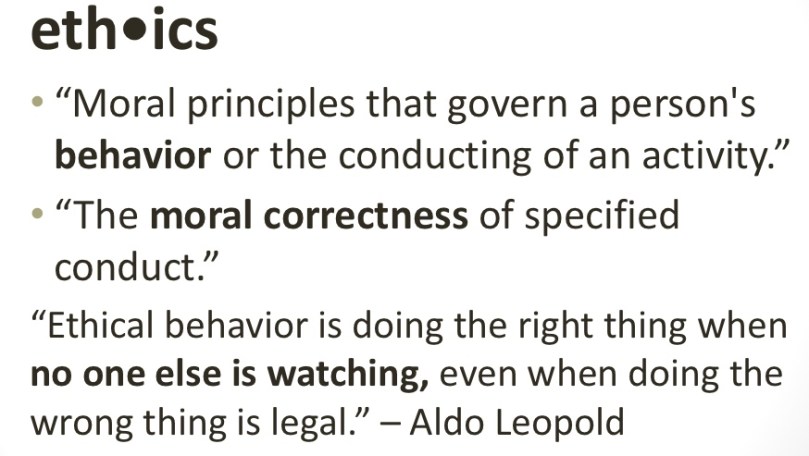
Ethics
Have you viewed your state’s teacher expectations, code of ethics, and code of conduct? It may surprise you that a number of seasoned professionals have never seen these documents. You may be ahead of the game if educator ethics were even mentioned briefly in a methods class, as indoctrination to student teaching, or orientation within the induction program of your first job.
The “code” defines the interactions between the individual educator, students, schools, and other professionals, what you can and cannot do or say, and the explicit values of the education profession.
No excuses! Better go look this stuff up. If you reside in Pennsylvania and plan to become employed there, go immediately to http://www.pspc.education.pa.gov/Pages/default.aspx. If your state does not have a code of ethics or state-specific conduct standards, download and consume this excellent reference: http://www.nasdtec.net/?page=MCEE_Doc. The  National Association of State Directors of Teacher Education and Certification proposes these principles:
- Responsibility to the Profession
- Responsibility for Professional Competence
- Responsibility to Students
- Responsibility to the School Community
- Responsible and Ethical Use of Technology
After reading all of this, what would be on proverbial “ethics test?” Well, can you answer questions like these?
- How do ethics inform a teacher’s personal and professional actions?
- What does it mean to be a “moral exemplar” or “role model” in the community?
- What are the professional expectations for working with diverse populations of students, parents, and colleagues?
- How should teachers handle social media and other electronic interactions with students?
- Do you see yourself as a potential “friend” or “confident” of the music students in your classes?
- Is it okay to accept personal gifts from students, their parents, or music vendors who do business with your school… or to give presents to students for no educational reasons?
For the last two questions, the response should be a resounding NO!
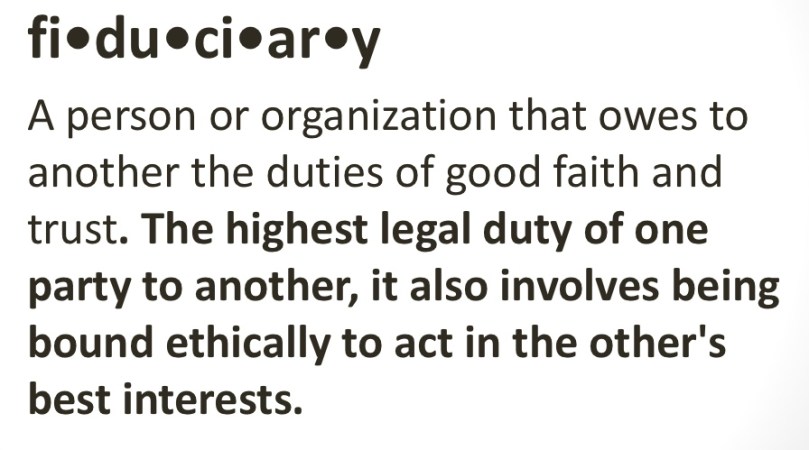 Here’s another query. What five groups of people are both “professionals” and “fiduciaries…” and have a legal responsibility to serve the best interests of their “clients?” The answer is… doctors/nurses, lawyers, counselors (both mental health and investment), the clergy, and… teachers.
 Although teachers seem to be the only one of these who DO NOT have formal pre- or in-service ethics training, and our “charges” represent a “captive audience,” our duty is clear: to act as a fiduciary for our students’ best interest, and to create and maintain a safe environment for them at all times.
The keystone of “right or wrong” and what your mother always said was “behaving appropriately when no one is watching you” are all about professional ethical standards that guide decision-making. The work of Troy Hutchings (among other leaders in this field) helps to further clarify these sometimes-blurred definitions:
Personal Morality: “Personal values and beliefs derived from one’s life experiences… subjective and may/may not align with community mores.”
Regulations of Law: “Policies, statues, and judicial activity that articulate conduct absolutes.”
Professional Ethics: “Professional ethical standards that assist practitioners within situation and systemic contexts in choosing the best course-of-action.”
Professional Dispositions: “Agreed-upon professional attitudes, values, and beliefs to be held by educational practitioners.”
For a comprehensive review on “Ethics for Music Educators,” please visit these links:
- Part I: Back to Basics
- Part II: The Nitty Gritty
- Part III: Case Studies
- Part IV: More Perspectives and Resolving a Few “Loose Ends”
All of these are available at https://paulkfoxusc.wordpress.com/category/ethics/.
At this point, if most of this makes you feel uneasy or uncertain, then perhaps it is time to switch majors and look into pursuing another line of work!
Philosophy
Have you written your personal philosophy of music education?
Regina Zona wrote in her article, “For Teachers: Writing a Music Teaching Philosophy Statement” that a music education philosophy statement is “a way to connect on a personal level to your students (current and potential) by stating who you are as a teacher (your beliefs and ideals), how you do what you do, and how that positively impacts the study of music.” If you have not completed your philosophy, here are her essential questions to guide your thoughts:
 What do you believe about teaching?
- What do you believe about learning? Why?
- How is that played out in your studio/class?
- How does student identity and background make a difference in how you teach?
- What do you still struggle with in terms of teaching and student learning?
She adds, “If you are having a hard time answering these questions, maybe because you haven’t been teaching very long, think on a teacher who made an impact on you (positive or negative), your education, your life. How did they communicate? Did they have passion for their work and if so, how did they express that passion? What were their methods of imparting the information?”
Read Zona’s entire blog-post at http://musiclessonsresource.com/writing-a-teaching-philosophy-statement.
Borrowed from the esteemed colleague and CEO of MusicFirst, Jim Frankel, is the introduction to many of his music education technology sessions, the foundation for teaching music in the schools:
- What is your personal mission? Why?
- What is the role of music in a child’s education?
- Are we creating performers, theorists, teachers… or lifelong music lovers?
If you are looking for sample philosophical statements, there are many “out there” on the Web. Here are several of my favorites:
- http://www.k-state.edu/musiceducation/eportfolio/archived/jhuey/Jessica_Huey/Philosophy_of_Music_Education.html
- http://personal-pages.lvc.edu/jmh006/philosophy.htm
- http://www.daviddockan.com/philosophy.html
- https://blogs.iwu.edu/mus497-choblin/music-education-philosophy/
 Take time to peruse these and others. Most of these sites also offer excellent examples of personal branding and marketing of the prospective job hunters’ experiences, skills, and achievements… material for our next blog on this topic.
Future blogs in this series will continue with a focus on these concepts:
- Moving from “Book Learning” to “Practical Application”
- Cultivating a Mentor or Two
- Personal Branding
- Engagement
- Networking
PKF
© 2018 Paul K. Fox
Photo credits (in order) from Pixabay.com: “tutor” by nrjfalcon1, “music” by brendageisse, “idea” by RobinHiggins, “woman” by RobinHiggins, “young” by RobinHiggins, “singer” by BEP, “ying-yang” by Printoid, “music” by davorkrajinovic, “isolated” by RobinHiggins, and “orchestra” by ernestoeslava.



 musical or athletic events, coaching or working with children in a coaching capacity, as a leader and role model.”
 If you can afford it, purchasing a simple domain name like your first and last name (something easy to remember) would be a great idea. Prospective employers will not have to write down a bunch of numbers, know your birthday, learn your nickname, etc. to find your e-portfolio. If you have an unique middle name or surname, you might luck out and be able to snag (and register) the perfect domain name. This was not possible for me! Do you know how many Paul Fox’s (even Paul K. Fox) are “out there” already taken?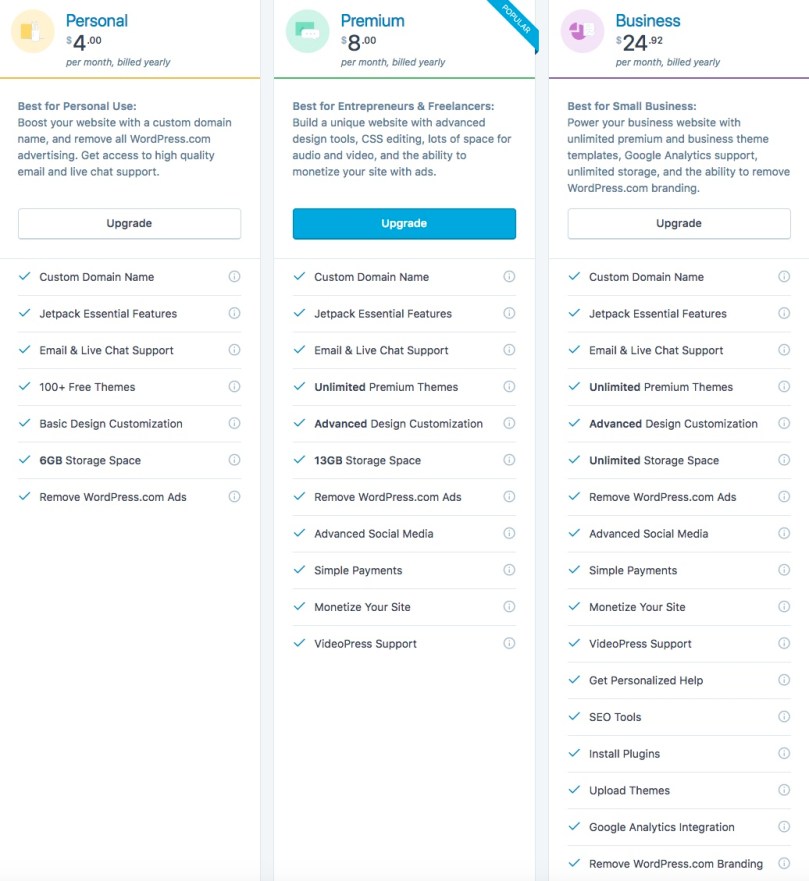
 To create your web site’s identity, WordPress will remove the dots and add their company’s moniker “.wordpress.com” at the end of your email name. That is how
 Showing your versatility, try to assemble a collection of still photos, audio examples, and videos that ideally represent all specialties in music education: choral, dance, general music, concert band and string instrumental, marching band, jazz, theater, etc., and demonstrate your proficiency in multiple settings at all grade levels.

 competence, and responsibility, and should probably error on the side of more formal attire rather than day-to-day casual.
 Suits are always a good choice.
 My view? Teaching is still among the most conservative of occupations. That is how it is viewed by the general public, parents of school-aged children, School Boards, administrators, and interview panels. You can certainly exercise your right to wear whatever you want and show-off numerous body piercings or tattoos… but, like it or not, the school districts are within their rights to choose someone else.
 As a “professional,” you have an open, inquisitive mind, constantly strive for self-improvement, continuing education, and retooling, embrace change and better ways of doing something, and “practice” your craft. This means you read your educational publications from cover to cover. For example, these were a few of the tips in a recent PMEA News article, “I’ve Got an Interview, Now What?” shared by Dr. Kathleen Melago, PCMEA State Advisor and Associate Professor of Music Education at Slippery Rock University, and Doug Bolasky, retired band and orchestra teacher and former Department Chair of the Southern Lehigh School District:


 The annual PMEA Spring Conference will be held on April 19-22, 2017 at the Erie Bayfront Convention Center. These sessions may be “perfect for PCMEA!”
 First things first! Prepare yourself in advance. Grab your winter or spring issue of PMEA News. Review the program of sessions which is usually laid out in chronological order and also by content strands (e.g. advocacy, choral, classroom music, collegiate, curriculum development/assessment, higher education research, instrumental, music technology, World Music, and special interest topics), as well as the list of keynote speakers, guest clinicians, showcase (music industry) demonstrations, association meetings (like PCMEA), and performances. Using an “old-fashioned” 20th century tool, mark up the conference schedule with two different colors of highlighter marking pens, first targeting “high interest” areas in yellow, and then “must attend” events in hot pink or other favorite color.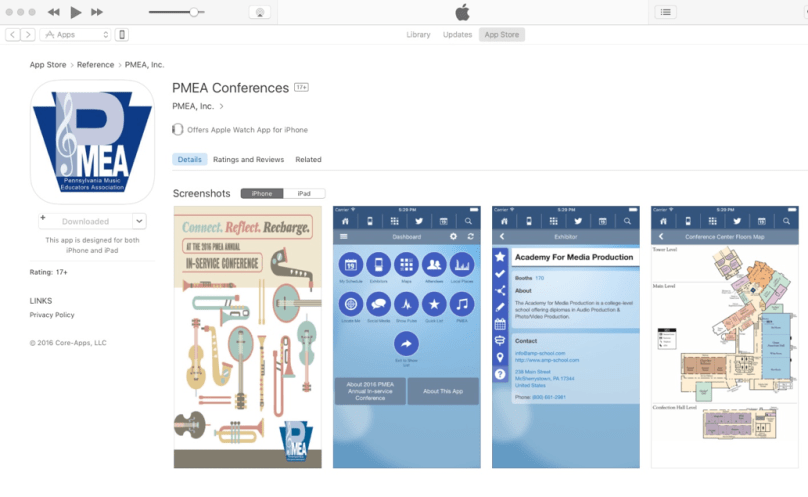
 DON’T focus exclusively on attending sessions or concerts in your specialty or most proficient areas, such as band if you’re a woodwind, brass or percussion major, orchestra if you are a string player, general music/choral if you are a vocalist or pianist. DO go to sessions that are not directly related to your major. You might be surprised at the connections you discover or the new interests that arise. Imagine “they” want to hire you next year as the next middle school jazz coach, HS marching band show designer, choreographer for the elementary musical, conductor of the string orchestra, teacher of AP music theory, etc. Could you select music for an elementary band (or choral) concert, create a bulletin board display for a middle school general music unit, set-up a composition project, or lead folk dancing at the kindergarten level?
 DON’T be shy! A conference is no place for being timid or afraid to start up a discussion with a more experienced music teacher. PMEA is all about circulating and introducing yourself, exhibiting your “charming self,” exploring resources and who are the experts/leaders in music education, getting the “lay of the land,” and adding as many names and emails to your professional contact data base as possible. Of course, DO follow-up with anyone who suggests that there may be a future employment posting from their school district!
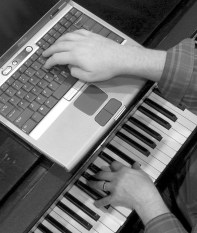 elf and ask a thoughtful question on some issue about which you are curious or found interesting.

 This article’s focus will be on the seemingly intangible… “body language!” Many say that during the interview, first impressions are critical — “the first ten seconds will create the interviewer’s first judgments about you, and then after four minutes, it’s all over.” The research also suggests that during the interview, the evaluation of your merit is based 7% on what you say, 38% on your voice or how you say it, and 55% on our facial expressions and non-verbal cues.
 Some of Cuddy’s assertions:
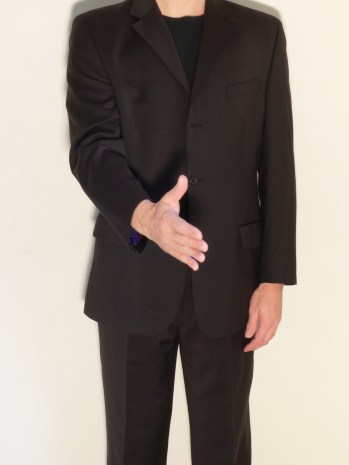 Practice handshaking with a friend before taking interviews.
 Although “the experts” are not always in consensus, especially on the subjects of eye contact and leaning posture, Desta’s tips summarized below provide additional enlightenment on how to use body language to promote a positive image:
 Music is one of life’s greatest treasures!
  Your joy of creative self-expression and “making music” will sustain you through almost anything… and will transfer to your students’ success in life.
 r mistakes (and there will be many) will be forgiven. Besides, there are usually no “single right answers” in music and art – only opportunities for divergent and flexible thinking, adaptability, and personal expression.
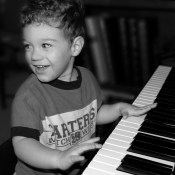 Music For All:
 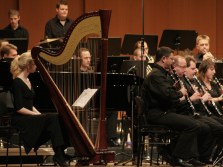 someone else, or sing solos at a local nursing home or senior center.
 Spend a lot of time sight-reading… especially on the piano. To take your ear-training training a step further, pull out your old folk-song sight-reading series or Hindemith’s Elementary Training for Musicians and practice musicianship exercises.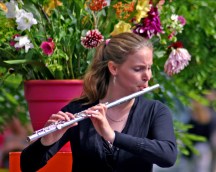


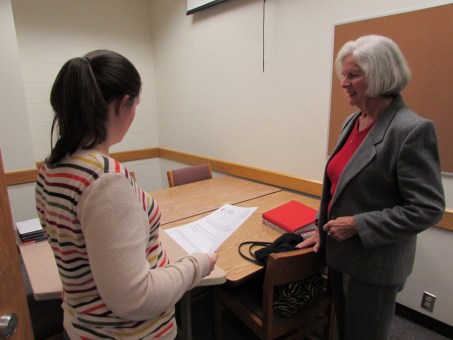

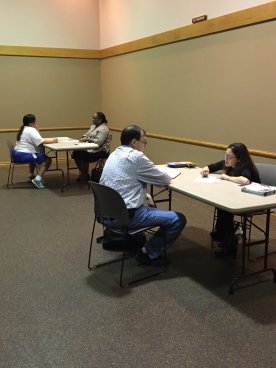 You may be asked to say something about another student or applicant. Speak only of your abilities & strengths. It is acceptable for an interviewer to ask you about other interviews, job offers & salary offers. You are not under an obligation to give a direct answer.

 The number one “tool” for finding a job is not a tool at all – it is all about modeling professionalism, networking with other college students and music teachers, and becoming actively engaged in your state/national music education associations (click on the acronyms to go to their websites) – National Association for Music Education
  Your “travel document” (paper copy you bring to the interview or “one-of-kind” attachment in response to email application) should be easy-to-modify based on the specific job posting to which you are applying. Your philosophy, goals, education, and teaching experience should focus on and reflect your competencies in alignment with the requirements for the music position. Your professional website and online resume should be more “general” and not rule out being considered for employment assignments outside your major. The PA teaching certificate states you are licensed to teach music in grades pre-K to 12… which means you should be qualified for any opening in elementary, middle, and high school general music, band, choir, jazz, keyboard lab, and strings, right?
 band for a year, conducting a small instrumental ensemble to accompany your youth church choir, giving a few summer lessons to the bell players in the local drum line where you live, etc. In addition, prior to the first employment screening and mock lesson at the interviews, you could “bone up” on your instrumental methods, suitable middle and elementary band warmups/literature, the meaning/concept of “middle school education,” and perhaps even pull out and brush up playing a few scales on that flute (or whatever) in your closet.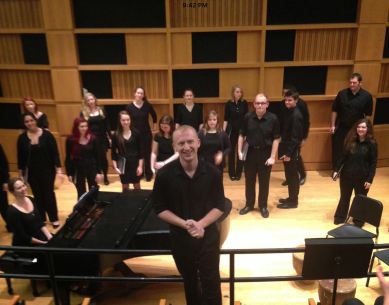
 Another great reason you should be a member of your professional association (PMEA or PCMEA) if you are looking for a job in PA is… the PMEA Job Board. Many PMEA members have relied on the Job Board for the most recent information when it comes to available PA music teacher positions.

 Be prepared for anything, and don’t slip up on “interview potholes” – any of these “terrifying, treacherous, tricky, and troubling” inquiries or potentially hot topics like…
 According to Lee E. Miller at
  Instead of a traditional interview (like most of the above) stating opinions about yourself, you may be faced with a behavioral interview. This type of employment screening requires job candidates to relate stories about how they handled challenges related to the skills and qualifications the company requires for the position. For this, you are encouraged to read “Acing the Behavioral Interview” by Jeanne Knight at
  In the unlikely event it gets asked, how would you respond to, “You say you are a musician? Are you temperamental?” Administrators want assurances and evidence that you are levelheaded, responsible, organized, reliable, and indeed NOT temperamental. Freelance singers and instrumentalists often have active performance calendars. Your principal may come out and ask if you will be available to “make the music” with your students after-school or evenings, and that your “gigs” and other non-district related activities will not interfere with school concerts, open houses, field trips, festivals, parent meetings, and other educational events for the growth and development of the total music program.
 paulfox.blog