
Focus on YOUR MUSIC during summer vacations, holidays, or academic breaks

The following idea-bank is a checklist offered to Band and Orchestra instrumentalists, their music teachers, and family members as “food for thought!”
Here are a few suggestions to consider as a TO-DO LIST after all the standardized tests, final concerts, and end-of-the-semester projects in all academic areas. Summertime is a wonderful way to “get to know” your instrument and build on your knowledge-base, technique, musicianship, and repertoire.
- Help organize your time by setting up a regular daily practice schedule. Practice a little every day. Consistency creates confidence!
- Create a “scale journal.” Write down on manuscript paper all your major and minor scales and the I, IV and V7 arpeggio series. Practice scales in all keys.
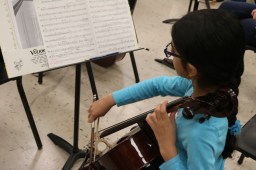 Create four new scale variations every day and add them to your “journal.” Creative new variations should make playing scales more enjoyable. Some examples are unusual rhythms (pizza toppings, desserts, interesting proper names), more difficult slurs, scales in thirds, etc.
- Explore the performance of one, two or three octaves of major, minor, chromatic, pentatonic and whole tone scales.
- To improve reading skills, play new music “at sight,” even music written for other instruments. Don’t be afraid to play a challenging piece above your ability level or even read a song from a piano score.
- Play through some of your “oldies” and favorites from past lessons or Band/Orchestra classes.
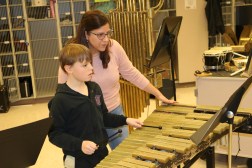 Visit the local music store and browse. Explore new publications of Classical, pop, folk, fiddle/jazz, show tunes or other styles.
- Sign-up for a music camp or college classes of music appreciation, theory, eurhythmics, etc.
- Take a few private lessons. For enrichment, take piano, voice and/or learn a new instrument.
- Spend an entire day in the sheet music, recordings, and music book section at the local library.
- Purchase and learn the music audition requirements for your MEA band/orchestra ensemble or solo adjudication festivals.
- Form a chamber group with other players in your neighborhood and rehearse at least once a week.
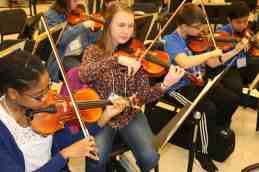 Purchase a duet book for mix or matched instruments (such as Beautiful Music for 2 Stringed Instruments by Applebaum—Book I (easy), Book II (medium), Book III advanced). Team up with another musician (band or string) and share non-transposing parts (flute or oboe with violin, trombone with cello, etc.).
- Encourage yourself to “pick out a song by ear” and try to write it down on music paper.
- Sit in or join a local community or youth ensemble like the South Hills Junior Orchestra which rehearses on Saturdays in the Upper St. Clair High School (Western PA) Band Room. Rehearsals resume on September 8, 2018.
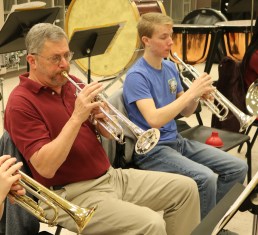 Plan a vacation or academic break around an out-of-state music workshop or concert series.
- Update your iTunes, Google Music, Amazon Music or other online music streaming services by purchasing and listening new solo or chamber works by artists who perform on the same instrument as you.
- Subscribe to SmartMusic, install/learn new music software, or peruse free online programs. Samples: Have you tried https://www.musictheory.net/ or https://www.good-ear.com/?
- Tune in to WQED FM, WDUQ or PBS and share a few minutes of classical music at least once a week. Attend concerts by professional musicians (like the Pittsburgh Symphony Orchestra, Civic Light Opera, or River City Brass).
- Prepare and perform a fifteen-minute recital for the residents of a local nursing home, hospital or Senior Citizen center.
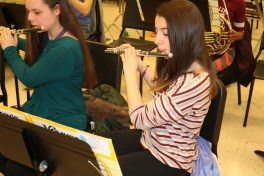 Read books or magazine articles about famous musicians, performers, conductors or composers.
- Take a “field trip” to a luthier (person who makes or repairs string instruments) or the instrument dealer. Have your instrument examined, cleaned, adjusted and appraised. Purchase accessories and do any necessary repairs. If necessary, update your insurance!
How many of these can you accomplish over the months of June, July and August… or throughout the year? “Practice makes self-confidence,” and the more time you put into it, the more you take away from the experience. Please enjoy your summer or winter breaks, but learn to have fun with your instrument and EXPLORE MORE MUSIC!
Click here for a digital “take-away” of this list. Also, please feel free to share the other SHJO enrichment resources and “Fox Firesides” at http://www.shjo.org/foxs-fireside/ or https://paulkfoxusc.wordpress.com/foxs-firesides/.

Paul K. Fox, Director, South Hills Junior Orchestra www.shjo.org
PKF
© 2018 Paul K. Fox
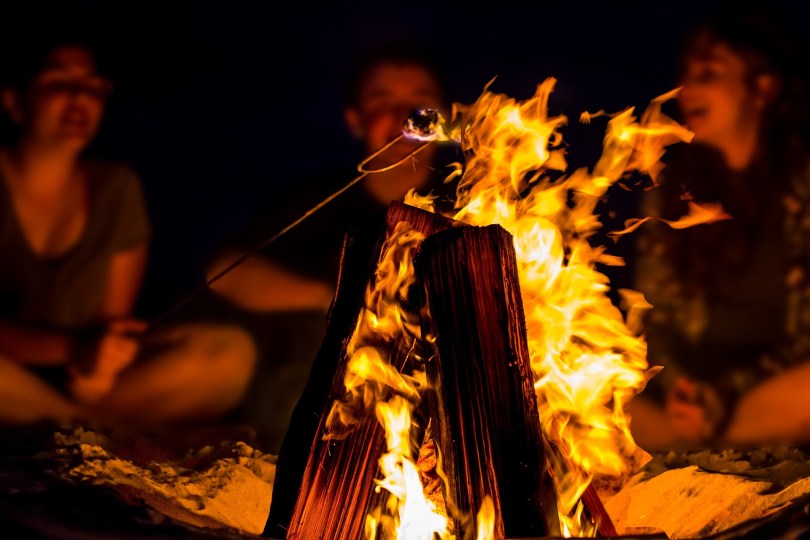
Photo credit from Pixabay.com: “fire” by skeeze.


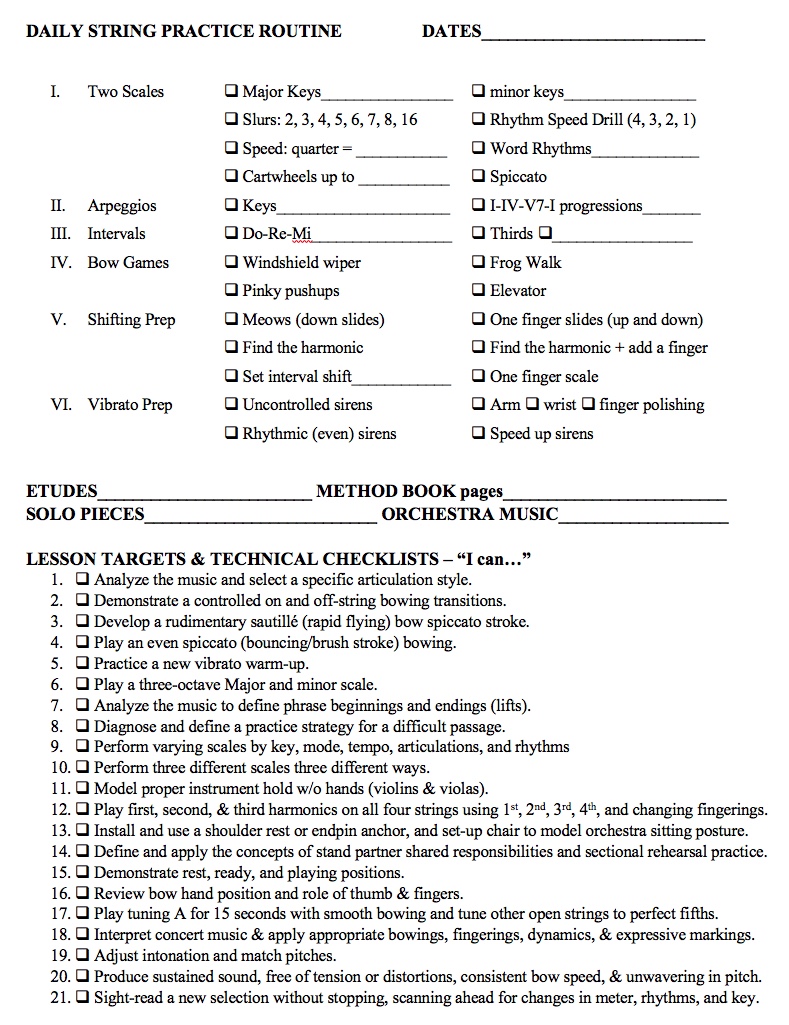
 In your “customized” journal, I recommend leaving space for metronome markings, special articulations, practicing tips and instructions (like “repeat it three-times-in-a-row perfectly” or “work on measures #1-8 today, #5-12 tomorrow,” etc.) and time spent. Remember, you are a problem solver and seek ways to integrate your “tool box of tricks” to learn each challenging passage. What works for you? What doesn’t? That’s the true magic of a journal… in with the good, and out the bad!
 What is the moral to the final story of these two racers… the turtle and the rabbit?
 into the “TEAM.”
 At lessons, some music teachers refer to batting averages, and point out how a .333 baseball hitting average is outstanding in the Major Leagues (when big-league pitchers are throwing 90-mile hour balls at you), but terrible for a musician who plays one note right to two notes wrong. Since each practice session builds neural-connections across brain cells (physical “memory” to do the skill again), in order to “play it right” consistently, we have to repeat it accurately over and over again, thus “the Ten Times Rule.” Musicians have to achieve a .950 or better average, and practicing their challenging musical “slice” ten times in a row will do the most good. Cumulative effort over different sessions or days is also the key to success! If a hard passage is played 10-20 times today, repeated 10-20 times tomorrow, another set of 10-20 drills the next day, etc. until the part can be played perfectly “in a row” every time, the player will have NO WORRIES when it comes time to perform it at the concert.
 prioritize what’s the most important, and define several new “practice plans.”
 Your practice should have well-defined goals. What do you want to learn as a musician? Are there particular pieces of music, styles, or technical skills you would like to be able to play? Knowing what you want to accomplish will help you decide what work is needed and assist defining specific learning targets. If you have a private teacher, he/she will automatically prescribe objectives for you, based on your present strengths and weaknesses. But if you desire to join the local youth symphony, participate in a music festival, play in a pit orchestra, perform solos or chamber music, become a conductor, help coach your peers, or want to improve a specific technical skill or general musicianship, make sure your teachers know it! They may be able to share warm-ups, strategies, or practice materials that will help you improve and expand your knowledge, technique, expressiveness, sight-reading and ear training.
 When I was teaching full-time school orchestra music grades 5-12, the following conversation by students in my program may have been shared at the dinner table. “He wants me to spend time and listen to several outstanding players. I was a little embarrassed when he called on me in class and asked, ‘Who is your favorite violinist?’ and I could not identify a single principal string player or even the current Concertmaster of the Pittsburgh Symphony Orchestra!”
 Pittsburgh has a strong cultural base, providing a home for the world-class Pittsburgh Symphony Orchestra and Pops, the Pittsburgh Ballet and Pittsburgh Opera companies, and the Pittsburgh Civic Light Opera productions, to name a few venues. We are also most fortunate that many amateur or semi-professional groups such as the Pittsburgh Civic Orchestra, Washington Symphony, and River City Brass Band are local (some concerts presented conveniently next door in the Upper St. Clair HS Theatre). Professional soloists and chamber groups visit our city nearly every month, and opportunities to enjoy free concerts are limitless on cable/FiOS television and WQED.
 Yes, practicing should be heard at home. It is NOT enough simply to play at school. The long-tested “success equation” is TIME + MAKING PROGRESS = FUN (encouraging more time, progress and fun). Practicing on a regular basis improves technique, musicianship, self-confidence, endurance, reading skills, and besides… playing better is a lot more FUN!
 paulfox.blog