

Senior Music Education Majors’ Employment Prep
Did you miss your state MEA conference?
Three of the most important recommendations for PCMEA members and other new or prospective music teachers wanting to develop a “personal brand” and presence on the job market are:
- Being an active member of your national (NAfME), state (PMEA), and local (college chapter) professional music teacher associations,
- Attending every possible music education meeting, workshop and conference, and
- Reading everything you can get your hands on from the first two resources above, modeling well-practiced habits of professionalism and networking skills, and getting yourself focused, organized, and prepared for the upcoming interviews.
That’s how you will get land your first employment as a full-time music educator.
If you live or go to school in PA, you should have attended the PMEA Spring Conference in Erie, PA last week. Just to “rub it in” a little, here are a few of the excellent sessions you missed that were especially geared for collegiate pre-service music teachers:
- Getting the Most Out of Your Student Teaching Experience
- Cracking the Graduate School Code: When, Where, Why, How, & How Much
- Starting with the End in Mind – or – You’ve Got 4 Years, Use Them Wisely
- Music Education & Gaming: Interdisciplinary Connections for the Classroom
- Ready for Hire! Interview Strategies to Land a Job
- Planning Strategies to Develop a Responsive Teaching Mindset
More importantly, if you are in your 4th year and were a no-show to your state conference this year, you missed out the chance to do a little networking, to “put your ear to the ground” listening for market trends and possible position openings for next year. You could have rubbed elbows at a bar (drinking a diet coke) or clinic or concert with a music supervisor, department chair, administrator, or high school band/choir director who knows who is taking a sabbatical or retiring from his/her school upon completion of the current semester.
Successful professionals stay up-to-date with their journals
 As a “professional,” you have an open, inquisitive mind, constantly strive for self-improvement, continuing education, and retooling, embrace change and better ways of doing something, and “practice” your craft. This means you read your educational publications from cover to cover. For example, these were a few of the tips in a recent PMEA News article, “I’ve Got an Interview, Now What?” shared by Dr. Kathleen Melago, PCMEA State Advisor and Associate Professor of Music Education at Slippery Rock University, and Doug Bolasky, retired band and orchestra teacher and former Department Chair of the Southern Lehigh School District:
- “The interview process at each school district is likely as unique as the district itself, and while there is no foolproof way to know in advance what questions will be asked of you, it helps to give some thought to what questions may come your way.”
- “It’s easy to tell someone what you would like to do; more valuable to the interviewers is what you DID do. Be ready to cite instances from your student teaching and even field experiences.”
- “Think about items you could place into your portfolio that would help you answer the questions. For example, if you are answering a question about an idea you implemented that was creative, consider including an artifact in your portfolio that provides credibility to your answer. Avoid simply passing around your portfolio during the interview. Instead, use it as a visual aid…”
- “Enlist the aid of a friend and use a webcam to record yourself answering the questions as in a mock interview. Look for distracting mannerisms like playing with your hair, saying ‘um’ or ‘like,’ and so forth.
Are you ready? Assess yourself! Then, DO YOUR HOMEWORK NOW!
For those who are nearing completion of their coursework for a teaching certificate, the season of professional school interviews is coming… At this point, you should be familiar with assessment rubrics and other evaluative tools used in education. Right NOW how well do you stack up in prepping for employment screenings? Complete this checklist as honestly as possible. I am citing and “reviewing” past articles I have written at this blog-site… a perfect opportunity for you to “fill in the missing gaps” and get started on this process of finding the perfect job!

- [ ] I am familiar with numerous criteria for assessing teacher candidates (for what the employment screening committee may be looking), including specific instructional, professional, and personal skills, experiences, behaviors, or ”core teaching standards” of “Unsatisfactory,” “Satisfactory,” “Good,” or “Superior.” I know the Charlotte Danielson Framework (one evaluative model for professional development used by the PA Dept. of Education – (https://www.danielsongroup.org/) or sample school district assessment forms. DO YOUR HOMEWORK NOW: https://paulkfoxusc.wordpress.com/2015/08/09/criteria-for-selection-of-the-ideal-teacher-candidate/ and https://paulkfoxusc.wordpress.com/2015/09/01/a-blueprint-for-success-preparing-for-the-job-interview/.
- [ ] I have developed a comprehensive unified philosophy of music education that spotlights my abilities from the perspective of a generalist not a specialist. I can model competency and experience in general music, piano playing, vocal and instrumental (band, strings, and guitar) music, Classical, jazz, pop, and folk music styles, improvisation, composition and music theory, and technology teaching grades Pre-K to 12. DO YOUR HOMEWORK NOW: https://paulkfoxusc.wordpress.com/2015/07/04/marketing-yourself-and-your-k-12-music-certification/.
- [ ] I am comfortable with today’s jargon, current trends, and key “buzz words” in general education. This includes everything from “The Common Core” to “The Four C’s” of 21st Century learning, and all of those constantly changing acronyms like HOTS, DOK, RTI, and UBD. These terms may come up at interviews, so I have at least a precursory understanding about them, and if I am “stumped” with a particular question, I will admit needing clarification (and I will look it up when I get home). DO YOUR HOMEWORK NOW: https://paulkfoxusc.wordpress.com/2015/07/18/the-alphabet-soup-of-educational-acronyms/.
- [ ] I am becoming a proficient storyteller and have prepared a set of personal anecdotes to potential questions that may be asked at the interviews. I have practiced responding with specific examples of my past experience and accomplishments, not just “telling” my strengths but allowing the listener(s) to make his/her(their) own deductions about me from my stories. DO YOUR HOMEWORK NOW: https://paulkfoxusc.wordpress.com/2015/08/02/when-it-comes-to-getting-a-job-s-is-for-successful-storytelling/.
- [ ] I have practiced taking “mock interviews” in front of my peers and recorded myself for self-assessment of my ability to answer employment screening questions. DO YOUR HOMEWORK NOW: https://paulkfoxusc.wordpress.com/2015/10/11/the-dos-and-donts-of-interviewing/, https://paulkfoxusc.wordpress.com/2016/02/27/interview-questions-revisited/, https://paulkfoxusc.wordpress.com/2016/06/04/those-tricky-interview-questions/, and https://paulkfoxusc.wordpress.com/2017/01/27/body-language-interviewing-for-a-job/.
- I understand the concepts of…
- [ ] Personal branding (https://paulkfoxusc.wordpress.com/2015/12/16/tips-on-personal-branding/), and
- [ ] Professional networking (https://paulkfoxusc.wordpress.com/2016/04/04/networking-niceties/).
- I have a high-quality…
- [ ] Resume (https://paulkfoxusc.wordpress.com/2016/01/12/music-teacher-resumes-revisited/),
- [ ] Business card (https://paulkfoxusc.wordpress.com/2016/04/04/networking-niceties/ and https://paulkfoxusc.wordpress.com/2016/08/14/21st-century-job-search-techniques/),
- [ ] Written and electronic portfolio (https://paulkfoxusc.wordpress.com/2015/11/15/planning-the-perfect-professional-portfolio/), and
- [ ] Professional website https://paulkfoxusc.wordpress.com/2018/01/14/the-professional-website/.
What was YOUR score… out of 11?
Get to work… so you can get work!

PKF
Photo credits: FreeImages.com, photographers hvaldez1 (studying for a test), Tory Byrne (quiz), and Svilen Milev (hire).
© 2017 Paul K. Fox

 It can’t get any better than this! Probably the most comprehensive one-stop vault of articles and “friends of NRN” sources for further study, the NCN provides an extensive collection of creativity tools: news stories (still current as of the week of April 7, 2017), quotes, webinars, blog-posts, past competitions like the USA Creative Business Cup, and a Board of Directors from across North America including many “giants in the field” like one of my heroes Sir Ken Robinson (California), along with George Tzougros (Wisconsin), Margaret Collins (North Carolina), Steve Dahlberg (Connecticut), Carrie Fitzsimmons (Massachusetts), Peter Gamwell (Ottawa, Canada), Jean Hendrickson (Oklahoma), Wendy Liscow (New Jersey), Susan McCalmont (Oklahoma), Robert Morrison, Scott Noppe Brandon, David O’Fallon (Minnesota), Andrew Ranson, Susan Sclafani (Washington D.C.), and Haley Simons (Alberta, Canada).
 According to their website,
 Spark local, regional, state and provincial, and national movements to create environments—in homes, schools, workplaces, communities and public offices—where every person is inspired to grow creatively.

 When I was teaching full-time school orchestra music grades 5-12, the following conversation by students in my program may have been shared at the dinner table. “He wants me to spend time and listen to several outstanding players. I was a little embarrassed when he called on me in class and asked, ‘Who is your favorite violinist?’ and I could not identify a single principal string player or even the current Concertmaster of the Pittsburgh Symphony Orchestra!”
 Pittsburgh has a strong cultural base, providing a home for the world-class Pittsburgh Symphony Orchestra and Pops, the Pittsburgh Ballet and Pittsburgh Opera companies, and the Pittsburgh Civic Light Opera productions, to name a few venues. We are also most fortunate that many amateur or semi-professional groups such as the Pittsburgh Civic Orchestra, Washington Symphony, and River City Brass Band are local (some concerts presented conveniently next door in the Upper St. Clair HS Theatre). Professional soloists and chamber groups visit our city nearly every month, and opportunities to enjoy free concerts are limitless on cable/FiOS television and WQED.
 Reprinted from the Winter 2016 PMEA News, the state journal of the Pennsylvania Music Educators Association.
 “Dogs in particular can reduce stress, anxiety, and depression, ease loneliness, encourage exercise and playfulness, and even improve your cardiovascular health.”
 Once you reach full retirement, you may find yourself with a lot more “freedom” and time “at-home” to share with your spouse, other loved ones (babysitting grandchildren/ nieces?), friends, personal music-making, hobbies, and pets! Indeed, this may be the first chance you have to go out and rescue a dog from an animal shelter. Full-time music teachers with those incredibly packed schedules of after-school/evening marching band practices, choir, band, orchestra, jazz, musical, and/or dance rehearsals and performances, their own concert gigs, private lessons, etc. may not be able to properly care for a dog by themselves. The only reservation to bringing a new dog into your home is if you plan to take a lot of long trips in retirement. Perhaps then, you can revisit the option of animal adoption after taking several cruises, safaris, and cross-country road trips. Pets need your love and attention!
 Several of my own experiences “learning and growing” with Brewster (a yorkie-poo) and Gracie (a bichon frise), “new children” added to my household immediately after retirement, are shared at
  So f
So f or what are you waiting? Go out and find a dog or cat to rescue… or at least pet one! You’ll be glad you did!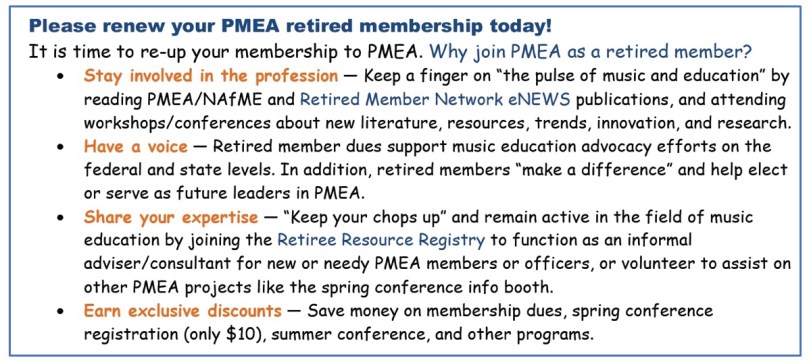

 The annual PMEA Spring Conference will be held on April 19-22, 2017 at the Erie Bayfront Convention Center. These sessions may be “perfect for PCMEA!”
 First things first! Prepare yourself in advance. Grab your winter or spring issue of PMEA News. Review the program of sessions which is usually laid out in chronological order and also by content strands (e.g. advocacy, choral, classroom music, collegiate, curriculum development/assessment, higher education research, instrumental, music technology, World Music, and special interest topics), as well as the list of keynote speakers, guest clinicians, showcase (music industry) demonstrations, association meetings (like PCMEA), and performances. Using an “old-fashioned” 20th century tool, mark up the conference schedule with two different colors of highlighter marking pens, first targeting “high interest” areas in yellow, and then “must attend” events in hot pink or other favorite color.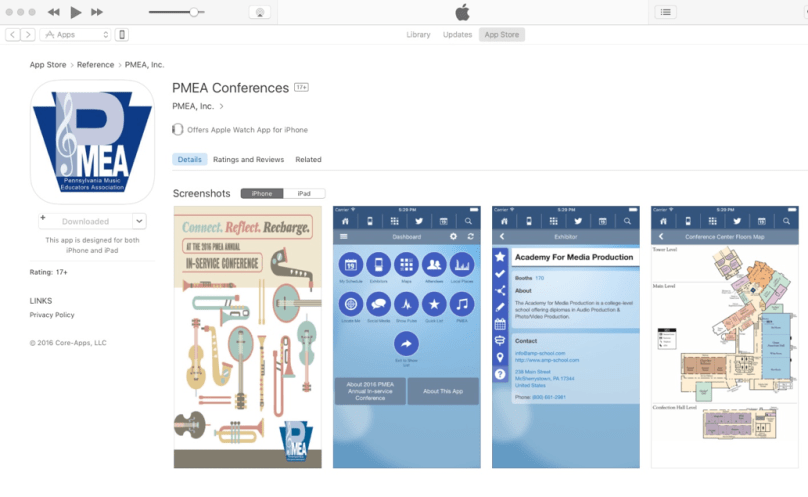
 DON’T focus exclusively on attending sessions or concerts in your specialty or most proficient areas, such as band if you’re a woodwind, brass or percussion major, orchestra if you are a string player, general music/choral if you are a vocalist or pianist. DO go to sessions that are not directly related to your major. You might be surprised at the connections you discover or the new interests that arise. Imagine “they” want to hire you next year as the next middle school jazz coach, HS marching band show designer, choreographer for the elementary musical, conductor of the string orchestra, teacher of AP music theory, etc. Could you select music for an elementary band (or choral) concert, create a bulletin board display for a middle school general music unit, set-up a composition project, or lead folk dancing at the kindergarten level?
 DON’T be shy! A conference is no place for being timid or afraid to start up a discussion with a more experienced music teacher. PMEA is all about circulating and introducing yourself, exhibiting your “charming self,” exploring resources and who are the experts/leaders in music education, getting the “lay of the land,” and adding as many names and emails to your professional contact data base as possible. Of course, DO follow-up with anyone who suggests that there may be a future employment posting from their school district!
 elf and ask a thoughtful question on some issue about which you are curious or found interesting.


 Yes, practicing should be heard at home. It is NOT enough simply to play at school. The long-tested “success equation” is TIME + MAKING PROGRESS = FUN (encouraging more time, progress and fun). Practicing on a regular basis improves technique, musicianship, self-confidence, endurance, reading skills, and besides… playing better is a lot more FUN!

 is the most essential “tech tool” to maintain your “now busier than ever” daily/weekly plan.
 r as changing my passwords. Everyone knows, with hackers lurking around every corner of the Internet, you are supposed to do two things: have a different password for each application, and from time to time, change these passwords. They should not be something someone else could guess, like “1234” or your phone number or the nickname “foxy” for me. A “good” password should utilize numbers, capitalized letters and small-case, and special characters like $, &, or underline. Using a password manager program like
  Girls three-part movie or The Crown (Netflix), all I have to do is go into another room, fire up my computer’s browser, and check out the latest video podcast of
  One of my hobbies furthest from a career in music education has to do with collecting and reading books about World War II, particularly U.S. Navy, submarines and surface fleet. One of my fellow hospital volunteer escorts, a veteran of the Vietnam war, turned me on to the free classic online episodes of T.V. series The Silent Service, for example the 25-minute 1957 broadcast of
 Powered by artificial intelligence, other voice-activated virtual assistants and knowledge navigators including products like Google Home and Amazon Echo (with a different “girlfriend” named “Alexa”) are flooding the market. This should be no surprise… the 21st Century seems to be developing many new inventions of super-automation, not so far from the female-voiced computer interface on the USS Enterprise (Star Trek) that could control everything. Soon you may take a ride from Uber in a driver-less car or “program” the autopilot on your pure-electric Tesla. Do you foresee the time when you will accept your Amazon merchandise or pizza being delivered from the air? What were those drone-operated lights we saw in the background of Lady Gaga’s halftime performance at the 2017 Super Bowl… possible future special effects for HS musicals and marching band shows?
 This article’s focus will be on the seemingly intangible… “body language!” Many say that during the interview, first impressions are critical — “the first ten seconds will create the interviewer’s first judgments about you, and then after four minutes, it’s all over.” The research also suggests that during the interview, the evaluation of your merit is based 7% on what you say, 38% on your voice or how you say it, and 55% on our facial expressions and non-verbal cues.
 Some of Cuddy’s assertions:
 Practice handshaking with a friend before taking interviews.
 Although “the experts” are not always in consensus, especially on the subjects of eye contact and leaning posture, Desta’s tips summarized below provide additional enlightenment on how to use body language to promote a positive image:
 f the 50-year-old Elementary and Secondary Education Act (ESEA). Each state must now develop and adopt their own “plan” of ESSA implementation. For example, the Pennsylvania Department of Education (PDE) is considering some very broad topics for inclusion in its state plan, and is currently asking for feedback from the general public on the following (source – Pennsylvania Music Educators Association – PMEA –
  Accountability – Interventions

 Shaheen discloses the new focus of the Foundation Stage Curriculum and National Curriculum for schools in England, with the aim that the school should “enable pupils to think creatively and critically, to solve problems and to make a difference for the better. It should give them the opportunity to become creative, innovative, and enterprising.” The key points on the National Curriculum website are: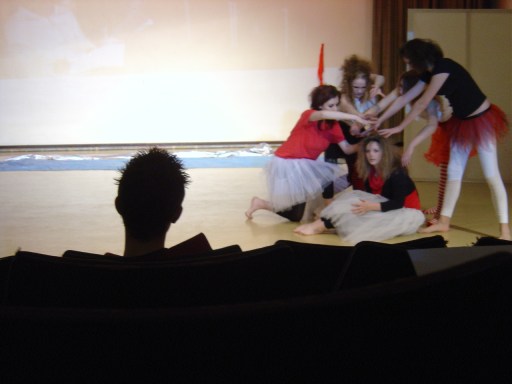
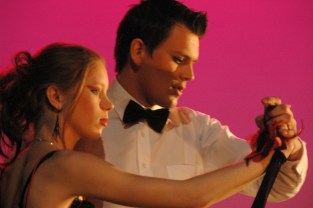 Nurturing creativity

 Reprinted from the Fall 2016 PMEA News, the state journal of the Pennsylvania Music Educators Association
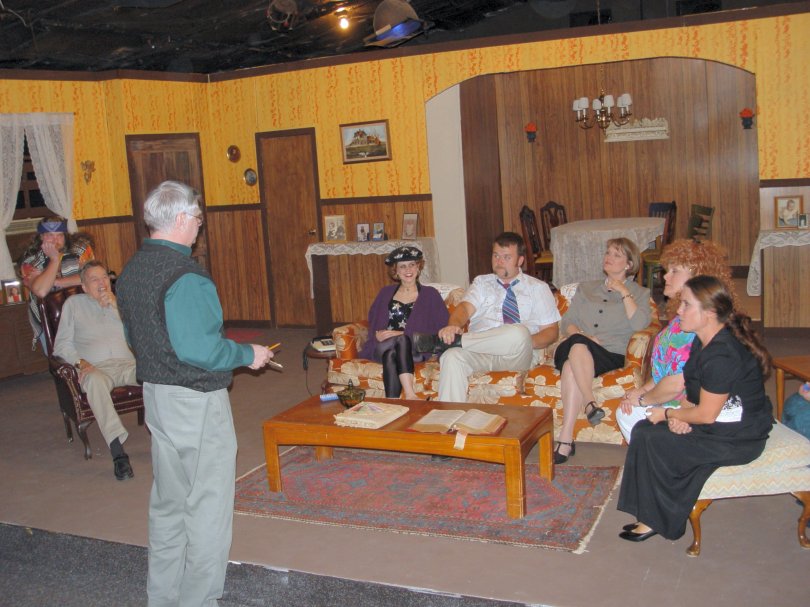
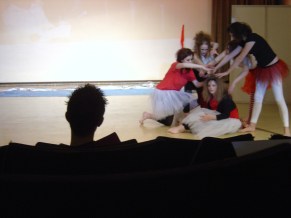 With the help of PMEA State Director of Member Engagement Joshua Gibson, PMEA retired members researched and compiled a PA community theater directory, to join the listings of bands, orchestras, and choruses posted on the PMEA retired members’ website.
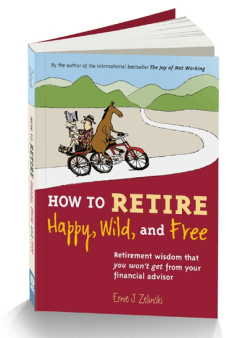 “Two essentials for successful retirement are sufficient funds to live on and sufficient things to live for. You may have the funds and a list of interests, hobbies, and leisure activities that will keep you busy. Nonetheless, if you want your retirement to be satisfying, these activities may not be enough. You may need an overriding purpose.
 paulfox.blog